



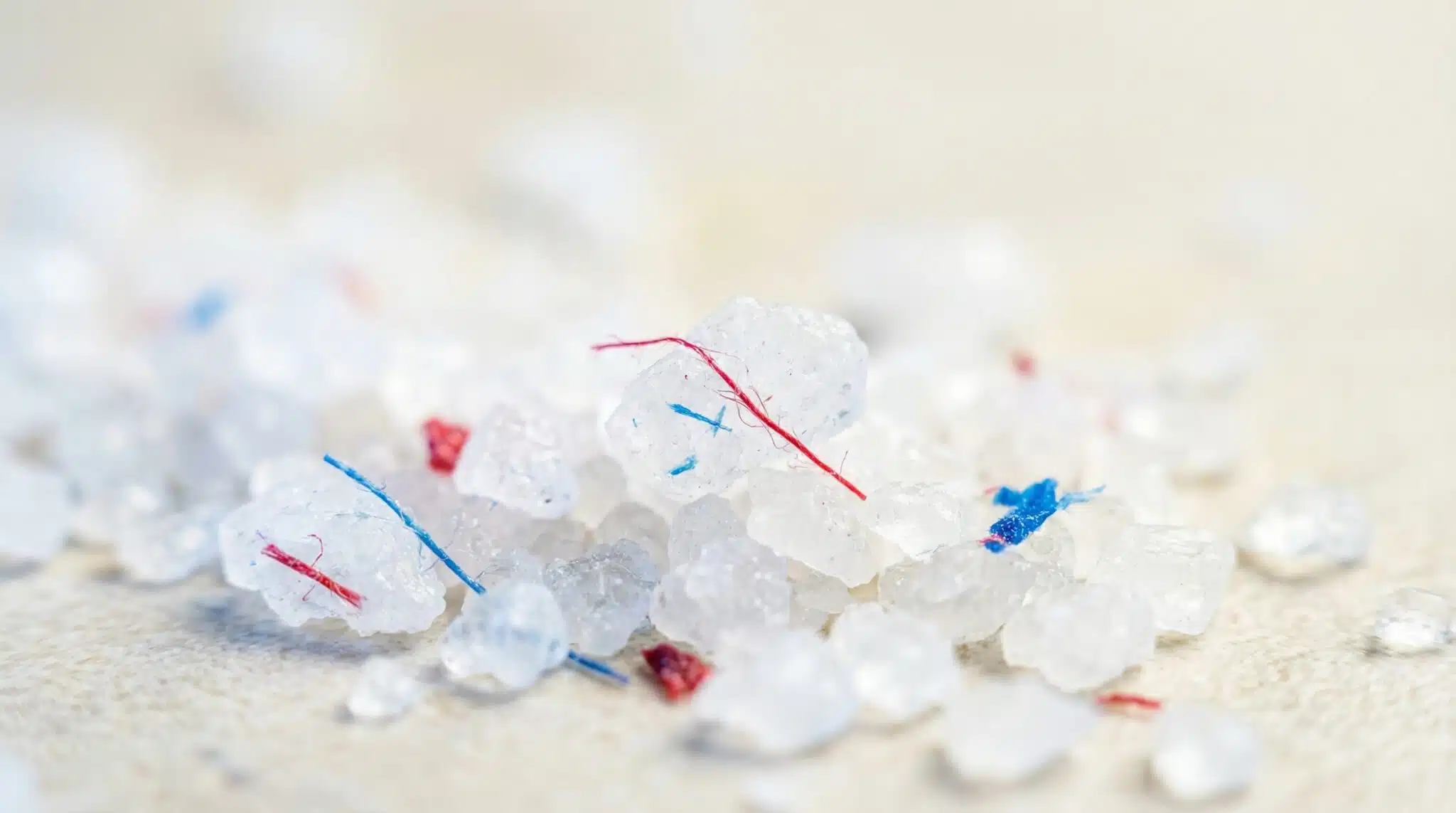

Microplastics in Salt: Which Ones Are Actually the Cleanest?
I love salt. Like… I’m the person who has a little dish of flaky finishing salt that makes me feel like a restaurant chef even though I’m mostly just salting scrambled eggs in yoga pants.
So when I started seeing “microplastics in salt” headlines, I did what any normal person does: I went down a research rabbit hole while standing in my kitchen holding a salt grinder like it was going to tell me the truth.
Here’s what I found: not all salt is equal when it comes to microplastics. Some types consistently test cleaner. And the best part is you don’t have to turn your pantry upside down or start salting your food with… vibes. You can make one small swap and call it a day.
Let’s talk about what the studies actually show, what’s worth caring about (and what’s not), and how to shop without needing a PhD in “tiny scary particles.”
First: How bad is it? (The quick reality check)
A Greenpeace backed analysis looked at 39 salt brands across 21 countries and found microplastics in over 90% of samples. Only three had zero detectable microplastics:
- a refined sea salt from Taiwan
- a refined rock salt from China
- an unrefined solar evaporated sea salt from France
That “none detected” thing matters because it tells us: cleaner salt isn’t a myth. It’s not a unicorn. It’s just… rarer than it should be.
Also important: salt is one microplastics source, not the only one. If you drink bottled water, eat seafood, or exist on planet Earth, microplastics aren’t exactly asking permission. But salt is one of the easiest places to make a simple choice.
The big pattern: Sea salt tends to be the messiest
This is where it gets kind of logical (and also kind of annoying, because I love fancy sea salt).
Across studies, microplastic contamination tends to shake out like this:
- Sea salt: highest
- from near zero in some samples to over 13,000 particles per kilogram in extreme cases
- many samples fall somewhere in the “few hundred to ~1,700 particles per kg” range
- Lake salt: middle
- roughly 28 to 462 particles per kg
- Rock salt (mined): lowest
- roughly 0 to 148 particles per kg
- on average, it can be 10-17x lower than sea salt
Why? Because sea salt is literally evaporated ocean water, and the ocean has been collecting our plastic nonsense for decades. Meanwhile rock salt comes from ancient underground deposits formed long before plastic was even a twinkle in anyone’s dystopian eye (think: hundreds of millions of years ago).
So yes, your cute little sea salt flakes are basically the “this came from the ocean” souvenir version of salt. Sometimes that’s fine! But if you’re trying to reduce microplastics where you can, the type matters.
Does location matter? Yep… but it’s not the whole story
Some regions show up more often as high contamination hotspots in the research parts of Asia get mentioned a lot. For example, certain studies have found higher counts in sea salts from places like Indonesia, Vietnam, and China (and the numbers vary a lot by site and sampling).
On the flip side, some Atlantic and Mediterranean sources (think parts of France/Portugal/Iberia) often look somewhat cleaner in the available data.
But here’s the thing: production method can matter more than geography. Which brings me to the most annoying twist…
The “natural” salt myth (brace yourself)
You know how “natural” and “artisanal” are supposed to make you feel like you’re doing something wholesome and superior?
Yeah. Sometimes that just means your salt sat outside collecting airborne junk.
Unrefined / minimally processed sea salts often contain more microplastics than refined salt. I know. It feels backwards. But it makes sense when you picture how a lot of artisanal sea salt is made:
- Salt water sits in open air evaporation ponds
- The salt crystals form over time
- Meanwhile, airborne fibers and particles can settle in (and no, they are not checking in politely at the front desk)
Refined salt, on the other hand, is often dissolved, filtered, and recrystallized in more controlled settings which can remove some of what raw salt hangs onto.
So if you’ve been buying the crunchy, gray, unrefined “straight from the sea” stuff because it feels virtuous and like mineral rich salt options… you might be getting a little extra bonus content you didn’t order.
(And yes, I’ve bought it too. I’m not judging you. I’m judging the universe.)
Okay but… how much are we even eating?
This depends wildly on how the study measures microplastics (especially particle size).
One 2017 study that focused on larger particles estimated a maximum of 37 particles per year from salt and basically called the health impact “negligible.”
The Greenpeace related work (which captured smaller particles) estimated closer to ~2,000 particles per year based on 10 grams of salt per day.
Two very different numbers because they’re counting different things.
Also: a lot of people eat more like 15 grams/day, but most of that comes from processed foods, not the salt shaker. So if your goal is “less salt overall,” the biggest bang for your buck move is still: eat fewer ultra processed foods (I know, I know rude, but true).
If your goal is “same salt life, fewer microplastics,” you can still make smarter salt choices without changing your entire personality.
What are these microplastics, exactly?
Microplastics are plastic bits smaller than 5 millimeters, down to stuff you can’t see. In salt, studies have reported particles from around 23 micrometers (smaller than the width of a human hair) up to a few millimeters.
A lot of what shows up in salt is fibers (around 80% in some reports), which points to sources like textiles and fishing gear so yes, your leggings and the ocean are in a toxic situationship and we’re all just trying to make dinner.
Common plastics found include things like PE, PET, and PP. And weirdly, the mix of plastics in salt doesn’t perfectly match seawater because different plastics behave differently during evaporation/crystallization.
The big takeaway for normal humans is simply: it’s not imaginary, and it’s not uniform.
Health effects: what we know, what we don’t
I’m not here to do doom and gloom, but I’m also not here to pretend “it’s fine, everything’s fine” while the world quietly sheds plastic confetti.
Here’s the honest version:
What research suggests (in general):
- Microplastics don’t always just pass straight through. Some can move through the body.
- Lab and animal studies have shown biological stress signals (inflammation/oxidative stress, immune and hormone effects).
- Microplastics can pick up other contaminants (including certain heavy metals) as they weather in the environment.
What’s still unclear:
- There aren’t established “safe” or “unsafe” thresholds for microplastics in food grade salt.
- Long term human accumulation data is limited.
- There are no FDA/WHO/EPA standards for microplastic limits in salt.
So I land here: choosing lower contamination salt is a reasonable precaution not because you need to panic, but because it’s an easy lever you can pull.
How to buy cleaner salt (without turning it into a hobby)
If you only remember one thing, remember this shopping priority list:
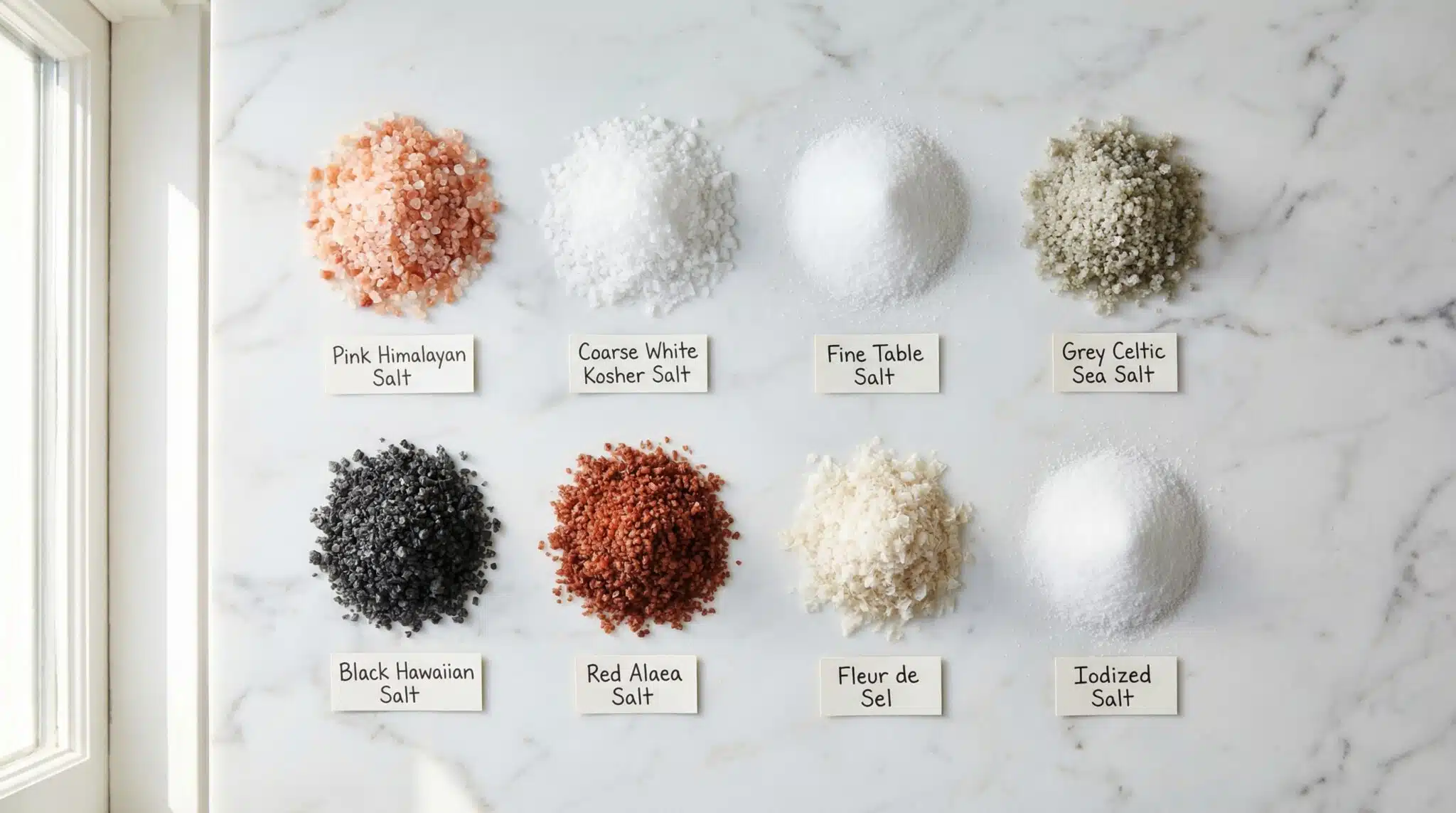
1) Start with the salt type
If you want the cleanest general bet:
- Mined rock salt tends to test lowest.
Sea salt tends to test highest.
Lake salt sits in the middle.
2) Then look at processing
- Refined salts are often cleaner than unrefined (especially for sea salt), because filtration/recrystallization can remove some particles.
3) Use origin as your tie breaker
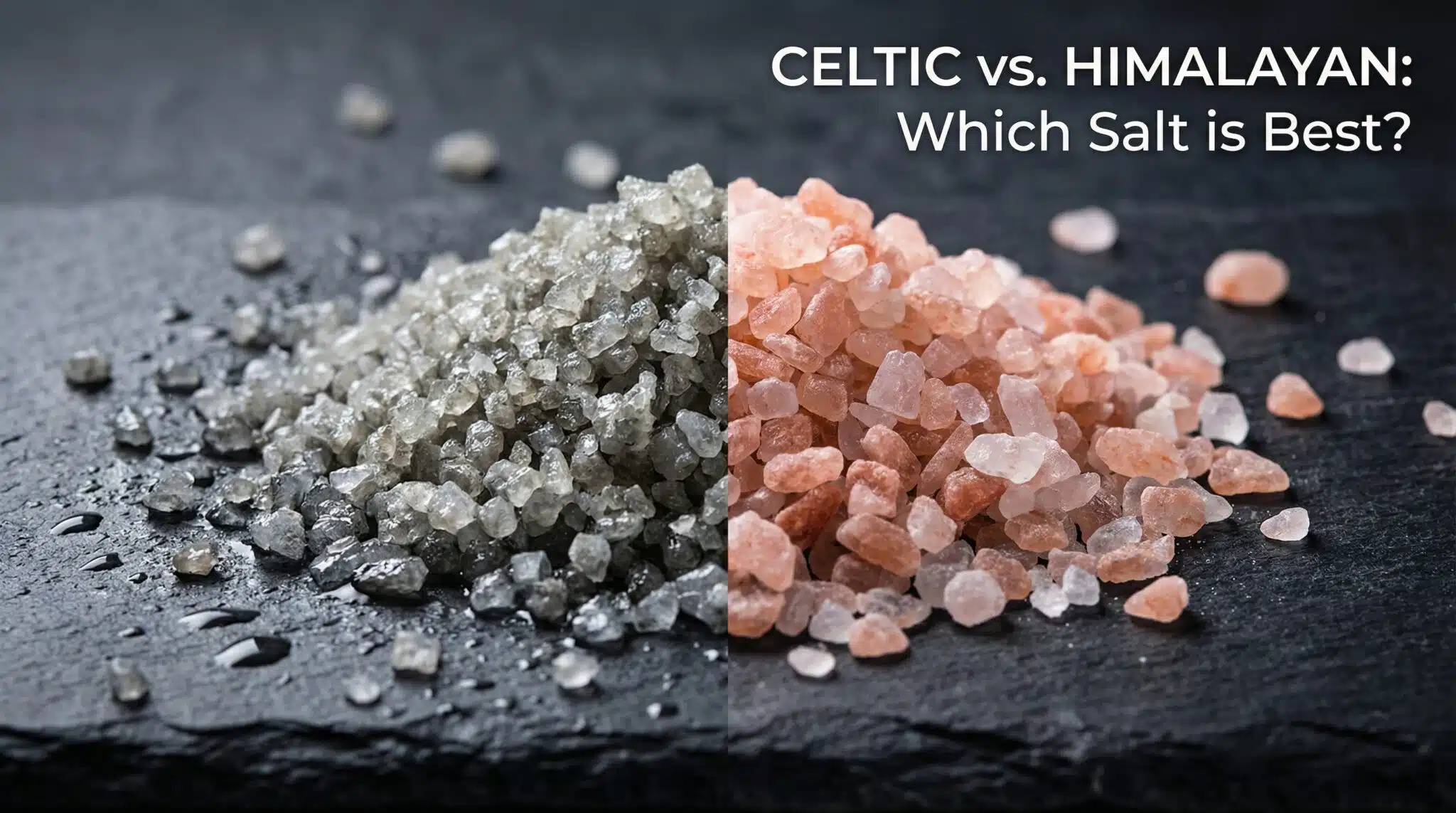
If you’re choosing sea salt because you love it (hi, same), for a Celtic and Himalayan salt comparison pick products with clear harvesting origin and, when possible, sources that test lower in available research (often Atlantic/Mediterranean areas show up more favorably than some high pollution hotspots but again, method matters a lot).
My “standing in the grocery aisle” label checklist
When you pick up a container, look for:
- Harvested/mined where?
“Packed in USA” is not the same as “harvested in ____.” You want the source, not the marketing. - Mined underground vs. evaporated from sea water
“Rock salt” / “mined” / “from ancient deposits” are your clues. - Refined (especially for sea salt)
It’s not sexy, but it can be practical.
Also: some studies have found unbranded salts can have higher contamination than established brands, likely due to quality control and traceability. You don’t need to buy the most expensive salt on the shelf, but I personally feel better buying something that isn’t basically “mystery salt in a bag.”
The iodine thing (don’t accidentally trade one issue for another)
Most rock salts and many fancy sea salts are not iodized. If you swap from iodized table salt to “cool salt,” just make sure you’re still getting iodine somewhere (food sources, a supplement if appropriate, etc.).
My lazy person solution:
- Keep iodized table salt for everyday cooking
- Use your fun flaky salt as a finishing salt when you want the ✨moment✨
You get the best of both worlds without turning dinner into a nutrition spreadsheet.
What I’d do if you told me your current salt situation
- If you mostly cook at home and use salt daily:
Switch your main salt to a mined rock salt (fine or coarse depending on how you cook). Keep iodized salt in rotation if you need it. - If you love sea salt and refuse to break up with it:
Choose a refined sea salt with a clearly stated origin, and save the open air “artisan” stuff for occasional use (or just… accept you’re paying extra for vibes and microfibers). - If you barely use salt but eat lots of packaged foods:
Salt choice won’t be your biggest microplastics lever anyway. Your bigger win is cutting back on ultra processed foods when you can (no perfection required).
Why this tiny swap is worth it (even if it feels small)
You can’t control everything. If you tried, you’d end up living in a glass box eating air you imported from 1992.
But salt is one of those rare household staples where the research points to a pretty consistent pattern: how it’s made and where it’s from can significantly change contamination levels. That means you can make a simple, low effort choice that likely reduces one source of microplastic exposure.
Not a life overhaul. Not a panic spiral. Just a smarter grab the next time you’re staring at the salt shelf thinking, “Why are there seventeen kinds of salt?”
Because of course there are.