



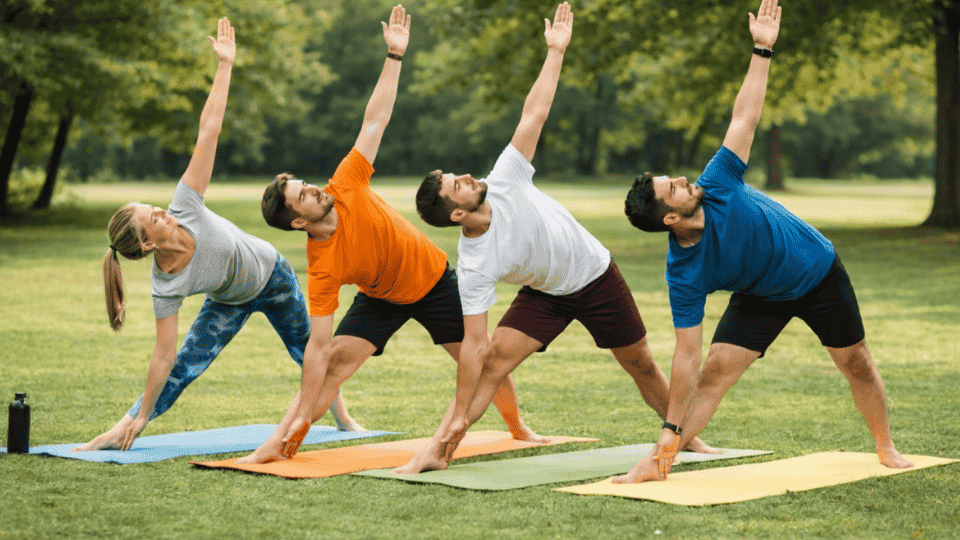







When I first saw a group perform advanced four-person yoga poses, I honestly thought it looked impossible. Four people balancing together, moving in sync, and trusting each other completely.
It feels less like exercise and more like teamwork in motion. If you already practice partner yoga or group poses, you might be ready for something harder.
Many people start with simple formations before moving into more challenging moves. If you are new to this style, you can begin with some four-person poses before trying the advanced versions.
Below, I have shared a few extreme acro poses that experienced groups can try. I will also explain safety tips, preparation steps, and simple advice so your team can practice with confidence.
What Are Advanced 4 Person Yoga Poses?
Advanced four-person yoga poses are group formations where four people work together to create balanced structures. These poses are often part of extreme acro yoga, which mixes traditional yoga with acrobatics and teamwork.
Unlike beginner group poses, advanced formations require much stronger coordination and trust between partners. Each person must hold their position carefully so the entire structure stays stable.
To perform these poses safely, your group needs strong core muscles, steady balance, and clear communication. Everyone must move slowly and support each other during transitions.
While beginner poses focus on simple balance, advanced four-person formations involve layered positions, lifting partners, and holding complex shapes that challenge strength and teamwork together.
Important Safety Rules Before Trying Extreme Acro Yoga
Before trying advanced group formations, I always make sure the team understands a few basic safety rules. These steps help everyone stay balanced and protected.
| Safety Rule | Why It Matters | Simple Tip to Follow |
|---|---|---|
| Warm up | Cold muscles can lead to strain or loss of balance during lifts or holds. | Spend 10–15 minutes stretching your legs, shoulders, and core before starting practice. |
| Clear communication | Every person must move at the same time to keep the formation stable. | Count together or use short signals before lifting, shifting, or changing positions. |
| Use spotters | Spotters help prevent falls if someone loses balance in a high formation. | Ask one or two teammates to stand nearby and guide the top person during the pose. |
| soft surfaces | Hard floors increase the risk of injury if someone slips or steps on the wrong spot. | Use yoga mats, gym mats, or grass when practicing new formations. |
| Build trust | Trust allows partners to hold positions confidently without sudden movements. | Practice simple group poses together before attempting more complex structures. |
When your group follows these safety habits, advanced formations become much easier to practice. I always remind my team that safety comes first.
Advanced Four-Person Yoga Poses You Can Try
These advanced formations challenge strength, balance, and teamwork at the same time. When your group practices carefully, these poses can help improve coordination and trust.
1. Four-Person Pyramid Pose (Standard Acro Variation)
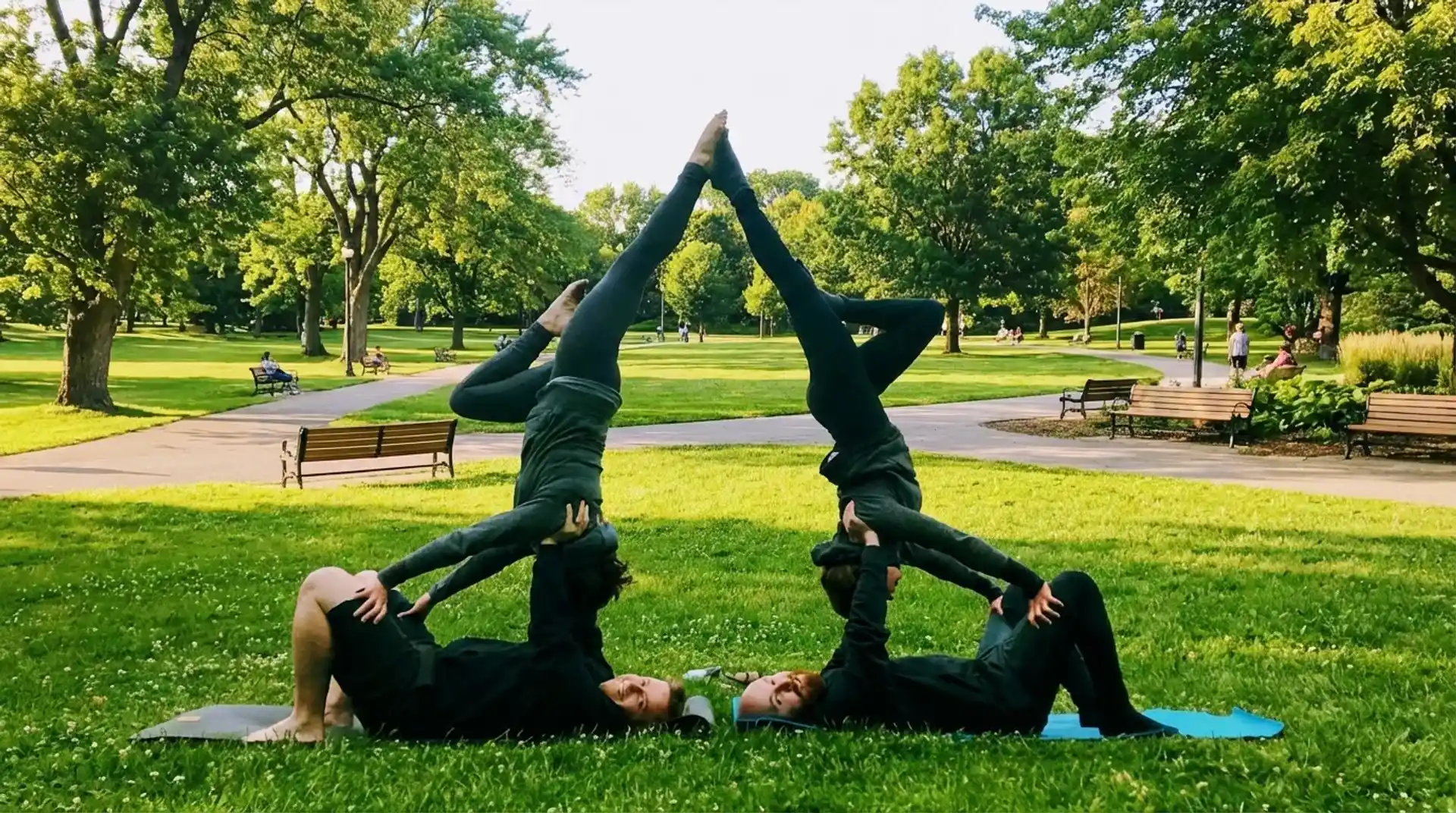
This four-person partner yoga pose is a balanced group formation where two base partners support two flyers in a controlled inverted position. It helps build core strength, body control, coordination, and strong communication between all participants during each practice.
- Set the base position: Two partners lie flat on their backs with knees bent and feet ready to support weight. Keep core engaged and arms stable.
- Place the flyers: Each top partner positions their hips onto the base’s feet while holding hands or wrists for balance.
- Lift with control: Bases slowly extend their legs upward, raising the flyers into an inverted position.
- Find balance: Flyers extend one leg upward and bend the other, keeping their core tight and body aligned.
- Hold and stabilize: Maintain steady breathing, keep communication clear, and hold the pose briefly before lowering down with control.
2. Acro Yoga Double Bird Pose (Double Front Bird Variation)
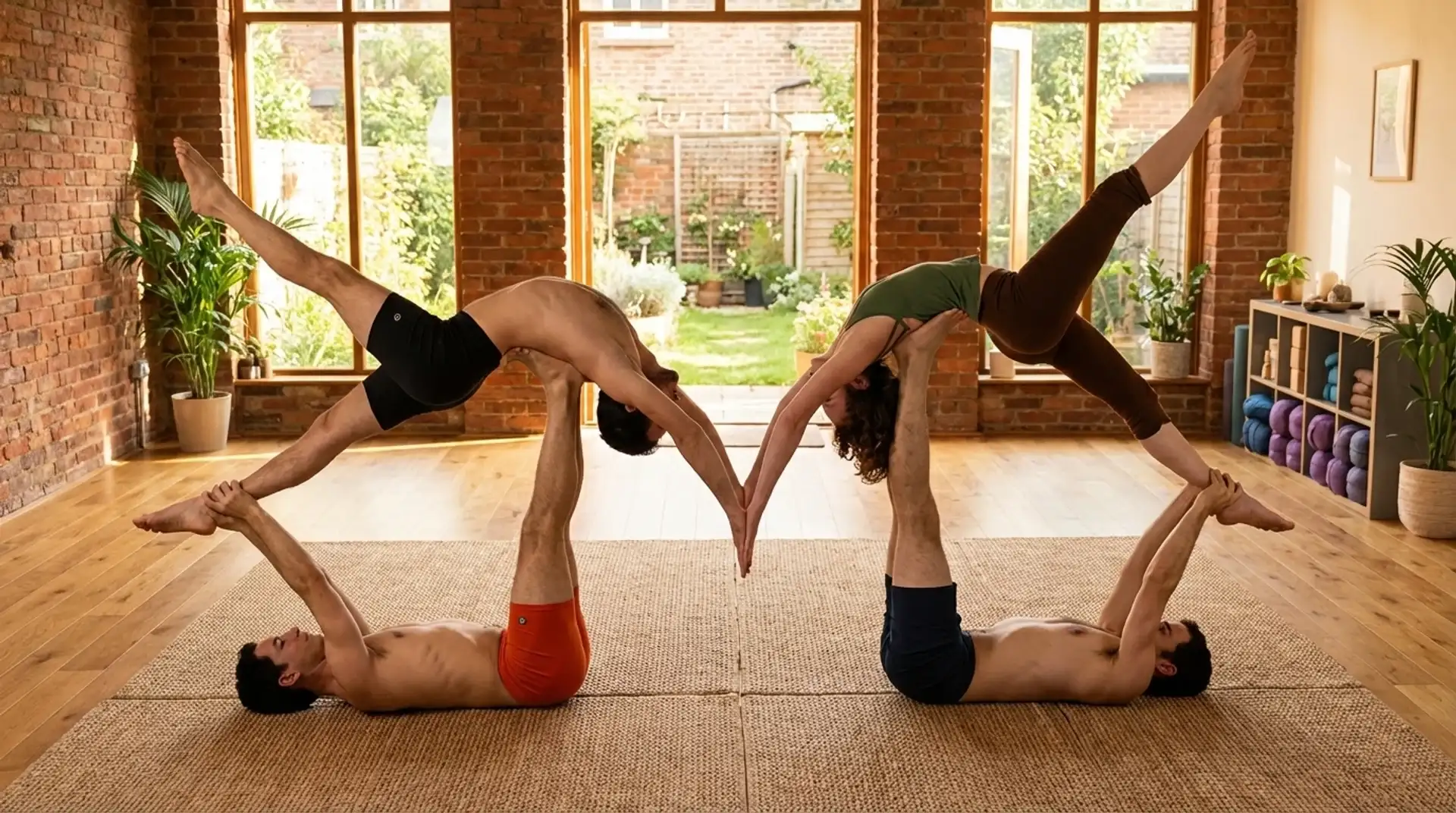
This four-person double bird pose is an advanced acro yoga balance where two bases support two flyers in a lifted position. It builds core strength, body control, coordination, and strong communication between all participants working together.
- Set the bases: Two partners lie on their backs with legs raised and arms ready for support.
- Position the flyers: Each flyer places their hips onto the base’s feet and holds the base’s hands.
- Lift into position: Bases extend their legs slowly to raise the flyers into a balanced, straight-body position.
- Connect at the center: Flyers reach toward each other and gently hold hands to improve balance.
- Hold and exit safely: Maintain steady breathing, then release hands and lower down slowly with control.
3. Four-Person Plank Square
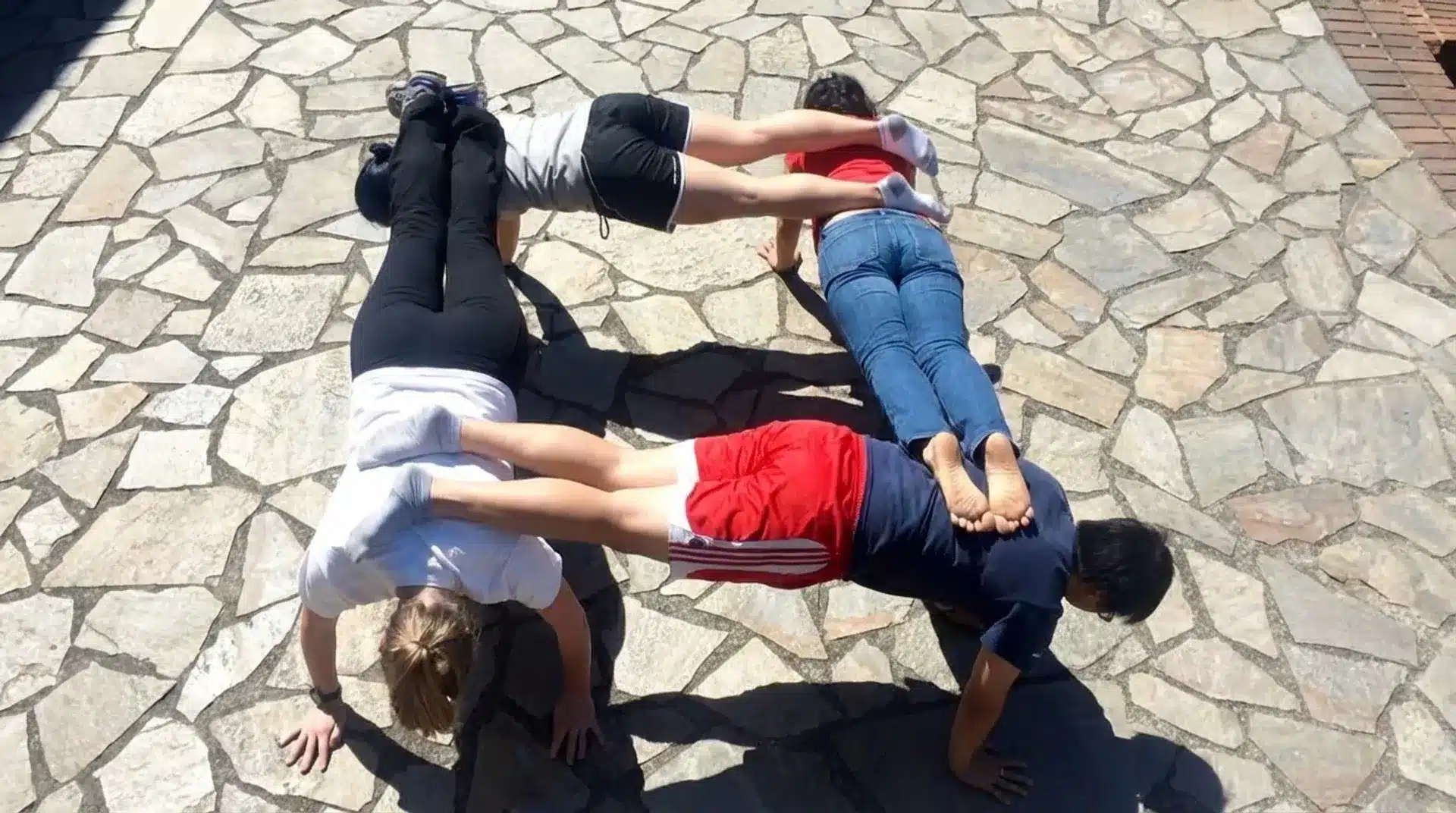
This four-person plank pose is a group balance that builds core strength, stability, and coordination. It challenges each partner to stay aligned and controlled while supporting shared weight, making it a great exercise for teamwork and full-body strength.
- Set the base position: Two partners start in a strong plank position with their hands under their shoulders and their bodies in a straight line.
- Position the top partners: The other two partners carefully place their hands on the ground and feet onto the backs of the base partners.
- Align the body: Everyone keeps their core tight, hips level, and body straight to maintain balance.
- Hold steady: Maintain the plank position with controlled breathing and clear communication between all partners.
- Exit safely: Top partners step down slowly, and base partners lower to the ground together.
4. Advanced Acro Yoga Group Pose
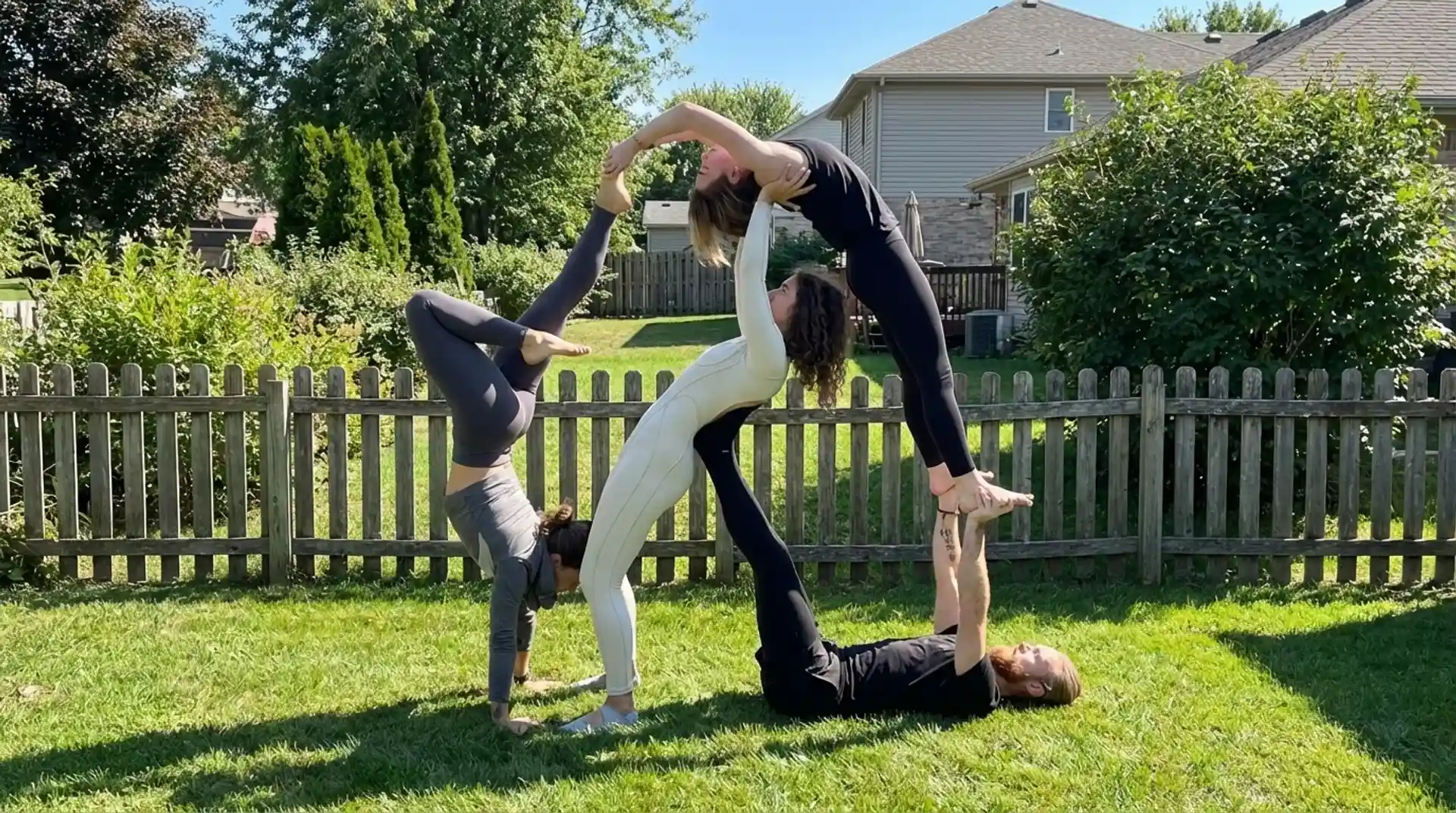
This four-person acro yoga pose combines balance, backbends, and inversion into one connected formation. It builds strength, flexibility, coordination, and trust, requiring each partner to remain in control and aligned while supporting and balancing together.
- Set the base: One partner lies on their back with legs raised to support the flyer above.
- Position the center support: The second partner stands and maintains a stable backbend to form the middle connection.
- Lift the flyer: The third partner balances on the base’s feet and leans into a backbend supported by the center partner.
- Add the handstand: The fourth partner performs a controlled handstand beside the group, using balance and core strength.
- Hold and exit safely: Maintain steady breathing, keep communication clear, and come down slowly in reverse order.
Take your time with each pose and focus on control, balance, and clear communication. Practice with trusted partners, use proper support, and build strength gradually to perform these advanced poses safely and confidently.
Common Mistakes to Avoid in Advanced Four-Person Yoga
Many groups struggle in their first few sessions, not because the poses are too hard, but because small errors throw off the entire formation before it even begins. Here are the most common mistakes to avoid:
| Mistake | Why It Happens | Quick Fix |
|---|---|---|
| Skipping Warm-Up | Rushing into poses | Stop and warm up for 5 minutes |
| Unclear Communication | Assuming partners know when to shift | Pause, reset signals, and restart |
| Heaviest Person on Top | Misjudging weight roles | Reassign positions before retrying |
| Holding Your Breath | Tension during difficult poses | Release pose, breathe, and reset |
| Ignoring Body Alignment | Overlooking small shifts | Come down safely and realign |
| Rushing Transitions | Eagerness to move forward | Slow down, communicate, and retry |
| Practicing on Hard Surfaces | Lack of proper equipment | Relocate to a proper mat immediately |
With these habits corrected early, your group will build a much stronger foundation. Progress feels smoother, sessions become safer, and the more demanding formations start to feel genuinely within reach.
When to Seek Medical Help
Advanced four-person yoga places significant demand on the body, and knowing when to consult a professional is just as important as learning each pose. While mild muscle soreness is normal, certain signs should never be ignored.
If you experience sharp joint pain, swelling, or numbness in the wrists, shoulders, or lower back after practice, visit a medical professional promptly. An awkward landing or spotter fall, even one that feels minor, can cause injuries that are not immediately visible.
Those with pre-existing conditions like spinal issues or knee instability should consult a doctor before attempting any advanced formation. Always remember that no pose is worth a long-term injury. Seeking medical help early keeps you and your group practicing safely for the long run.
Wrapping Up
Advanced four-person yoga poses look intense but bring people together in a powerful way. The right group builds trust, strength, and a real connection with every session.
The key is to move slowly, respect your limits, and never rush into difficult formations before your group feels ready. Patience and steady practice are what turn challenging poses into enjoyable ones.
With consistent effort, even the most extreme acro formations become achievable and genuinely fun to perform. Keep challenging your group step by step, and progress will come naturally. Drop a comment below and share whether you have tried any of these poses or have one you would like to see next.