











Skin concerns often don’t come from products alone. Stress, inflammation, and daily exposure play a big role in how skin looks and heals over time.
Ashwagandha is an Ayurvedic herb traditionally used to support stress response and overall balance.
In recent years, researchers have begun studying how those same effects may relate to skin health, including hydration, elasticity, and irritation. Because of that growing interest, ashwagandha now appears in supplements and topical skincare products.
In this article, I’ll break down how ashwagandha may support skin health, what current research suggests, and what kind of results are realistic with consistent use.
This article was reviewed for accuracy against published clinical and pharmacological research on Withania somnifera and skin health.
Ashwagandha Benefits for Skin
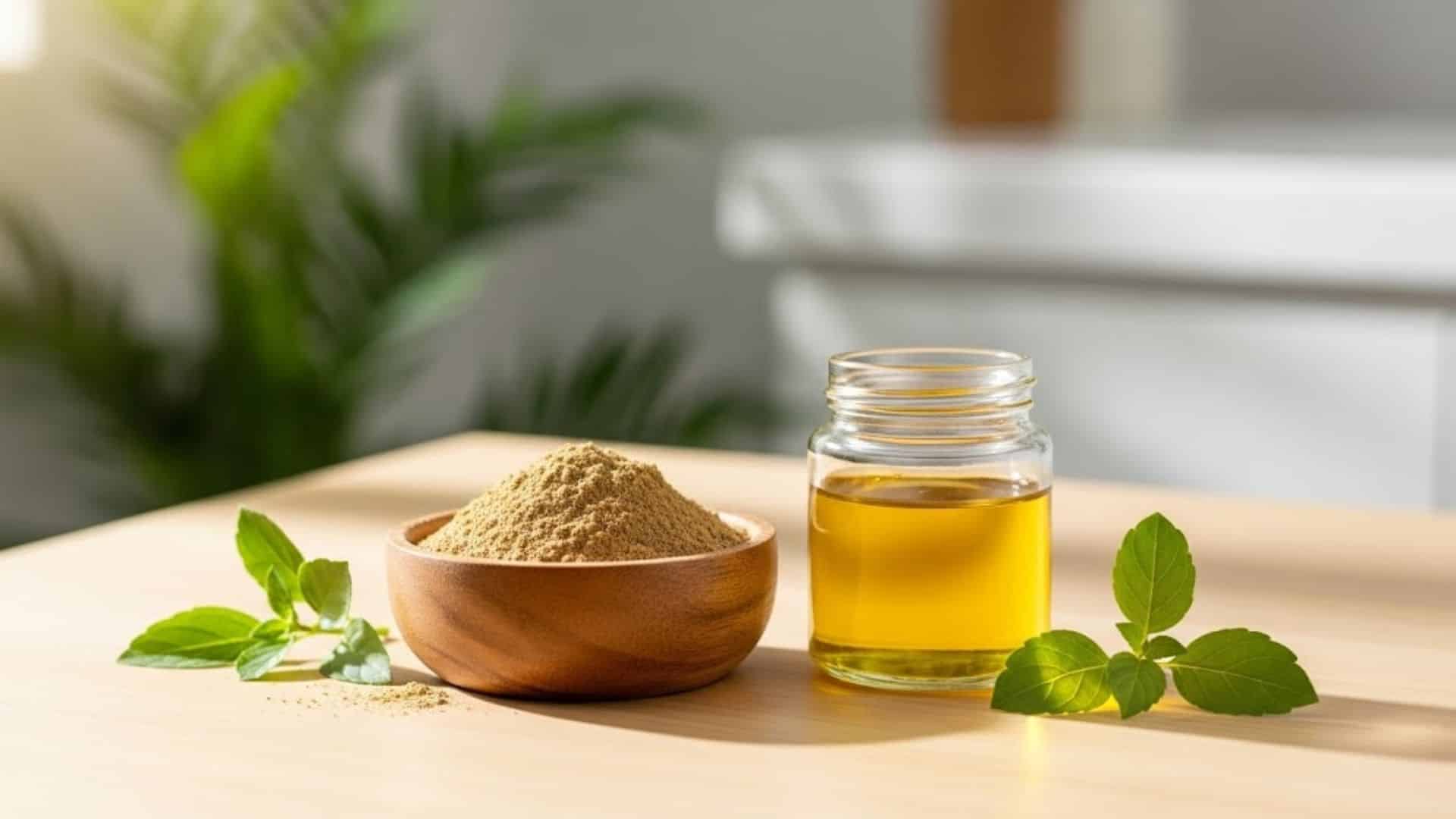
Research on ashwagandha and skin health centers on stress response, inflammation, and oxidative damage, all of which affect common skin concerns.
The benefits below reflect how ashwagandha may support skin health through these pathways, with results developing gradually over time.
1. Reduces Inflammation
Inflammation plays a key role in skin concerns such as redness, breakouts, sensitivity, and flare-ups. Ashwagandha contains withanolides, plant compounds studied for their anti-inflammatory effects and their role in regulating stress-related inflammatory responses.
By helping the body manage cortisol levels and inflammatory signaling, ashwagandha may support calmer, more balanced skin over time. This is especially relevant for stress-related acne, sensitivity, and inflammatory skin conditions.
In a randomized, double-blind clinical trial, topical use of standardized ashwagandha root extract was shown to improve skin parameters linked to irritation and barrier health, as reported in a PubMed-indexed study on ashwagandha and facial skin health.
Results tend to develop gradually and depend on consistent use, rather than short-term application.
2. Boosts Collagen Production
Collagen helps keep skin firm and elastic, but its breakdown speeds up with ongoing inflammation, oxidative stress, and hormonal imbalance.
Ashwagandha does not act as a direct collagen booster. Instead, it may help support skin structure by reducing the internal stressors that contribute to collagen degradation.
Research on ashwagandha shows it can influence stress response and inflammatory signaling, both of which affect how quickly collagen and elastin break down over time.
By supporting a more balanced internal environment, ashwagandha may help preserve skin firmness and elasticity as part of a long-term routine.
3. Fights Acne
Acne is often influenced by stress hormones, inflammation, and excess oil production rather than skincare alone. Elevated cortisol levels can increase sebum output and trigger inflammatory responses that contribute to clogged pores and breakouts.
Ashwagandha has been studied for its ability to reduce stress and cortisol levels, which may indirectly help regulate oil production and inflammatory activity linked to acne.
In a randomized, placebo-controlled trial, adults who supplemented with ashwagandha experienced significant reductions in stress and serum cortisol, as shown in a PubMed-indexed clinical study on ashwagandha and stress response.
By supporting a more balanced stress response, ashwagandha may help reduce one of the underlying contributors to stress-related acne.
4. Protects Against Oxidative Stress
Oxidative stress occurs when free radicals damage skin cells faster than the body can repair them. This process contributes to early aging, uneven tone, and a weakened skin barrier, especially with ongoing sun exposure and environmental stress.
Ashwagandha has been shown to exhibit antioxidant activity, helping neutralize free radicals and reduce oxidative damage at the cellular level.
Research published in a PubMed-indexed study on the antioxidant properties of Withania somnifera highlights its ability to support the body’s natural defense systems against oxidative stress.
By limiting this damage, ashwagandha may help protect skin structure and maintain overall skin resilience over time.
5. Promotes Even Skin Tone
Uneven skin tone is often linked to inflammation, oxidative stress, and slow cell turnover, rather than pigment issues alone. When skin is repeatedly exposed to stress or irritation, it can heal unevenly, leading to dark spots or patchy tone over time.
Ashwagandha may support a more even-looking complexion by helping reduce internal stressors that contribute to irritation and oxidative damage. Its antioxidant and anti-inflammatory properties may support healthier skin cell turnover and recovery, which can influence how evenly skin regenerates.
Rather than acting as a direct brightening agent, ashwagandha appears to support the conditions that allow skin tone to normalize gradually.
6. Soothes Skin Irritation
Skin irritation from sun exposure, rashes, or sensitivity is often driven by inflammatory responses and a weakened skin barrier. When these processes stay active, skin can feel tight, itchy, or reactive for longer periods.
Ashwagandha may help support calmer skin by influencing inflammatory signaling and stress-related responses that can worsen irritation.
Rather than acting as a topical soothing agent, it works indirectly by supporting the body’s ability to regulate inflammation. This may be helpful for people with reactive or easily irritated skin, especially when flare-ups are linked to stress or environmental exposure.
7. Improves Skin Texture
Skin texture issues aren’t always about surface buildup. In many cases, they reflect how well the skin barrier functions and how efficiently skin renews itself under stress.
Ashwagandha may support smoother-looking skin by helping regulate internal stress responses and inflammatory activity that interfere with normal skin renewal.
When these internal pressures are better controlled, skin is more likely to maintain an even surface and recover from minor disruptions. Rather than acting as a topical smoothing agent, this reflects broader support for skin function and balance
8. Reduces the Appearance of Wrinkles
Wrinkles form when skin loses structural support faster than it can repair itself. This process is influenced less by surface dryness and more by long-term factors such as inflammation, oxidative stress, and hormonal imbalance.
Ashwagandha does not function as a topical anti-wrinkle agent or filler. Its potential role is to support internal processes that affect how quickly collagen and elastin break down.
By helping regulate stress-related pathways and oxidative damage, ashwagandha may support skin resilience, which can influence how pronounced fine lines appear over time.
9. Promotes Skin Rejuvenation
Skin naturally repairs itself, but that process can slow down under ongoing stress or inflammation. When recovery is delayed, minor damage, blemishes, or irritation may take longer to resolve.
Ashwagandha contains withanolides and other bioactive constituents that have demonstrated antioxidant and anti-inflammatory activity at the cellular level, which can support pathways involved in normal skin recovery and resilience, as described in a peer-reviewed review on ashwagandha’s antioxidant and anti-inflammatory properties.
Rather than triggering rapid regeneration, ashwagandha appears to support the internal conditions that allow skin to renew more efficiently over time.
10. Improves Skin Elasticity
Skin elasticity reflects how well skin can adapt to movement and return to its original shape. This quality tends to decline when structural support weakens due to ongoing stress, inflammation, and oxidative damage.
Ashwagandha does not act as a direct tightening or firming agent. Instead, it may help support elasticity by influencing internal processes that affect collagen and elastin stability, including stress regulation and inflammatory control.
By supporting these underlying factors, ashwagandha may help skin maintain resilience and flexibility over time, rather than producing immediate visible firming.
11. Detoxifies the Skin
Skin concerns are sometimes linked to how well the body manages oxidative stress and metabolic byproducts, rather than toxins accumulating in the skin itself.
When these internal systems are under strain, effects can show up indirectly through dullness or congestion.
Ashwagandha may support the body’s natural detox processes by helping regulate stress responses and oxidative balance that affect overall metabolic function.
Instead of acting as a cleansing agent, its role appears to be supportive, influencing internal pathways that help the body maintain balance. This indirect support can contribute to clearer, more stable skin over time
12. Balances Skin Oils
Oil imbalance often shows up as a reaction, not a root problem. Skin may overproduce oil in response to irritation or dehydration, or reduce oil output when the barrier is repeatedly disrupted.
Ashwagandha’s potential role is not to control oil production directly, but to support internal conditions that influence how skin responds to disruption
By helping the body manage inflammatory and stress-related signals, it may reduce the triggers that cause oil output to swing unpredictably.
This can support a more stable skin environment rather than forcing oil levels up or down
13. Supports Wound Healing
Skin repair relies on controlled inflammation and efficient tissue regeneration. When these processes are disrupted, even small cuts or abrasions can take longer to heal or recover unevenly.
Ashwagandha has been studied in preclinical wound-healing models, where topical formulations of Withania somniferawere shown to support wound contraction, epithelialization, and tissue strength during the healing process in animal studies.
An experimental evaluation published in a wound care journal observed improved healing outcomes in rat models treated with ashwagandha-based preparations, suggesting biological pathways through which the herb may support normal skin recovery in research settings (animal study on Withania somnifera and wound healing).
While these findings don’t confirm the same effects in humans, they help explain how ashwagandha may support the body’s natural repair processes.
Research highlight (2023): In a randomized, double-blind clinical trial, topical ashwagandha root extract significantly improved skin hydration, reduced transepidermal water loss (TEWL), and improved elasticity over 60 days (study link).
Note: Ashwagandha supports skin through stress and inflammation pathways, so results tend to appear gradually rather than immediately. Changes may take a few weeks and vary based on individual factors. It works best as part of a consistent skincare and wellness routine, not as a quick fix.
Ways to Use Ashwagandha for Skin
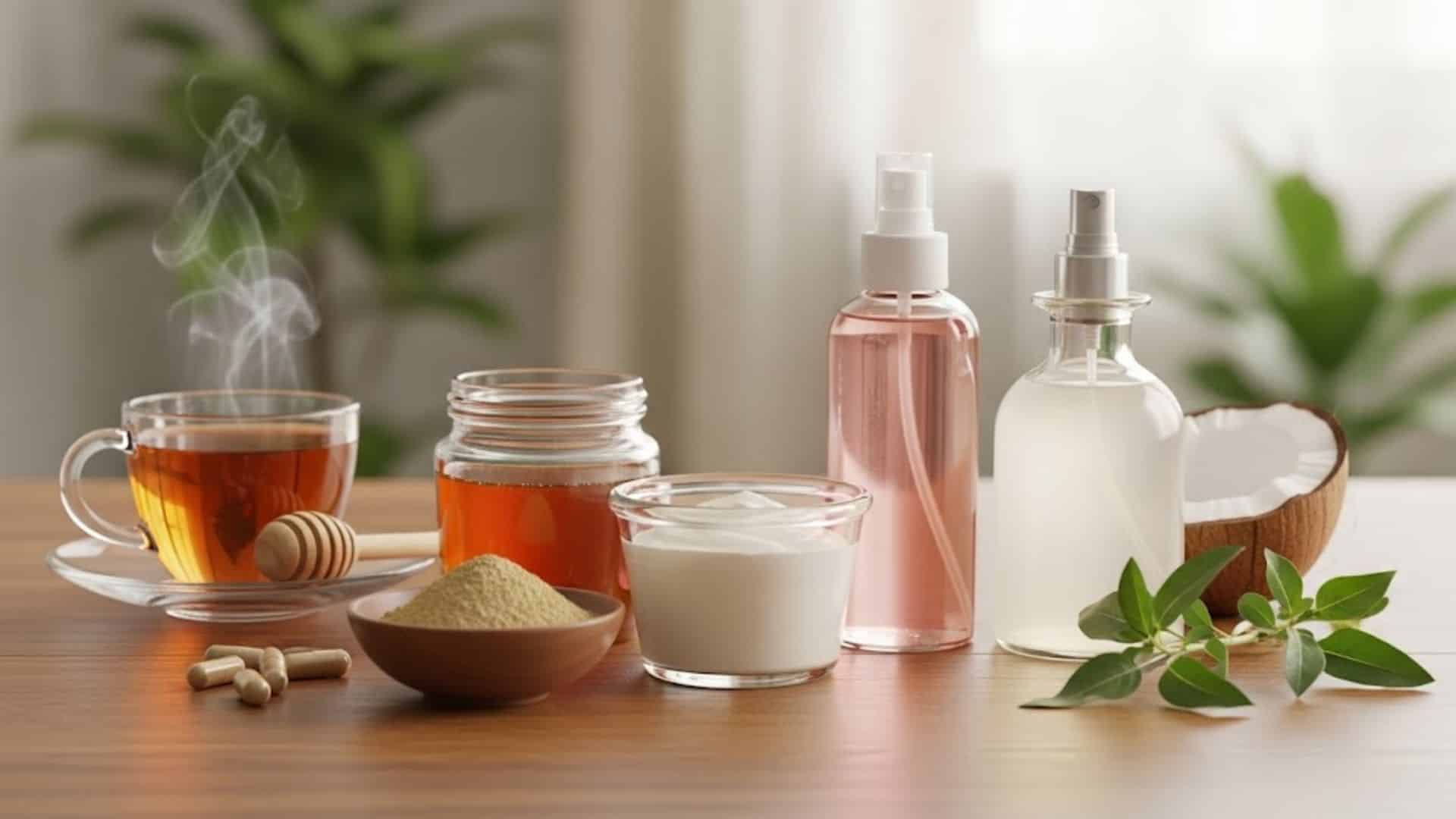
You can use ashwagandha on your skin or take it internally for beautiful results. Both methods work together to give you healthier, happier skin from the inside and outside.
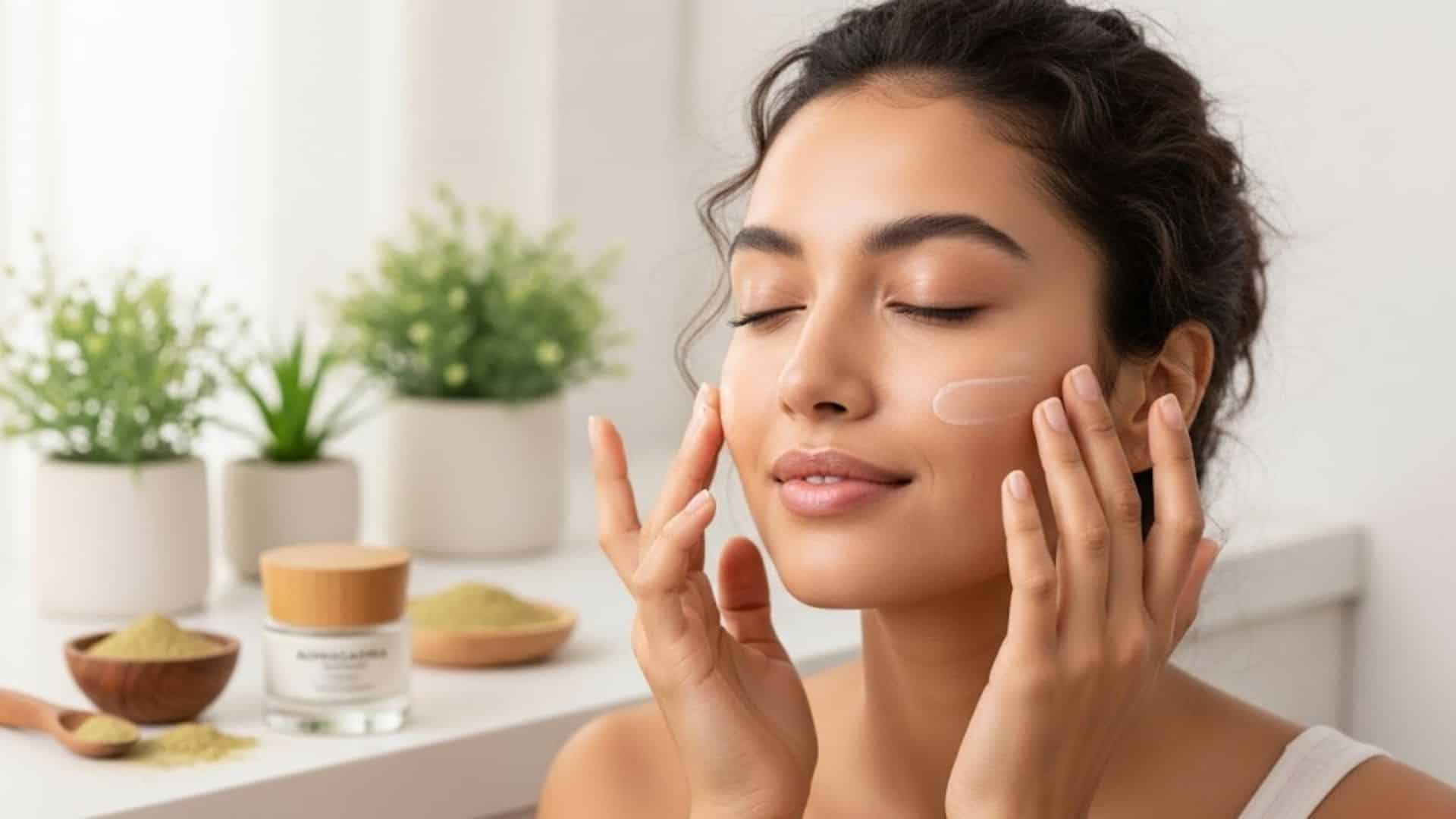
- Face mask with honey: Mix one teaspoon of ashwagandha powder with two tablespoons of honey and apply for fifteen minutes.
- Yogurt face pack: Combine ashwagandha powder with plain yogurt to create a cooling mask that balances oily skin.
- Rose water toner: Blend 1/2 teaspoon of ashwagandha powder with rose water to create a refreshing daily toner.
- Oil-based serum: Mix ashwagandha powder with coconut oil and massage gently before bed for anti-aging benefits.
- Daily supplements: Take 300-500mg ashwagandha capsules with meals to reduce stress and improve sleep for better skin.
- Herbal tea blend: Drink ashwagandha tea before bedtime to help your body relax and naturally repair your skin.
These simple methods fit easily into your daily routine without complicated steps or expensive products. Start with one method and gradually add others as your skin gets used to this powerful herb.
Topical vs. Oral Ashwagandha for Skin Support
Ashwagandha can support skin health in different ways depending on how it’s used. The table below highlights the primary differences between topical and oral use:
| Form of Use | How It Supports Skin | Best For |
|---|---|---|
| Oral (capsules, powder, tea) | Supports skin indirectly by helping regulate stress response, cortisol levels, inflammation, and oxidative balance | Stress-related acne, inflammatory skin issues, long-term skin resilience |
| Topical (creams, serums, masks) | Acts locally on the skin barrier by supporting hydration, reducing transepidermal water loss, and calming irritation | Dryness, sensitivity, barrier damage, surface-level irritation |
Oral and topical forms are often used together, depending on whether the goal is internal stress support, surface-level skin care, or both.
Ashwagandha Forms for Skin Support
Ashwagandha is available in several forms, and the type used can influence how it supports skin health.
Ashwagandha powder is the most traditional form and is often used in teas, food, or DIY topical applications. Potency can vary widely depending on the source and preparation.
KSM-66 is a standardized root-only extract commonly used in supplements. It is primarily studied for stress and cortisol regulation, which may indirectly support skin concerns linked to inflammation and acne.
Sensoril is a standardized extract made from both roots and leaves. It is typically more concentrated and often used for stress-related conditions, which may be relevant for individuals whose skin concerns worsen under chronic stress.
The most appropriate form depends on whether the goal is topical use, internal stress support, or a combination of both.
How to Choose a High-Quality Ashwagandha Supplement
Product quality plays a major role in both safety and effectiveness, especially when ashwagandha is used consistently.
Look for products that use standardized extracts, which ensure consistent levels of active compounds. Root-only extracts are often preferred for internal use, as they are more commonly studied and less variable than mixed plant extracts.
Third-party testing is another important indicator of quality. Independent testing helps verify purity, potency, and the absence of contaminants such as heavy metals.
Avoid products that rely on vague labeling or proprietary blends without clear sourcing details. Higher-quality formulations are more likely to provide predictable results and reduce the risk of unwanted reactions.
Potential Side Effects and Considerations
Like any natural remedy, ashwagandha can sometimes cause unwanted reactions in certain people. It’s always smart to be cautious and know what to look out for before trying it.
- Always do a patch test by applying a small amount of the ashwagandha mixture on your wrist first.
- Some people experience nausea or digestive issues when taking ashwagandha supplements on an empty stomach.
- Stop using ashwagandha immediately if you notice redness, itching, or swelling in your skin.
- Pregnant women, nursing mothers, and people with autoimmune diseases should consult healthcare providers before using ashwagandha.
- Start with tiny doses to see how your body reacts before increasing to recommended amounts.
Most people can use ashwagandha safely when they follow proper guidelines and listen to their bodies.
Remember that ‘natural’ doesn’t always mean risk-free, so stay alert and use common sense at all times.
Final Words
Ashwagandha isn’t a quick fix or a replacement for good skincare habits. Its potential value lies in how it supports stress response, inflammation control, and antioxidant balance, all of which play a role in skin health over time.
Current research suggests that ashwagandha may help support skin resilience, balance, and recovery rather than deliver immediate or cosmetic results.
How it works, and whether it helps, can vary based on the form used, consistency, and individual factors like stress levels and overall health.
Used thoughtfully, ashwagandha can be a supportive addition to a broader skincare and wellness routine, especially for those looking to address skin concerns from the inside out.
Frequently Asked Questions
Does Ashwagandha Work Better When Taken Orally or Used Topically for Skin?
Ashwagandha works differently depending on how it’s used. Oral forms mainly support skin indirectly through stress and inflammation pathways, while topical products act locally on the skin barrier. Many people use both approaches together, depending on their skin concerns.
How Long Does It Take to See Skin-Related Results from Ashwagandha?
Ashwagandha is not a fast-acting skincare ingredient. Most skin-related changes, when they occur, tend to appear over several weeks rather than days and depend on factors such as stress levels, overall health, and form of use.
Is Ashwagandha Safe for Sensitive or Acne-Prone Skin?
Ashwagandha is generally well tolerated, but sensitivity can vary. Topical products should be patch tested first, and oral supplements should be started at lower doses to assess tolerance, especially for people with reactive or acne-prone skin.
Can Ashwagandha Be Used Alongside Other Skincare Ingredients?
Ashwagandha can usually be used alongside common skincare ingredients, as it does not function as an exfoliant or active acid. When used topically, it is often combined with moisturizing or barrier-support ingredients rather than strong actives.