












Essential oils are like that friend who seems chill at brunch and then starts a fight in the group chat. Tiny bottle, big personality… and if you use them like they’re harmless scented water, they can absolutely clap back.
I love a good lavender moment as much as the next person. But I’ve also learned (the itchy way) that “natural” is not a safety label. Poison ivy is natural. So are bees. Nature is gorgeous and also occasionally chooses violence.
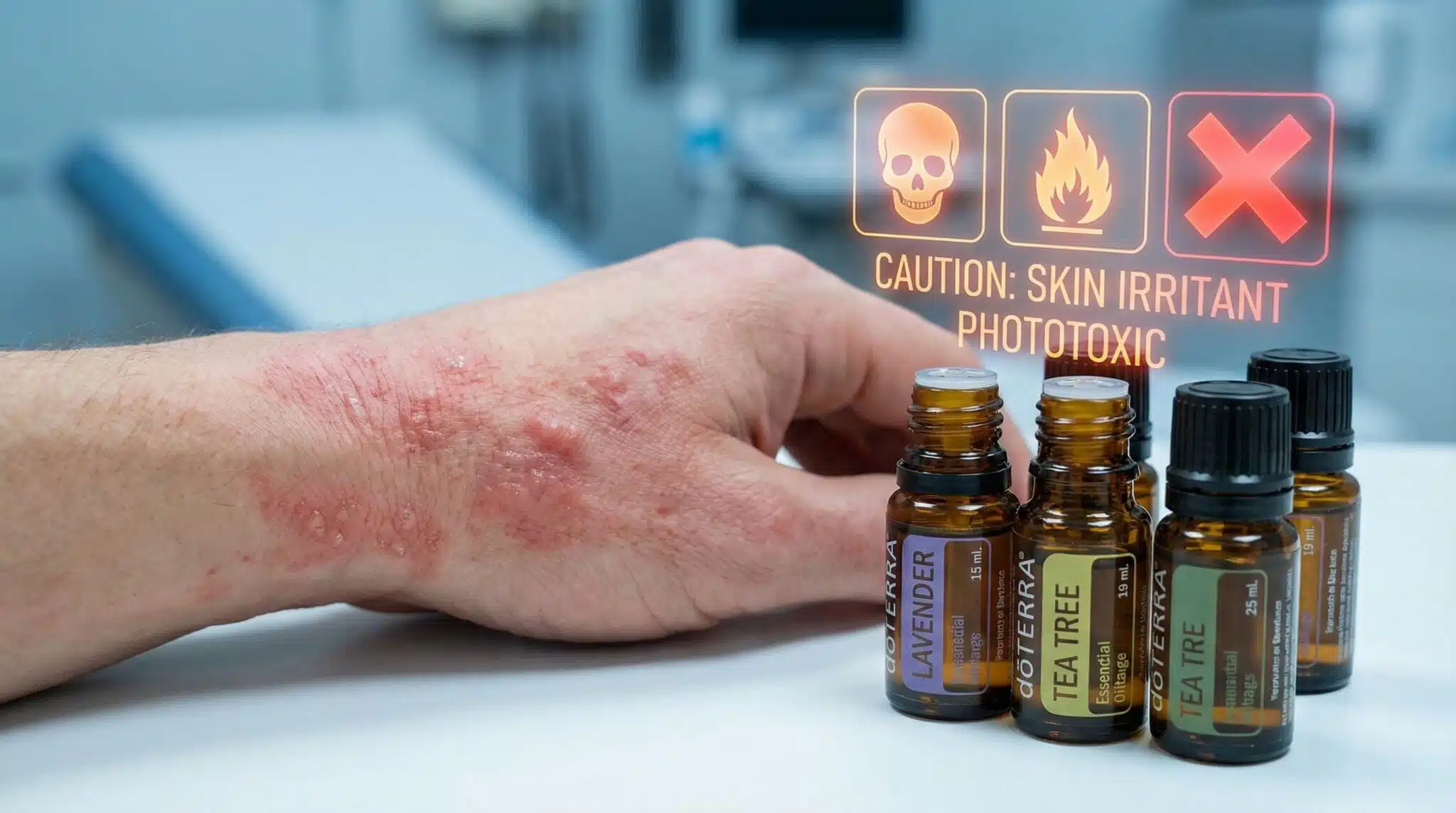
So if your skin has ever gone red, stingy, blotchy, or full on “why does it feel like I rubbed a jalapeño on my arm?” after using an essential oil… you’re not alone. And most of the time, it’s preventable.
Let’s keep you in the “ahh spa vibes” lane and out of the “urgent care fluorescent lighting” lane.
If You’re Having a Reaction Right Now
Do this first (calmly, no spiraling):
- Wash gently with plain soap and cool/lukewarm water.
Not hot. Not scalding. Not “I will scrub my sins away.” Heat + friction can push oils in deeper. (Ask me how I know. Actually don’t. I’ll cry.)
- Then apply a thin layer of a plain carrier oil (olive oil from your kitchen is fine) to help dilute and lift leftover essential oil.
- Stop using the oil that caused the reaction. Like, immediately. This is not the time to “power through.”
If it’s in your eyes, or you’re having breathing issues, skip ahead to the emergency section below.
The Six Rules I Want You to Tattoo on Your Brain
Not literally. But also… kind of literally.
- Always dilute before it touches skin. Always.
- Patch test new oils. Your inner forearm is the test kitchen.
- Citrus + sun can equal burn. More on that zesty betrayal in a minute.
- Store oils like they’re tiny divas. Cool, dark, tightly closed.
- If you’re pregnant, breastfeeding, dealing with health stuff, or on meds double check first.
- Keep oils away from kids and pets. Their bodies don’t process this stuff like ours.
Here’s my sticky note truth: “Natural” just means “chemistry that grew on a plant.”
Why These Tiny Bottles Pack Such a Punch
Essential oils are concentrated. Like, wildly concentrated.
Rose oil, for example? It takes an absurd number of roses to make a small amount. That’s part of why they smell amazing… and part of why your skin sometimes reacts like you just challenged it to a duel.
Also: essential oils aren’t regulated like medications. Labels can be… optimistic. “100% pure” doesn’t always mean what you think it means. So your best protection isn’t the brand it’s how you use the oil.
Irritation vs. Sensitization: The Two Ways Oils Get You
There are two main kinds of skin drama:
1) Irritation (the immediate “OW”)
This is the classic: redness, burning, stinging right after you apply it. Usually because the oil was undiluted or too strong for your skin.
2) Sensitization (the delayed “Surprise, I hate you now”)
This one is sneakier. You can use an oil for months and be totally fine… until one day your immune system decides it’s an enemy and files it under Never Again.
Once you’re sensitized, you may react every time you use that oil (and sometimes even similar oils). It’s like your body saved the argument receipt and refuses to delete the email.
Some of the usual “spicy troublemakers”:
- Cinnamon (especially bark)
- Oregano, thyme
- Clove
- Lemongrass
- Tea tree (especially if it’s old/oxidized)
Are these oils evil? No. Are they the ones most likely to start a bar fight? Yes.
Citrus Oils + Sun: The “How Did I Get a Burn From Lemon?” Problem
Some oils (mostly citrus) can be phototoxic. Meaning: you put them on, go into sunlight, and your skin basically says, “Cool, I’ll blister now.”
Not cute. Not glowy. Not “summer skin.” More like “why does my arm look like it lost a fight with a toaster?”
Be extra careful with:
- Bergamot (big offender)
- Lime (cold pressed)
- Lemon (cold pressed)
- Grapefruit
- Bitter orange
- Angelica root
Here’s the annoying but important detail: cold pressed/expressed citrus oils are the usual problem because they contain compounds that react with UV light. Steam distilled versions are often safer in this specific way.
And timing matters: avoid direct sun/tanning beds for about 12-18 hours after using phototoxic oils on skin.
My personal rule: if I’m using citrus, it’s either in the diffuser or it’s going on my skin at night. Save the lemon glow for lemonade.
Dilution: The Part Everyone Skips and Everyone Regrets
I’m going to say this with love:
Do not put essential oils straight on your skin.
Not “just one drop.” Not “but it’s lavender.” Not “this influencer does it.” No.
Here are simple, real life safe skin dilution ratios you can actually remember.
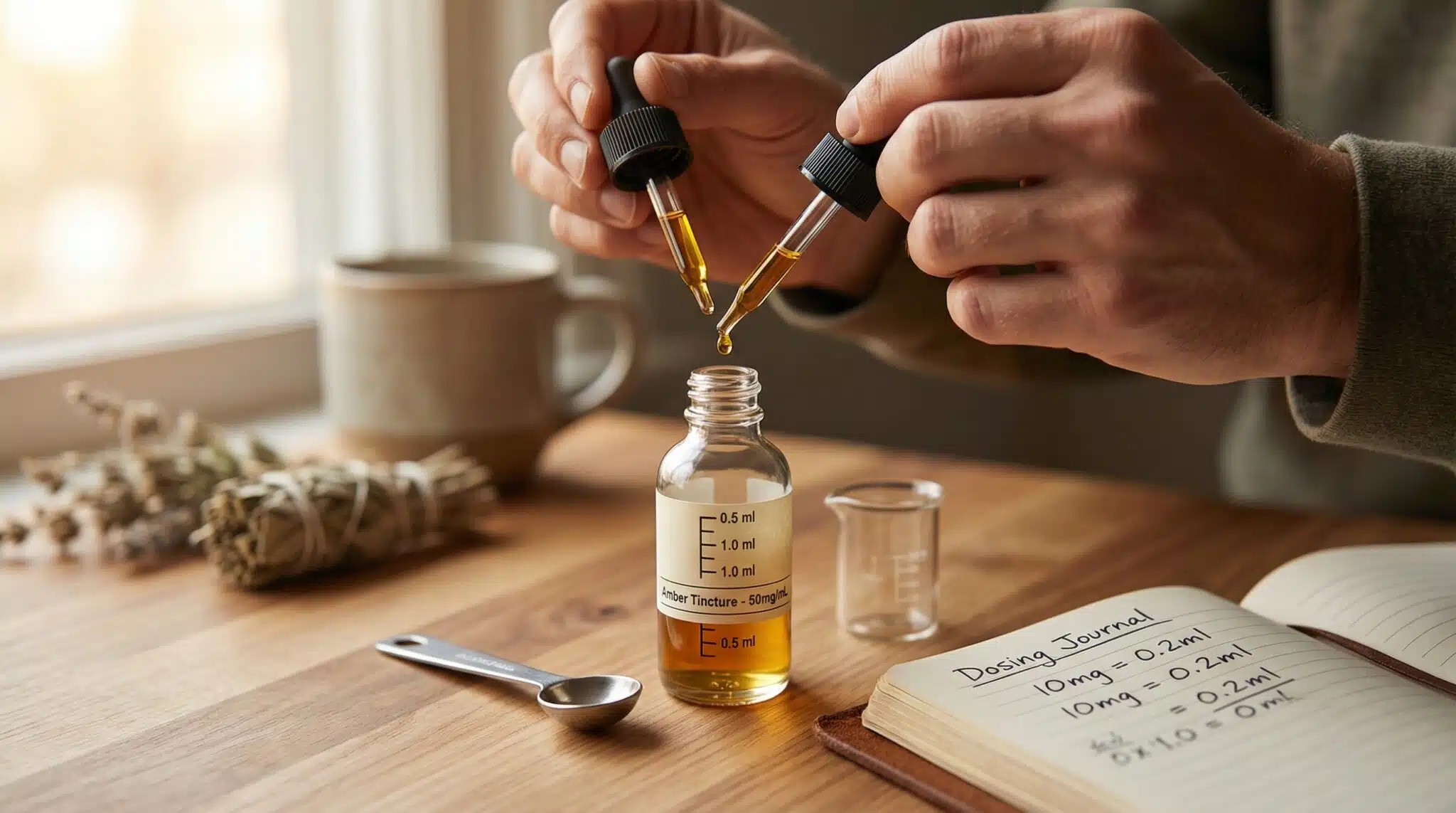
My go to dilution cheat sheet (per 1 tablespoon / 15 mL carrier oil)
- Adults (body): 2-3% → about 6-9 drops
- Face: 0.5-1% → about 1-3 drops (your face is not a testing ground)
- Kids 6-12: ~1% → about 3 drops
- Kids 2-6: 0.25-0.5% → about 1-2 drops
- Under 2: usually skip topical oils unless your pediatrician says otherwise
Carrier oils that work: jojoba, sweet almond, fractionated coconut, grapeseed, even plain olive oil in a pinch.
Patch testing (the 5 minute habit that saves you days of misery)
Put your diluted blend on a small spot (inner forearm is easy), cover with a bandage, wait 24-48 hours. If it gets itchy, red, swollen, or angry congrats, you’ve avoided a bigger problem.
Places oils should not go (ever)
Eyes, inner ears, mucous membranes, broken skin, irritated skin. Also don’t rub them near your nose/mouth and then wonder why you’re coughing like a Victorian child.
Please Don’t Drop Oils Straight Into Your Bath
This is such a common mistake, and I get it Pinterest makes it look so luxe.
But oil and water don’t mix. So those little drops? They float around and can land on you in concentrated blobs like tiny chemical landmines.
If you want oils in the bath, mix them first with something that helps disperse:
- full fat milk
- unscented liquid soap
- bath salts (mixed well)
No floaty oil slick. No surprise burning. Everybody wins.
Storage: The Unsexy Thing That Actually Matters
Essential oils oxidize with air, heat, and light, and oxidized oils are more likely to irritate your skin.
Store them:
- in dark glass
- tightly closed
- in a cool, dark spot (fridge is fine and can extend shelf life)
If an oil smells “off,” or it’s been open forever, don’t get sentimental. Toss it. Citrus oils tend to go faster (often within 6-9 months).
Who Needs to Be Extra Careful (AKA: Read This Twice)
Pregnancy & breastfeeding
Safest option, especially in the first trimester, is to avoid essential oils topically. If you use them later, stick to lower dilutions and gentler choices. And yes, there are oils commonly flagged as higher risk during pregnancy (clary sage, rosemary, juniper, cinnamon, clove, thyme, oregano basically the “spicy cabinet”).
Kids
Kids have thinner skin and different metabolism. Also: avoid peppermint and eucalyptus on kids under 6, since they can cause breathing issues in young children.
Health conditions & meds
If you have seizure disorders, bleeding disorders/take blood thinners, autoimmune issues, or chronic skin conditions like eczema/rosacea be cautious and talk to a professional if you’re using oils regularly. Also, grapefruit oil can potentially mess with the same liver enzymes as grapefruit juice. (Yes, your skin can absorb things. Bodies are rude like that.)
Gentle isn’t a vibe. It’s a strategy.
The “Hard No” Oils (Or: Please Don’t Keep These Around)
Some oils are genuinely not worth casual home use:
- Pennyroyal (seriously toxic skip it entirely)
- Wormwood & thuja (contain thujone, neurotoxic risk)
- Wintergreen & birch (methyl salicylate = concentrated aspirin, dangerous with overuse, especially if you’re on blood thinners or aspirin sensitive)
- Camphor (seizure risk in kids. Pure oil is not a DIY toy)
- Nutmeg (can be toxic/hallucinogenic in larger amounts keep very low or skip)
If you’re ever unsure, that’s not your cue to wing it. That’s your cue to pause.
When to Get Help (Not Heroic About It)
Most mild irritation can be handled at home, but these are stop and get help signs:
- trouble breathing or throat tightness
- widespread hives/rash
- severe blistering
- symptoms getting worse over hours
- any significant reaction in a child
Poison Control (US): 1-800-222-1222
They’re incredibly helpful and will tell you exactly what to do.
If oil gets in your eye
Treat it as urgent:
- Put carrier oil (or milk) in the eye area first to help lift/dilute the oil
- Then rinse with water for 15-20 minutes
- If irritation continues, get medical care
(And yes, it feels weird to put oil near your eye. But water alone won’t dissolve essential oil. Chemistry is inconvenient.)
What I Want You to Do Today (So Future You Doesn’t Have to Deal With a Rash)
Pick one oil you use regularly and do a quick safety check:
- Are you diluting it properly?
- Is it fresh and stored well?
- Is it a citrus oil you’re wearing in the sun?
- Should it be kept away from kids/pets in your house?
Small tweaks = huge difference. Essential oils like helichrysum oil for skin can be lovely, but they need boundaries. Just like people.
Now go dilute something. Your skin deserves the happily ever after version of this story.