











Which Salt Is Healthiest? (Spoiler: It’s Not the Pink One in the Fancy Bag)
Let me guess: you went to buy salt and suddenly you’re standing in the aisle holding a $9 pouch of Himalayan pink crystals like it’s going to fix your life, your skin, and your credit score.
I’ve been there. I’ve absolutely paid extra for “artisan” salt and then used it to… boil pasta. (Truly a financial crime.)
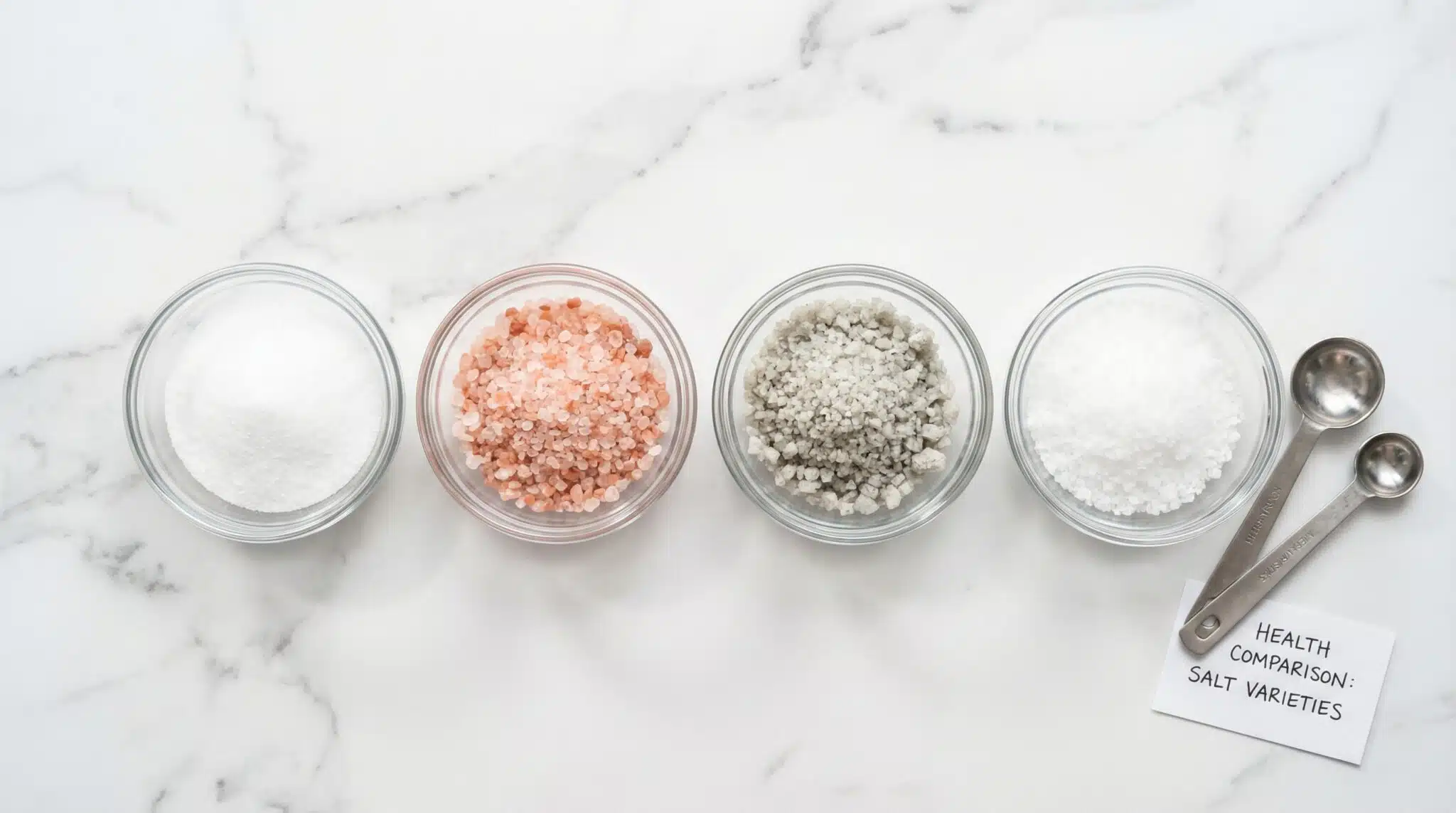
Here’s the annoying but free truth: most salt is basically the same thing. Salt is 95-99% sodium chloride, and your body doesn’t care if it came from a mountain, the sea, or a tiny jar with a minimalist label.
But! There are a couple of things that actually matter, and they’re way less glamorous than marketing wants you to believe:
- Iodine
- How much salt you’re accidentally using because of crystal size
- Whether you care about additives/contaminants
Let’s do this.
The only “healthiest salt” question that really matters: Are you getting iodine?
If you take nothing else from this post, take this:
Iodized salt is the only one bringing something useful to the party.
Iodine is important for thyroid function, and a lot of people don’t get enough unless it’s intentionally included somewhere (hello, modern diets). Iodized table salt typically has about 45-77 mcg of iodine per serving, which can be a solid chunk of what you need in a day.
Meanwhile, most of the trendy salts sea salt, Himalayan pink, kosher, Celtic grey have basically no iodine. “Trace amounts” is just a fancy way of saying “don’t count on it.”
You might want iodized salt if you…
- Don’t eat seafood at least a couple times a week
- Eat mostly plant based (vegan/vegetarian)
- Don’t do much dairy or eggs
- Are pregnant or breastfeeding (needs go up talk to your clinician here, please)
If you do eat iodine rich foods regularly (seafood, dairy, eggs, seaweed), you can usually be chill about it. Also check your multivitamin some include iodine, some weirdly don’t.
And if you’ve got a thyroid condition or you’re on a medically advised low iodine diet, follow your clinician’s guidance, not a chatty person on the internet who once used Maldon on scrambled eggs like a celebrity.
The sneaky reason your salt might be “unhealthy”: you’re using more than you think
By weight, salt is salt. But in real life, most of us measure with spoons or let’s be honest our fingers while standing over the stove pretending we’re on a cooking show.
Crystal size changes how much sodium fits in a teaspoon. Big, flaky crystals take up more space with less actual salt packed in. Fine table salt packs in tighter, like it’s trying to win Tetris.
Here’s the headline that matters:
- Table salt is dense. A little scoop can be a lot of sodium.
- Kosher salt can be much lighter per spoonful and the brand matters a ton.
If you want a rough idea (because labels vary), a ¼ teaspoon is around:
- Table salt: ~590 mg sodium
- Morton coarse kosher: ~480 mg
- Diamond Crystal kosher: ~280 mg (it’s super airy and flaky)
So if a recipe says “1 tsp kosher salt” and you use table salt instead… surprise, you may have just made your soup aggressively salty. Like “why does this taste like the ocean punched me?” salty.
My personal rule: if baking, I use table salt because it’s consistent and most recipes assume it. For cooking, I like kosher because it’s easier to pinch and control (and I enjoy feeling like I know what I’m doing).
“But my salt is cleaner/more natural!” (Let’s talk about what’s actually in the crystals.)
I know, I know “less refined” sounds healthier. Like how “rustic” makes a slightly lopsided cake seem intentional.
But here’s the thing: less refined doesn’t automatically mean purer. Some studies have found variation in contaminants (including heavy metals) in certain specialty salts depending on where they’re mined. Sea salt can also come with the delightful modern bonus of microplastics (because of course it can).
Meanwhile, table salt is heavily refined, which removes more impurities. It often includes anti-caking agents so it pours instead of turning into a sad salt brick in your shaker. These additives are considered safe, but if you’d rather avoid them, many kosher salts are just… salt.
So it’s not that specialty salts are “bad.” It’s just that they’re not automatically some cleaner, superior health product because they’re pink and expensive.
The “trace minerals” thing is mostly a fairy tale (sorry)
The “84 trace minerals” claim about Himalayan salt is one of those statements that sounds impressive until you do the math.
Yes, there are tiny amounts of minerals in some specialty salts. But you’d have to eat a wildly unhealthy amount of salt to get meaningful nutrition from them like multiple teaspoons a day. And at that point, congratulations, you’ve consumed enough sodium to make your blood pressure write a complaint letter.
If you want minerals, get them from actual food. Spinach. Beans. Dairy. Nuts. Literally anything besides “six teaspoons of salt.”
The pink color is mostly from iron oxide, which is cool aesthetically (I love it on a finished dish), but it’s not a multivitamin and how salt gets its color does not change that.
Okay, so what salt should you actually buy?
Here’s what I’d tell my best friend who just wants to cook dinner and not accidentally join a salt cult.
1) For everyday life: iodized table salt
It’s cheap, consistent, works in baking, and covers iodine for a lot of people. If you only want one salt in your house, this is the practical, grown up choice.
2) For cooking when you like to pinch and season: kosher salt
Great texture, easy control, nice for meat and roasting veggies.
Just remember: Morton and Diamond Crystal are not interchangeable by volume. If you switch brands and your food suddenly tastes “off,” you’re not losing your mind.
3) For making food feel fancy at the end: finishing salt
Maldon, fleur de sel, flaky sea salt this is where priciest gourmet salts shine. Not for health. For texture. For that little crunch on chocolate chip cookies or roasted potatoes that makes you feel like you should be charging $28 a plate.
Himalayan pink and Celtic grey fall into this category for me: fun, pretty, vibe forward. Not necessary.
What about salt substitutes? (Potassium chloride blends)
These can be helpful if you’re trying to reduce sodium, because they replace some sodium with potassium.
BUT and I’m saying this gently because this is important if you have kidney disease, diabetes, or you take certain meds (like ACE inhibitors or potassium sparing diuretics such as spironolactone), you should talk to your doctor first. Too much potassium can be dangerous for some people.
If you’re generally healthy, they can be a decent middle ground option.
If you really want to cut sodium, don’t start with your salt shaker
Here’s the plot twist: most of your daily sodium (around 75%) comes from processed and restaurant foods, not the salt you add at home.
One fast food sandwich can easily clock 1,200 mg of sodium. Meanwhile, salting a home cooked meal usually adds way less than people assume plus you can control it.
So yes, pick a salt that works for you. But if you’re trying to make a real dent in sodium, focus on:
- fewer packaged/processed meals
- scanning labels (the sodium numbers will humble you)
- cooking at home more often
My quick, no drama salt checklist
If you want the simple version:
- Need an easy default? Buy iodized table salt.
- Prefer kosher salt? Cool just make sure you’re getting iodine elsewhere (food or a supplement if advised).
- Love fancy salts? Keep one for finishing. Sprinkle like a queen. Don’t pretend it’s medicine.
- Trying to cut sodium? Look at processed foods first. That’s where the real salt party is happening.
And if you currently own three kinds of salt and still feel confused… same. But now you’re confused with purpose.