







A beard can change how you look and feel, but it only looks its best when it’s properly cared for. If you’re wondering how to maintain a beard, the answer usually comes down to a few consistent habits rather than complicated routines.
I’ve worked with natural wellness and daily care practices long enough to see how small grooming and lifestyle choices can shape overall hair health.
When you give attention to both the beard and the skin underneath it, the results become noticeable quickly.
I’ll walk you through a practical beard care routine, essential grooming products, and simple maintenance steps that fit into everyday life. You’ll also learn how diet, hydration, and lifestyle habits support healthier beard growth over time.
Understanding Proper Beard Maintenance
Maintaining a beard involves two main areas: hair care and grooming.
Hair care focuses on keeping the beard clean, hydrated, and comfortable. This includes washing the beard, applying conditioning products, and protecting the skin underneath from dryness.
Grooming focuses on shaping and controlling the beard’s appearance. Trimming, defining the neckline, and brushing the beard help maintain a clean and intentional look.
When both parts are handled consistently, the beard stays healthy and easier to manage. Ignoring either side often leads to issues like itchiness, uneven growth, or an untidy shape.
What to Expect in the First 4–6 Weeks
If you’re just starting out, resist the urge to trim or shape your beard for the first four to six weeks.
Hair grows unevenly at first, and committing to a shape too early often results in a patchy, unbalanced look.
Use this phase to start applying beard oil daily and establish your washing routine. The awkward phase passes — and the foundation you build during it matters.
The Products Worth Having in Your Routine
The right products do most of the heavy lifting in any beard care routine. Getting this lineup right early saves a lot of trial and error down the road.
1. Beard Wash and Conditioner
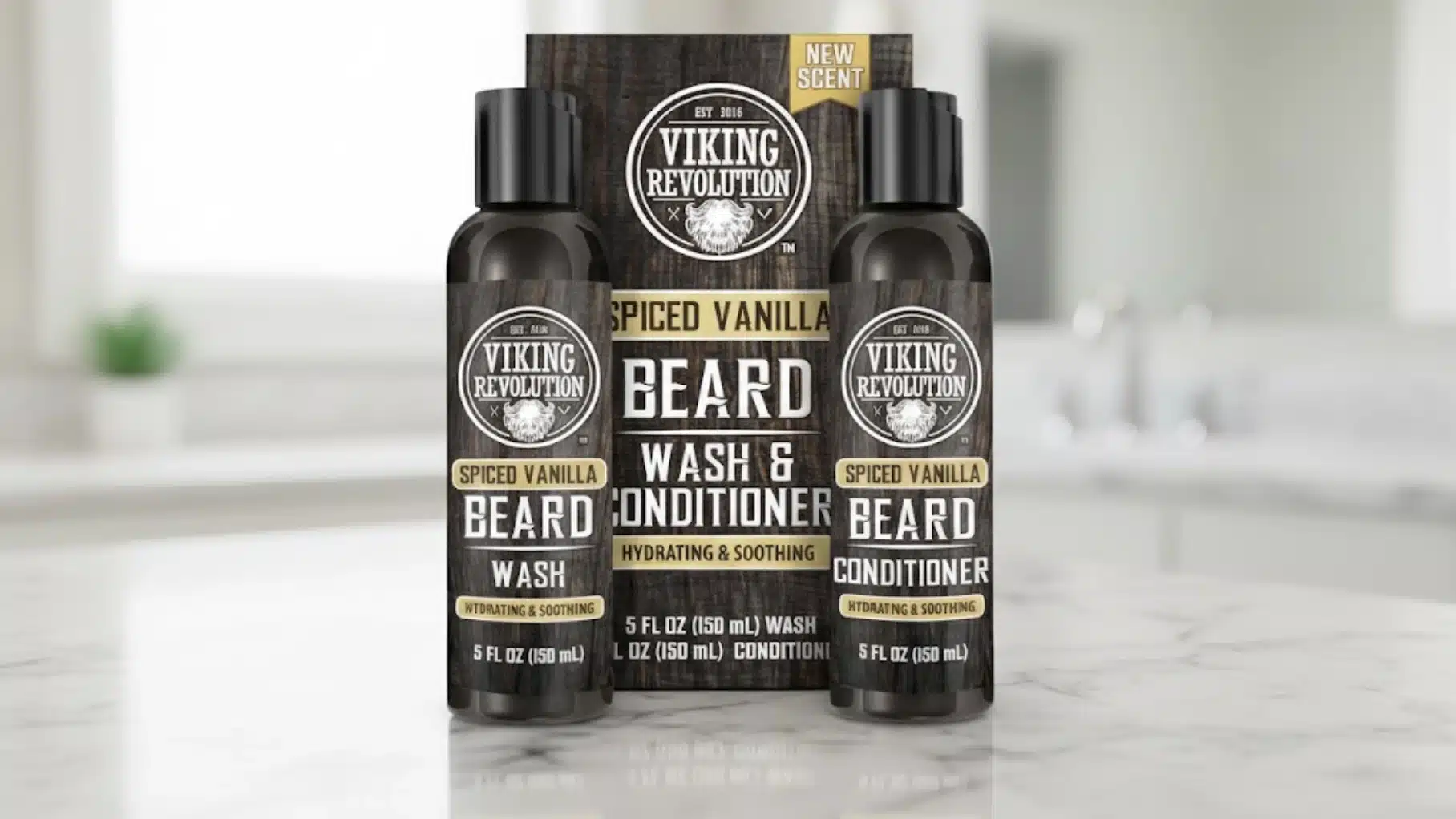
Many men use regular shampoo on their beard, which often causes dryness and irritation. A beard wash solves this problem by cleaning facial hair without removing essential oils.
Benefits include:
- Gentle cleansing for facial hair
- Hydration for the skin underneath
- Softer and more manageable beard hair
Products such as Viking Revolution Beard Shampoo and Conditioner contain moisturizing oils like argan and jojoba that help keep the beard clean and comfortable.
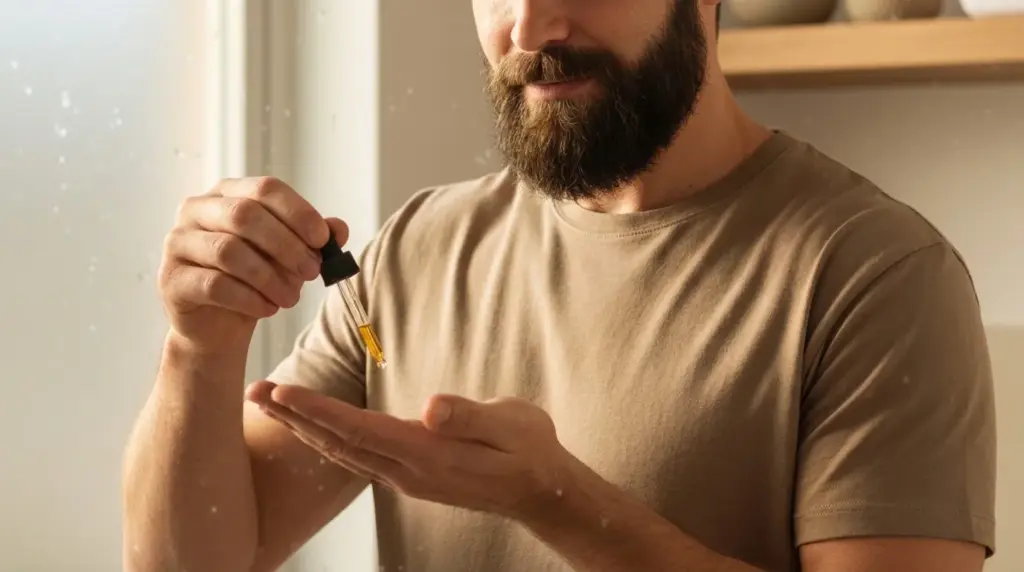
2. Beard Oil
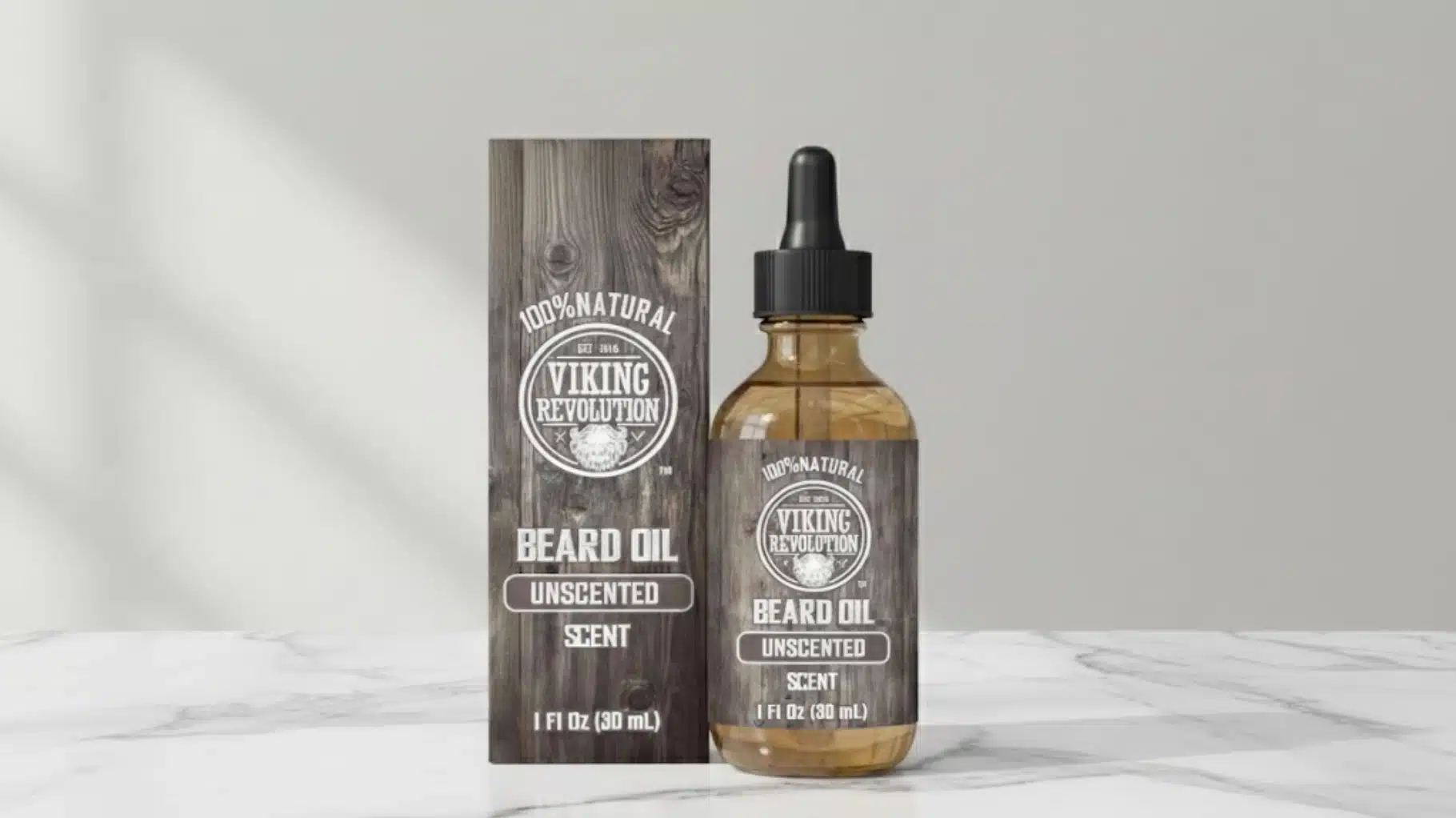
Many men notice dryness, itchiness, or rough beard hair as their beard grows. Beard oil helps solve this by replacing the natural oils that are often lost through washing and daily exposure to wind, sun, and dry air.
Benefits include:
- Hydrates beard hair and the skin underneath
- Helps reduce beard itch and dryness
- Softens coarse or rough facial hair
- Improves overall beard appearance and shine
Products such as Viking Revolution Sandalwood Beard Oil use moisturizing oils like argan and jojoba to hydrate both the beard and the skin beneath it.
Skin type note: If you have oily skin or are acne-prone, choose a lightweight, non-comedogenic beard oil and avoid heavy oil-based formulas. If your skin runs dry, apply oil daily without skipping.
3. Beard Balm or Butter
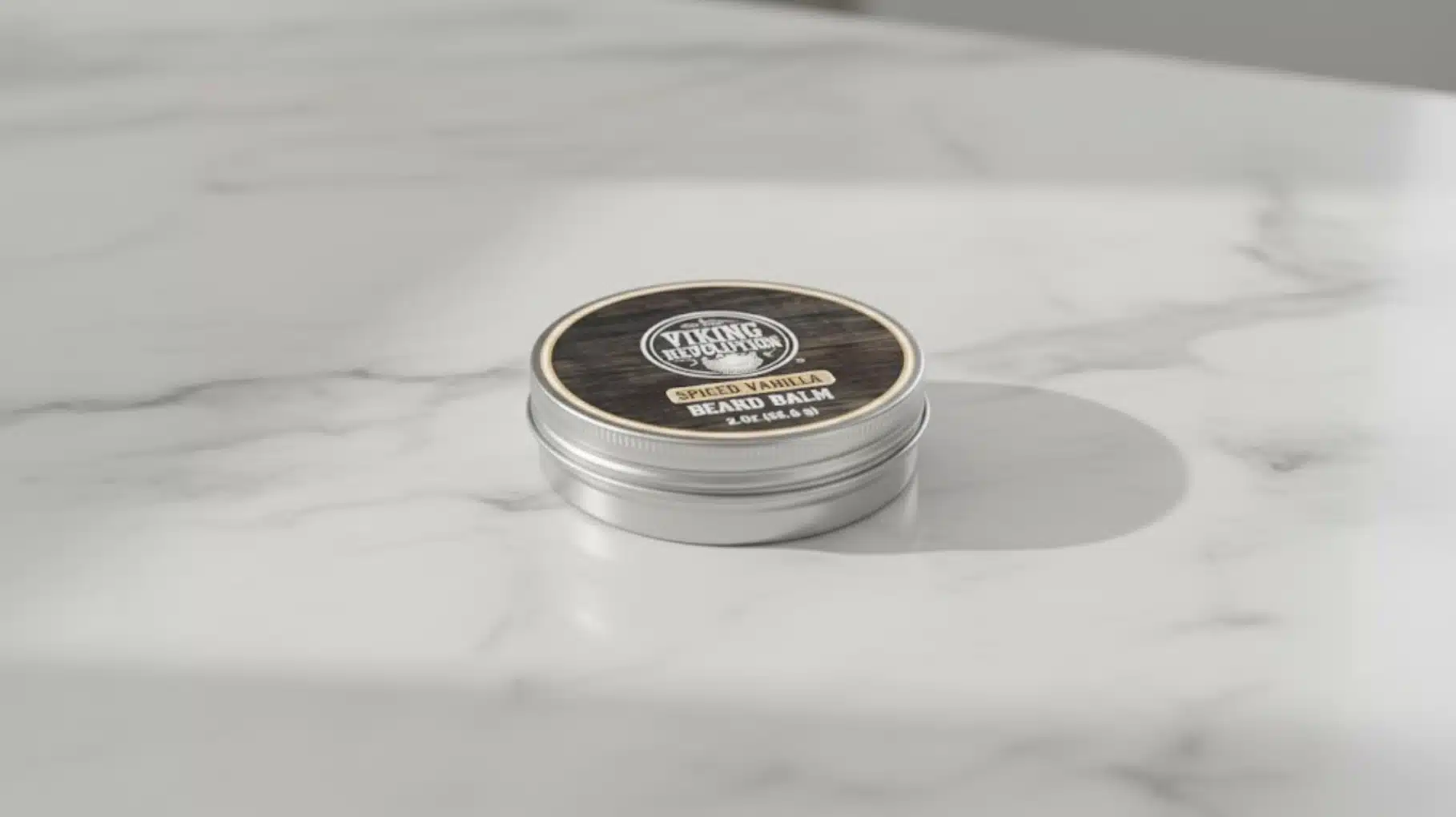
Longer beards often develop stray hairs and uneven texture that make styling difficult. Beard balm or beard butter helps control flyaways while also conditioning the beard for a smoother look.
Benefits include:
- Provides light hold for shaping the beard
- Helps manage stray or uneven hairs
- Conditions beard hair to keep it softer
- Makes styling easier throughout the day
Products such as Viking Revolution Spiced Vanilla Beard Balm combine moisturizing oils with light styling hold to help keep facial hair controlled and well-groomed
4. Beard Brushes and Scissors
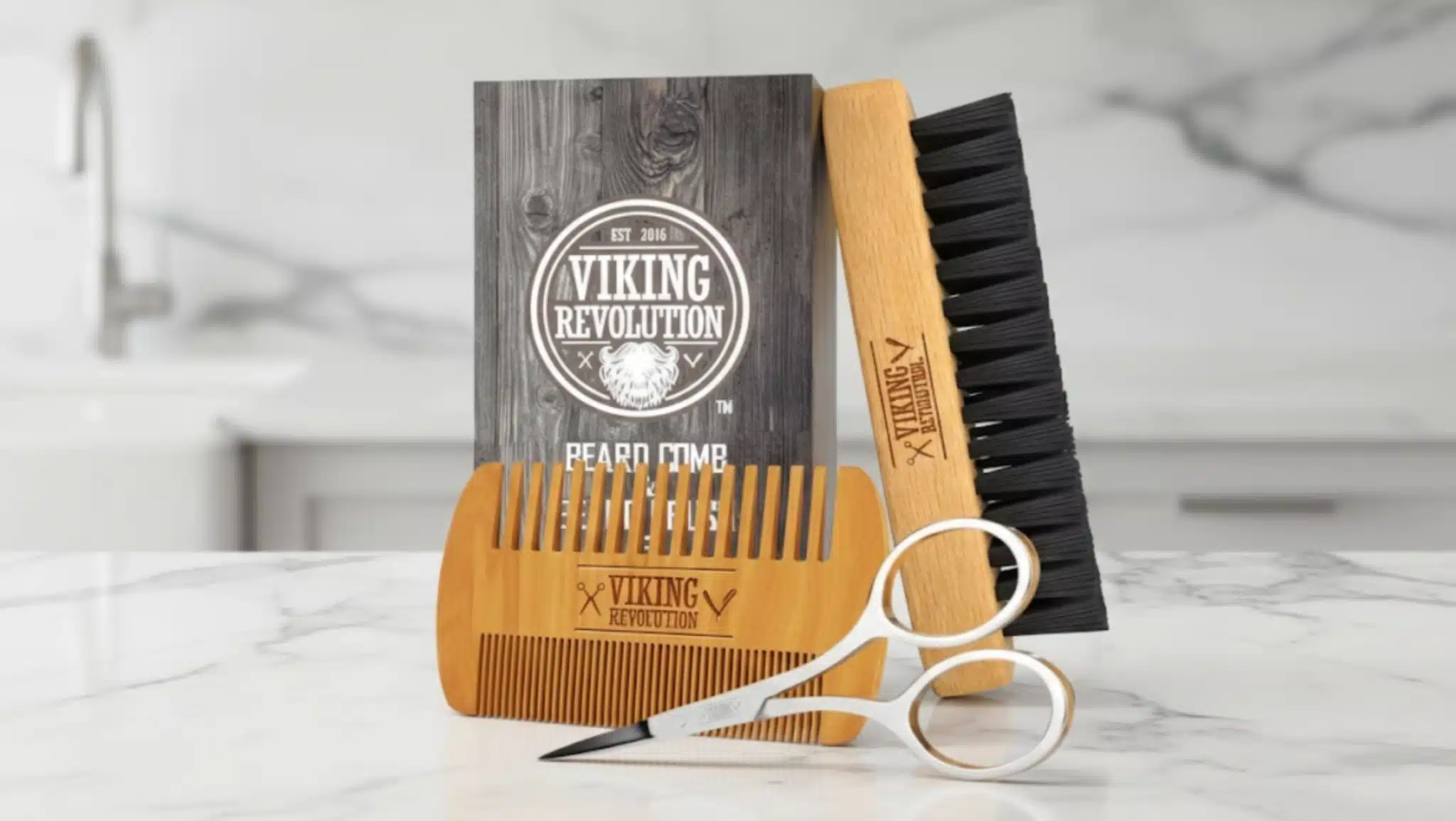
Without brushing, beard hair can grow in different directions and become tangled. Using a beard brush or comb helps distribute oils evenly while training the hair to grow in a consistent direction.
Benefits include:
- Spreads beard oil from root to tip
- Helps reduce tangles and uneven growth
- Stimulates the skin beneath the beard
- Improves overall beard shape and neatness
Tools like the Viking Revolution Natural Boar Bristle Beard Brush help distribute oil while gently exfoliating the skin underneath the beard.
Brush tip: Use a wide-tooth comb for straight or long beards and a boar bristle brush for curly or thick beards. These aren’t interchangeable — the wrong tool can cause frizz instead of fixing it.
These core grooming tools cover the main needs of beard care: cleansing, hydration, styling, and maintenance. Even using two or three of these products consistently can noticeably improve how your beard looks and feels.
Essential Beard Care Routine (Daily & Weekly)
A consistent routine keeps your beard clean, hydrated, and well-shaped. Daily care protects the hair and skin while weekly habits maintain structure.
| Routine Step | What to Do | Frequency |
|---|---|---|
| Beard Wash | Clean beard using a beard-specific cleanser with lukewarm water to remove dirt and oil buildup | 2–3 times per week |
| Beard Oil | Apply a few drops and massage into the beard and skin underneath to maintain moisture | Daily |
| Brush or Comb | Use a beard brush or comb to distribute oil and align hair growth | Daily |
| Beard Balm | Apply balm to manage flyaways and help shape the beard | As needed |
| Trimming | Trim neckline, cheek line, and stray hairs to maintain a clean beard shape | Every 1–2 weeks |
Following these steps regularly helps keep your beard healthy, softer, and easier to manage while maintaining a clean, well-groomed appearance.
Beard Maintenance by Beard Length
Not all beards need the same care. Here’s what changes based on how long your beard is:
| Beard Type | Key Focus | Product Priority |
|---|---|---|
| Stubble (under 1 cm) | Moisturize skin — hair is short but skin dries fast | Beard oil daily, gentle face wash |
| Short beard (1–3 cm) | Define shape, control itch, build washing habit | Beard wash + oil + soft brush |
| Medium beard (3–6 cm) | Manage texture, prevent tangles, define neckline | Oil + balm + comb daily |
| Long beard (6 cm+) | Deep moisture, flyaway control, regular trimming | More oil (up to 7 drops), butter, boar bristle brush |
Simple Step-by-Step Beard Grooming Routine for Daily Maintenance
Following a consistent grooming routine helps keep your beard clean, healthy, and well-shaped. These simple steps take only a few minutes but make a noticeable difference in how your beard looks and feels throughout the day.
Step 1: Wash Your Beard
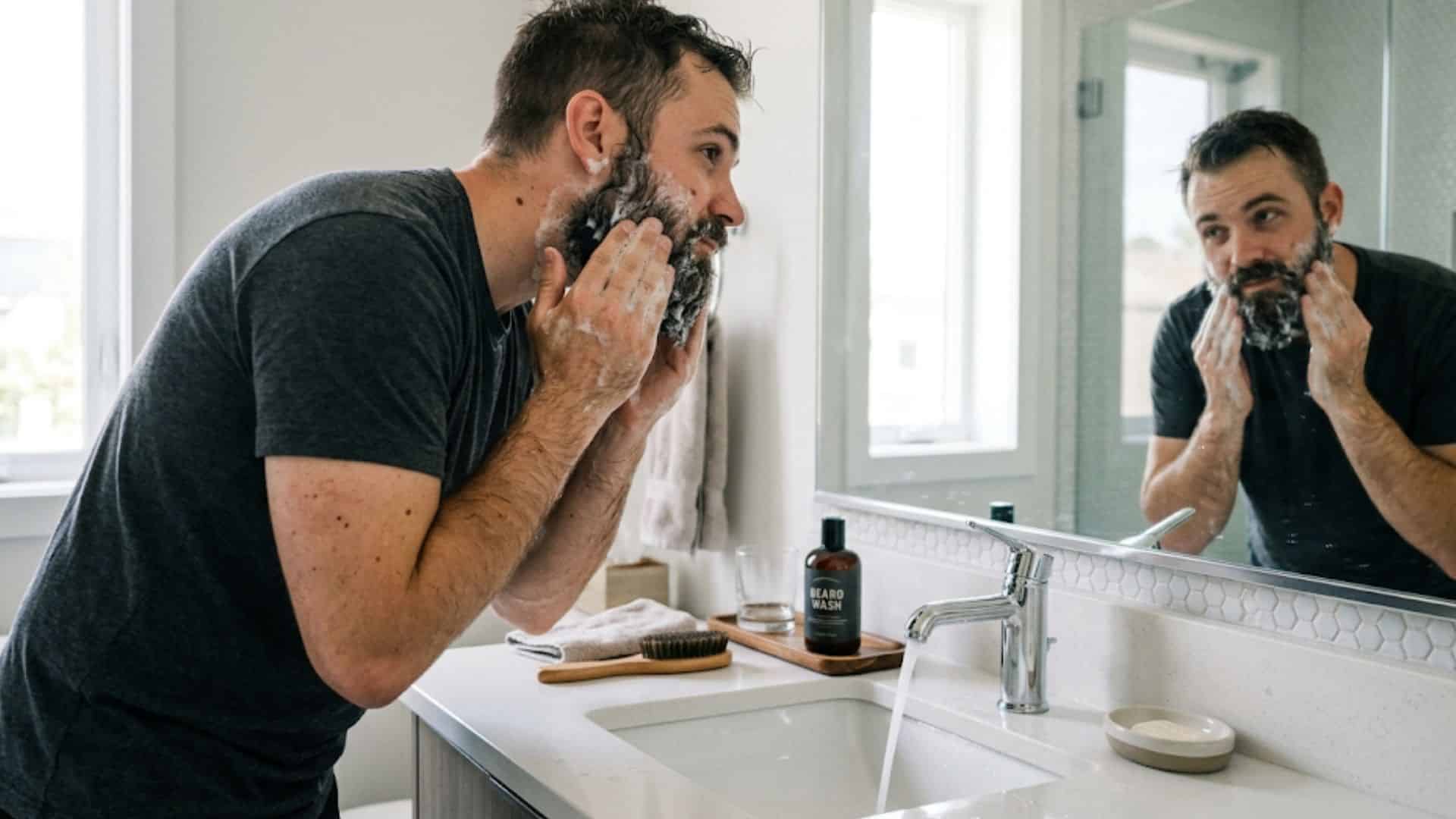
Start your grooming routine by washing your beard with a beard-specific cleanser and lukewarm water. This helps remove dirt, excess oil, and product buildup that collects throughout the day.
Regular hair shampoo can dry out facial hair, so a gentle beard wash is usually the better option. Washing two or three times per week is enough for most beards. After washing, rinse thoroughly to prevent residue from staying in the hair.
Step 2: Dry Gently With a Towel

After washing, gently pat your beard dry with a clean towel. Avoid rubbing the beard aggressively because friction can cause frizz and damage the hair. Instead, press the towel lightly against the beard to absorb excess water.
If your beard is longer, allow it to air dry for a few minutes before applying grooming products. Keeping the beard slightly damp can help oils and conditioners absorb more effectively.
Step 3: Apply Beard Oil
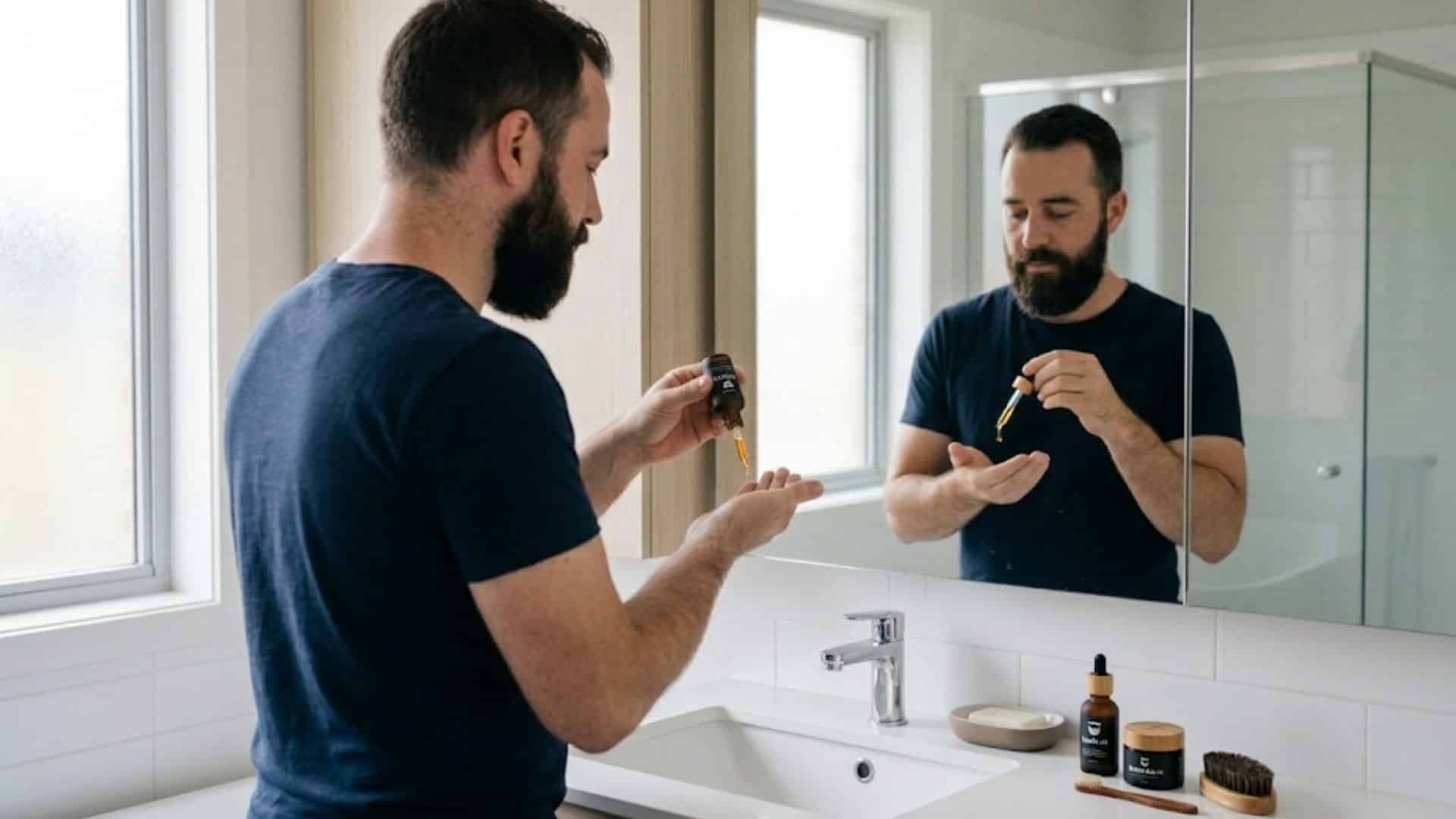
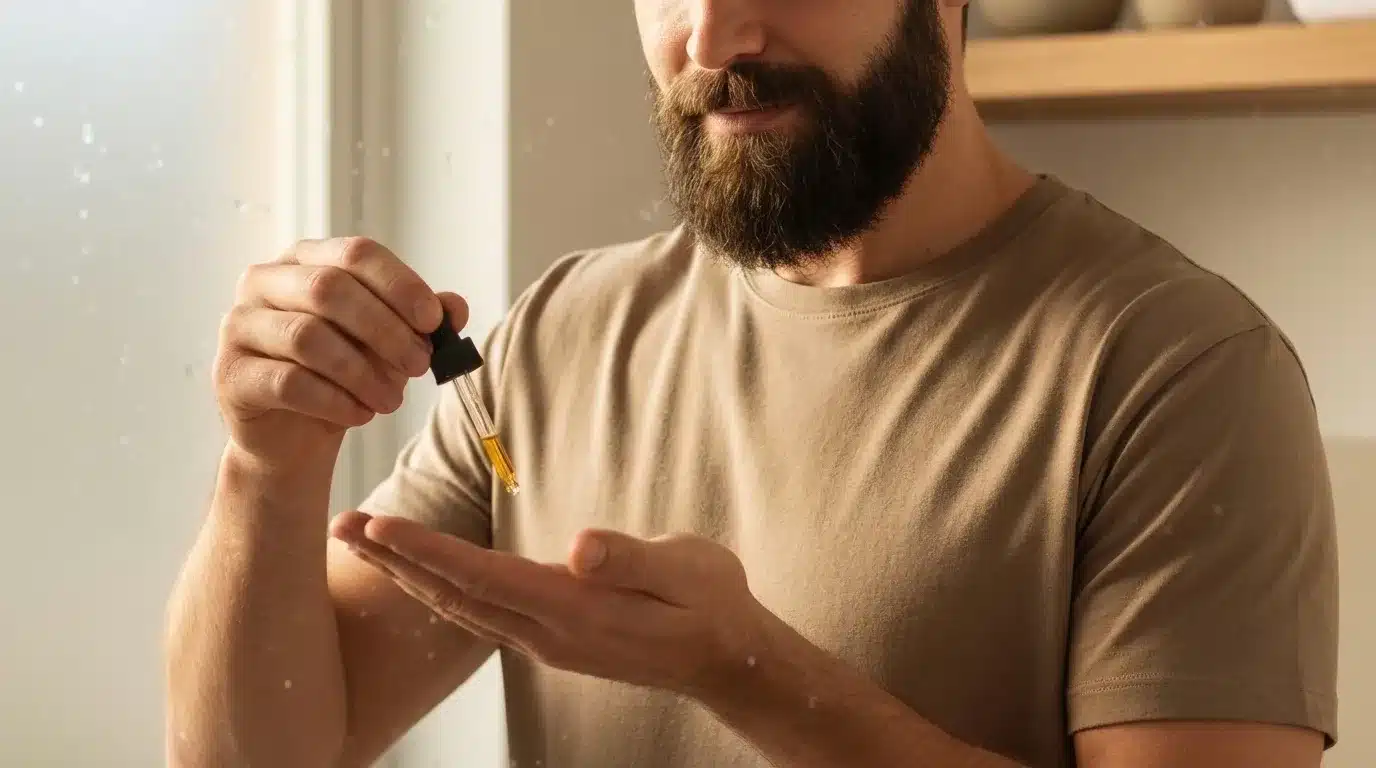
Once the beard is mostly dry, apply a few drops of beard oil to your palms and massage it into the beard. Focus first on the skin beneath the beard because this area often becomes dry. Then work the oil through the beard hair from root to tip.
Beard oil helps keep the hair softer and improves overall manageability. Consistent use can also reduce itchiness and support healthier beard growth.
Step 4: Comb to Distribute Product
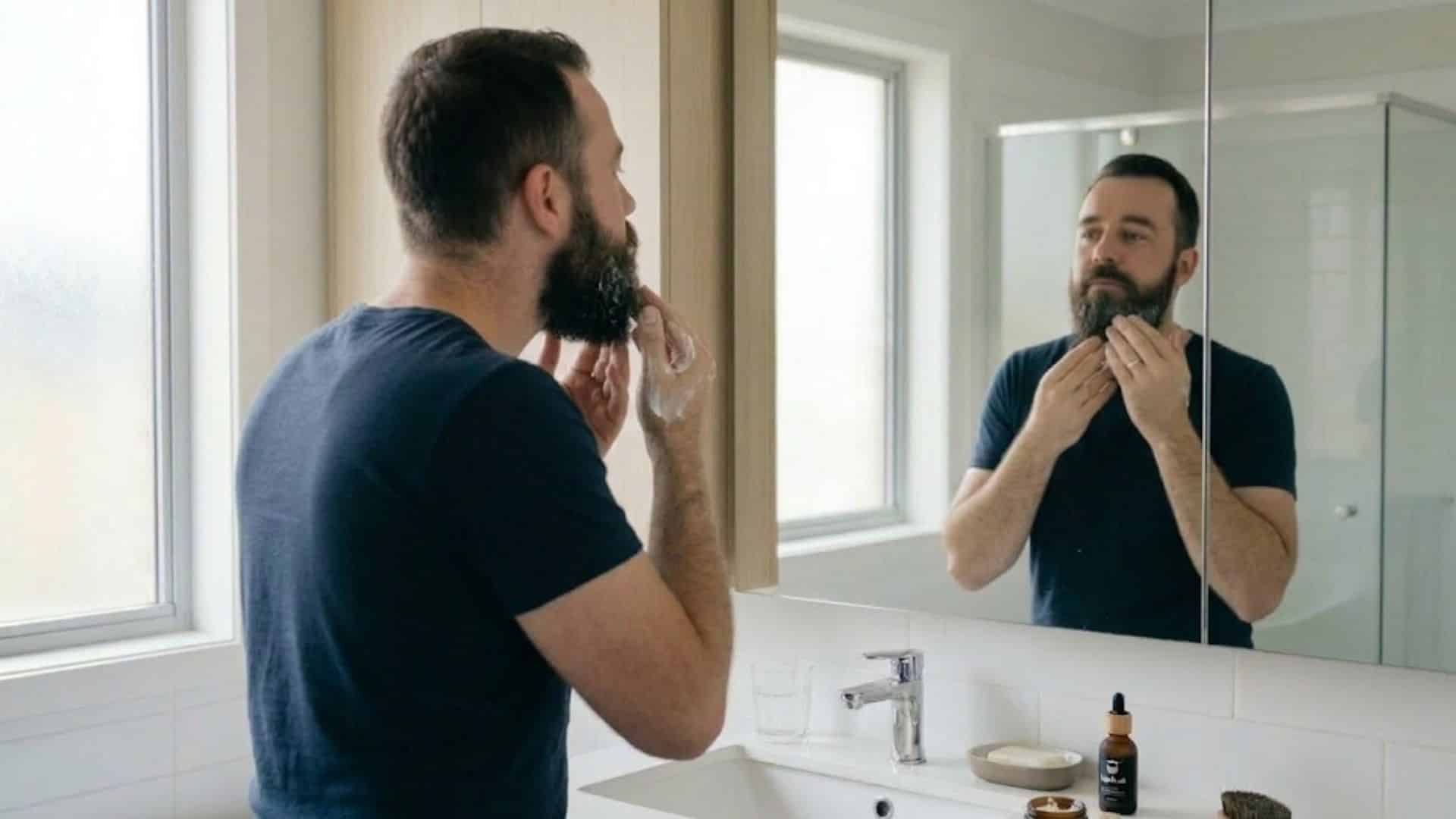
After applying beard oil, use a comb or beard brush to spread the oil evenly throughout the beard. This step helps coat every strand of hair while also guiding the beard to grow in a consistent direction.
Brushing regularly reduces tangles and improves the overall shape of the beard. It also helps train the beard over time so it becomes easier to style and maintain.
Step 5: Trim Stray Hairs
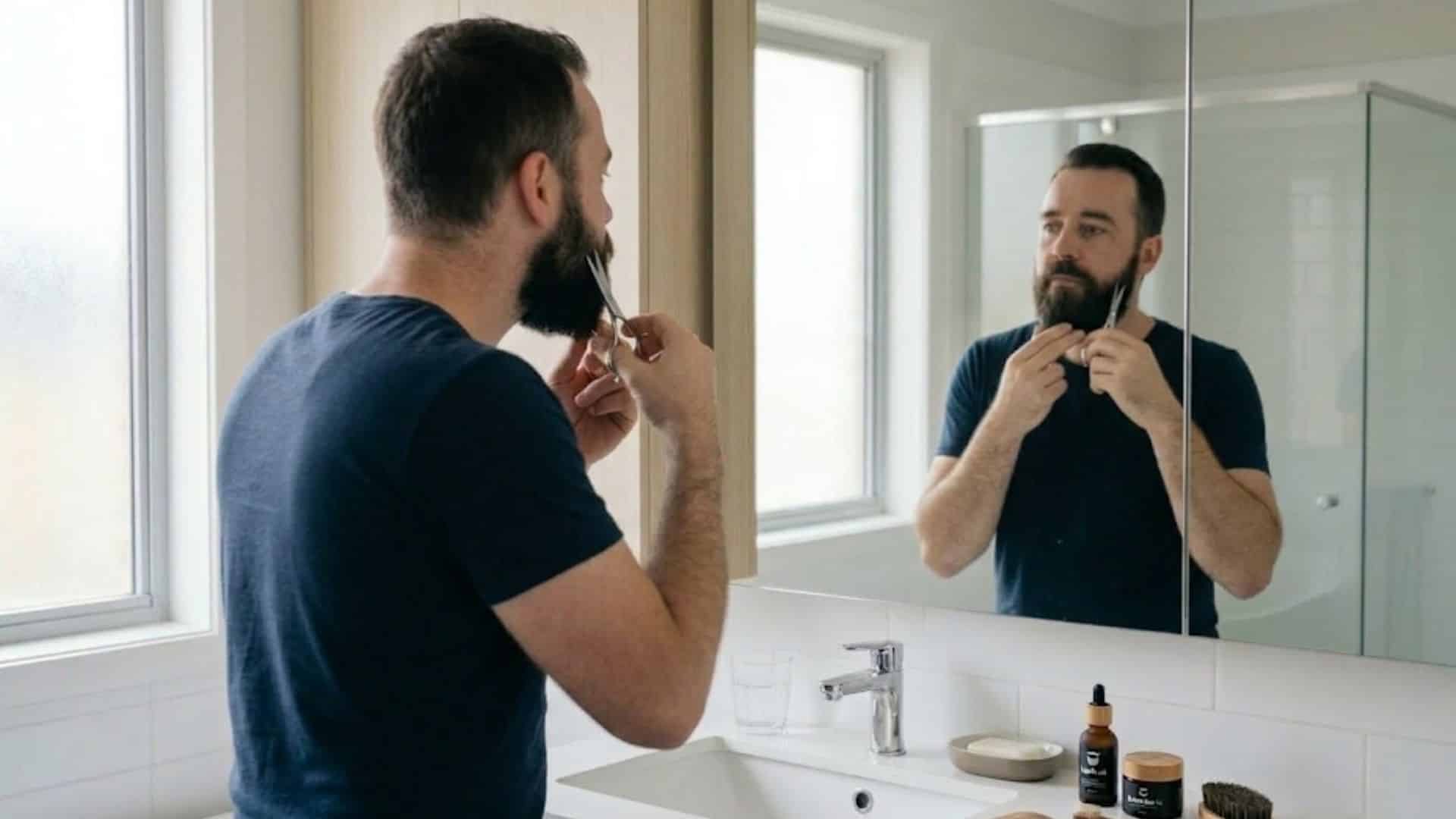
Even a well-grown beard can develop uneven areas or stray hairs. Use small grooming scissors or a precision trimmer to remove hairs that stick out beyond the natural beard shape.
Light trimming keeps the beard looking neat without removing too much length. Checking the beard in natural lighting can make it easier to spot uneven areas that may need small adjustments.
Always trim a dry beard. Hair sits longer when wet, so trimming a damp beard often means you cut off more length than intended.
Step 5b: Define Your Neckline
The neckline is where most men make their biggest grooming error. A good rule of thumb: place two fingers above your Adam’s apple — that’s your neckline.
Everything below it gets trimmed or shaved clean. Setting it too high is the most common mistake; it visually shrinks the beard and makes it look rigid and unnatural.
If you’re unsure, visit a barber once to have the line set professionally, then maintain it at home from there.
Step 6: Style the Beard
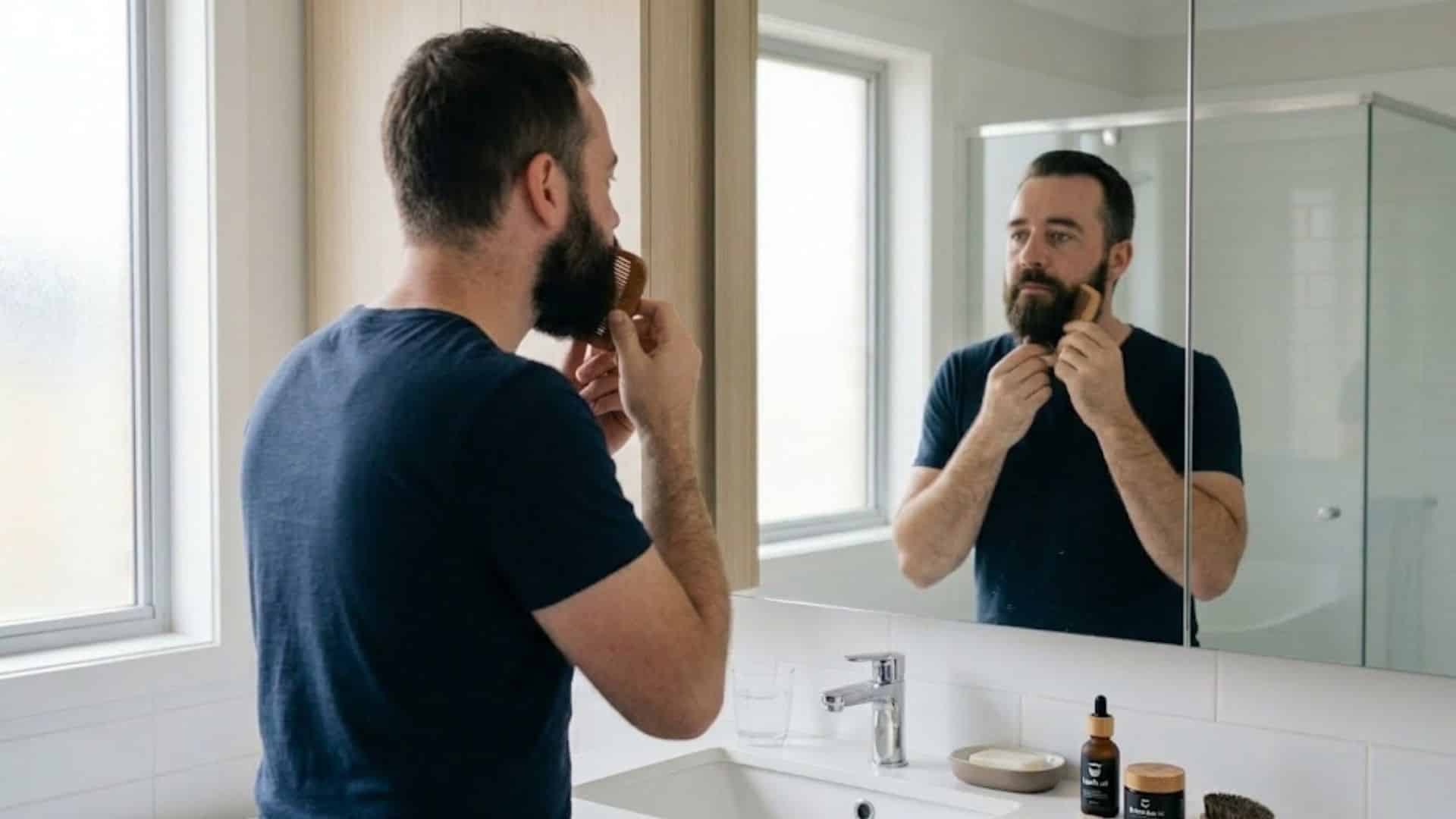
The final step is shaping the beard to look intentional and well-groomed. You can use beard balm or butter to control flyaways and add light hold.
Warm a small amount between your hands and work it through the beard while shaping it with your fingers or a brush. This step helps the beard maintain its structure throughout the day while keeping the hair softer and easier to manage.
Common Problems and What Actually Fixes Them
Most beard problems stem from two root causes: dryness and neglect. Identifying the issue you’re dealing with makes the fix straightforward rather than a guessing game. Here are some fixes to the common problems:
- Beard itch: Caused by dry skin. Daily beard oil and correct washing frequency (2–3x per week), clear it up within one to two weeks
- Beardruff: Dry, flaking skin beneath the beard. Weekly exfoliation and a moisturizing beard wash treat the source, not just the symptom
- Rough, coarse hair: Regular conditioning and beard butter soften texture over time; expect a few weeks of consistent use before results show
- Patchy growth: Largely genetic. Proper grooming, consistent moisture, and patience are the practical answers; minoxidil is sometimes discussed, but that call belongs with a dermatologist
Small, consistent fixes tend to work better than product overhauls. Most of these issues respond well within two to three weeks once the right habit is in place.
How Diet and Lifestyle Affect Beard Health
Beard health depends not only on grooming habits but also on everyday lifestyle choices. A balanced diet that provides enough protein and essential vitamins supports healthy hair growth because beard hair is primarily made of protein.
Nutrients such as biotin, zinc, and B vitamins help strengthen hair and support the follicles that produce beard hair.
Physical activity also plays a role — regular exercise improves blood circulation, which supports hair follicle health. According to research, resistance training in particular has been associated with higher testosterone levels, which can positively influence beard density and growth rate.
Hydration also plays an important role. Drinking enough water helps maintain moisture in both the skin and beard hair, reducing dryness and improving overall hair texture.
Lifestyle habits such as adequate sleep and stress management are equally important. Consistent sleep helps regulate natural hair growth cycles, while high stress levels may disrupt them. Maintaining healthy daily habits supports stronger, healthier beard growth over time.
Mistakes That Quietly Ruin a Good Beard
Most beard problems are not product problems; they are habit problems. Using regular shampoo strips the natural oils from both hair and skin, which quietly causes most of the dryness men blame on other things.
Trimming a wet beard is another one; hair sits longer when damp, so the actual cut ends up shorter than planned.
Setting the neckline too high is arguably the most common grooming error in my experience; it visually shrinks the beard and makes it look stiff.
Skipping daily beard oil, then wondering why the itching returns, is a cycle that fixes itself the moment the habit sticks.
And ignoring the skin underneath, beardruff, clogged pores, and persistent dryness all start there, not at the hair. Fixing two or three of these shifts the results faster than any new product would.
One more that gets overlooked: never cleaning your grooming tools. Brushes and combs accumulate dead skin cells, product residue, and bacteria over time. Rinse them weekly, let them air dry completely, and replace blades when they dull — your beard (and skin) will thank you.
Final Thoughts
Maintaining your beard becomes easier when you follow a few consistent habits instead of complicated routines.
I explained how to maintain a beard through simple steps like regular washing, applying beard oil, brushing, and light trimming. These habits help keep your beard clean, softer, and easier to manage.
You also learned how common issues such as dryness, beard itch, and beardruff can improve with small adjustments to your grooming routine.
Daily lifestyle choices like balanced nutrition, hydration, and proper sleep also support healthier beard growth. Start applying these beard care steps today and build your routine gradually.
If this guide on how to maintain a beard helped you, share your beard care tips or experience in the comments!