





That “metabolic age” number can look very official like your smart scale went to medical school, graduated top of its class, and now feels entitled to judge your life choices before you’ve even had coffee.
But here’s the truth: metabolic age is built on estimates… stacked on top of more estimates… wearing a tiny lab coat and holding a clipboard. And even the better BMR formulas can be off by 200-400 calories a day. So if your scale is telling you your metabolism is 73 years old and bitter about it, take a breath. Your body isn’t broken. The math is just… confident.
Let’s talk about what metabolic age actually is, why it bounces around like a toddler on a sugar high, and how to use it without spiraling.
What “Metabolic Age” Actually Means (Spoiler: It’s Just BMR With a Birthday Filter)
Metabolic age is basically your BMR (basal metabolic rate) in a trench coat pretending to be a birthday.
Your BMR is the amount of energy your body uses just to exist breathing, pumping blood, keeping the lights on. Metabolic age takes an estimated BMR and compares it to average BMRs for different age groups rather than biological age markers. If your estimated BMR matches the “average” 35 year old and you’re 45, it spits out: metabolic age = 35.
The idea isn’t completely nonsense. Metabolism often slows with age mostly because people lose muscle and move less (not because birthdays are magic). If you’ve kept muscle, stay active, and have decent genetics, your BMR might genuinely look “younger.”
The problem is the tool: most consumer devices don’t measure your metabolism. They guess.
The Math Behind the Curtain (a.k.a. “Vintage Formulas Doing Their Best”)
Most metabolic age calculators whether they’re on a website, a smart scale, or that gym machine that looks like it survived the early 2000s use old school equations to estimate BMR.
Common ones include:
- Harris-Benedict (originally from 1919, later revised): height, weight, age, sex
- Mifflin-St Jeor (1990): similar inputs, generally considered more accurate for modern populations
- Katch-McArdle: uses body fat percentage (which can help… if the body fat number is even remotely accurate)
Then the calculator compares your estimated BMR to age group averages and assigns you a “metabolic age.”
So no, your scale is not reading your cells’ diaries. It’s doing math based on population averages and whatever info you gave it (or whatever it guessed).
How Accurate Is Metabolic Age, Really?
In a lab, resting metabolic rate can be measured with indirect calorimetry you literally breathe into a device and it analyzes oxygen and carbon dioxide to estimate calorie burn. It’s not glamorous (you’re basically getting graded on breathing), but it’s actual data.
At home and consumer tools? They use equations and, often, bioelectrical impedance (that little current that runs through your feet). Under ideal conditions, those estimates can still be off by 10-20%. And then metabolic age is another step removed from that.
It’s like making a photocopy of a photocopy and then being shocked the final image is blurry.
When lab testing might be worth it: if you’re making big nutrition changes, dealing with a medical condition that affects metabolism, or training seriously for sport. Paying for clinical RMR testing can give you a real baseline instead of a fancy guess.
Otherwise? Treat metabolic age like a trend tool for health, not a diagnosis.
Why Your Metabolic Age Changes Overnight (and No, Your Body Didn’t Age 6 Years While You Slept)
If your metabolic age jumps around, you’re not imagining things. Your scale isn’t possessed. It’s just trying to estimate body composition and calorie burn while your body is doing normal human body chaos.
A few common reasons your number bounces:
1) Hydration changes the whole game
Bioelectrical impedance relies on water conductivity. More water can make you read “leaner.” Less water can make you read “fatter.”
So yes, you can basically “age” on the scale because you had salty takeout and woke up dehydrated. Love that for us.
2) Exercise messes with readings
After a workout, your muscles hold water, inflammation changes things, blood flow changes… the scale sees all that and goes, “I guess we’re 58 today?”
3) Food timing matters
Eat before measuring and you’re not in a true resting state digestion burns energy (thermic effect of food). Morning before breakfast is usually the most consistent window.
4) Time of day = different baseline
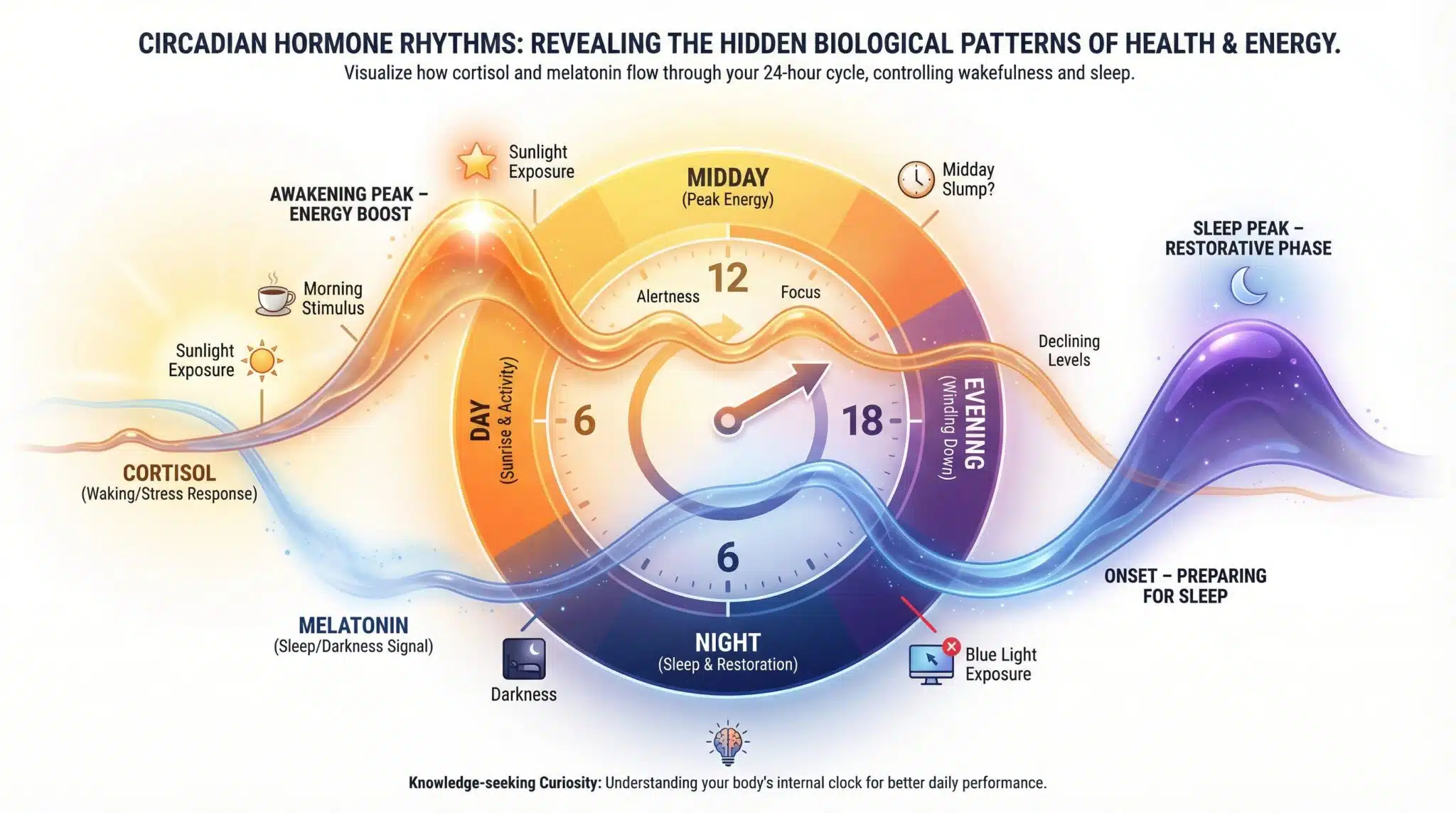
Your metabolism shifts with circadian rhythm. Evening you is not the same as morning you, and your scale is not emotionally mature enough to handle that nuance.
Same body. Different conditions. Different number. That’s the plot.
When Metabolic Age Is Especially Likely to Be Wrong
These calculators are built from “average” data. The further you are from average, the more the results can get weird.
- Very muscular people: muscle is dense and metabolically active, but not all formulas account for that well. Two people can weigh the same and have wildly different body composition and the calculator can still lump them together.
- Older adults: muscle loss varies a ton person to person. Two 70 year olds can look “identical” on paper but have very different metabolic rates.
- Medical conditions + meds: thyroid disorders, diabetes, hormonal conditions, and certain medications (like beta blockers, antidepressants, corticosteroids) can affect metabolism in ways the calculator can’t detect from height/weight/age alone.
So if the number feels off, it might be because the tool is a bad fit not because you’ve personally failed at having a metabolism.
How I’d Interpret Your Score (Without the Doom Spiral)
- If your metabolic age is “younger”: cool. That usually means your estimated BMR is higher than average for your age group often linked to muscle mass, activity, or genetics. It’s a positive signal, not a full body health certificate.
- If your metabolic age is “older”: don’t panic. It could reflect lower muscle mass or lower activity… or it could just be the formula not matching your body well.
Also: anything within about 5-7 years of your actual age is basically static. Noise. The scale equivalent of your friend saying, “I’ll be there in 5 minutes” when you know it’s 17.
The Only Way to Track It Without Losing Your Mind
If you want metabolic age to be useful at all, you need consistency. Not “roughly similar.” Like, as identical as you can make it otherwise your graph will look like a seismograph.
Here’s my simple, non-obsessive routine:
1) Pick one time and stick to it.
Ideally: first thing in the morning, after the bathroom, before food, before exercise.
2) Use the same device every time.
Your bathroom scale and the gym machine will almost never match because they use different algorithms and reference data. Choose one and commit (relationships are hard, I know).
3) Check how jumpy your device is.
Weigh/measure three mornings in a row under the same conditions. If your metabolic age swings more than ~5 years, that’s your device telling you, “Hey, I’m not great at this.” Believe it.
4) Look at trends over 8-12 weeks.
Daily numbers are drama. Monthly patterns are information.
And please remember: metabolic age does not measure disease risk, organ health, or longevity. It’s just a comparison between your estimated calorie burn and an average.
Skip consistency and you will earn three gentle slaps from your future self with a very wet noodle.
The Bottom Line: Data, Not Destiny
Metabolic age can be a mildly interesting snapshot of your estimated calorie burn but it’s not a medical verdict. It’s math. Helpful sometimes, hilarious other times, and occasionally rude for no reason.
If the number worries you (or you’re making big health changes), talk with a healthcare provider and consider clinical testing. Otherwise, use metabolic age as one small puzzle piece alongside things that actually matter: energy, strength, sleep, endurance, how your clothes fit, how you feel living your life.
Use it as data, not destiny.