



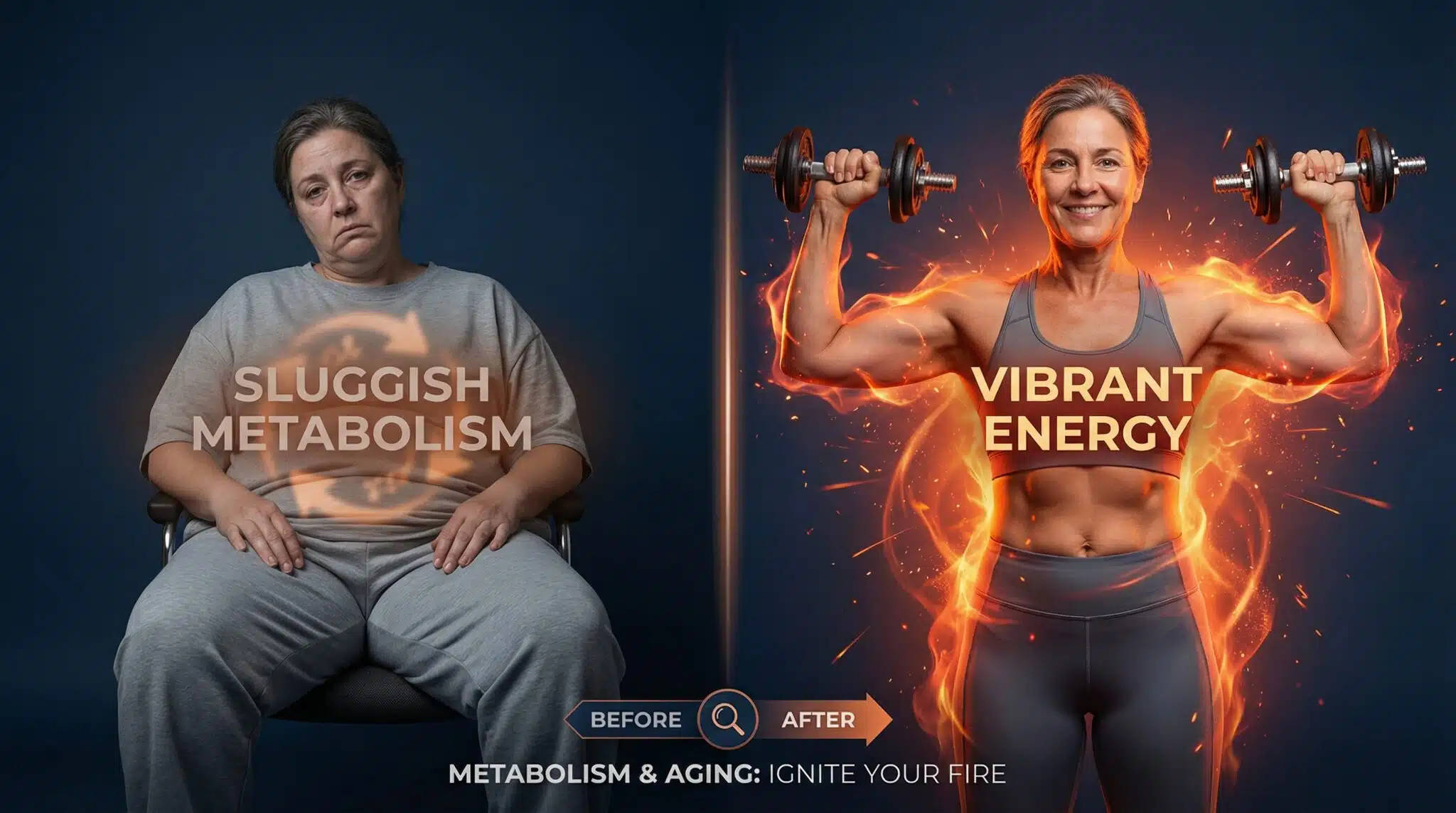

If you’ve ever stared at your jeans and thought, “Cool, I turned 35 and my metabolism immediately filed for divorce,” you’re not alone. That story is basically modern folklore at this point.
But here’s the plot twist: your metabolism usually doesn’t nosedive in your 30s or 40s. The research doesn’t back up the whole “it all goes downhill after 30” drama the way we’ve been told. Which is both comforting… and also mildly irritating, because it means we can’t blame everything on a birthday.
So why do so many of us notice weight creep in midlife anyway?
Because the sneaky stuff changes first: muscle, daily movement, sleep, stress, hormones. Not in a “your body betrayed you” way—more in a “your routine quietly shifted and no one told you the rules changed” way.
Let’s talk about what metabolism actually is, what the science says, and what’s actually worth doing (spoiler: it’s not “drink ice water and pray”).
Metabolism Isn’t One Thing. It’s Three Buckets.
People talk about metabolism like it’s a single knob on your body—either set to “fast” or “tragically slow.” In real life, it’s more like three separate buckets that add up to your daily calorie burn:
- Resting metabolism (the big one): About 60-70% of what you burn daily. This is your body running the essentials—breathing, heartbeat, brain doing brain things, cells repairing, etc. Yes, you burn calories while lying perfectly still. (Finally, a talent I can get behind.)
- Thermic effect of food: Roughly 10%. This is the energy it takes to digest and process food. Protein takes more effort to break down, which is why it keeps popping up in metabolism conversations like that one friend who always “just wanted to check in.”
- Physical activity: Everything else. Workouts count, but so does everyday movement—walking around the house, errands, standing, fidgeting, taking stairs. Scientists call that background stuff NEAT (non-exercise activity thermogenesis), and it can vary wildly from person to person.
This matters because when people say “my metabolism slowed,” what they often mean is: “One or more of those buckets shrank and I didn’t notice until my pants did.”
So… Does Metabolism Actually Slow After 30?
Not the way most of us think.
A big 2021 study published in Science looked at over 6,400 people across 29 countries and found that metabolism is pretty steady from about age 20 to 60 which matters if you’re thinking about a health age estimate. Yep. That’s a long time for your metabolism to be quietly clocking in, doing its job, and getting absolutely zero credit.
After 60 is when a more noticeable decline tends to show up—about 0.7% per year.
So if the math isn’t dramatically changing at 35, what is?
Your habits, your muscle, your movement, your sleep, your stress, and (for many people) hormones. Which is actually good news, because those are things you can work with. Not all at once, not perfectly, not like a robot—but you’ve got options.
The Real “Metabolism Killers” (They’re Boring, Sorry)
1) Muscle loss is the slow leak nobody warns you about
Starting around your 30s, people can lose muscle gradually if they’re not doing anything to keep it—think roughly 3-8% per decade. That doesn’t mean you wake up on your 33rd birthday and your biceps evaporate. It’s more like a tiny leak under the sink: easy to ignore until the cabinet floor is suspiciously warped.
Muscle tissue burns more energy at rest than fat tissue. So if you slowly lose muscle over years, your resting metabolism BMR and RMR can drift downward—not because you’re “aging,” but because your body is literally made of slightly different stuff.
2) Daily movement shrinks (even if you still “work out”)
This one is sneaky and honestly kind of rude.
You might still hit the gym a couple times a week… but you’re also sitting more. Driving more. Working longer. Collapsing harder. The little “bonus movement” you used to do without thinking—the wandering around stores, walking to meet a friend, pacing during phone calls—can disappear.
And that drop in NEAT can be significant. Sometimes it’s the difference of a couple hundred calories a day. Not because you got “lazy.” Because adult life is basically a chair based sport.
3) Hormones can change the playing field
Hormonal shifts don’t magically “break” metabolism, but they can change appetite, energy, body composition, and where your body likes to store fat.
- Lower estrogen during menopause can make midsection fat storage more likely.
- Testosterone tends to decline in men over time (often cited around ~1% per year after 30), which can make muscle maintenance harder.
- Thyroid changes can also matter—especially if something feels genuinely “off,” which we’ll talk about later.
Bottom line: your metabolism isn’t magic. It’s muscle, movement, and maintenance. (And yes, I wish it were sexier than that too.)
The Part Everyone Skips: Sleep and Stress
If you’re trying to “fix” your metabolism while sleeping five hours a night and marinating in stress… you’re basically trying to mop the floor while the bathtub overflows.
I like to think of sleep and stress like your phone battery. You can have all the best apps (meal prep! workouts! protein!) but if you’re running on 9%, everything gets glitchy and dramatic.
- Sleep: A string of short nights can mess with hunger and fullness hormones (ghrelin and leptin) and make your body handle carbs less efficiently. Aim for 7-9 hours if you can. If you’re a parent of tiny people or a person with insomnia, please don’t throw your phone across the room—I said “aim,” not “achieve flawlessly.”
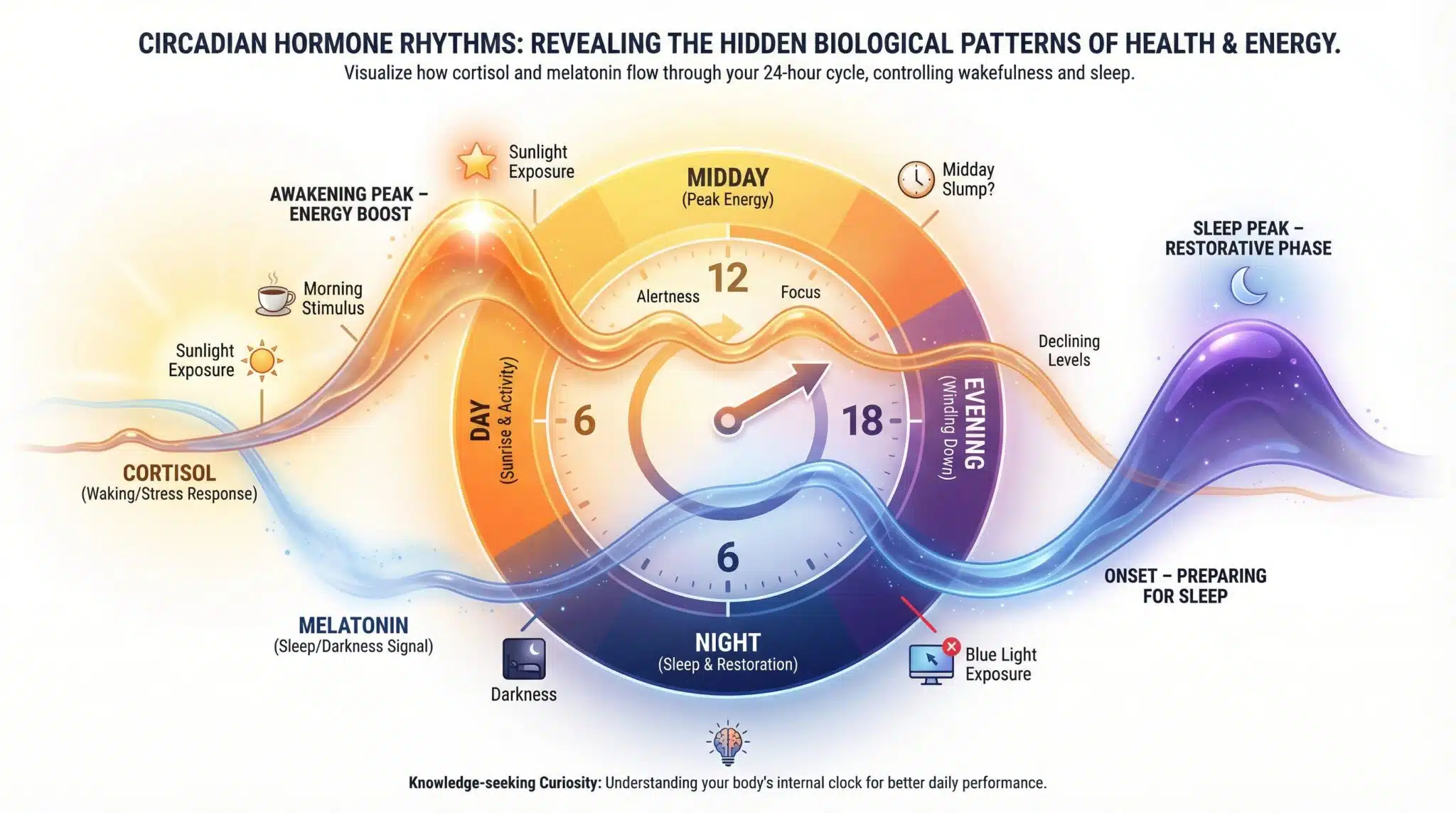
- Stress: Chronic stress keeps cortisol elevated, which can increase cravings, mess with sleep, and make muscle maintenance harder. Stress also makes “self-care” turn into “I ate pretzels over the sink at 10:47 p.m.” (Ask me how I know.)
No, you can’t eliminate stress. But you can lower the volume: walks, strength training, boundaries, sunlight, therapy, saying “no,” doing less (my personal favorite, though I’m still bad at it).
What Actually Helps (Not the TikTok “Metabolism Hacks”)
If you want the biggest bang for your effort, focus here:
1) Lift something heavy-ish a couple times a week
Resistance training is the MVP for maintaining and building muscle. You do not need to train like a competitive bodybuilder who owns six different shakers.
Two to three strength sessions per week, hitting major muscle groups, is plenty for most people. The goal isn’t just what you burn during the workout—it’s keeping the muscle that supports your resting metabolism and makes daily life easier (carrying groceries without making weird noises, for example).
2) Eat enough protein (without turning into a chicken breast hostage)
Protein helps with muscle maintenance and keeps you full longer. A common ballpark is 0.7 to 1 gram of protein per pound of body weight per day, especially if you’re strength training—though your exact needs can vary.
If that number makes your eye twitch, start simpler: add a solid protein source to breakfast and lunch and see what changes. You don’t have to go from “toast person” to “protein spreadsheet person” overnight.
3) Increase NEAT (aka: stop trying to solve everything with one workout)
This is the underrated secret weapon.
NEAT is the “everything else” movement that adds up: short walks, standing breaks, stairs, parking farther away, pacing during phone calls, taking the long way to the bathroom at work (no one needs to know why).
Try one of these:
- 10-20 minute walk most days (yes, it counts even if it’s slow and you’re annoyed).
- Set a timer to stand up every hour and move for 3-5 minutes.
- Make one daily task “on foot” if you can—drop off a package, pick up a few groceries, walk the dog like you mean it.
You don’t need a total life overhaul. You need more tiny movement than modern life naturally gives you.
Eating Habits That Help Without Making You Miserable
I’m not here to sell you a 900-calorie cleanse that turns you into a tired raccoon with a headache.
A few basics that actually work in real life:
- Don’t crash diet. Extreme restriction can backfire by making you hungrier, more tired, and more likely to quit (and then blame yourself). A moderate, sustainable approach usually wins.
- Eat mostly whole foods. Not because you’re “good,” but because they’re filling and nutrient dense. Plus, they often take more energy to digest than ultra processed foods.
- Have some meal rhythm. Skipping meals works for some people, but for many it turns into “fine all day” and then “feral at night.” If that’s you, regular meals might be the most “metabolism friendly” thing you do all week.
Realistic Expectations (Because Math Is Rude)
Can you “boost” your metabolism? Yes… but not in the way supplement ads promise.
Building muscle helps, but it’s not a magical 1,000-calorie-per-day upgrade. For example, gaining several pounds of muscle might only raise your resting burn by something like 25-50 calories/day. That sounds small because it is small.
But here’s what matters: combined changes add up.
A little more muscle + more NEAT + better sleep + consistent training can easily create a meaningful difference over time—sometimes 100-300 calories/day depending on the person. And that’s before you factor in improved strength, energy, mood, and the fact that you’ll probably feel more like yourself.
Also: two people can do the same plan and get different results. It’s annoying. It’s normal. It’s not a moral issue.
Consistency beats intensity. Every time.
When It Might Be Medical (Don’t Gaslight Yourself)
Sometimes it’s not “willpower.” Sometimes something is actually going on.
If you’ve got persistent symptoms like:
- unexplained fatigue
- unexpected weight changes (up or down)
- feeling unusually sensitive to cold or heat
- hair loss
- significant mood changes
- menstrual irregularities
…ask your doctor about a workup (including thyroid testing). Hypothyroidism is common, treatable, and easy to miss if you keep telling yourself you’re “just getting older.”
You’re allowed to get help. Please don’t talk yourself out of it.
What I’d Do This Week (If You’re Overwhelmed)
If you take nothing else from this: your metabolism probably didn’t “crash” after 30. Your life just got busier, your movement got quieter, your stress got louder, and your muscle got harder to keep without trying.
So here’s your very un sexy, very effective next step:
Pick one:
- Two strength workouts this week (even 20-30 minutes counts).
- A 10-20 minute walk most days.
- Protein at breakfast for the next 5 days.
- Go to bed 30 minutes earlier for a week (yes, that means putting your phone down—sorry, I don’t make the rules).
Small steps compound. Your body is adaptable. And you’re not doomed because you had a birthday.
Start where you are. Do the boring basics. Let time do its thing.