












The Salt Swap I Wish More People Knew About (Because Your Heart Deserves Better)
Confession: I used to think “healthier salt” was just another grocery store scam sitting next to the chia seeds and the $9 jar of artisanal optimism.
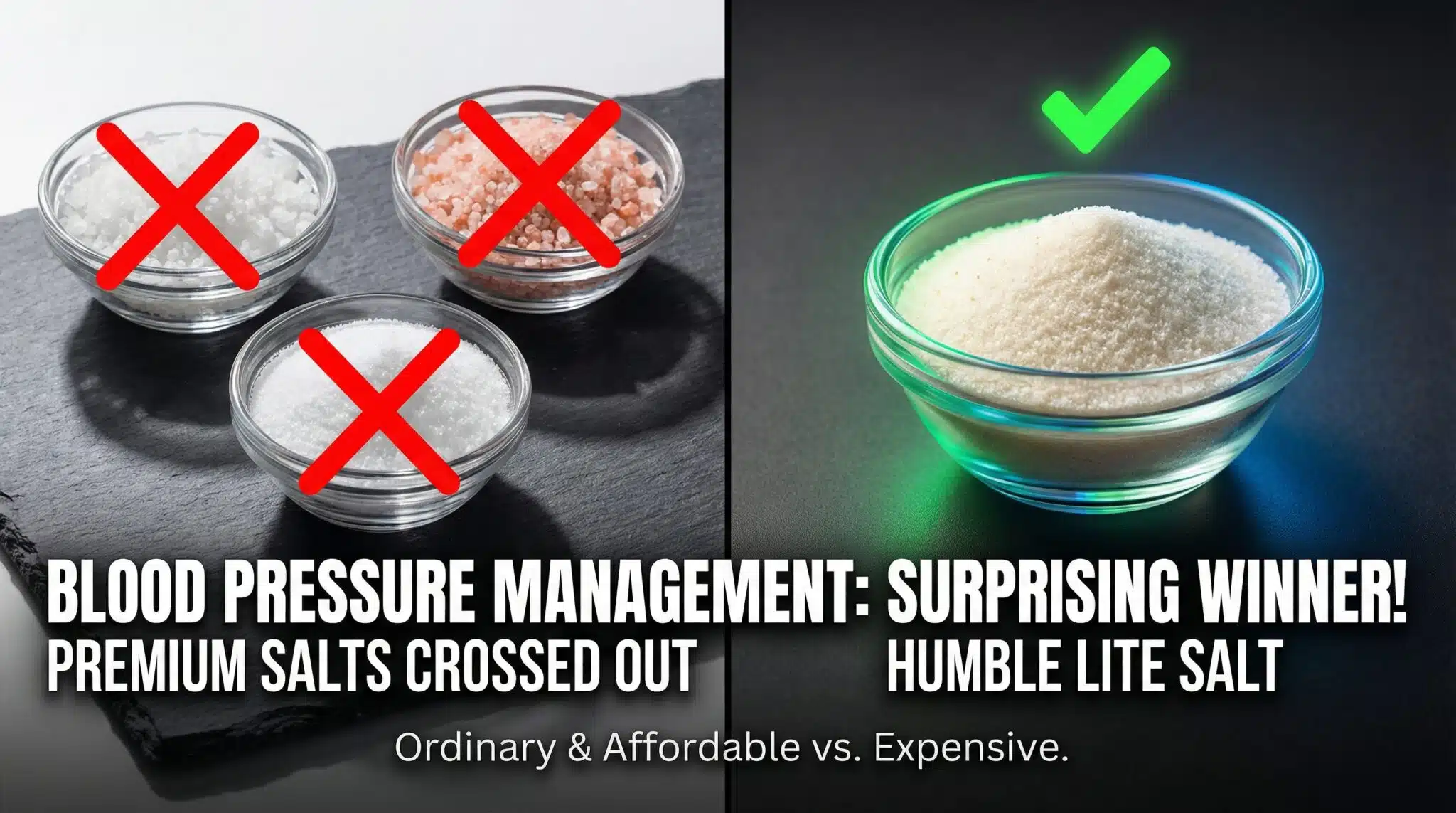
But then I fell down a research rabbit hole (as one does, instead of folding laundry) and found something that’s… annoyingly legit: potassium enriched salt. A big meta analysis of 21 trials found it was linked to a 13% reduction in cardiovascular mortality and yet fewer than 6% of Americans use it.
So yeah. It’s basically the most underhyped thing sitting right there on the shelf next to regular salt, quietly minding its business.
Let’s talk about why it matters, what to buy, and the one big “WAIT, CHECK FIRST” safety thing you absolutely shouldn’t skip.
What regular salt is doing in your body (the dramatic version)
When you eat a lot of sodium, your body holds onto water to keep things balanced. More water = more blood volume = your heart has to push harder through your blood vessels.
Think of it like turning your garden hose up to “pressure washer” and then acting surprised when everything gets stressed out.
Potassium helps from the other side: it nudges blood vessels to relax and helps your kidneys get rid of extra sodium. And most of us are stuck in the worst combo: too much sodium, not enough potassium.
That’s why potassium enriched salt is such a sneaky smart swap. It doesn’t require you to become a kale munching saint overnight. It’s just… your normal salt habit, slightly upgraded.
The only “salt substitute” that actually has receipts
Let me save you from the “but I use Himalayan pink salt!” conversation (said with love, because I’ve been that person too) and the microplastics in sea salt worry.
- Sea salt, kosher salt, pink salt they all still contain about 40% sodium by weight. The label might look different because of crystal size (a teaspoon of flaky salt weighs less than a teaspoon of fine salt), but sodium is still sodium.
The one option with real, consistent evidence for blood pressure is:
Potassium enriched salt (a sodium/potassium blend)
Studies consistently show modest blood pressure drops (which, in blood pressure world, is a big deal). It’s also a swap people can actually stick with one long follow up found most participants were still using it years later, which is more than I can say for my “I’ll meal prep every Sunday” era.
Here’s what you’ll see on shelves:
- Potassium enriched salt (often around a 75/25 sodium/potassium mix)
- “Lite” salt (often closer to 50/50)
- Potassium chloride salt substitute (almost all potassium brands like Nu-Salt/Morton Salt Substitute)
- Herb/acid blends (not a “salt,” but amazing for flavor: lemon, vinegar, garlic, spices, etc.)
One more practical note: if you switch away from iodized table salt for higher mineral content salts, make sure you’re getting iodine elsewhere (eggs, dairy like yogurt, seafood like cod adults generally need 150 mcg/day).
How much sodium do you actually need? (Without turning dinner into cardboard)
Most people don’t realize how tiny the official numbers are compared to how we actually eat.
- American Heart Association “ideal” target: 1,500 mg/day
- General upper limit used on labels: 2,300 mg/day
- Average intake in the U.S.: around 3,400 mg/day
And here’s the rude truth: the salt you shake on your food at home is usually only 5-10% of your total sodium. The rest is coming from processed foods and restaurant meals.
So yes, swapping your salt shaker is helpful but if you’re also living on deli meat, frozen meals, canned soup, pizza, and “just a little” soy sauce, the math is not mathing.
The safety part you can’t skip (seriously, don’t play tough here)
Potassium enriched salt is not a “free for all” product. For some people, extra potassium can be dangerous, because high blood potassium (hyperkalemia) can trigger serious heart rhythm problems and many people don’t feel symptoms until it’s a problem.
Do NOT use potassium enriched salt if you have:
- Chronic kidney disease (any stage)
- eGFR under 60, especially if it’s been low for 3+ months (this is a lab value your clinician can confirm)
Talk to your clinician first if you take:
- ACE inhibitors (like lisinopril, enalapril, perindopril)
- ARBs (like losartan, valsartan, irbesartan)
- Potassium sparing diuretics (like spironolactone, amiloride)
- Regular NSAIDs (like ibuprofen or naproxen especially frequent use)
These can all affect how your body handles potassium. Adding a potassium based salt substitute on top can push levels too high.
If you’re not sure where you fall: ask your clinician about your most recent kidney function labs (eGFR/creatinine) and whether potassium enriched salt makes sense for you.
Boring? Yes. Important? Also yes. This is your heart, not a DIY backsplash.
Okay, let’s make this easy: what I’d actually do in a normal kitchen
If your clinician gives you the green light:
1) Pick a starter option you’ll actually use
- If you’re sensitive to taste: start with a “lite” blend (often 50/50).
- If you want the stronger swap: go for a potassium enriched blend (often around 75/25).
Potassium chloride can taste slightly “different” to some people (a little metallic/bitter). Some people don’t notice at all. Some people act like it personally offended their ancestors. You won’t know until you try.
2) Don’t go full throttle on day one if you’re picky
You can swap 1:1, but if you want to reduce the chance you’ll hate it and rage quit, do a quick transition:
- Week 1-2: mostly regular salt
- Week 3-4: half and half
- Week 5+: mostly potassium enriched salt
Your taste buds will adjust. They’re dramatic, but they’re trainable.
3) Use the “make it taste salty without salt” tricks
When people tell you to “just use herbs,” that can feel like someone handing you a single basil leaf and saying, “Enjoy your joyless chicken.”
Here’s what actually works:
- Acid (lemon juice, vinegar) = makes food taste brighter and more seasoned
- Umami (tomatoes, mushrooms, garlic, onion, parmesan, nutritional yeast) = adds depth so you don’t miss salt as much
- Spice + aromatics = the adult version of flavor glitter
How to tell if it’s working (without guessing)
If you’re doing this for blood pressure, don’t go by vibes.
- Check your blood pressure the way your clinician recommends (often that means taking multiple readings and averaging them).
- Give it time several weeks is reasonable to see meaningful change when you’re also cutting back on processed food sodium.
And if your clinician wants labs monitored after changing potassium intake, follow their plan.
Know the “call someone” symptoms
If you ever notice things like muscle weakness, tingling, or heart palpitations, contact a clinician promptly. High potassium can be sneaky.
My bottom line
If you’ve been trying to get your sodium down and it feels like an impossible, joy sucking life sentence, potassium enriched salt is one of the simplest swaps with real evidence behind it.
Just do it the grown up way:
- Make sure it’s safe for you (kidneys + meds matter here).
- Swap the salt and keep an eye on processed foods.
- Use acid/umami so dinner still tastes like dinner.
If you want a super low effort starting move: next time you’re at the store, take 30 seconds to read the label on a potassium enriched salt option then ask your clinician if it fits your situation. Small swap, potentially big payoff.