




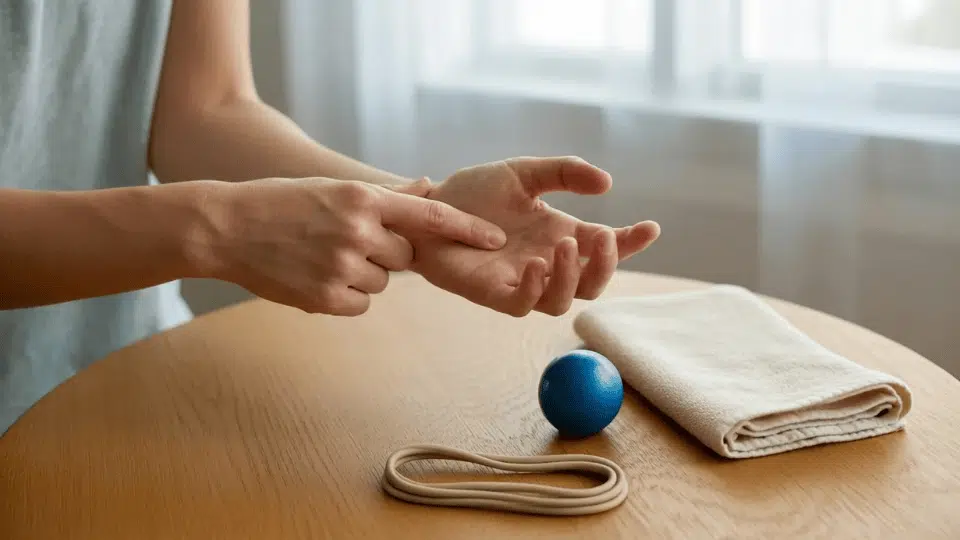









When I first heard about trigger finger, I did not realize how much it could affect simple daily tasks. Something as small as bending a finger or gripping a cup can suddenly feel stiff or painful. The finger may even lock or click when you try to move it.
The good news is that gentle movement can often help. Many doctors recommend simple trigger finger physical exercise routines to improve flexibility and reduce stiffness. These exercises help the tendon move smoothly again and can relieve discomfort over time.
Here, I will explain what trigger finger is and why trigger finger physical exercise can help. I will also share simple exercises you can safely try at home, along with helpful tips and common mistakes to avoid.
A Closer Look at Trigger Finger and Exercise
Trigger finger, medically known as stenosing tenosynovitis, develops when the flexor tendon responsible for bending your finger becomes inflamed and can no longer glide freely through the protective sheath surrounding it.
As the sheath thickens and narrows, the tendon catches or snaps when you try to bend or straighten the finger, creating the characteristic clicking, popping, or locking sensation.
Today, it affects a much wider range of people, from office workers to musicians to new mothers. The condition develops when repeated finger movements cause tendon inflammation over time.
Left unaddressed, it can limit daily tasks like typing, cooking, or holding a cup.
Who is Most at Risk?
Trigger finger is not random. Certain people are significantly more likely to develop it:
- Women aged 40-60 are more affected than men, according to consistently reported clinical data.
- People with diabetes face a substantially higher risk because diabetes can cause thickening of the tendons and surrounding tissue.
- People with rheumatoid arthritis or gout are predisposed due to systemic inflammation affecting the tendon sheaths.
- Occupational risk groups include construction workers, gardeners, hairstylists, musicians, and anyone whose work involves sustained gripping or repetitive fine motor tasks.
- New parents, particularly mothers, frequently develop trigger finger from the sustained gripping and lifting involved in caring for a newborn.
In my years of working with clients in rehabilitation settings, trigger finger shows up most often in two groups: desk workers who have been typing heavily for years without any hand-specific conditioning, and tradespeople who grip tools daily.
The third group that surprises people is new parents, particularly mothers, in the first six months post-birth. The combination of hormonal changes and constant infant lifting creates the exact conditions for this condition to develop. Knowing your risk profile helps you take it more seriously before it becomes a locking problem.
Where Does Exercise Fit in the Treatment Picture?
Exercise is the first-line conservative approach for mild to moderate trigger finger — and for good reason. It is safe, costs nothing, and can be done anywhere. But it helps to understand the broader treatment spectrum so you know when to escalate:
| Severity | Typical Approach |
|---|---|
| Mild — clicking, morning stiffness, mild soreness at the base of the finger | Home exercise routine, activity modification, warm-up protocol |
| Moderate — intermittent locking that releases on its own, persistent stiffness | Exercise + splinting (finger splint worn at night to keep tendon extended) + possible physiotherapy referral |
| Severe — finger locked in bent position, cannot release without manual force, significant pain | Medical evaluation required. May need corticosteroid injection (~80% success rate) or surgical release |
The exercises I outline later in the blog are designed for mild to moderate presentations. If your finger is stuck and will not release, do not try to force it through exercise. That is the moment to see a doctor, not the moment to push harder.
Exercise became a go-to approach because it is safe, cost-free, and can be done anywhere. Starting early with simple movement gives your tendon the best chance to recover without needing medical intervention.
When to Start Trigger Finger Physical Exercise
You can usually begin an exercise routine when symptoms are mild, and the finger can still move. Starting early may help reduce stiffness and improve movement.
- Morning stiffness: Your finger feels tight or hard to move when you wake up.
- Clicking or popping: The finger makes a small clicking sound when bending or straightening.
- Finger locking occasionally: The finger briefly gets stuck, but can still move.
- Mild pain at the base of the finger: You may feel soreness in the palm area near the finger.
- Reduced finger flexibility: The finger feels slower or harder to bend than usual.
If these symptoms sound familiar, starting gentle exercises early may help improve finger movement and prevent the condition from getting worse.
Always Warm Up Before You Start
One of the most consistent mistakes I see, both in clients and in general exercise guidance online, is jumping straight into trigger finger exercises on a cold hand.
Tendons are far less pliable when they haven’t been warmed up, and exercising them cold increases the risk of aggravating rather than relieving inflammation.
My standard recommendation for every client before any hand exercise session: soak the affected hand in comfortably warm (not hot) water for 5–10 minutes, or hold a warm compress against the palm for the same duration.
After that, give the whole hand a light self-massage for 1–2 minutes before touching a single exercise.
This one habit dramatically reduces post-exercise soreness and makes the tendons genuinely more responsive to the movements. It takes 10 minutes and makes everything else work better.
Best Trigger Finger Physical Exercises for Pain Relief
Doing simple hand movements every day can help reduce stiffness and improve finger movement. These exercises focus on stretching the tendon and helping it glide smoothly again.
I always recommend following these exercises roughly in the order listed, starting with tendon gliding and passive stretching before moving to resistance and grip work.
The earlier exercises are diagnostic as much as therapeutic: if tendon gliding alone causes significant pain, that tells you the condition needs professional assessment rather than more aggressive loading.
Think of the sequence as a graduated warm-up for the tendon itself.
1. Finger Tendon Glide Exercise
The finger tendon glide is one of the most common exercises used for trigger finger relief. It helps the tendon move smoothly through the finger joint.
This exercise works by taking the tendon through its full range of positions in a controlled sequence (straight hand, hook fist (fingertips to top of palm), then full fist) before opening back out.
Each position targets a slightly different point along the tendon sheath, which is why the progression matters.
Steps to follow:
- Start with your hand open and fingers straight, keeping your palm relaxed and facing upward.
- Slowly bend your fingers into a hook shape while keeping your knuckles straight and relaxed.
- Continue bending until you form a soft fist, then slowly open your hand again.
- Repeat the movement slowly while keeping the finger motion smooth and controlled.
Reps and Sets: Aim for 10 reps per session and complete 3 sets spread evenly throughout your day.
2. Rubber Band Finger Stretch
This exercise strengthens the muscles that open your fingers and helps balance hand movement, which can reduce strain on the affected tendon.
Steps to follow:
- Place a rubber band around your thumb and all fingers while keeping your hand relaxed.
- Slowly spread your fingers apart against the resistance created by the rubber band.
- Hold the stretch for five seconds while keeping your fingers comfortably extended.
- Relax your hand, then repeat the movement slowly several times.
Reps and Sets: 10–12 reps, 3 sets daily for finger strength and flexibility.
Start with the lightest rubber band available, the kind used for vegetables or mail. Only increase resistance when the current band feels genuinely easy across all three sets.
I have had clients aggravate their tendons by starting with a thicker band too soon. Progression here should be patient and deliberate, not athletic.
3. Passive Finger Extension Stretch
This stretch gently straightens the affected finger and helps loosen tight tendons that may cause clicking or locking during movement.
Steps to follow:
- Hold your affected hand in front of you with the palm facing down.
- Use the other hand to gently pull the stiff finger backward until it straightens.
- Hold the stretch for about ten to fifteen seconds without forcing the finger.
- Slowly release the finger and relax your hand before repeating.
Reps and Sets: 8–10 reps, 2–3 sets per session for gentle tendon stretching.
4. Palm Pressure Stretch
This simple stretch helps loosen tight tendons in the palm and fingers while improving overall hand flexibility and movement.
Steps to follow:
- Place your hand flat on a table, palm down.
- Keep your fingers straight while gently pressing your palm toward the surface.
- Hold the stretch for around ten seconds while keeping your hand relaxed.
- Slowly release the pressure and repeat the stretch several times.
Reps and Sets: 8–10 reps, 2–3 sets daily to improve hand and finger mobility.
5. Thumb-to-Finger Touch Exercise
This exercise improves finger coordination and keeps the tendons active by encouraging smooth and controlled finger movements.
Steps to follow:
- Hold your hand in front of you with fingers straight and relaxed.
- Slowly touch your thumb to the tip of your index finger.
- Hold the position briefly before moving your thumb to the next finger.
- Continue until your thumb touches each fingertip one by one.
Reps and Sets: 10 reps per finger, 2–3 sets for controlled movement.
6. Finger Lift Exercise
The finger lift exercise is a simple movement that helps strengthen the small muscles in your hand. These muscles support finger movement and stability during everyday tasks like typing, gripping, or holding objects
Steps to follow:
- Place your hand flat on a table, palm facing downward.
- Slowly lift one finger off the surface while keeping the others resting.
- Hold the lifted finger for about three to five seconds.
- Lower the finger slowly and repeat with each finger.
Reps and Sets: 8–10 reps per finger, 2–3 sets to strengthen small hand muscles.
7. Towel Scrunch Exercise
The towel scrunch exercise is a simple way to strengthen hand muscles and improve finger flexibility. It also helps restore natural gripping movement over time.
Steps to follow:
- Place a small towel flat on a table in front of you with your hand resting comfortably above it.
- Put your hand on the towel with fingers slightly spread and your palm gently touching the surface.
- Slowly use your fingers to scrunch the towel toward your palm while keeping your wrist relaxed.
- Spread the towel back to its original position and repeat the movement slowly several times.
Reps and Sets: 10 reps, 2–3 sets daily for grip strength and flexibility.
8. Finger Joint Bend Exercise
The finger-joint bend exercise helps improve movement at the middle joint of the finger. This helps smooth tendon motion and reduce stiffness.
Steps to follow:
- Hold your hand in front of you, fingers straight and relaxed, while keeping your wrist comfortable.
- Slowly bend the affected finger at the middle joint while keeping the rest of the finger supported.
- Hold the bent position for about 5 seconds, keeping the movement gentle and controlled.
- Slowly straighten the finger again and repeat the movement several times for better flexibility.
Reps and Sets: 8–10 reps per finger, 2–3 sets to loosen middle joint tendon.
The wrist stretch helps release tension in the muscles and tendons that connect to your fingers. This can support better finger movement and reduce overall hand stiffness.
Steps to follow:
- Extend your arm forward, palm down, with your elbow slightly bent and relaxed.
- Use your other hand to gently bend your wrist to one side until you feel a light stretch.
- Hold the stretch for a few seconds while keeping your fingers relaxed and breathing steady.
- Slowly move the wrist to the opposite side and repeat the stretch several times.
Reps and Sets: 5–8 reps per direction, 2–3 sets daily for tendon tension release.
10. Soft Ball Grip Exercise
The soft ball grip exercise strengthens the muscles in your hand and fingers. This supports better grip strength and controlled finger movement.
Steps to follow:
- Hold a soft foam ball or stress ball comfortably in the center of your palm.
- Slowly squeeze the ball using your fingers and thumb while keeping your wrist relaxed.
- Hold the squeeze for about five seconds while maintaining steady pressure and comfortable breathing.
- Release the ball slowly and repeat the exercise several times to build gentle hand strength.
Reps and Sets: 10 reps, 2–3 sets per session to strengthen grip and fingers.
11. Palm Massage Exercise
A gentle palm massage can relax tight tendons and improve blood flow around the affected finger. This technique helps reduce stiffness and supports easier finger movement.
Steps to follow:
- Turn your palm upward and locate the base of the affected finger near the center of the palm.
- Use the thumb of your opposite hand to apply gentle circular pressure on that area.
- Continue massaging slowly for about 1 minute, keeping the pressure comfortable and steady.
- Relax your hand for a moment and repeat the massage if the area still feels tight.
Reps and Sets: Massage 1–2 minutes, 2–3 times daily to relax tendons and reduce stiffness.
Common Mistakes That Can Worsen Trigger Finger
Avoiding certain habits is important when doing a trigger finger physical exercise routine. Small mistakes can increase irritation in the tendon and slow down recovery.
- Doing exercises too aggressively: Moving the finger too forcefully or too fast can irritate the tendon and increase swelling.
- Ignoring pain signals: Continuing exercises despite sharp pain may worsen the condition and cause more stiffness.
- Skipping warm-ups: Starting exercises without warming the hand can make tendons tight and harder to move smoothly.
- Repetitive phone or keyboard use: Constant tapping or typing can strain the finger tendons and delay healing.
- Heavy gripping activities: Tasks like lifting heavy tools or tight gripping can put extra pressure on the affected finger.
- Exercising only when symptoms flare: Sporadic sessions during painful episodes are less effective than short daily sessions during calmer periods. Consistency between flares is where the real rehabilitation happens.
- Ignoring ergonomic factors: Exercises alone cannot undo the daily strain that caused trigger finger in the first place. Tool handles, keyboard setup, and gripping technique all need to be reviewed.
Being gentle and consistent with exercises can help the finger heal more comfortably and prevent symptoms from getting worse.
Ergonomic and Lifestyle Adjustments That Support Recovery
Physical exercises address the symptom. Ergonomic adjustments address the cause. Both are necessary for lasting recovery.
- Padded tool grips: Adding foam or rubber grip wraps to frequently used tools significantly reduces the compressive force on the tendon. Hardware stores and occupational therapy suppliers stock these.
- Keyboard and mouse setup: For desk workers, a neutral wrist position — supported and not bent upward — reduces chronic flexor tendon strain. A vertical mouse or split keyboard can help.
- Scheduled micro-breaks: Taking a 2–3 minute hand break every 45–60 minutes of repetitive work allows the tendon to recover between load cycles. Set a timer if needed.
- Nighttime splinting: For moderate cases, wearing a finger splint at night to keep the tendon in an extended position is a well-supported conservative approach. A physiotherapist or hand therapist can fit one correctly.
- Anti-inflammatory support: Applying an ice pack wrapped in a cloth to the base of the affected finger for 10–15 minutes after exercise sessions can help manage post-exercise inflammation, particularly in the early weeks.
The clients I see who recover fastest are almost always the ones who change something in their daily environment alongside their exercise routine.
The exercises rebuild tendon health; the ergonomic changes prevent the injury from recurring every day.
If you are only doing the exercises and nothing else has changed in how you work or hold things, your progress will be slower and more fragile than it needs to be.
When to Stop Exercising and See a Professional
Home exercise is appropriate for mild to moderate trigger finger, but certain signs indicate you need professional assessment rather than more self-directed movement:
- The finger is locked and will not release – do not try to force it open.
- Significant swelling, warmth, or redness at the base of the finger may indicate active inflammation that requires medical management.
- No improvement after 2–4 weeks of regular daily exercise is a signal to seek physiotherapy or occupational therapy evaluation.
- Worsening symptoms during or after exercise, particularly increasing pain or new locking episodes, mean the current approach needs adjustment.
- Underlying conditions such as diabetes or rheumatoid arthritis warrant early professional involvement, as they alter how the tendon responds to conservative treatment.
A corticosteroid injection, when appropriate, has roughly an 80% success rate for trigger finger and can provide rapid relief. That is not a failure state; it is a legitimate and effective tool.
Recommending exercises is not about avoiding that outcome; it is about giving the tendon every chance to respond conservatively first. Know the signs that you have crossed that threshold.
Final Stretch
Dealing with trigger finger can be frustrating, especially when simple hand movements become painful or stiff. I have found that gentle and consistent movement can make a big difference.
A regular trigger finger physical exercise routine can help improve flexibility, reduce stiffness, and allow the tendon to glide more smoothly. The key is to start slowly and stay consistent.
What I find most often in rehabilitation work is that people underestimate how quickly trigger finger can improve and how quickly it can stall when the effort isn’t consistent.
The clients who make the best progress are those don’t push through sharp pain, but they also don’t stop at the first twinge of discomfort. That balance between sensitivity and persistence is what drives real recovery.
These exercises are meant to support healing, not force the finger to move. If the pain increases or the finger becomes stuck, it is important to seek medical advice.
If you found this helpful, consider sharing it or bookmarking it so you can follow the exercises regularly.