









What Your Salt’s Color Really Means (a.k.a. Why Your Salt Looks Like It Belongs in a Crayon Box)
The first time I saw a little dish of pink salt at a friend’s house, I fully assumed it was some kind of fancy bath product that escaped from a spa gift set. Then I tasted it and went, “Oh. It’s just… salt. But dramatic.”
And that’s basically the story with most “gourmet” salts: they’re still mostly sodium chloride, but the color (and sometimes texture and vibe) comes from minerals, clay, or the way the salt was processed. Some colors are legit geology from ancient earth stuff. Others are more like… “we mixed this with something on purpose.” (Not necessarily a scam! Just different.)
So let’s talk about what those colors actually mean so you can buy salt for the right reasons (flavor/texture/prettiness) and not because the label promised it’ll fix your life.
First: Where salt gets its color (the quick, non-boring version)
Pure sodium chloride is basically colorless/white. When you see pink, gray, black, or blue salt, that usually means one of three things happened:
- Minerals got trapped in the salt when it formed (the “nature did it” category).
- Stuff got mixed in during traditional processing (like clay or sulfur compounds).
- Modern additions were added for color (hello, activated charcoal).
Here’s my little real life tip: if you’re looking at coarse crystals and the color is slightly uneven specks, streaks, some pieces lighter than others that often points to a more natural situation. If every crystal looks like it was printed by a tiny salt copier… ask questions.
Pink salt: The gateway salt everyone owns
Why it’s pink
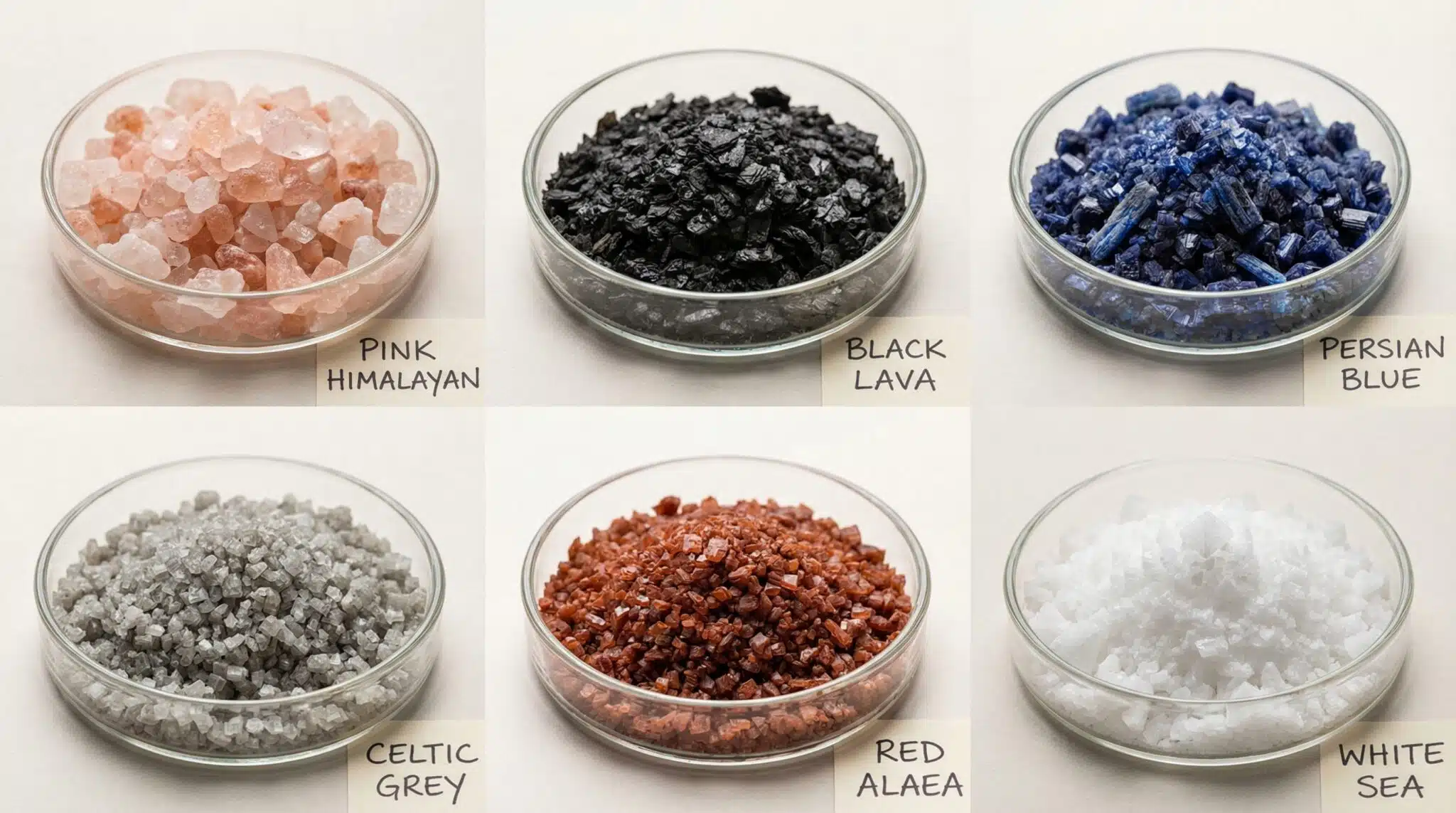
Himalayan pink salt gets its blush from iron oxide (yep, rust vibes don’t panic, it’s normal). It’s mined from ancient deposits (most famously Pakistan’s Khewra mine), and it can range from pale ballet slipper pink to “I accidentally bought a salt lamp I can eat.”
What it’s actually like to use
In everyday cooking? Honestly, the taste difference from regular salt is usually small. The texture and the aesthetic are where it shines.
Also, I’m going to say the quiet part out loud: pink salt is not a multivitamin. It does have trace minerals, but you’d have to eat an amount of salt that would have your doctor sprinting toward you to make those minerals matter.
Other pinkish salts you’ll see
- Murray River salt (Australia) can lean pink orange thanks to minerals and even pigments from algae in the environment.
- Some “pink salts” are basically a vibe and a label so it’s worth reading the origin (more on that later).
Gray salt: The slightly messy one (in a good way)
Why it’s gray
Classic Celtic sea salt / sel gris gets its gray tint from clay in the salt marshes (Brittany is the famous spot). It’s often harvested and handled in a way that keeps it a little moist.
The dead giveaway
If your “gray salt” pours like bone dry table salt and never clumps… it might not be the real deal. Real sel gris can be a touch sticky. (Not “wet sandbox,” just “I have texture, darling.”)
Best way to use it
I love gray salt as a finishing salt on things like soups, roasted potatoes, seafood foods where a little mineral complexity actually shows up.
Baking? I’m not saying you can’t, but if you want precision, use something consistent (and measure by weight more on that in a sec).
Black salt: Two completely different things that share a color (because marketing)
This is where people get confused, because “black salt” can mean two wildly different products.
1) Kala namak (the eggy one)
Kala namak (Indian black salt) is famous for that sulfur-y, egg like aroma. It’s not just “black rock salt from the earth” the way people assume it’s typically made by processing salt with sulfur compounds (and often other ingredients) and heating it.
It’s a vegan magic trick in the kitchen. If you’ve ever had tofu scramble that tasted weirdly like eggs? Kala namak was probably lurking nearby like a tiny culinary wizard.
My advice: use it sparingly and add it near the end. It can go from “yum, eggy” to “did someone strike a match in here?” real fast.
2) “Black lava salt” (the charcoal one)
This one is usually sea salt mixed with activated charcoal often coconut charcoal. It’s bold looking, great for drama on deviled eggs, avocado, fish, anything pale… but the black color is added, not mined that way.
Not a scam. Just… know what you’re buying.
Blue salt: The fancy unicorn
Persian blue salt is the one that makes people lean in and whisper, “Is that real?”
It’s real and the blue isn’t from some blueberry flavored mineral or anything. The color comes from quirks in the crystal structure (tiny defects that mess with how light travels through the salt). Basically: geology did a cool light trick.
Important note: if you grind it, it’ll look less blue. Big chunks = more light bouncing around = more color. So if you’re buying it for looks, keep it coarse and use it as a finishing salt where people will actually see it.
“But table salt is white.” Yep. Here’s why.
Regular table salt is processed to be extremely consistent mostly sodium chloride, stripped of most minerals. That’s why it’s bright white and behaves predictably.
It’s also often:
- iodized (helpful for preventing iodine deficiency)
- treated with anti-caking agents (so it pours nicely instead of turning into a salt brick)
For baking, table salt (or any consistent fine salt) is honestly a relief. Baking is already stressful enough without your salt deciding to be artisanal about it.
How to tell if a specialty salt is legit (and not just expensive seasoning confetti)
I’m not here to ruin your pretty salt dreams about rare luxury salts. I’m here to keep you from paying $14 for a jar of “Himalayan-ish pinkish vibes.”
Here’s what I look for:
- Uneven color in coarse crystals (a good sign for naturally colored salts)
- Specific origin info (country of origin at minimum. Better if it’s more detailed)
- A real company name / importer / lot info (because “mystery salt” is not my kink)
- Price that makes sense
If it’s suspiciously cheap, I get suspicious. If it’s wildly expensive, I also get suspicious. (I’m fun at parties.)
Quick reality check: the mineral health claims
Yes, colored salts can contain trace minerals. No, they’re not a meaningful source unless you eat a truly unreasonable amount of salt like “my fingers are swelling just reading this” amounts.
Also worth saying: because salts can come from oceans and soils, microplastics and iodine factors matter and contaminants can happen. If you’re buying fancy salts regularly, stick with reputable brands that do testing and aren’t vague about sourcing.
So: buy the pink/gray/black/blue salt because you like the flavor, texture, or look. Not because it promised to align your chakras.
My “which salt should I use?” cheat sheet (so you don’t stand in the aisle spiraling)
- Everyday cooking: use whatever you like and will actually use. Table salt is fine. Pink salt is fine. The big win is seasoning your food properly.
- Finishing: gray salt, flaky sea salt, Persian blue (if you’re feeling fancy) anything with texture.
- Vegan “egg” flavor: kala namak, added at the end (start small. It’s powerful).
- Presentation/contrast: black lava salt for pale foods (it’s basically edible eyeliner).
- Baking/curing: measure salt by weight, not teaspoons. Coarse salts have more air between crystals, so a teaspoon of one salt won’t equal a teaspoon of another. A little kitchen scale = fewer salty surprises.
Shopping + storing tips (because moisture is a salty menace)
- Moist salts (like sel gris) need an airtight container unless you enjoy the “solid salt puck” lifestyle.
- Start with one specialty salt and learn it. You don’t need six jars at once unless you’re building a salt shrine (no judgment, just… space is finite).
- Use the pretty salt where it matters: sprinkled on top, not dissolved into a soup where nobody will ever see your expensive blue crystals. Save the glamour for the red carpet moment.
If you take nothing else from this: salt color usually tells you what got into the salt (minerals/clay/charcoal/processing), not whether it’s magically healthier. Buy what you’ll enjoy using, keep the special stuff for finishing, and don’t let a trendy label bully you into believing you need “volcanic moon salt” to roast a chicken.