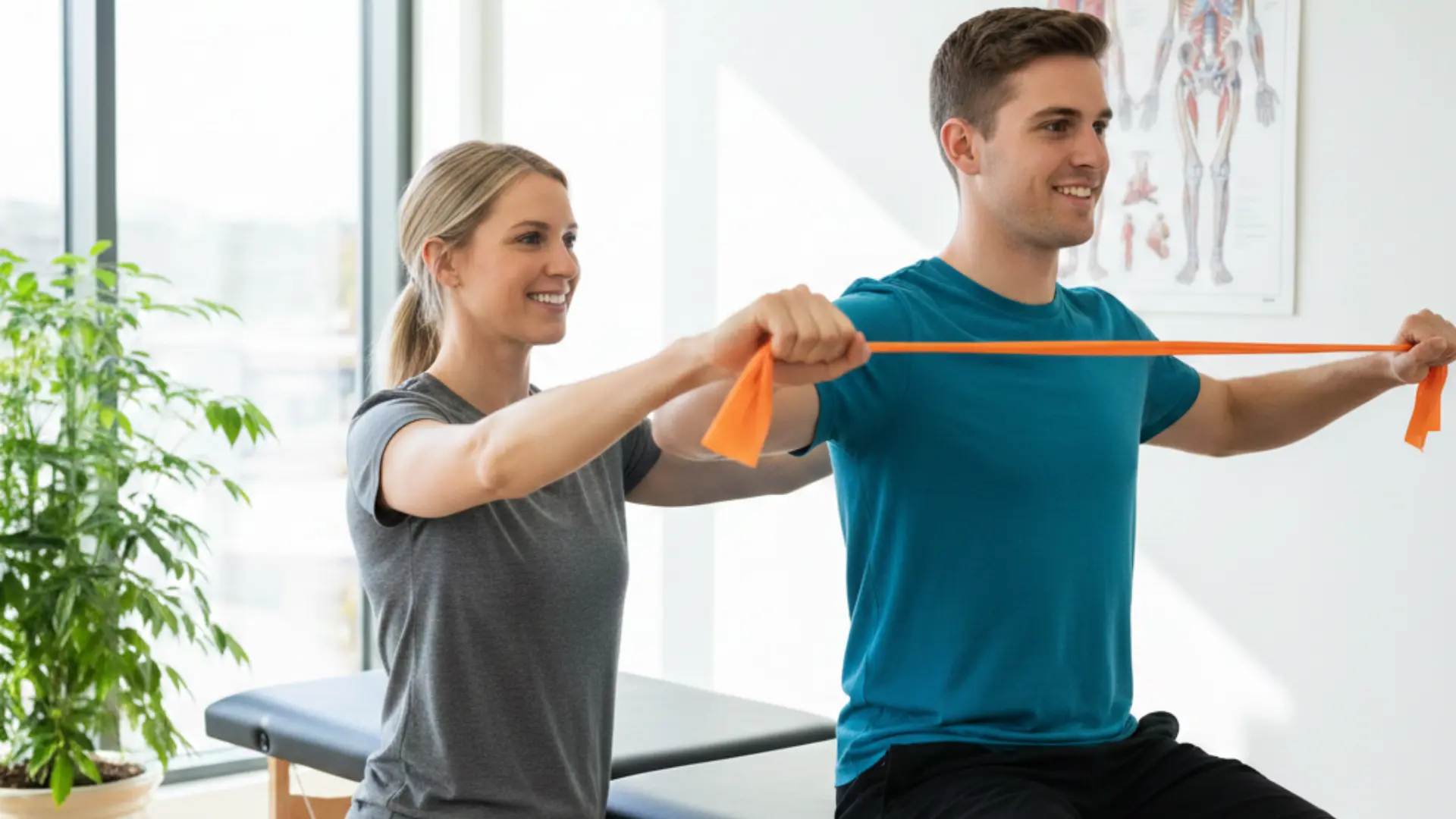













I’ve asked myself this question many times: Should I do yoga before or after a workout? The truth is, I’ve tried both, and each one feels different for a reason.
Some days, yoga helps me warm up and feel ready to move. Other days, it helps me slow down and recover after a tough workout. That’s why there isn’t one perfect answer for everyone.
Here, I’ll break down the benefits of doing yoga before and after a workout.
I’ll also share what fitness experts and real people from workout communities say, plus tips to help you decide what works best for your body and goals.
Should You Do Yoga Before or After a Workout?
If you’re confused about whether to do yoga before or after a workout, you’re not alone. I’ve been there too. The truth is, both can be helpful.
Yoga before exercise works like a warm-up: it loosens tight muscles, improves mobility, and helps you feel focused and ready to move.
This can be especially useful if you feel stiff, sore, or “cold” when you start training. Yoga after a workout feels more like a cool-down.
Since your muscles are already warm, stretching often feels deeper and more relaxing, and it can help reduce tightness later. There’s no strict rule; try both on different days and stick with what makes your body feel stronger, lighter, and more comfortable.
Yoga Before a Workout: Benefits and Precautions
Doing yoga before a workout can help your body feel ready and focused. Here’s a quick look at the benefits and key precautions.
| Benefit | What It Does for You | Precautions to Keep in Mind |
|---|---|---|
| Improves Mobility | Loosens tight hips, shoulders, and ankles so movement feels smoother. | Do not force deep stretches. Move slowly and stay within a pain-free range. |
| Warms the Body | Increases blood flow and gently raises muscle temperature. | Avoid holding poses too long before strength training. Keep it dynamic. |
| Reduces Injury Risk | Prepares stiff areas and helps your form stay aligned. | If you have past injuries, skip poses that stress that joint. |
| Boosts Focus | Calms your breathing and sharpens body awareness. | Do not over-relax. Stay mentally ready for your main workout. |
| Improves Performance | Helps your body move with better control and balance. | Keep it light. Intense yoga can drain energy before training. |
Keep your yoga session light and controlled. When done right, it prepares your body safely and helps you train with better movement and focus.
Best Yoga Styles Before Workouts

Yoga before a workout should feel like a gentle “wake-up,” not a workout by itself.
The goal is to boost blood flow, loosen tight areas (like your hips, hamstrings, and shoulders), and steady your breathing so your body feels ready to move.
- Vinyasa: light flowing moves to warm you up.
- Sun Salutations: a quick full-body warm-up sequence.
- Dynamic Hatha: simple poses with movement to loosen stiffness.
- Mobility yoga: hip/shoulder openers and easy twists for joints.
Keep it smooth and easy, and save long holds for after training. Aim for 5–15 minutes so you feel warmed up, loose, and ready to lift, run, or train.
After Workout: Benefits of Doing Yoga
After a workout, your body is warm and ready to slow down. Here’s how post-workout yoga helps, along with simple precautions to stay safe.
| Benefit | What It Does for You | Precautions to Keep in Mind |
|---|---|---|
| Relaxes Warm Muscles | Helps tight, active muscles release tension after training. | Do not force deep stretches. Warm muscles can still strain if pushed too far. |
| Cuts Stiffness and Soreness | Loosens calves, quads, hips, and back so you feel less stiff later. | Avoid bouncing in stretches. Move slowly and hold each pose with control. |
| Boosts Recovery | Encourages slower breathing and shifts your body into recovery mode. | If you feel dizzy or lightheaded, sit or lie down and breathe normally. |
| Calms the Nervous System | Lowers heart rate and reduces stress after an intense session. | Do not skip hydration. Drink water before settling into longer poses. |
| Improves Flexibility Over Time | Helps your range of motion improve safely with consistency. | Never stretch into sharp pain. Mild tension is okay, but pain is not. |
Keep your session slow and gentle. When you stretch with control and awareness, you support recovery and help your body reset properly.
Best Yoga Styles to Do After Workouts
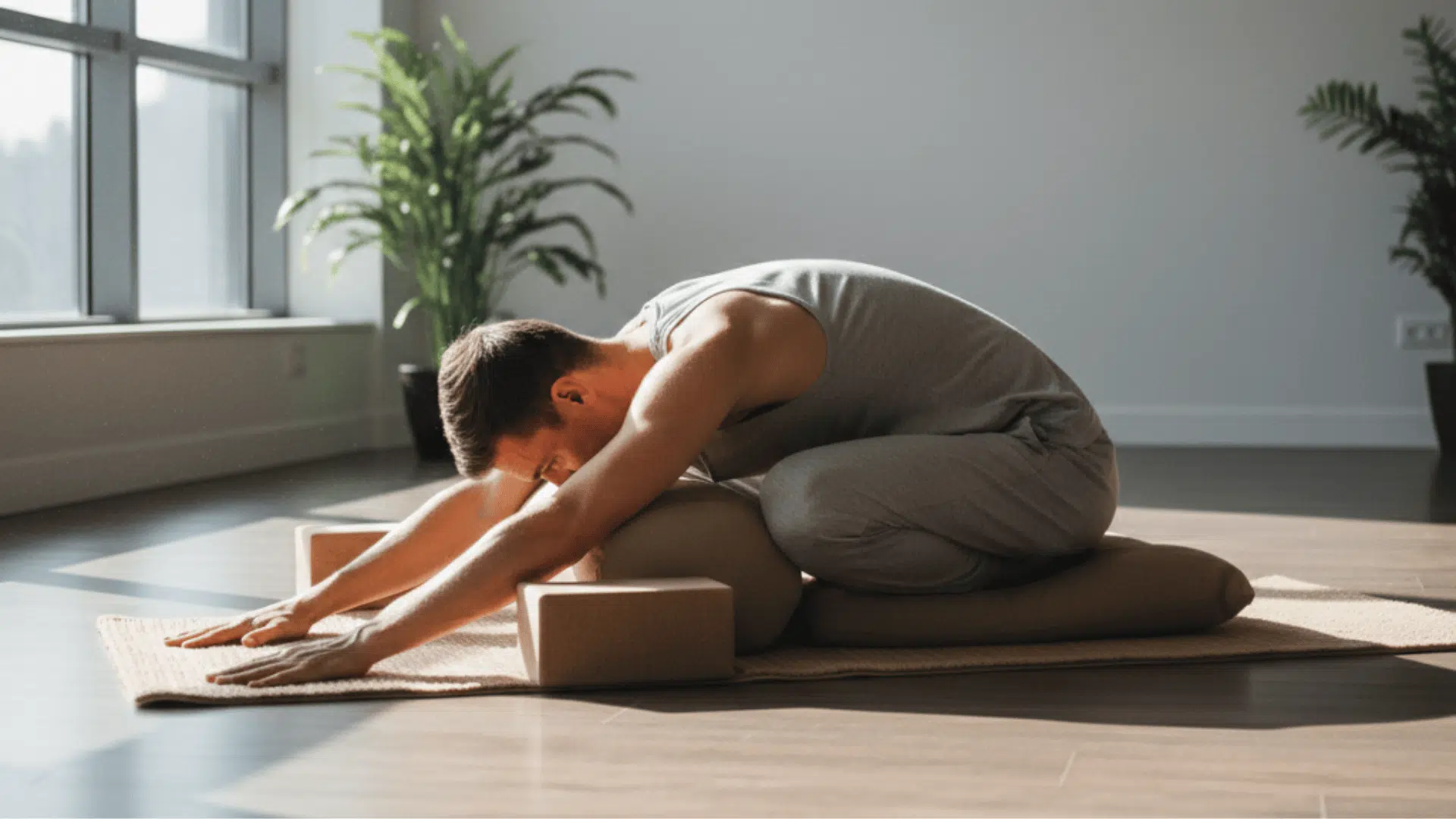
Yoga after a workout should focus on slowing down, stretching tired muscles, and helping your body relax and recover. Since your muscles are already warm, this is the best time for deeper stretches and longer holds.
- Yin Yoga: Long, deep holds that target tight muscles and joints.
- Restorative Yoga: Very gentle poses using props for full-body relaxation.
- Slow Hatha Yoga: Easy-paced stretches that help you cool down gradually.
- Gentle Stretch Yoga: Flexibility-focused moves to release muscle tightness.
- Yoga Nidra (guided relaxation): Deep rest for the body and mind after training.
Post-workout yoga can help release tension, calm your breathing, and reduce soreness later on. Keep the pace slow, avoid fast flows, and focus on comfort rather than intensity. Even 10–20 minutes can make a big difference in how your body feels afterward.
What Fitness Communities Say?
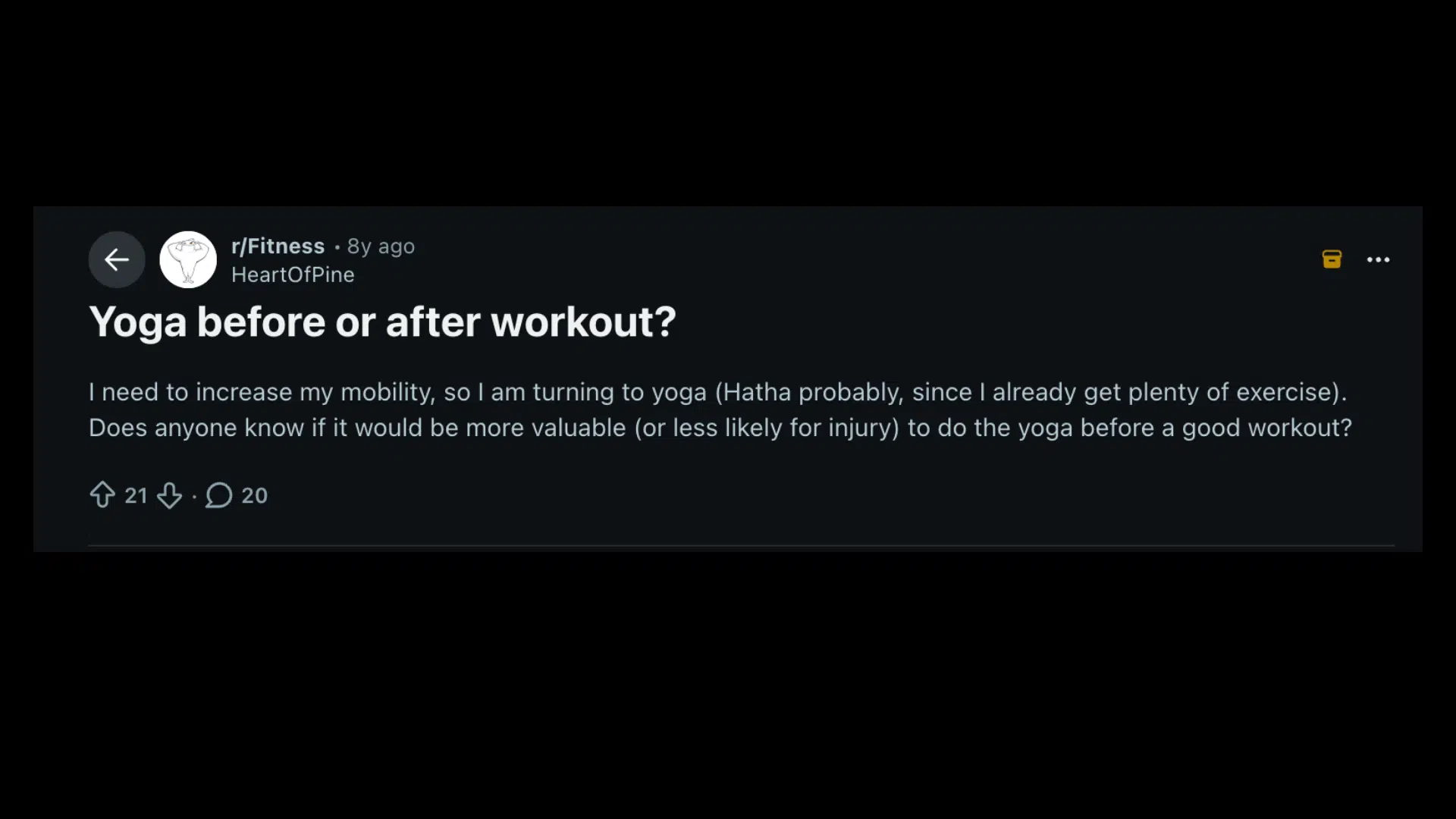
In the discussion “Yoga before or after workout?” most people agree that yoga works best after a workout or on rest days, especially for mobility and relieving soreness.
Many users explain that stretching feels better when muscles are already warm, allowing deeper, more comfortable holds.
Several commenters caution against performing long static stretches before heavy lifting, noting that they may temporarily reduce strength or stability. That said, short, dynamic yoga before training still receives support, mainly as a warm-up.
A popular middle-ground approach is mobility or light flow before workouts, followed by deeper stretching afterward. Foam rolling before yoga on rest days is also frequently recommended.
Personally, this approach makes sense to me. I prefer light mobility before training and slower, deeper yoga afterward. It feels balanced and keeps my body happier in the long term.
Best Time to Do Yoga Around Your Workouts?
I’ve found timing matters more than people think. When you place yoga correctly in your week, you support recovery, mobility, and overall performance without overloading your body.
- Before strength or cardio sessions: Do 5 to 10 minutes of light, mobility-focused yoga right before training to warm joints, increase blood flow, and improve movement quality.
- After intense workouts: Save slower, deeper stretches for post-workout sessions when muscles are warm, helping release tension and support recovery without draining energy.
- On rest or low-intensity days: Use gentle yoga to stay active, reduce stiffness, and help your body recover without adding training stress.
I suggest testing different timing for one week. Pay attention to energy, soreness, and performance, then adjust based on what helps you feel stronger and more balanced.
Final Thoughts
I’ve learned there isn’t one perfect time for yoga. What matters is what your body needs and how you want to feel.
If you want to feel more ready to move, try 5 to 10 minutes of mobility-style yoga before your workout. It can loosen tight spots and help your training feel smoother.
If you’re looking to relax and recover, save longer, slower stretches for after your workout or on rest days. Do this for one week. Pay attention to how you feel during training and the next morning.
Try one method this week and see how your body responds. If it helps, save this guide and share your experience in the comments!