











I’ve always loved dumplings. They’re warm, filling, and hard to stop eating once you start. But I also hear the same question again and again: are dumplings healthy, or are they comfort food we should avoid?
That’s exactly what I wanted to break down here. I’ll cover what dumplings are made of, how cooking methods change their nutrition, and which types are better for your body.
I’ll also share tips on portion size, sauces, frozen dumplings, and what people online really think about eating them. By the end, you’ll know when dumplings can be part of a healthy meal and when they’re better enjoyed as a treat.
Are Dumplings Healthy or Just a Treat?
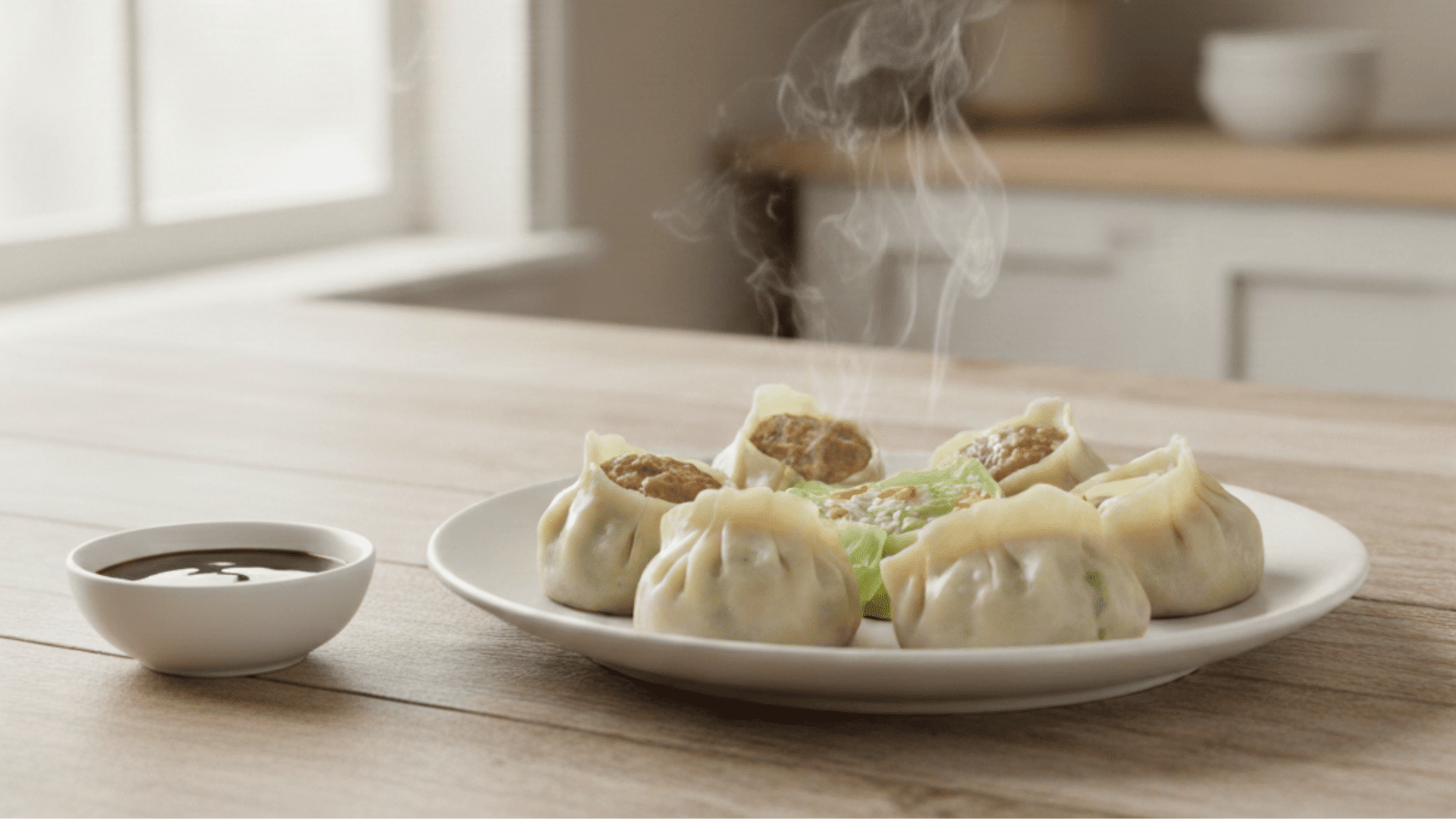
Dumplings can be healthy, but the answer depends on three things: cooking style, filling, and portion size. I usually pick steamed dumplings first because they use little oil and stay lighter.
Pan-fried dumplings are next; they taste great, but the added oil bumps up calories. Deep-fried dumplings are the one I treat like an occasional snack. Fillings matter too.
Lean chicken, shrimp, tofu, and lots of veggies are better than fatty pork and heavy, creamy mixes. Watch the sauce as well; soy sauce can add a lot of salt and quickly increase the sodium content.
My simple rule: eat a reasonable number, add a side of greens or soup, and enjoy them without guilt. If you buy frozen ones, check the sodium and choose veggie-heavy options too.
And if you are opting for healthy takeout, there are smarter choices than just dumplings to mix and match from Chinese menus, too.
Dumplings Calories Breakdown
Before you look at the calorie numbers below, it helps to know this: dumplings aren’t unhealthy by default. The most significant difference comes from how they’re cooked, not just what’s inside.
A small change in cooking style can add or remove hundreds of calories without you noticing.
- 6 steamed dumplings: about 250 calories
- 6 pan-fried dumplings: about 330 calories
- 6 deep-fried dumplings: about 500 calories
To put that in perspective: choosing steamed over deep-fried for a single meal saves you roughly 250 calories, equivalent to a full snack. Over a week, that adds up in a meaningful way if you are managing your weight.
When choosing Chinese dishes, keep in mind that some are higher in calories and sodium than others.
Dumpling Nutrition Checklist: What to Look For
This simple dumpling nutrition checklist helps you make smarter choices without giving up flavor, so you can enjoy dumplings while keeping calories, fat, and sodium in check.
| Part | What to check | Health tip |
|---|---|---|
| Protein | Chicken, shrimp, tofu, lean pork | More protein helps you feel full longer |
| Carbs | Wrapper thickness and flour type | A thinner wrapper is often lighter |
| Fat | Cooking method + oily or fatty fillings | Steamed is usually lighter than pan-fried; deep-fried is the highest |
| Sodium | Filling, dipping sauces, and frozen brands | Use low-sodium soy sauce and dip lightly |
| Veggies | Cabbage, chives, mushrooms, spinach | More veggies = more fiber and volume |
| Filling type | Veg vs seafood vs meat | Veg or seafood is often lighter than fatty meats |
By paying attention to portions, fillings, and cooking methods, you can enjoy dumplings more often and feel good about your choices without sacrificing taste or satisfaction.
Dumpling Cooking Method Matters More Than You Think
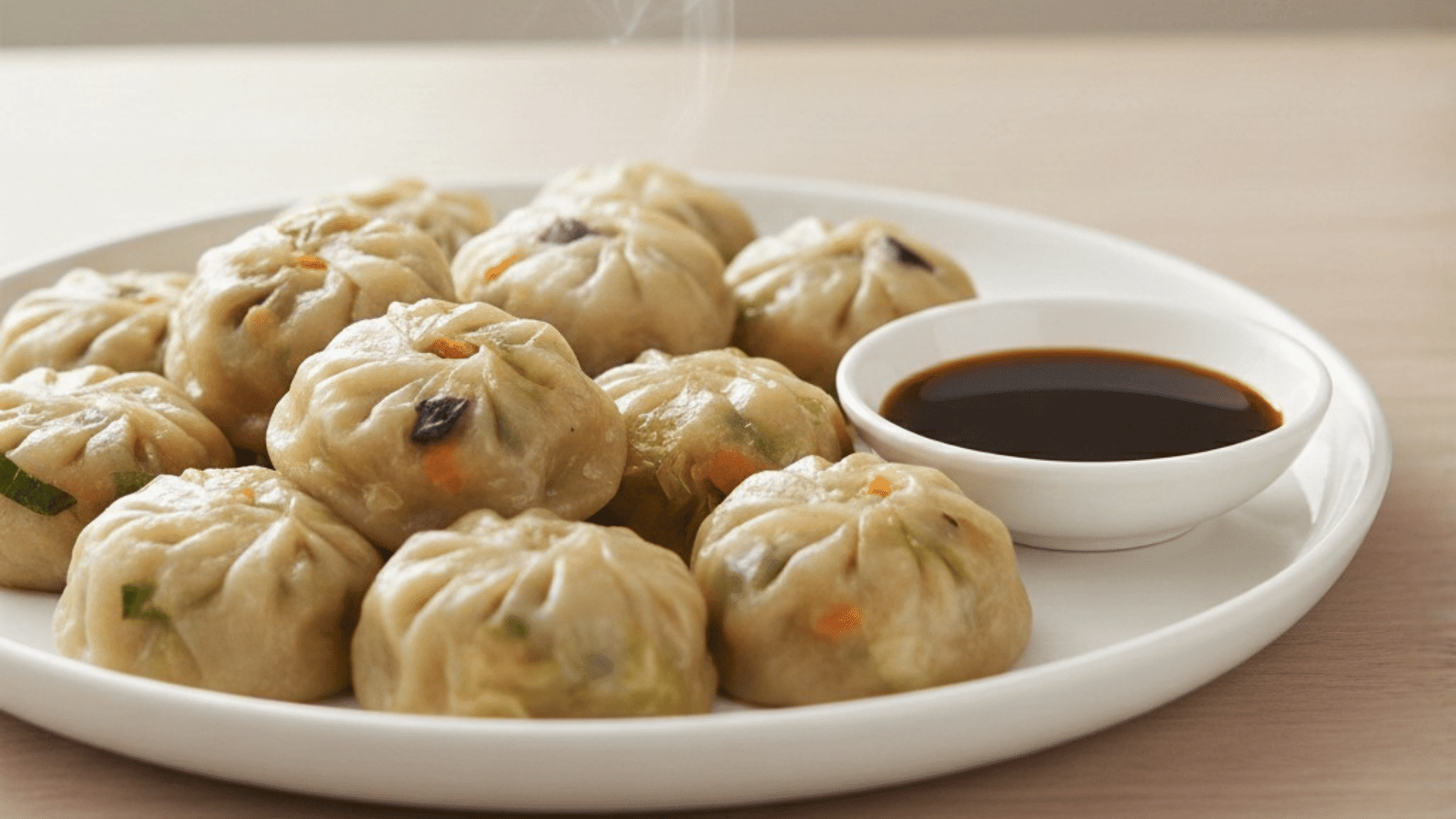
How dumplings are cooked can change their calories, fat, and overall health value. Even with the same filling, one cooking style can be much better for your body than another. Here’s how each method compares in simple terms.
1. Steamed Dumplings: Are Steamed Dumplings Healthy?
Steamed dumplings are the lightest and healthiest choice. They are cooked using hot steam instead of oil, which keeps fat levels low.
A single steamed dumpling contains roughly 40 to 60 calories, 2 to 4 grams of protein, and under 2 grams of fat, numbers that hold up well against most snack or meal options at similar calorie counts.
Steaming also preserves heat-sensitive nutrients in the filling better than frying does, which means the vegetables inside retain more of their vitamins and fiber.
In my practice, steamed dumplings are one of the few foods I recommend without caveats to clients watching both calories and sodium.
They are naturally low in added fat, and the filling does most of the nutritional work. A chicken-and-cabbage steamed dumpling, for instance, gives you a solid protein hit with almost no saturated fat.
If you’re watching calories or eating often, steamed dumplings are the safest pick.
2. Pan-Fried Dumplings
Pan-fried dumplings use a small amount of oil, which adds extra fat and calories. They still can fit into a healthy meal if eaten in moderation.
The crispy bottom is what makes potstickers so satisfying, but it does come at a cost. Pan-frying adds roughly 30 to 50 extra calories per serving of six compared to steaming.
If you want that texture at home, use a non-stick pan with just one teaspoon of oil, then add a splash of water and cover to steam the tops. You get the crunch with far less fat.
The key is balance, don’t eat too many at once, and pair them with vegetables or soup to keep the meal lighter and filling.
3. Deep-Fried Dumplings (Least Healthy)
Deep-fried dumplings soak up a lot of oil while cooking, making them high in fat and calories. They may taste crispy and satisfying, but they’re best enjoyed occasionally.
Eating them often can add too many calories quickly, especially when combined with salty dipping sauces.
4. Boiled Dumplings
Boiled dumplings are often overlooked, but they sit right alongside steamed dumplings as one of the healthiest cooking methods. Because they cook in water with no added fat, the calorie count stays low.
The wrapper turns slightly softer than steamed, but the filling stays moist, and the nutrition is fully intact. If you’re making dumplings at home and don’t have a steamer basket, boiling is a perfectly solid alternative.
Are Soup Dumplings Healthy?
Soup dumplings, most commonly known as xiao long bao, deserve their own mention because people often assume the broth inside makes them heavier.
They’re actually more moderate than they look. A standard soup dumpling contains roughly 70 to 90 calories, with around 3 grams of fat, 7 grams of carbs, and 4 grams of protein per piece.
The broth inside is typically made from slow-cooked pork bone or skin, which contributes collagen, a protein that supports joint health.
The main thing to watch with soup dumplings is sodium. Because the broth is seasoned, the salt content is higher than that of a plain steamed dumpling.
Six soup dumplings can land you in the 400 to 500 calorie range, which is reasonable as a main course if you pair them with a water-rich side like cucumbers or steamed greens rather than more dipping sauce.
So are soup dumplings healthy? Yes, in the right portions and with mindful pairing, though they are best treated as an occasional indulgence rather than a weekly staple if sodium is a concern for you.
Are Frozen or Store-Bought Dumplings Healthy?
Frozen or store-bought dumplings can still be a decent option if you know what to look for. I buy them sometimes when I don’t have time to cook from scratch, and they can save a lot of effort.
But not all frozen dumplings are the same. Some are packed with salt, low-quality meat, or added oils. Others use simple ingredients and are perfectly fine in moderation.
When I’m reading a frozen dumpling label for clients, I look at three things first: sodium per serving, the ingredient list length, and whether vegetables appear in the top five ingredients.
A reasonable benchmark is under 600 mg of sodium per serving of six. Anything above 800 mg starts to eat up a significant chunk of the daily 2,300 mg limit.
Such frozen foods are healthy if consumed in moderation and are even approved for many diets. The key is checking labels, watching sodium, and choosing dumplings with more vegetables and lean protein.
Meat vs Vegetable Dumplings – Which is Better?
Both can be healthy. The best choice depends on calories, protein, and how balanced your meal is. Here’s a quick way to compare.
- Lean meat fillings: Lean meat dumplings usually give more protein without too much fat, so they feel filling but not too heavy. Chicken, shrimp, and lean pork are smart picks.
- Vegetable fillings: Vegetable dumplings are often lighter and add fiber, which helps digestion and keeps you full longer. Cabbage, mushrooms, and leafy greens are great choices.
- Mixed veg + protein: Mixed dumplings give you the best of both worlds: protein for fullness and veggies for fiber. I like options like chicken + cabbage or tofu + mushroom.
From a nutrition standpoint, the filling ingredients do more work than most people realize. Cabbage provides vitamin C and gut-supporting fiber. Bean-based fillings work on the same principle; much like refried beans, they pack plant protein and fiber into something compact and satisfying.
Ginger, a common seasoning in dumpling filling, has well-documented anti-inflammatory and digestive properties.
Chives contribute allicin, which supports cardiovascular health. This is one reason why a well-filled dumpling is genuinely different, nutritionally, from a plain carbohydrate like white rice or bread.
If you want more protein, go for lean meat. If you want something lighter, go veggie. For an easy middle ground, pick mixed fillings and pair them with a veggie side.
Dumpling Portions & Sauce: Are Dumplings Healthy?
Dumplings can be a healthy choice, but two things can quickly turn them into a heavy meal: eating too many and using too much sauce. Dumplings are small, so it’s easy to keep popping them until you’ve eaten way more than you planned.
I like a simple plate rule: keep dumplings to about half your plate, and fill the other half with veggies or soup greens. A common sweet spot is 6–8 medium dumplings for a meal , depending on your hunger and what else you’re eating. Sauces matter too.
Sauces deserve more attention than most dumpling guides give them.
A single tablespoon of regular soy sauce contains over 900 mg of sodium, nearly 40% of the daily recommended limit in one dip. Chili oil adds fat quickly, too, with about 45 calories per teaspoon.
I tell clients to put the sauce in a small dish and dip one corner of the dumpling, not pour it over the whole plate. Switching to low-sodium soy sauce cuts that sodium number roughly in half without changing the flavor in any noticeable way.
When it comes to Chinese food, it’s important to know that some dishes can be much higher in sodium, fat, and calories than others. For example, certain unhealthy dishes can easily make your meal less nutritious if you’re not mindful of what you’re choosing.
What Do People Online Say? (Reddit & Community Opinions)
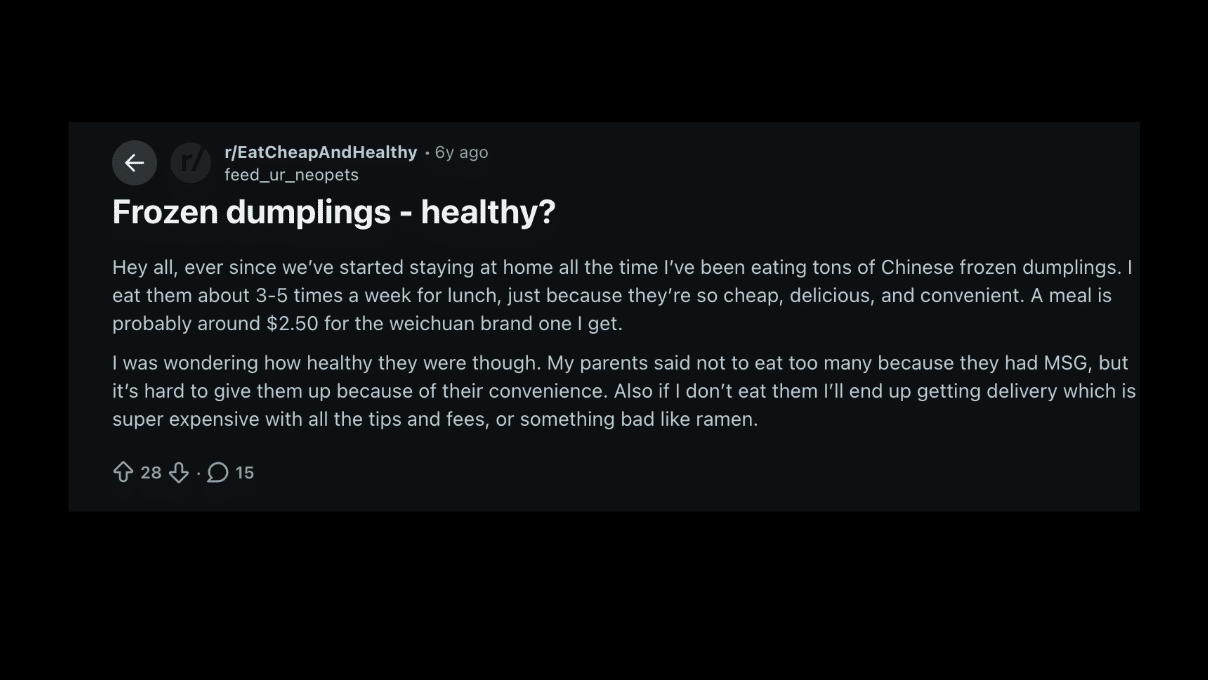
The original Reddit post asks whether Frozen dumplings – healthy? , admitting they’ve been eating them 3–5 times a week because they’re cheap, convenient, and tasty, but wondering about health concerns like MSG.
Commenters generally advise a balance: one suggests pairing dumplings with vegetables to make a fuller meal, while another recommends checking the nutrition label and watching portion sizes, as frozen dumplings can be high in sodium and fat, especially when pan-fried or eaten in large quantities.
Another reply points out that “healthy” is relative; frozen dumplings might be better than delivery or ramen, though they aren’t as nutrient-packed as fresh whole foods.
I think that’s a fair take. In my experience working with clients on budget-friendly eating, frozen dumplings often compare well to other convenient options like instant noodles or frozen pizza.
As long as you’re choosing brands with shorter ingredient lists and lower sodium, and you’re pairing them with a vegetable rather than eating them solo.
Are Dumplings Healthy for Weight Loss?
Dumplings can fit into a weight-loss plan if you’re smart about the type and the portion. I usually go for steamed dumplings first, since they’re lower in fat than fried ones.
I also keep the serving reasonable, around 6 to 8 dumplings, and fill the rest of my plate with vegetables or soup.
For fillings, I pick chicken, shrimp, tofu, or veggie-heavy options because they feel lighter but still satisfying. Sauces matter too, so I dip lightly.
One thing worth flagging for people in a calorie deficit: dumplings are energy-dense relative to their size, meaning it’s easy to underestimate how many you’ve eaten.
Weighing or counting them before you start, rather than eating straight from a shared plate, is a small habit that makes a real difference in portions.
Pairing a smaller serving of dumplings with a bowl of clear broth soup is one of my go-to recommendations because the soup volume increases satiety without adding many calories.
Final Verdict
After looking at everything, I don’t think dumplings are “bad food.” The truth is, dumplings can be healthy when you choose the right kind and eat them in balance.
Steamed dumplings with lean protein and vegetables can fit into a healthy diet, especially when paired with greens and lighter sauces. The problem usually isn’t the dumplings; it’s overeating them or drowning them in salty sauce.
I still enjoy dumplings, but now I’m more mindful of how many I eat and how they’re made. If you love dumplings too, you don’t have to give them up. Just make more intelligent choices.
Want more simple food guides like this? Stick around and check out my other nutrition posts