



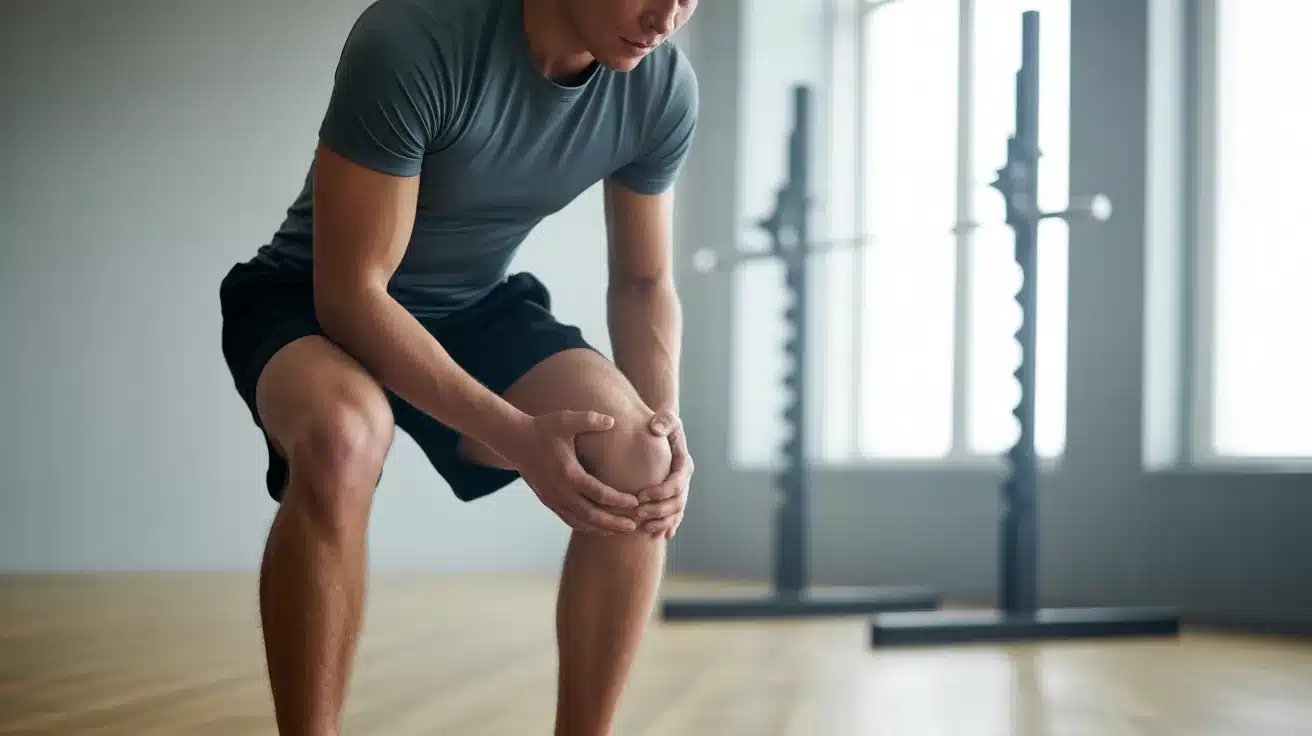






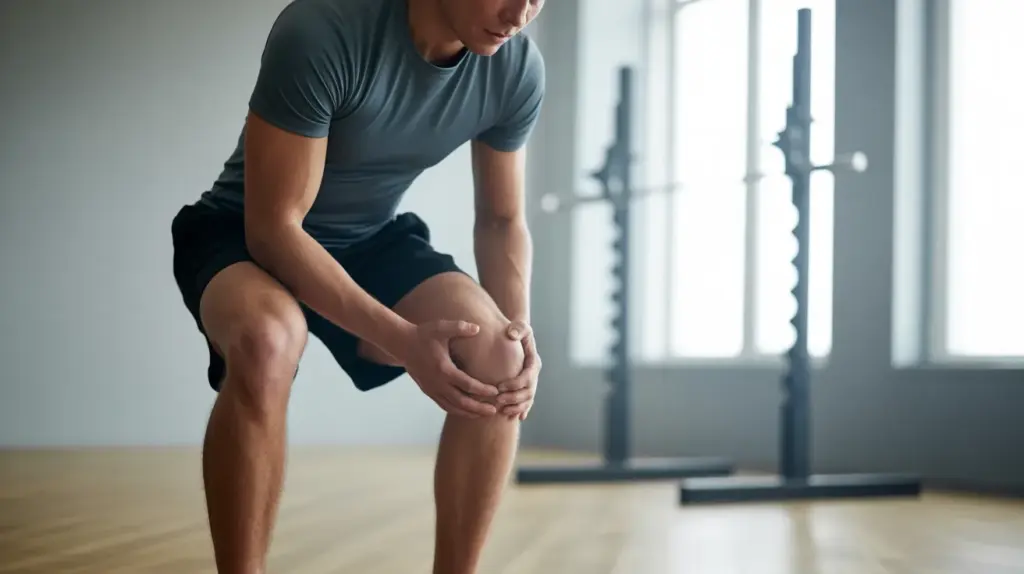

I know how frustrating it feels when knee pain when squatting suddenly shows up and makes you question every rep. You might start wondering if something serious is wrong or if you should stop squatting altogether.
In many cases, the pain comes from simple problems like weak glutes, tight ankles, or small form mistakes. The good news is that these issues can often be improved with the right exercises and movement habits.
In this guide, I’ll walk you through practical ways you can reduce knee strain during squats. Over the years, working with clients on both strength training and injury recovery, knee discomfort during squats is one of the most common issues I help people solve.
You’ll learn helpful exercises, technique adjustments, and lifestyle habits that support healthier knees so you can move with more comfort and confidence.
Quick Ways to Reduce Knee Pain When Squatting
If your knees hurt during squats, a few simple adjustments can often make an immediate difference. Improving movement mechanics reduces unnecessary pressure on the joint.
Helpful adjustments include:
- Keep your knees tracking in line with your toes
- Begin the squat by pushing your hips back
- Avoid letting your knees collapse inward
- Reduce squat depth temporarily if discomfort appears
- Warm up hips, glutes, and ankles before training
Combining these small changes with strengthening exercises often improves squat comfort over time
Exercises to Relieve Knee Pain During Squatting
In rehabilitation-focused training, I usually begin with exercises that restore proper hip and knee support before returning clients to heavier squat movements.
Strengthening the muscles that support your knee, particularly the glutes, hips, and quads, takes pressure off the joint itself and helps correct the movement patterns causing the pain.
These exercises are ordered from foundational to more functional, making them easy to work through progressively.
1. Glute Bridges
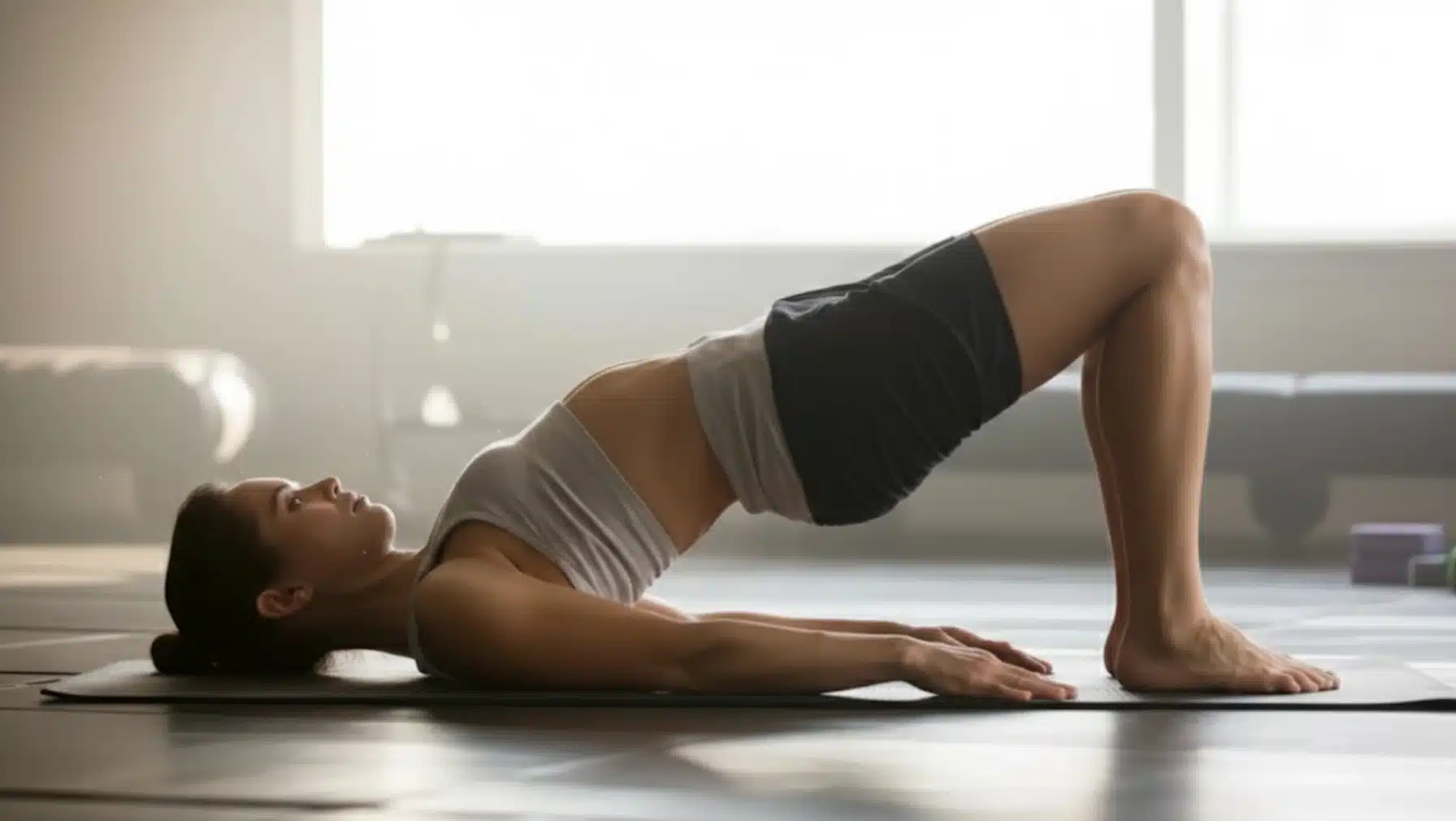
Your glutes do more for your knees than you might expect. When they’re underactive, your knee joint absorbs forces it simply wasn’t built to handle, and that’s where the trouble starts.
How to do It:
- Lie on your back with your knees bent and feet flat on the floor.
- Keep your arms relaxed at your sides and engage your core gently.
- Press through your heels and lift your hips toward the ceiling.
- Pause briefly at the top while squeezing your glutes.
- Slowly lower your hips back to the starting position.
Perform 3 sets of 12–15 repetitions.
Adding this to your routine is a small time investment that pays off quickly in how your knees feel during every squat rep.
2. Clamshells
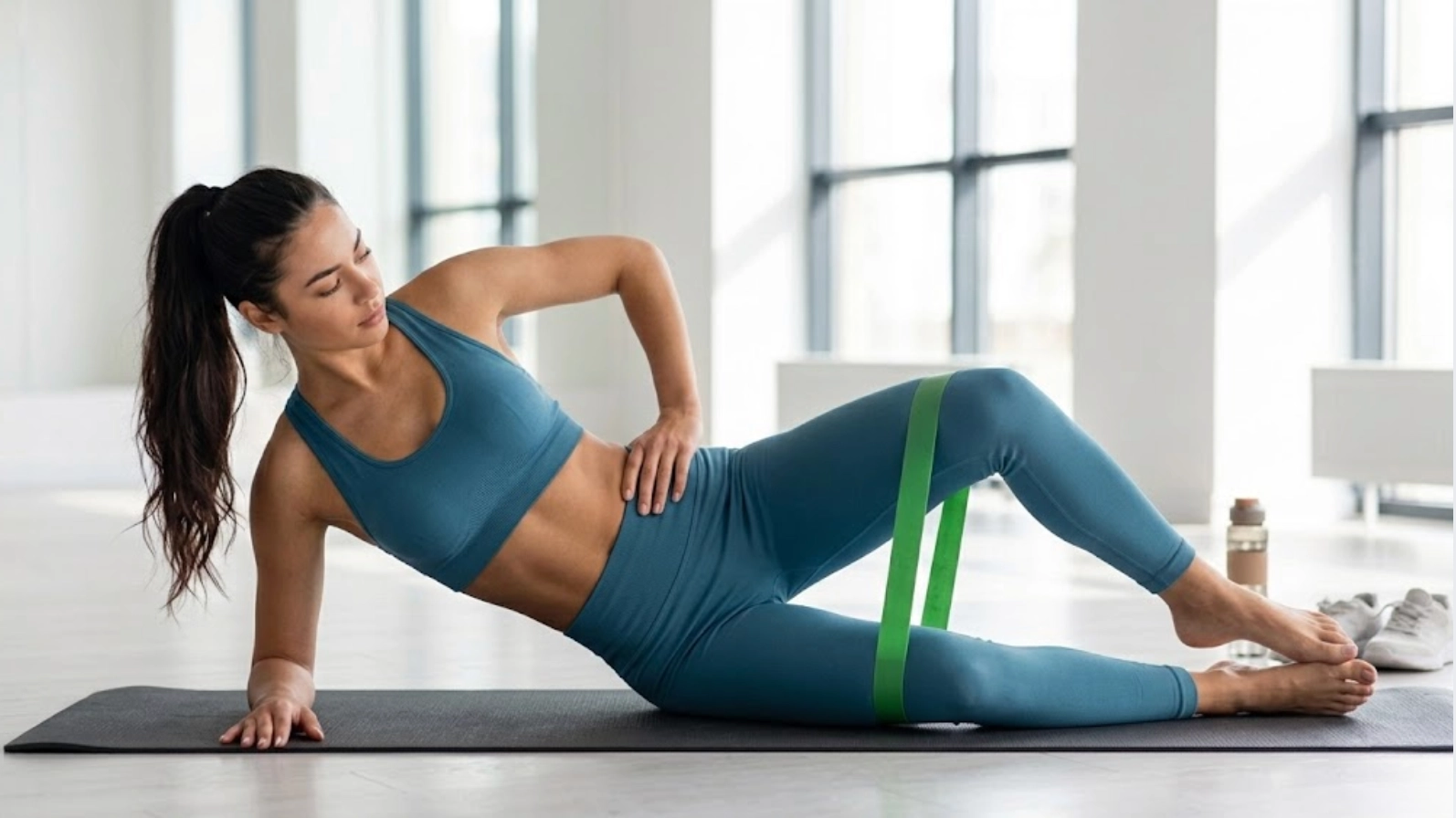
If your knees cave inward during squats, your hip abductors aren’t pulling their weight. This move targets the gluteus medius directly, so your knees stay where they’re supposed to.
How to do It:
- Lie on your side with your knees bent and feet stacked together.
- Rest your head on your arm while keeping your hips stable.
- Slowly lift your top knee upward while keeping your feet together.
- Pause briefly when the knee is raised.
- Lower your knee slowly back to the starting position.
Perform 3 sets of 15 repetitions per side.
Your knees will track more reliably once your hips start doing their share of the work, and you’ll feel the difference almost right away.
3. Step-Down Control Drill
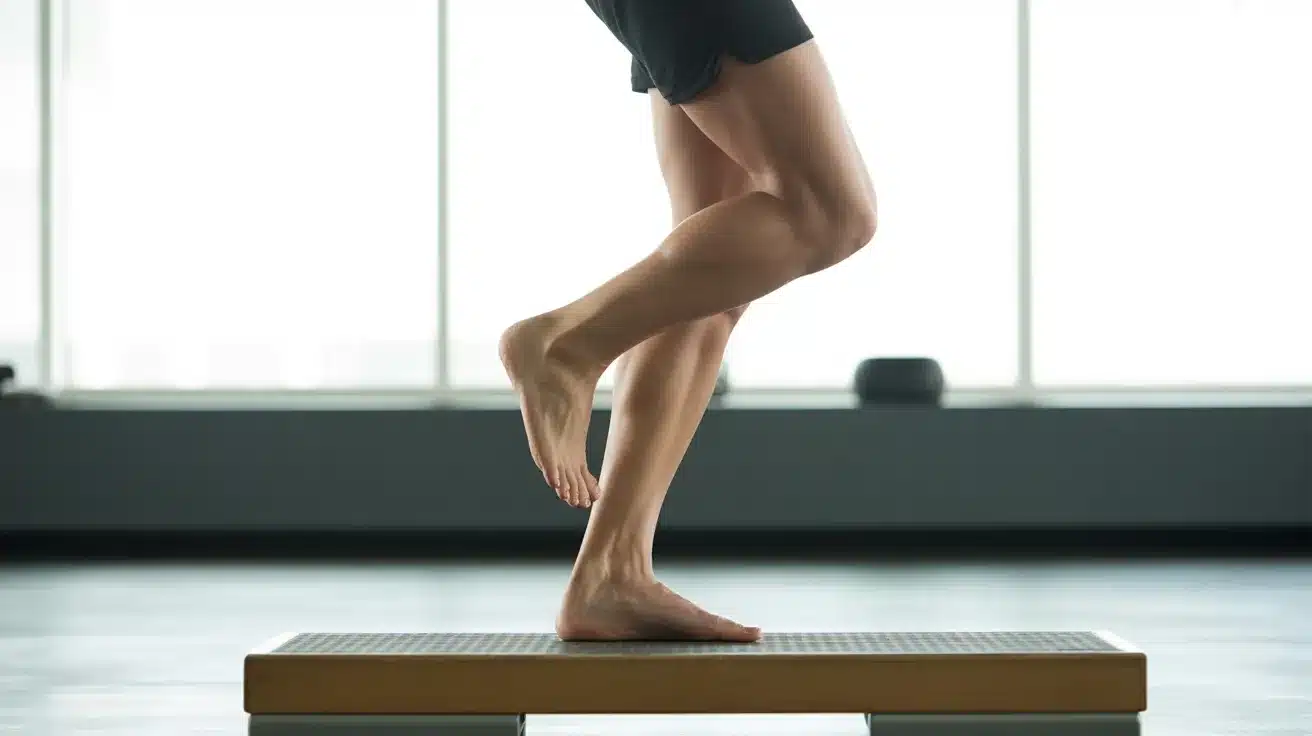
Single-leg stability is easy to ignore until pain makes it impossible to overlook. This drill builds the eccentric quad control your knees rely on every time you lower into a squat.
How to do It:
- Stand on a small step or sturdy platform.
- Keep your weight balanced on the standing leg.
- Slowly lower your opposite heel toward the floor.
- Maintain knee alignment over your toes throughout the movement.
- Push through the standing leg to return to the starting position.
Perform 3 sets of 10–12 repetitions per leg.
Work through this consistently, and you’ll notice your squats feel more controlled and far less unpredictable on the way down.
I often use this drill in early rehab programs because it builds knee control without placing excessive load on the joint.
4. Spanish Squats
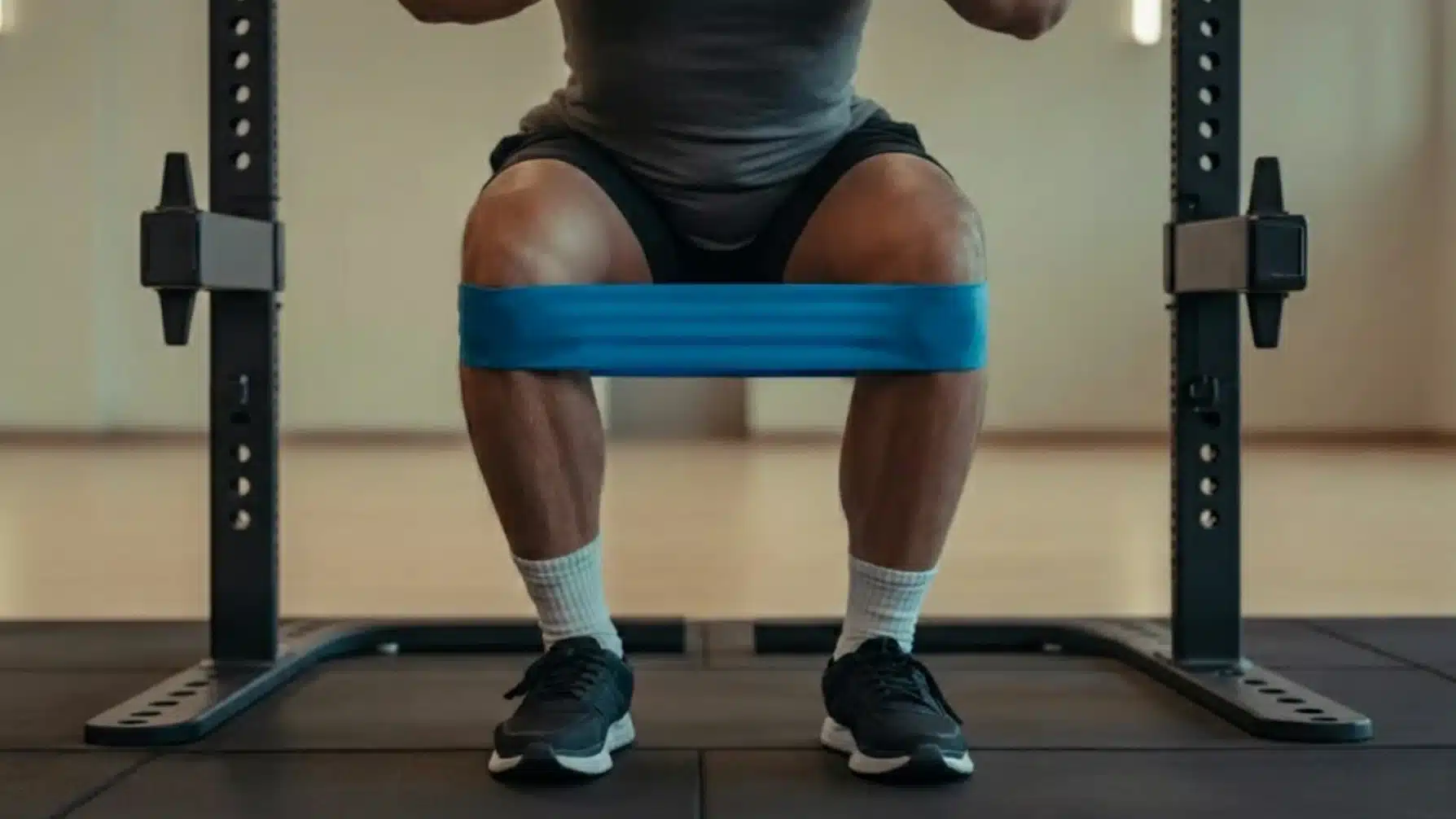
If kneecap discomfort is your main issue, your standard squat setup may be the problem. Spanish squats shift the load away from the kneecap while still working your quads hard.
How to do It:
- Attach a resistance band behind your knees and anchor it to a stable object.
- Stand with your feet shoulder-width apart and lean slightly back into the band.
- Slowly lower into a squat while keeping your torso upright.
- Hold briefly at the bottom of the squat.
- Push through your heels and return to the standing position
Perform 3 sets of 10–12 repetitions.
Your quads get a solid training stimulus here without putting your kneecap in a position it can’t handle right now.
5. Terminal Knee Extensions (TKEs)
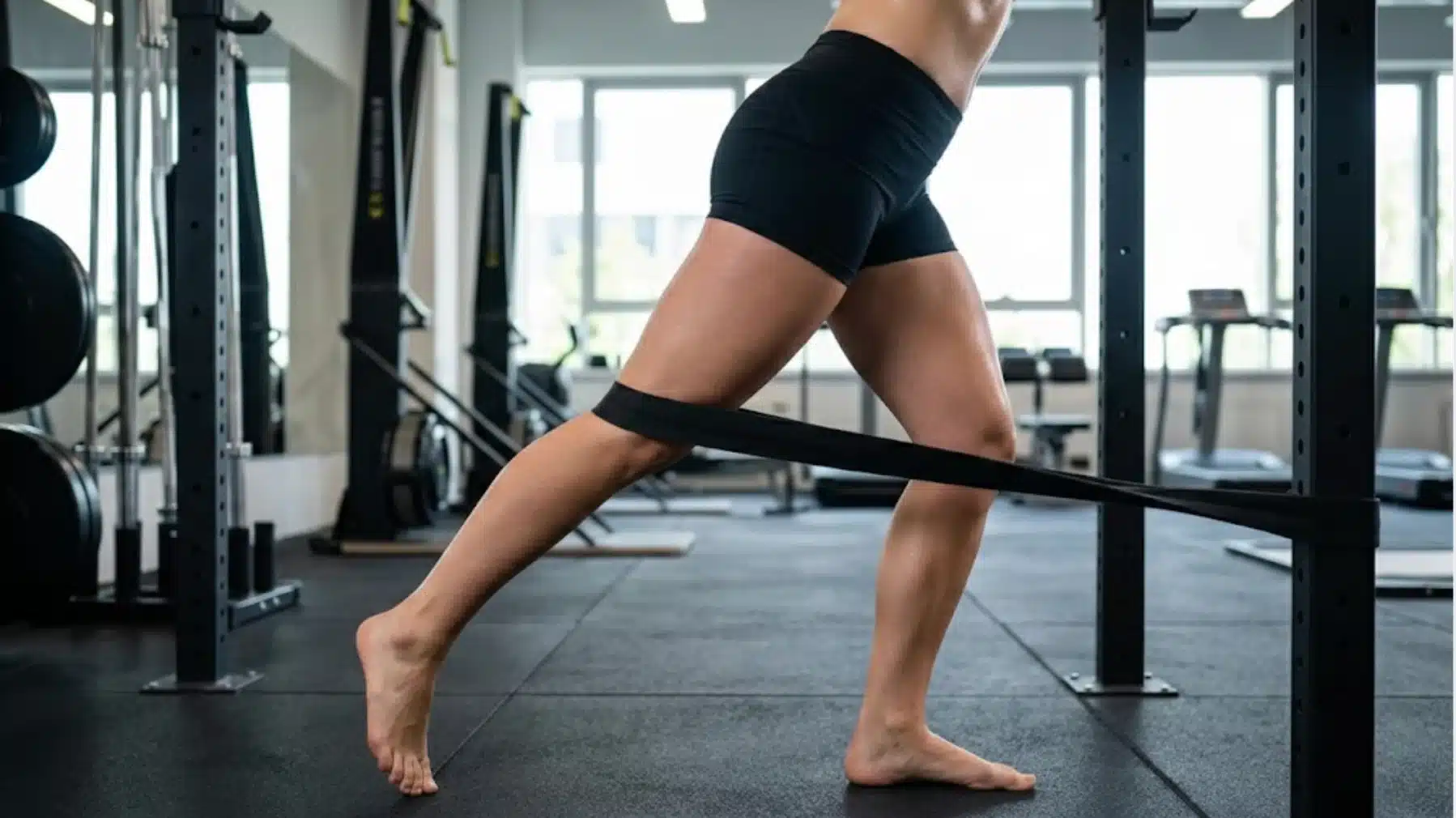
VMO activation, the teardrop quad muscle that guides kneecap tracking, is something many people train around rather than directly. TKEs fix that gap efficiently and without loading a bent knee.
How to do It:
- Loop a resistance band behind your knee and anchor it to a fixed object.
- Stand facing the anchor with your knee slightly bent.
- Slowly straighten your leg by tightening the front thigh muscles.
- Pause briefly with the leg fully extended.
- Return slowly to the starting position.
Perform 3 sets of 15–20 repetitions.
Better kneecap tracking means less friction and irritation over time; your knees will feel it after just a few weeks of consistent use.
6. Box Squats
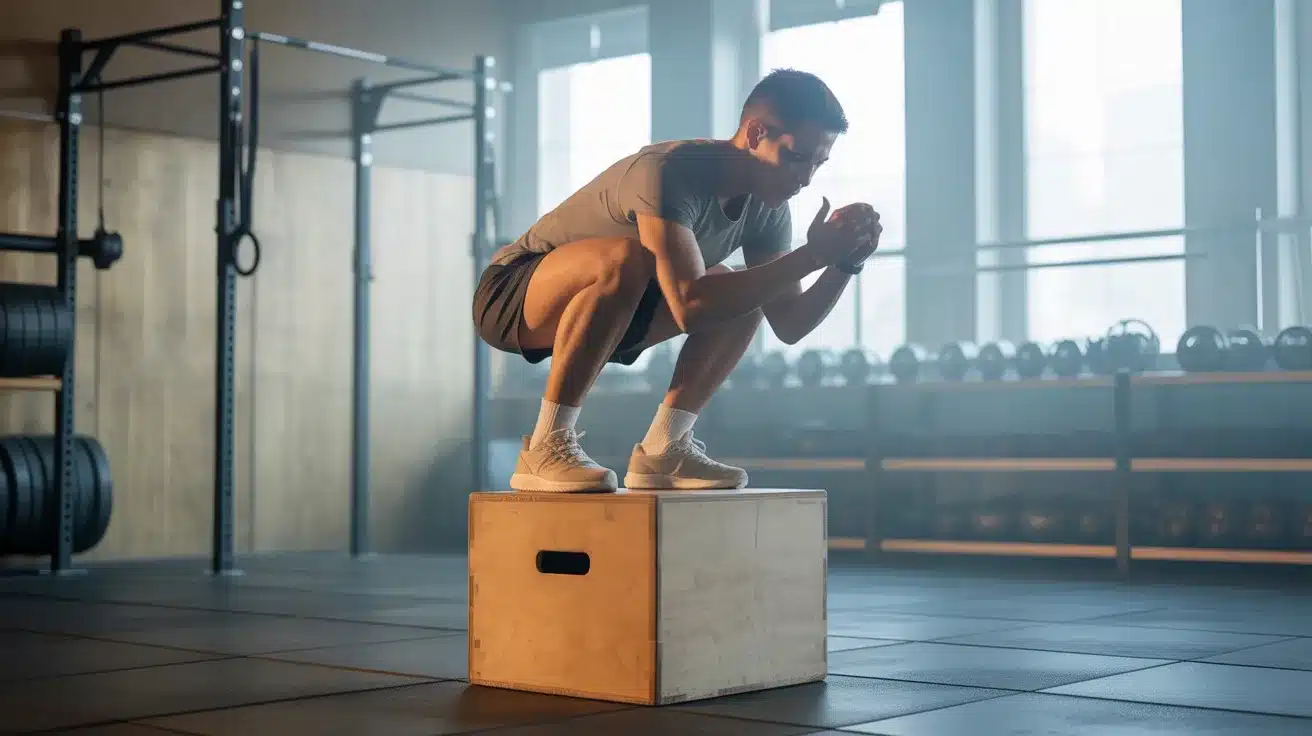
If squatting has been painful, you need a way back in that doesn’t make things worse. Box squats give you a controlled, confidence-building entry point with built-in depth limits.
How to do It:
- Stand in front of a sturdy box or bench with feet shoulder-width apart.
- Begin the squat by pushing your hips back.
- Lower your body slowly until you lightly sit on the box.
- Keep your chest upright and your knees aligned with your toes.
- Push through your heels to stand back up.
Perform 3 sets of 10–12 repetitions.
Think of box squats as your bridge back to full squatting; use them until your knees are ready for more, then move on.
7. Slow Tempo Squats
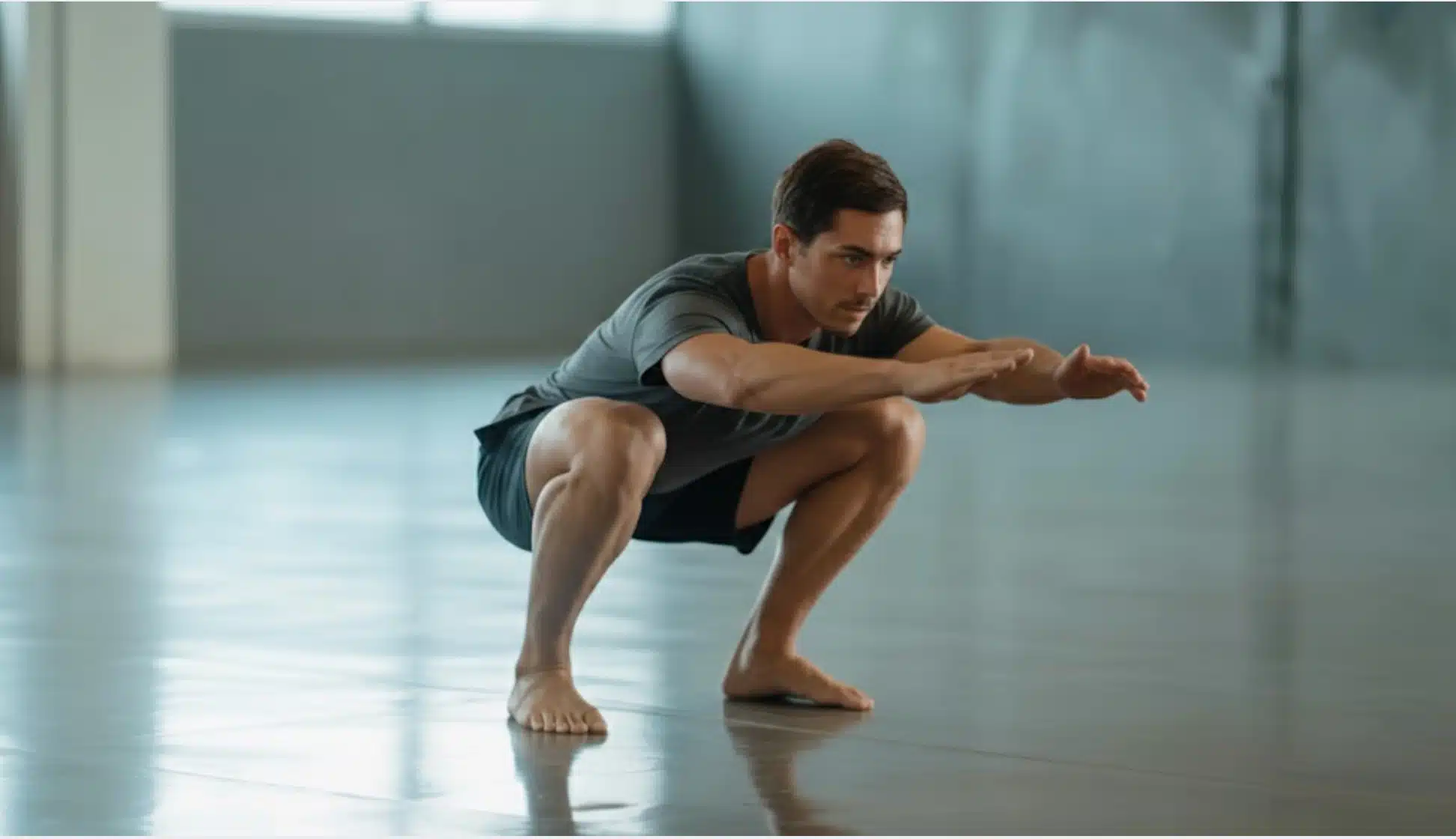
Speed is one of the easiest ways to hide poor form, and your knees are usually the ones absorbing the consequences. Slowing your squat down forces your body to stay honest through the full range.
How to do It:
- Stand with feet shoulder-width apart and engage your core.
- Slowly lower into the squat for about 4 seconds.
- Pause briefly at the bottom for 2 seconds.
- Rise back up to standing over 2 seconds.
- Focus on keeping your knees aligned and your movement controlled.
Perform 3 sets of 8–10 repetitions.
You’ll quickly feel exactly where your squat breaks down, and that information is what helps you fix it for good.
Mobility Exercises That Improve Squat Comfort
When your ankles or hips feel tight, your knees often take extra pressure during squats. Improving mobility helps you move more smoothly and maintain better squat control.
8. Ankle Mobility Drill
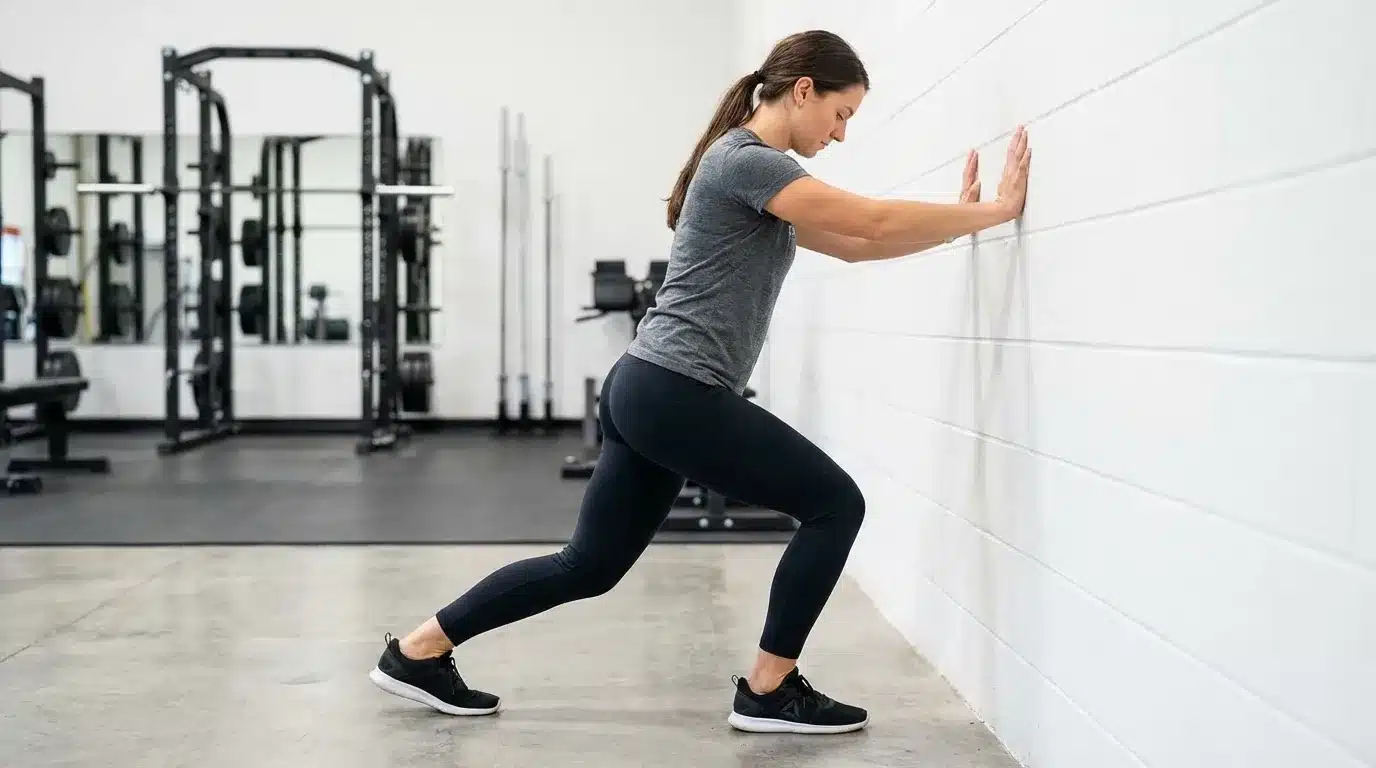
Stiff ankles can quietly ruin your squat mechanics long before you connect them to your knee pain. When your ankles can’t move freely, your heels lift, and your knees pay the price.
How to do It:
- Stand facing a wall with one foot placed a few inches away from it.
- Keep your heel flat on the floor while bending your front knee forward.
- Slowly move your knee toward the wall without letting the heel lift.
- Pause briefly when you feel a stretch in the ankle.
- Return to the starting position and repeat the movement.
Repeat 10–12 times per side.
Freeing up your ankles is one of those fixes that improves your entire squat pattern, not just one small piece of it.
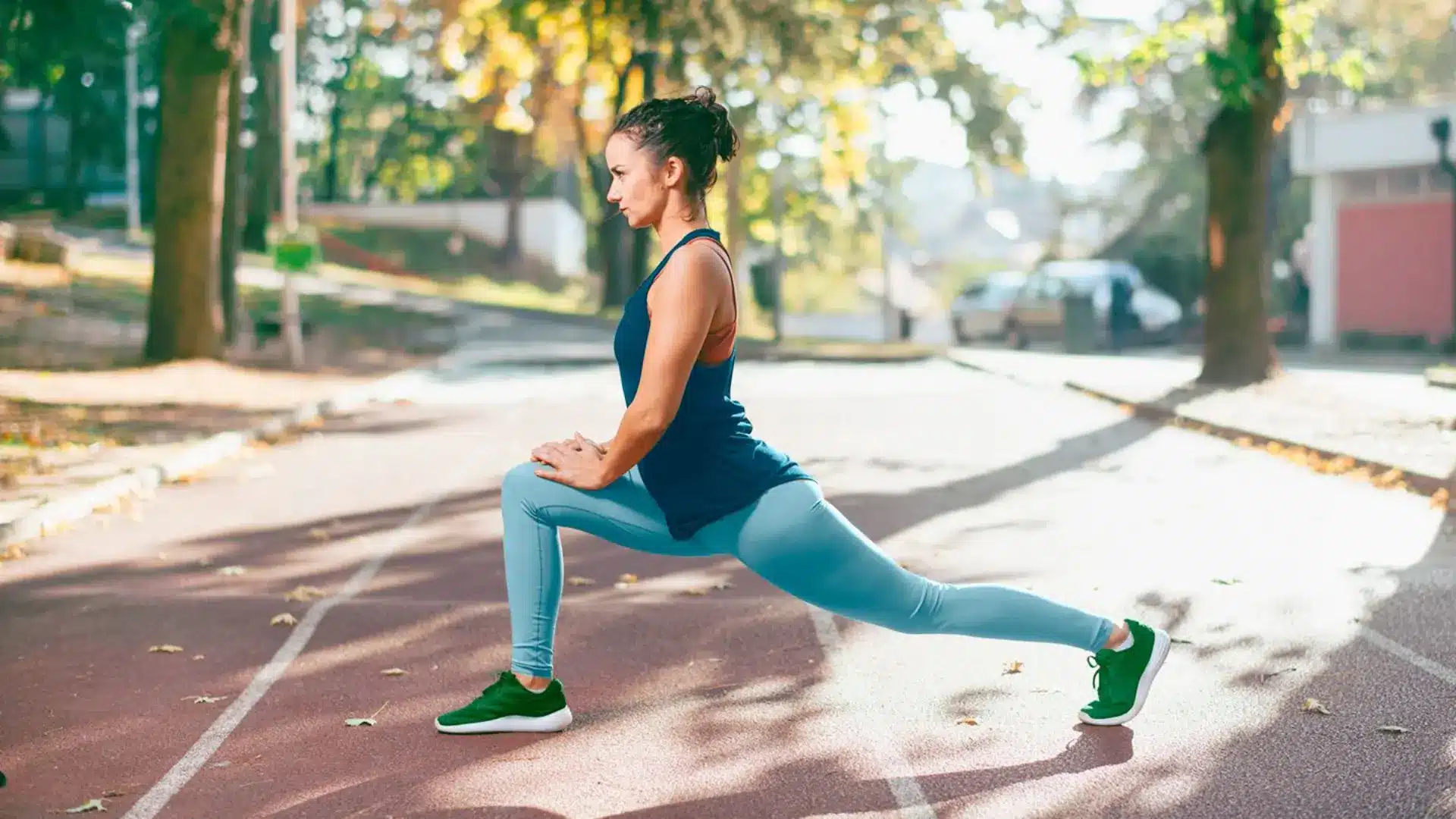
9. Hip Flexor Stretch
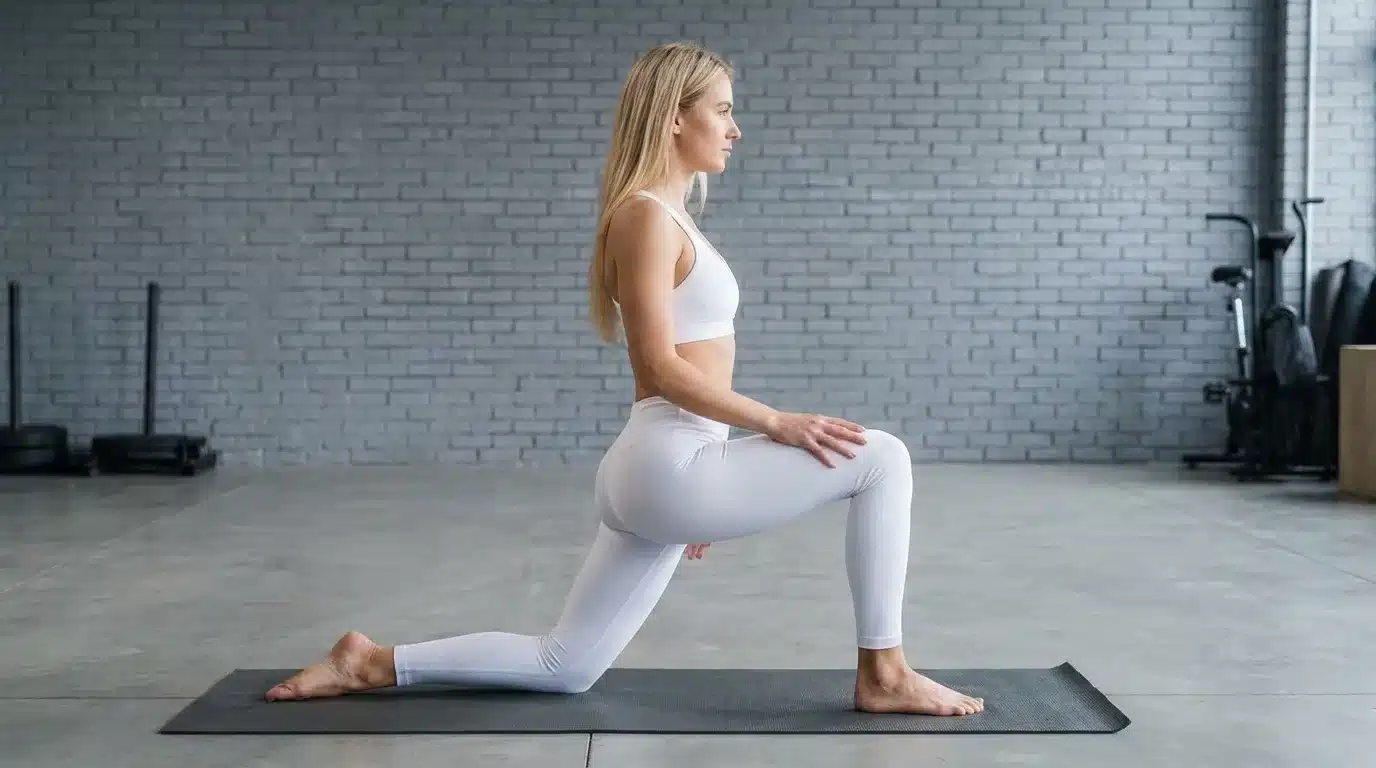
Tight hip flexors tilt your pelvis forward and change how your knee tracks during a squat. A daily stretch here can noticeably reduce the strain you feel through the front of your knee.
How to do It:
- Kneel on one knee with your other foot placed in front of you.
- Keep your upper body upright and gently push your hips forward.
- Maintain a stable posture while feeling a stretch at the front of the hip.
- Avoid arching your lower back during the stretch.
- Hold the position while breathing steadily.
Hold 30–40 seconds per side.
Your squat depth and comfort can both improve when your hips are moving freely; it’s worth building this into your warm-up every time.
Technique Mistakes That Can Lead to Knee Pain
Squat mechanics strongly influence how stress is distributed through the lower body. When I review squat form with clients, small technical habits often explain why knee discomfort develops over time.
Common issues include:
- Knees collapsing inward during the movement
- Weight shifting too far forward onto the toes
- Descending too quickly without control
- Increasing weight before mastering the movement pattern
- Skipping proper warm-ups before training
Correcting these habits often improves comfort and stability during squats.
Lifestyle Changes That Help Reduce Knee Pain During Squatting
Exercise is important, but what you do outside of training sessions matters just as much. Small daily habits can either protect the knee or quietly worsen it.
From a holistic health perspective, joint comfort rarely depends on exercise alone. Daily habits, recovery, and movement patterns outside the gym also play a major role.
- Warm up before workouts: Light movement before training prepares your muscles and joints, helping your body move more comfortably during exercise.
- Increase training intensity gradually: Slowly adding weight or repetitions allows your joints and muscles to adapt without unnecessary strain.
- Maintain a healthy body weight: Balanced weight helps reduce extra pressure on the knees during both exercise and daily activities.
- Wear supportive training shoes: Proper footwear improves stability and alignment, which helps protect the knees during squats.
- Take movement breaks during long sitting periods: Standing or walking briefly throughout the day helps reduce stiffness and supports joint mobility.
- Balance training with recovery: Rest between intense workouts allows muscles and joints to recover and stay strong over time.
Small daily habits like these support better movement patterns and help keep your knees feeling more comfortable over time.
When to See a Professional
Most knee discomfort during squats improves with better movement patterns and strengthening work. However, some symptoms require medical evaluation.
Consider seeking professional help if you experience:
- Persistent swelling around the knee
- Sharp pain during movement
- A locking or catching sensation
- Instability in the joint
A sports physiotherapist or orthopedic specialist can evaluate whether structural issues, such as ligament or meniscus injuries, are involved
Final Thoughts
By now, you have a better understanding of what may cause knee pain when squatting and the steps you can take to improve it.
I walked you through technique adjustments, strengthening exercises, mobility drills, and simple daily habits that help support healthier knee movement.
When you focus on building hip strength, improving ankle flexibility, and practicing controlled squat mechanics, your knees receive better support during each rep.
I’ve noticed that consistent practice and gradual progress often make a real difference, and you may see the same improvement over time. Start with a few of these exercises and track how your body responds.
If you’ve experienced knee pain during squats, share your tips or experience in the comments below.