







Sharp headaches and neck pain from occipital neuralgia can make everyday movements feel uncomfortable and frustrating. Here, I will walk you through exercises for occipital neuralgia that focus on the upper neck, the base of the skull, and the surrounding muscles.
Unlike a regular tension headache, occipital neuralgia produces sharp, shooting, or burning pain that travels along the occipital nerves from the base of the skull up toward the scalp, and sometimes behind the eyes. Exercises alone will not cure the condition, but consistent gentle movement can help reduce muscle tension, take pressure off the nerves, and lower how often flare-ups occur.
These exercises include simple stretches, light strengthening movements, and easy self-massage techniques that many experts recommend for managing symptoms.
You’ll also find tips on how often to practice these exercises and common mistakes to avoid. With the right approach and consistent practice, these exercises may help ease muscle tightness, improve neck movement, and support better comfort during daily activities.
What Is Occipital Neuralgia?
Occipital neuralgia is a type of nerve pain that affects the back of the head and the upper neck. It happens when the occipital nerves, which run from the top of the spine to the scalp, become irritated or compressed.
This can cause sharp, shooting pain, aching, or a burning feeling in the back of the head. Some people also feel tenderness when touching the base of the skull.
In many cases, the problem is linked to tight neck muscles, poor posture, or long hours spent looking down at phones or computers. Stress, neck injuries, or stiff joints can also trigger it.
One often overlooked cause is forward head posture. When the head sits forward of the shoulders, the suboccipital muscles at the base of the skull have to work harder to hold the head up. Over time this creates chronic compression on the occipital nerves. Correcting this posture pattern is one of the most important long-term steps alongside the exercises below.
Because these muscles and nerves are closely connected, gentle stretches and exercises are often recommended to help relax the area and reduce pressure on the nerves.
Note: Occipital neuralgia symptoms can closely resemble migraines and other headache conditions. If you do not yet have a confirmed diagnosis, speak with a doctor before starting an exercise program so you are treating the right condition.
Safety Tips Before You Start
Before starting any exercises for occipital neuralgia, it’s important to take a few simple precautions. These movements are meant to be gentle and helpful, not painful. Keeping a few safety tips in mind can help you avoid making the pain worse.
- Consult a doctor if pain is severe: If your headaches or neck pain are very intense, constant, or getting worse, it’s best to speak with a healthcare professional before trying new exercises.
- Stop any movement that causes sharp pain: Mild stretching or tension can be normal, but sharp or shooting pain is a sign to stop the exercise right away.
- Practice slowly and gently: These exercises work best when done calmly and in a controlled way. Move slowly and focus on good form rather than rushing through the repetitions.
- Use heat before stretching and ice afterward: Applying a warm pack to the neck for a few minutes before exercises helps loosen tight muscles. A cold pack applied after can help reduce any inflammation. Do not apply either for more than 20 minutes at a time.
- Do not attempt all exercises at once: Start with two or three movements, notice how your body responds over 24 to 48 hours, and add more gradually.
Following these simple guidelines can make your exercise routine safer and help you get better results over time.
How to Do Occipital Neuralgia Exercises Safely
Before starting these exercises, it’s important to move slowly and gently. These movements are designed to reduce tension, not cause pain. Follow the steps carefully and stop if you feel discomfort.
1. Chin Tucks
This simple exercise helps strengthen the deep neck muscles and improve overall posture. It reduces pressure on the occipital nerves and eases tension in the upper neck.
Regular practice can help retrain your neck muscles to hold a healthier position throughout the day, which may gradually reduce the frequency and intensity of occipital neuralgia symptoms.
Steps to Follow:
- Sit or stand tall, with your shoulders relaxed and your eyes forward, keeping your neck in a neutral position.
- Gently pull your chin straight back, creating a small double chin without tilting your head.
- Hold the position for five seconds, relax slowly, and repeat the movement for several controlled repetitions.
Wall variation: Stand with your back flat against a wall and perform the chin tuck so the back of your head actually touches the wall. This reinforces correct alignment and gives you immediate feedback on whether you are moving straight back rather than tilting down. This version is considered more effective for correcting forward head posture.
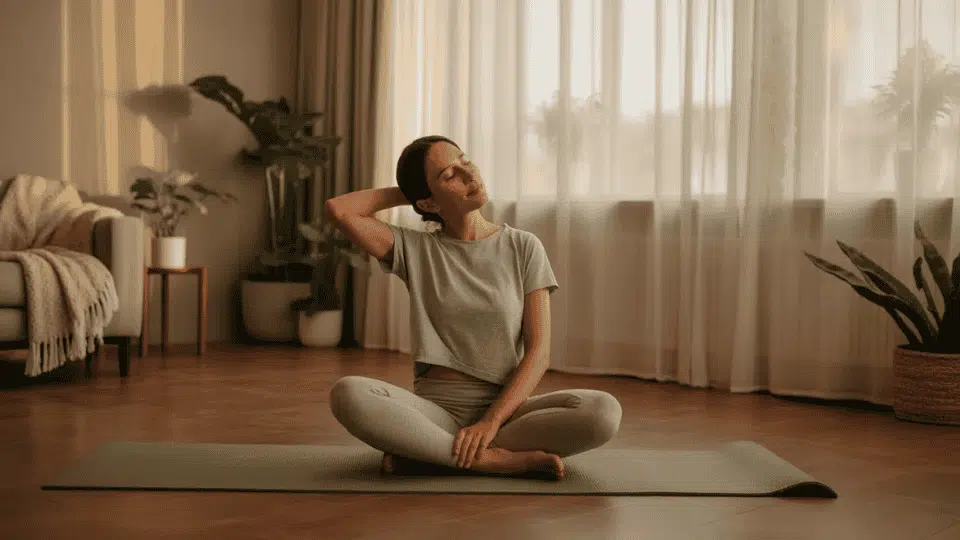
2. Upper Trapezius Stretch
The upper trapezius muscles often become tight from long hours of sitting or looking at screens. Stretching them can help relieve neck tension and reduce nerve irritation.
This gentle stretch improves flexibility in the neck and shoulders while encouraging better posture. When done regularly, it may help reduce stiffness and allow the neck to move more comfortably throughout daily activities.
Steps to follow:
- Sit or stand upright with your shoulders relaxed and your back straight.
- Place one hand behind your back, reaching toward the opposite hip. Use your other hand to gently pull your head toward the opposite shoulder until you feel a stretch along the side of your neck.
- Hold the stretch for 20 to 40 seconds, then bring your head back to the center and repeat the movement on the other side.
3. Suboccipital Release (Tennis Ball Massage)
Tight muscles at the base of the skull can irritate the occipital nerves. A gentle self-massage using a tennis ball may help release this tension.
This technique gently relaxes the small muscles beneath the skull while encouraging better blood flow. Practicing this method for a few minutes can help loosen stiff tissues and provide soothing relief for the upper neck.
Steps to Follow
- Lie on your back on the floor or a yoga mat and place a tennis ball under the base of your skull.
- Slowly move your head side to side so the ball gently massages the tight muscles.
- Pause on any tender spots for a few seconds while breathing slowly and keeping the pressure comfortable.
Alternative: If a tennis ball feels too firm, use a rolled towel placed under the base of the skull instead. The gentle pressure still helps release tight suboccipital muscles without aggravating a sensitive area.
4. Neck Flexion Stretch
This stretch targets the muscles along the back of the neck. It can help relieve stiffness and improve flexibility in the upper cervical area.
This movement is simple but effective for helping the neck relax. When practiced consistently, it may help reduce discomfort and improve the neck’s natural range of motion.
Steps to follow:
- Sit or stand with your back straight and shoulders relaxed.
- Slowly lower your chin toward your chest until you feel a stretch along the back of your neck.
- Hold the stretch briefly while breathing calmly, then lift your head back up slowly to the starting position.
5. Neck Extension Stretch
Neck extension helps balance the muscles at the front and back of the neck. It can also improve mobility when done gently.
By carefully extending the neck, the muscles and joints in the upper spine can move more freely, helping the neck feel less tight during daily activities.
Steps to follow:
- Sit or stand tall, keeping your shoulders relaxed and your spine straight.
- Slowly tilt your head backward so you look slightly toward the ceiling.
- Hold the position for a few seconds, then gently bring your head back to a neutral position without moving too quickly.
Caution: If this movement triggers sharp pain or causes pain to travel toward the eyes or face, stop immediately. Extension can worsen symptoms in some people depending on the underlying cause of their nerve compression.
6. Side Neck Stretch
This stretch loosens muscles on the sides of the neck that can contribute to tension and headaches linked to occipital neuralgia.
This movement improves flexibility and can make it easier for the neck to turn and tilt without discomfort. Regular practice may help reduce stiffness and support healthier neck movement throughout the day.
Steps to follow:
- Sit upright with your shoulders relaxed and your back straight.
- Slowly tilt your head to one side so your ear moves closer to your shoulder.
- Hold the stretch briefly, then return your head to the center and repeat the stretch on the other side.
7. Shoulder Blade Squeezes
Strengthening the upper back helps support the neck and improves posture. This can reduce strain on the muscles of the occipital area.
This simple strengthening exercise encourages better posture and helps the shoulder blades stay in a healthy position. With consistent practice, it can reduce tension in the upper back and make the neck feel more supported during everyday activities.
Steps to follow:
- Sit or stand with your arms resting naturally at your sides, maintaining an upright posture.
- Slowly squeeze your shoulder blades together behind your back while keeping your shoulders down.
- Hold the squeeze for a few seconds, then relax gently before repeating the movement.
8. Cat-Cow Stretch
This gentle movement improves flexibility through the spine and neck. It also helps release tension in the upper back.
By slowly moving between two positions, the muscles along the back and neck can relax and stretch. Practicing this stretch regularly may help reduce stiffness and promote better posture and spinal mobility.
Steps to follow:
- Start on your hands and knees with your wrists under your shoulders and knees under your hips.
- Slowly arch your back while lifting your chest and head slightly upward.
- Then round your spine while tucking your chin toward your chest to stretch the upper back and neck.
9. Resistance Band Rows
This strengthening exercise targets the upper back muscles that support the neck. Stronger back muscles can help reduce neck strain. Stronger back muscles can help keep the shoulders in a better position and reduce stress on the cervical spine.
This exercise is simple to perform at home with a resistance band. Over time, it can improve posture and help reduce tension that travels up into the neck.
Steps to follow:
- Hold a resistance band with both hands while sitting or standing with your back straight.
- Pull the band toward your body by bending your elbows and squeezing your shoulder blades together.
- Slowly extend your arms back to the starting position while keeping your chest lifted.
10. Scapular Retractions
Scapular retractions help train the shoulders to stay in a healthy position. This reduces pressure on the neck and surrounding nerves.
This exercise is simple but effective for supporting better posture. Practicing it regularly may help the neck and upper back feel more stable and less tense.
Steps to follow:
- Sit or stand tall with your arms relaxed by your sides and your chest gently lifted.
- Pull your shoulders back and slightly downward while keeping your neck relaxed.
- Hold the position briefly, then slowly release your shoulders and repeat the movement.
11. Seated Thoracic Extension
This exercise opens the upper back and improves posture. It can help reduce tension that travels from the upper spine to the neck.
A seated thoracic extension helps open the chest and improve mobility in the upper back. This can reduce tension that travels upward into the neck and base of the skull.
Steps to follow:
- Sit on a chair with a firm backrest and place your hands behind your head.
- Gently lean your upper back over the chair while keeping your hips stable on the seat.
- Hold the stretch briefly, then slowly return to an upright sitting posture.
12. Diaphragmatic Breathing
Stress is a well-known trigger for occipital neuralgia flare-ups. Controlled breathing exercises help calm the nervous system and reduce the muscle tension that compresses the occipital nerves.
The American Migraine Foundation recommends regular breathing exercises for headache disorders, and the same principle applies here.
Steps to follow:
- Place one hand on your chest and the other on your stomach just below the ribs.
- Inhale slowly through your nose, directing the breath downward so your stomach rises while your chest stays still.
- Exhale gently through pursed lips, letting the stomach fall.
- Repeat for 5 to 10 minutes. Practice several times per week or during any flare-up.
Square breathing variation: Inhale for 4 seconds, hold for 4 seconds, exhale for 4 seconds, pause for 4 seconds. Repeat for a few minutes to quickly calm muscle tension.
Common Mistakes to Avoid
Small mistakes during exercises can sometimes make neck pain worse instead of better. Being aware of these common issues can help you practice more safely and get better results.
- Overstretching or forcing movement: Pushing your neck too far during a stretch can strain muscles and irritate the occipital nerves. Always move gently and stop if the stretch feels painful.
- Ignoring posture during daily activities: Poor posture while sitting, using a phone, or working at a desk can keep the neck muscles tight and undo the benefits of exercises.
- Skipping warm-ups or rushing exercises: Jumping straight into movements or doing them too quickly can increase tension. Take a few moments to relax your neck and move slowly.
- Neglecting the front of the neck: Most people focus only on stretching the back of the neck. But tightness in the front neck muscles (the scalenes and platysma) is often what pulls the head forward in the first place. If chin tucks alone are not helping, adding a gentle scalene stretch may make a bigger difference.
- Expecting immediate results: These exercises work through gradual, consistent practice. Most people need two to four weeks of daily effort before noticing a meaningful reduction in symptoms.
Avoiding these mistakes can make your exercises safer and help you get more relief over time.
Final Thoughts
Occipital neuralgia exercises are not a quick fix, but they are one of the most practical tools you have for managing this kind of pain at home.
I’ve seen people experience real relief simply by staying consistent and moving gently. The key is to listen to your body, avoid forcing anything, and give your muscles time to respond.
Good posture between sessions matters just as much as the exercises themselves. Small daily effort adds up more than people realize.
If your pain is severe or getting worse, always check in with a doctor first. Which exercise helped you the most? Drop it in the comments below.