



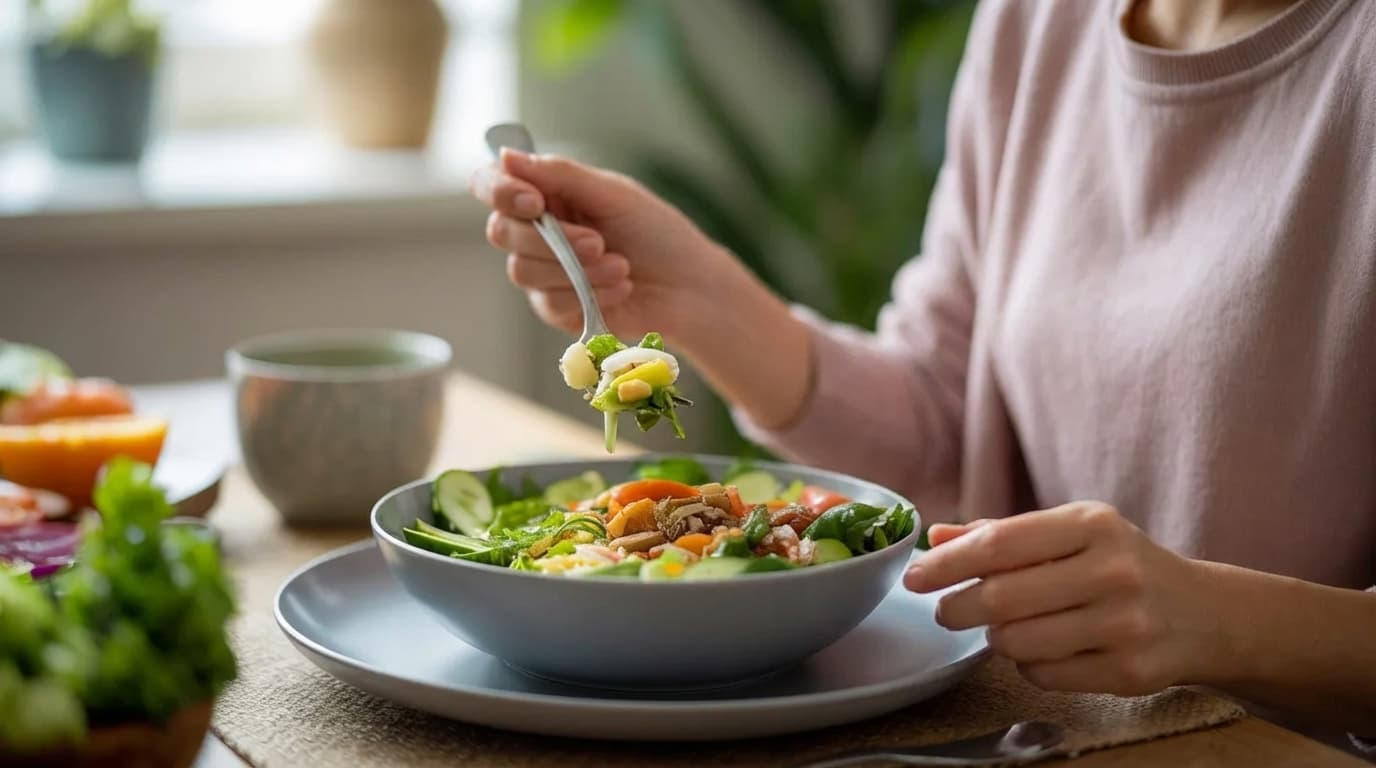








Eating less is not the same as eating smart, and I spent a long time confusing the two. For anyone with a big appetite, that distinction matters more than any calorie target.
The lowest-calorie foods for big appetites are built around a simple principle: high volume, high water content, and enough fiber to keep hunger quiet without the calorie cost.
That principle is what separates a sustainable approach from one that relies entirely on willpower and eventually breaks down.
If you have finished a meal and felt hungry an hour later, this is where the answer lives: here are some specific foods, and how to build them into everyday meals without feeling deprived.
Why Volume Eating Works Better Than Eating Less
Eating less is not a sustainable strategy, and the reason is how the stomach actually works. It responds to physical volume, not calorie count. Filling it with high-water-content food triggers the same fullness signals as calorie-dense food, at a fraction of the cost.
Water content in food also slows gastric emptying, prolonging fullness beyond the meal itself. Fiber adds bulk, feeds gut bacteria, and stabilizes appetite throughout the day. The brain takes roughly 20 minutes to register fullness.
High-volume foods naturally extend eating time, giving those signals a chance to catch up. Calorie density is the only metric that matters here; low calories per gram means larger portions, same deficit, a rule that extends to low-calorie quick meals just as easily.”
Low-Calorie Foods That Satisfy a Big Appetite
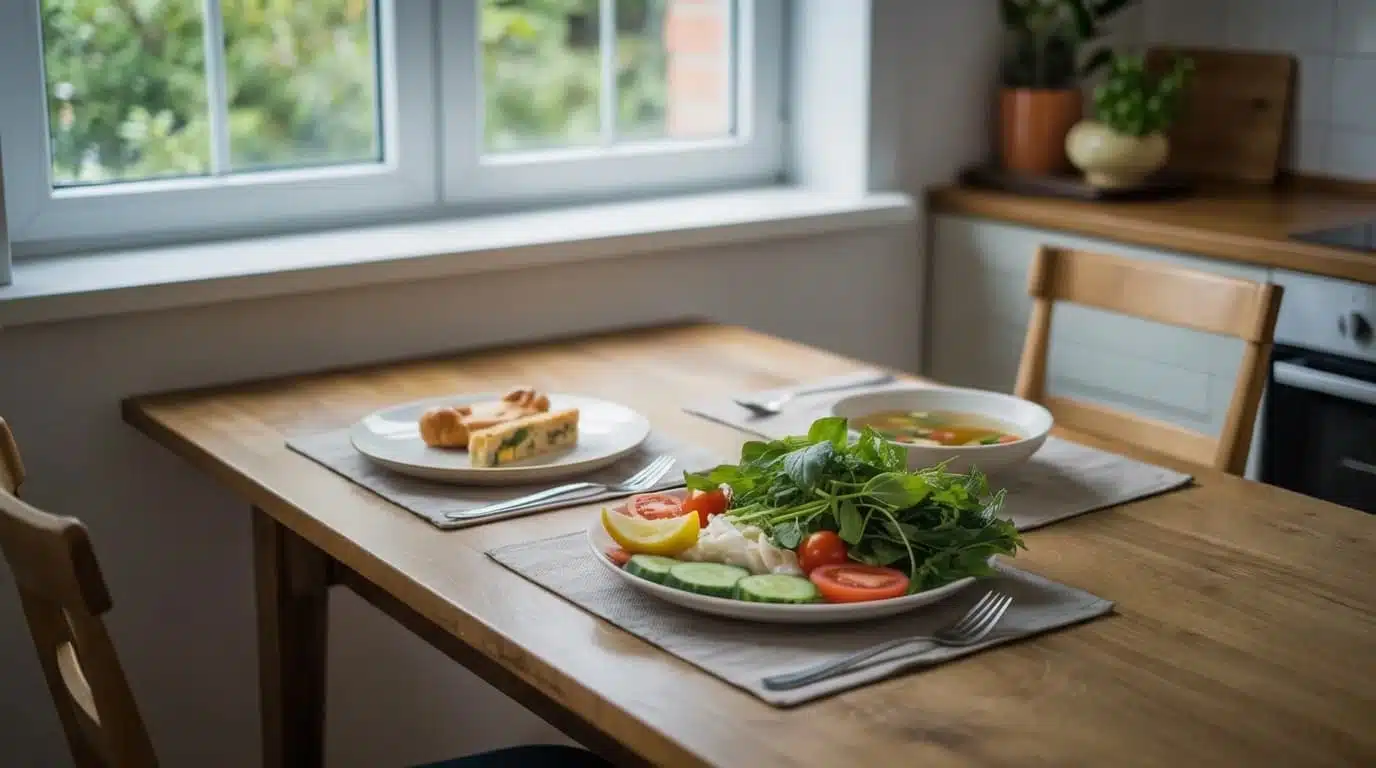
These are not diet foods designed to be endured. They are high-volume, low-calorie ingredients that physically fill the stomach, and actually taste good.
1. Cucumber: ~15 cal per cup
Cucumber is 96% water, and a whole large one has roughly 45 calories. It adds significant volume to meals and snacks without registering meaningfully on the calorie count.
The crunch is genuinely satisfying in a way that soft, low-calorie foods rarely are. Slice it into salads, pair it with hummus, or use it as a direct replacement for crackers under any topping.
2. Celery: ~16 cal per cup
Celery has an almost negligible effect on daily calorie intake, and that is precisely what makes it useful. High water content, a small but real hit of fiber, and vitamin K.
A crunch that genuinely satisfies the urge to snack on something substantial. It is not the most exciting ingredient on this list, but as a free-range snack, it is almost impossible to beat.
3. Leafy Greens: ~7–20 cal per cup
Spinach, romaine, kale, arugula, and watercress are among the lowest-calorie foods per serving available anywhere. An enormous bowl of mixed greens, the kind that takes a full ten minutes to work through, comes in under 30 calories.
The nutritional profile makes it more than just filler: vitamins A, C, K, folate, iron, and calcium are all present in genuinely meaningful amounts, exactly what a snack should deliver alongside volume.
4. Zucchini / Courgette: ~20 cal per cup
Courgette is one of the most versatile filler foods available at any calorie level. Spiralize it into zoodles as a direct pasta alternative, roast it until caramelized, or add it to soups, stir-fries, and omelets.
Its mild flavor absorbs seasoning well and works across virtually every cuisine without tasting like a compromise, which makes it easy to use regularly without getting bored.
5. Broth-Based Soup: ~15–70 cal per cup
Research on soup and satiety is unusually consistent: people who eat soup before a meal reliably consume fewer calories overall. Warmth, volume, and water content all signal fullness to the brain simultaneously, in a way that cold, low-calorie foods do not.
A simple vegetable broth with tomatoes, onion, cabbage, and herbs is very low in calories and delivers a deeply satisfying result.
6. Strawberries: ~50 cal per cup
Strawberries are one of the lowest-calorie fruits available and deliver meaningful fibre and vitamin C alongside the sweetness.
A generous bowl is visually satisfying, naturally sweet without any added sugar, and takes real time to eat, all of which allows the brain’s fullness signals to register properly before overeating has a chance to occur. Few low-calorie foods manage to feel this indulgent for the calorie cost.
7. Egg Whites: ~17 cal per white
Egg whites are almost entirely protein, 3.6g per white, with virtually zero fat, which puts them in a category of their own at this calorie level. Four whites scrambled with non-starchy vegetables make a genuinely filling, protein-packed meal for under 150 calories.
Adding yolks back delivers the full nutritional profile, but for pure volume, whites alone are difficult to beat.
8. Plain Popcorn: ~30 cal per cup
Three cups of air-popped popcorn come in at roughly 90 calories, a snack bowl that takes real time to finish, and delivers 3.5g of fiber alongside the volume.
That combination of bulk, fiber, and eating time makes it one of the more satisfying low-calorie snack options available. Keep it plain or lightly seasoned; flavored microwave varieties can instantly triple or quadruple the calorie count.
9. Cottage Cheese: ~80 cal per half cup
Low-fat cottage cheese is unusual in the low-calorie category because it is also genuinely high in protein, 12g per half cup, making it one of the better protein-per-calorie options available as a whole food.
That protein slows digestion and suppresses hunger hormones more effectively than carbohydrates or fat. Use it as a savory base with toppings, mix it with fruit, or eat it plain with herbs and seasoning.
10. Watermelon: ~46 cal per cup
Watermelon is 92% water and delivers a sweet, refreshing hit for very few calories, making it one of the more mentally satisfying options on this list in a way that calorie-dense foods rarely replicate at the same portion size.
It takes real time to eat, which helps fullness signals register before the bowl is empty. It also contains lycopene, an antioxidant consistently associated with heart health benefits.
How to Build Meals Around Low-Calorie Foods
Knowing which foods are low in calories is the starting point. Building them into snacks around 200 calories that actually satisfy is what makes the difference. Here is how to do exactly that:
| Instead Of | Do This | Why It Works |
|---|---|---|
| Starting with the main course | Begin with broth soup or a large salad | Reduces overall calorie intake at the meal that follows |
| Filling the plate with carbs | Fill half with non-starchy vegetables first | Volume without the calorie cost |
| Reaching for a protein bar | Add egg whites, cottage cheese, or white fish | Keeps hunger quiet between meals |
| Snacking on crisps or crackers | Swap for popcorn, strawberries, or a cucumber | Same snacking urge, fraction of the calories |
| Ending with something heavy | Close with watermelon, strawberries, or popcorn | Sweet, low-calorie, and signals the meal is done |
Five structural shifts, same amount of food on the plate. The calorie count drops, but the satisfaction does not.
Tips for Improving Fullness with Low-Calorie Foods
From what I have seen, staying full on fewer calories comes down to eating smarter, not less. Here is what actually makes a difference:
- Lead with fiber and protein. Both digest slowly, keep hunger quieter for longer, and make every snack work harder within the same calorie count.
- Add water-rich foods to your plate. Cucumbers, celery, and leafy greens add volume without adding calories, sending a stronger fullness signal to the brain.
- Eat slowly and chew thoroughly. The brain needs around 20 minutes to register fullness, so slowing down gives that signal time to arrive.
- Drink water consistently throughout the day. Thirst is frequently mistaken for hunger, and a glass of water before meals helps the body tell the difference.
None of these strategies requires a complete overhaul of your eating habits. Small, consistent adjustments to meals and snacks are enough to notice a real shift in how satisfied you feel.
The Bottom Line
Eating on a deficit does not have to mean eating small, and I think that is the most important thing this list proves. The lowest-calorie foods for big appetites all work on the same principle: volume, water content, and fiber do the work that willpower should never have been asked to do.
You now have ten specific foods, the science behind why they work, and a practical meal structure to build them around. None of it requires expensive ingredients or complicated preparation.
Pick two or three foods from this list, add them to this week’s meals, and notice the difference in how full you actually feel. Drop a comment below and tell me which one surprised you most.