











Breakfast rarely gets the attention it deserves, and for most people, that gap shows up in how they feel by mid-morning. Chronic inflammation builds through repeated food choices that feel completely normal until the body starts pushing back.
The pattern is quiet, slow, and almost entirely shaped by what happens in the first meal of the day. Once I started paying attention to my own mornings, I realized an anti-inflammatory breakfast doesn’t require expensive ingredients or an hour in the kitchen. It just requires knowing what works.
You will find recipes you can actually make on a weekday morning, a full week of meal ideas, and everything that makes this genuinely stick. Some of it might surprise you.
What Makes a Brea kfast Anti- Inflammatory?
Not every healthy breakfast is truly anti-inflammatory. What actually matters is how it’s built. A strong option includes high fiber , which supports gut bacteria linked to lower inflammation, and antioxidants from foods like berries and whole grains that help neutralize harmful compounds.
Keeping meals low glycemic helps avoid blood sugar spikes that can trigger inflammatory responses. Adding omega-3 fatty acids , found in chia seeds and walnuts, supports the body in reducing inflammation at a deeper level.
It also helps to keep added sugar intake low , since excess sugar is closely linked to chronic inflammation. Probiotics from yogurt or kefir strengthen gut health, while polyphenols in plant foods actively help calm inflammatory pathways over time.
Anti-Inflammatory Breakfas t Re cipes
These recipes are built around the ingredients above, quick to prepare, genuinely filling, and designed to rotate through all week without repetition.
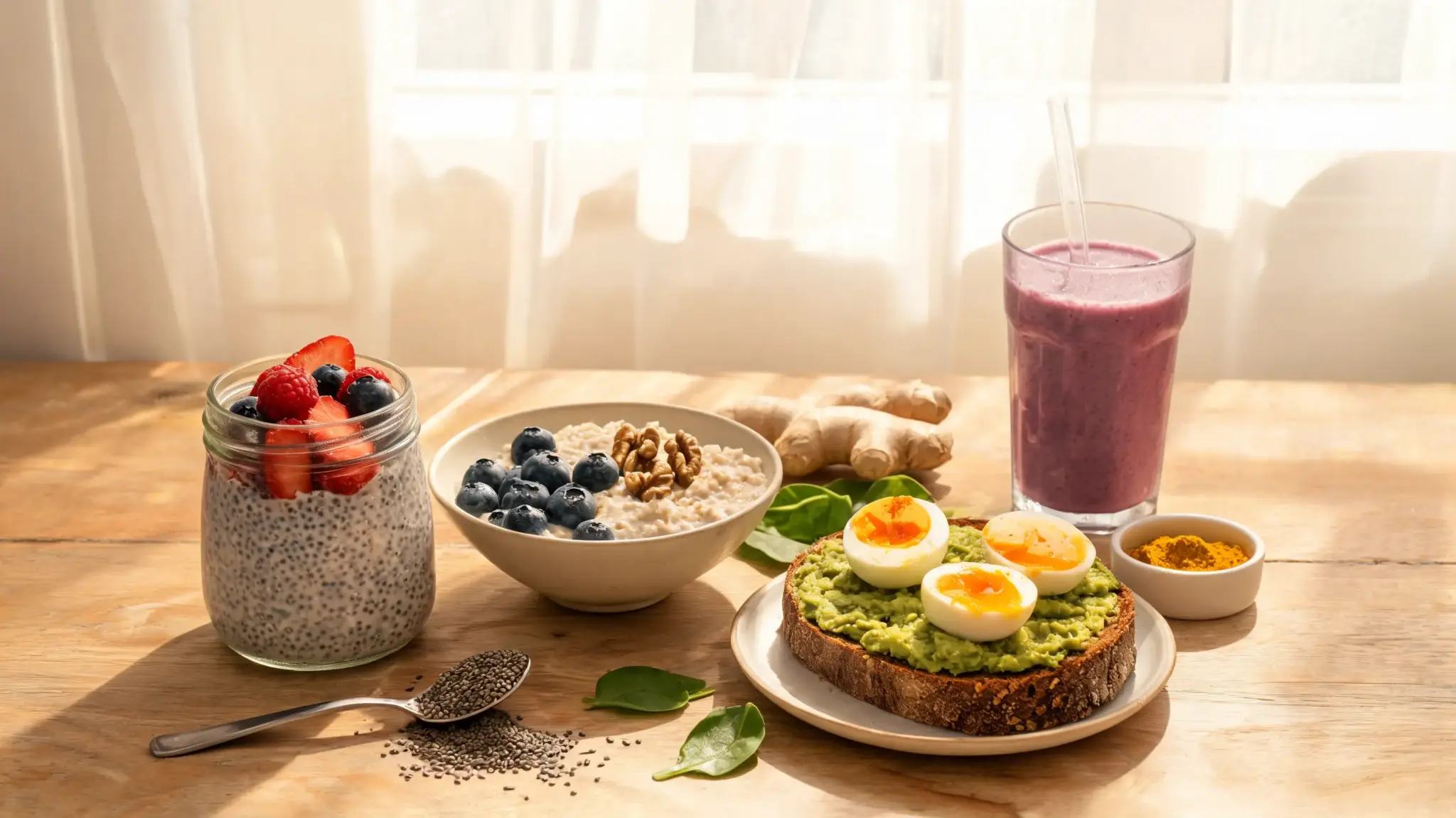
1. Overnight Chia Pudding with Berries and Turmeric
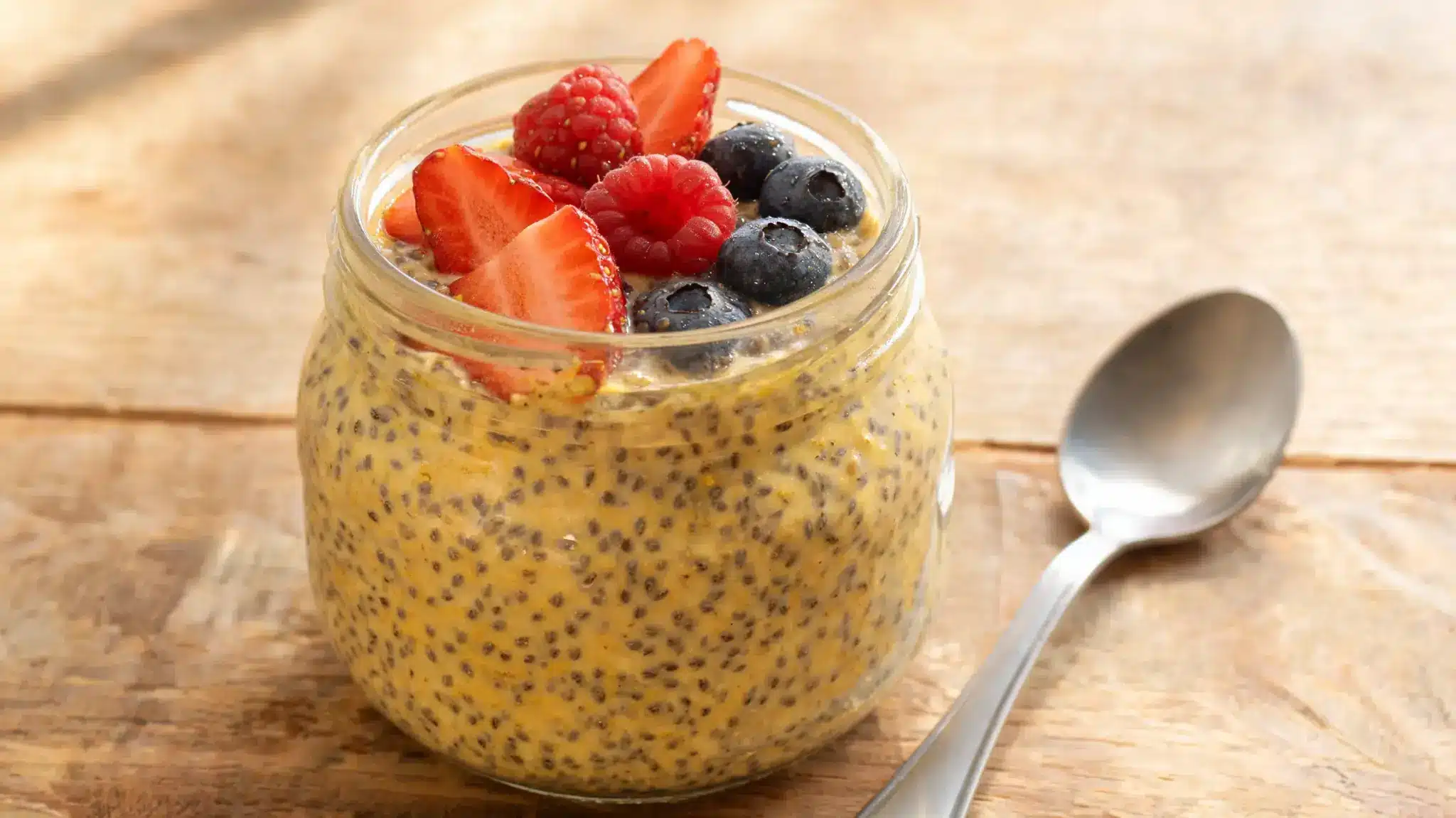
Five minutes of prep covers three mornings. Chia seeds deliver omega-3s and fiber. Turmeric adds curcumin. Berries add anthocyanins.
Prep: 5 min | Cook: 0 min | Calories: ~280 | Protein: 9g
Ingredients: ¼ cup chia seeds, 1 cup almond milk, ½ tsp turmeric, pinch black pepper, 1 tsp honey, ½ cup mixed berries.
How to Make:
- Whisk chia seeds, milk, turmeric, black pepper, and honey in a jar.
- Refrigerate overnight.
- Stir before eating to break up clumps.
- Top with berries and serve cold.
Storage Notes: Store in an airtight jar in the fridge for up to 3 days. Stir before eating. No reheating needed, but let it sit at room temperature for 5 minutes if too thick.
2. Berry Oats with Walnuts and Cinnamon
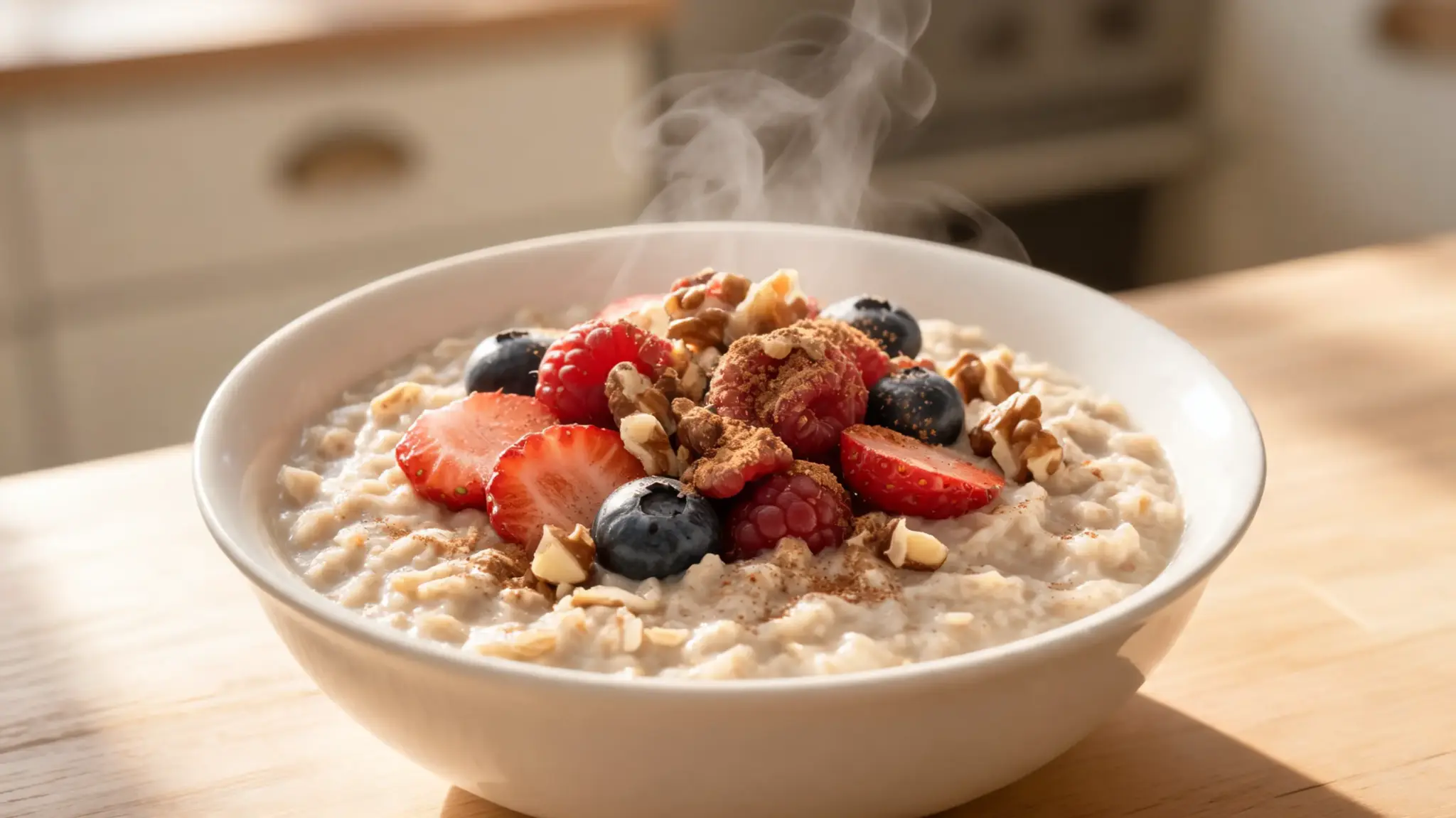
Beta-glucan from oats regulates blood sugar. Walnuts add ALA omega-3s. Berries add anthocyanins. One of the most research-backed breakfasts on this list.
Prep: 5 min | Cook: 5 min | Calories: ~350 | Protein: 12g
Ingredients: ½ cup rolled oats, 1 cup milk, a handful of berries, 1 tbsp chopped walnuts, 1 tsp chia seeds, and a pinch of cinnamon.
How to Make:
- Cook oats in milk over medium heat for 5 minutes.
- Stir in cinnamon off the heat.
- Top with berries, chia seeds, and walnuts.
- Add a small drizzle of honey if preferred.
Storage Notes: Refrigerate leftovers for up to 2 days. Reheat on the stovetop or microwave with a splash of milk to bring back the creamy texture before serving
3. Greek Yogurt Parfait with Pomegranate and Pumpkin Seeds
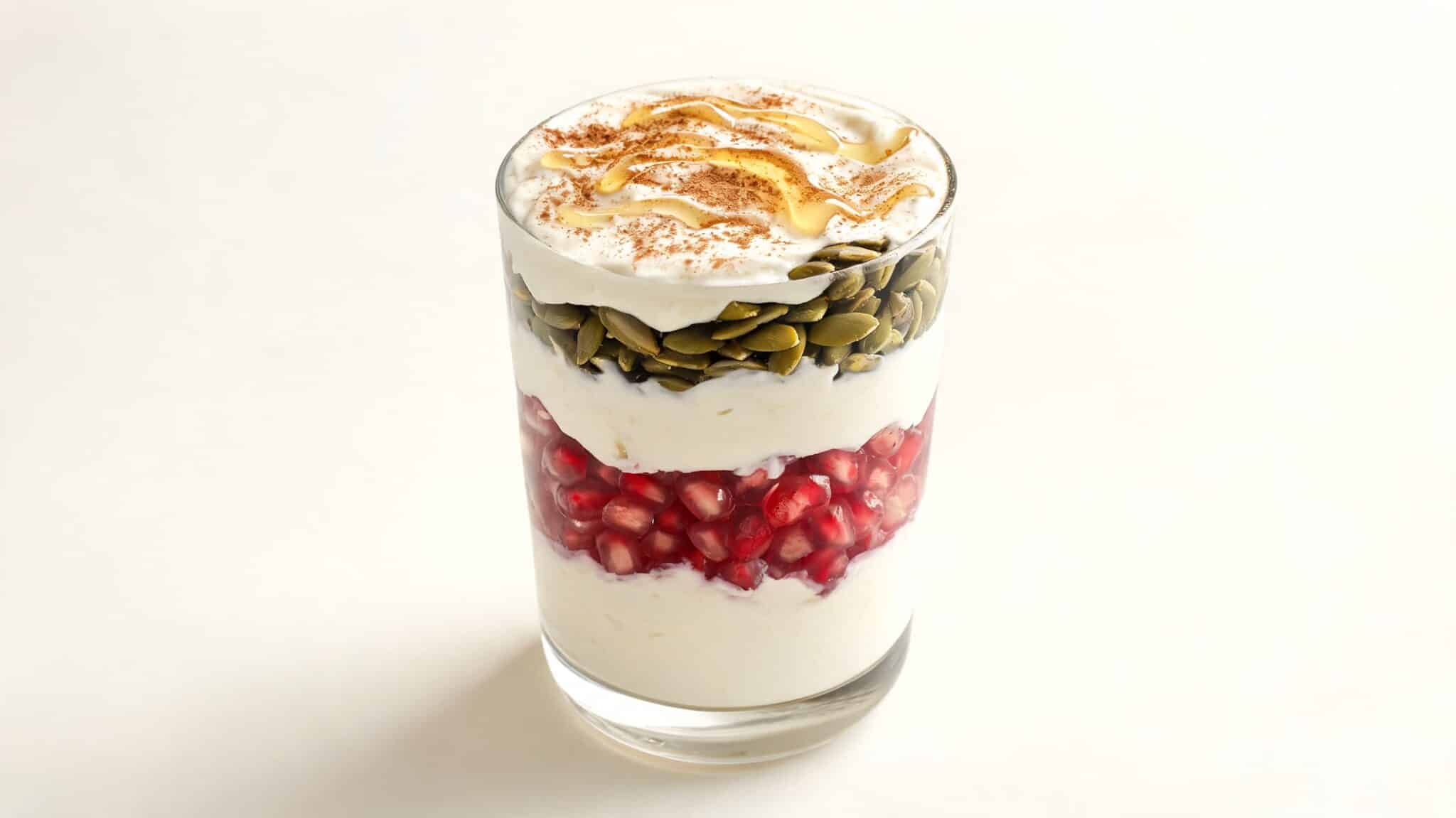
No cooking required. Probiotics from plain Greek yogurt block the production of inflammatory compounds. Pomegranate contains punicalagins, among the most potent antioxidants in any fruit.
Prep: 5 min | Cook: 0 min | Calories: ~320 | Protein: 20g
Ingredients: 1 cup plain Greek yogurt, ½ cup pomegranate seeds, 1 tbsp pumpkin seeds, pinch of cinnamon, 1 tsp honey.
How to Make:
- Spoon yogurt into a bowl or jar.
- Layer pomegranate seeds over the top.
- Sprinkle pumpkin seeds and cinnamon.
- Drizzle with honey and serve.
Storage Notes: Best eaten fresh, but can be stored in the fridge for 1 day. Keep toppings separate to avoid sogginess. No reheating required.
4. Turmeric Scrambled Eggs on Whole Grain Sourdough
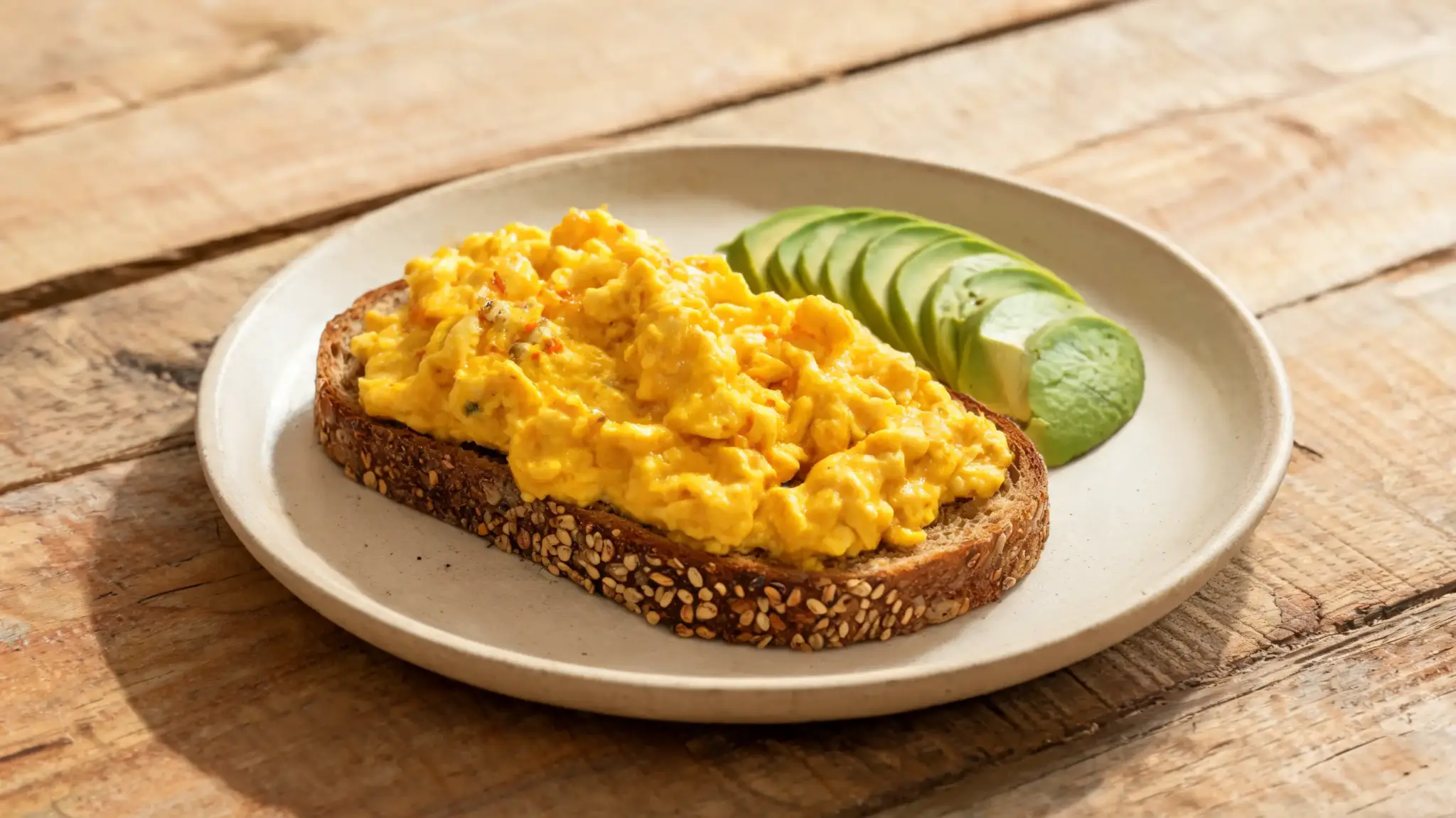
Eggs provide phospholipids that reduce inflammation. Turmeric adds curcumin. Sourdough has a lower glycemic impact than standard bread due to fermentation.
Prep: 5 min | Cook: 5 min | Calories: ~380 | Protein: 16g
Ingredients: 2 eggs, ¼ tsp turmeric, a pinch of black pepper, salt, 1 tsp olive oil, 1 slice whole-grain sourdough, and a few avocado slices.
How to Make:
- Whisk eggs with turmeric, black pepper, and salt.
- Heat olive oil in a skillet over medium-low heat.
- Cook eggs slowly, stirring gently until just set.
- Serve over toast with avocado and a drizzle of olive oil.
Storage Notes: Store eggs separately in the fridge for up to 2 days. Reheat gently on low heat or microwave in short bursts to avoid drying out
5. Avocado Toast with Egg and Hemp Seeds
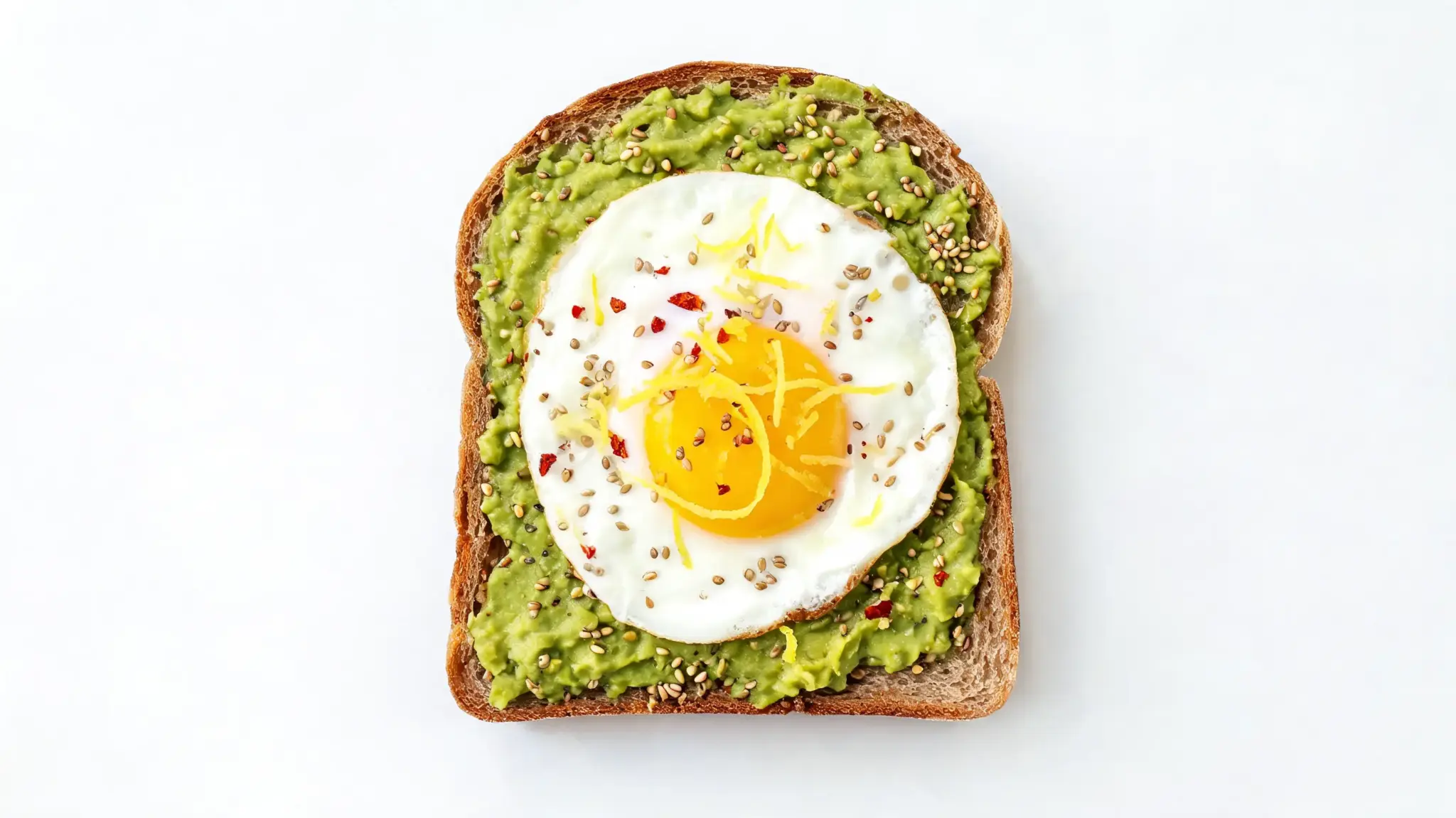
Avocado provides monounsaturated fats, which help reduce inflammatory markers. Hemp seeds add plant-based omega-3s and complete protein in a single tablespoon.
Prep: 5 min | Cook: 5 min | Calories: ~390 | Protein: 17g
Ingredients: 1 slice whole grain bread, ½ avocado mashed, 1 egg, 1 tbsp hemp seeds, a squeeze of lemon, chili flakes, salt, and pepper.
How to Make:
- Toast bread until golden and firm.
- Mash avocado with lemon juice, salt, and pepper.
- Fry or poach the egg to the desired doneness.
- Place the egg over the avocado, then top with hemp seeds and chili flakes.
Storage Notes: Prepare fresh for the best texture. If needed, store components separately for up to 1 day. Reheat egg lightly; avoid storing mashed avocado too long.
6. Blueberry Chia Smoothie with Ginger
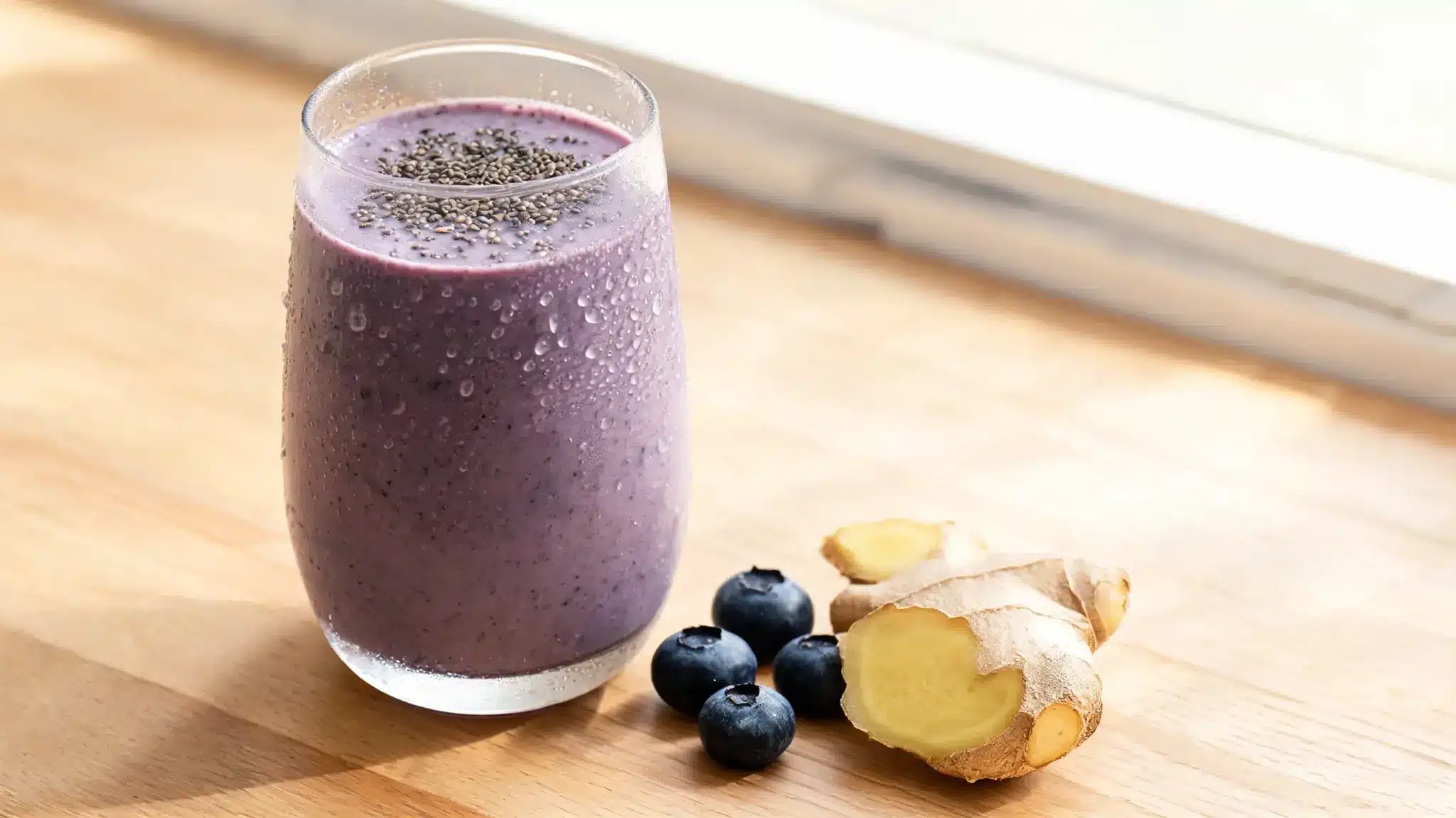
Five minutes, zero cooking, one of the highest antioxidant loads on this list. Blueberries deliver anthocyanins. Ginger contains gingerols that reduce pro-inflammatory cytokines.
Prep: 5 min | Cook: 0 min | Calories: ~270 | Protein: 8g
Ingredients: 1 cup blueberries, 1 tbsp chia seeds, 1 cup almond milk, ½ tsp ginger, grated, 1 banana.
How to Make:
- Add all ingredients to a blender.
- Blend on high for 60 seconds until smooth.
- Add more milk if needed.
- Pour and consume immediately.
Storage Notes: Best consumed immediately. Can be refrigerated for up to 24 hours in a sealed bottle. Shake well before drinking; no reheating needed.
7. Smoked Salmon on Whole Grain Toast with Avocado
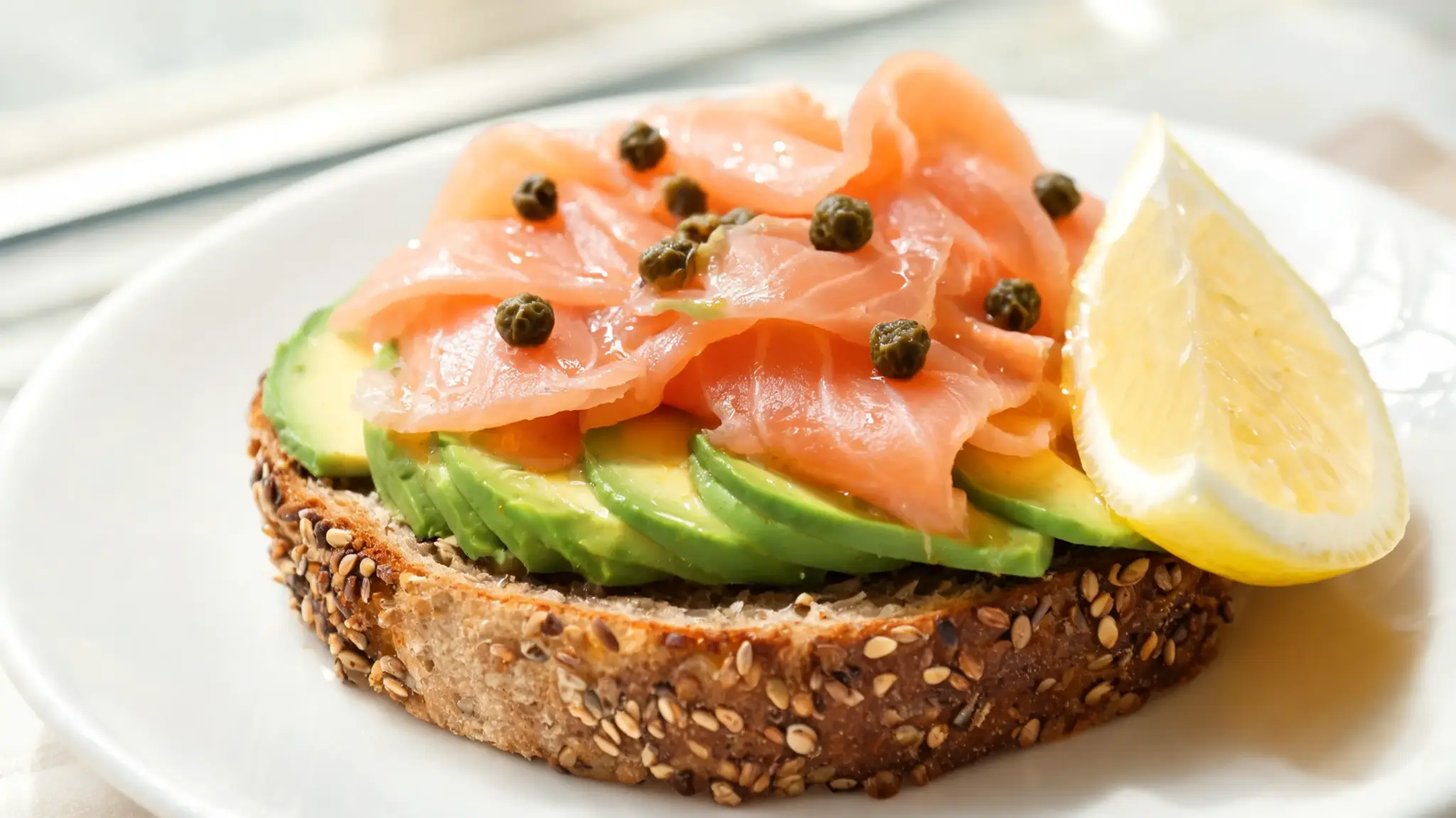
Salmon delivers EPA and DHA omega-3s, the most bioavailable anti-inflammatory fatty acids from any food source.
Prep: 5 min | Cook: 2 min | Calories: ~340 | Protein: 22g
Ingredients: 1 slice whole grain bread, 60g smoked salmon, ¼ avocado sliced, 1 tsp capers, a squeeze of lemon, and black pepper.
How to Make:
- Toast bread until golden.
- Layer avocado slices over toast.
- Lay smoked salmon over avocado.
- Top with capers, lemon, and black pepper.
Storage Notes: Assemble fresh. Store ingredients separately for up to 1 day. Avoid reheating salmon; toast bread fresh and add toppings just before serving.
8. Sweet Potato and Egg Breakfast Bowl with Spinach
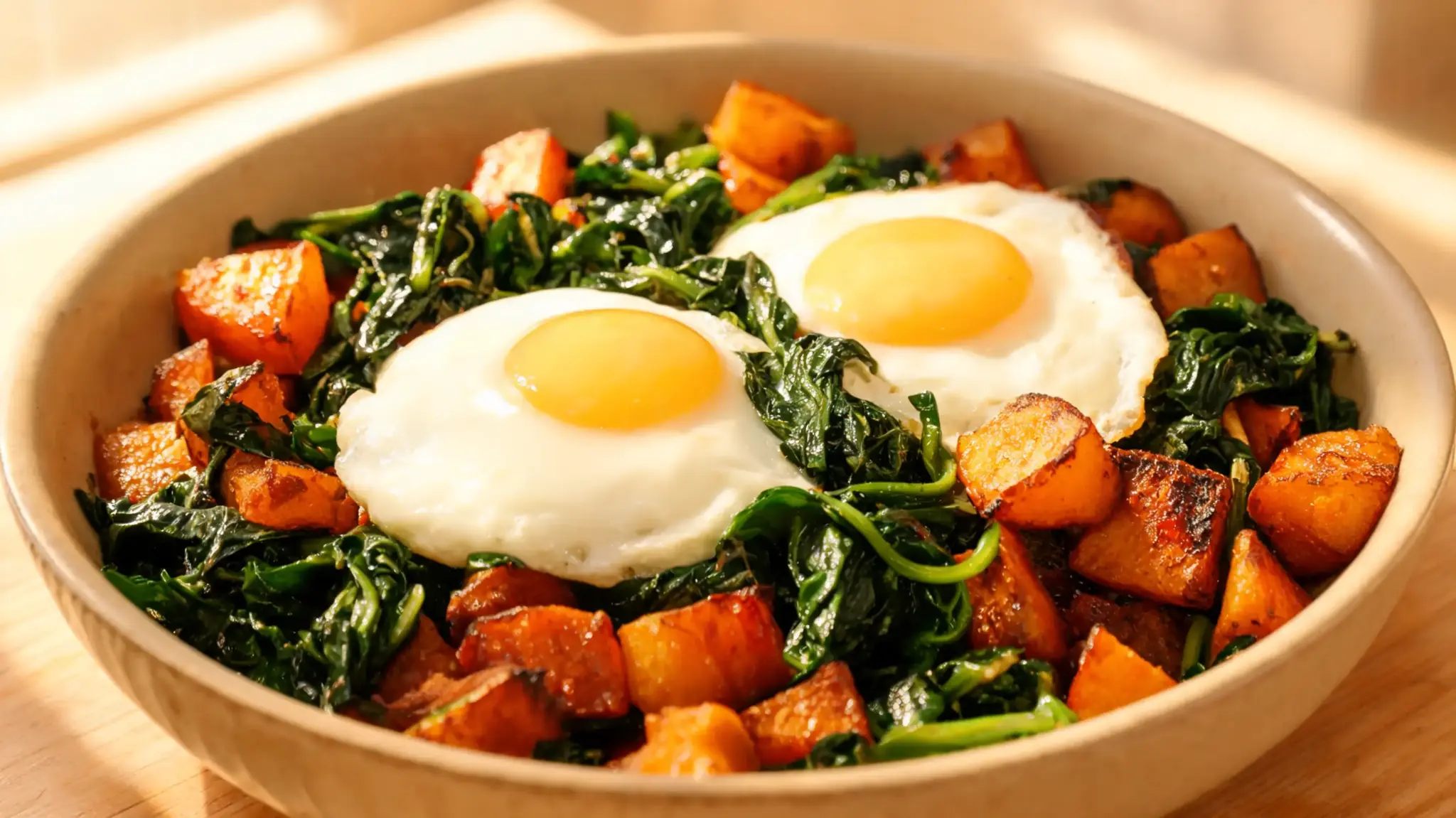
Sweet potato delivers beta-carotene. Spinach adds vitamins C and K. Eggs add phospholipids. Three distinct anti-inflammatory pathways covered in one bowl.
Prep: 5 min | Cook: 20 min | Calories: ~380 | Protein: 16g
Ingredients: 1 medium sweet potato, cubed; 2 eggs; 1 cup spinach; 1 tsp olive oil; ¼ tsp smoked paprika; salt and pepper.
How to Make:
- Roast sweet potato at 400°F with olive oil and paprika for 20 minutes.
- Sauté spinach for 2 minutes until wilted.
- Fry or poach eggs.
- Assemble the bowl with sweet potato, spinach, and eggs on top.
Storage Notes: Store components in the fridge for up to 3 days. Reheat sweet potato and spinach in microwave, then add freshly cooked or reheated eggs.
9. Anti-Inflammatory Egg Muffin Cups with Turmeric and Kale

Make 12 on Sunday, store for 5 days, or freeze for 3 months. Two muffins is a complete breakfast. Zero effort on busy mornings.
Prep: 10 min | Cook: 20 min | Calories: ~90 per muffin | Protein: 7g per muffin
Ingredients: 6 large eggs, 1 cup chopped kale, ½ cup halved cherry tomatoes, ¼ tsp turmeric, pinch of black pepper, 2 tbsp feta (optional), salt.
How to Make:
- Preheat oven to 350°F and grease a 12-cup muffin tin.
- Whisk eggs with turmeric, black pepper, and salt.
- Divide the kale and tomatoes across all cups.
- Pour egg mixture over vegetables and bake for 20 minutes.
Storage Notes: Store in the fridge for up to 5 days, or freeze for up to 3 months. Reheat in microwave for 30–45 seconds until warmed through.
These recipes cover every morning style, from five-minute no-cook options to batch-cook solutions that handle the whole week before it starts.
What to Drink With an Anti-Inflammatory Breakfast
The right drink adds meaningful anti-inflammatory value without extra effort. The wrong one quietly undoes everything on the plate.
- Green tea: contains EGCG, a researched anti-inflammatory compound. One cup alongside breakfast delivers measurable benefit over time.
- Golden milk: warm milk with turmeric, ginger, cinnamon, and black pepper. Heat for 3 minutes and serve.
- Fresh ginger lemon water: warm water, lemon juice, and fresh ginger slices. Gingerols directly reduce pro-inflammatory cytokines.
These drinks take under five minutes to prepare and add genuine anti-inflammatory value to every breakfast on this list.
Avoid: Coffee on an empty stomach can increase cortisol and trigger inflammation.
Breakfasts to Avoid or Limit
Knowing what to put back on the shelf matters just as much as knowing what to buy. These choices quietly work against you.
| Breakfast Item | Why It Works Against You | Inflammation Impact | Healthier Alternative |
|---|---|---|---|
| Sugary cereals and pastries | High sugar triggers inflammation and blood sugar spikes | High | Oats with fresh fruit or nuts |
| Processed meats | High fat and additives promote inflammation | High | Grilled chicken or boiled eggs |
| White bread and refined grains | Causes quick spikes and increases inflammation | Moderate–High | Whole-grain or sourdough bread |
| Sweetened yogurts | Added sugar cancels probiotic benefits | Moderate | Plain Greek yogurt with honey |
| Processed breakfast bars | Hidden sugars and artificial ingredients | Moderate–High | Homemade oat bars or fruit |
| Flavored syrups | Adds sugar, undermines healthy meals | High | Fresh fruit puree or cinnamon |
In my experience, removing the highest-impact item from this table makes a faster, measurable difference than adding any single superfood.
If a recipe calls for a small drizzle of sweetener, it is worth noting that honey and maple syrup have different glycemic responses before deciding which to the.
Common Anti-Inflammatory Breakfast Mistakes to Fix
Small habits quietly cancel out the effort every single morning. These are the ones most people do not realize they are making.
- Flavored syrups on oatmeal: Add the same inflammatory compounds that the oats are meant to balance. Use cinnamon and whole berries instead.
- Skipping protein: Leads to blood sugar instability even with otherwise healthy ingredients. Every anti-inflammatory breakfast should include at least 10 to 15g of protein.
- Using vegetable or canola oil: These are inflammatory seed oils high in omega-6 that disrupt the ratio your morning meal depends on; olive oil is the right choice here.
- Packaged “healthy” bars: Often contain more added sugar per serving than a standard cookie. Check the label before trusting the front-of-package claim.
- Eating the same breakfast every day: Limits polyphenol variety and reduces the diversity of gut-microbiome substrates. Rotating ingredients weekly covers more anti-inflammatory pathways.
- Sugary juice alongside meals: Disrupts the blood sugar balance your breakfast is actively building. Whole fruit with its fiber intact is fine; extracted juice is not.
- Sweetened nut milks in smoothies: A flavored oat milk can add 12 to 18g of sugar to what would otherwise be a clean, anti-inflammatory smoothie. Always use unsweetened varieties.
One or two of these are almost certainly happening right now, fixing them costs nothing, and makes every recipe on this list work noticeably better.
Tips for Making Anti-Inflammatory Breakfasts Sustainable
Starting well is easy. Staying consistent is where most people fall short. These five habits make the difference.
- Batch prep on Sunday: Chia pudding jars and egg muffin cups take under 45 minutes total and cover most of the week’s mornings before it starts.
- Build a core pantry: Oats, chia seeds, frozen berries, eggs, plain Greek yogurt, and ground turmeric cover every recipe in this article. Keep these stocked, and the barrier to a good morning drops to near zero.
- Start with two swaps only: Replacing sweetened cereal with oatmeal and sweetened yogurt with plain Greek yogurt makes the biggest immediate reduction in inflammatory food load. Build from there.
- Pair breakfast with movement: Morning movement recovery patterns, even a 10-minute walk, reduce the post-meal blood sugar spike that follows even a well-constructed anti-inflammatory meal.
None of these require extra time or money, just slightly more intentional choices made once at the start of each week.
Frequently Asked Questions
How quickly can a diet reduce inflammation?
Most people notice improvements in energy, digestion, and overall comfort within 2 to 3 weeks. Measurable changes in inflammatory markers usually appear after 4 to 8 weeks, depending on consistency, food choices, and overall lifestyle habits.
Can I eat fruit every morning?
Yes, whole fruit supports an anti-inflammatory diet. The fiber slows sugar absorption, while polyphenols help reduce inflammation. It’s best to avoid fruit juices, as removing fiber leads to faster sugar spikes and reduced overall health benefits.
Does the timing of breakfast affect inflammation?
Yes, eating within about two hours of waking helps regulate cortisol levels. Balanced morning meals support steadier hormones, which can reduce inflammatory responses throughout the day and help maintain more stable energy and metabolism.
Final Thoughts
Fighting inflammation does not require a complete diet overhaul; it starts with one meal. The information about anti-inflammatory breakfasts is often too clinical to actually use on a Tuesday morning.
What works is simpler than most people expect: a few consistent ingredients, a small amount of Sunday prep, and the habit of choosing differently at the first meal of the day. I found that starting with just two swaps made the biggest difference before adding anything else.
Tried any of these? Drop a comment and let me know which one stuck. I make these myself every week, and some might surprise you.