






My face looked the same for weeks until a small stone changed my entire morning routine. Gua sha benefits are genuinely surprising once you move past the social media version of the practice.
This is a centuries-old traditional Chinese medicine technique that involves pressing and scraping a smooth stone across the skin to move blood, relieve muscle tension, and support lymphatic flow.
It is not a quick fix, and it will not reshape your face overnight, but used consistently, it can reduce puffiness, ease chronic tension, improve circulation, and leave your skin looking noticeably clearer.
By the end of this article, you will know exactly what gua sha does, what results are worth expecting, how to use it without causing irritation, and which tools are actually worth the money.
| Disclaimer: This article is for informational and educational purposes only. It does not constitute medical advice and should not replace consultation with a qualified healthcare provider. Always consult a doctor before making changes to your wellness practices, particularly if you have a skin condition, chronic pain, or any diagnosed health condition. |
What is Gua Sha?
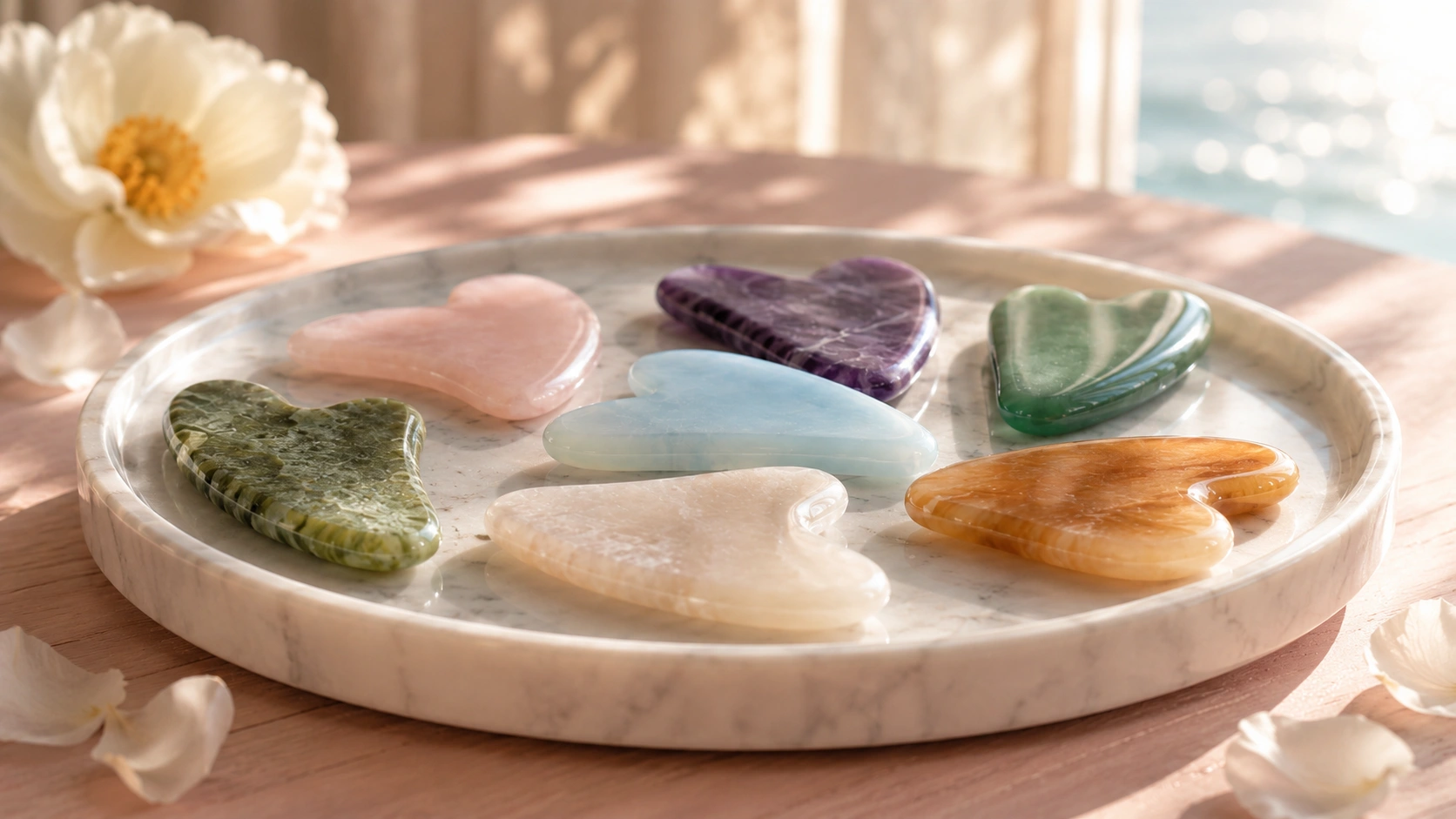
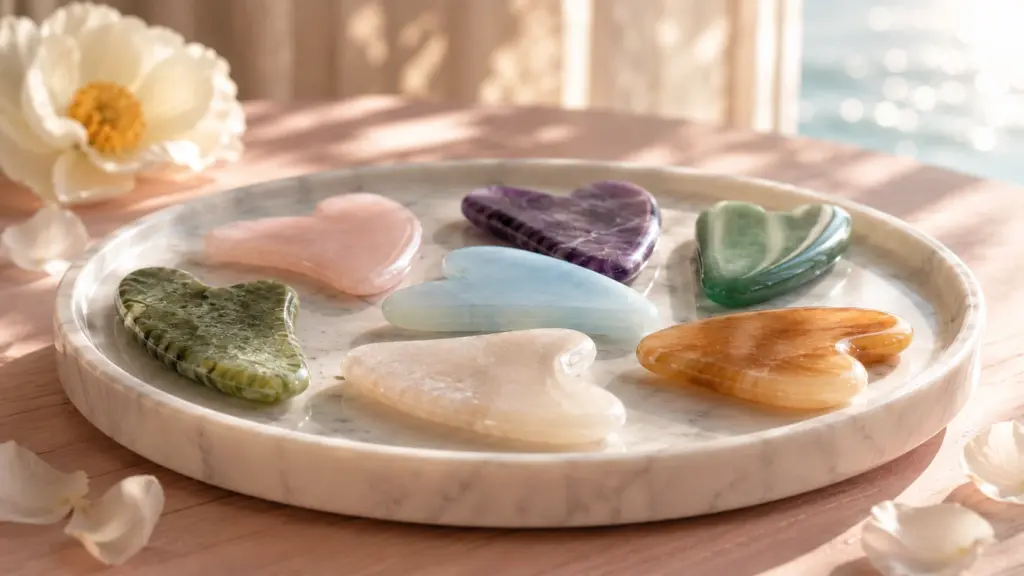
Gua sha originated in traditional Chinese medicine as a hands-on method for treating pain, stiffness, and poor circulation. The name translates roughly to “scraping away illness,” which describes the physical mechanism accurately. A smooth-edged stone, typically jade, rose quartz, or bian stone, is pressed against oiled skin and drawn across the surface in firm, deliberate strokes.
That pressure creates temporary redness beneath the skin called petechiae, small dots of broken capillaries that signal increased blood movement in the treated area. Traditionally applied to the back, neck, and shoulders for pain relief, gua sha has since been adapted for facial use with lighter pressure.
The goal in facial work shifts to lymphatic drainage, muscle relaxation, and improved skin tone, but the core mechanism stays the same: controlled mechanical pressure on tissue to stimulate circulation and reduce stagnation.
Understanding that distinction between body gua sha and facial gua sha, how the pressure, tools, and goals differ, is the foundation for using the technique effectively. The benefits follow directly from the mechanism.
Gua Sha Benefits
The benefits of gua sha fall into two broad categories: cosmetic outcomes you will see in the mirror, and therapeutic outcomes you will feel in your body.
Research on gua sha is still developing, but existing clinical studies show measurable changes in blood flow, inflammatory markers, and pain levels following treatment. Here is what each category actually covers.
1. Cosmetic Benefits
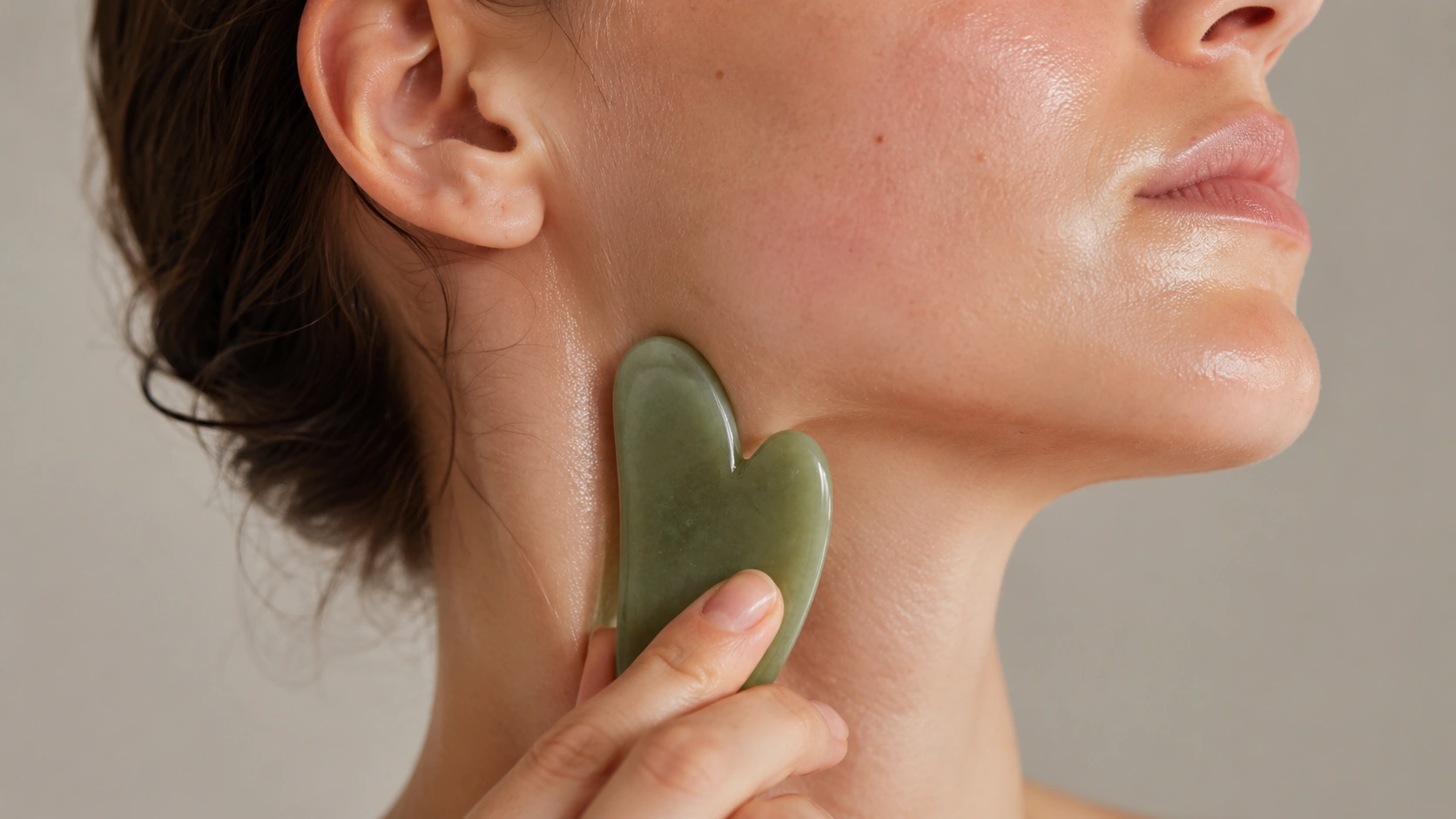
Facial gua sha addresses three visible concerns at once: puffiness, uneven skin tone, and surface muscle tension that builds through daily use of your face.
- Lymphatic drainage moves stagnant fluid from the jaw, cheekbones, and under-eye area toward the neck lymph nodes.
- Increased blood flow delivers oxygen to skin cells, resulting in visible brightness improvements after each session.
- Tight facial muscles soften gradually with consistent practice, particularly around the jaw and forehead.
- Skincare absorption improves immediately after gua sha because the skin is warm and circulation is active.
- Herb-based skin support, such as ashwagandha for skin clarity, pairs well with a consistent gua sha practice.
Used three to five times per week, facial gua sha produces cumulative results in skin tone, reduced puffiness, and reduced muscle tension, which become more noticeable over several weeks of consistent practice.
2. Pain Relief Benefits
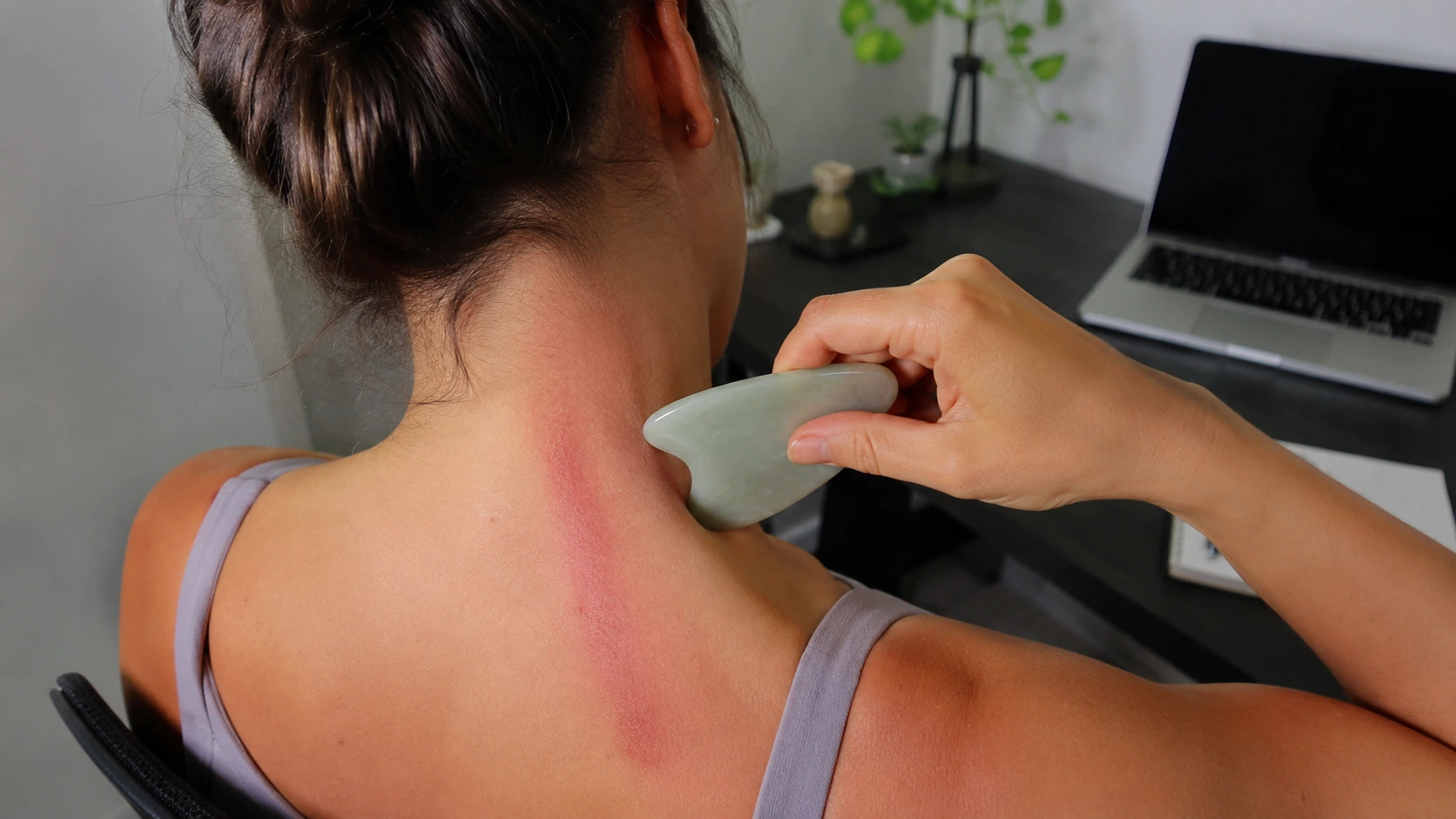
Pain relief is where gua sha has the strongest clinical support. The mechanism is direct: pressure on fascia and muscle tissue restores movement and reduces chronic stiffness in targeted areas.
- Neck, shoulder, and upper back tension caused by poor posture or desk work responds well to body gua sha.
- Fascia pressure disrupts connective tissue adhesions, restoring the normal range of movement in stiff areas.
- Serotonin precursors increased measurably in a 2024 randomized controlled trial following regular gua sha treatment.
- Pro-inflammatory markers were reduced in the same trial, confirming a physiological response beyond the placebo effect.
- Chronic neck pain, TMJ discomfort, and tension headaches are the most consistently reported areas of relief.
The clinical evidence here is more developed than most people expect. For anyone dealing with postural tension or recurring muscle tightness, body gua sha offers a practical, low-risk option worth trying consistently.
3. Inflammation and Healing
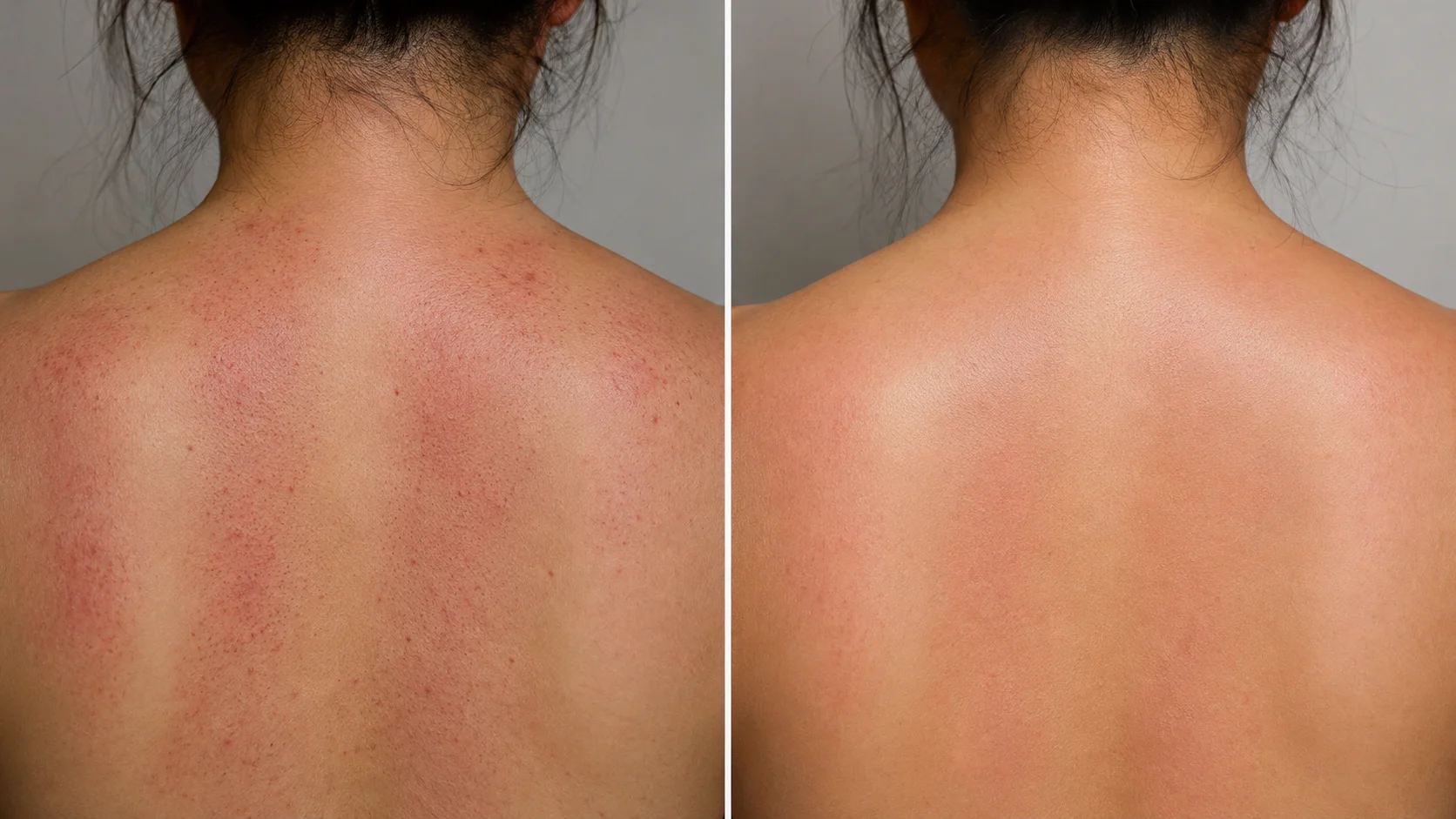
Gua sha works on inflammation through a mechanism most people find counterintuitive: it creates minor, controlled stimulation that triggers the body’s own repair response in treated tissue.
- Controlled microtrauma in superficial tissue prompts the body to dispatch immune cells and repair compounds.
- Heme oxygenase-1 production increases in treated areas, delivering anti-inflammatory and antioxidant properties to the tissue.
- Postpartum breast engorgement is one documented clinical application studied well beyond general cosmetic or wellness use.
- Chronic musculoskeletal pain and systemic inflammation have both been subjects of published gua sha clinical research.
The effects are real across multiple conditions, though the evidence strength varies. Cosmetic claims are less clinically supported than pain and inflammation outcomes, which carry the most consistent research behind them.
4. Stress and Relaxation
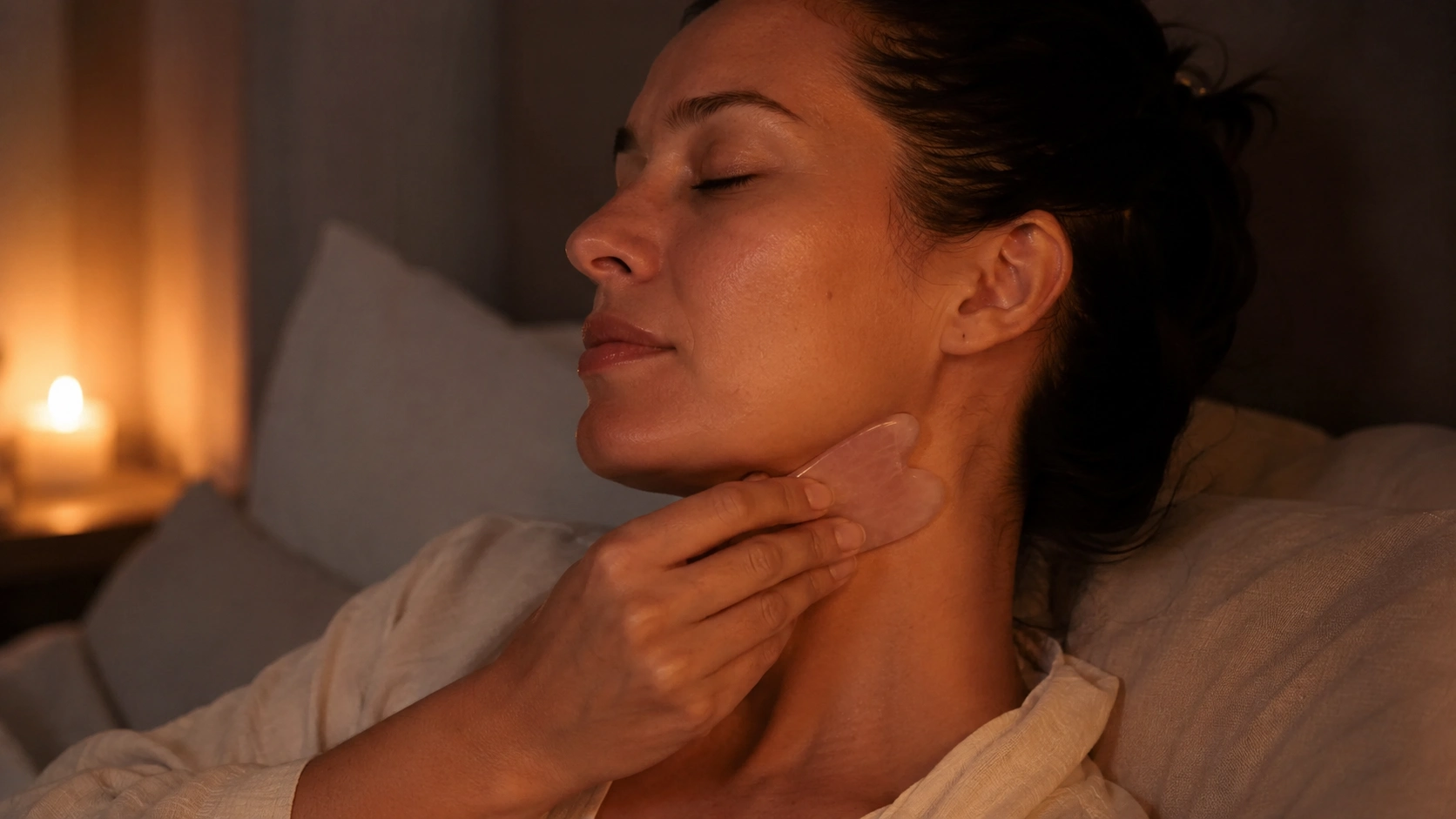
This benefit is the least discussed, and the most immediately felt. Slow, rhythmic pressure applied to the jaw, scalp, and neck signals the parasympathetic nervous system to reduce held tension. In as little as five minutes of deliberate gua sha work on the jaw and shoulders, the body can shift into a noticeably quieter state.
Teeth grinding and chronic neck tightness ease with consistent nightly practice over time, not because the stones have any special property, but because the nervous system responds to regularity. People who carry baseline tension without realizing it often notice the clearest benefit here. Short, consistent evening sessions compound over weeks in a way that occasional, aggressive sessions cannot replicate.
If you already follow an Ayurveda morning routine, adding a five-minute gua sha pass on the neck and jaw before bed extends the daily self-care framework into the evening in a genuinely useful way.
5. Body and Eye Benefits
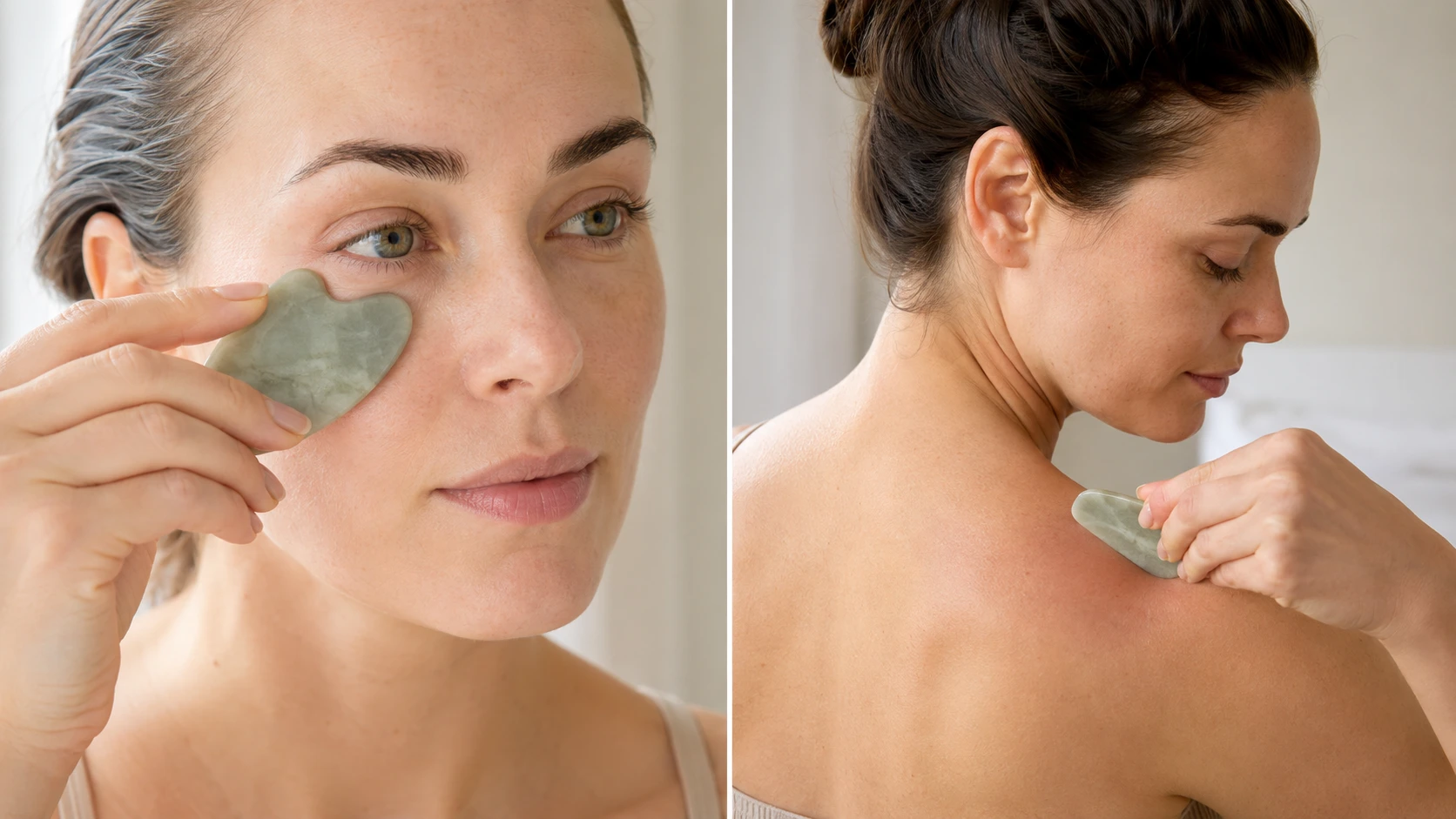
Body and eye applications serve different purposes but share the same principle: the right pressure in the right area moves fluid, clears stagnation, and supports tissue recovery more effectively than rest alone.
- Heavier pressure across the back, shoulders, and limbs supports lymphatic detoxification across larger surface areas.
- Post-workout muscle soreness clears faster when blood flow to fatigued tissue is actively stimulated after exercise.
- A lightly applied stone edge beneath the eye reduces puffiness caused by overnight fluid retention.
- Sinus pressure eases with gentle strokes along the brow bone and along the side of the nose during allergy season.
Body and eye gua sha are often overlooked in favor of facial work, but they address soreness, congestion, and puffiness in ways that produce some of the clearest, most immediate results across the entire practice.
Gua Sha Tool Comparison
The stone you use matters more than most people realize. The stone material affects temperature, pressure tolerance, and what each tool does best. Here is how the three most common options compare before you buy:
| Feature | Jade | Rose Quartz | Bian Stone |
| Best Use | Facial drainage, general daily use | Sensitive skin, facial contouring | Therapeutic body work, pain relief |
| Temperature Retention | Stays cool, warms gradually with use | Stays cooler longer than jade | Retains heat well; warms quickly with friction |
| Pressure Suitability | Light to medium; good for face and neck | Light; best for delicate or reactive skin | Medium to firm; suited for body and muscle work |
| Surface Feel | Smooth, slightly waxy glide | Very smooth, consistent glide | Slightly denser feel, firm contact with tissue |
| Price Range | $15 to $50, depending on quality | $15 to $45 for most facial tools | $30 to $80; harder to source outside specialty stores |
| Best For | Everyday facial routine, beginners | Sensitive or dry skin types | Chronic tension, deeper body work, experienced users |
Jade or rose quartz is the right starting point for facial work. Bian stone earns its place later, when the goal shifts to deeper body tension and firmer pressure.
How to Use Gua Sha: Technique by Application
Gua sha is not a one-size technique. Where you apply it, how much pressure you use, and what you put on your skin beforehand all change what it delivers and how your body responds.
1. Facial Gua Sha
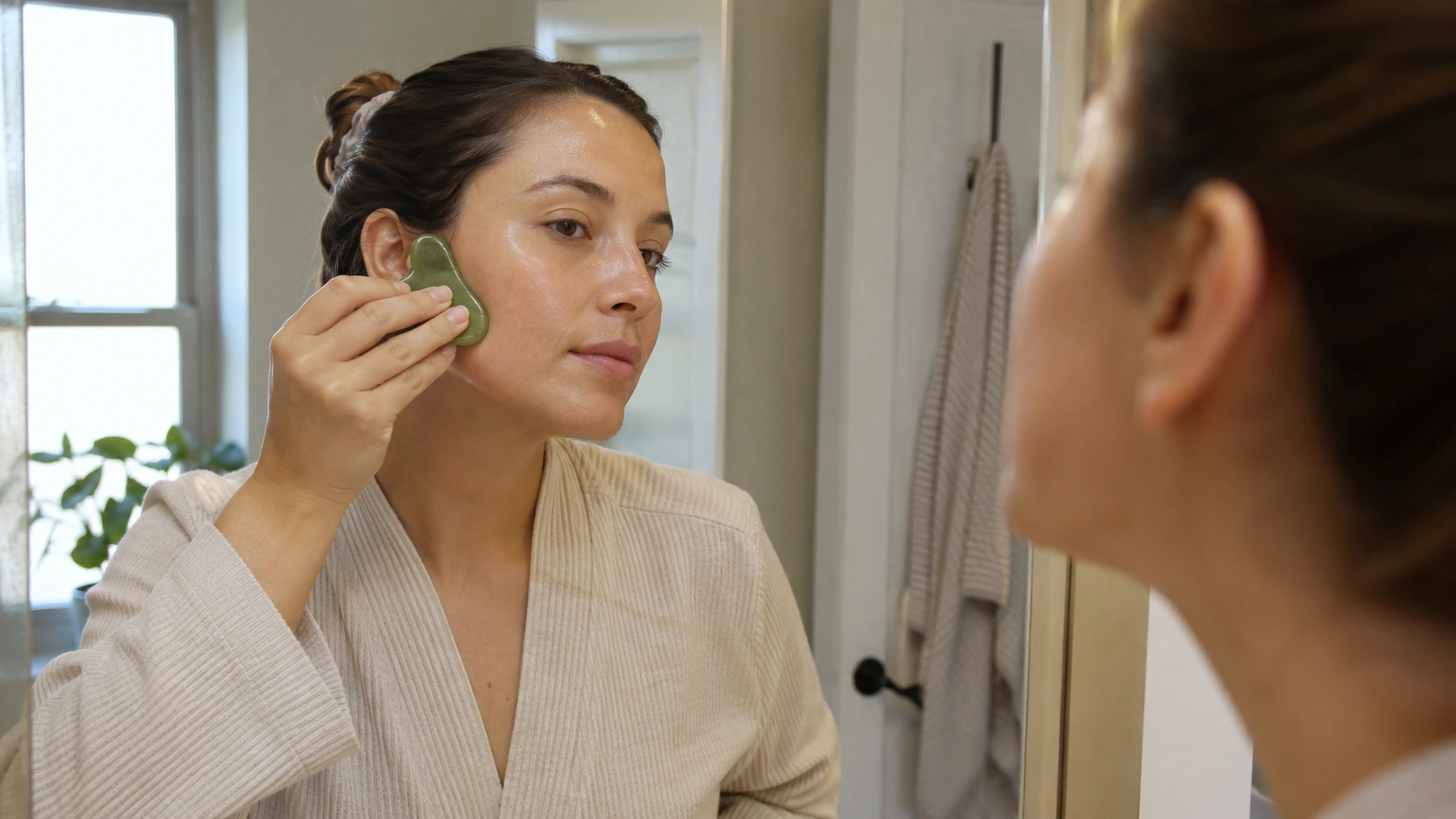
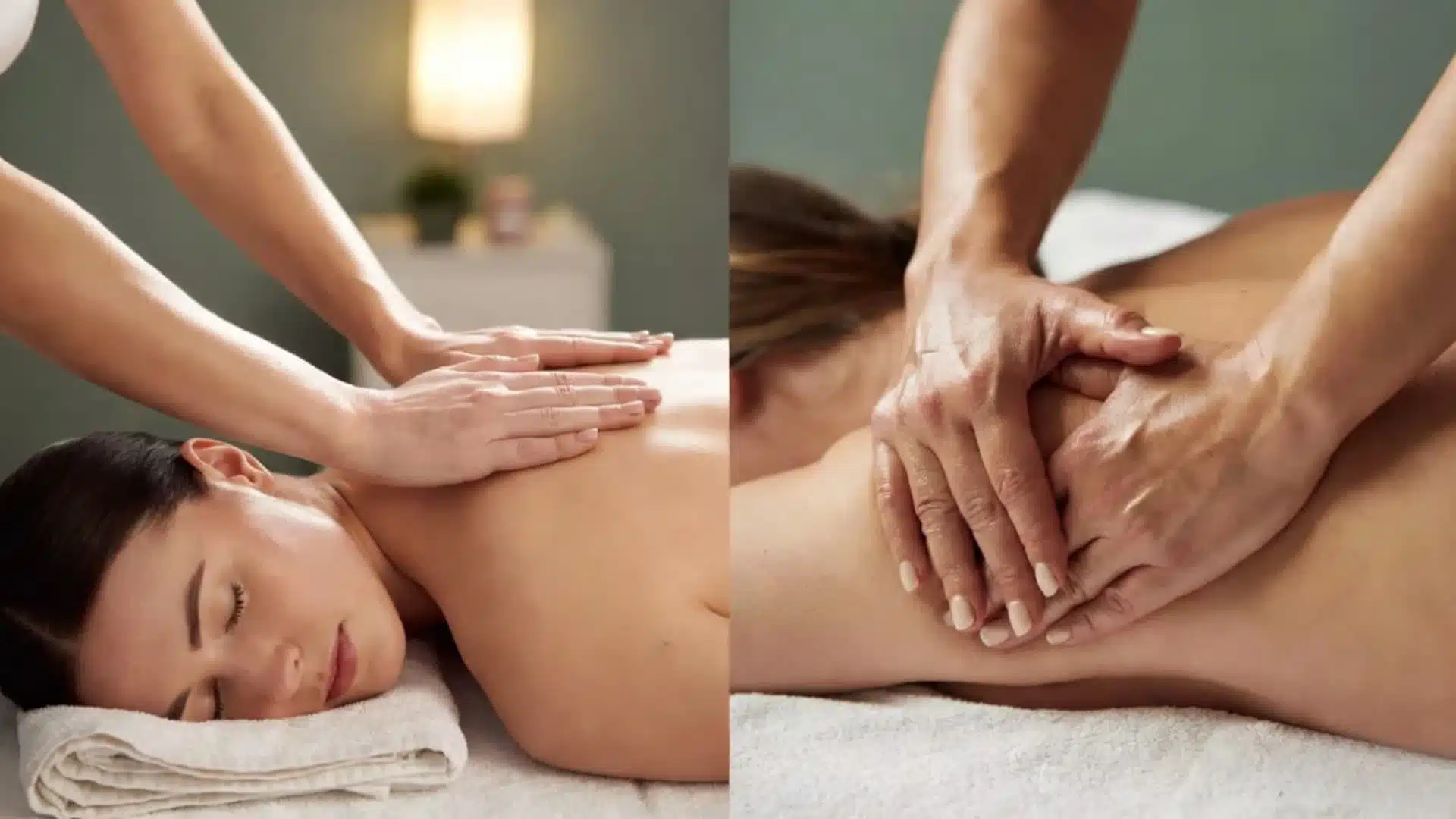
Facial gua sha suits anyone dealing with morning puffiness, dull skin tone, or jaw and brow tension that builds through the day. The strokes here are light and deliberate, nothing like the firm pressure used on the body.
- Before you start: Apply a facial oil or serum to clean skin. Never work on dry skin; friction without slip causes irritation rather than drainage.
- Technique and direction: Hold the stone at roughly 15 degrees to the skin. Work outward from the center of the face toward the ears, then sweep down the neck. Three to five passes per area across the jawline, cheekbones, forehead, and neck.
- Pressure: Light, consistent, and even. It should feel like a firm but comfortable massage, not a scrape. If it stings, ease off immediately.
- After: Follow with a lightweight moisturizer or serum. Skin absorbs products faster right after gua sha, making it the best window for anything you want to penetrate deeply. Morning sessions clear overnight puffiness; evening sessions release jaw and brow tension built through the day.
Used consistently three to five times per week, facial gua sha addresses puffiness, skin dullness, and surface muscle tension, which are the areas where daily results show up most visibly over time.
2. Body Gua Sha
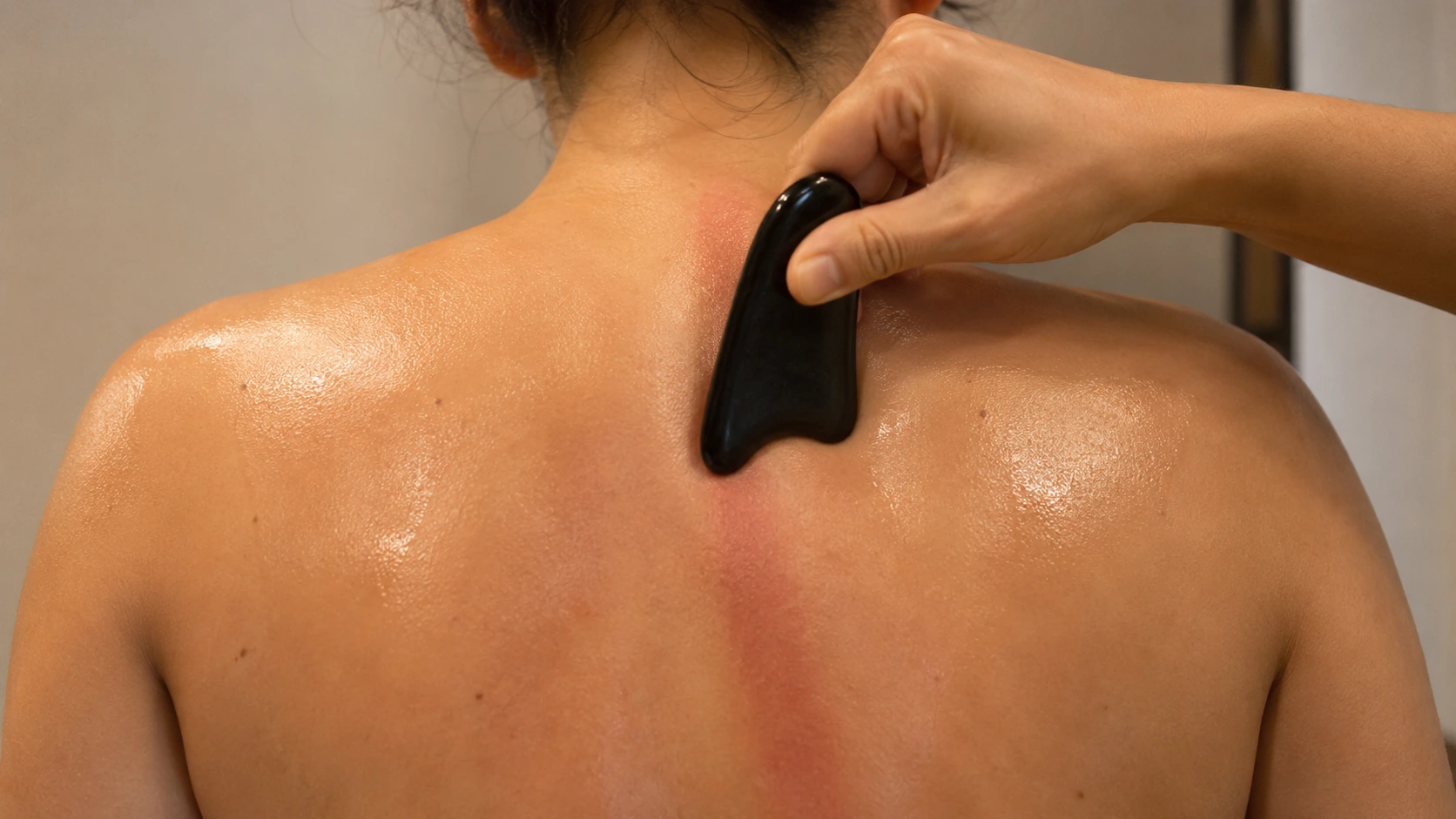
Body gua sha is better suited to muscle soreness, chronic back and shoulder tension, and circulation in larger areas. It requires more pressure than facial work and covers broader surface zones in each pass.
- Before you start, apply body oil generously to the target area. Arnica oil works well for post-exercise soreness; plain sesame or jojoba oil is fine for general use.
- Technique and direction: Always move from the center of the body outward, following lymph flow toward the nearest nodes. For the upper back and shoulders, use firm downward strokes from the neck toward the mid-back. For arms and legs, stroke from the joints toward the body’s core.
- Pressure: Firm and steady across larger muscle groups. Light redness afterward is normal. Reduce pressure immediately if bruising appears.
- After: Drink water and apply a light body oil or moisturizer to the treated area. A warm compress or heating pad for ten minutes after extends muscle relaxation and keeps circulation active.
Body gua sha is particularly effective after long periods of sitting or physical exercise, where circulation has slowed, and muscle tissue needs active support to clear soreness and restore range of motion.
3. Eye and Sinus Gua Sha
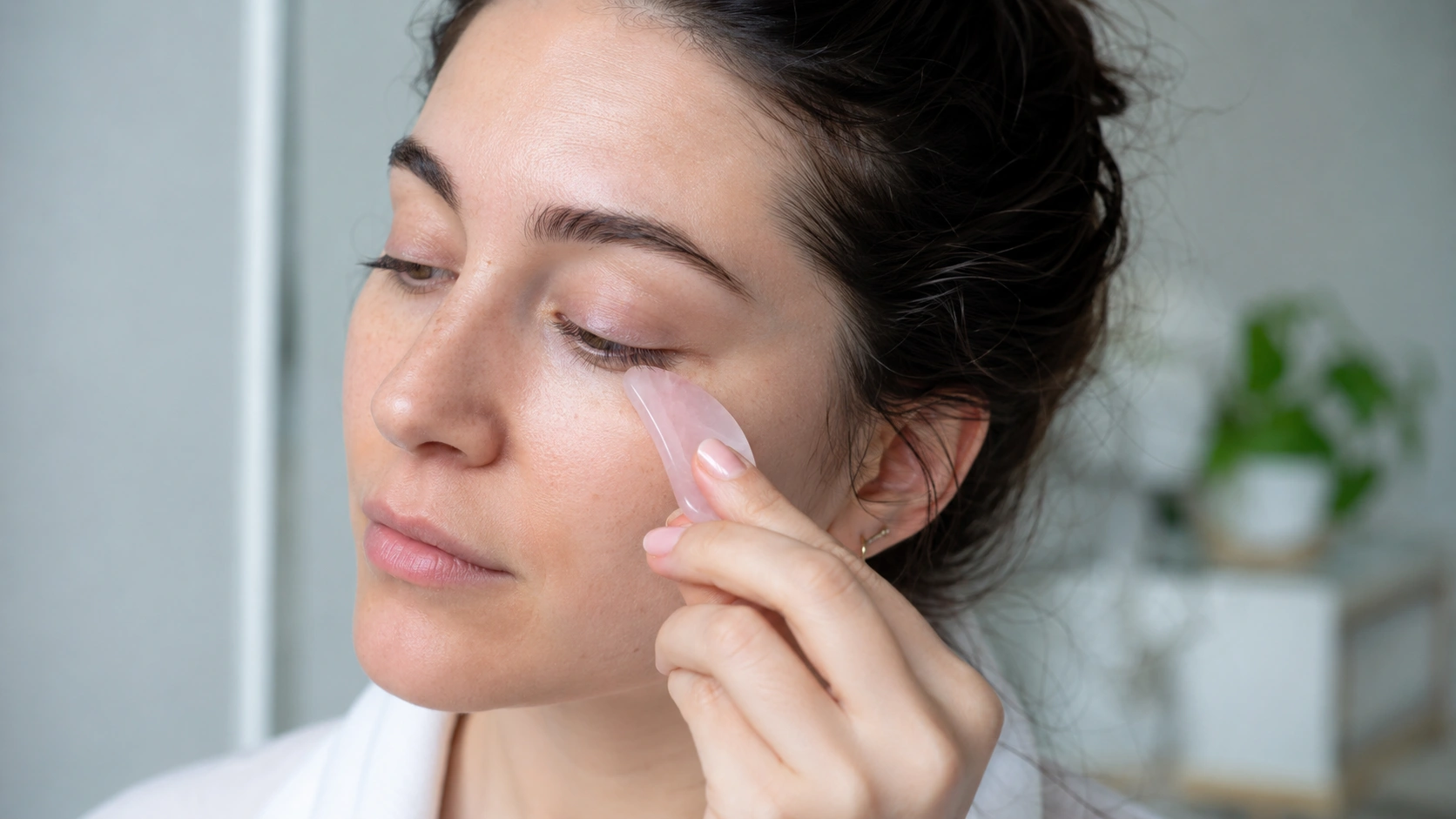
The eye and sinus area requires the lightest touch in any gua sha practice. The skin here is thin, the tissue underneath is delicate, and the pressure needed to see results is far less than you might expect.
- Before you start: Apply a hydrating eye cream or a lightweight facial oil. A cool stone straight from the refrigerator works especially well for reducing puffiness in this area.
- Technique: Use the smallest, most rounded edge of your stone. Under the eye, begin at the inner corner and stroke slowly outward toward the temple, three to four passes per side. For sinus relief, move along the brow bone from the nose outward, then from the center of the cheek toward the ear.
- Pressure: Minimal throughout. Barely more than the natural weight of the stone resting on skin. Any additional pressure can irritate the under-eye area or aggravate sinus tissue.
- After: Gently press a cool, damp cloth against the eye area for thirty seconds. This settles the tissue and reduces any residual warmth from the increased circulation.
This application addresses under-eye fluid retention, morning puffiness, and sinus congestion. Allergy sufferers and anyone spending long hours in front of screens often notice the clearest short-term relief from this specific approach.
4. Relaxation and Stress-Relief Gua Sha

This version of gua sha prioritizes nervous system regulation over drainage or muscle targeting. Technique precision matters less here; what matters is slow, consistent pressure in areas where the body holds stress most visibly.
- Before you start: Apply a calming oil to the scalp, neck, and shoulders. Lavender or chamomile-infused oil works well here. A warm shower beforehand makes the tissue more receptive and the session more effective.
- Technique: Scalp: slow strokes from the hairline toward the crown and down to the nape, medium pressure. Neck: light downward strokes only, moving toward the collarbone. Shoulders: firm outward strokes from the base of the neck across the tops of the shoulders.
- Pressure: Varies deliberately by area. Medium on the scalp, light on the neck, firm on the shoulders. Let comfort guide you rather than following a fixed rule.
- After: Lie down for five to ten minutes or apply a warm compress to the neck and shoulders. Avoid screens immediately after to allow the nervous system to stay in a settled state.
Five to ten minutes of this practice before sleep noticeably reduces the physical residue of a stressful day. Over time, it can lower baseline tension in the neck and jaw, which is where stress tends to accumulate most silently.
Gua Sha Results
Gua sha results depend on consistency, technique, and what you are actually trying to address. After a single session, most people notice reduced puffiness and a brief lift in skin brightness, both driven by immediate circulation changes that settle back within hours. That is normal and expected.
The longer-term picture builds differently. With regular practice three to five times per week, skin tone steadies, chronic facial tension eases noticeably, and puffiness linked to sluggish lymphatic flow becomes less frequent. Muscle-related lines around the jaw and forehead often appear softer after several weeks of consistent work.
For the body, neck, and shoulder tension typically responds within one to two weeks of regular treatment. Individual factors, including skin sensitivity, circulation baseline, and how deeply tension is held, all shape how quickly results appear.
| Realistic Timeline: After 1 session: reduced puffiness and temporary brightness (lasts 2 to 4 hours). After 2 to 3 weeks: noticeably less morning puffiness; jaw tension beginning to ease. After 4 to 6 weeks: measurable improvement in skin tone, facial muscle softness, and consistency of results between sessions. |
How to Use Gua Sha Safely
Getting gua sha right comes down to two things: preparation and pressure. Most problems with the practice, irritation, bruising, or disappointment trace back to skipping one of the basics below:
- Always prep the skin first: Clean skin with a generous layer of oil or serum before every session. This is not optional. Without slip, the stone drags rather than glides, and the friction does more harm than good.
- Match pressure to the area: Light pressure on the face, firmer pressure on the body. If you are new, start lighter than you think you need to and build from there.
- Know when to skip it: Never use gua sha over broken skin, active blemishes, sunburn, open wounds, or visibly inflamed areas. The stimulation will aggravate rather than help.
- Consistency over intensity: Lighter, regular sessions produce steadier results than occasional aggressive ones. Scraping the same area repeatedly in one session does not speed up results; it causes irritation.
- Be clear on what it cannot do: Gua sha relieves tension, improves circulation, and supports lymphatic drainage. It does not permanently reshape bone structure, lift tissue, or reverse deep wrinkles.
The most common reason gua sha stops working for someone is that they pushed too hard, too fast. Keeping sessions short, consistent, and well-prepared is what makes the practice worth maintaining in the long term.
Risks and Side Effects
Most side effects from gua sha are mild and short-lived. Knowing what is normal versus what signals a problem helps you adjust early rather than stop the practice altogether. Here are the most common risks and side effects:
- Mild redness: Normal after facial gua sha and typically fades within an hour. No sign of damage when pressure was light, and the skin was well-oiled beforehand.
- Petechiae: Faint reddish marks that appear after body gua sha, indicating increased circulation in the treated area. Expected and resolved within a few days without intervention.
- Bruising: Can occur when pressure is too heavy, particularly on thin or sensitive skin. Pull back on pressure immediately if bruising appears rather than waiting for the next session.
- When to skip it entirely: Avoid gua sha over active eczema, rosacea flares, sunburn, open wounds, or broken skin. Do not use if you take blood thinners or have a clotting disorder.
- Post-surgical skin: Anyone with a history of facial surgery should check with a healthcare provider before starting facial gua sha, as scar tissue and altered nerve pathways respond differently to pressure.
If redness or irritation persists beyond 24 hours, reduce both pressure and session frequency. Consistent, lighter sessions cause far fewer problems than infrequent, heavy-handed ones.
Frequently Asked Questions
Which gua sha is better, pink or green?
Pink rose quartz and green jade perform similarly for facial use. The real difference is temperature retention and feel on the skin. Neither has a clinically established edge over the other, so personal preference wins here.
What happens if you use gua sha every day?
Daily facial gua sha with light pressure is generally fine. For the body, every day is often too much; three to four times per week gives tissue enough time to respond and recover between sessions.
Can gua sha help with headaches?
Gentle scraping along the neck and base of the skull relieves the muscle tension that feeds tension-type headaches. It works less reliably for migraines or headaches with a vascular or hormonal origin.
Can gua sha reduce wrinkles?
It can soften the look of expression lines by relaxing the muscles underneath and improving local circulation. It does not remove wrinkles or reverse structural skin aging, regardless of how consistently it is used.
Closing Thoughts
Gua sha works when used consistently, with appropriate technique, and with clear expectations about what it does and does not do.
The gua sha benefits that hold up across personal experience and emerging research, things like improved circulation, lymphatic drainage, muscle tension relief, and better-looking skin, are real, but they require patience and regularity to show up.
Start with a quality tool, apply oil every time, keep pressure light on the face and firmer on the body, and give it at least three to four weeks before evaluating results.
That is where gua sha earns its place in a routine, not as a quick fix, but as a consistent practice that compounds over time. Drop a comment below and let me know which stone worked for you.