



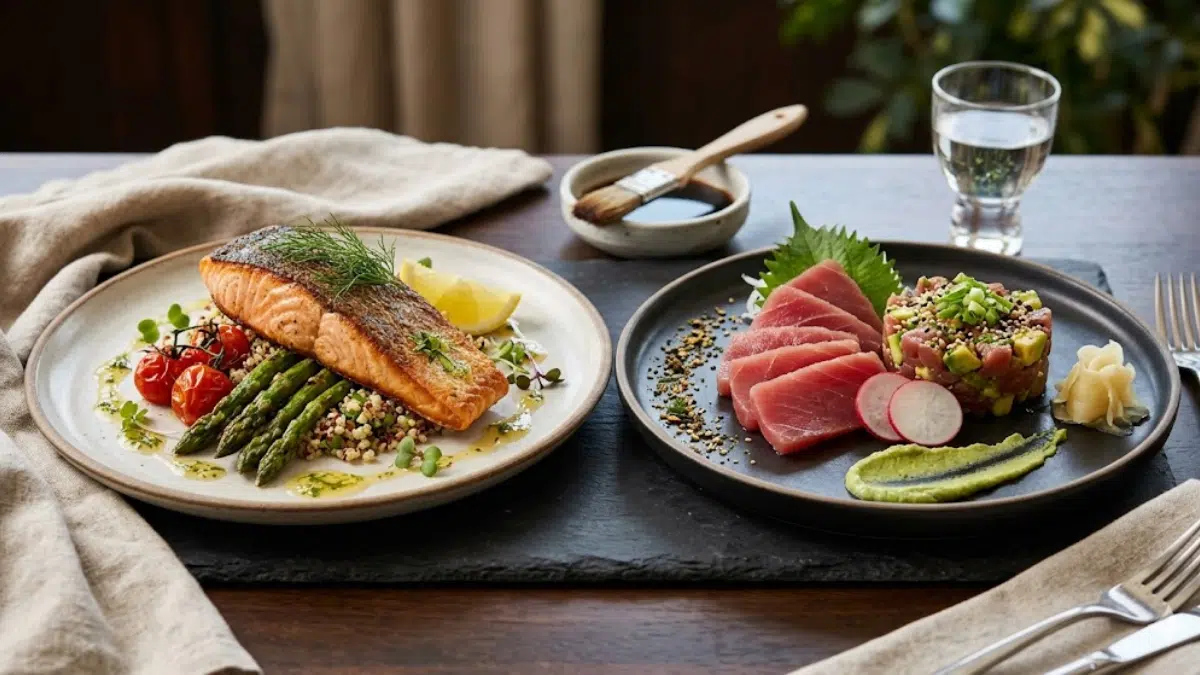








Ahi tuna and salmon appear on nearly every nutritionist’s list of top healthy proteins, and yet, choosing between them is rarely straightforward.
Both are celebrated in clean eating circles, both deliver impressive protein and essential nutrients, but beneath the surface, their nutritional profiles tell quite different stories.
In my experience, the most common question isn’t just “which fish is healthier?” but “which fish is right for me?
If you enjoy either fish folded into a fresh poke bowl, this breakdown will help you make a smarter choice on your plate.
Ahi Tuna and Salmon: What Sets Them Apart
Ahi tuna refers to either yellowfin or bigeye tuna, valued for their firm texture and mild, clean flavour. Its lean flesh delivers high-quality protein with minimal fat, making it a popular choice in sushi, poke bowls, and seared dishes.
Salmon, on the other hand, is a fatty fish with a richer, more indulgent profile. Its oils are rich in omega-3 fatty acids, linked to better heart health, reduced inflammation, and improved cholesterol levels.
While ahi tuna wins on calories, salmon offers a denser nutrient profile overall. Together, they represent two of the most nutritionally rewarding fish you can put on your plate.
Ahi Tuna vs Salmon: Nutrition Comparison
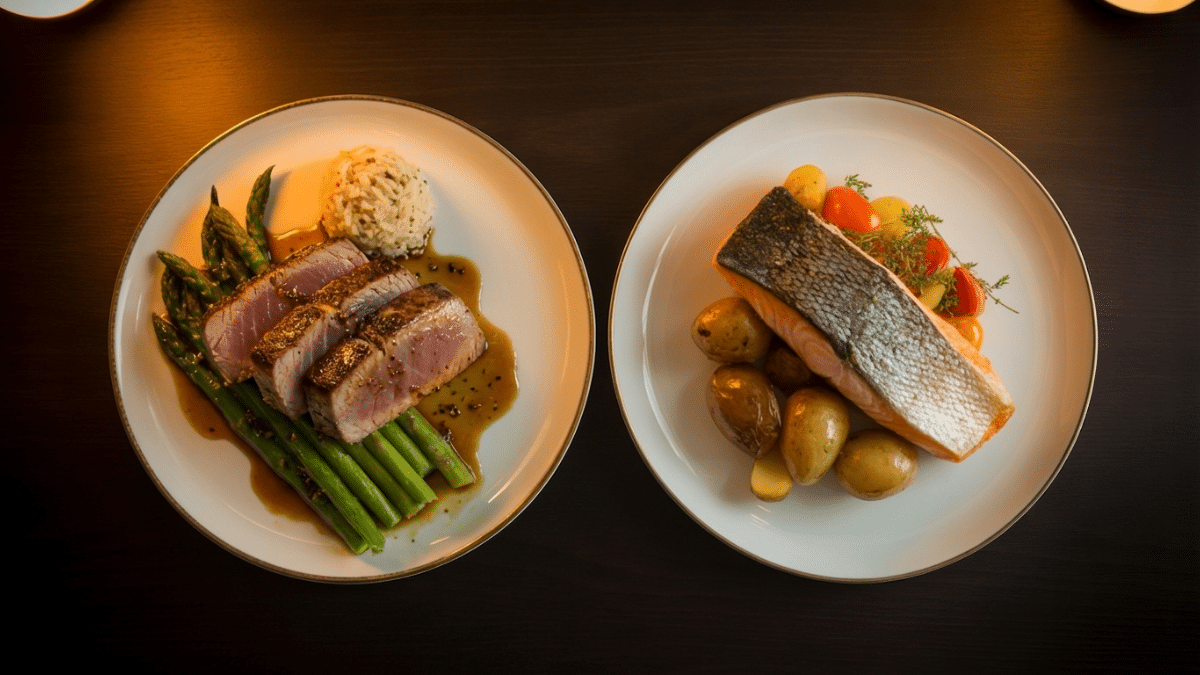
Both fish are nutritional powerhouses, but they shine in different areas. Here is how they compare across the key nutrients.
1. Calories and Macronutrients
Per 100g, ahi tuna contains 109 calories, 24g of protein, and under 1g of fat. It is one of the leanest fish available, making it a natural fit for high-protein, calorie-conscious eating.
Salmon contains 208 calories, 20g of protein, and 13g of fat per 100g. The higher calorie count comes almost entirely from its fat content, which is predominantly unsaturated and nutritionally valuable rather than a concern, especially for anyone working within a disciplined weight-loss framework that doesn’t compromise nutrition.
2. Omega-3 Fatty Acids
Ahi tuna provides around 243mg of omega-3s per 100g, a meaningful contribution for such a lean fish. Both EPA and DHA are present, supporting inflammation management and brain health, respectively.
Salmon delivers approximately 2,260mg of omega-3s per 100g, roughly nine times more than tuna. For anyone prioritising heart health or reducing inflammation, it is the stronger choice.
3. Vitamins and Minerals
Ahi tuna stands out for its selenium content at 90 mcg per 100g, nearly double that of salmon. Its vitamin D and B12 levels are decent, though salmon edges ahead on both.
Salmon leads on vitamin D at 447 IU per 100g compared to tuna’s 60 IU, and also comes out ahead on B12 and potassium. Each fish has a strong micronutrient profile, just with different strengths.
4. Cholesterol and Sodium Content
Ahi tuna contains 38mg of cholesterol and 45mg of sodium per 100g, both on the lower end. For those actively managing either, wild-caught tuna holds a modest but consistent advantage.
Salmon comes in at 63mg of cholesterol and 59mg of sodium per 100g. Farmed varieties tend to carry more fat and sodium than wild-caught options, so sourcing makes a difference here.
Which Fish Is Better for Heart Health?
Heart health is where the difference between these two fish becomes most clear. Salmon holds the stronger position due to its high omega-3 fatty acid content.
These include EPA and DHA, both of which are linked to better cholesterol levels and reduced inflammation. Choose salmon if you have cardiovascular concerns or a family history of heart disease.
Ahi tuna still fits well into a heart-healthy diet, thanks to its lean protein and low saturated fat. It is the smarter pick on days when you want something lighter. You can still support your heart without always reaching for the richer option.
Mercury Levels and Safe Consumption
Mercury content is a practical consideration that often gets overlooked when choosing between these two fish. Here is a clear breakdown of what you need to know:
| Factor | Ahi Tuna | Salmon |
|---|---|---|
| Mercury Level | 0.35 ppm average | 0.02 ppm average |
| Position in Food Chain | Large predatory fish | Mid-level fish |
| Safe for Pregnant Women | Max 170g per week advised | Up to 340g per week is considered safe |
| Safe for Young Children | Max 85g per serving recommended | Up to 170g per week is generally suitable |
| Recommended Weekly Intake | Once or twice a week, maximum | Up to 2 to 3 times per week |
| Overall Risk Level | Moderate | Low |
Choosing seafood thoughtfully and staying mindful of portion sizes is always the smarter, long-term approach to safe, balanced nutrition.
The Bottom Line
Both ahi tuna and salmon deserve a place in a well-rounded diet; they simply serve different nutritional purposes.
If lean protein and lower calories are your priority, ahi tuna is a strong choice. If omega-3 intake and nutrient density matter more, salmon pulls ahead convincingly.
As a dietitian, I rarely recommend choosing one permanently. Rotating between both provides your body with a broader nutritional spectrum, lean protein from tuna, and the omega-3 richness of salmon.
Have a preference, or a question about fitting either into your diet? Drop it in the comments.