

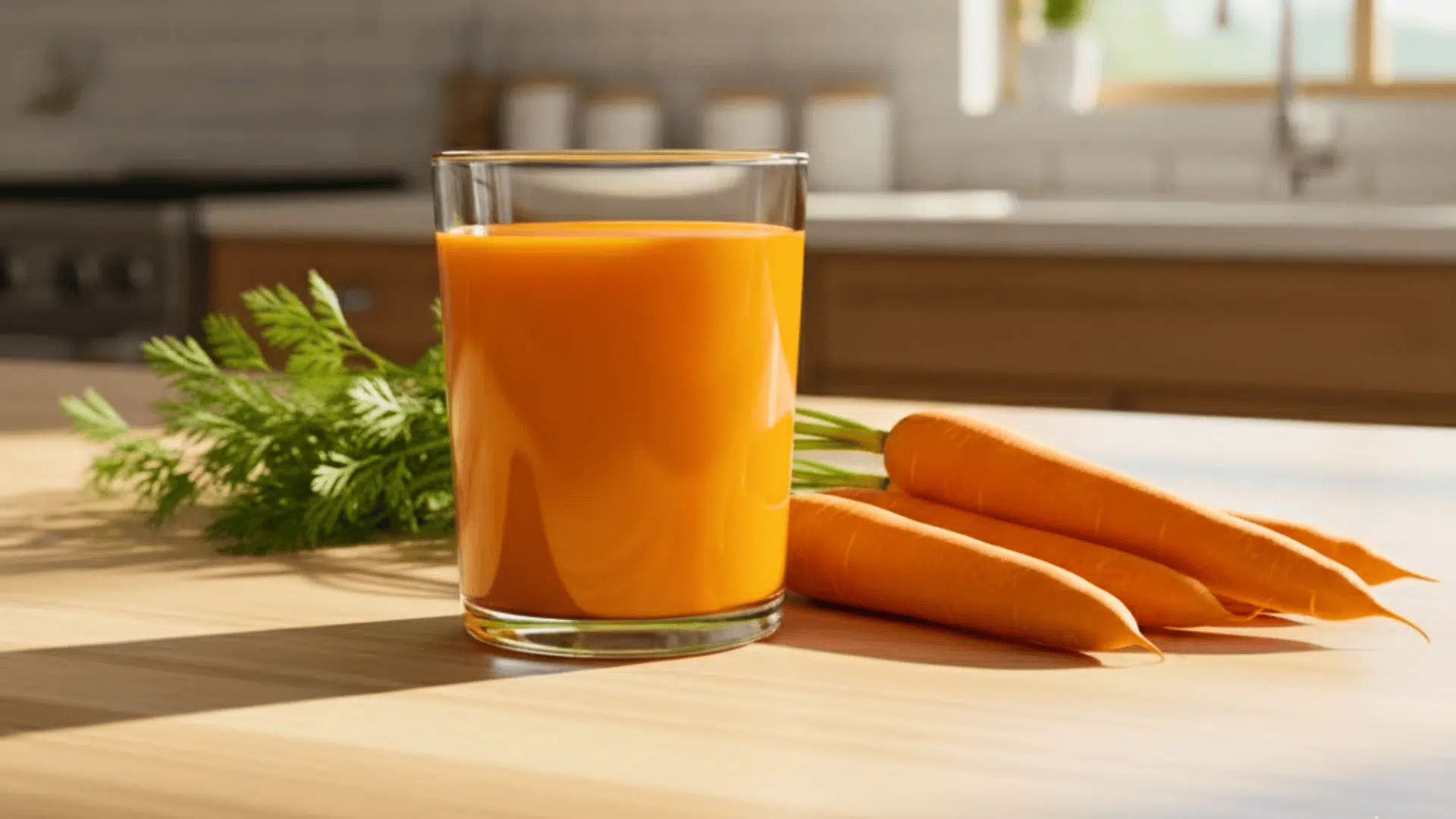









If you’ve been wanting a carrot juice recipe that feels simple and doable, you’re in the right place. I like knowing exactly what goes into my drinks, and I know you might feel the same.
Fresh carrot juice tastes clean and light, and it’s something you can make in just a few minutes with tools you already have.
In this guide, I’ll walk you through easy ways to make your own juice at home. You’ll see steps for different methods, ideas to change the flavor, and tips to help you store it the right way.
My goal is to give you clear, relaxed guidance so you can make a glass that fits your taste without any stress.
Benefits of Carrot Juice
Carrot juice gives you a fast way to enjoy the nutrients found in fresh carrots. It has a naturally sweet taste, no added sugar, and offers clean hydration at any time of day. You also get steady energy without feeling weighed down.
- Supports eye health through natural vitamin A
- Helps your skin thanks to vitamin C
- Provides hydration with water and natural minerals
- Supplies nutrients like vitamin A, vitamin C, and potassium
- Feels light and easy to drink in the morning or mid-day
Let me know if you want the same style applied to other sections.
Nutrition Values for Carrot Juice (1 Cup)
These values give you a quick look at what’s in a small serving of fresh carrot juice so you can see its basic nutrition at a glance.
| Nutrition | Amount (Approx.) |
|---|---|
| Calories | ~40 kcal |
| Carbohydrates | ~9 g |
| Sugars (natural) | ~4 g |
| Fiber | ~0.3 g |
| Protein | ~0.8 g |
| Fat | ~0.1 g |
Interesting Facts
- Fresh carrot juice is naturally sweet due to natural sugars, not added sugar.
- Most fiber is removed during juicing, especially when using a juicer rather than a blender.
- The high vitamin A content comes from beta-carotene, which supports eye and skin health.
Carrot Juice Recipes with Different Methods: Step-By-Step
You can make carrot juice in several easy ways, and each method shows you how to make carrot juice with a different texture and flavor, so you can choose the approach that fits the tools you already have at home.
1. Juicer Method
Ingredients:
Carrots: 3–4 medium
Optional add-ins: lemon, ginger, or orange
Steps:
- Wash the carrots well and peel them if you want a cleaner taste.
- Chop the carrots into pieces that fit into your juicer.
- Feed the pieces through the juicer slowly for a steady flow.
- Stir the juice to blend the flavor.
- Add lemon, ginger, or orange to adjust the taste.
- Serve right away for best freshness.
Tip: Chill the carrots before juicing for a cooler drink without ice.
2. Blender Method
Ingredients:
Carrots: 2–3 medium
Water: ½–1 cup
Optional add-ins: lemon, apple, or orange
Steps:
- Peel and chop the carrots into small chunks.
- Add the carrots and water to the blender.
- Blend on high until smooth.
- Strain through a towel, mesh strainer, or nut-milk bag.
- Press or squeeze to extract the juice.
- Add lemon, apple, or orange to shape the flavor.
- Serve chilled or over ice.
Tip: Blend a little longer for a smoother mixture that strains more easily.
3. Grater or Food Processor Method
Ingredients:
Carrots: 3–4 medium
Water: a small splash (food processor only)
Optional add-ins: lemon or simple fruit juice
Steps:
- Wash and peel the carrots if needed.
- Grate the carrots by hand or pulse in a food processor with a small splash of water.
- Continue until the mixture turns soft and pulpy.
- Place the pulp in a towel or cheesecloth.
- Squeeze firmly to release the juice.
- Add lemon or fruit juice to balance the flavor.
- Serve fresh.
Tip: Add a small splash of apple juice if you want a sweeter result.
Carrot Juice Recipe Variations To Try
You can change the flavor of carrot juice in simple ways by mixing carrots with fruits, vegetables, or a small amount of ginger.
These variations give you different tastes and colors while keeping the steps quick and easy.
| Variation | Ingredients (Detailed) | Steps |
|---|---|---|
| Carrot Orange Ginger | 2 medium carrots (chopped), 1 orange (peeled and segmented), a small ginger piece (¼–½ inch) | Chop ingredients → juice or blend → strain if needed → adjust flavor. |
| Carrot Apple Beet | 2–3 carrots, 1 small beet (peeled), 1 apple (cored and sliced) | Wash and chop → juice or blend → strain if blending → serve fresh. |
| Carrot Apple Celery | 2 carrots, 1 apple, 2 celery stalks (trimmed and chopped) | Chop ingredients → juice or blend → strain if needed → adjust sweetness. |
| Tropical Carrot | 2 carrots, ½ cup mango, ½ cup pineapple (fresh or frozen) | Chop ingredients → blend until smooth → add water if needed → strain or serve thick. |
| Kid-Friendly Carrot | 2 carrots, 1 cup sweet fruit (apple or pineapple), very light ginger (optional) | Chop ingredients → juice or blend → strain if blending → keep ginger minimal. |
These variations work well with any method you choose, so you can try different combinations based on what you have at home.
How to Store Carrot Juice Safely?
Carrot juice keeps its best flavor in a sealed glass jar in the fridge, and it generally stays fresh for about two days. The texture may shift slightly after sitting, so a quick shake helps blend it again.
If you want to save extra juice, freezing is a good option. Freeze it in small portions so it thaws evenly, and expect a softer texture once it melts. The flavor stays pleasant, and frozen cubes can be used in smoothies or blended drinks.
Helpful storage tips:
- Use smaller containers so you only open what you need
- Fill jars almost to the top to reduce air exposure
- Use frozen cubes within one month for the best taste
- Keep the juice away from strong-smelling foods in the fridge
What to Do With Leftover Carrot Pulp
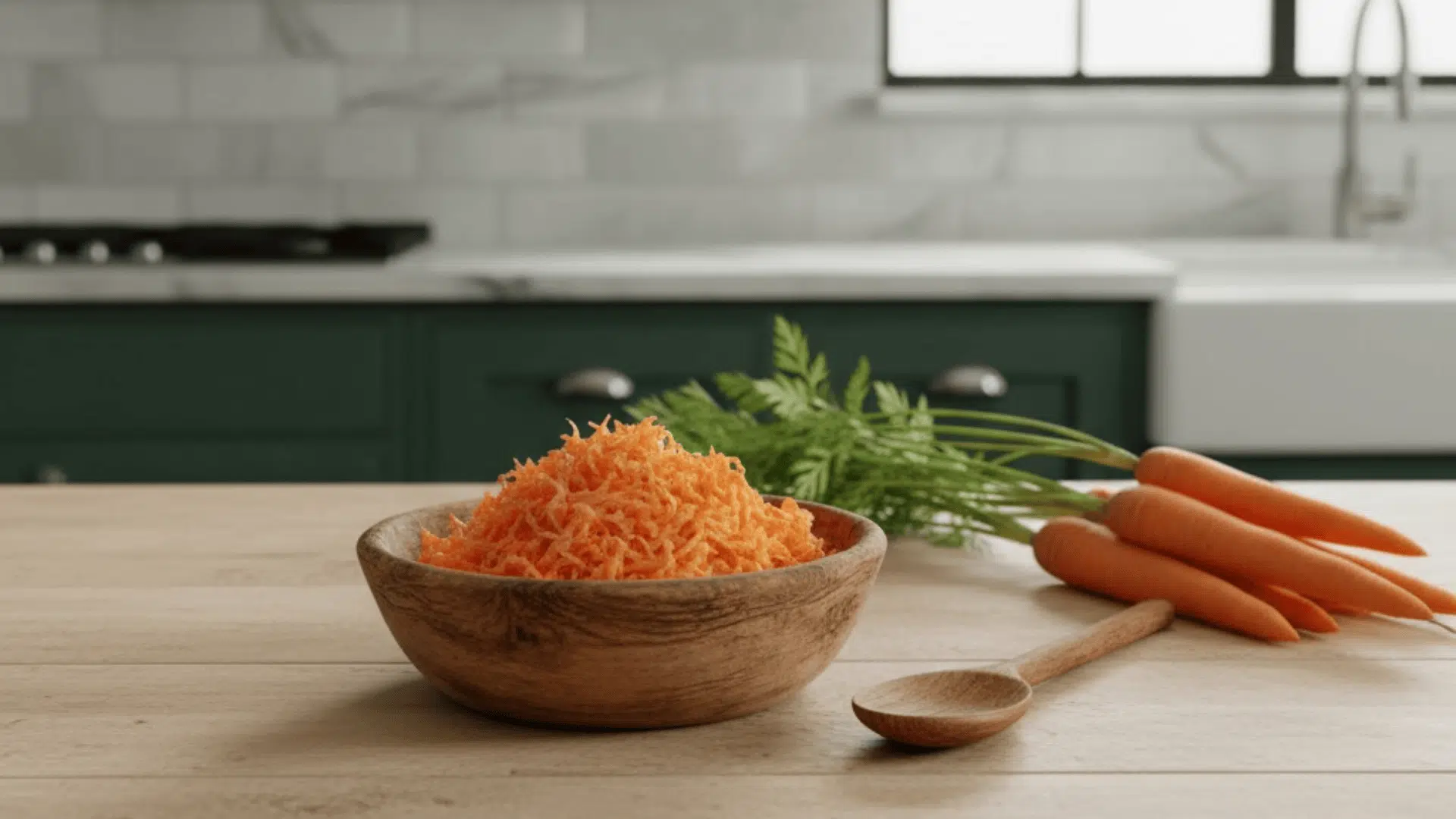
Leftover carrot pulp is easy to reuse, and you can work it into many simple dishes or use it in the garden if you prefer not to cook with it. Here are a few practical ways to make sure none of it goes to waste:
- Muffins and cakes: Add the pulp to baked goods for extra moisture
- Veggie patties: Mix it into patties for soft texture and gentle flavor
- Oatmeal or porridge: Stir a small amount into warm bowls for fiber
- Soups: Blend it into broth-based soups for thickness
- Compost: Add the pulp to compost, where it breaks down quickly
These small steps help you get more use out of your carrots while keeping kitchen waste low.
Wrap Up
I hope this carrot juice recipe gave you the clear steps you needed to make your own fresh drink at home. You now have different methods to choose from, easy flavor ideas, and simple tips to help you adjust the taste to your style.
It feels good to make something fresh in your own kitchen, and I’m glad you and I could walk through it together.
If you want to keep trying new things, you’ll find more posts that can help you with simple recipes, home tips, and everyday ideas.
Feel free to look around and see what interests you. I’m always here to help you with your next kitchen project.