











Why Pro Chefs Swear by This $5 Kosher Salt (and why your pasta sometimes tastes “meh”)
If you’ve ever made the same recipe twice and one time it was perfection and the next time it tasted like you seasoned it with a polite whisper… you’re not imagining things.
A “pinch” of salt is not a universal unit of measurement. A pinch from one brand can pack way more sodium than a pinch from another, because the crystals are shaped differently and they pack together differently. Which is honestly rude, because we’re out here just trying to make dinner, not take a chemistry final.
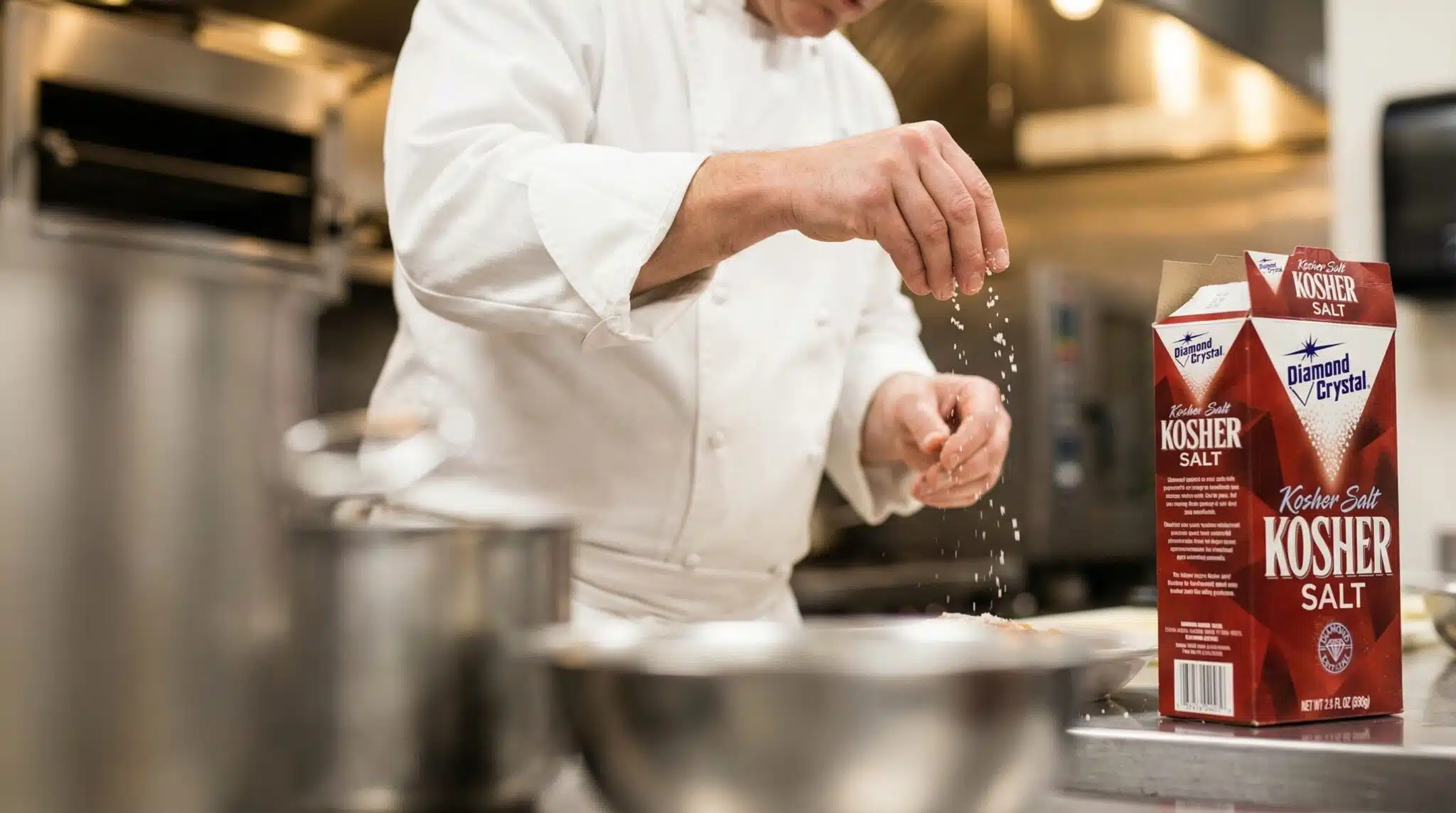
This is why so many professional kitchens standardize on Diamond Crystal Kosher Salt. It’s not fancy. It’s not artisanal. It comes in a giant cardboard box that looks like it should be holding copier paper. And yet: it’s the MVP.
Let me explain (without turning this into Salt: The Novel).
The real reason Diamond Crystal is the chef favorite
Diamond Crystal kosher salt has these light, hollow, pyramid-ish crystals. Translation: it doesn’t pack tightly.
So when you grab a pinch (or a three finger pinch, or the dramatic chef sprinkle from up high), you’re getting a more forgiving amount of salt by volume. That forgiveness is everything when you’re cooking fast, tasting as you go, and trying not to accidentally turn your soup into the Dead Sea.
Other reasons I love it:
- It clings to your fingers instead of immediately skittering off like it’s late for a meeting.
- It dissolves quickly in hot food (goodbye, crunchy salt surprise in your sauce).
- No weird anti-caking vibe going on.
- It’s like $4-$5 for a 3-pound box. Yes, really. Cheaper than one “oops I oversalted it” takeout meal.
Now… we have to talk about the other popular kosher salt that causes chaos in perfectly good kitchens.
The Morton problem (aka: same scoop, totally different saltiness)
Morton kosher salt is denser and flatter. The crystals pack together more tightly, which means it’s significantly saltier per teaspoon than Diamond Crystal.
So if a recipe developer used Diamond Crystal (many do), and you use Morton without adjusting, you can oversalt your dish faster than you can say “Wait why is this inedible?”
Roughly speaking, Morton can be about 50-75% saltier by volume. (Yes, that big of a difference. Salt is dramatic.)
This is also why people swear they “followed the recipe exactly” and it still tasted off. You did follow it. Your salt did not.
My hot take: pick one salt and marry it (in the kitchen, at least)
Here’s the thing: seasoning is muscle memory. It’s like learning how much coffee grounds makes your perfect cup, or how long your shower takes before the water gets cold. Your body learns.
If you use the same kosher salt consistently for a few weeks, you start to feel what a pinch does. After a month or two, you’ll season without thinking just tasting and nudging things into place.
If you keep switching salts, it’s like trying to learn a dance while someone changes the tempo every 30 seconds. Annoying. Confusing. Potentially ends in tears.
So yes, I’m telling you: commit to one everyday cooking salt.
The easiest “two salt” setup (that makes you feel wildly competent)
You do not need seventeen jars of artisanal salt in your cabinet even if you see salts with jaw dropping prices. (Unless you want them. I’m not here to crush your dreams. I’m just saying you don’t need them.)
My simple, pro-ish setup:
- Diamond Crystal Kosher Salt = everyday cooking salt
- Maldon Sea Salt = finishing salt (for crunch and sparkle)
That’s it. That combo will carry you through basically everything from scrambled eggs to roast chicken to a pot of beans that tastes like you cooked it on purpose.
Do yourself a favor: keep your kosher salt in a little open container (a salt cellar, a ramekin, a small bowl… I’ve used all of the above). Put it near the stove. If it’s easy to grab, you’ll actually use it.
Quick conversions (so you don’t ruin dinner)
These are by volume (teaspoons/tablespoons), because the whole issue here is that volume is sneaky.
If a recipe calls for 1 teaspoon Diamond Crystal kosher salt, use approximately:
- 3/4 teaspoon Morton kosher salt
- 1/2 teaspoon table salt (or fine sea salt)
If you have a kitchen scale and the recipe gives salt by weight? Bless. Use the weight. Weight doesn’t care about crystal drama.
If you don’t have a scale (most people don’t), use the conversions above as guardrails and then this is the real secret taste and adjust.
Finishing salt: the crunchy little upgrade your food deserves
Finishing salts are not for cooking. They’re for that moment at the end when you want a little texture and a pop of salt on the surface like earrings for your dinner.
Two favorites:
- Maldon: big flaky pyramids, satisfying crunch. Amazing on roasted veggies, steaks, grilled chicken, even buttered bread.
- Fleur de sel: smaller, slightly moist crystals, gentler vibe. Great on fish and anything delicate.
Lazy shorthand: Maldon for meat, fleur de sel for fish.
Also: both are weirdly excellent on chocolate, caramel, and tomatoes. (Try it once. Report back.)
Specialty salts (smoked, pink, kala namak, etc.) can be fun, but they’re like throw pillows: buy them when fancy salt is worth it and you have an actual spot for them, not when you’re just bored in the aisle.
How to season like a pro (without becoming insufferable about it)
You don’t need chef hands. You just need a few habits.
1) Season in stages
Salt needs time to move into food. If you only salt at the end, you get salty outside / bland inside. The worst personality combo.
- Before cooking: season meat as it hits the pan
- During cooking: taste soups, sauces, beans, etc. and adjust
- At the end: finishing salt for crunch (optional but delightful)
2) Salt from a little height
Hold your hand 6-12 inches above the food and sprinkle. It spreads evenly like seasoning confetti. Salting from one inch away tends to create salty potholes and sad bland patches.
3) Use your fingers, not a shaker
Shakers are chaos. Fingers are control. Keep your hands dry so the salt doesn’t clump and dump itself in one dramatic pile (been there).
4) Taste as you go (especially with salty ingredients)
Soy sauce, miso, fish sauce, anchovies, cheese, store bought stock these are all delicious and also… salty. Recipes can’t predict exactly how salty your brand of broth is today. Your taste buds can.
Add a little, taste, repeat. It’s not fussy. It’s just smart.
The only “salt rule” you actually need to remember
Pick one everyday salt, keep it within arm’s reach, and use it constantly until your hands know what they’re doing.
That’s the whole glow up.
Once you’ve got Diamond Crystal (or whichever kosher salt you commit to) living by your stove, you’ll start seasoning like it’s second nature and suddenly your food tastes more like you meant it.
And honestly? That’s the best kind of dinner.