










What the Alkaline Diet Gets Wrong About Your Body (and why you might still feel better on it)
If you’ve ever watched someone wave a little pH strip around like it’s the Sorting Hat from Harry Potter—“Congrats, your body is alkaline!”—this post is for you.
Because yes, a ton of people swear they feel amazing eating “alkaline.” And also yes, the whole “I changed my blood pH with celery” storyline is… not how human bodies work.
Let’s sort out the big confusion (it’s one of those internet health myths that survives purely on vibes), and then I’ll tell you what’s actually worth keeping from alkaline style eating—without accidentally giving yourself a nutrient faceplant.
The big mix-up: blood pH is not urine pH
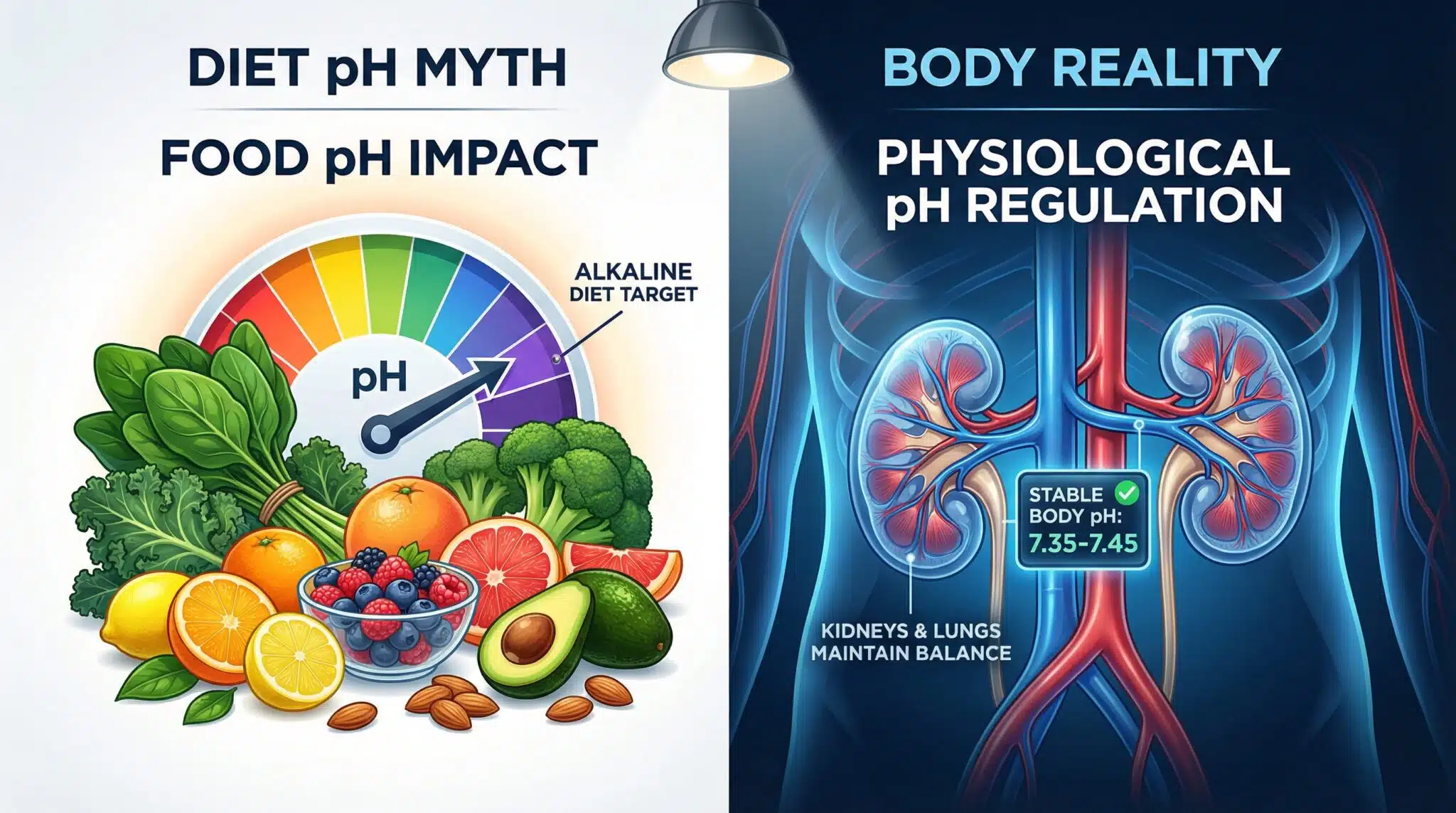
Your blood pH lives in an extremely tight range: about 7.35 to 7.45.
That’s not a “goal” you hustle toward with lemon water. That’s a locked thermostat your body guards like a feral raccoon guards a dumpster pizza.
Even small shifts can be dangerous, so your body works constantly to keep blood pH stable. In a generally healthy person, food does not “acidify” or “alkalize” your blood. Not steak. Not green juice. Not a month of being Very Serious about chia seeds.
Now, urine pH? That’s a different beast. It can swing roughly from 4.5 to 8.0, and it does change depending on what you eat.
So when someone says, “Look! My pH changed!” what they usually mean is: their urine changed. Which is… fine. That’s literally part of what pee is for. It’s the “take the trash out” system.
The alkaline diet industry basically takes this very normal thing (urine pH changes) and quietly implies it means the important thing changed (blood pH). It’s kind of like looking in your kitchen trash and deciding what temperature your oven is. Related room. Not the same information.
“But my body was too acidic!” (No. Your body is not a sourdough starter.)
If your blood pH actually drifts out of range, that’s not a “wellness journey.” That’s a medical emergency.
Low blood pH (acidosis) can happen with things like:
- kidney failure
- diabetic ketoacidosis
- severe infection (sepsis)
- serious poisoning
Not: coffee, cheese, bread, or your emotional support Diet Coke.
And the symptoms of real, dangerous pH problems aren’t cute little “detox” complaints. We’re talking things like confusion, rapid breathing, extreme weakness, severe illness—the kind of situation where the solution is urgent medical care, not a Pinterest list of “alkaline snacks.”
So if anyone claims, “This diet made my blood acidic,” one of two things is true:
- they’re mixing up blood with urine (super common), or
- they need actual medical care (not a group chat).
How your body keeps blood pH stable (without asking your permission)
Your body uses a few overlapping systems to keep blood pH steady, basically 24/7, like an HVAC system you never think about until it breaks.
- Chemical buffers (fast): your blood has compounds (like bicarbonate) that mop up extra acid/base quickly.
- Your lungs (pretty fast): you breathe out carbon dioxide, which affects acidity. Your brain adjusts breathing automatically.
- Your kidneys (slower, but powerful): they control what acids/bases leave through urine and what gets conserved.
So when you eat something that produces more acid “byproducts,” your kidneys go, “Cool, I’ll escort that out,” and your urine may get more acidic. Your blood stays steady because your body is doing its job.
Honestly, it’s kind of rude how well your body handles this without even a thank you note.
When doctors actually care about urine pH
For most people, urine pH is trivia. Fun at parties, maybe (if you attend deeply weird parties).
But there are a few real life times it matters, like:
- Certain kidney stones: Some types (like uric acid stones) form more easily in acidic urine, so doctors might recommend strategies to raise urine pH. (Important note: stone types differ, so DIY’ing this can backfire.)
- Some UTIs: Urine pH can affect bacterial growth and sometimes treatment choices.
- Certain medications: Urine pH can influence how some drugs are excreted.
If urine pH matters for you, your clinician will tell you. If no one has told you, you probably don’t need to be in your bathroom doing chemistry experiments twice a day.
Why people feel better on “alkaline” diets (spoiler: it’s not because they hacked pH)
Here’s the part where I’m not here to be a hater.
A lot of alkaline diet food lists are basically: eat more plants, fewer ultra processed foods.
And shockingly (sarcasm), many people feel better when they:
- eat more fruits and vegetables (fiber! potassium! magnesium!)
- eat fewer ultra processed foods (less added sugar, less sodium, fewer refined carbs)
- swap some animal foods for plant proteins (often less saturated fat, more fiber)
So if you started eating more produce and stopped living on drive thru and desk crackers, yes—you may feel like a new person. Not because your blood pH “shifted.” Because you started feeding yourself like someone you’re responsible for.
Alkaline diet claims that don’t really hold up
Let’s lovingly toss a few popular claims into the “sounds nice but no” bin:
- “Food changes your blood pH.” In healthy people, your body regulates blood pH tightly.
- “Alkaline eating changes tumor acidity.” Tumors can create acidic environments due to their metabolism. Diet doesn’t reach in and re-pH a tumor like you’re adjusting pool chemicals.
- “Acid forming foods cause bone loss.” Research reviews don’t consistently show alkaline diets protect bone density the way the marketing suggests.
- “You can test your body’s pH at home.” You can test urine pH. You cannot accurately test blood pH at home with wellness strips.
Also, a quick reality filter I use for anything online:
- Are they talking about blood pH or urine pH? (They love to blur this.)
- Do they explain what kidneys/lungs do? (If no, that’s… convenient.)
- Are they selling you pink salt marketing myths? (If yes, your skepticism should be fully moisturized and active.)
The part people don’t talk about: strict alkaline plans can cause nutrient gaps
If you keep the “eat more plants” part and skip the rigid rules, great.
But some strict alkaline plans get very “foods are moral” and start cutting out big categories (animal foods, grains, etc.). That’s where people can quietly end up with gaps.
A few to watch if you’re heavily limiting animal foods:
- Vitamin B12: Plants don’t provide reliable B12. If you’re not eating animal products, you generally need a supplement (talk to your clinician).
- Calcium: Some people unintentionally fall short, especially if they’re avoiding dairy and not replacing it thoughtfully.
- Protein: Totally doable on plants, but you have to actually plan it (especially if you’re older or trying to maintain muscle).
- Iron and zinc: You can get them from plants, but they’re often less easily absorbed than from meat sources.
And this is important: if you feel fatigued, weak, nauseated, dizzy, and someone tells you that’s “detox”… I want you to hear me clearly: that is not a cute badge of honor. Those symptoms can overlap with deficiencies like anemia or B12 deficiency and deserve real attention.
“Detox” is often what people say when they don’t want to admit they’re under fueling.
Who should not follow random DIY alkaline diet rules from the internet
If any of these apply, please don’t take health advice from a meme with a beige background:
- Chronic kidney disease: high potassium “alkaline” foods may need limits, and kidneys are central to acid base balance.
- Diabetes (especially type 1): diet changes can affect blood sugar and medication needs. Ketoacidosis is a real risk.
- Pregnant/nursing: nutrient needs are higher. Restrictive rules can be harmful.
- Kids/teens/older adults: steady protein and adequate nutrients matter a lot in growth and aging.
- History of eating disorders: strict “good vs bad” food rules can be triggering.
If you’re in one of these groups, work with a clinician or dietitian who can tailor things to you. Your body isn’t a template.
If you like the alkaline vibe, do this instead (Mediterranean/DASH energy, zero pH drama)
If what you really want is “more plants, fewer junky foods, feel better,” you do not need a pH chart taped to your fridge to understand salt and body pH.
Two eating patterns with actual decades of research behind them:
- Mediterranean style
- DASH style
They’re basically the same common sense idea:
- lots of vegetables and fruits
- beans and lentils regularly
- whole grains (yes, you’re allowed)
- olive oil, nuts, seeds
- fish sometimes
- less red meat and ultra processed stuff
My favorite low stress approach is the plate method:
- About 2/3 plants (vegetables, fruit, beans, whole grains)
- About 1/3 protein (beans/lentils, fish, poultry, eggs, tofu, etc.)
No food needs to be “illegal.” You’re not joining a cult. You’re just feeding yourself.
My bottom line
Your body is already doing the pH job. Beautifully. Constantly. For free.
If alkaline style eating got you to eat more plants and fewer ultra processed foods, keep that part. Just don’t waste money (or sanity) chasing a blood pH change that your body won’t allow unless you’re seriously ill.
You don’t need pH strips for wellness. You need a sustainable way to eat that supports your real life.
Five things you can do this week (no pH strips required)
- Stop testing your urine pH for “health.” Unless your clinician asked you to, it’s mostly noise.
- Add one plant heavy meal a day. Soup + salad counts. A loaded grain bowl counts. Tacos with beans count (tacos are basically self-care).
- If you’re cutting animal products, plan nutrients on purpose. Especially B12, calcium, iron, zinc, and protein.
- If you have kidney disease, diabetes, are pregnant/nursing, or have ED history—get personalized guidance. Internet rules are not your friend here.
- Treat severe symptoms as medical, not “detox.” Confusion, extreme weakness, rapid breathing, etc. = get urgent care.
If you want, tell me what you’re hoping the alkaline diet will “fix” for you (energy? digestion? inflammation? just feeling less blah?) and I’ll help you translate that into something practical that doesn’t involve turning your bathroom into a science fair.