










Stop Wasting Your Finishing Salt (Yes, I’m Talking to You)
If you’ve ever bought a pretty little box of Maldon or a jar of fleur de sel and felt extremely fancy… and then casually dumped it into pasta water like it’s 1997 table salt… hi. Welcome. I’ve been you.
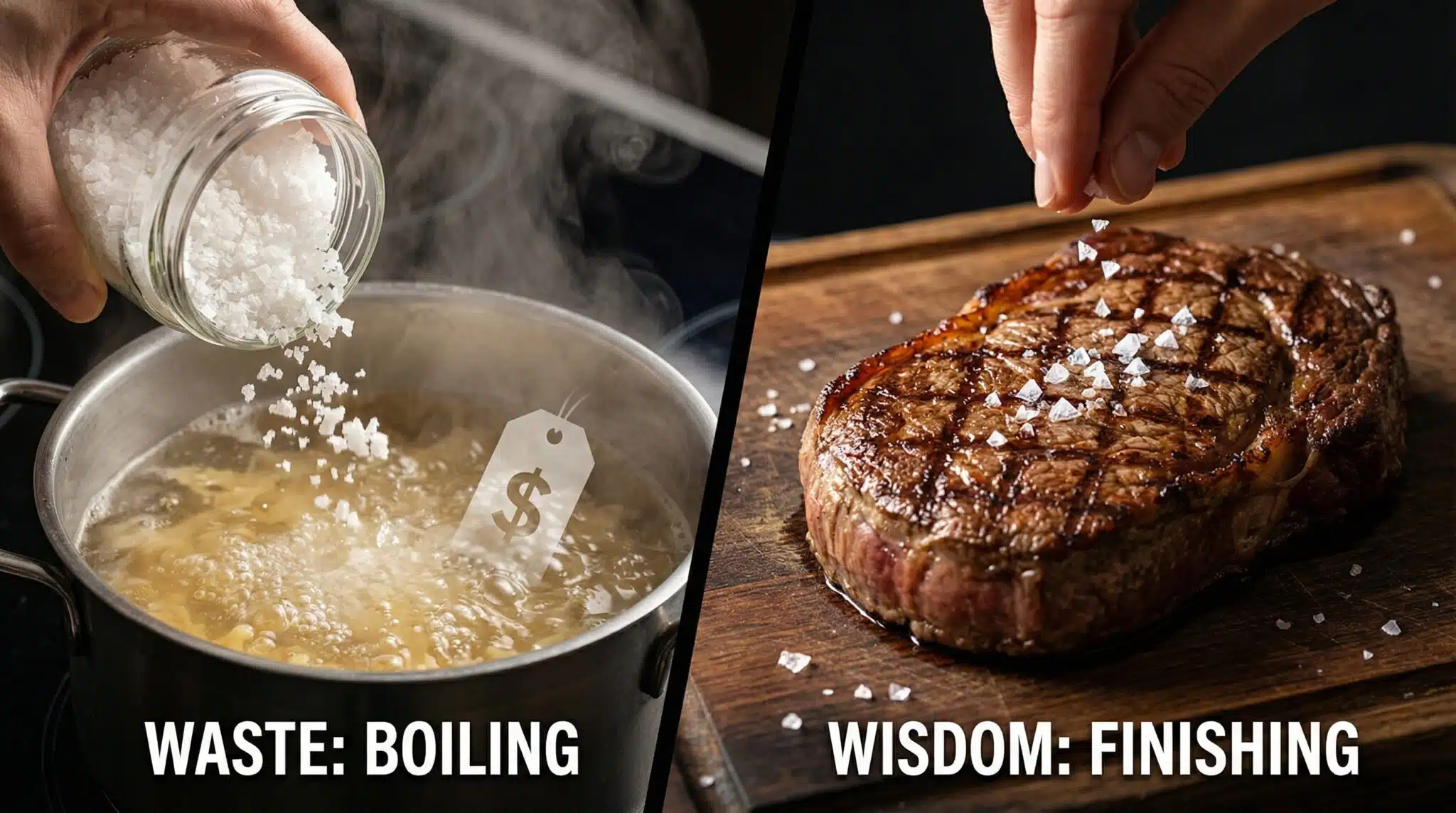
Finishing salts are gorgeous and they cost real money, and the tragic part is that a lot of people use them in the exact moments when they turn into… regular salt. Like, poof. Your crunchy flakes dissolve and now you’ve basically paid boutique prices for something you could’ve done with a $4 box of kosher salt.
The good news: this isn’t about being a “better cook.” It’s about timing. And I’m going to make it idiot proof (because I, too, am an idiot at the stove sometimes).
The Only Thing You’re Really Paying For: The Crunch
Let’s clear something up: fancy salt isn’t mainly “more flavorful.” It’s more textured.
Finishing salt is for that moment when you bite into something and you get:
- a little crackle
- a quick pop of salt
- that sparkly “oh hello” on the surface of the food
Once those crystals dissolve (in soup, sauce, pasta water, a hot pan situation), the magic is gone. Minerals, ocean breezes, hand harvested romance whatever the label says none of it matters once it’s melted into a vat of liquid. It just becomes… saltiness. Which is fine! But it’s not finishing salt fine.
Try this if you want to convince yourself in 10 seconds:
Take buttered bread. Sprinkle flakes on top. Crunchy, punchy, delightful.
Now mix that same salt into the butter. Still tasty, but the drama is gone.
Texture is the whole party.
The Salt Lineup (Quick and Non-Boring)
You don’t need seven salts unless you’re also collecting cast iron and calling it a personality. Here’s what actually helps:
1) Cooking salt (meant to dissolve)
This is your workhorse. Use it when salt needs to disappear into the food.
- Kosher salt (my ride or die)
- Table salt (yes, it works, yes, it’s fine)
If a recipe just says “salt,” a lot of recipe developers mean Diamond Crystal fluffy grains specifically (it’s fluffy, less dense, and easy to pinch). If you’re using table salt, you need less and I will get to that in a sec.
2) Finishing salt (meant to stay crunchy)
This is your sparkly topcoat. Use it when you want salt on purpose.
- Maldon (big flakes, shatters nicely also looks fancy with zero effort)
- Fleur de sel (slightly moist, softer crunch, very “ocean-y”)
3) Specialty salts (mostly for vibes)
Smoked salt, black lava salt, Hawaiian red salt fun! But FYI: the cool color fades when you cook it, and smoked salt loses its charm with heat too. These are “last second sprinkles,” not “throw it in the stew.”
When Fancy Salt Is a Waste (And When It’s Magic)
Here’s the rule I use: If the salt is going to dissolve, use cheap salt. If the salt is going to sit on top and be noticed, bring out the fancy flakes like the diva they are.
Use kosher/table salt for:
- Pasta water (PLEASE, I’m begging you)
- Soups, stews, braises (all the simmering stuff)
- Ground meat (tacos don’t care about pyramid flakes)
- Brines and marinades
- Baking (you want even distribution, not salty landmines)
Save finishing salt for:
- Steak, chicken, fish… right before serving
- Salads and sliced tomatoes (anything raw = perfect)
- Chocolate desserts, brownies, caramel (salt + sweet + crunch = actual witchcraft)
- Cocktail rims (because sometimes we drink like adults)
And smoked salt? Put it on things like eggs after cooking, popcorn, roasted veggies after roasting, or trust me vanilla ice cream. It sounds unhinged. It’s incredible.
The Timing Trick That Changes Everything
Finishing salt has a tiny window where it’s at its best:
Sprinkle it within about 30-60 seconds of serving.
You want the food warm enough to slightly soften the flakes (so they cling and taste great), but not so hot that they melt away instantly and die the death of all good intentions.
Also: pinch from a few inches above the plate so it scatters. If you salt from one inch above the steak, you’ll get one salty boulder and five sad bites of nothing. (Ask me how I know.)
And salt the parts you’ll actually bite especially cut surfaces on sliced meat or chicken. That’s where the crunch lives.
One Thing That Sneaks Up on People: Salt Density
Not all salts measure the same by volume. This is why you can follow a recipe “exactly” and still end up with something that tastes like the ocean slapped you.
A rough, useful comparison:
- 1 tsp table salt ≈ 1.5 tsp Diamond Crystal kosher salt
So if you swap salts, adjust. Or do what I do: season gradually, taste, adjust, repeat like a normal person.
My “Two Zone” Salt Setup (Because I Don’t Trust Myself)
This is the simplest system I’ve found that prevents accidental fancy salt tragedy:
Zone 1: Stove salt
Keep kosher salt in an open bowl near where you cook.
This is the salt you grab without thinking for anything involving heat: sautéing, boiling, seasoning while cooking, marinades, brines go wild.
Zone 2: Finishing salt
Keep your Maldon/fleur de sel away from the stove near where you plate food or eat.
It only comes out at the end, like a tiny crunchy crown.
This separation is what saves you. Because when you’re hungry and multitasking and your kitchen timer is screaming? You will absolutely grab the wrong container if they’re next to each other. (Again: ask me how I know.)
Storage: Don’t Let Humidity Steal Your Crunch
Salt doesn’t “go bad,” but humidity will clump it and mess with the texture especially the luxury salt splurges you paid too much for.
- Keep finishing salt in a container with a lid (glass or ceramic is great)
- Store it away from the sink and the steam zone by the stove
- If your finishing salt turns into a damp brick, it’ll still taste salty, but the crunch factor takes a hit
One more quick nutrition note (not to be boring, just helpful): sodium is basically sodium most salts are roughly similar per teaspoon. And if you stop using iodized table salt entirely, make sure you’re getting iodine elsewhere (dairy, eggs, seafood, or a supplement). Okay, health class over.
The Bottom Line (a.k.a. Save the Fancy Stuff for the Finale)
Finishing salt is worth it only when it stays intact on the surface and you get that crunchy little burst. Use kosher/table salt for anything hot, wet, or large volume. Use flaky fancy salt at the very end, right before serving, when it can actually do its sparkly thing.
Set up the two zone salt situation tonight. Your future self standing at the stove, hungry and chaotic will thank you. And your Maldon will stop getting dumped into pasta water like it owes you money.