











Which Salt Is Best? (Spoiler: It’s Not the One With a Himalayan Backstory)
Walk down the salt aisle and you’d think you’re choosing a soulmate: artisanal, ancient, hand harvested under a full moon, blessed by a French fisherman named Luc. Meanwhile, most of us are already eating more sodium than we need, and the internet is out here arguing about whether pink salt has “better vibes.”
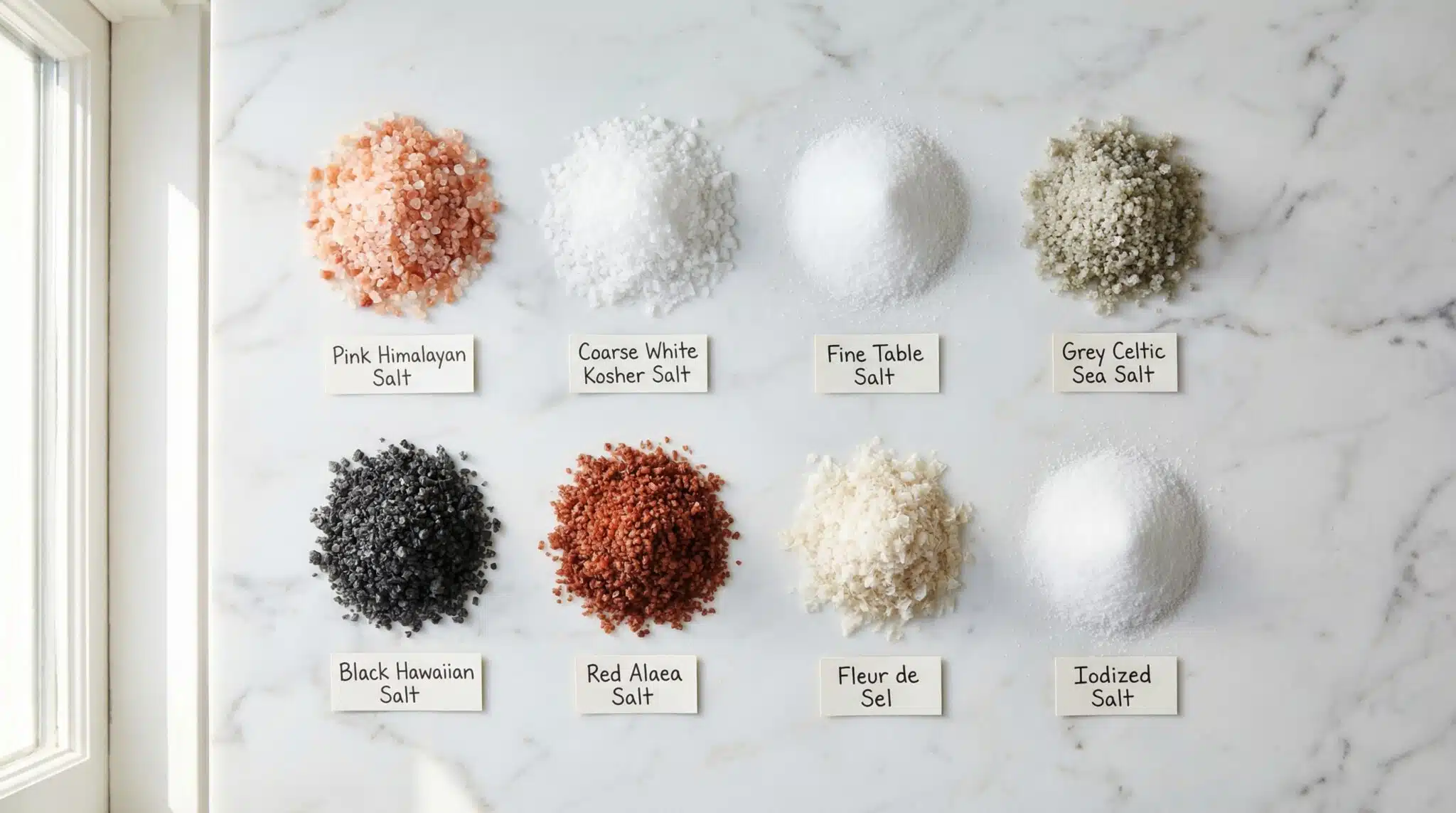
So here’s my mildly unromantic truth bomb: nearly all culinary salts are basically the same thing about 98% sodium chloride. The “best” salt usually comes down to three things that actually matter:
- How it measures (crystal size = sneaky sodium differences)
- Whether it has iodine
- How clean/reputable the source is
Everything else is mostly crunch, aesthetics, and marketing poetry.
Let’s get into it.
1) The reason your salt “nutrition facts” don’t match: SPOONS LIE
If you’ve ever followed a recipe to the letter and still ended up with a dish that tasted like a wave hit it… welcome. This is often a salt crystal problem, not a you problem.
Salt isn’t measured in chemistry class. It’s measured with spoons and “a pinch,” which is basically cooking’s version of vibes. Fine salt packs tightly into a spoon. Flaky salt traps air. So you can use the same ¼ teaspoon and get very different amounts of sodium.
Real life example:
- Fine table salt is dense. A ¼ tsp can be around 590 mg sodium.
- Diamond Crystal kosher salt is super light and hollow/flaky. A ¼ tsp can be around 280 mg sodium.
That’s not because one is “healthier.” It’s because one is basically tiny rocks and the other is crunchy little salt clouds.
My rule:
- If you’re measuring by weight, salt is salt.
- If you’re measuring by spoons, crystal shape can totally mess with your “I barely salted it!” math.
(And yes, I learned this the hard way when I switched salts and accidentally turned a soup into ocean broth.)
2) The biggest “health” difference isn’t minerals… it’s iodine
This is the part nobody puts on a cute label.
Iodized table salt typically gives about 45 micrograms of iodine per ¼ teaspoon. Most trendy salts sea salt, kosher, Himalayan, Celtic, fleur de sel usually have little to none unless the label specifically says iodized.
Why care? Because your thyroid cares. Iodine is a big deal for thyroid function, and deficiency can creep in with vague stuff like fatigue, brain fog, feeling cold all the time… you know, all the symptoms that also describe being alive in winter.
People who really shouldn’t play the “oops I stopped using iodized salt” game:
- Pregnant people (need ~220 mcg/day)
- Breastfeeding people (need ~290 mcg/day)
- Vegans/vegetarians who aren’t regularly doing seaweed/dairy/eggs
- Anyone whose diet is just… not seafood forward
If you want pink salt because it looks cute in a little crock (I get it), fine. Just make sure iodine is coming from somewhere else seafood, dairy, eggs, seaweed, or a supplement if your doctor says so.
3) “84 trace minerals” sounds impressive until you do… literally any math
Pink salt marketing loves the whole “it has minerals!” storyline. Celtic salt too. And yes those trace minerals are real. That’s what gives pink salt its color and grey salt its moody little swamp aesthetic.
But nutritionally? At normal salt intake levels, those minerals are basically a rounding error. One study looking at pink salts and the 84 minerals marketing math found you’d need to eat an absolutely unhinged amount of salt to get meaningful mineral benefits… and by then you’d also be eating way too much sodium.
If you want potassium, eat a banana.
If you want magnesium, eat nuts/beans/leafy greens.
If you want iron, please don’t look to your salt shaker like it’s a multivitamin.
Buy fancy salt for texture and fun. Not for nutrition or salt mineral levels compared.
4) The thing that’s actually worth being picky about: contaminants (because… earth)
Here’s the not fun but useful part: some salts can contain contaminants like heavy metals, and it can vary a lot by source and batch, not just by “type.” “Himalayan” on a label doesn’t automatically mean “pure.” “Sea salt” doesn’t automatically mean “dirty.” It’s messy.
A couple practical thoughts without spiraling into fear:
- More refined salts (like regular table salt) are processed in ways that can remove some impurities.
- Less processed salts may keep more “natural” stuff… which can include both trace minerals and environmental contaminants.
- For microplastics, sea salts can be more exposed than rock salts, but again batch and source matter.
What I do (and what I’d tell you to do):
- Buy from reputable brands (bonus points if they share third party testing info)
- Don’t marry one salt forever rotate sometimes if you’re worried
- Keep total salt intake reasonable, because the dose makes the drama
Okay, so what salt should you actually buy?
If you want the no nonsense answer for a normal human who eats food and doesn’t want a spreadsheet with dinner:
My “real life” salt lineup
- Everyday cooking: Iodized table salt
- Cheap, consistent, dissolves fast, and quietly does the iodine job.
- Cooking where you like pinching salt (and pretending you’re on a cooking show): Kosher salt
- Easy to grab, easy to sprinkle evenly.
- Important: Morton and Diamond Crystal don’t measure the same. (Annoying, but true.)
- Finishing / fancy crunch moments: Maldon or fleur de sel
- This is for the top of cookies, tomatoes, salads, chocolate chip masterpieces. Texture city.
- If you’re avoiding additives: many kosher and specialty salts skip anti-caking agents
- (I personally don’t stress about anti-caking agents, but you do you.)
If you’re trying to reduce sodium
This is where people get tripped up.
- If you’re measuring by teaspoons, Diamond Crystal can mean less sodium per spoon because it’s so airy.
- If you want true precision, use a kitchen scale and measure in grams. That’s the only way to make different salts truly comparable.
Quick and dirty conversion cheats (so you don’t ruin dinner)
If a recipe uses table salt and you’re using kosher, don’t just swap spoon for spoon and hope for the best.
A simple starting point:
- 1 tsp table salt ≈ 1.5 tsp Diamond Crystal kosher
- 1 tsp table salt ≈ 1.25 tsp Morton coarse kosher
- For baking/curing where accuracy matters: 1 tsp table salt ≈ 6 grams (weigh it!)
And if you’re thinking, “I will absolutely forget this,” same. Screenshot it or write it on a sticky note and slap it inside a cabinet door like the rest of us.
One big safety note: potassium “salt” isn’t harmless
Those potassium chloride salt substitutes are basically the only way to truly cut sodium chemically (because you’re replacing sodium with potassium).
But: they can be dangerous if you have:
- kidney disease
- heart failure
- or you take potassium sparing meds (like certain blood pressure meds, including ACE inhibitors, ARBs, or spironolactone)
If any of that is you: ask your doctor before using potassium based salt substitutes. No kitchen hack is worth messing with your potassium levels.
My final verdict (aka the part you actually came for)
If you want the “best” salt without overthinking your entire pantry:
- Keep iodized table salt in the rotation unless you’re very sure you’re getting iodine elsewhere.
- Use kosher salt because it’s delightful to cook with (but respect the brand differences).
- Buy fancy finishing salt for crunch and joy, not minerals.
- If you care about sodium numbers, weigh your salt or at least don’t swap salts casually by the teaspoon.
- If you have medical stuff going on (blood pressure, heart, kidneys, thyroid meds like lithium, etc.), focus less on “which salt” and more on total sodium and get personal guidance.
Now go peek at your salt container. If it doesn’t say iodized anywhere and you’ve been living that pink salt life… just make sure your thyroid isn’t out here running on fumes.