












Herb Drug Interactions You Can’t Afford to Miss (A Love Letter to Telling Your Doctor About Your Supplements)
Let me paint you a very normal picture: you’ve got your prescription meds lined up like responsible little soldiers… and then there’s the other stuff. The magnesium you swear helps you sleep. The “immune” gummy you panic-bought in November. The fish oil that makes you feel like a healthy woodland creature. Maybe a calming tea that tastes like potpourri but you drink it anyway.
And somewhere in that chaos is the part nobody wants to talk about: herbs and supplements can mess with medications sometimes quietly, sometimes in a “why is my body doing that?” way.
One stat that made me sit up straighter: a big chunk of people mix herbs with prescriptions and have some interaction risk… yet a lot of us don’t mention supplements to our clinician. (Not because we’re sneaky. More like… it doesn’t feel like it “counts.” Spoiler: it counts.)
I’m not your doctor, and I’m definitely not here to diagnose you from the internet. I am here to help you do a quick reality check so you can stay safe—and so your meds actually work the way they’re supposed to.
Why Herbs Can Be Sneaky (Even When They’re “Natural”)
Herb drug interactions usually happen in two annoying ways:
1) The “processing problem” (aka your body’s speed controls)
Your body uses enzymes (often called CYP450 enzymes) to break down a ton of medications. Some herbs speed up that process, so your medication gets cleared too fast and doesn’t work well. Other herbs slow it down, so drug levels can climb and side effects get louder.
The poster child here is St. John’s Wort. It can speed up drug metabolism enough to reduce the effectiveness of things like:
- birth control
- HIV meds
- some cancer drugs
…and more. Not a cute surprise.
2) The “stacking problem” (aka doubling down on the same effect)
Sometimes the herb and the medication push your body in the same direction especially with things like clotting, sedation, or blood pressure.
Example: ginkgo + blood thinners can increase bleeding risk even if your lab numbers look “fine.” Your body doesn’t care that your spreadsheet looks good.
And here’s the extra fun twist: supplements aren’t as predictable as prescriptions. The strength can vary by brand and batch. Two bottles can look identical and behave totally differently. (Which is… not the vibe when we’re talking about your bloodstream.)
The Combos I’d Take Seriously Immediately
If any of these are in your life right now, don’t power through and hope for the best. Pause and call your clinician/pharmacist for guidance (especially if you’re on high stakes meds).
St. John’s Wort +
- antidepressants (risk of serotonin syndrome)
- birth control (reduced effectiveness)
- HIV meds or certain cancer drugs (reduced effectiveness)
Also: St. John’s Wort isn’t always a “stop today, no questions” situation ask how to stop safely. A washout period can be around 14 days depending on what you’re taking.
Ginkgo biloba + blood thinners/anticoagulants
This can raise bleeding risk. Worth a real conversation, not a casual shrug.
High dose fish oil (over ~3g EPA/DHA per day) + anticoagulants
High dose fish oil plus blood thinners can increase bleeding/bruising risk (yes, even scary stuff like spontaneous hematomas). Don’t “just add” mega doses on top of anticoagulants because TikTok said your joints deserve it.
Kava + medications processed by the liver
Kava has been associated with serious liver toxicity. If you’re taking anything that’s hard on the liver already, this is a big waving red flag.
Other “worth a call soon” mixes (not exhaustive, but common):
- Grapefruit + some statins or calcium channel blockers
- Green tea extract + anticoagulants
- Turmeric + immunosuppressants
- Valerian + benzodiazepines (can increase sedation)
- Licorice + blood pressure meds (licorice can affect blood pressure/potassium)
If you’re reading this thinking, “Well, that’s basically my whole personality,” stay with me. You’re not doomed. You just need a system.
Are You in the “Extra Cautious” Club?
Some people can mix things with fewer issues. Others have a much smaller margin for error. You’re higher risk if you have any of these going on:
- You take narrow therapeutic index meds (small line between helpful and harmful), like warfarin, digoxin, lithium, tacrolimus, cyclosporine, phenytoin, theophylline
- You’re on 5+ medications (interactions multiply fast like rabbits, but less cute)
- You’re over 65
- You have liver or kidney disease
- You’re pregnant or breastfeeding
- You’re immunocompromised, in active cancer treatment, have a transplant history, or you have surgery coming up
If any of that’s you and you want pregnancy supplement safety basics: this isn’t the time for “probably fine.”
Red Flags: When You Need Help (Not Google)
I’m going to be very unfun for a second because this matters.
Go to the ER / call emergency services if you have:
- bleeding that won’t stop after 10-15 minutes of steady pressure
- chest pain, trouble breathing, fainting, seizures
- symptoms that could suggest serotonin syndrome, especially if you’re mixing serotonin affecting meds/herbs: confusion + high fever + muscle rigidity
Get urgent evaluation for:
- yellowing skin/eyes with severe belly pain (possible liver injury)
- blood in stool or urine while on anticoagulants
Call your clinician within 24 hours if:
- a med suddenly feels less effective
- unusual drowsiness on pain/anxiety meds
- big blood pressure swings
- unexplained blood sugar drops
- if you’re on warfarin: an INR change > 0.5 from your usual
Feeling fine doesn’t mean nothing’s happening it just means you’ve got time to check calmly. Which brings me to my favorite part: the “15 minutes now saves a nightmare later” routine.
My 15 Minute Herb Drug Safety Check (Do This Tonight)
Set a timer. Seriously. This is not a three hour wellness inventory spiral where you end up reading reviews on zinc lozenges from 2018.
1) Round up your full list (5-10 minutes)
Write down (or put in your notes app):
- prescriptions
- OTC meds (pain relievers, antihistamines, heartburn meds, etc.)
- supplements (including CBD gummies)
- herbal products and teas you use daily or most days
Add brand + dose + how often for homemade mullein tinctures. This matters more than you’d think.
2) Do a quick quality check (2 minutes)
If you’re using random brands, look for third party testing marks like:
- USP Verified
- NSF
- ConsumerLab
No seal doesn’t automatically mean “bad,” but it does mean “less certain what’s in here,” which makes interaction checks fuzzier.
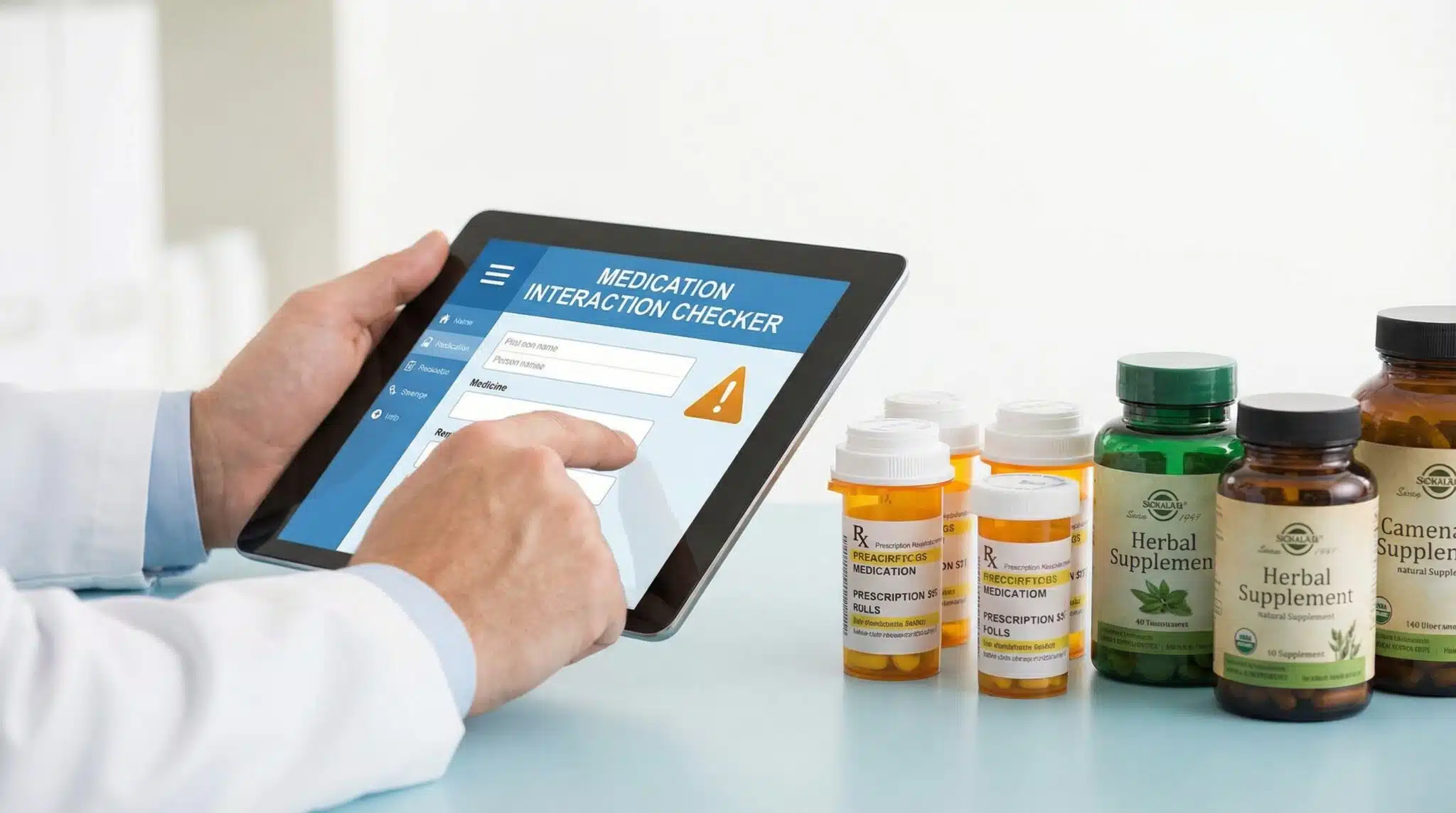
3) Run an interaction check (5 minutes)
A few free places to start:
- WebMD Interaction Checker (simple severity labels)
- Drugs.com (often more supplement coverage)
- Memorial Sloan Kettering’s “About Herbs” database (especially useful if cancer treatment is part of your world)
If something says “no data,” read that as: not studied, not “go wild.”
4) Use the severity labels like a normal person
- Major/Severe: don’t combine without medical guidance
- Moderate: may be possible with monitoring/adjustments
- Minor: usually okay, but stay alert
If the results look scary or confusing, that’s not you failing. That’s your cue to bring in a pro.
When to Loop in a Pharmacist (My Underused Hero of the Healthcare World)
If you take anything “heavy duty” (blood thinners, seizure meds, transplant meds, chemo related meds, etc.) or you’re on multiple prescriptions, talk to a pharmacist before adding supplements.
Community pharmacists can often do a quick consult and they have professional databases that go deeper than consumer tools.
And if you have a complex medication list (especially 5+ long term meds, transplant history, recent cancer treatment), ask about a more thorough medication review (often called Medication Therapy Management).
Surgery coming up?
Please tell your surgeon/anesthesia team about every supplement even the “just a tea” ones. Some herbs affect bleeding or anesthesia metabolism and may need to be stopped 5-14 days before surgery. Don’t surprise the anesthesiologist. They do not enjoy surprises.
How to Talk About Supplements Without Feeling Weird About It
If you take one thing from this post, make it this: bring the bottles or bring photos. Guessing names from memory (“It’s, um… a white capsule? The label is green-ish?”) is not the efficient healthcare moment we want.
Here’s a script you can steal:
“I want to make sure you have the full list of everything I’m taking. I’ve been using [supplement] at [dose] for [reason]. Can we check interaction risk with my current meds?”
And if you get brushed off:
“Totally understand it may not be proven for what it’s marketed for. I’m specifically asking about interaction risk. What should I watch for?”
Also: use one pharmacy for prescriptions if you can. It helps their system catch interactions automatically.
Your Simple Game Plan (No Panic, Just Practical)
Tonight:
- Gather every bottle/tea/gummy you use regularly.
- Make one complete list with doses.
- Run it through an interaction checker.
- If anything flags major/severe, don’t take the next dose until you’ve talked to a clinician/pharmacist.
Supplements are not automatically “bad.” But they are absolutely capable of changing how your meds work and you deserve to feel confident that your routine isn’t quietly undermining your health.
Now go look at your nightstand stash. I’ll wait.