










Pink Salt vs. Sea Salt: Let’s Calm Down and Talk About What Actually Matters
If you’ve ever stood in the salt aisle holding a $1 tub of sea salt in one hand and a $9 bag of Himalayan pink salt in the other like you’re choosing a college major… hi. Same.
The internet has made salt weirdly emotional. One side is yelling “84 minerals!” like you’re about to reverse aging. The other side is yelling “MICROPLASTICS!” like your pasta water is basically a landfill smoothie. So let’s take a breath and look at the few differences that actually change anything in real life—your food, your budget, and the tiny details that sneak up on you (like iodine, which nobody talks about because it’s not sexy).
Here’s what matters:
- Microplastics (mostly a sea salt issue)
- Iodine (both pink and sea salt are basically not helping you)
- Texture + finishing (the only time you’ll truly notice a difference)
- Crystal size (the reason your soup sometimes tastes like the ocean even though you “used the same amount”)
- Cost (pink salt is the bougie friend who always “forgets” their wallet)
Let’s get into it.
1) Microplastics: Sea Salt Has a Real PR Problem
Sea salt is literally ocean water that’s been evaporated. Which sounds romantic and coastal until you remember what humans have done to the ocean. Studies have found microplastics in a lot of sea salt samples—and yes, that means if you’re using it daily, you could be consuming tiny plastic bits along with your electrolytes and good intentions.
Now, Himalayan pink salt comes from ancient underground deposits (most famously from the Khewra mines in Pakistan), which means it’s not pulled straight from modern ocean water. So if microplastics are your #1 stressor right now, pink salt is generally the calmer choice.
But—and this is important—pink salt isn’t a magical sterile crystal kissed by angels. It can still pick up contaminants during mining, processing, and packaging. So if you want to be a little nerdy (in a good way), look for:
- A brand that’s clear about where it’s sourced
- Any mention of third party testing (not always available, but nice when it is)
- Sealed packaging + lot info (basic “we have our life together” signals)
Is this something I lose sleep over? No. But if you’re already paying extra for fancy salt, you might as well get the good stuff—not “mystery crystals in a crumpled bag from the bottom shelf.”
2) The Iodine Thing: Pink Salt and Sea Salt Are Both… Not It
This is the part where I gently ruin a vibe.
Neither Himalayan pink salt nor most sea salt is a reliable source of iodine. And iodine is one of those quiet, unglamorous nutrients that your body actually needs for thyroid function (and generally running the whole “being alive” program). Adults need about 150 mcg of iodine per day.
If you grew up with iodized table salt, that’s where it came from—iodine is added on purpose. If you switch away from iodized salt completely and you don’t eat iodine rich foods, it can become a problem.
If you’re not using iodized salt, make sure you’re getting iodine elsewhere. Easy sources include:
- 3 oz cod: ~158 mcg
- 1 cup milk: ~56 mcg
- 1 egg: ~26 mcg
If you eat seafood or dairy regularly, you’re probably fine. If you don’t, it’s worth paying attention. (This is not me being dramatic. This is me being the person who wants you to have functioning energy levels and not blame your “bad week” on Mercury retrograde when it’s actually nutrition.)
3) Flavor: Yes, They Taste Different… Until They Don’t
If you taste them straight (like a salt sommelier, which I have absolutely done while pretending it was “for work”), here’s the vibe:
- Pink salt can taste a touch milder, sometimes slightly earthy.
- Sea salt often tastes cleaner and a little brinier.
But here’s the truth bomb: once salt dissolves in cooking, the difference is basically gone. In soup, sauce, pasta water, baked goods—salt is salt. You’re tasting sodium chloride, not the crystal’s origin story.
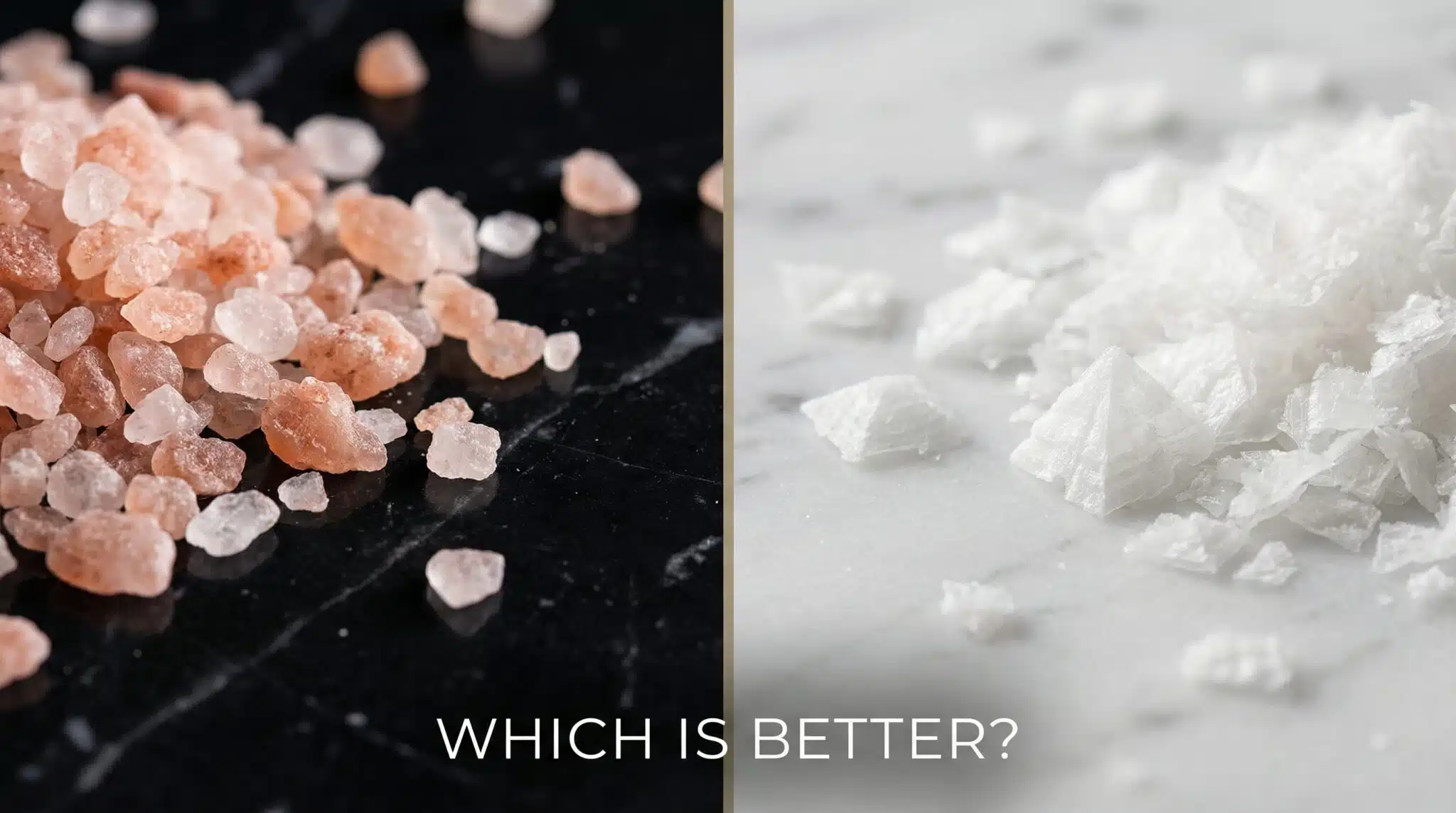
Where the difference actually shows up is when you use salt as a finishing touch—the cooking salt vs finishing salt moment when the crystals stay intact and you get crunch and little bursts of salt on your tongue.
If you want to prove it to yourself tonight, do this: Slice a tomato. Put pink salt on one half and a nice sea salt on the other. Take a bite. You’ll notice it more in the texture than the flavor, but yes—there’s a difference.
And that’s why people love flaky sea salt (like Maldon) on chocolate chip cookies. It’s not “health.” It’s the little crunchy sparkles of joy.
4) About Those “84 Minerals” Everyone Yells About
Himalayan salt does contain trace minerals. That’s why it’s pink (iron oxide is doing the coloring). Sea salt can also contain trace minerals depending on where it’s harvested.
But nutritionally? This is where marketing gets a little carried away.
Both salts are roughly 98% sodium chloride. The minerals are present in tiny, tiny amounts—not enough to matter unless you’re eating salt by the bowlful, which (please don’t) is both dangerous and also deeply unpleasant.
So if you buy pink salt because you like the color, the vibe, and the finishing crunch? Love that for you. If you’re buying it because you think it’s your new multivitamin? I need you to back away slowly and go eat an egg.
5) Crystal Size: The Sneaky Reason Your Food Comes Out Too Salty
This is the part that actually affects your cooking the most.
A teaspoon of fine salt and a teaspoon of coarse salt are not the same. Coarse crystals have more air gaps, so you usually get less saltiness per teaspoon than you would with fine salt.
If you switch salts and keep measuring by volume, you can easily under salt or over salt your food and then blame the recipe like it personally betrayed you. (Been there.)
Two easy options:
- Use a scale (my favorite). Grams don’t lie.
- If you must measure by spoons, remember:
- Fine → coarse: use about 1.5x
- Coarse → fine: use about 0.67x
Do I weigh salt every time? Not always. Do I weigh it when I’m baking or making something fussy? Absolutely. Because I enjoy peace.
So… Which Salt Should You Actually Buy?
Here’s how I’d choose without turning it into a personality test.
Go with Himalayan pink salt if:
- Microplastics are your biggest concern (and you want the “ancient deposit” peace of mind)
- You want something typically additive free without playing label detective
- You like the look of it for finishing (pink salt on avocado toast is basically a lifestyle photo)
Go with sea salt if:
- You cook a lot and want something budget friendlier
- You love a clean, briny bite (especially for savory stuff)
- You have a brand you trust and you’re willing to check labels
Honestly, either is fine if:
- You mostly use salt in cooking where it dissolves
- You care more about consistency than crunch
- You’re measuring by weight or paying attention to crystal size
And no matter what: if you’re not using iodized salt, make sure iodine is coming from somewhere else. That’s the real “adulting” part of this whole conversation.
Quick FAQ (Because I Know You’re About to Ask)
Can I substitute pink salt and sea salt for each other?
Yes—especially in recipes where salt dissolves (soups, sauces, baking, pasta water). Just watch the crystal size. If one is finer than the other, don’t do a straight teaspoon swap unless you enjoy chaos.
Will switching to pink salt eliminate microplastics completely?
It may reduce exposure to ocean derived microplastics, but nothing is guaranteed. Processing and packaging still matter, so buy from a reputable brand when you can.
My Final Take
If you want the simplest answer: pick one salt for cooking, one salt for finishing, and stop overthinking it. (Save your brainpower for paint colors. That’s where the real suffering lives.)
For everyday cooking, a decent sea salt is totally fine if you trust the source and you’re not spiraling about microplastics. If microplastics genuinely worry you, pink salt is a reasonable swap—just don’t expect it to fix your health, your skin, and your credit score.
And if you love a crunchy, flaky finish? Buy the fancy stuff including priciest salts worldwide. Life is short. Sprinkle the good salt.