



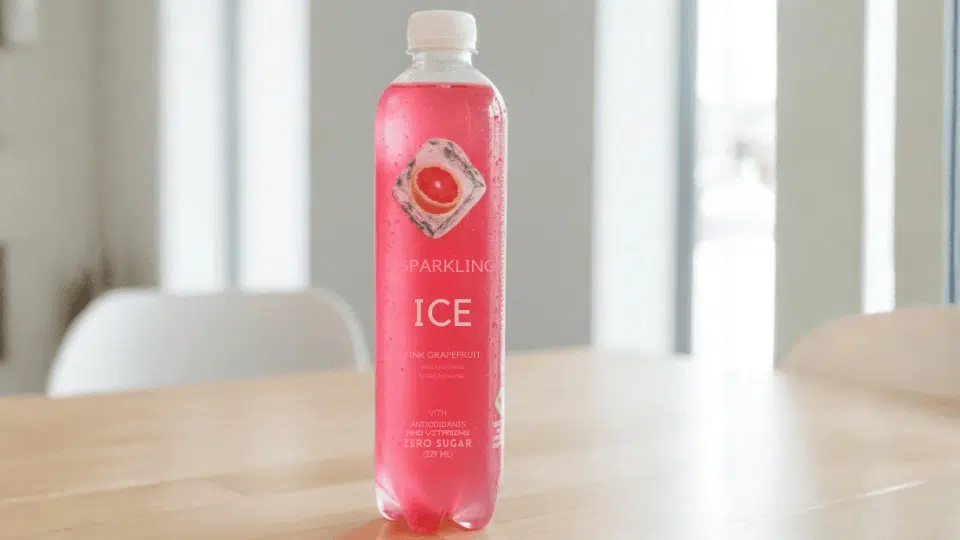









I’ve noticed Sparkling Ice popping up in grocery carts, office fridges, and even gym bags, and it made me pause and ask the same question you might have: Is Sparkling Ice good for you? When a drink promises zero sugar, low calories, and bright fruity flavors, it’s easy to assume it’s a healthier option.
Still, labels don’t always tell the full story. Looking closely at ice drink ingredients helps you understand what you’re actually consuming beyond the marketing claims.
I’ll walk you through what’s actually inside Sparkling Ice and what those ingredients mean for your daily habits.
You’ll also see how it compares with soda, what people online say after drinking it, and who might benefit from it. By the end, you’ll have clear information so you can decide if Sparkling Ice belongs in your routine.
Is Ice Sparkling Water Good for You or Not?
If you’re wondering is sparkling ice bad for you, the answer depends on how often you drink it and how your body responds.
For most people, Sparkling Ice is not a true “health drink,” but it can be a better choice than regular soda. It has zero sugar and very few calories, which is why many people use it to cut back on sugary drinks.
The sweet taste and fizz also make it feel like a treat, so switching from soda can feel easier. Still, it’s a processed drink with artificial sweeteners, added flavors, and acids.
Some people online report bloating, headaches, stomach discomfort, or stronger cravings for sweet foods. Others drink it often and feel totally fine.
The best approach is simple: if it causes no problems, it can fit into a routine in moderation. If side effects show up, it’s smarter to limit it or skip it.
What’s Actually in Sparkling Ice? Ingredient Breakdown
Before looking at nutrients, it helps to know what you are actually drinking. The main ingredients in Sparkling Ice are:
- Carbonated water: the base of the drink, generally harmless on its own.
- Sucralose: an artificial sweetener roughly 600 times sweeter than table sugar. Most of it (about 85%) passes through the body unmetabolized, which is why it contains zero calories. The FDA considers it safe, but emerging research has raised questions about its effects on gut bacteria and insulin response in some individuals.
- Citric acid: used for tartness and as a preservative. Sparkling Ice has a pH of approximately 3, which is acidic. Frequent exposure to acidic drinks can contribute to the gradual erosion of tooth enamel.
- Potassium benzoate: a preservative that prevents bacterial and mold growth. Generally recognized as safe by the FDA, though some researchers have raised questions about high long-term intake.
- Maltodextrin: a carbohydrate used to improve texture and mouthfeel. It has a high glycemic index and may raise blood sugar levels in insulin-sensitive people, even though the amount per serving is small.
- Natural flavors: a broad label. The exact compounds are not disclosed by the brand, but they are derived from natural sources.
- Green tea extract: present in most Sparkling Ice formulas. Green tea extract is a source of antioxidant polyphenols. The amounts in flavored sparkling water are small, so any antioxidant benefit is minimal, but it is a more positive ingredient than the others listed here.
- Synthetic vitamin blend: includes vitamins A, D, B6, B12, E, and zinc. These are added in, not naturally occurring. Some nutrition researchers recommend caution with heavily fortified processed beverages as a primary source of vitamins.
Sparkling Ice is not vegan. The vitamin blend contains lanolin, a by-product of sheep’s wool.
Sparkling Ice Nutrients Explained
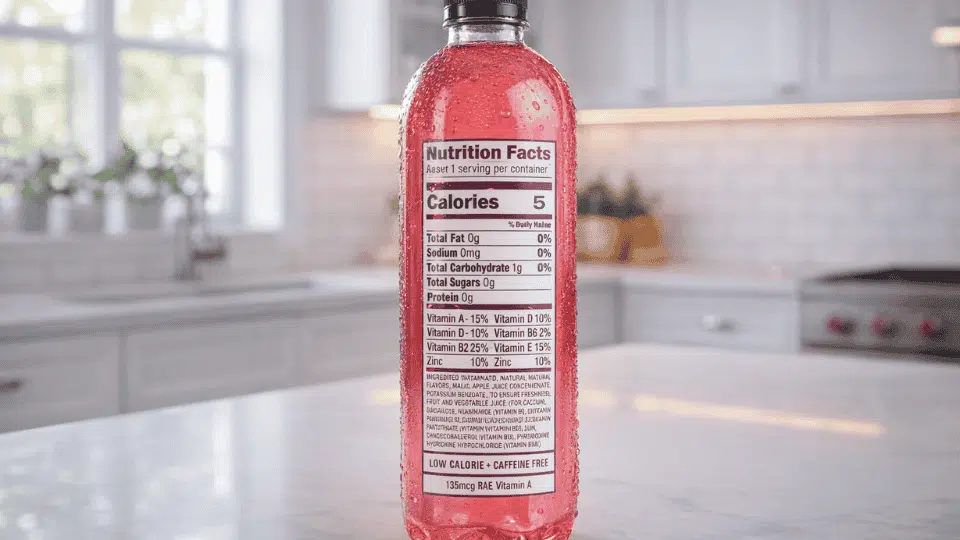
Looking at the nutrients in Sparkling Ice can help you understand what the drink actually contributes to your daily diet.
| Nutrient | Amount Per Bottle | What It Means |
|---|---|---|
| Calories | About 5 | Very low; helpful if you’re cutting back on sugary drinks |
| Sugar | 0 g | No added sugar; lighter than regular soda |
| Sodium | 0 mg | Does not add sodium to your diet |
| Vitamin A | ~15% DV | Supports eye health and immune function |
| Vitamin D | ~10% DV | Helps the body absorb calcium; supports bone health |
| Vitamin B6 | ~15% DV | Supports brain function and energy conversion |
| Vitamin B12 | ~25% DV | Supports nerve health and red blood cell production |
| Vitamin E | ~15% DV | Antioxidant: helps protect cells from damage |
| Zinc | ~10% DV | Supports immune function and cell repair |
These added vitamins may sound impressive, but they work best as a small bonus rather than as replacements for nutrients from whole foods. Whole-food sources like dairy are far more reliable sources of these nutrients, though overconsumption of dairy daily also carries its own trade-offs worth keeping in mind.
They are also synthetic additions to a processed drink, not the same as vitamins naturally present in fruits or vegetables.
What Does Sucralose Actually Do to Your Body?
Since sucralose is the main sweetener in every Sparkling Ice product, it’s worth understanding more specifically:
- Gut bacteria: Some research suggests sucralose may alter the balance of gut bacteria, potentially reducing beneficial microbes. This is an area of active research, and findings are not yet conclusive in humans, but it’s a commonly cited concern.
- Sweet cravings: Because sucralose is hundreds of times sweeter than sugar, regular exposure may keep taste receptors primed for intensely sweet flavors, which could make naturally sweet foods like fruit feel less satisfying over time.
- Cardiovascular concerns: The large-scale NutriNet-Santé prospective cohort study found that higher sucralose consumption was associated with a statistically significant increase in coronary heart disease risk. The study did not establish direct causation, but the association held after adjusting for age, sex, physical activity, education, and family history of heart disease
- Insulin response: A clinical trial published in the Nutrition Journal found that sucralose caused insulin dysregulation in some young, healthy adults. People managing blood sugar should be aware of this, even though sucralose itself has no carbohydrates.
The FDA continues to consider sucralose safe for general consumption. These are emerging concerns, not established harms but they are worth knowing about when deciding how often to drink Sparkling Ice.
What People Online Really Say About Sparkling Ice
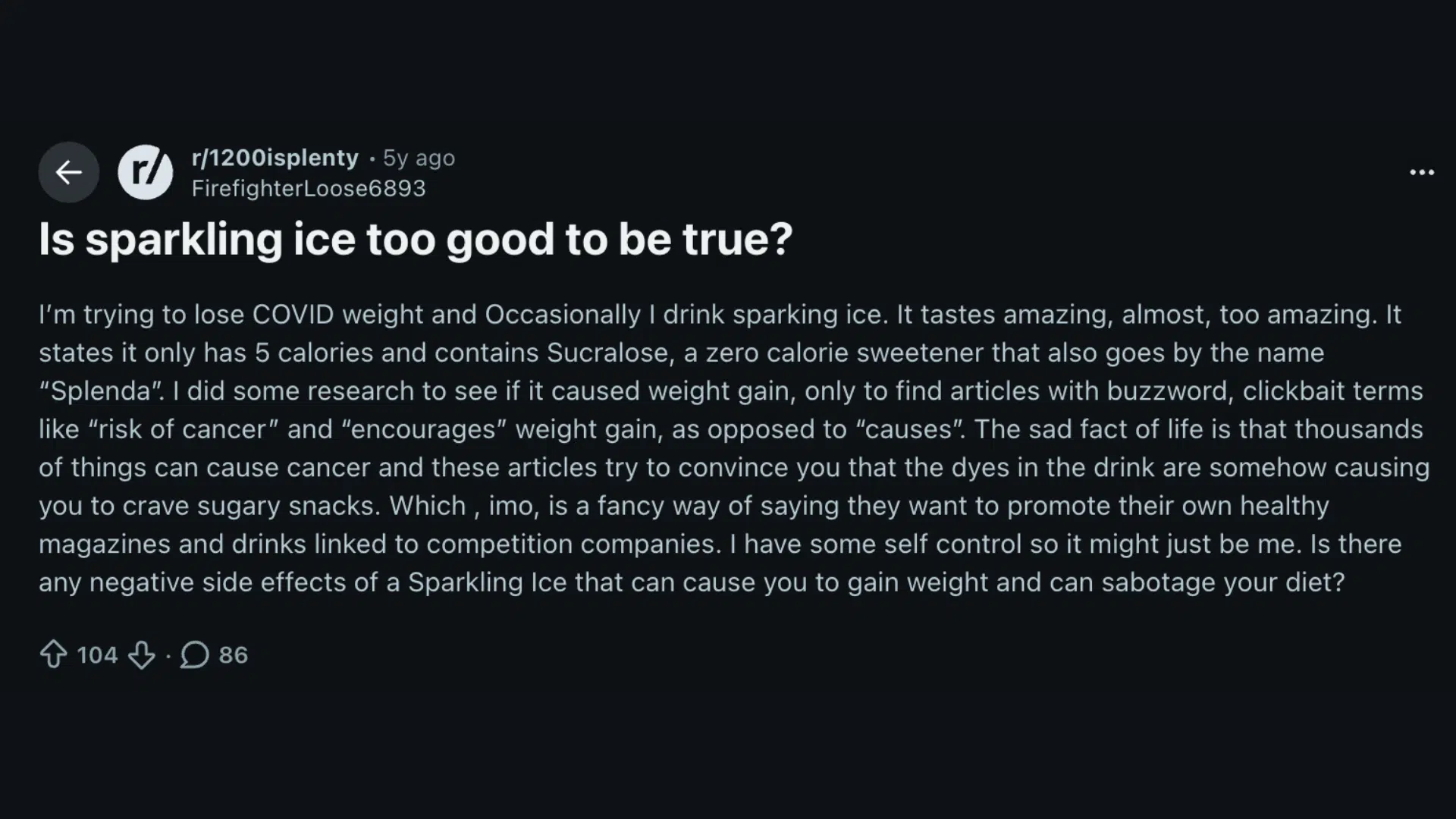
In the Reddit post “Is sparkling ice too good to be true?”, users discuss Sparkling Ice as a popular calorie-cutting alternative to soda.
Many replies say it helps satisfy sweet cravings without blowing daily limits, especially for people on strict calorie plans. Some users praise the bold flavors and zero sugar, calling it a lifesaver during weight loss.
Others raise concerns about artificial sweeteners, including bloating and cravings, saying they work for some people but not all. The overall tone is mixed, but practically most agree it’s fine in moderation, depending on personal tolerance.
A recurring point in those threads: people who switched from Sparkling Ice to plain sparkling water (like La Croix or Pellegrino) often reported that sweet cravings reduced after a few weeks suggesting the sucralose itself may have been driving those cravings, not just habit.
My view is simple: Sparkling Ice can help reduce soda intake, but it shouldn’t replace water or whole foods, and moderation matters more than labels.
Sparkling Ice vs. Soda and Diet Soda
When I first looked at Sparkling Ice, I wanted to see how it really compares to common drinks like soda and diet soda. This quick table helps you understand the main differences.
| Feature | Sparkling Ice | Regular Soda | Diet Soda | Plain Sparkling Water (e.g. La Croix) |
|---|---|---|---|---|
| Calories | About 5 | 140–150 | 0–5 | 0 |
| Sugar | 0 g | 35–40 g | 0 g | 0 g |
| Sweetener | Sucralose (artificial) | High-fructose corn syrup or sugar | Artificial sweeteners | None |
| Vitamins | Added vitamins (A, B, D, E) | Usually none | Usually none | None added |
| Preservatives | Potassium benzoate | Varies by brand | Varies by brand | None |
| Flavor | Fruity sparkling flavors | Cola or sugary flavors | Cola or flavored | Light natural flavor or unflavored |
| pH / Acidity | 3 (quite acidic) | 2.5–3.5 | 2.5–3.5 | 5–6 (mildly acidic) |
Looking at the comparison, you can see Sparkling Ice sits somewhere between soda and diet soda.
Plain sparkling water like La Croix or Perrier is the cleaner option if you want the carbonation experience without any sweeteners, acids, or preservatives.
Does Sparkling Ice Have Caffeine?
The original Sparkling Ice Classic line does not contain caffeine. If you’ve been drinking the standard fruity flavors, Black Raspberry, Orange Mango, Cherry Limeade, and Kiwi Strawberry, there is no caffeine in those products.
Sparkling Ice offers two caffeinated product lines:
- Sparkling Ice +Caffeine: Each 16-oz can contains 70 mg of caffeine sourced from natural origins. This is slightly less than a standard cup of coffee (~95 mg). Available in flavors like Black Raspberry, Triple Citrus, and Strawberry Citrus. The ingredient profile is otherwise identical to the original sucralose, citric acid, potassium benzoate, natural flavors, and the vitamin blend.
- Sparkling Ice Energy: Contains 160 mg of caffeine per 12-oz can, sourced from green tea extract and coffee beans, and also includes vitamins B12, B3, and E. This is a meaningfully higher caffeine dose closer to a strong cup of coffee and should be treated accordingly.
The packaging clearly differentiates these lines, so accidental caffeine consumption is unlikely. That said, if you’re sensitive to caffeine, have elevated blood pressure, are pregnant, or are limiting caffeine for any reason, check the label before purchasing.
What About Sparkling Ice +Caffeine?
Sparkling Ice also offers a caffeinated product line, Sparkling Ice +Caffeine, available in flavors like Black Raspberry, Triple Citrus, and Strawberry Citrus.
Each 16-oz can contains 70 mg of caffeine from natural sources, which is slightly less than a standard cup of coffee (around 95 mg).
The ingredient list is essentially the same as the original: sucralose, citric acid, potassium benzoate, natural flavors, and the vitamin blend, with the addition of caffeine.
If you’re sensitive to caffeine or have high blood pressure, this line is worth avoiding. The packaging is clearly differentiated from the original, so there is no risk of accidentally consuming caffeine from the standard product.
Who Should Drink Sparkling Ice?
Sparkling Ice may suit people who want a fizzy drink without the sugar and calories found in regular soda.
If you’re trying to reduce sugary beverages, it can feel like an easier switch because it still has sweetness and carbonation. Many people use it when they want something more interesting than plain water but don’t want the sugar spike from soft drinks.
It may also work for those who enjoy flavored drinks during meals or as an occasional treat. Still, it’s best used in moderation since it contains artificial sweeteners and added flavors.
If your body tolerates it well and it helps you cut back on soda, it can fit into your routine as a lighter drink choice.
Who Should Avoid SparklingIce?
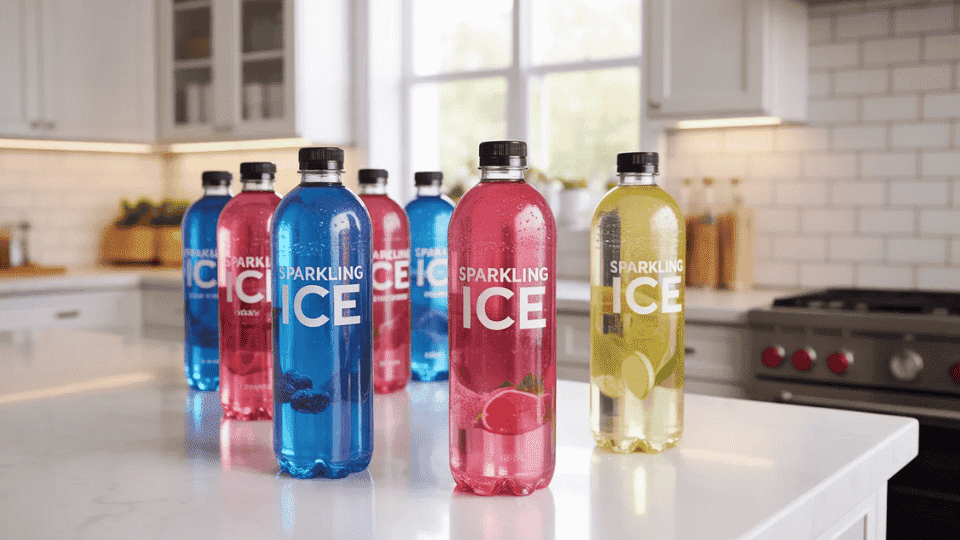
Some people may want to limit or avoid Sparkling Ice depending on their health needs or sensitivity to certain ingredients.
- People sensitive to artificial sweeteners: If you notice headaches, stomach discomfort, or cravings after artificial sweeteners, it may be better to limit drinks like Sparkling Ice.
- People with digestive sensitivity: Carbonated drinks can sometimes cause bloating, gas, or stomach pressure, especially if you already have a sensitive digestive system.
- People trying to reduce sweet cravings: Very sweet drinks, even without sugar, can keep cravings for sugary foods strong throughout the day.
- People with tooth enamel concerns: Sparkling Ice has a pH of approximately 3, making it quite acidic. Frequent sipping throughout the day rather than drinking it in one sitting increases enamel exposure time and raises erosion risk.
- People who already drink many flavored beverages: If your daily drinks already include sweetened beverages, adding Sparkling Ice may increase overall sweetener intake.
- People managing blood sugar or insulin sensitivity: Although sucralose itself has no carbs, maltodextrin in the formula has a high glycemic index, and some research suggests sucralose may affect insulin response. People with diabetes or prediabetes should consult their doctor before drinking it regularly.
- Vegans: The vitamin blend contains lanolin, derived from sheep’s wool, making Sparkling Ice not suitable for a vegan diet.
- Pregnant women and children (for caffeinated lines): Sparkling Ice Energy (160 mg caffeine) and Sparkling Ice +Caffeine (70 mg caffeine) are not recommended for children, pregnant women, or nursing mothers. The brand itself states this on its FAQ page. Stick to the original caffeine-free line if this applies to you.
This may slowly replace water in your routine and make it harder for you to maintain balanced hydration habits throughout the day, especially when plain warm water habits tend to do more for digestion and metabolismthan most people realize.
How Much Sparkling Ice Is Safe to Drink?
“Safe” depends on tolerance and total habits. For many adults, Sparkling Ice is fine in moderation: a few times per week, or one bottle on most days if nothing feels off.
The key is what happens after drinking it. If it keeps cravings for sweet snacks high, disrupts sleep, or leaves you bloated, that’s your signal to cut back.
Also consider what else you drink; stacking it with other sweetened beverages can make “moderate” add up quickly.
If you’re sensitive to sweeteners or have digestive issues, less is usually better. A simple rule: track how you feel, and adjust over time. To protect your teeth, drink it with a meal rather than sipping it slowly throughout the day , this limits how long the acidic liquid stays in contact with your enamel.
Checking labels and rotating drinks can also help.
Healthier Alternatives to Sparkling Ice
If you’re trying to cut back on artificial sweeteners, I’ve found there are several simple drink options you can try instead.
| Drink Option | What It Is | Why People Choose It |
|---|---|---|
| Sparkling Water With Fruit | Carbonated water with slices of lemon, berries, or cucumber | Adds natural flavor without sweeteners or artificial ingredients |
| Infused Water | Still water infused with fruits, herbs, or vegetables | Refreshing and naturally flavored without added sugar |
| Herbal Teas | Teas made from herbs like chamomile, peppermint, or hibiscus | Naturally caffeine-free and often used for relaxation |
| Plain Sparkling Water (La Croix, Pellegrino, Perrier) | Carbonated water with light natural flavor, no sweeteners or preservatives | Gives the fizz experience without sucralose, citric acid, or potassium benzoate |
| Coconut Water (unsweetened) | Natural electrolyte drink from young coconuts | Provides natural hydration with potassium; contains naturally occurring sugars rather than artificial sweeteners better choice post-exercise |
Trying a few of these drinks can help you reduce your intake of artificial sweeteners while still enjoying flavorful beverages throughout the day.
Conclusion
By now, you’ve seen the bigger picture behind the question “is Sparkling Ice good for you.” I walked you through its nutrients, how it compares with soda and diet drinks, and what people online say after trying it.
You also learned who might enjoy Sparkling Ice as a lighter soda alternative and who may want to limit it due to artificial sweeteners or carbonation. For me, the key takeaway is balance.
Sparkling Ice can help you reduce your intake of sugary drinks, but it shouldn’t replace water in your daily routine. In addition, starting your day with warm water offers benefits that a flavored drink simply can’t replicate.
If you want the fizz without the sucralose, potassium benzoate, or citric acid, plain sparkling water is a cleaner option that gives you the same experience with fewer trade-offs.
Pay attention to how your body responds and drink it in moderation.
If you’ve tried it yourself, share your experience in the comments so others can learn from your perspective.