












I remember sitting at my kitchen table, trying to decide between keto and carnivore, feeling stuck and unsure.
If you’re comparing keto vs carnivore, you probably want clear answers about fat loss, energy, and long-term results. Here’s the simple truth: both cut carbs and push your body to burn fat, but they feel very different in daily life.
You might be looking for better body composition, fewer cravings, steadier focus, or relief from bloating.
I’ve broken this guide down so you can see how each diet works, what you actually eat, the benefits people report, and the risks you should not ignore. By the end, you’ll have a realistic picture to help you choose confidently.
What is the Keto Diet?
The keto diet is a low-carb, high-fat way of eating that shifts how your body gets its energy. On keto, you eat mostly meat, fish, and eggs along with low-carb vegetables, nuts, dairy, and healthy fats, with only small amounts of berries allowed.
You keep carbs very low, usually between 20 and 50 grams per day, so your body enters a state called ketosis, where it burns fat for fuel instead of carbs.
People choose keto for weight loss, better blood sugar control, more stable energy, and the flexibility it offers compared to stricter diets.
Real people say things like: lost weight fast but had cravings at first, energy felt steady after the second week, and tracking carbs can feel stressful. It works well for many, but it does take planning.
What is the Carnivore Diet?
The carnivore diet takes things a step further by cutting out all plant foods completely. You eat only animal-based foods like beef, chicken, pork, fish, and eggs, and some people also include dairy.
There are almost zero carbs on this diet, and both protein and fat are very high. People choose carnivore because it is simple, no labels to read, no carbs to count.
Many also turn to it for digestive relief, help with autoimmune symptoms, or to remove all plant-based triggers that might be causing problems in their body.
Real people say things like: bloating stopped within just a few days, mental clarity felt amazing, and social events became really difficult to navigate. It is straightforward but also very strict.
Keto vs. Carnivore: Key Differences

Both diets cut carbs and burn fat, but they differ in rules, food choices, and strictness. Here is a simple side-by-side look at how they compare:
1. Carbs
Keto allows 20–50 grams of carbs per day, giving you a small but workable limit.
Carnivore cuts carbs down to almost zero by removing all plant foods completely.
If you want some flexibility with carbs, keto wins. If you want to eliminate them entirely, carnivore is the stricter choice.
2. Food Variety
Keto includes a wide range of foods: vegetables, nuts, dairy, eggs, meat, and even some berries.
Carnivore keeps it simple with only animal-based foods like meat, fish, and eggs.
Keto gives you more options on your plate, while carnivore keeps your meals very limited but also very straightforward.
3. Strictness
Keto has rules, but allows room to adjust and personalize your meals.
Carnivore is all or nothing no plant foods, no exceptions. Keto is easier to tweak based on your lifestyle, while carnivore demands full commitment.
For people who do better with clear, firm rules, carnivore may actually feel simpler to follow.
4. Fiber
Keto includes low-carb vegetables and nuts, so you still get some fiber in your diet.
Carnivore has zero fiber since all plant foods are removed. Some people do fine without fiber, especially on a carnivore diet.
Others may notice digestive changes. This is one of the biggest physical differences between the two diets worth paying attention to.
5. Ease of Eating Out
Keto is fairly easy to manage at restaurants, just skip the bread, choose low-carb options, and avoid sugary sauces.
Carnivore is harder because most menus include sauces, marinades, or sides made with plant ingredients.
Both diets require some planning when eating out, but keto gives you more flexibility in social and restaurant settings.
6. Typical Goal
People on keto usually aim for weight loss, better blood sugar, or steadier energy while still enjoying some food variety. People on carnivore often seek deeper results like reducing inflammation, managing autoimmune issues, or getting complete digestive relief.
Both diets can support weight loss, but their deeper goals and motivations are often quite different.
Health Benefits of Keto and Carnivore
I have learned that both diets offer real health benefits beyond just weight loss, but the strength of the evidence varies depending on the area.
Here is an honest look at how keto and carnivore compare across key health topics:
| Health Benefit | Keto | Carnivore |
|---|---|---|
| Blood Sugar Control | Strong evidence low carbs reduce blood sugar spikes | Good results reported zero carbs keep insulin very low |
| Insulin Sensitivity | Well-studied keto improves insulin response significantly | Less studied but zero-carb intake may help insulin levels |
| Mental Clarity & Energy | Many report a sharper focus once fully in ketosis | Strong anecdotal reports of improved clarity and steady energy |
| Inflammation | Some evidence supports reduced inflammatory markers | Many report reduced inflammation, especially with autoimmune conditions |
| Autoimmune Issues | Limited evidence, but some positive reported outcomes | Growing anecdotal support, limited clinical research available |
The evidence for keto is more established in medical research, while the evidence for carnivore relies more on real-world experiences. Always speak with a doctor before using either diet to manage a health condition.
Why People Switch Between Keto and Carnivore?
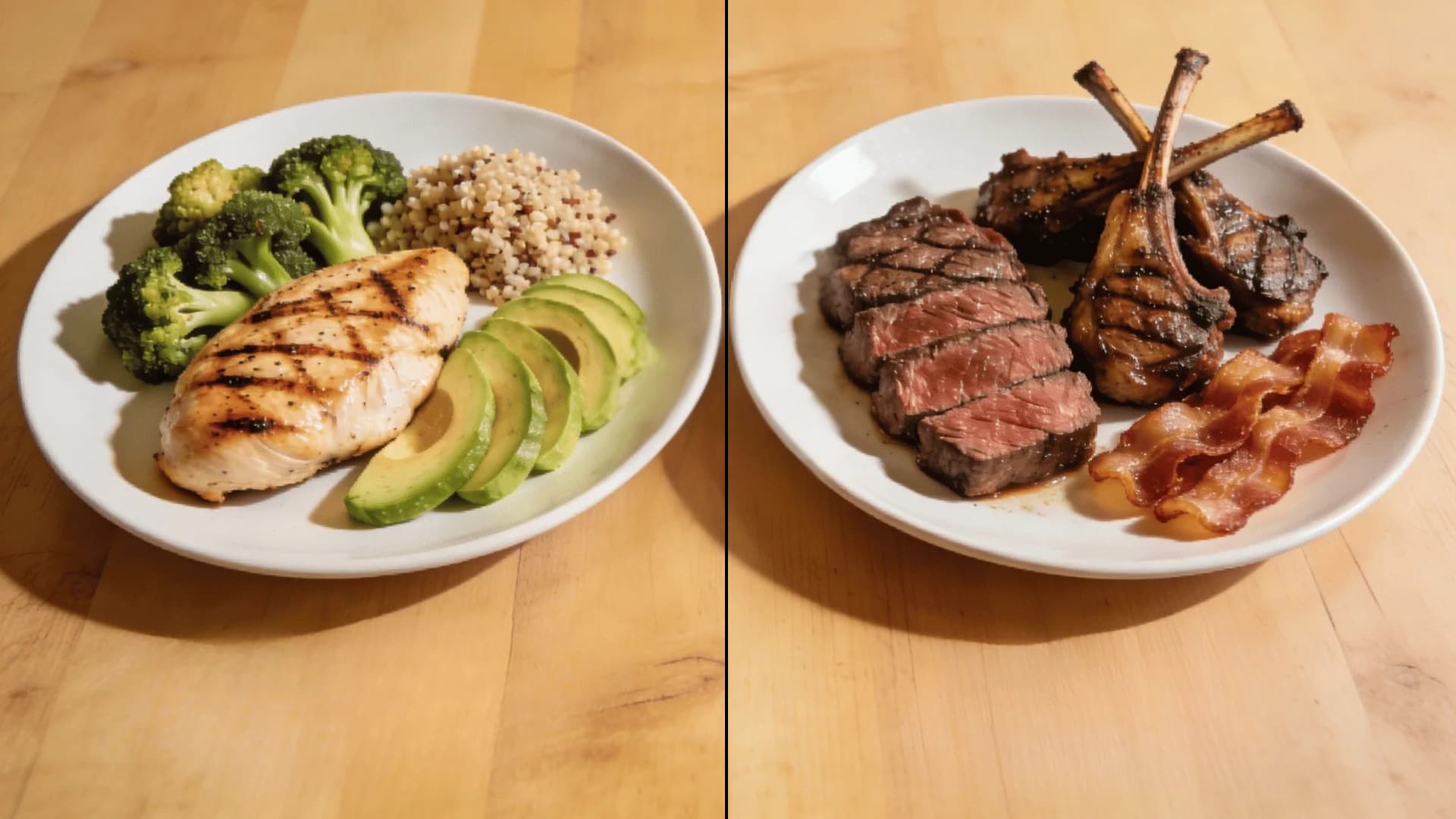
Both diets have loyal followers, but many people end up moving back and forth between the two depending on how their bodies feel and what life demands at the time.
- Some switch to carnivore when fat loss stalls, autoimmune flares up, or plant foods cause bloating and sensitivity reactions.
- The simplicity of eating only animal foods attracts people who are tired of counting carbs and planning complex meals.
- Many return to keto because they miss vegetables, experience constipation, or start worrying about missing key nutrients.
- Social pressure makes a carnivore hard to sustain long-term, especially at restaurants, family dinners, and social gatherings.
Switching between keto and carnivore is far more common than most people expect, and both diets can serve different purposes at different stages of your health journey.
Which Diet is Better for Weight Loss?
I have understood that both keto and carnivore can help you lose weight, but they work differently depending on your goals. Here is how they compare across the most important weight loss factors:
| Factor | Keto | Carnivore |
|---|---|---|
| Short-Term Fat Loss | Fast ketosis kicks in quickly | Very fast, zero-carb speeds fat burning |
| Long-Term Sustainability | Easier to maintain long-term | Hard to stick with for most people |
| Body Composition | Good fat loss with muscle retention | Strong fat loss, high protein protects muscle |
| Muscle Retention | Moderate protein supports muscle | High protein helps preserve lean mass |
| Belly Fat Loss | Yes, reduced carbs lower insulin | Yes, zero carbs can target stubborn fat |
| Ketosis Achieved | Yes by design | Yes, zero carbs naturally trigger ketosis |
Both diets can deliver real weight loss results when followed correctly.
Your best choice comes down to how strict you can be, how much food variety you need, and whether your body responds better to moderate or zero carbs.
Risks and Drawbacks of Each Diet
Both keto and carnivore come with real risks that are important to understand before starting: here is what you should know about the potential downsides of each diet.
Risks of Keto and Carnivore Diets
Before starting either plan, it helps to understand the health risks. I always think long-term, not just short-term fat loss.
- Nutrient Deficiencies: Carnivore removes all plant foods, which can increase the risk of low vitamin C, magnesium, and potassium over time. These gaps may affect energy, muscle function, and immune support.
- Digestive Issues: Both diets are very low in fiber, which supports gut health. You may notice constipation, bloating, or discomfort, especially during the first few weeks.
- Cholesterol Changes: High saturated fat intake can raise LDL cholesterol in some people. Regular blood work helps you monitor changes and avoid long-term heart concerns.
- Hormone Disruptions: Some people report irregular cycles, thyroid shifts, or other hormone changes after extended very low-carb eating. Calorie restriction and stress can increase this risk.
Drawbacks of Keto and Carnivore Diets
Beyond health risks, there are practical challenges you should consider before committing.
- Social Limitations: Eating out, traveling, or attending social events can feel restrictive. Strict food rules may make normal situations stressful or awkward.
- Long-term Sustainability: Highly restrictive diets can become mentally exhausting. Over time, boredom or food obsession may lead to burnout or binge eating patterns.
- Limited Food Variety: Carnivores especially limit meal options to meat and animal products. This lack of variety can reduce enjoyment and make adherence harder.
- Planning Demands: Both diets require careful planning to stay consistent. Without preparation, it becomes easy to slip into overeating or frustration.
Always consult a healthcare professional before starting either diet, especially if you have an existing medical condition. What works well for one person may cause real problems for another.
Real Experiences from Reddit and Forums
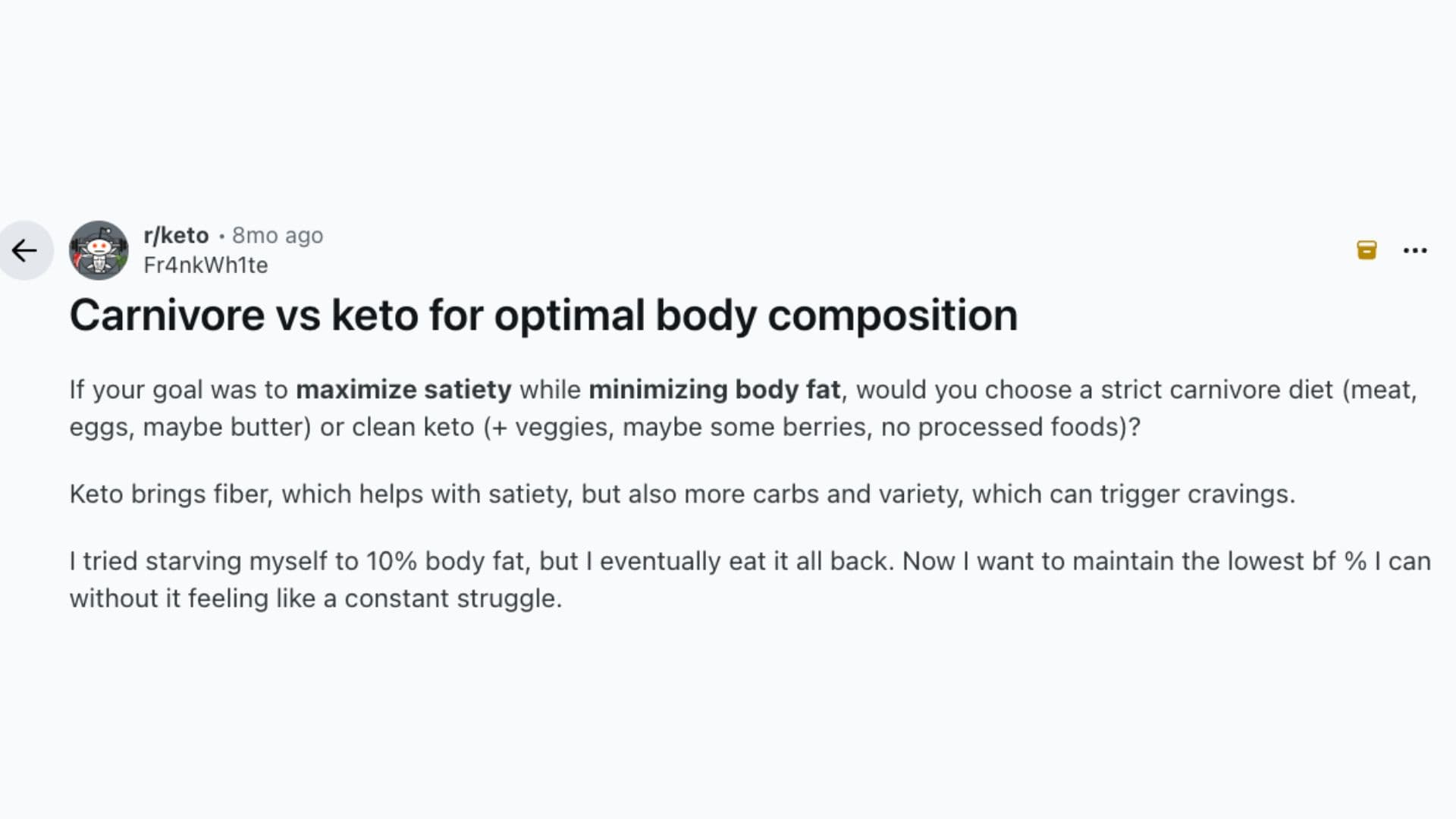
On r/keto, people shared very mixed experiences when comparing carnivore and keto for body composition and appetite control.
Sir_Toccoa said he felt great on keto, with better energy and weight control, but felt sluggish and saw worse blood markers after four months on carnivore. He switched back to keto and felt better again.
BigTexan1492 pointed out that calories ultimately drive body fat, so the best diet is the one you can stick to. Brownie00037 said the carnivore diet led to bingeing because it felt too restrictive, while the keto diet gave more satisfying meal options.
On the other hand, Aggravating-Tap4406 and Deep_flu preferred a carnivore, saying it reduced cravings and kept them full. Overall, most agreed that satiety and long-term adherence matter more than strict labels.
Final Thoughts
You’ve now seen how keto and carnivore work, what foods they include, the weight loss potential, and the real risks involved. I’ve also shared real experiences so you can understand how these diets feel in everyday life, not just in theory.
When it comes to keto vs carnivore, the better choice depends on your goals, your body, and how strict you can realistically be. Keto offers more flexibility and variety, while carnivore focuses on simplicity and full carb removal. Both can support fat loss, but long-term consistency matters most.
I always suggest choosing the plan you can follow without constant stress or burnout. Now I’d like to hear from you. Where do you stand in the keto vs carnivore debate? Share your thoughts in the comments section.