









Is Your “Natural” Skincare Oil Actually… Refined? (Let’s Talk About It.)
If you’ve ever stood in the skincare aisle holding a bottle that says “100% Pure, Natural, Glowing Goddess Elixir” (or whatever) and thought, Okay but… what does that actually mean? you’re my kind of person.
Here’s the sneaky truth: a whole lot of oils on shelves are refined, even when the vibe is earthy, crunchy, harvested by moonlight. And that matters sometimes… but not always. (I know. Annoying.)
Let me save you from paying extra for a fancy label when what you really need is just… a decent moisturizer that doesn’t smell like a salad.
Refined vs. Unrefined: the difference in normal person language
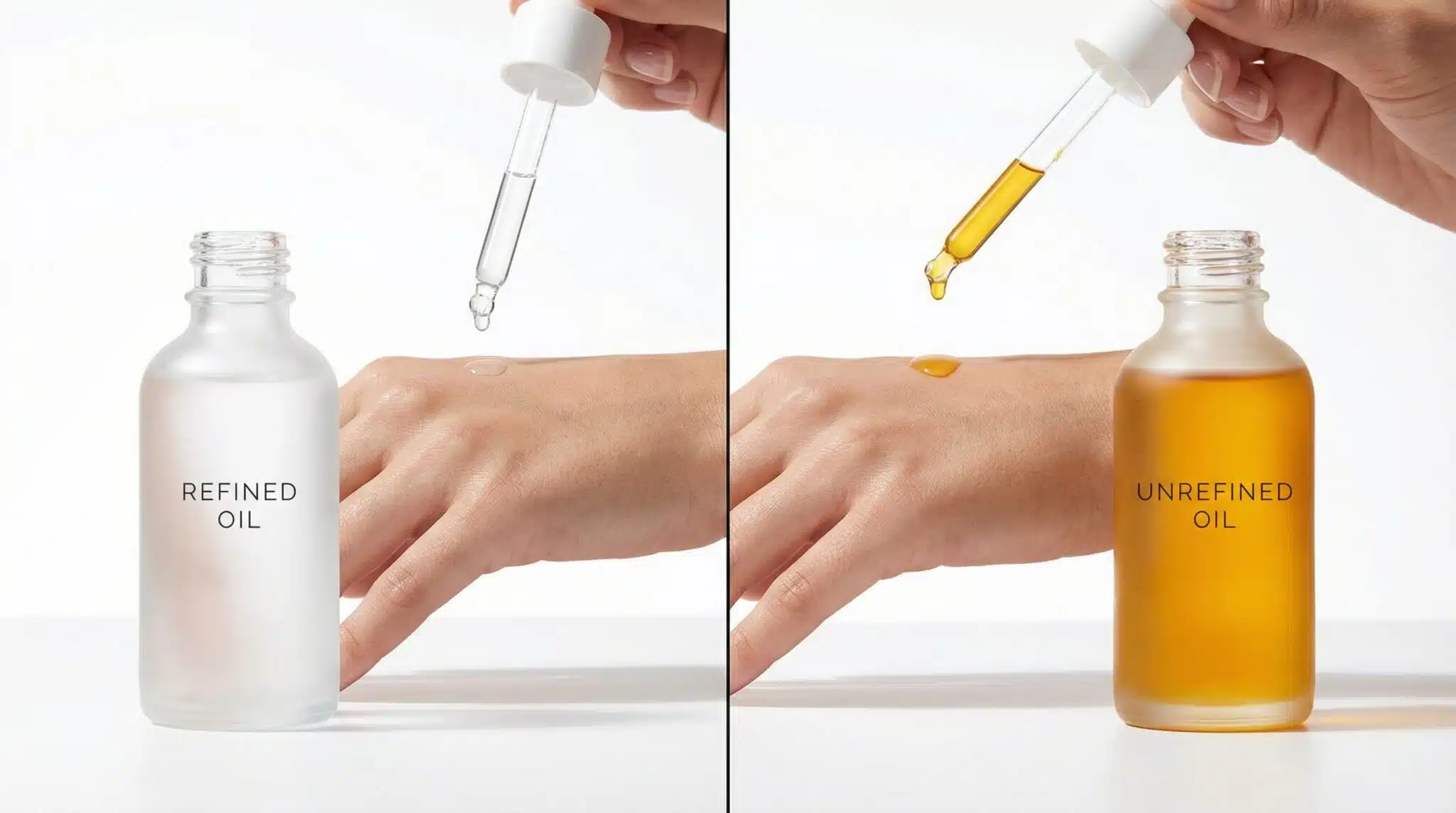
Unrefined oils are basically the “close to the plant” version. They keep more of the naturally occurring stuff: antioxidants, vitamins, plant compounds that can do things beyond basic moisturizing.
Refined oils have been processed so they’re more neutral: less scent, less color, more stable, and usually cheaper.
Now here’s the plot twist most people miss:
If your goal is just “my skin feels dry,” refined and unrefined moisturize about the same.
The fatty acids that soften your skin don’t magically disappear because an oil got refined. So if you’re using oil like you’d use lotion just to stop the flakiness refined can be totally fine.
Where unrefined earns its keep is when you want the “extras,” like:
- antioxidant support (think: vitamin E-ish vibes)
- soothing compounds for irritation prone skin
- naturally occurring pigments (like carotenoids) that can help with uneven looking tone
But yes, those “extras” can also be the exact reason your skin goes, Absolutely not, ma’am.
So what happens during “refining,” exactly?
I won’t make you memorize industrial processing terms, promise. But the quick version is:
- Unrefined / cold pressed oils are extracted mechanically (pressed/squeezed) and filtered. Minimal drama.
- Refined oils go through more steps to remove color, scent, and some compounds that can spoil faster.
Refining often involves heat and filtration processes that make the oil:
- more shelf stable
- more neutral (less smell)
- less “active” (fewer naturally occurring antioxidants/plant compounds)
And honestly? There are people who need that neutrality. If your skin is reactive, refined can feel like a calm, boring friend who never starts problems. (We love a calm, boring friend.)
Label terms: who’s telling the truth, who’s just vibing
This is where brands get… creative.
Usually means unrefined
- Cold pressed
- Virgin / Extra virgin (extra virgin is tightly defined for olive oil, not necessarily for everything else)
- Raw (sometimes meaningful, sometimes vibes)
Usually means refined
- Refined
- RBD (Refined, Bleached, Deodorized yes, it sounds like a skincare insult)
- “Light” or “Pure” (the least helpful words ever. They sound wholesome and are often refined)
Means basically nothing legally
- “Natural”
- “100% pure”
- Organic (it can be organic and refined organic just tells you how it was grown, not how it was processed)
My personal rule: if it just says “Argan Oil” and gives you no processing info, assume it’s refined. When something is truly cold pressed/unrefined, brands usually brag loudly because it costs more.
Okay, but which one should you buy?
Here’s how I’d choose without spiraling into a 2 hour research hole.
If you want “extra credit” skincare (glow, tone, barrier support)
Go unrefined, especially for face oils you’ll use up fast. Those plant compounds are the whole point.
If your skin is sensitive/reactive
Start with refined. Unrefined oils can be amazing… and also the source of “Why am I itchy on day three?” chaos.
If you need fragrance free (or you hate “nutty” smells)
Refined. Full stop. Unrefined oils smell like what they came from sometimes pleasant, sometimes like you accidentally bought cooking supplies.
If you’re making DIY stuff you’ll keep around for months
Refined is usually the practical choice because it’s less likely to go rancid while your body butter sits in the back of a cabinet waiting for its moment. (RIP to the shea whip I forgot about that smelled like old crayons.)
If you’re on a budget
Use refined for body/hair and save unrefined for your face if you want the benefits. Your legs do not need artisanal, small batch, cold pressed excellence. They just need moisture.
My favorite simple setup:
- Unrefined for face (small bottle, used quickly)
- Refined for body/DIY (bigger bottle, longer shelf life)
A few oils I actually think are worth talking about
I’m not going to list every oil known to man (we’d be here until next Tuesday), but here are the ones you’ll see everywhere and what I’d do.
Jojoba oil (my reliable, low drama pick)
Jojoba is popular because it plays nicely with a lot of skin types and feels less greasy than some oils. If you find an unrefined one, it’s usually more golden and has a faint nutty smell.
If you want one “starter oil,” jojoba is a solid choice.
Argan oil (often worth paying for the good stuff)
If you’re going to splurge on unrefined, argan is a good candidate. Unrefined argan typically has a warm, nutty scent and a richer color. If it’s totally colorless and odorless, it’s probably refined (or questionable).
Rosehip oil (effective… but high maintenance)
Rosehip and its rosehip oil benefits can be great for the look of uneven tone because of naturally occurring pigments, but it can also oxidize faster. Translation: don’t buy a giant bottle you’ll still be using in 2028.
If you get rosehip, buy small and consider storing it somewhere cool/dark (even the fridge).
Coconut oil (the chaos agent)
People either love coconut oil or it breaks them out just by existing in the same room. It’s one of those oils that clog pores for a lot of folks, so I don’t personally love it for faces.
For body/hair? Sure. For face? Proceed like you’re petting a strange cat.
Shea butter (either refined or unrefined can work)
Unrefined shea has a distinct smoky/nutty smell that some people adore and others absolutely cannot tolerate. Refined is easier to use if you want “no scent” and smoother blending.
Quick allergy note
If you have tree nut allergies, be cautious with nut derived oils. Refining can reduce proteins, but it doesn’t make anything magically risk free. When in doubt, talk to a professional and patch test like your peace depends on it (because it does).
Storage: how to not accidentally ruin your oil
If you do nothing else, please don’t store your nice oil on a sunny windowsill like it’s a houseplant.
Unrefined oils are a little precious. They prefer:
- dark glass (amber is your friend)
- cool, dark storage
- away from heat/steam (bathrooms are basically little tropical jungles)
Refined oils are more forgiving, but they still don’t love heat and light.
Refrigeration is optional. Some oils will thicken or solidify when cold (coconut oil is the queen of this). That doesn’t mean it’s bad it just means it’s cold and dramatic. Let it come back to room temp.
And if your oil came in clear plastic? I’m not saying panic… but I am saying consider transferring it to dark glass if you want it to last.
How to tell if your oil is rancid (aka: don’t rub regret on your face)
This is the part where you trust your senses like a woodland witch.
Fresh oil usually smells like its source (nutty, earthy, seed like, mild plant scent). Rancid oil often smells like:
- crayons
- stale nuts
- musty old pantry
- sour “something’s off” vibes
Other signs:
- the color gets noticeably darker
- the texture feels sticky or weirdly grainy
- it separates in a new, suspicious way
Once oil oxidizes, you can’t “fix” it. And rancid oil isn’t just useless it can be more irritating to skin. If you’re unsure, toss it. Your face is not a landfill.
Patch testing: yes, you really should (especially with unrefined)
Before you slather a new oil all over your face like you’re basting a turkey:
- Put 2-3 drops on your inner forearm or behind your ear
- Wait 24-48 hours
- Watch for itching, redness, burning, bumps, etc.
One extra note: with unrefined oils, some people get delayed irritation after a few days of repeated use. That’s not “purging.” That’s your skin saying, “Hi, I hate this.” If that happens, try the refined version or switch oils.
And if you have persistent irritation, eczema like symptoms, or swelling skip the DIY detective work and check in with a dermatologist.
The simplest way to start (without buying six bottles and regretting everything)
Pick one oil based on your main goal:
- want extra benefits? try an unrefined face oil (jojoba or argan are easy starters)
- want low scent, low drama moisture? go refined
- making DIY or moisturizing your whole body? refined is usually the sensible pick
Use it consistently for about 4 weeks before you decide it “does nothing.” Skin is slow. It’s like a moody houseplant you don’t water it twice and expect it to become a rainforest.
And please, for the love of your budget: add new oils one at a time. Otherwise you’ll have no clue what worked, what didn’t, and what made your chin start a rebellion.
If you want, tell me your skin type + what you’re trying to fix (dryness? irritation? breakouts? uneven tone?) and I’ll tell you which oil I’d start with and whether I’d go refined or unrefined.