










When I look at everyday foods, white rice always raises a big question: how many calories does white rice have? A lot of people ask me if it’s “too many calories” or if it can still fit into a healthy meal.
I get it, rice is easy to cook, filling, budget-friendly, and it shows up in everything from stir-fries to curries. But calorie talk can get confusing fast, especially when portion size changes the numbers a lot.
In this guide, you’ll learn how many white rice calories are in common serving sizes, how cooked vs. uncooked measurements can trip people up, and what white rice nutrition facts really look like (without any fancy talk).
I’ll also cover the possible benefits, a few concerns to keep in mind, and simple tips for enjoying white rice in a balanced way, with no stress, no guilt, and no “never eat this again” vibes.
White Rice Calories by Type (Cooked Serving Sizes)
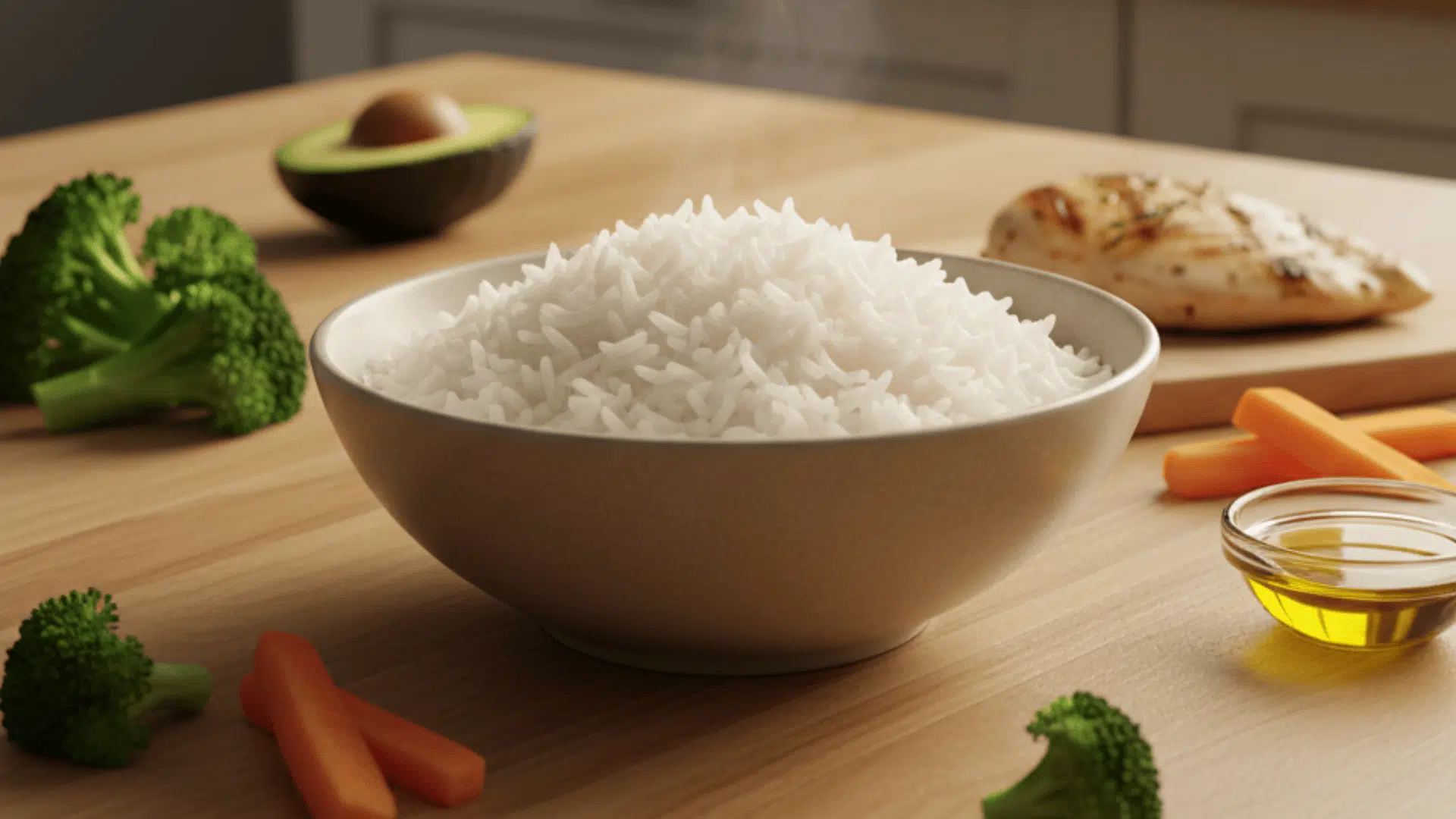
White rice calories mainly depend on how much you eat. The rice itself stays the same, but the serving size can change the calorie count fast. ½ cup cooked white rice is a smaller side with fewer calories, while 1 cup cooked white rice is the standard label serving.
Bowls can hold more than one cup, so calories may be higher than expected. Restaurant portions are often bigger, and butter or oil can add extra calories. Measuring at home keeps portions more predictable.
- Short-grain white rice: 1 cup cooked (186g) has about 242 calories. It’s soft and sticky, which can make servings feel heavier.
- Long-grain white rice: 1 cup of cooked (158g) contains around 205 calories. The grains stay separate and are easier to portion.
- Jasmine white rice: 1 cup cooked (140–160g) provides roughly 205–238 calories, depending on moisture and cooking style.
- Basmati white rice: 1 cup (158g) of cooked rice has about 200–210 calories. It’s lighter and often feels less filling.
- Sticky (glutinous) white rice: 1 cup cooked (174g) delivers about 165–170 calories. It’s dense, so smaller portions add up fast.
- Instant white rice: 1 cup cooked (175g) offers around 190 calories. It cooks quickly and has a softer texture.
- Uncooked white rice: 1 cup dry (about 185g) has roughly 675–700 calories, and it typically yields about 3 cups of cooked rice.
The calories in white rice depend on portion size. Measure servings at home, and watch restaurant bowls, extra cups, plus butter or oil can quickly raise calories.
White Rice Nutrition Values
Here’s a quick snapshot of the main nutrition numbers for cooked white rice, without the extra fluff. These values are for 1 cup (186g) of cooked white rice, which is a typical serving size.
| Item | Amount |
|---|---|
| Calories | 242 |
| Carbs | 53.4 g |
| Protein | 4.39 g |
| Fat | 0.35 g |
| Fiber | 0.6 g |
| Sugar | 0 g |
| Iron | 2.72 mg |
| Manganese | 0.664 mg |
| Thiamin (B1) | 0.305 mg |
The calories in white rice are only part of the story. To understand what you’re eating, it helps to look at the macros and micros in each serving.
White Rice Macronutrients and Micronutrients Explained
White rice is mostly a carb, making it a good source of quick energy. It has a small amount of protein and almost no fat unless you cook it with butter or oil.
White rice is also low in fiber, so it may not keep you full for long on its own. On the micronutrient side, it provides small amounts of minerals such as iron and manganese, and it can also include B vitamins, such as thiamin (B1).
Many brands sell enriched white rice, which means some nutrients are added back after processing. For a more balanced meal, white rice pairs best with protein and fiber-rich foods like vegetables or beans.
White Rice Impact on Blood Sugar
White rice can raise blood sugar levels more quickly because it is low in fiber and digests quickly. When you eat white rice on its own, the carbs break down fast and enter the bloodstream, which may cause a quick spike in blood sugar. Portion size matters a lot here.
A small serving, like ½ cup, has a milder effect than a large bowl or multiple cups eaten at once. You can also slow digestion by how you eat white rice.
Pairing it with protein (like chicken or beans), healthy fats (like olive oil), and fiber-rich foods (like vegetables) helps slow the rate of carb absorption. This makes blood sugar changes steadier and easier for the body to handle.
Is White Rice Healthy? (Pros and Cons You Should Know)
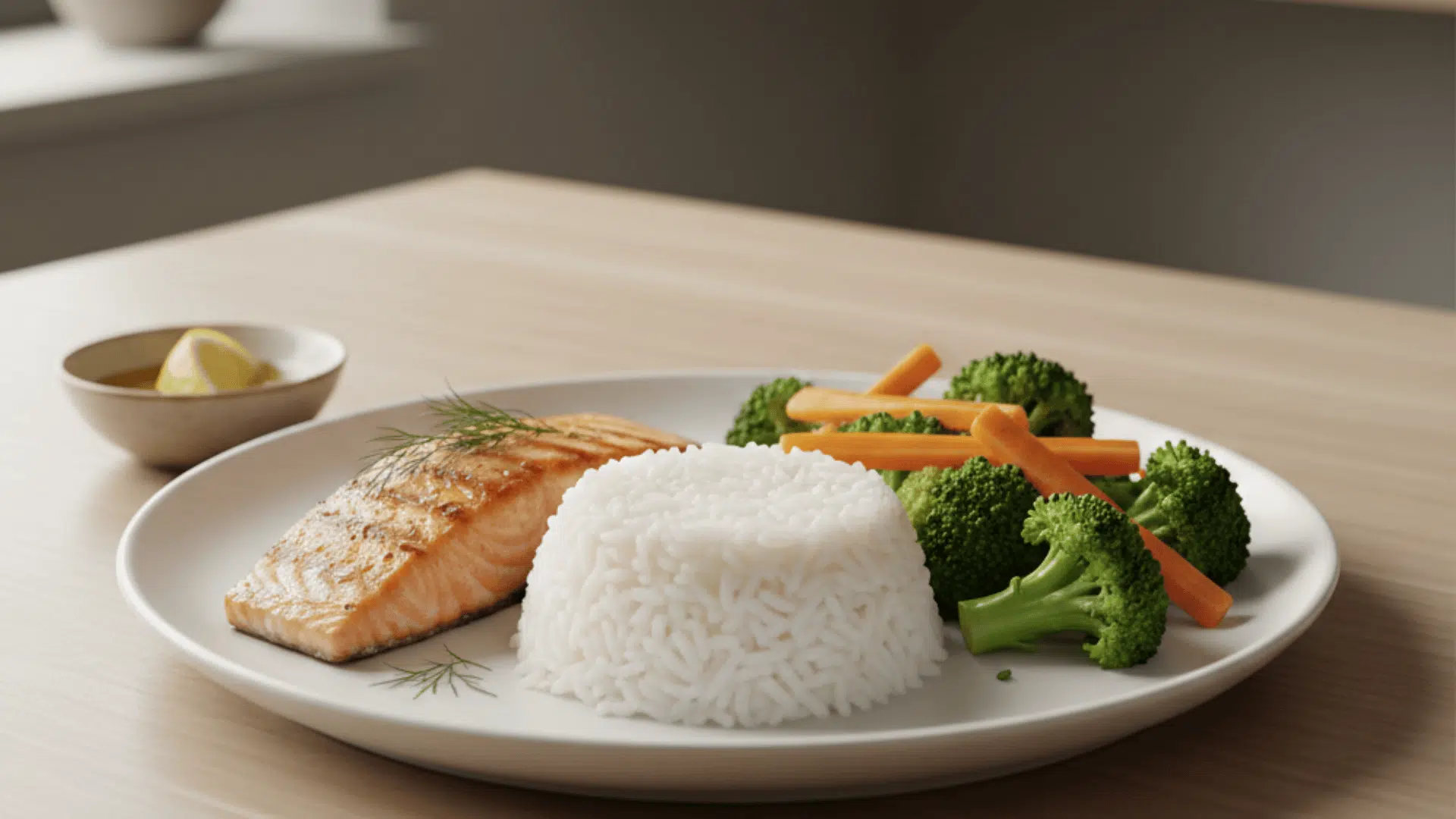
White rice can fit into a healthy diet, but it depends on your portion size and what you eat with it. Below are the main benefits and downsides, presented clearly.
Benefits of white rice
- Quick energy: White rice is mostly carbs, so it fuels the body fast. This is helpful for active people and athletes.
- Easy to digest: It’s gentle on the stomach, which can help during recovery or when you want lighter meals.
- Naturally gluten-free: It works well for people who avoid gluten.
- Works well in balanced meals: When paired with protein, veggies, and healthy fats, it can be part of a filling meal.
Downsides of white rice
- Low in fiber: It may not keep you full as long as whole grains.
- Can raise blood sugar faster: Large servings can cause a quicker blood sugar spike than brown rice or other high-fiber grains.
- Easy to overeat: Because it’s soft and mild, it’s easy to take bigger portions without noticing.
- Some people need smaller portions: People with diabetes or insulin resistance often do better with controlled servings.
Cooling cooked rice and then reheating it can increase the amount of resistant starch, which may support gut health.
Can You Use White Rice for Diets and Eating Goals?
White rice can work in many diets, but the key is portion size and what you pair it with.
- For weight loss, keep servings smaller and add filling foods like vegetables and lean protein.
- For muscle building, white rice is a helpful carb because it gives quick energy for workouts and supports calorie needs.
- For people with diabetes or insulin resistance, portions should be modest, and rice should be paired with protein, healthy fats, and fiber to slow digestion.
- For celiac disease, white rice is naturally gluten-free, so it’s a safe grain option as long as it isn’t cross-contaminated.
Final Thoughts
After looking at everything, I can say that white rice isn’t something to fear. When I pay attention to portion size and how it’s cooked, white rice can fit into many eating styles.
The calories mainly come from carbs, and while it’s lower in fiber, it still offers energy and essential nutrients.
Understanding the calories and nutrition facts of white rice makes it easier to decide when and how to eat it. Instead of cutting it out completely, I focus on balance and pairing it with protein and veggies.
If you found this guide helpful, feel free to share it or save it for later. Let me know if you want a similar breakdown for brown rice or other grains.