






Pink Salt vs. Table Salt: Which One Should You Use?
I’m going to confess something right up front: I bought pink Himalayan salt because it looked pretty on my counter. That’s it. No dramatic wellness journey, no chanting over my cutting board just vibes. And honestly? I regret nothing.
But then I fell into the internet rabbit hole (as one does at 11:47 p.m. while eating cheese over the sink) and started seeing all these claims like “pink salt alkalizes your body” and “it has 84 minerals!” and “it’s healthier!” and suddenly my cute little salt jar felt… suspicious.
So let’s talk about what actually matters when you’re choosing between pink salt and plain old table salt without the marketing confetti.
First: No, Pink Salt Isn’t “Alkalizing” Your Body
This is the big myth that refuses to die.
Here’s the thing: salt is basically sodium chloride. When it dissolves in water, it splits into sodium ions and chloride ions. That doesn’t magically create an “alkaline” situation. If you mix either table salt or Himalayan salt into water, you’re generally landing around neutral (about pH 7). The tiny trace minerals in pink salt aren’t enough to turn your water into some kind of high vibe alkaline spa potion.
Also and I say this with love your body is not a DIY science fair project. Your blood pH is tightly regulated by your lungs and kidneys. And your stomach acid is basically a tiny dragon (pH roughly 1.5-3.5). Even if you could make salt water slightly alkaline (you can’t, not meaningfully), your stomach would shut that down immediately.
If you want to play scientist for fun, you can dissolve a pinch of each salt in water and use pH strips. It’s a very “I’m in control of my life” activity, and then you’ll go right back to ignoring your laundry pile. (Just me?)
So if “alkalizing” is the reason you’re buying pink salt… please save your money for something more exciting, like fancy butter.
The One Difference That Actually Matters: Iodine
If you only take one thing from this whole post, let it be this: iodized table salt is a major iodine source for a lot of people. Pink Himalayan salt? Basically none.
Here are the rough numbers:
- Iodized table salt: about 45-50 mcg iodine per gram
- Himalayan pink salt: typically under 0.1 mcg iodine per gram (aka: essentially not an iodine source)
And iodine isn’t some optional “wellness extra.” It’s important for thyroid function, and it’s especially critical during pregnancy and breastfeeding for fetal/infant development.
Typical daily iodine needs:
- Most adults: 150 mcg/day
- Pregnant: 220 mcg/day
- Breastfeeding: 290 mcg/day
Now for the kitchen math (because I know you’re not weighing your salt like you’re on a baking show):
- 1/4 tsp fine iodized table salt (about 1.5 g) = roughly 70-75 mcg iodine
- 1/2 tsp fine iodized table salt = roughly 140-150 mcg iodine (pretty close to an average adult’s daily target)
So if you swapped your everyday salt to pink salt because it’s trendy, and you don’t eat many iodine rich foods (seafood, seaweed, dairy, eggs), you might accidentally be cutting out a reliable iodine source.
I’m not saying you need to panic and throw your pink salt into the sea. I am saying this is the part worth paying attention to especially if you’re pregnant, breastfeeding, or have thyroid concerns. If that’s you, it’s smart to talk with your doctor about iodine intake (because TikTok is not a medical provider, no matter how confident it sounds).
My personal lazy person strategy: I keep iodized table salt for everyday cooking, and I treat pink salt like the sparkly finishing salt it is.
“But Pink Salt Has Less Sodium!” (Not Really)
I’ve heard this one a lot, usually said with the same energy as “I only eat dessert on weekends” (while holding a cupcake).
By weight, the sodium difference is tiny:
- Himalayan salt: about 368 mg sodium per gram
- Table salt: about 381 mg sodium per gram
That’s under a 5% difference. In real life eating? It’s basically the same.
So why do people swear pink salt is “lower sodium”? Crystal size.
Coarse salts don’t pack as tightly into a teaspoon. So if you measure by volume (teaspoons), a teaspoon of coarse salt weighs less than a teaspoon of fine table salt meaning less sodium in that spoon. But that’s not because it’s pink. That’s because it’s chunky.
Your body responds to sodium by how much you actually eat, not by how aesthetic it looked in the jar.
If you’re watching sodium for blood pressure or health reasons, switching from table salt to pink salt isn’t the loophole. It’s the same party, different outfit.
The “84 Minerals” Thing: Technically True, Practically Meh
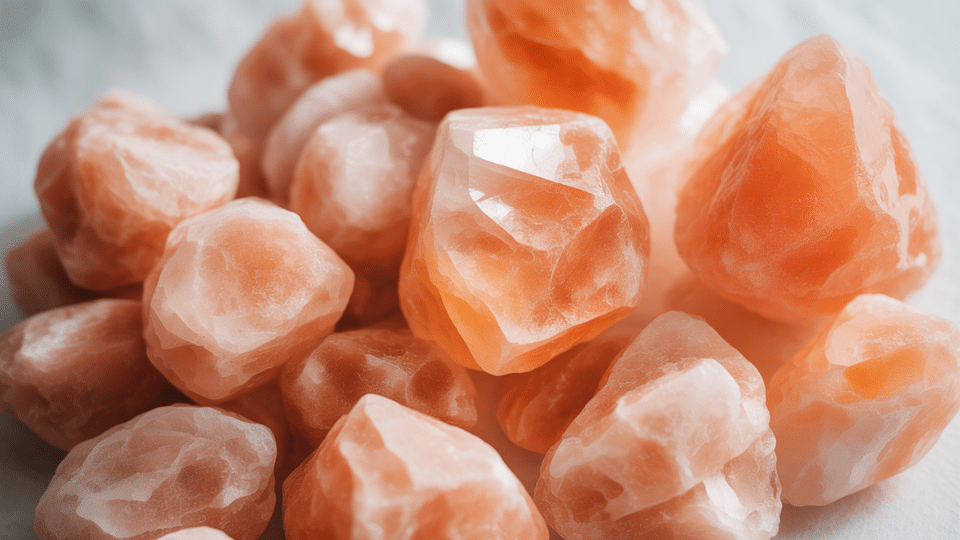
Yes, pink Himalayan salt contains trace minerals like potassium, magnesium, calcium, and a tiny bit of iron (that’s partly why it’s pink).
But “contains minerals” and “is a meaningful mineral source” are two very different sentences.
In normal human salt quantities like 1/4 to 1/2 teaspoon a day those minerals are nutritionally insignificant. The math gets silly fast. To get meaningful amounts of something like potassium from Himalayan salt, you’d need to eat an absurd amount… which would also mean consuming a wildly unsafe amount of sodium.
So when someone tells you pink salt is a “mineral boost,” think of it like this: it’s like saying your throw pillow collection counts as cardio because you carried them upstairs. Technically movement, not the point.
If you want minerals, eat actual food. (Rude, I know. I also wish salt could replace vegetables.)
Taste + Texture: Where Pink Salt Actually Shines
This is where I’ll happily defend pink salt like it’s a family member.
Table salt is usually more refined, often has anti-caking agents, and may be iodized for iodine and sodium differences. It tastes “clean” and straightforward salty.
Pink Himalayan salt is typically less refined, often without additives, and it can have a slightly different flavor some people call it mineral-y, some say metallic, some don’t notice anything at all. The bigger difference is texture.
Here’s how I use them:
- Baking: I reach for fine iodized table salt. Baking is a science project already. I don’t want surprise salt pockets in a cookie. Also, salt dissolves into the dough, so the “fancy salt flavor” isn’t really a moment here.
- Soups, sauces, everyday cooking: either works, because it dissolves. (But I still default to iodized because iodine.)
- Finishing: this is where pink salt is cute and crunchy. A few flakes on roasted veggies, steak, brownies, chocolate chip cookies chef’s kiss. It’s basically jewelry for food.
One more note people bring up: Himalayan salt is mined (commonly from Pakistan’s Khewra Salt Mine), not harvested from ocean water, so it sidesteps some of the microplastic concerns that have been found in certain sea salts. That doesn’t automatically make it “healthy,” but it’s a fair point if it matters to you.
So… Which Salt Should You Actually Buy?
If you want the simplest, real life answer (because nobody needs salt to become a personality trait):
Keep (or buy) iodized table salt if:
- You don’t eat many iodine rich foods (seafood, seaweed, dairy, eggs)
- You’re pregnant/breastfeeding or have higher iodine needs (talk to your doctor)
- You want the cheapest, most predictable option for everyday cooking and baking
Buy pink Himalayan salt if:
- You want a pretty, crunchy finishing salt
- You like the coarser texture and the look (valid!)
- You already get enough iodine elsewhere and you’re not relying on salt for it
- You prefer to avoid anti-caking agents (some people care, some don’t)
Don’t buy pink salt expecting it to:
- Alkalize your body
- Act like a supplement
- Provide meaningful minerals
- Be a sodium “hack”
My Pantry Verdict (a.k.a. The Non-Dramatic Compromise)
I keep both.
- Iodized table salt is my boring, reliable weekday salt. It’s like the friend who shows up on time and brings snacks.
- Pink salt is my “make it pretty” salt. It’s fun, it’s crunchy, it makes me feel like I have my life together even when there’s a mystery pile on my dining table.
If you’re only buying one? I’d choose iodized table salt for daily use 9 times out of 10 because iodine is the only difference here that can actually matter for health.
And if you still want the pink salt jar because it’s adorable? Same. Put it on the counter. Sprinkle it on cookies. Live your best sparkly salt life. Just don’t let it replace your iodine plan.