










I used to think the back extension exercise was simple. You bend down, come back up, and move on. But after watching enough people rush through it, and after fixing my own mistakes, I realized how often it’s misunderstood.
If you’re here, you probably want to know how to do the back extension exercise correctly and safely. The short answer is this: it’s a hip-driven movement, not a lower-back crunch.
In this guide, I’ll walk you through what the exercise really trains, how to set it up properly, what research says about it, and the mistakes that quietly cause problems. By the end, you’ll know exactly how to use it with purpose instead of guessing.
How to Do the Back Extension Exercise With Proper Form
Good form protects your lower back and makes the movement more effective. Focus on control, breathing, and hip movement instead of speed or heavy loading.
Step 1: Position Your Body Correctly
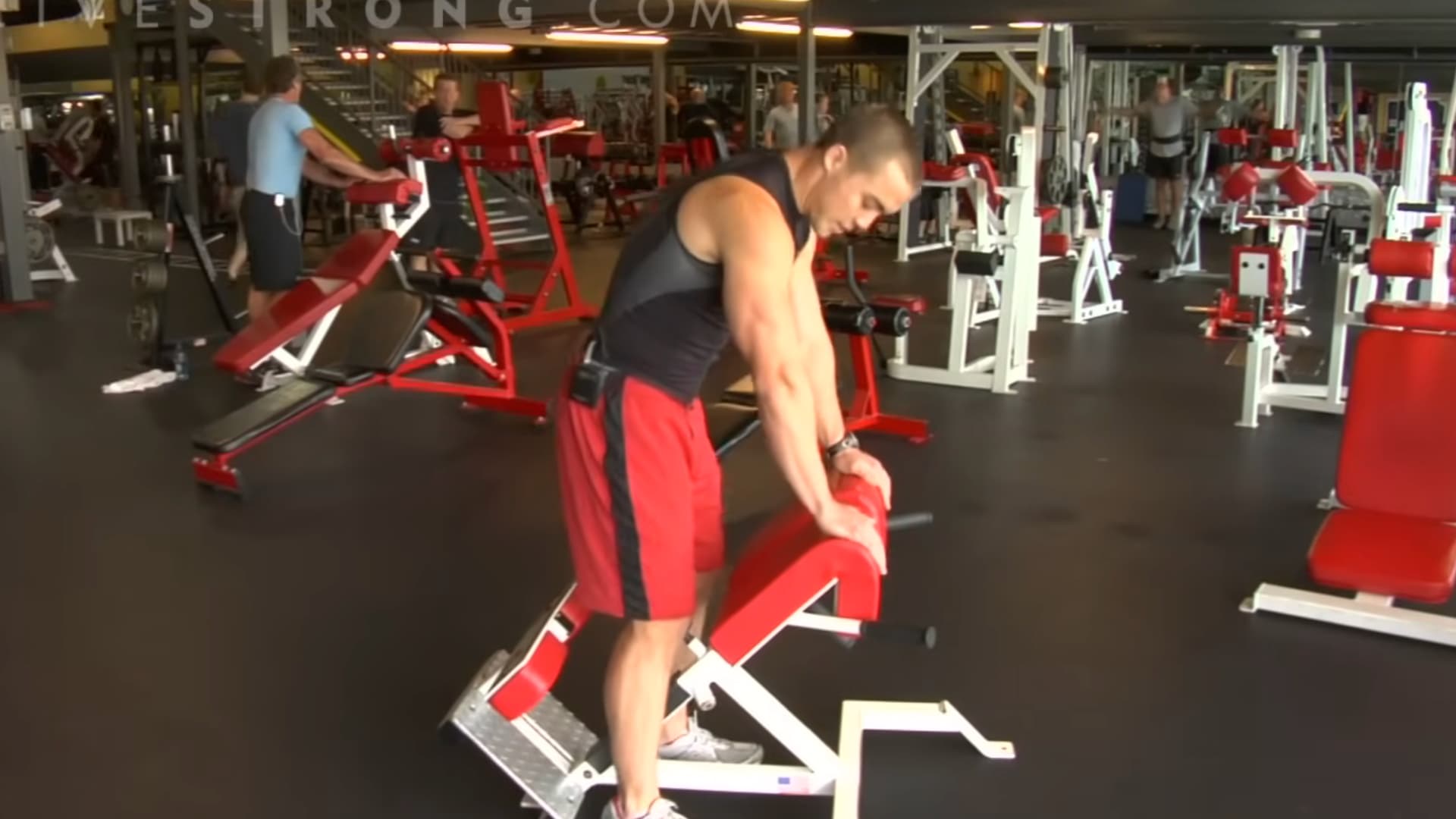
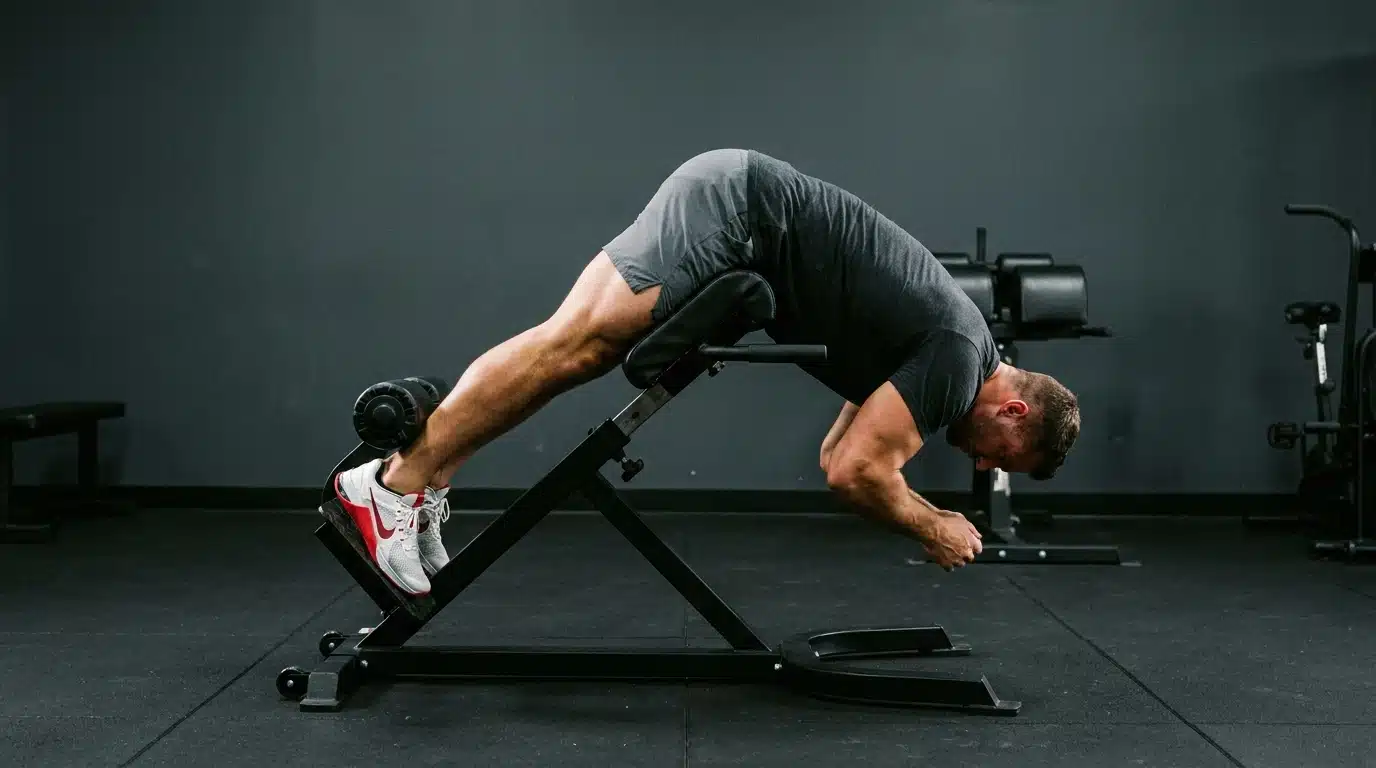
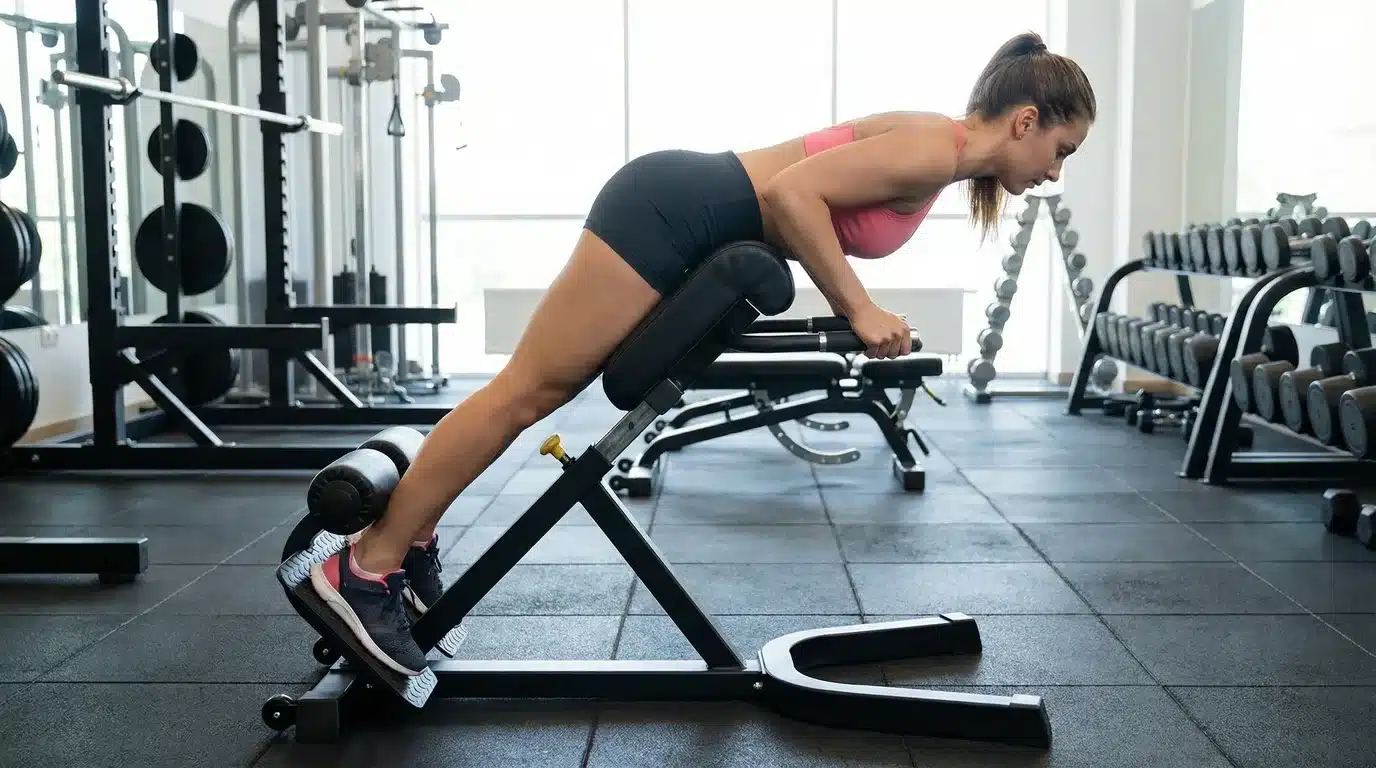
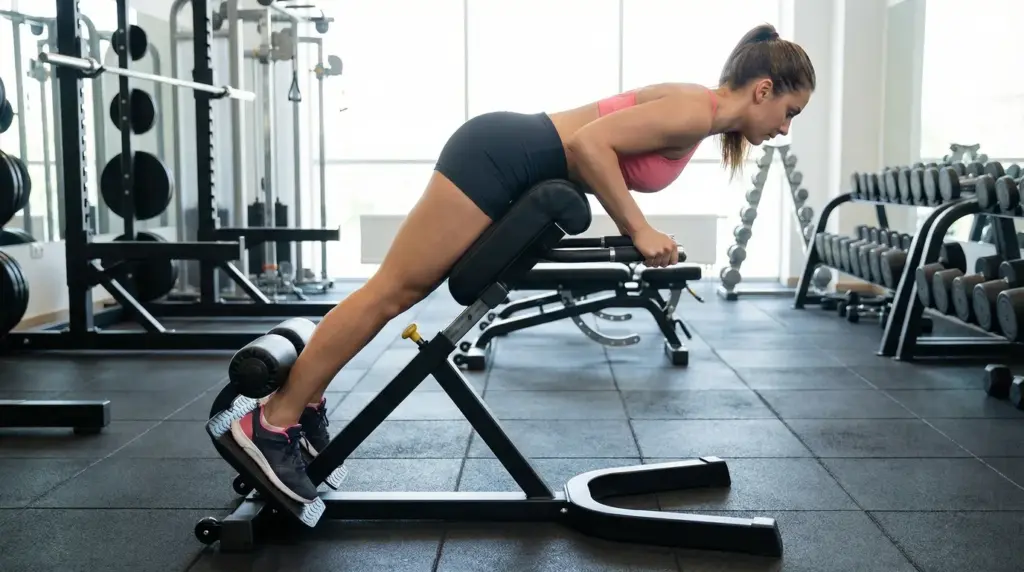
Start by adjusting yourself on the back extension machine. Your thighs should press firmly against the front pads, and your hips should sit just slightly above the top edge of the pad. This allows your torso to move freely without blocking your hips.
Step onto the platform carefully and make sure your body feels stable before beginning. Proper positioning here protects your lower back and ensures the correct muscles do the work.
Step 2: Lock Your Feet and Set Your Upper Body
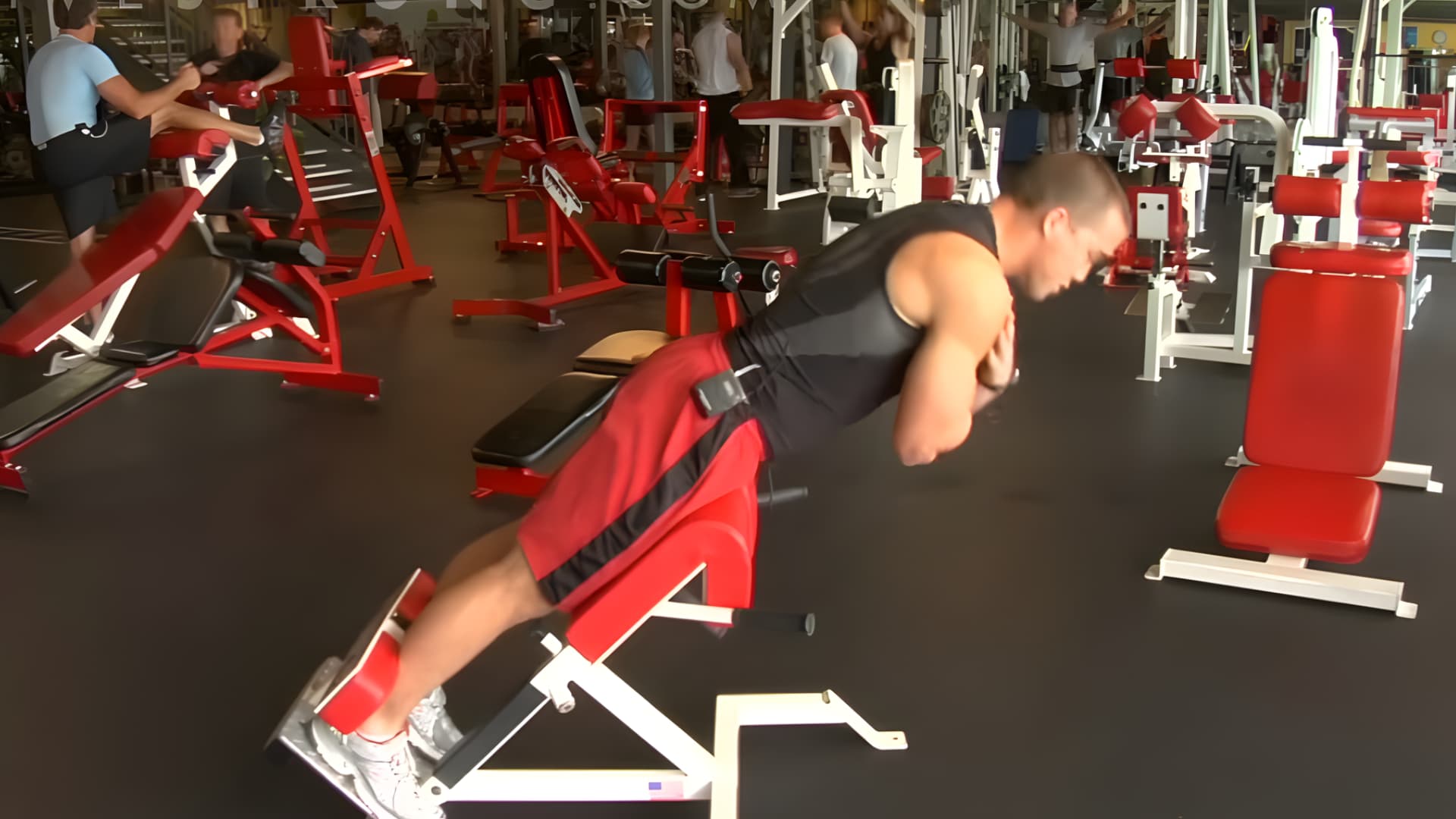
Secure your feet tightly under the back pads so you feel anchored. Your legs should stay still throughout the movement. Once your lower body is locked in, cross your arms over your chest.
Imagine there is a straight board along your back. This mental cue helps you maintain a neutral spine. Do not arch or round your back before starting. Stay tall and controlled at the top.
Step 3: Lower Your Body Slowly
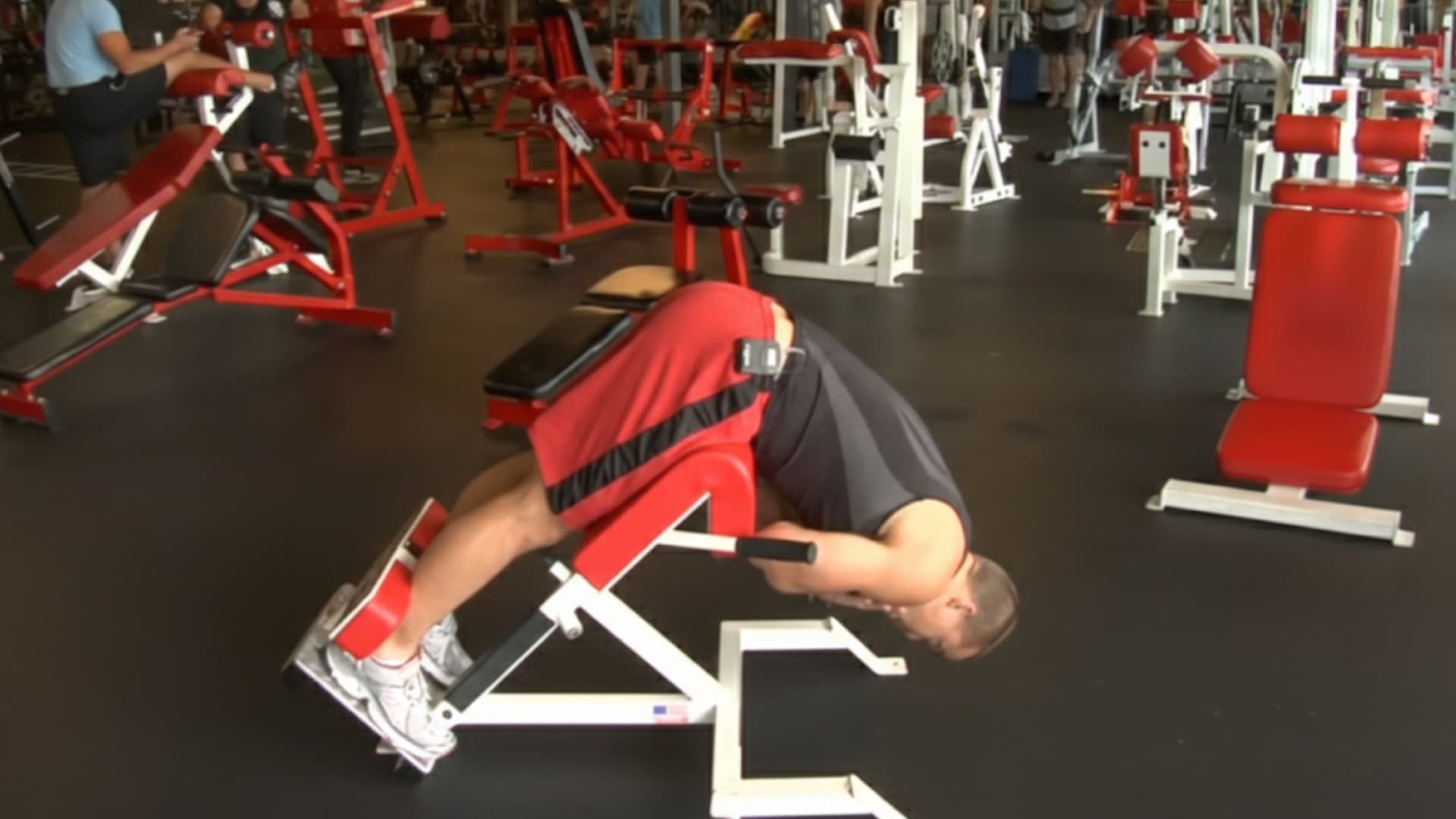
Begin lowering your torso toward the floor in a slow and controlled motion. Move at a steady pace instead of dropping quickly. Keep your spine neutral and avoid rounding your lower back. Your hips should act as the hinge point.
Staying slow increases muscle engagement and reduces unnecessary strain. Focus on control during the entire descent. The goal is smooth movement, not speed.
Step 4: Lift Back Up With Control
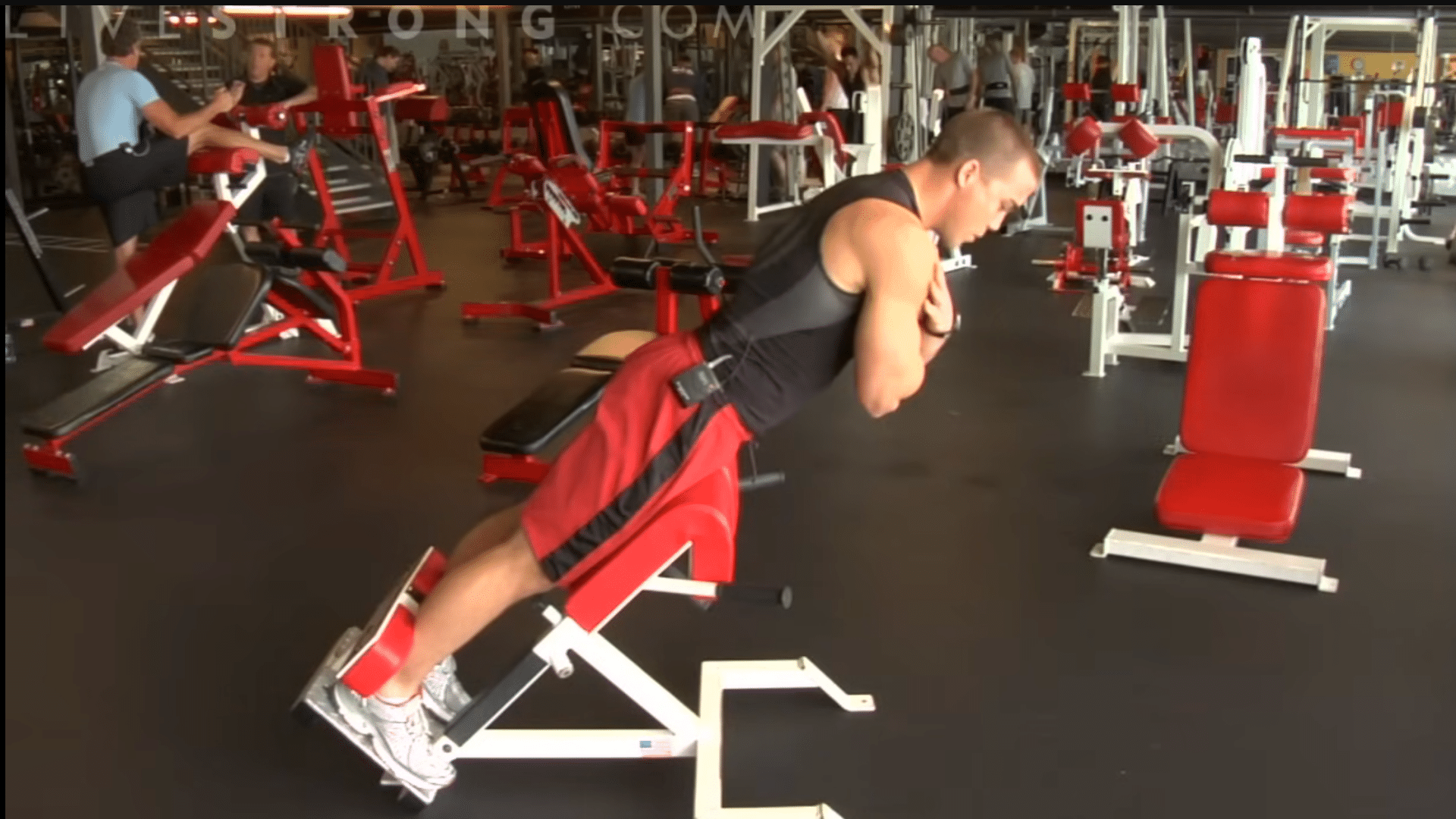
Raise your torso back to the starting position using your lower back and hip muscles. Exhale as you lift. Stop when your body forms a straight line.
Keep the movement controlled and avoid jerking your body upward. Each repetition should look steady and consistent.
Step 5: Finish Safely and Repeat
After completing your repetitions, grab the machine handles for support before stepping off. Maintain balance as you exit the machine. Repeat for several controlled sets, focusing on form every time.
Key reminders include keeping your thighs firmly on the pads, hips slightly above the pad edge, and feet securely locked in place. Staying mindful of these details helps you strengthen your lower back safely.
Understanding Back Extension Exercise
From my observation, the back extension is a posterior chain movement performed on a 45-degree Roman chair or a horizontal hyperextension bench. It primarily targets the erector spinae, glutes, and hamstrings, making it useful for both strength training and lower back endurance work.
Despite being commonly called a hyperextension, that name is misleading; a well-executed rep should not push your spine into extreme extension. The distinction that changed my understanding entirely is spinal extension versus hip extension, and most people have never been taught the difference.
The distinction that changed my understanding entirely is spinal extension versus hip extension. The machine angle, your hip placement, and how you control the descent all affect what you actually get out of it.
How It Works and What Muscles It Targets
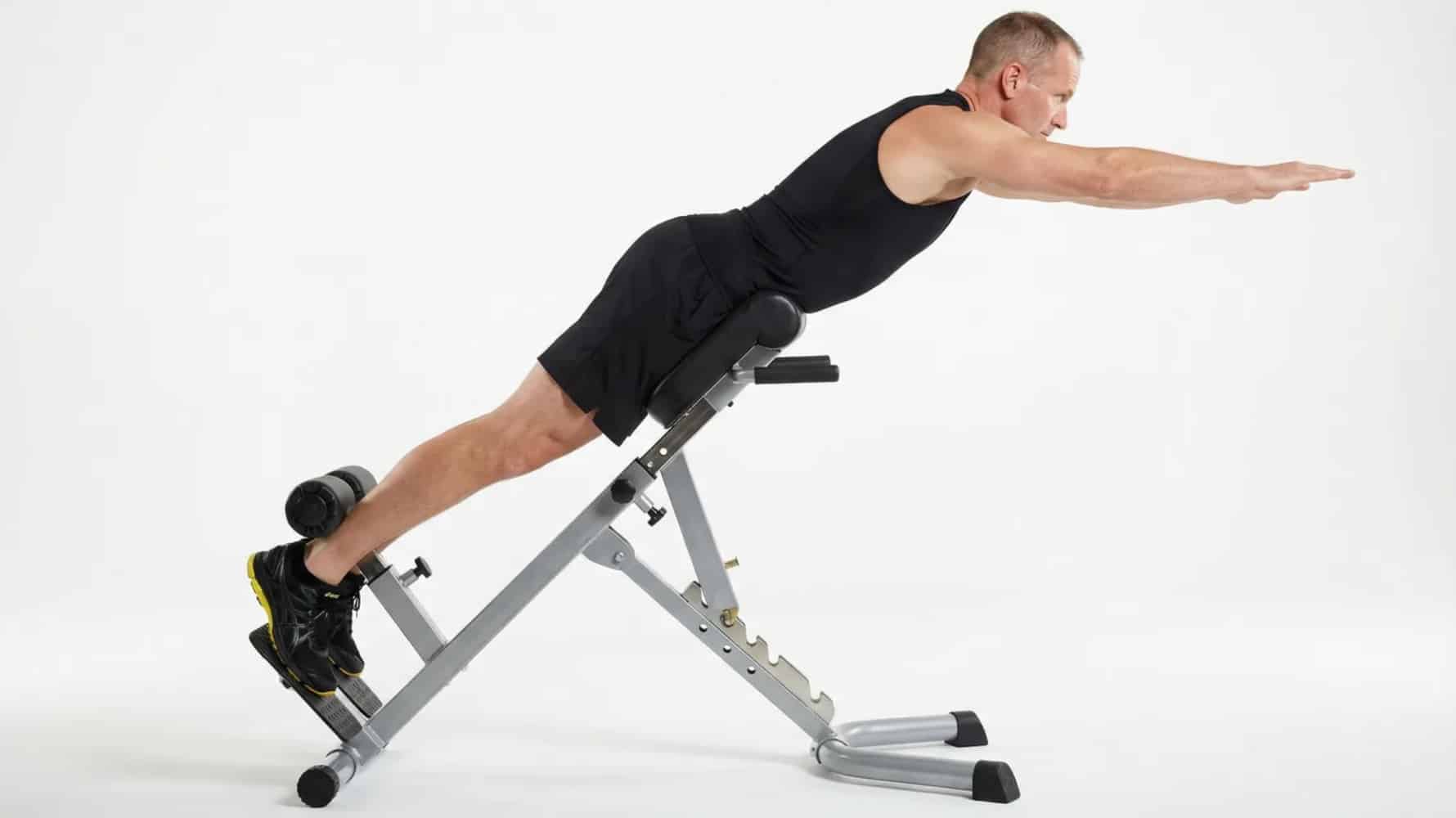
The movement originates from the hip joint, not the spine. Your glutes and hamstrings drive the lift while the erector spinae stabilize throughout, not the other way around. Here’s the muscle work in detail:
- Erector spinae: stabilize the spine and maintain its position throughout the rep
- Gluteus maximus: the primary driver of hip extension; does most of the actual lifting
- Hamstrings: assist extension on the way up and control the lowering phase
- Core stabilizers (multifidus, transverse abdominis) prevent rotation and buckling under load
Getting the muscle roles right changes how you set up, cue the movement, and what results you actually get.
Community Discussion: What People Get Confused About
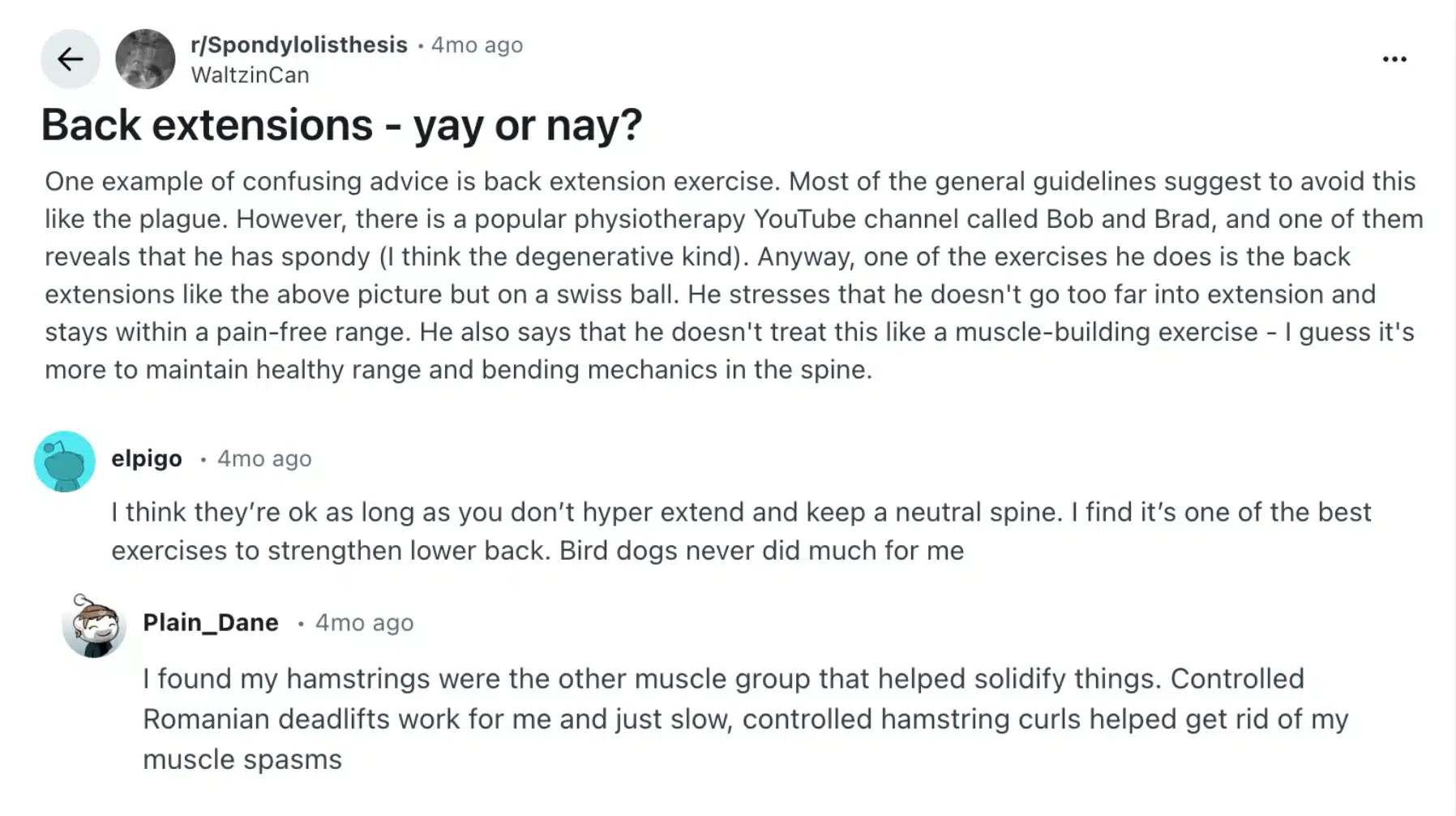
In many Reddit discussions about back extensions, confusion often centers on muscle activation. One user said the exercise was felt almost entirely in the glutes and assumed that meant poor form.
One user said, “I think they’re ok as long as you don’t hyper extend and keep a neutral spine. I find it’s one of the best exercises to strengthen lower back. Bird dogs never did much for me.”
When the hips are positioned correctly, and the movement comes from the hip joint, strong glute involvement is normal. The lower back muscles usually work in a steady, supportive role, so they may not create a strong burning feeling.
Another mentioned that the exercise seemed pointless because it did not immediately improve a major lift. Back extensions help build lower back endurance and strengthen the posterior chain, especially for those who sit long hours.
Bodyweight control should come first, with load added slowly. Without a machine, Romanian deadlifts or good mornings can train a similar hip-hinge pattern.
What Research Says About Back Extensions
Studies show that back extensions engage the spinal extensors and the hips, supporting back strength and endurance. Controlled extension work can improve pain and function, but context and technique matter significantly.
EMG Findings and Spinal Extensor Endurance in Back Extensions
Electromyography research shows that back extension–type movements activate the erector spinae and gluteal muscles, though activation levels can vary with machine angle and load.
Studies also link greater endurance of spinal extensors with a lower risk of ongoing pain, using tests such as the Biering-Sørensen test to measure endurance. This supports using extension work as part of spine conditioning when done with control and good form.
Can Back Extensions Help With Back Pain?
A study in Nature Scientific Reports noted how extension-focused exercise has been compared with flexion-based movements in patients with chronic low back pain and often shows better long-term pain relief when extension is part of a supervised program.
For people with general lower back weakness or poor endurance, slow controlled extension work can build support around the spine. Technique matters more than load; proper form reduces risk far more than heavy resistance.
However, if back pain is sharp or worsens with extension movements, this kind of work should be paused until a professional evaluates the situation.
Who Should Modify or Avoid Back Extensions
Not everybody responds well to loaded spinal extension. Know where you stand before adding this to your routine. Here are some tips:
- Acute disc injuries: Especially herniations that worsen with extension movements
- Severe or radiating nerve pain: Sharp, shooting sensations down the leg are a clear stop signal
- Post-lumbar surgery: No loaded extension until cleared by a physiotherapist
- Pain that increases with arching: Any worsening during the movement means stop immediately
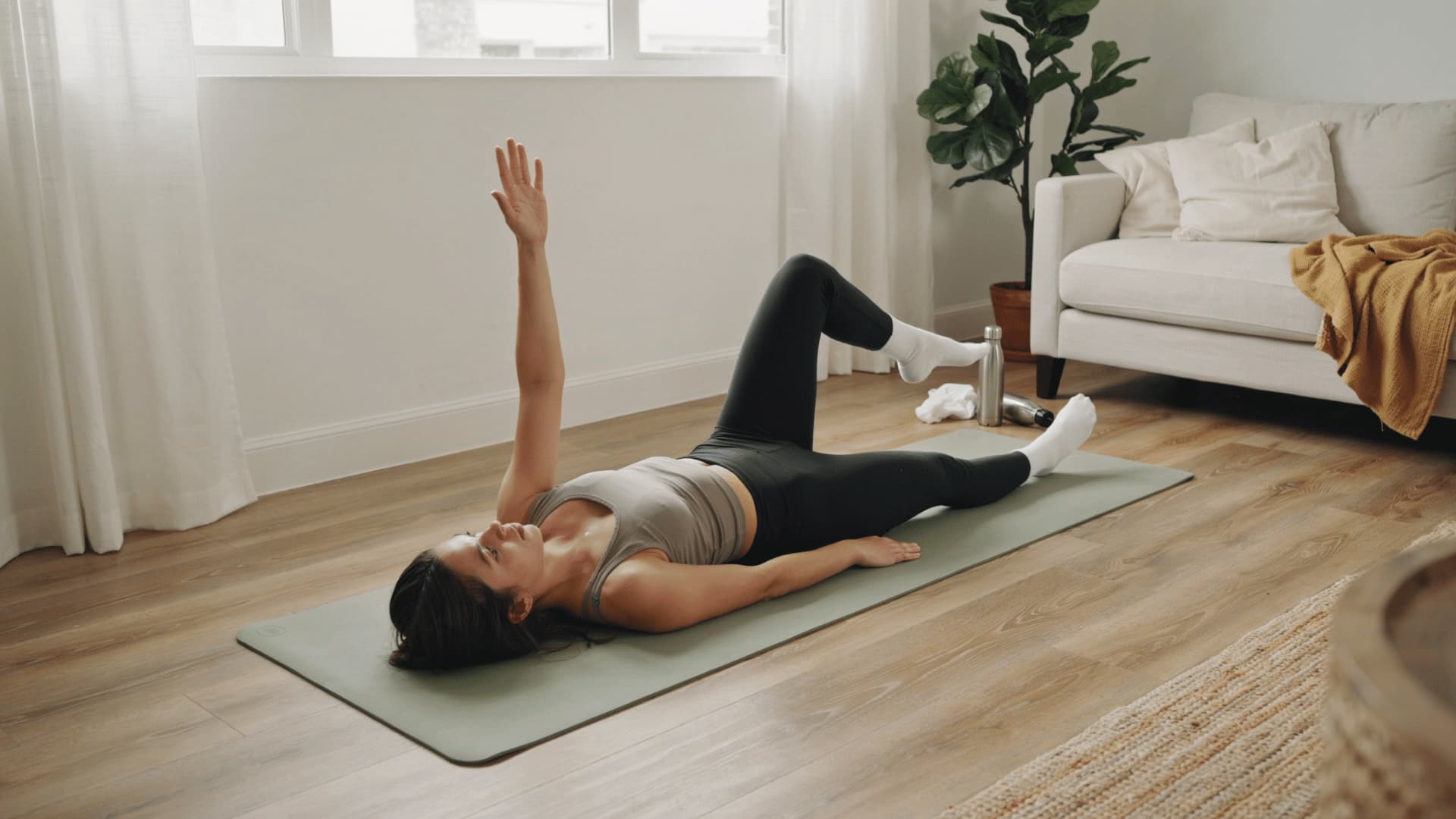
If any of the above apply, safer alternatives include dead bugs, bird dogs, glute bridges, and cat-cow mobilizations, all of which build posterior chain stability without compressive spinal loading.
How to Program the Back Extension Properly
This exercise works best with a clear purpose rather than being treated as filler at the end of a session. Here’s a clear breakdown for your exercise plan:
| Goal | Sets X Reps | Load | Session Placement |
| Strength | 3–4 X 8–12 | Moderate (plate or Dumbbell) | After Primary Compound Lifts |
| Glute Focus | 3 X 12–15 | Bodyweight or Light Load | Glute Day, After Hip Thrusts |
| Lower Back Endurance | 3 X 15–25 | Bodyweight | End of Session or Rehab Circuit |
| No Machine Available | 3 X 10–15 | Bodyweight (floor or Ball) | Anywhere in The Session |
For glute emphasis, squeeze actively at the top of each rep. For endurance, add a brief isometric hold at the top; this mirrors protocols used in clinical rehabilitation settings.
Back Extension Mistakes to Avoid
Most injuries from this exercise stem from small technical errors that compound quietly over time. Here are the four most common ones to watch for:
- Over-arching at the top: Stop the rep when your body is flat. Going past neutral compresses the lumbar facet joints with no added benefit
- Using momentum: Swinging removes muscular demand and spikes spinal load. Slow the descent to at least 2 seconds
- Pad too high: If the pad sits under your stomach, the glutes and hamstrings drop out. Reposition it just below the hip bones
- Loading too soon: Adding weight before controlling the bodyweight version puts the spine under unnecessary stress. Build endurance over several weeks first
Each of these errors is fixable with a small adjustment: catching them early saves a lot of discomfort down the line.
Final Thoughts
You’ve now seen what the back extension exercise actually does, which muscles should drive it, and how proper setup changes everything.
I’ve shown you how to perform it with control, what common mistakes to avoid, and when to modify or skip it. The key takeaway is simple: hinge at the hips, keep your spine neutral, and stop at a straight line.
When you apply these details, you turn a commonly misused movement into a powerful tool for building a stronger posterior chain.
I encourage you to slow down, master the bodyweight version, and add load only when your form is solid. If you have questions or experiences with back extensions, share them below.