



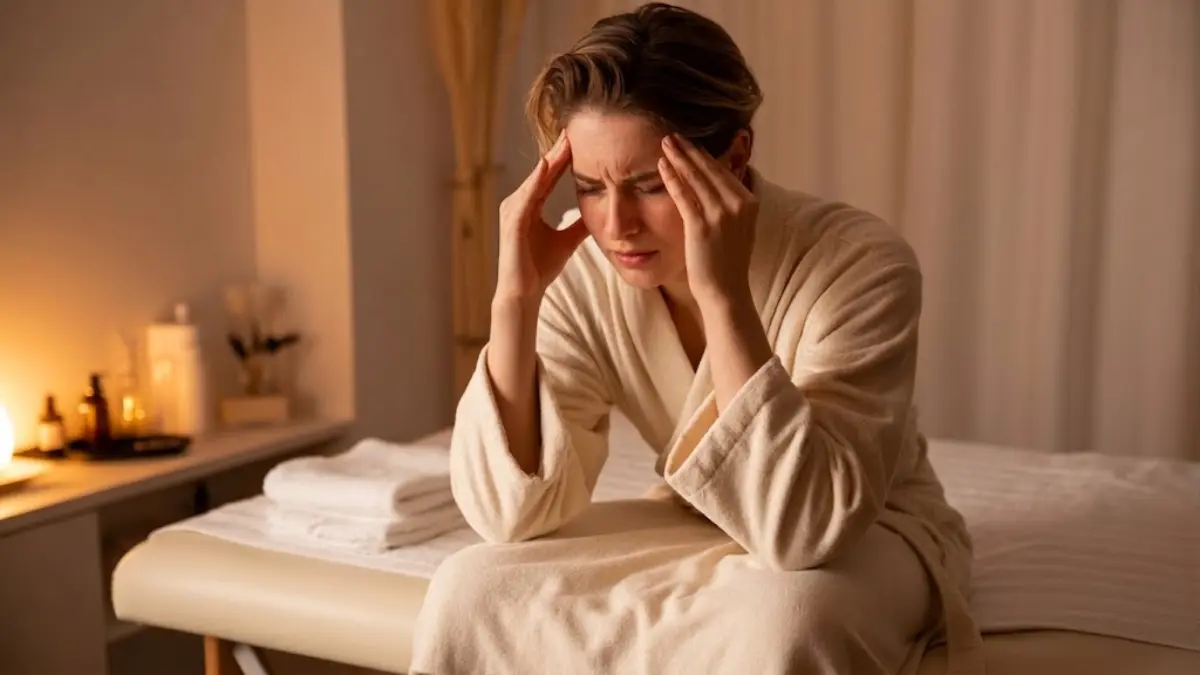





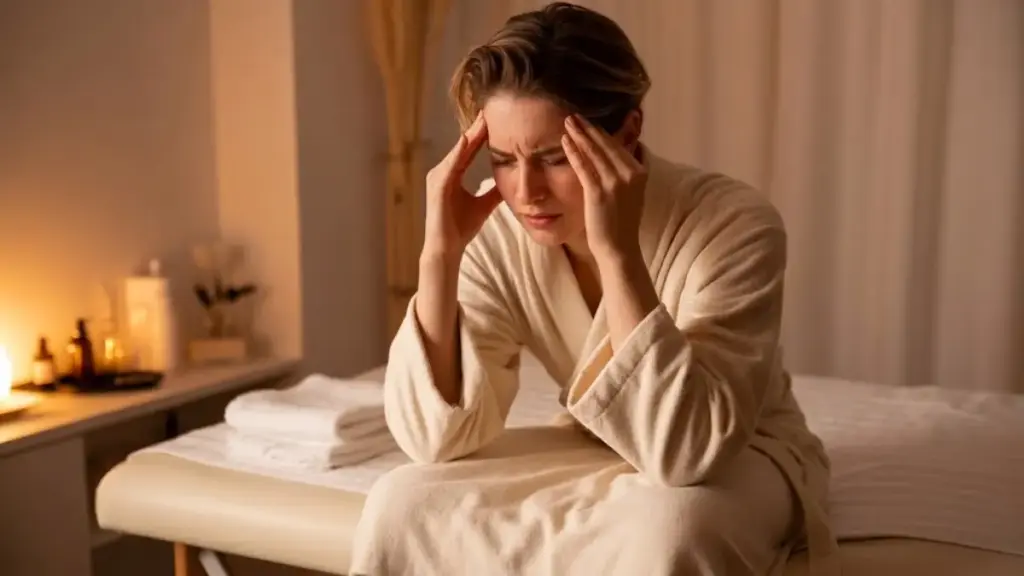

You booked a massage to feel better, not to leave with a throbbing head. Yet for many people, a headache after a massage is exactly what follows, and it catches them completely off guard.
What most don’t realize is that this response is rarely random. It’s your body communicating something specific, about hydration, nervous system shifts, pressure tolerance, or even sinus activity.
Once you understand the mechanism, the experience becomes far less alarming. Every likely cause gets unpacked here, from dehydration and deep-tissue work to stress letdown and sinus pressure.
What these headaches typically feel like, how long they tend to last, and the most effective ways to ease them are all covered, including real experiences from others who have been through the same thing.
Is It Normal to Get a Headache After a Massage?
Yes, it’s completely normal.
Massage affects your muscles, circulation, and nervous system, which can sometimes lead to a headache.
This is especially true if your body isn’t used to massage, the pressure was deeper than usual, or there was a lot of neck and shoulder tension.
What’s happening is less about something going wrong and more about your body adjusting. Here’s what’s often going on behind the scenes:
- Muscles releasing tension: When tight areas finally relax, nearby nerves can react. That shift can create short-term discomfort before things settle.
- Changes in circulation: Massage increases blood flow. For some people, that sudden change can feel like pressure or a dull throbbing in the head.
- Body shifting from stress to rest: Moving from a tense, alert state into relaxation can trigger a stress-letdown response. Headaches are a common part of that transition.
For most people, this kind of headache is temporary and fades as the body balances itself out.
The “Toxin Release” Myth
You may have heard that post-massage headaches are caused by toxins being flushed from your muscles into your bloodstream. This idea is widespread, but there is no scientific evidence to support it.
The real drivers are physiological – circulation shifts, nervous system recalibration, and hydration levels. Understanding the actual mechanism is what helps you prevent and manage these headaches effectively.
Key Factors People Get Headaches After a Massage
If you’re wondering why a headache showed up after your massage, these common reasons come up again and again in real experiences people share online.
1. Dehydration
Massage helps move fluids and waste products through the body, which increases the body’s water demand during and after a session.
Without adequate hydration, dehydration can set in quickly, and headaches are often the first warning sign, particularly after longer sessions.
This is also why hydrating before a session matters, not just after. Arriving already mildly dehydrated, which many people do, especially after morning coffee or a busy day, puts you at higher risk before the massage even begins.
2. Neck and Shoulder Work
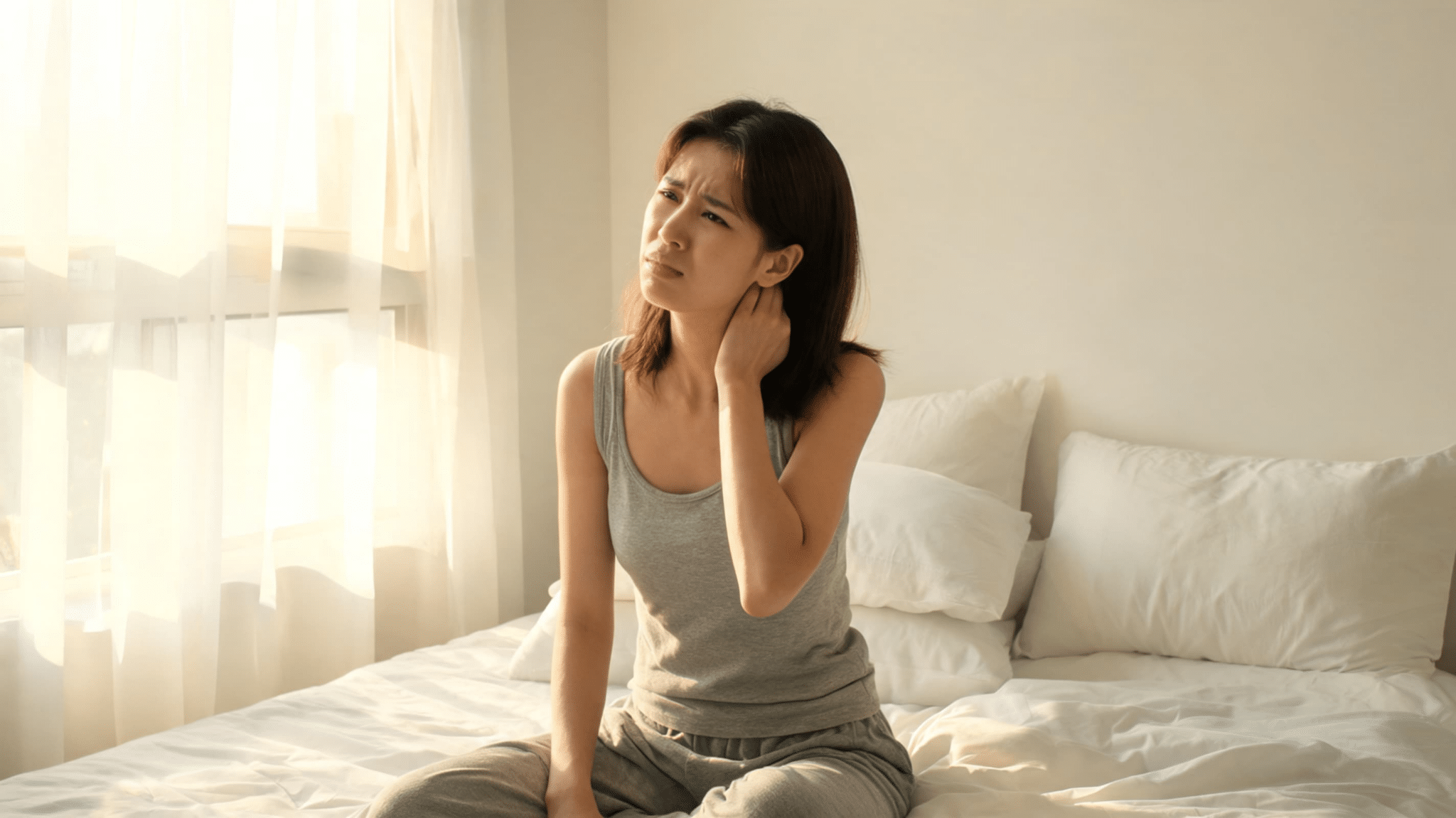
The neck and shoulder region is dense with trigger points that can refer pain directly to the head. Working through tight knots in this area may temporarily irritate surrounding nerves, leading to tension headaches during the release phase.
Trigger points in the suboccipital region, the muscles at the base of your skull, are particularly prone to referring pain upward and forward into the head when pressed.
If your headache felt like it was radiating from the back of your skull toward your forehead, this is the most likely explanation.
3. Pressure That was Too Deep
When deep pressure is applied before the body is adequately prepared, muscles can become overwhelmed, and nerves may react strongly to intense or sustained force.
This is particularly common during first-time massages or sessions that involve very firm techniques.
What people don’t realize: You don’t have to be in obvious pain during the massage for this to be a factor. Sustained pressure that feels manageable in the moment can still overstimulate nerve endings enough to trigger a headache hours later.
Communicating your pressure preferences proactively, not just when it becomes uncomfortable, makes a real difference.
4. Stress Letdown
During a massage, the nervous system transitions from a state of high alert into deep relaxation, a shift that can initially feel physically uncomfortable.
Headaches arising from stress letdown are typically mild and resolve on their own fairly quickly.
From a psychological standpoint, this mechanism is well-documented. When the body has been running on elevated cortisol and heightened sympathetic nervous system activity for an extended period, a sudden parasympathetic shift can feel physically jarring.
Clients who arrive already exhausted, sleep-deprived, or emotionally overwhelmed tend to experience this more acutely than those who arrive in a relatively calm state.
This is why I often recommend that people going through a high-stress period request lighter, integrative techniques rather than deep-tissue work, and communicate that context to their therapist upfront.
5. Sinus Pressure
Work performed on the face or upper chest can encourage sinus drainage, and if existing congestion is present, this drainage may temporarily amplify pressure sensations.
The resulting discomfort typically manifests as pain around the eyes or forehead.
6. Scent Sensitivity and Environmental Irritants
This cause is overlooked far more often than it should be. Massage oils, room diffusers, incense, linen detergents, or cleaning agents in the treatment room can all trigger headaches in people sensitive to fragrances, even those who don’t consider themselves “scent-sensitive.”
If your headache tends to begin during the session rather than after it, and you notice a strong smell in the room, this is worth flagging before your next booking. Requesting unscented or minimal-fragrance products is a completely reasonable ask.
7. Blood Pressure Drop When Standing (Orthostatic Hypotension)
After lying still for an extended period, standing up too quickly can cause a temporary drop in blood pressure, a condition called orthostatic hypotension.
A headache, sometimes accompanied by light-headedness, is one of its most common symptoms.
It’s brief and harmless for most people, but those with naturally low blood pressure should take a few extra minutes to sit upright before fully standing after a session.
How Long Does a Headache After Massage Usually Lasts?
Most headaches that follow a massage don’t stick around long. The timing often depends on how your body responds to the session and how intense the work was.
| Duration | What it usually means |
|---|---|
| A few hours | The most common experience. Mild pressure or a dull ache that fades with water, rest, or light movement. |
| Up to 24 hours | Your body is still adjusting, especially after longer sessions or focused neck-and-shoulder work. This is still normal. |
| Longer than a day | If pain lasts beyond 24 hours or worsens, it’s worth checking in with a doctor, especially with nausea, dizziness, or fatigue. |
This timeline can vary from person to person, but most post-massage headaches improve on their own with a little time and care.
What People Share in Forums About Headaches After Massage
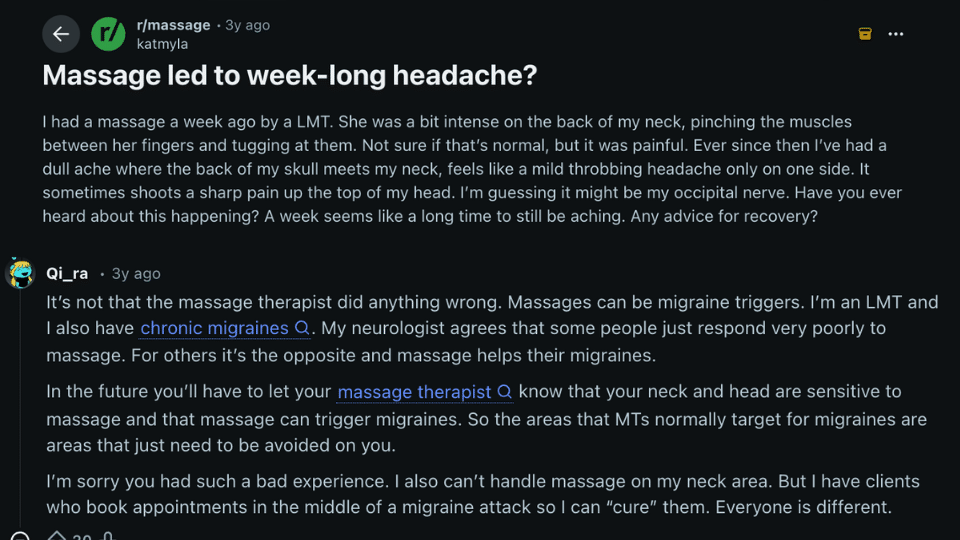
A Reddit thread titled “Massage led to week-long headache?” describes someone who developed persistent pain after an intense neck massage. The original poster felt pinching and tugging at the base of the skull, followed by a one-sided throbbing headache lasting over a week.
Commenters, including licensed massage therapists, shared that massage can trigger migraines, irritate nerves, or aggravate tight muscles.
Many advised hydration, ice, gentle stretches, better communication with therapists, and seeing a doctor if headaches persist or continue longer.
What strikes me professionally about this thread is how many people described arriving at their session already tense, sleep-deprived, or emotionally wound up, and then received deep-tissue work with no prior communication about pressure tolerance.
The nervous system is not a passive recipient of massage. When it’s already in an elevated stress state, aggressive pressure can amplify rather than calm the response.
Pain is not progress. Any headache that persists beyond a day or two deserves attention, not dismissal.
Tips to Ease a Headache After a Massage
| Tip | How It Helps |
|---|---|
| Drink water steadily throughout the day, starting right after your session | Rehydrates the body and helps flush out waste moved during the massage |
| Rest in a quiet space after your session | Gives the nervous system the time it needs to fully calm down |
| Apply heat or cold to your neck | Soothes muscle tension, use whichever feels more comfortable to you |
| Try gentle movements like light neck rolls or shoulder shrugs | Releases residual tension without overwhelming already-sensitive muscles |
From a nervous system perspective, the hour immediately after a massage is a window where your parasympathetic system is actively recalibrating.
Every small disruption, a bright screen, a stressful notification, a loud noise, prolongs that process. Protecting this window costs nothing and makes a measurable difference in how you feel.
Common Mistakes to Avoid
Most post-massage headaches are made worse unintentionally. Knowing what not to do is just as important as knowing what to do.
- Pushing through the pain: Waiting and hoping it fades on its own can allow the headache to worsen rather than resolve
- Forcing stretches or deep movements: Intense movement too soon after a session can aggravate muscles and nerves that are already sensitized
- Returning to screens too quickly: Jumping back into phones, laptops, or TV adds visual and mental stress at a time when your body needs stillness
- Skipping water entirely: Many people forget to hydrate post-massage, which is one of the most common and easily avoidable triggers
- Booking back-to-back activity: Scheduling demanding tasks or workouts right after a massage leaves no room for the body to recover properly
- Assuming deeper is always better: Many people request maximum pressure, believing that intensity equals results. For headache-prone individuals, gentler options like Swedish massage, hot stone therapy, or reflexology can deliver significant relief without triggering nervous system overload.
Avoiding these habits gives your body the breathing room it needs to fully settle after a massage and move past the headache sooner.
Summing Up
A headache after a massage doesn’t mean something went wrong. For most people, it’s the body reacting to pressure, circulation changes, or deep relaxation, and it fades faster than expected.
Muscles that have been tight for a long time don’t always let go quietly. With water, rest, and lighter activity, most headaches resolve within a day or two.
You may notice symptoms linked to neck work, deep pressure, or a sudden stress drop, unsettling, but far more common than you think. Awareness changes everything.
Speaking up during your session and staying hydrated can transform the experience entirely. If headaches keep returning after sessions, don’t brush them off; book a consultation, and get the clarity you deserve.