


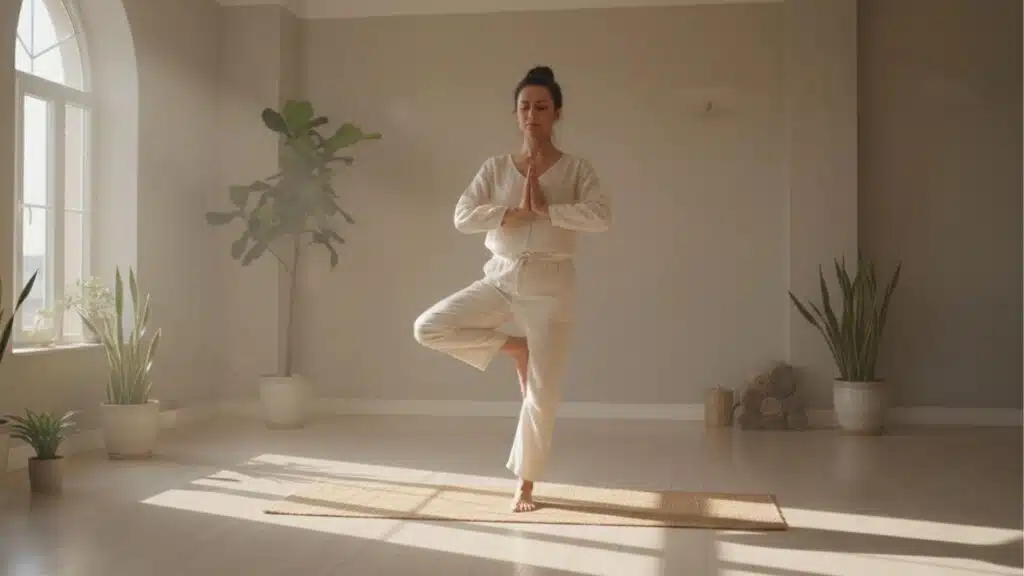
Balance may look simple, but your body relies on strength, focus, and body awareness working together. I often notice that yoga for balance poses trains all these systems at the same time.
When breath, muscles, and attention align, the body learns to steady itself more naturally. Many people think balance is only about standing on one leg.
In reality, it also involves ankle stability, hip strength, core control, and mental focus. I’ll share yoga poses for balance that build these skills step by step.
You’ll also learn why balance training works, what each pose strengthens, and simple practice tips that help reduce wobbling. With regular practice, even difficult poses can become more controlled, stable, and comfortable over time.
Why Yoga for Balance Works So Well
Balance isn’t just about standing on one leg without toppling over. It’s a combination of strength, focus, and proprioception (body awareness).
Balancing yoga poses train the ankles, knees, hips, and core to work together as a coordinated system rather than isolated parts.
Controlled breathing improves steadiness and reduces wobbling by calming the nervous system and creating internal stability. When the mind steadies, the body follows.
Consistency wins over intensity. Most people notice improved stability within 2-3 weeks of regular practice (3-4 times per week).
By weeks 6-8, poses that once felt impossible start to feel manageable. The secret isn’t perfection in each session; it’s showing up repeatedly and letting the body adapt.
Balancing Yoga Poses to Improve Stability
These poses progress from foundational work to advanced challenges, training every system your body uses to stay upright and centered.
1. Mountain Pose (Tadasana)
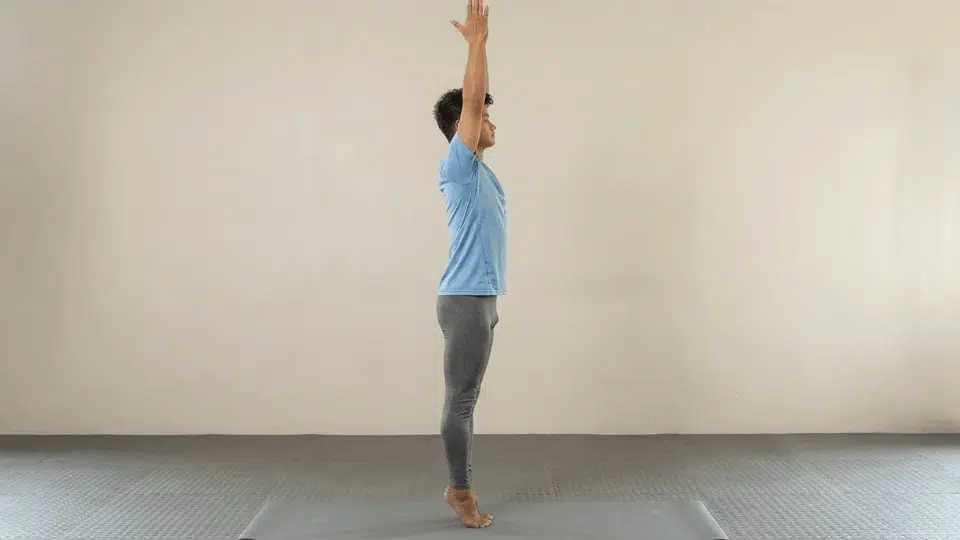
Mountain pose may look like simple standing, but it creates the base for every balance pose. It teaches even weight distribution through the feet while gently engaging the core and aligning the spine.
How to Practice:
- Stand tall with feet hip-width apart and arms resting by your sides.
- Spread your toes and press evenly through the heel, big toe mound, and little toe mound.
- Engage the thighs lightly while keeping the knees soft.
- Draw the ribs slightly inward and lengthen the spine upward.
- Keep your gaze steady and breathe slowly.
Try This: Practice with your back lightly touching a wall to feel natural spinal curves and vertical alignment.
2. Chair Pose on Toes (Utkatasana Variation)
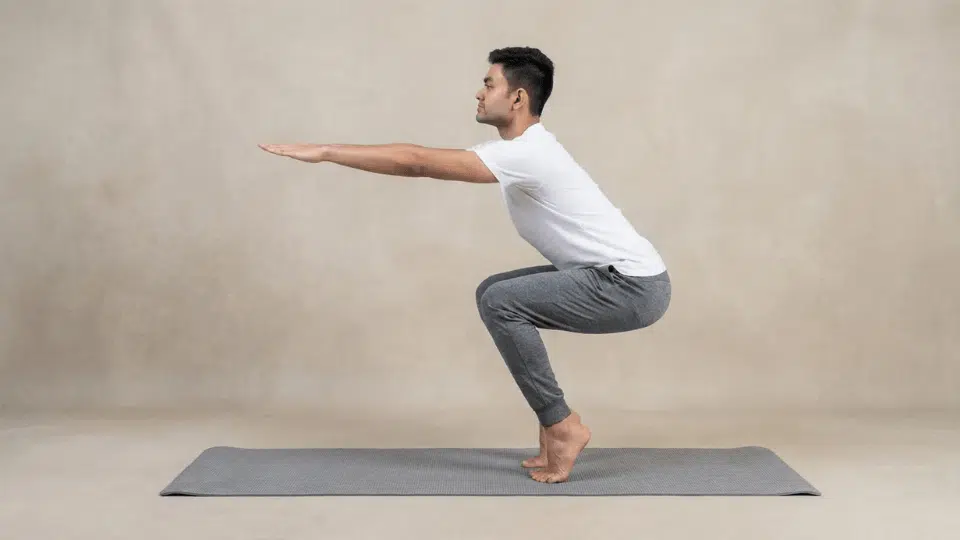
Raising the heels in chair pose adds a strong balance challenge. Your ankles and calves stabilize the body while the core works to control the shifting center of gravity.
How to Practice:
- Stand with feet hip-width apart and bend your knees into Chair Pose.
- Keep your chest lifted and arms reaching forward or overhead.
- Slowly lift both heels, so you balance on the balls of your feet.
- Engage the core and keep the weight evenly distributed through the front of the feet.
- Hold for several breaths while keeping your gaze steady.
Try This: Lightly hold a chair or wall while lifting the heels until ankle strength and balance improve.
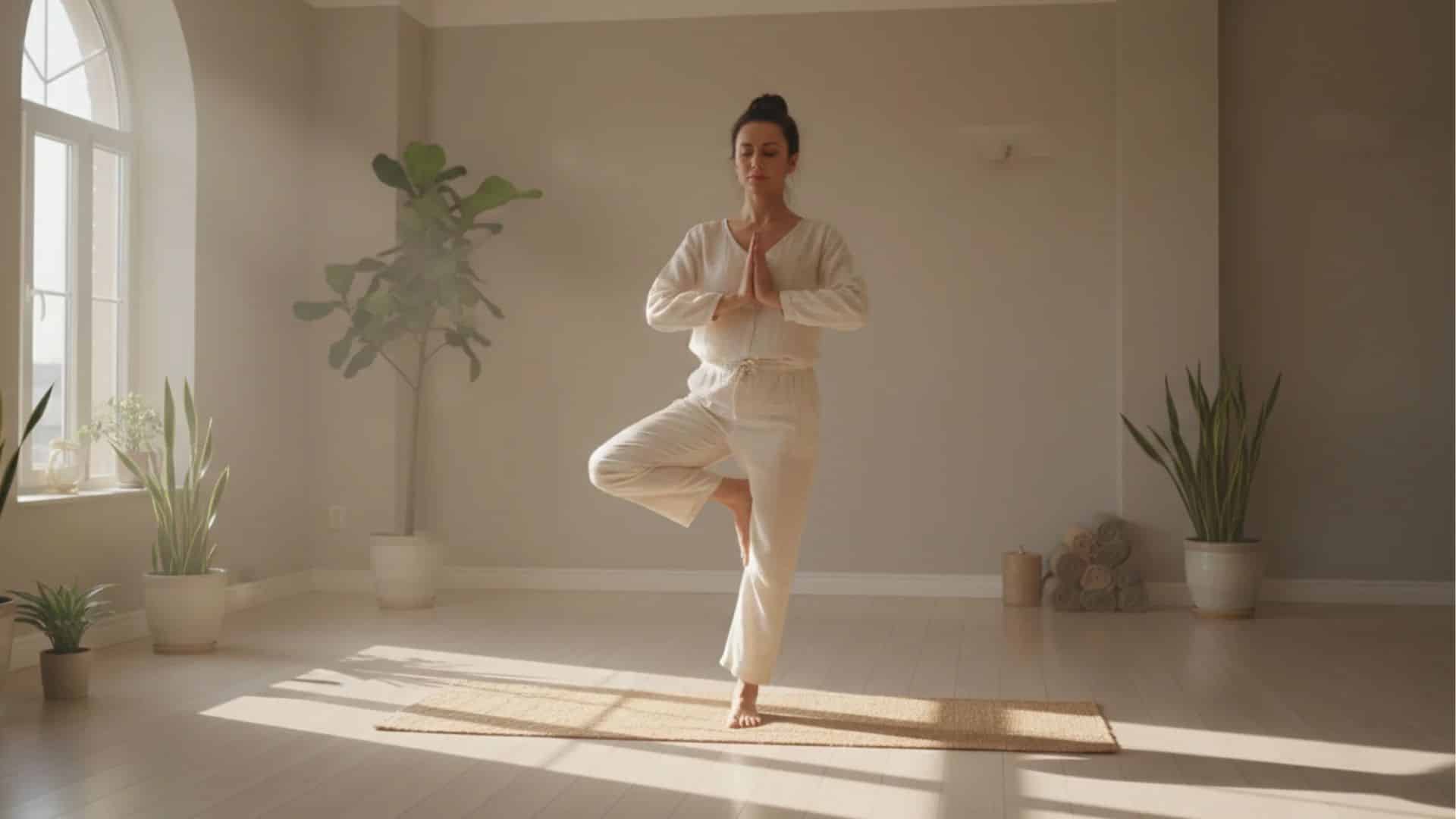
3. Tree Pose (Vrksasana)
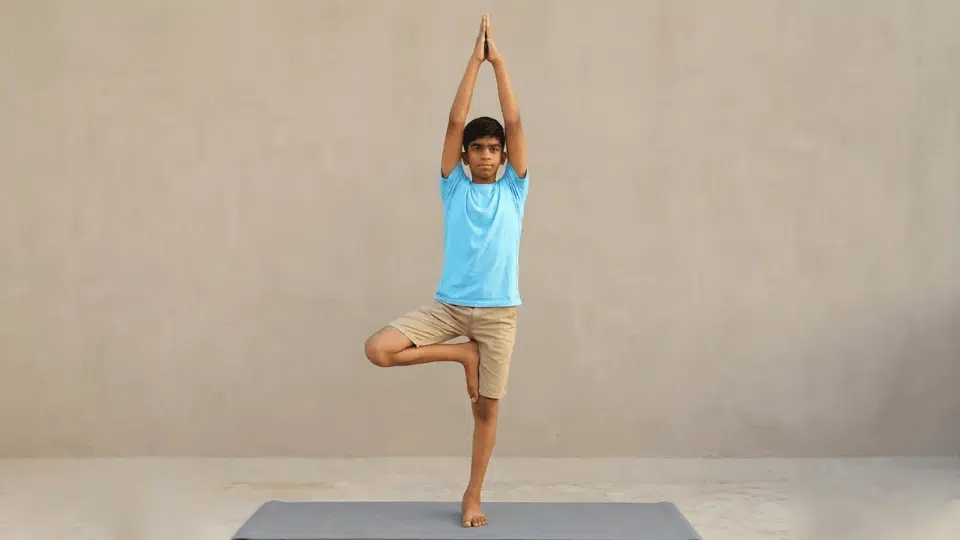
Tree pose is often the first single-leg balance many people try. It strengthens the standing leg, improves hip stability, and trains focus while the body learns to stay steady.
How to Practice:
- Stand tall and shift your weight into one foot.
- Place the sole of the other foot on the ankle, calf, or inner thigh.
- Press the foot and the standing leg gently together for stability.
- Bring your hands together at the chest or raise them overhead.
- Focus your gaze on a steady point and breathe slowly.
Try This: Keep the toes of the lifted foot touching the floor at first to build confidence while learning the pose.
4. Toe Stand Prep (Heel Lifts)
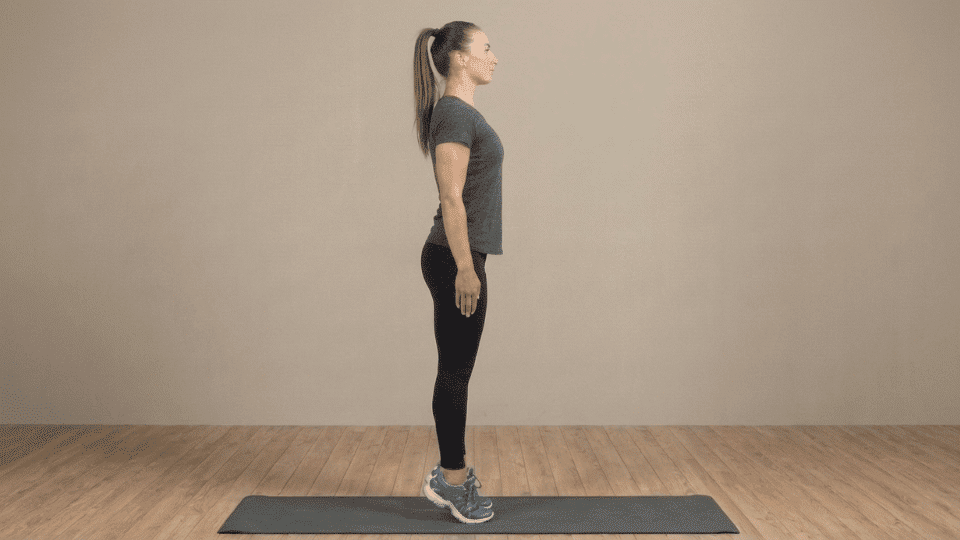
Heel lifts strengthen the small muscles in your feet that help prevent ankle rolling. This simple drill improves arch support and body awareness while creating a small but effective balance challenge.
How to Practice:
- Stand with feet hip-width apart and arms relaxed at your sides.
- Spread your toes and press evenly through both feet.
- Slowly lift one heel while keeping the ball of the foot on the floor.
- Keep your weight centered and your core gently engaged.
- Lower the heel slowly and repeat on the other side.
Try This: Practice near a counter or chair so you can lightly hold it while lifting the heel slowly.
5. Eagle Pose (Garudasana)
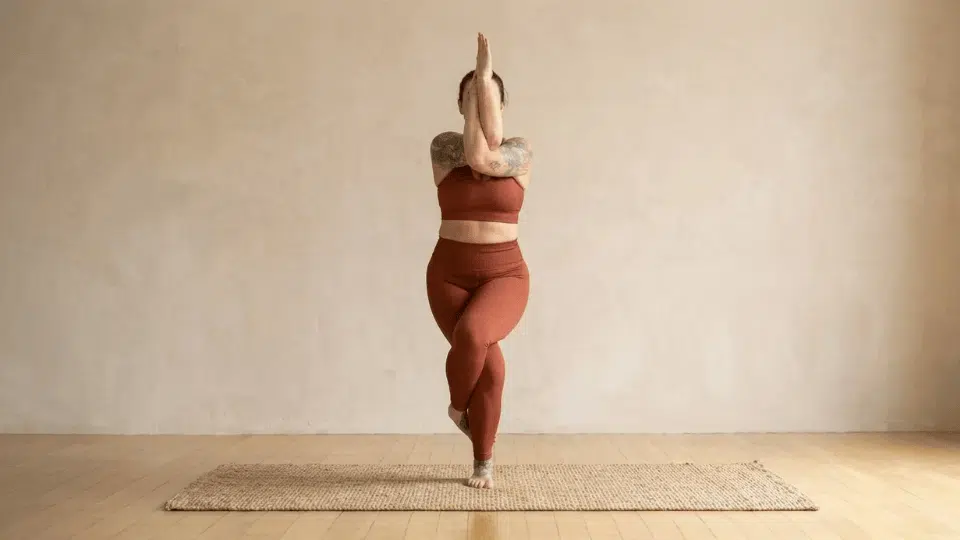
Eagle pose wraps the arms and legs together while balancing on one foot, creating a strong test of coordination and focus. The squeeze through the limbs helps stabilize the body and strengthen the hips.
How to Practice
- Stand tall and shift your weight into one leg.
- Bend the standing knee slightly to prepare for balance.
- Cross the opposite thigh over the standing leg and hook the foot behind the calf if possible.
- Extend your arms forward and cross one elbow over the other.
- Bring the palms together while keeping the shoulders relaxed.
- Sit slightly deeper into the standing leg and hold steady breaths.
Try This: Skip the arm wrap at first and focus only on balancing the legs until stability improves.
6. Standing Figure Four (Hip Opener Balance)
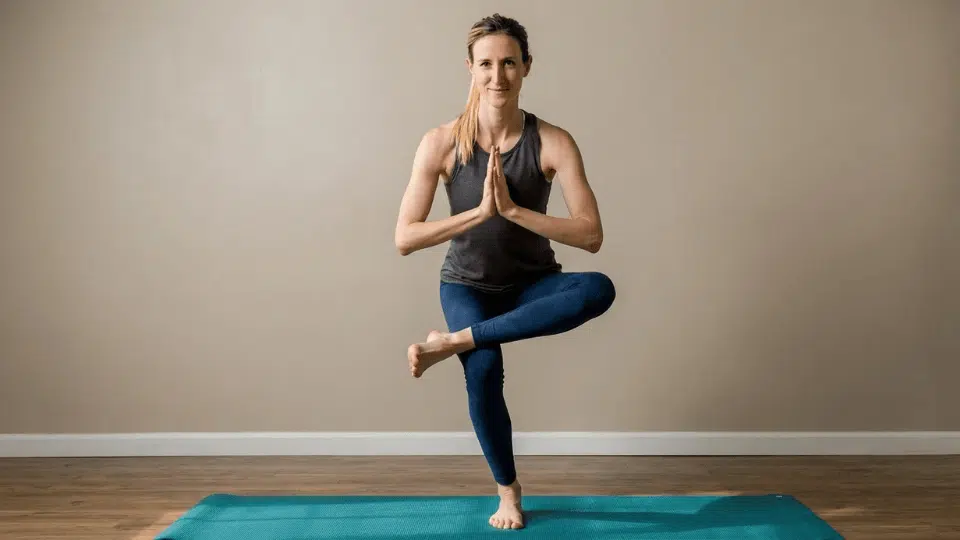
Standing figure four combines a hip-opening stretch with single-leg balance. The standing leg builds strength while the crossed leg stretches the hips and glutes, helping reduce stiffness from long periods of sitting.
How to Practice:
- Stand upright and shift your weight onto one foot.
- Lift the opposite leg and place the ankle across the standing knee.
- Flex the lifted foot to protect the knee joint.
- Sit the hips back slightly, similar to a shallow squat.
- Keep the chest lifted and spine neutral.
- Hold the balance while breathing slowly and evenly.
Try This: Practice near a wall or sturdy surface so you can lightly touch it while building confidence.
7. Warrior III (Virabhadrasana III)
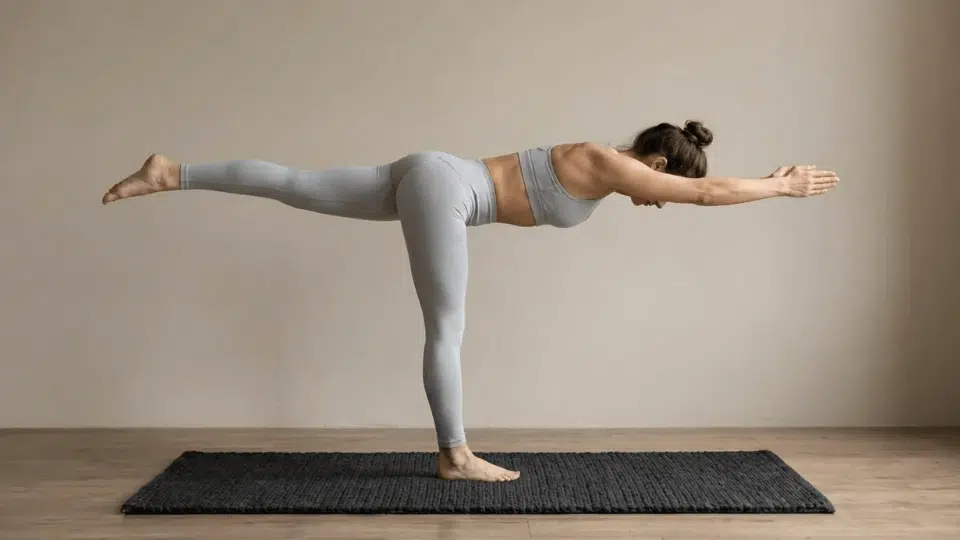
Warrior III builds strength and balance at the same time. Balancing on one leg while hinging forward trains the hamstrings, core, and ankles to stabilize the body in a long, steady line.
How to Practice:
- Stand tall and shift your weight into one foot.
- Slowly hinge forward from the hips while lifting the other leg behind you.
- Keep the hips facing the floor and the standing leg slightly bent.
- Extend your arms forward or keep them by your sides.
- Hold the position while keeping your gaze steady.
Try This: Place your hands on a chair or yoga blocks to reduce the load while building strength and balance.
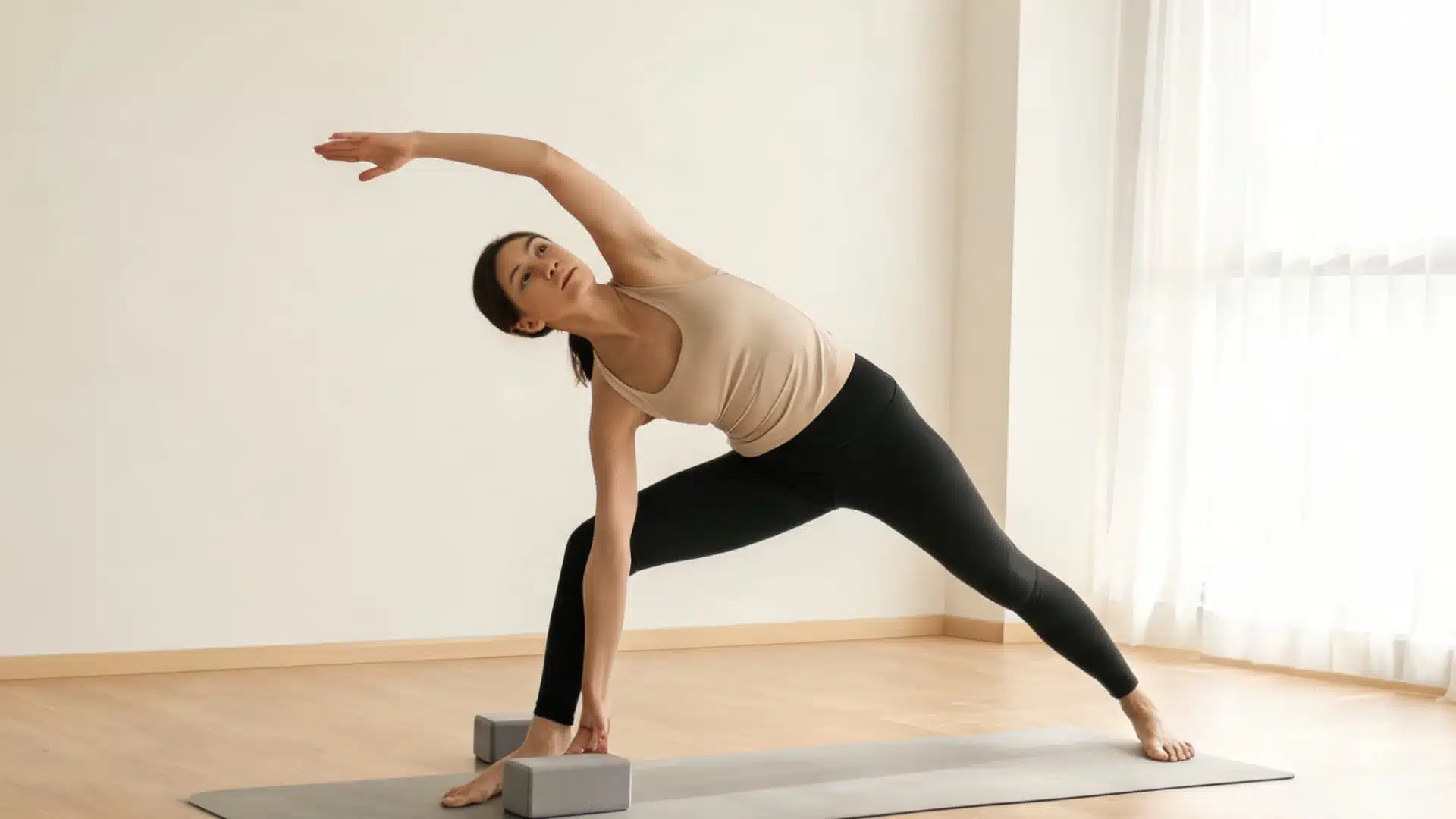
8. Half Moon Pose (Ardha Chandrasana)
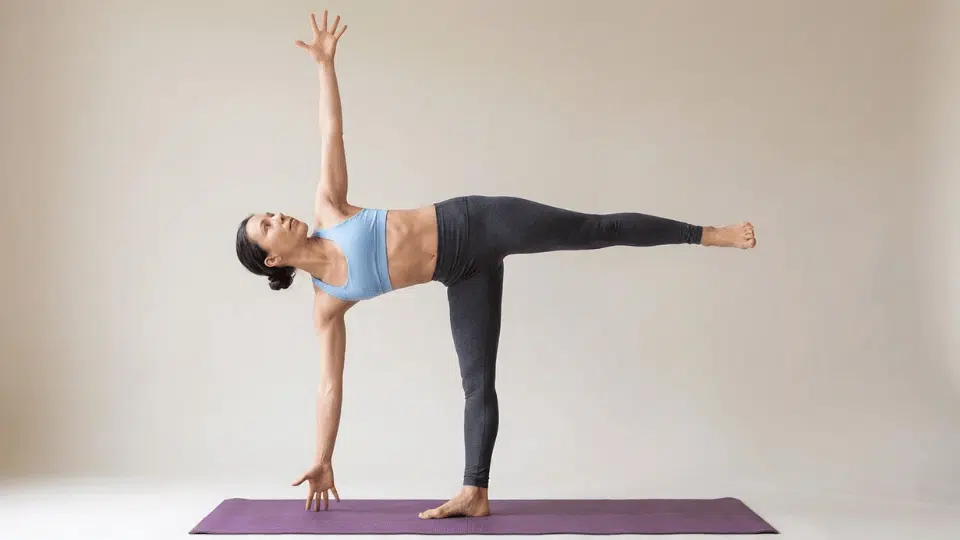
Half moon pose challenges balance while opening the body sideways. The standing leg stabilizes the body while the lifted leg strengthens the hips and improves control through the core.
How to Practice:
- Start in a standing position and shift your weight onto one leg.
- Place one hand on the floor or a block slightly in front of the standing foot.
- Lift the back leg until it is parallel with the floor.
- Rotate the chest open and extend the top arm upward.
- Keep your gaze forward or upward while breathing steadily.
Try This: Use a yoga block under the lower hand to make the pose more stable while learning the alignment.
9. Dancer Pose (Natarajasana)
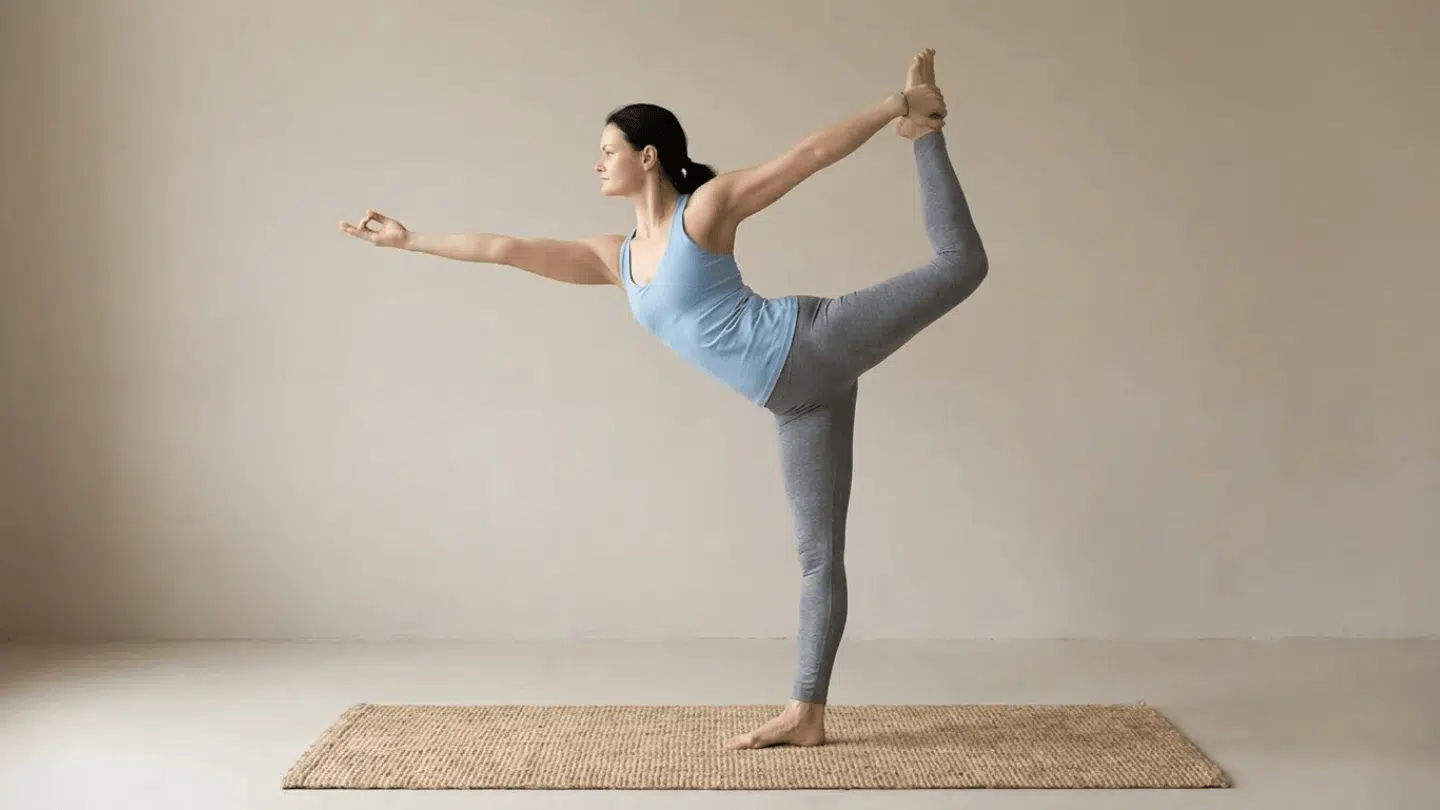
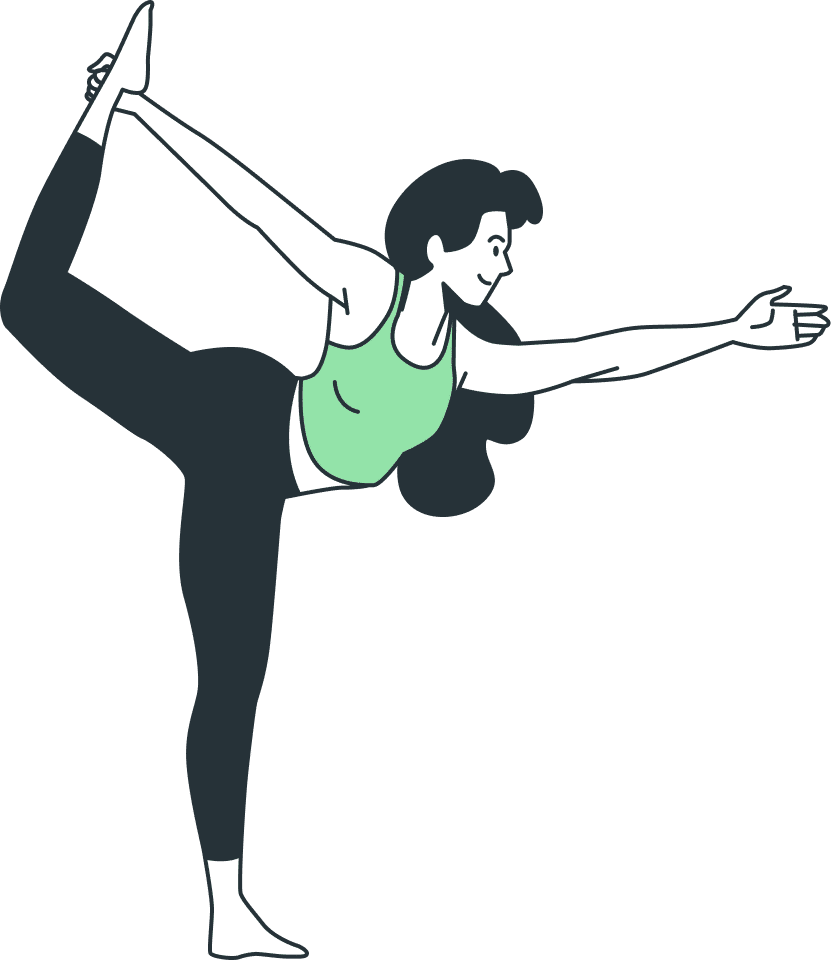
Dancer pose combines balance with a gentle backbend. Reaching back to hold the lifted foot opens the chest and hips while the standing leg works to stabilize the entire posture.
How to Practice:
- Stand tall and shift your weight into one foot.
- Bend the opposite knee and reach back to hold the inside of the foot or ankle.
- Begin lifting the foot while leaning the torso slightly forward.
- Extend the free arm forward for balance.
- Keep the chest lifted and avoid collapsing into the lower back.
- Maintain slow, steady breathing.
Try This: Use a yoga strap around the lifted foot if reaching your foot comfortably feels difficult.
10. Extended Hand-to-Big-Toe Pose (Utthita Hasta Padangusthasana)
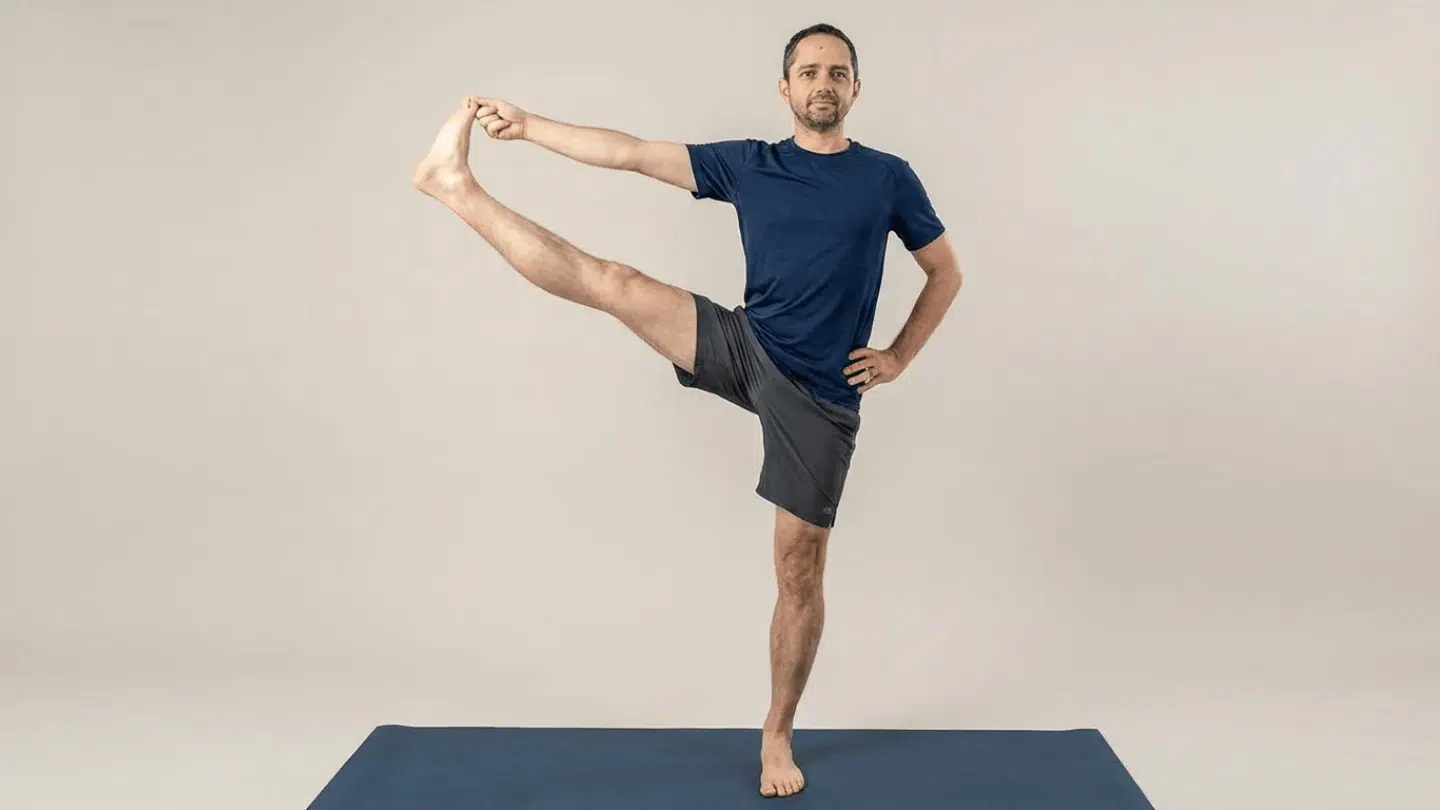
Extended hand-to-big-toe pose tests slow, controlled balance while lifting one leg forward. The standing leg stabilizes while the lifted leg challenges hamstring flexibility and hip strength.
How to Practice:
- Stand tall and shift your weight fully into one foot.
- Lift the opposite knee toward your chest.
- Hold the big toe with your fingers or loop a strap around the foot.
- Slowly extend the leg forward while keeping your spine upright.
- Keep the standing leg strong and the chest open.
- Fix your gaze on a steady point and breathe slowly.
Try This: Use a yoga strap around the lifted foot if reaching the toe comfortably feels difficult.
11. Side Plank (Vasisthasana)
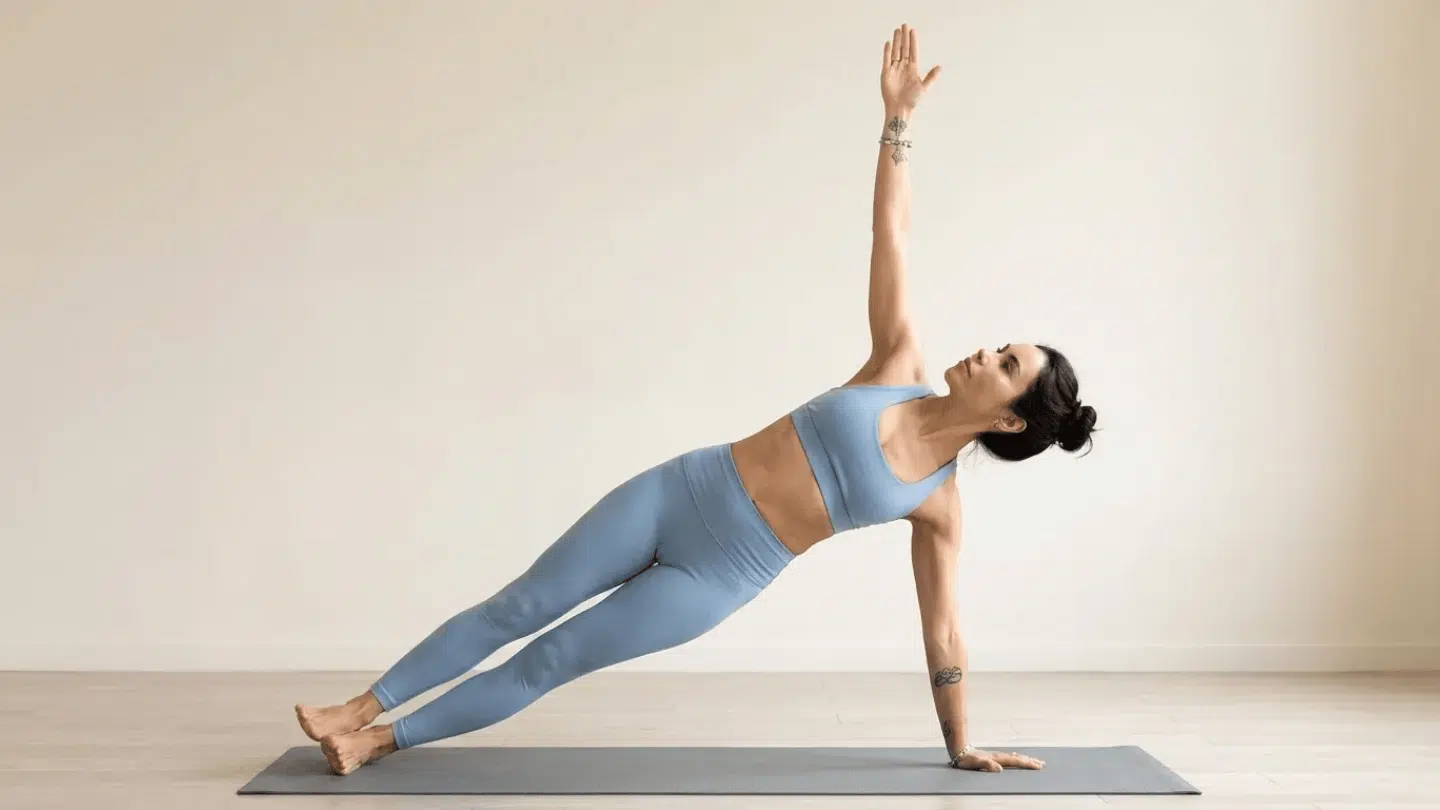
Side plank shifts balance into the arm and lateral core muscles. Holding the body sideways strengthens the shoulders, obliques, and hips while improving stability for standing balance poses.
How to Practice:
- Begin in a plank position with shoulders stacked above wrists.
- Shift your weight into one hand and rotate onto the outer edge of that foot.
- Stack the top foot over the bottom foot.
- Extend the top arm toward the ceiling.
- Lift the hips so the body forms a straight line.
- Keep the core engaged and hold steady breaths.
Try This: Lower the bottom knee to the floor to build shoulder and core strength gradually.
12. Bird Dog (Tabletop Balance)
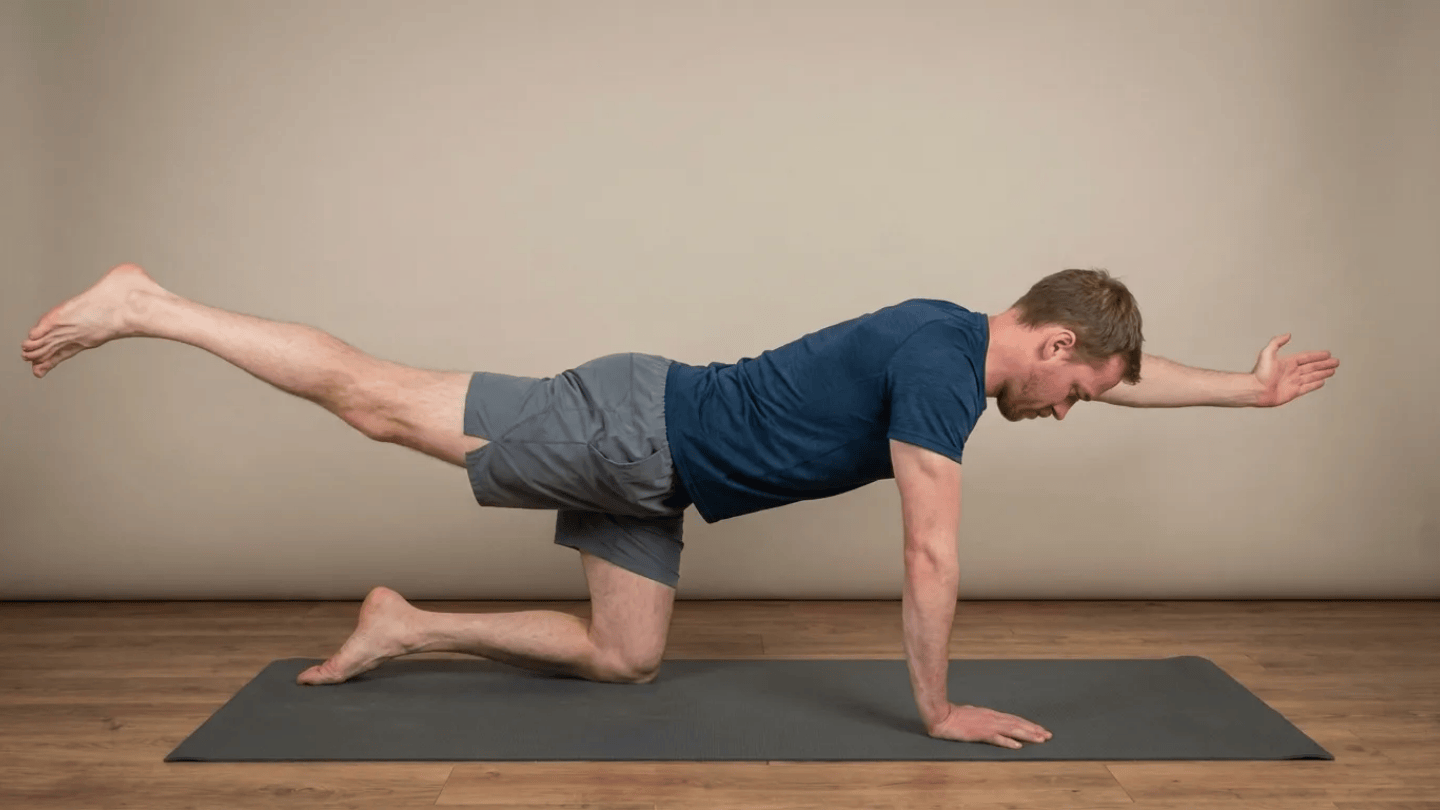
Bird dog builds balance and coordination by extending the opposite arm and leg while keeping the body stable. The pose strengthens the core and trains the body to resist twisting.
How to Practice:
- Start on hands and knees with wrists under shoulders and knees under hips.
- Engage your core gently to keep the spine neutral.
- Extend one leg straight behind you.
- Reach the opposite arm forward at shoulder height.
- Keep hips and shoulders level with the floor.
- Hold briefly before returning and switching sides.
Try This: Move slowly while extending the limbs to challenge stability and improve body control.
13. Crow Pose (Bakasana)
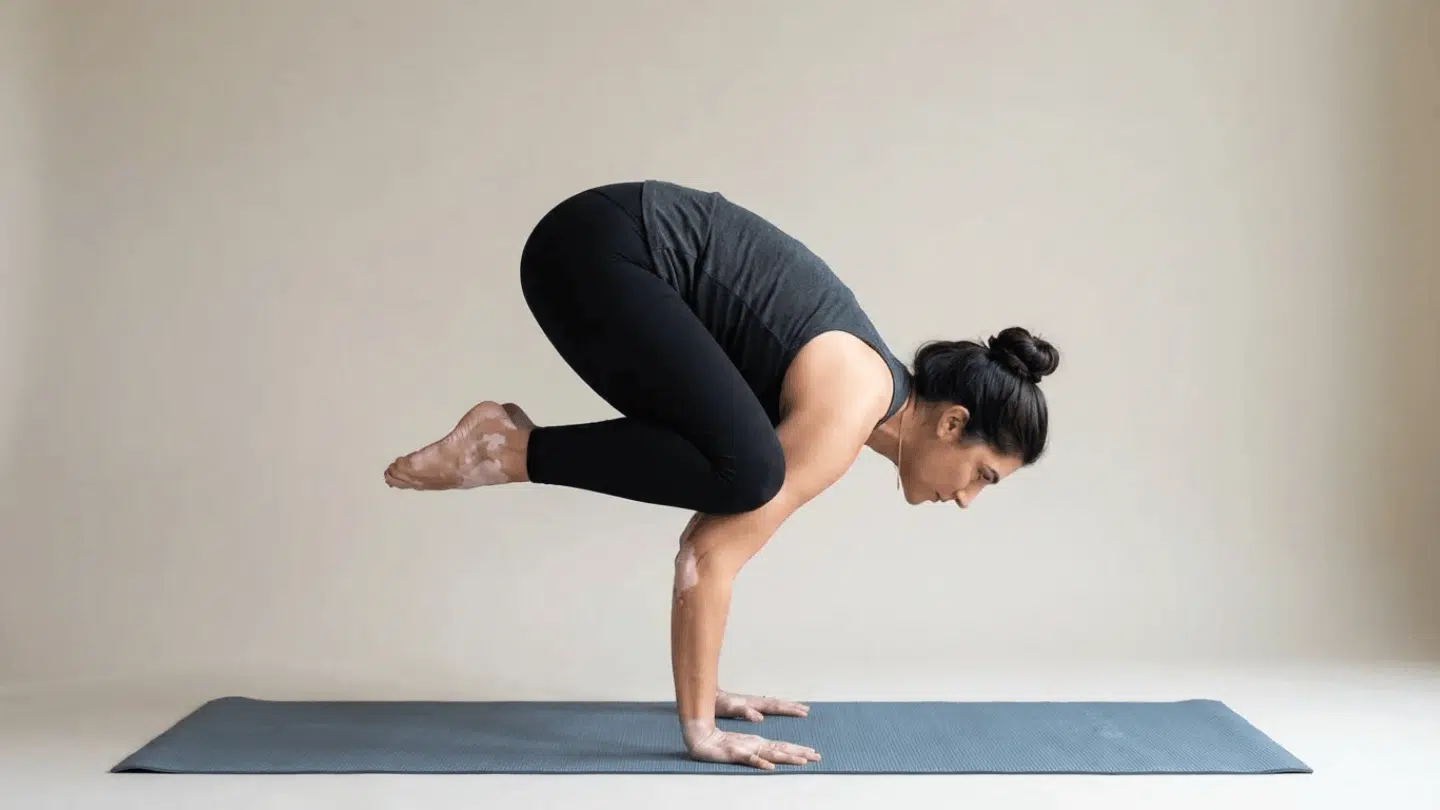
Crow pose introduces arm balancing by shifting body weight forward onto the hands. It strengthens the wrists, shoulders, and core while teaching controlled weight transfer and confidence in balancing.
How to Practice:
- Begin in a low squat with your feet close together.
- Place your palms flat on the floor shoulder-width apart.
- Bend the elbows slightly and bring your knees onto the upper arms.
- Lean your body forward slowly to shift weight into the hands.
- Lift one foot off the floor, then the other.
- Engage the core and look slightly forward.
Try This: Place a pillow or yoga block in front of your face while learning to reduce fear of tipping forward.
14. Side Crow (Parsva Bakasana)
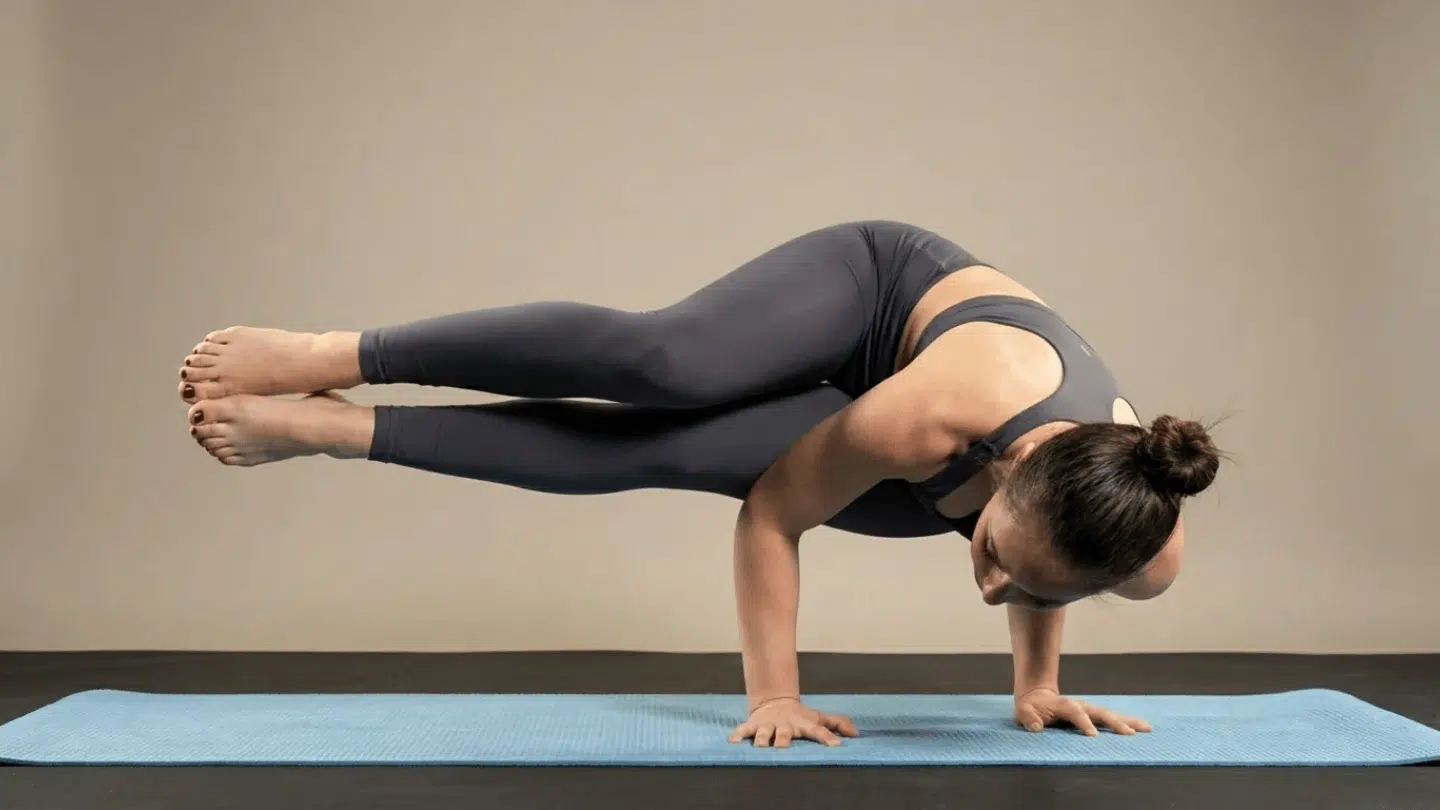
Side crow adds rotation to the arm balance by twisting the torso while both legs rest on one arm. This variation strengthens the core and shoulders while challenging balance through controlled rotation.
How to Practice:
- Start in a squat with your feet together.
- Twist your torso to one side and bring both knees toward one arm.
- Place your palms firmly on the floor shoulder-width apart.
- Bend the elbows slightly and lean forward.
- Shift your weight into the hands until the feet lift from the floor.
- Keep your core engaged while holding the balance.
Try This: Practice the twisting position first with your feet on the ground before attempting the full arm balance.
15. Headstand Prep or Dolphin Balance
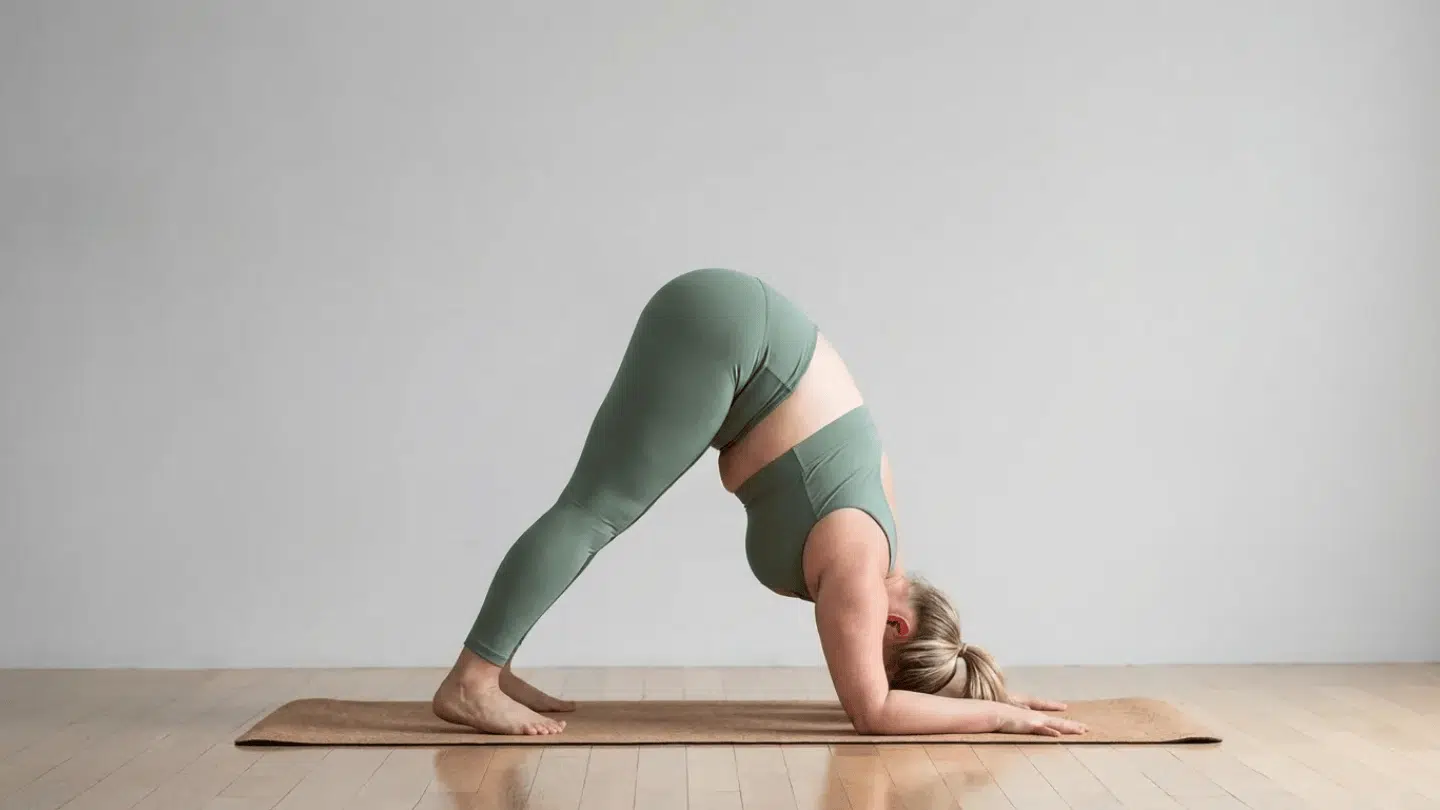
Headstand preparation builds strength for inversions while improving balance awareness. The pose strengthens the shoulders and core while training the body to stabilize in an upside-down position.
How to Practice:
- Begin on the floor with forearms placed shoulder-width apart.
- Interlace your fingers and press the forearms firmly into the mat.
- Lift your hips upward into a dolphin-like position.
- Walk your feet slightly closer toward your elbows.
- Lift one leg slowly while keeping most of the weight in the arms.
- Maintain steady breathing while holding the position.
Try This: Practice close to a wall so you can use it for support while building confidence with inversions.
16. Warrior II with Pulse (Virabhadrasana II Variation)
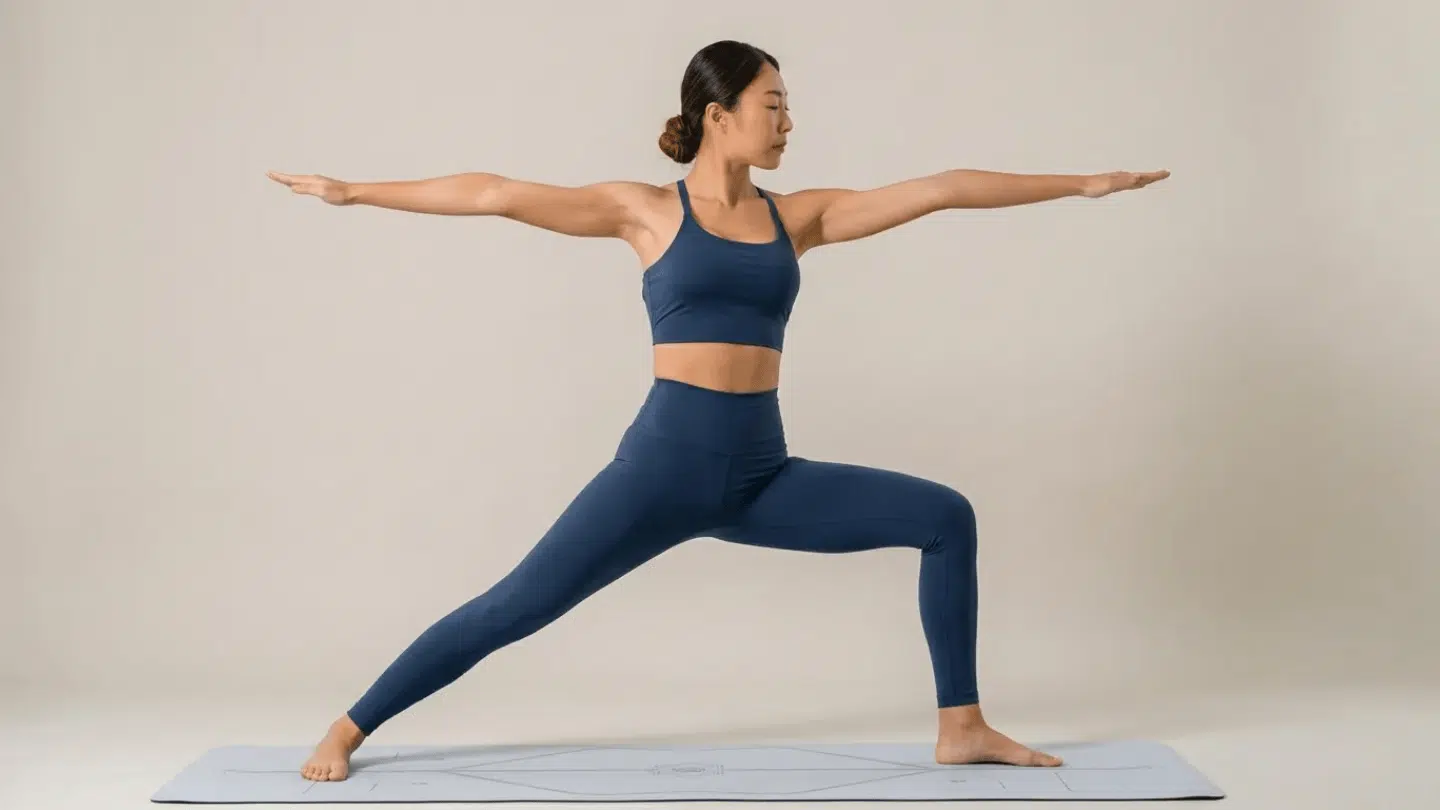
Adding a pulse to warrior II turns a strong standing pose into a moving balance challenge. The small up-and-down motion trains the hips, knees, and core to stabilize during movement.
How to Practice:
- Step your feet wide apart and turn one foot forward.
- Bend the front knee so it stacks over the ankle.
- Extend both arms out at shoulder height.
- Lower the hips slightly deeper, then rise a few inches.
- Continue small pulses while keeping the chest upright.
- Keep your gaze steady over the front hand.
Try This: Start with very small pulses so the legs stay stable and the front knee tracks over the toes.
17. Airplane Pose (Arms Extended Warrior III)
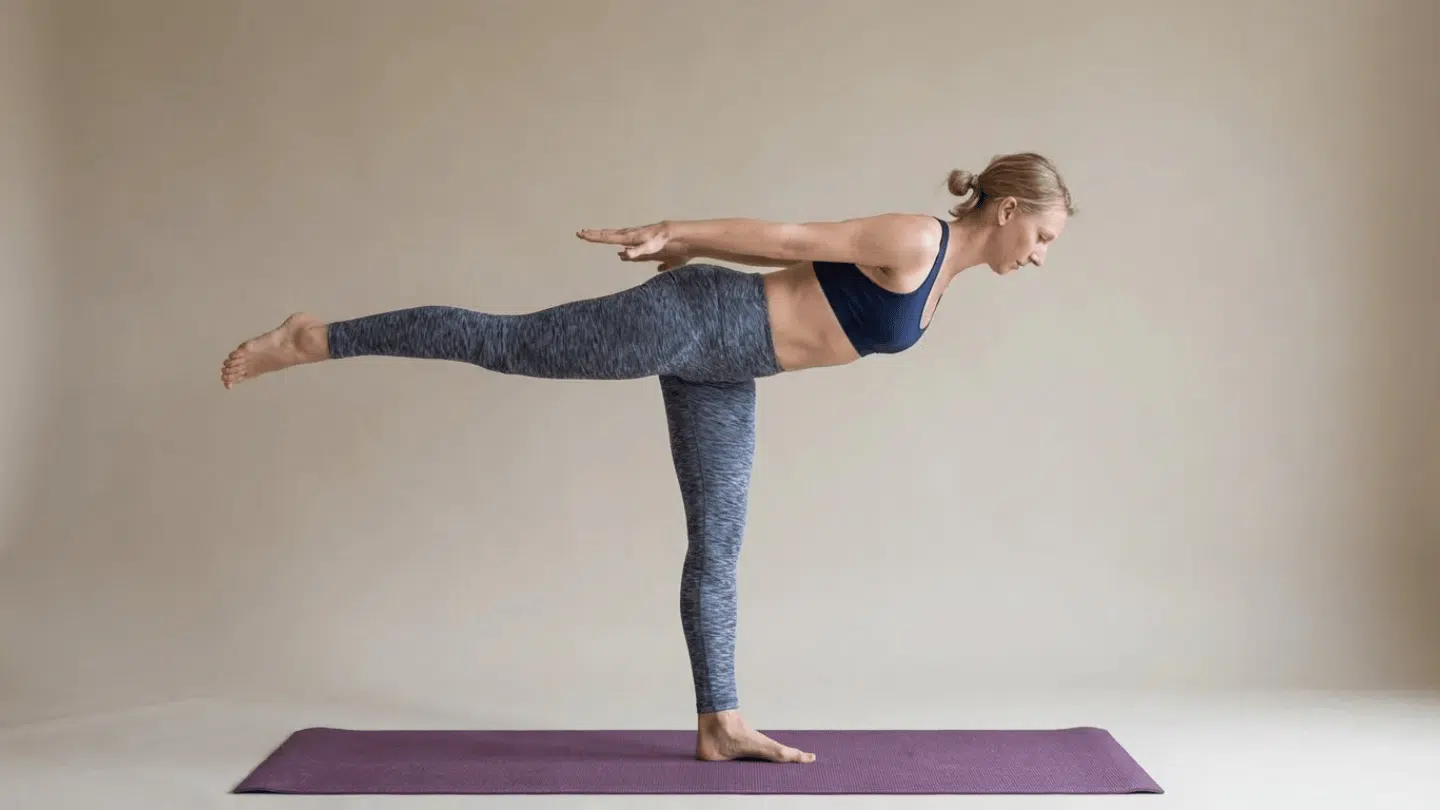
Airplane pose is a variation of warrior III where the arms extend out to the sides like wings. This arm position shifts the center of gravity and increases the demand on the core and hips.
How to Practice:
- Begin in Warrior III with the torso leaning forward.
- Lift the back leg until it aligns with the hips.
- Extend both arms out to the sides at shoulder height.
- Keep the hips facing the floor.
- Engage the core to prevent rotation.
- Hold the position while keeping your gaze steady.
Try This: Keep your hands on your hips first, then extend the arms outward once the balance feels stable.
How to Get Better at Balancing Yoga Poses
Balance isn’t about never wobbling, it’s about training your body to recover quickly and find steadiness through consistent, mindful practice.
- Where to look (drishti) and why it matters: Choose a fixed point at eye level with a soft, steady gaze. Looking around or down disrupts your vestibular system, as eyes send stability signals; scattered focus causes imbalance.
- Slow down transitions: Most wobbling happens between poses, not during. Moving slowly from standing to balance engages muscles; rushing creates momentum, hiding weak stabilizers. Take three deep breaths before any balance pose.
- Engage “tripod foot”: Press down through big toe mound, little toe mound, and center of heel equally. This creates a stable base and activates arch muscles. Most people collapse into one side.
- Core cues that actually help: Draw ribs toward hips without holding your breath. Think “zipper up” from pubic bone to sternum. An engaged core steadies everything above and below it.
- Props and support aren’t cheating: Walls, chairs, and blocks provide feedback while you build strength. Use them liberally. Remove support gradually as stability improves naturally over weeks.
Practice three times weekly for ten minutes, focusing on three poses. Progress beats perfection every single time you show up consistently.
Conclusion
Balance develops through patience, regular practice, and mindful movement. In this guide, you learned how yoga for balance poses strengthens the ankles, hips, and core while improving focus and body awareness.
Each pose trains different stability systems, so your body gradually becomes steadier and more coordinated.
Through my work in yoga therapy, I’ve seen how consistency creates real progress. Even short practice sessions several times a week can improve stability and confidence over time.
Start with a few poses that feel manageable and repeat them regularly. As your strength and control improve, slowly add more challenging poses. Small steps lead to lasting improvement.
If these poses helped your balance, share your experience or mention which pose felt most challenging for you.