











Guacamole sits on nearly every “healthy eating” list, and yet the one question most people never think to ask about it changes how useful it actually is. If you have ever wondered, “Does guacamole have protein, the answer is yes, but that figure alone is just the starting point.
What lies behind that number is a nutritional argument that most people who eat guacamole regularly are already winning without fully realizing it. I looked past the “healthy fats” label and found something more interesting.
Avocado behaves differently from almost any other whole food, and understanding that changes how guacamole fits into a diet that actually performs. The answer is simpler than expected, and far more useful than most people assume.
What is Guacamole Actually Made Of
Guacamole is simple by nature. The base is always avocado, mashed until smooth or chunky, depending on preference. From there, a few key ingredients do the heavy lifting.
Fresh lime juice adds brightness and keeps the avocado from browning too quickly. Salt brings everything together. Cilantro adds a fresh, herby note that most classic recipes rely on.
Diced white onion gives it a mild sharpness. Jalapeños or serrano peppers add heat, though the amount is always adjustable.
Some recipes add garlic, diced tomato, or a pinch of cumin for extra depth. These additions also quietly shift the guacamole carb count, which is worth knowing if you are tracking macros closely.
Does Guacamole Have Protein?
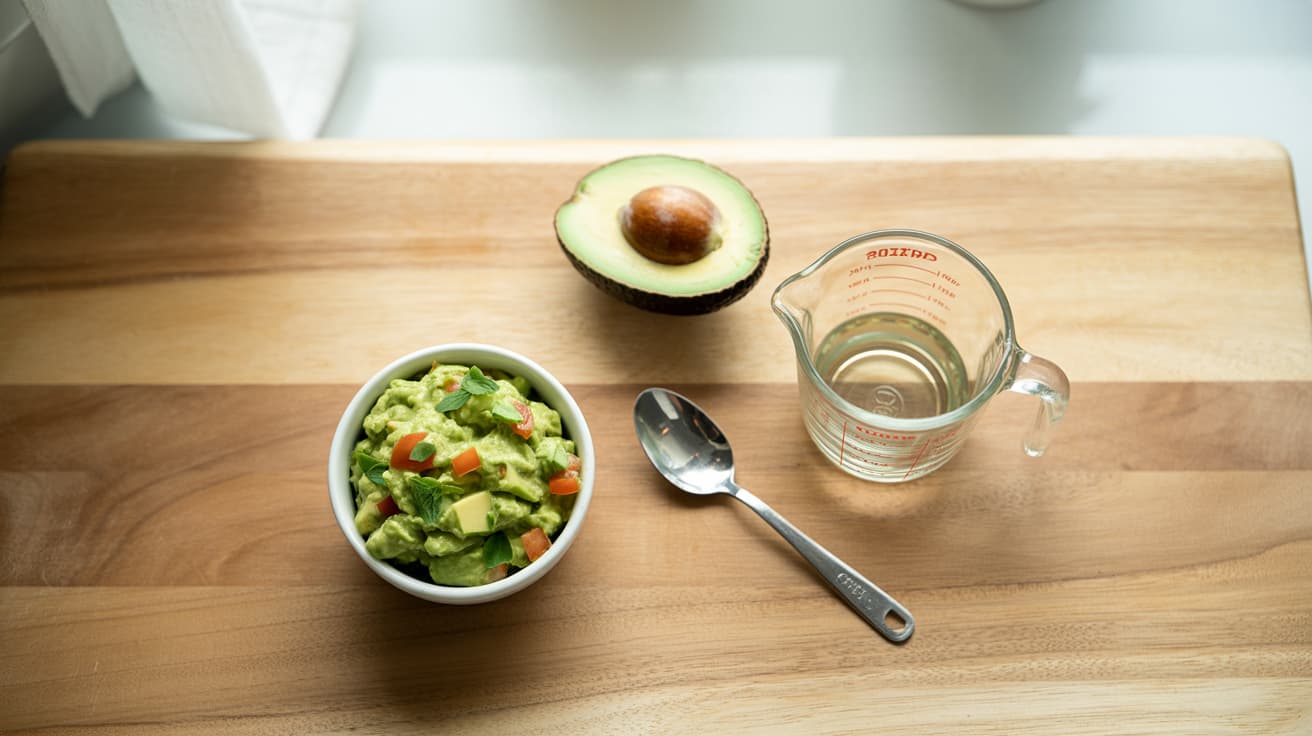
Yes, Guacamole has protein, but not a lot. Two tablespoons land at 0.5–1g. Scale that to half a cup and it reaches 2–3g. A whole medium avocado delivers roughly 3g on its own. Modest, but real.
The reason this number stays low comes down to what avocado actually is. Among fruits, it is already unusual; most carry almost no protein at all, sitting closer to zero than anything worth counting. Avocado brings something consistent every time it is eaten.
It is not the food to reach for when protein is the priority, but it is not an empty contribution either. There is more sitting alongside that number that makes the full view considerably more interesting than one macro suggests.
How Ingredients Affect Protein Content
Guacamole has many ingredients, but most of them are just seasonings. Only one actually determines how much protein ends up in the bowl.
| Ingredient | Role in Guacamole | Protein Amount |
|---|---|---|
| Avocado | Forms the base of the dip | ~3g per medium avocado |
| Lime juice, garlic, and cilantro | Flavor-forward additions | Less than 0.5g combined |
| Tomato, onion, jalapeño | Add texture and freshness | ~0.5g to 1g combined |
| Greek yogurt (if added) | Optional creamy addition | ~10g per ¼ cup |
| Sour cream (if added) | Adds creaminess and richness | ~1g per 2 tbsp |
Breaking it down this way makes the vision very clear. From everything I have looked at, Greek yogurt is the only ingredient worth adding if boosting the protein number is the actual goal.
Health Benefits of Guacamole Beyond Protein
Guacamole gets reduced to a chip dip far too often, and from what I have seen, most people have no idea how much it actually delivers nutritionally. Here is what makes it worth eating regularly:
- Healthy monounsaturated fats from avocado support heart health by helping to lower bad cholesterol levels and reduce inflammation over time with consistent consumption.
- Dietary fiber from avocado, onion, and tomato supports healthy digestion, keeps you fuller for longer, and helps regulate blood sugar levels after meals.
- Vitamins K, C, and B6 are all present in meaningful amounts, supporting bone health, immune function, and proper brain and nerve function, respectively.
- Potassium in avocado exceeds what most people associate with bananas, helping to regulate blood pressure and support healthy muscle and nerve function daily.
- Antioxidants from lime juice, jalapeño, and cilantro help protect cells from oxidative stress and contribute to a stronger immune response over time.
None of these benefits requires eating guacamole in large amounts to feel the difference. A consistent, moderate serving as part of a balanced diet is enough to make it one of the more nutritionally complete dips available.
Ways to Boost the Protein Content of Guacamole
Guacamole is easy to upgrade without changing what makes it good. Here is a straightforward breakdown of the best ways to increase the protein content:
| Method | How to Use It | Protein Added |
|---|---|---|
| Greek yogurt | Stir in a few tablespoons in place of sour cream | ~5 to 10g per ¼ cup |
| Black beans or chickpeas | Fold in a small portion after mashing the avocado | ~4 to 7g per ¼ cup |
| Hemp seeds | Sprinkle on top or mix directly into the dip | ~10 g per 3 tbsp |
| Chia seeds | Stir in after mixing for added texture and nutrition | ~2g per tbsp |
| Pair with grilled chicken | Serve guacamole as a topping or side | ~25g per 3oz serving |
| Pair with whole-grain crackers | Use as a base for a balanced snack plate | ~3 to 4g per serving |
| Pair with eggs | Serve alongside or on top of scrambled or boiled eggs | ~6g per egg |
In my view, Greek yogurt is the simplest swap with the biggest return on protein. Most people cannot tell the difference once it is mixed in, and that alone makes it the first upgrade I would always recommend trying.
Is Guacamole a Good Option for Vegetarians and Vegans?
Yes, and it fits naturally into both diets without any modification. Every ingredient in a classic guacamole is plant-based, making it one of the easiest whole-food options to reach for.
It is not a high-protein food, but that is not why it earns its place. The healthy fats, fiber, vitamins, and minerals it provides make it genuinely nutrient-dense, unlike most dips.
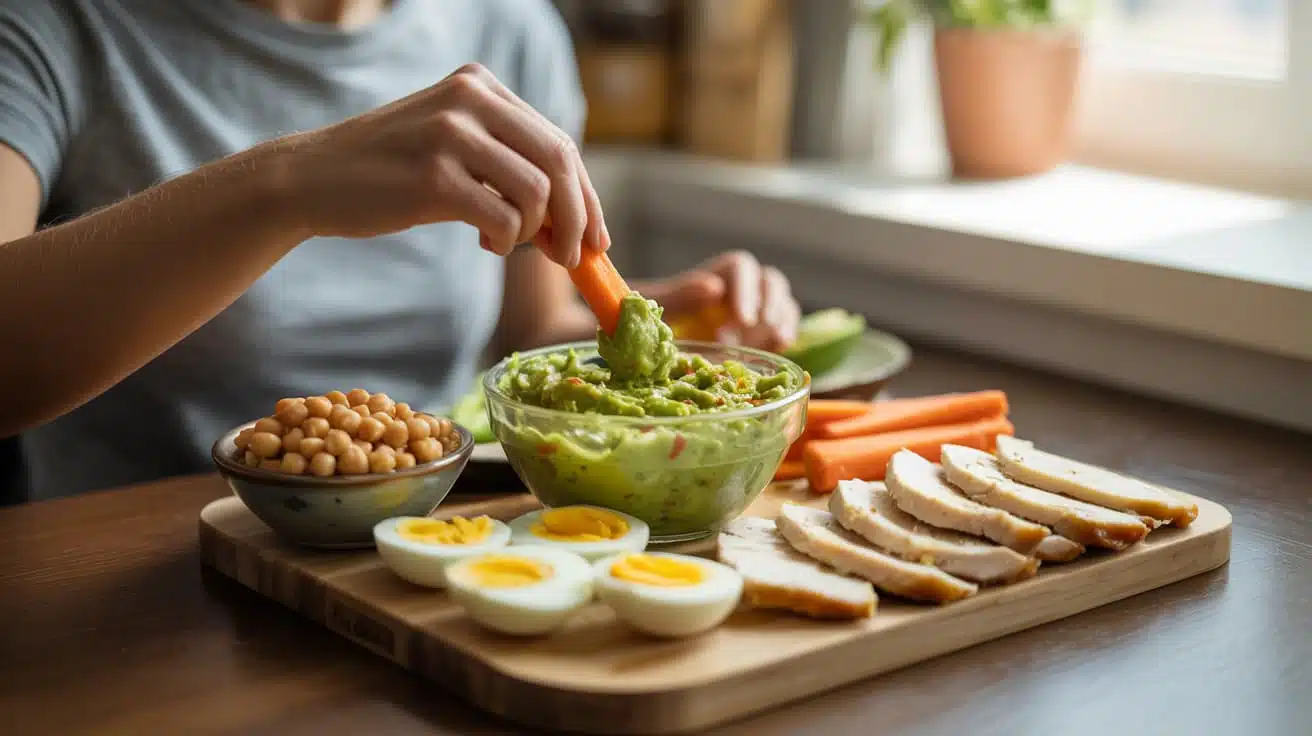
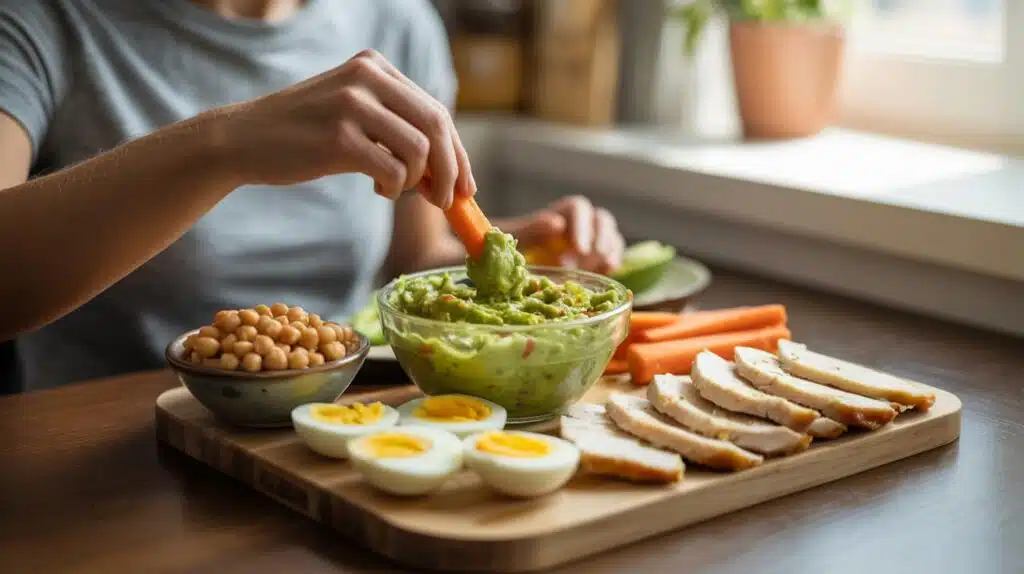
For vegetarians and vegans looking to build a more balanced plate, pairing guacamole with black beans, chickpeas, or tofu covers the protein gap while keeping everything plant-based. It is a simple combination that works well together.
Common Myths About Guacamole and Protein
There is a lot of confusion around what guacamole actually delivers nutritionally. Here is where the most common misconceptions go wrong:
| Myth | Fact |
|---|---|
| Eating more guacamole means more protein | Doubling the portion doubles the calories and fat, but the protein gain remains negligible |
| Guacamole is enough protein for a snack | A standard snack needs at least 10 to 15g of protein to be satisfying. Guacamole alone falls well short |
| Seeds added to guacamole solve the protein problem | Chia seeds add around 2g per tablespoon. Meaningful, but not enough to close the gap on their own |
| Homemade guacamole has more protein than store-bought | The protein content is determined by the avocado, not the preparation method or the freshness of the ingredients |
The pattern across every myth is the same. Guacamole is a genuinely nutritious food, but protein is simply not what it is built around. Expecting it to perform that role leads to a gap that quietly adds up over time.
Final Thoughts
Guacamole may not be your go-to for protein, but it still plays a useful role in your meals. I like to think of it as support, not the main source. You get healthy fats, fiber, and key nutrients, while the protein in guacamole stays low.
So if you want a balanced meal, you should pair it with eggs, beans, meat, or dairy. That simple shift helps you meet your protein needs without giving up flavor.
It matters because small food choices add up over time. Try mixing guacamole with a high-protein food next time, and see how it works for you. Share your go-to combo or check out more food tips