



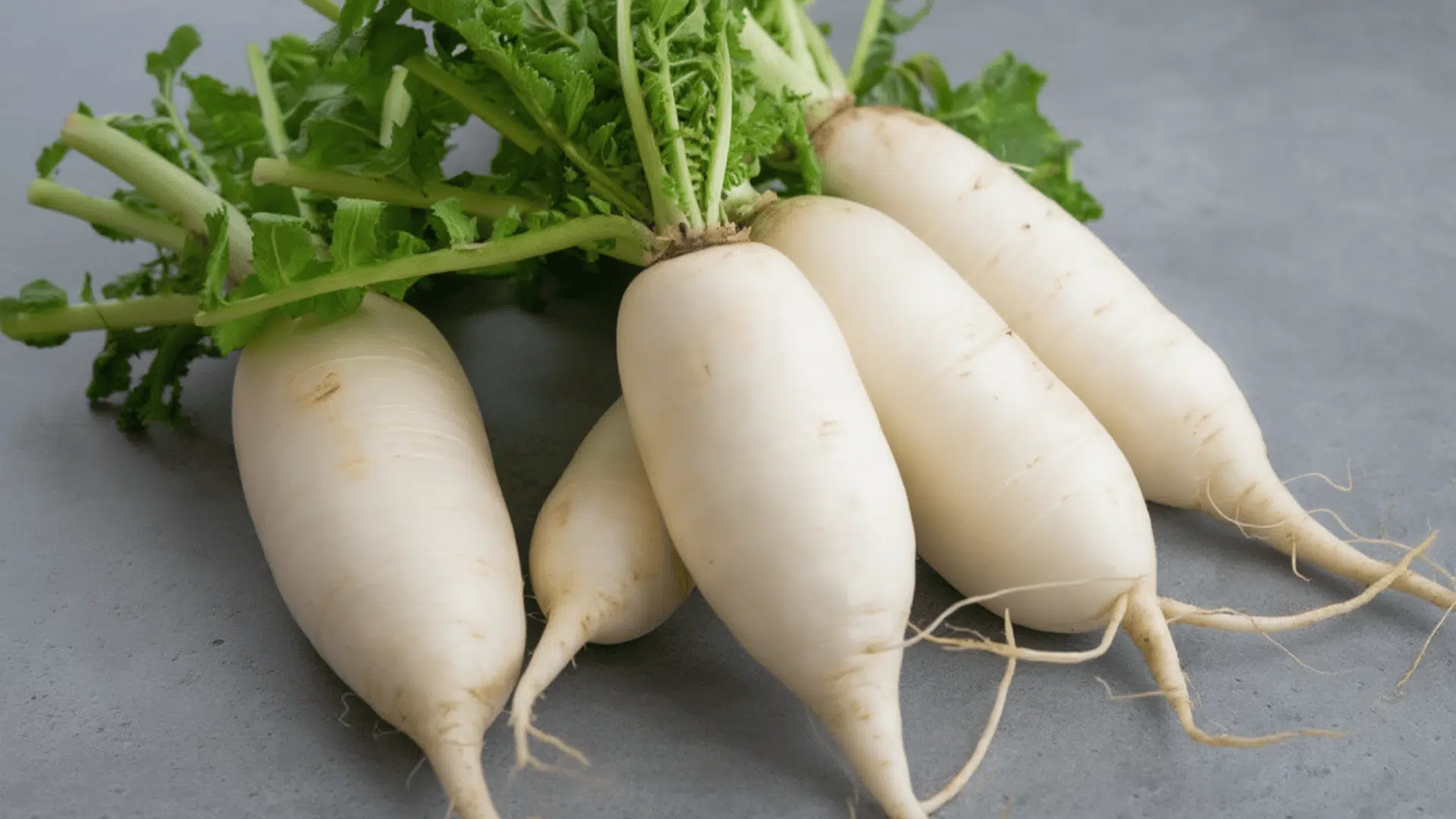









I’ve been adding daikon radish to my meals for months now, and I’m amazed at how this crisp white root has become my go-to healthy ingredient.
What really caught my attention wasn’t just its refreshing crunch but also its impressive daikon radish nutritional profile, which packs a serious punch without weighing you down.
This vegetable covers vitamins, minerals, and fiber in one simple package. As I dug deeper, I realized it does way more than just add texture to salads.
From supporting digestion to immunity, this underrated radish offers real benefits worth knowing about. Let me walk you through what makes it so special and how you can start using it too.
What Makes Daikon Radish So Nutritious?
Daikon radish earns its reputation as a healthy vegetable through a combination of nutrients that work together to support your body.
It’s low in calories, virtually fat-free, and rich in fiber, making it easy to add to almost any diet without second-guessing your choices.
What stands out most is how much it offers from a single root. You get vitamin C for immunity, potassium for blood pressure, and fiber for digestion, all in under 18 calories per 100 grams.
Unlike heavier root vegetables, daikon gives you real nutritional value without the extra carbs or starch. It’s a clean, light option that delivers more than its size suggests, which is exactly what makes it worth eating regularly.
Daikon Radish Nutritional Profile
Calories alone don’t explain its place in the diets of hundreds of millions of people across East Asia.
The figures below are based on USDA food composition data for raw daikon radish (Raphanus sativus) per 100g.
| Nutrient | Amount (per 100g raw) |
|---|---|
| Calories | ~18 kcal |
| Carbohydrates | ~4.1g |
| Fiber | ~1.6g |
| Protein | ~0.6g |
| Fat | <0.1g |
| Vitamin C | ~22mg (~24% DV) |
| Folate | ~28µg (~7% DV) |
| Potassium | ~227mg (~7% DV) |
| Calcium | ~27mg (~3% DV) |
The original figures cited 9% DV for potassium, but USDA data puts daikon at approximately 227mg per 100g, which is closer to 7% of the FDA’s reference daily intake of 4,700mg.
Daikon is also a notable source of folate, ranking higher per gram than most vegetables.
What the Research Says About Daikon’s Antioxidants
Daikon belongs to the Brassicaceae family (cruciferous vegetables), which includes broccoli, cabbage, and kale. Like other members of this family, it contains glucosinolates.
When daikon cells are disrupted by chewing, chopping, or grating, an enzyme called myrosinase converts these glucosinolates into isothiocyanates.
The primary isothiocyanate in daikon is 4-methylthio-3-butenyl isothiocyanate (MTBITC), which has shown antimicrobial, antimutagenic, and antioxidant activity in laboratory research.[1]
Daikon also contains polyphenol antioxidants, including ferulic acid and quercetin, which have demonstrated anti-inflammatory properties in cell-based studies.
Importantly, most of the research on these specific compounds from daikon comes from in vitro or animal models.
Human clinical data on daikon’s antioxidant effects are limited, and the concentrations used in lab studies often exceed those provided by dietary intake.
| Myrosinase activity in daikon is concentrated in the outer skin layer. Peeling the radish before eating removes much of the enzyme needed to convert glucosinolates into their active isothiocyanate form.[1] |
Fiber, Digestion, and Weight Management
Raw daikon contains about 1.6g of fiber per 100g. Dietary fiber supports bowel regularity and feeds beneficial gut bacteria, which produce short-chain fatty acids with downstream effects on gut and metabolic health.
A meta-analysis of randomized controlled trials found that dietary fiber interventions significantly increased the abundance of Bifidobacterium and Lactobacillus species in the gut microbiome compared to placebo.[2]
Daikon also contains digestive enzymes, including amylase and esterase, in its raw form. These enzymes help break down starches and fats, respectively, though they are heat-sensitive and largely deactivated by cooking.
For this reason, raw daikon (grated or thinly sliced) is considered more useful as a digestive aid than cooked preparations.
Its very low calorie density (18 kcal/100g) and high water content (over 95%) make it a filling, low-calorie addition to meals.
This is consistent with the general evidence that high-water, high-fiber foods support satiety without adding significant calories, which can support weight management when incorporated into a balanced diet.
Daikon, the Heart, and Cruciferous Vegetable Research
A prospective cohort study of 134,796 Chinese adults found that higher intake of cruciferous vegetables was inversely associated with cardiovascular disease mortality, with the highest quintile of intake showing a 24% lower risk of CVD death compared with the lowest quintile, after adjustment for multiple confounders.[3]
A separate meta-analysis of prospective studies found that cruciferous vegetable intake was associated with reduced risk of cardiovascular disease and all-cause mortality.[4]
A randomized controlled crossover trial also found that consuming approximately 300g per day of cruciferous vegetables reduced systolic blood pressure by 2.5 mmHg compared to root and squash vegetables, a reduction the researchers noted could translate to roughly a 5% lower risk of major cardiovascular events.[5]
Daikon is included in the cruciferous vegetable category used in these studies, so the association plausibly extends to it, but isolated trials on daikon and cardiovascular outcomes are not available.
Potassium contributes to this picture as well. A meta-analysis of 15 randomized controlled trials found that potassium supplementation reduced systolic blood pressure by an average of 4.7 mmHg and diastolic by 3.5 mmHg in non-medicated patients.[6]
At 227mg per 100g, daikon’s potassium contribution is modest, but consistent inclusion across a vegetable-rich diet adds up.
How Does Daikon Radish Compare to Other Vegetables?
| Nutrient | Daikon Radish | White Radish | Turnips | Carrots | Beets | Broccoli | Cabbage |
|---|---|---|---|---|---|---|---|
| Calories (per 100g) | 18-20 | 16-18 | 28-30 | 41 | 43 | 34 | 25 |
| Fiber (grams) | 2-3 | 1.6 | 1.8 | 2.8 | 2.8 | 2.6 | 2.5 |
| Vitamin C (mg) | 22-25 | 14-15 | 21 | 5.9 | 4.9 | 89 | 36 |
| Carbs (grams) | 4-5 | 3.4 | 6.4 | 9.6 | 9.6 | 6.6 | 5.8 |
Daikon offers a solid balance of low calories, decent fiber, and good vitamin C, without the higher carb content found in many root vegetables.
Daikon works well for low-carb, low-calorie, and heart-healthy diets. It’s filling without being starchy like potatoes. Its mild flavor makes it easy to add anywhere. If you need fiber and nutrients without extra calories or carbs, daikon is a better fit than heavier root vegetables.
How to Eat Daikon Radish
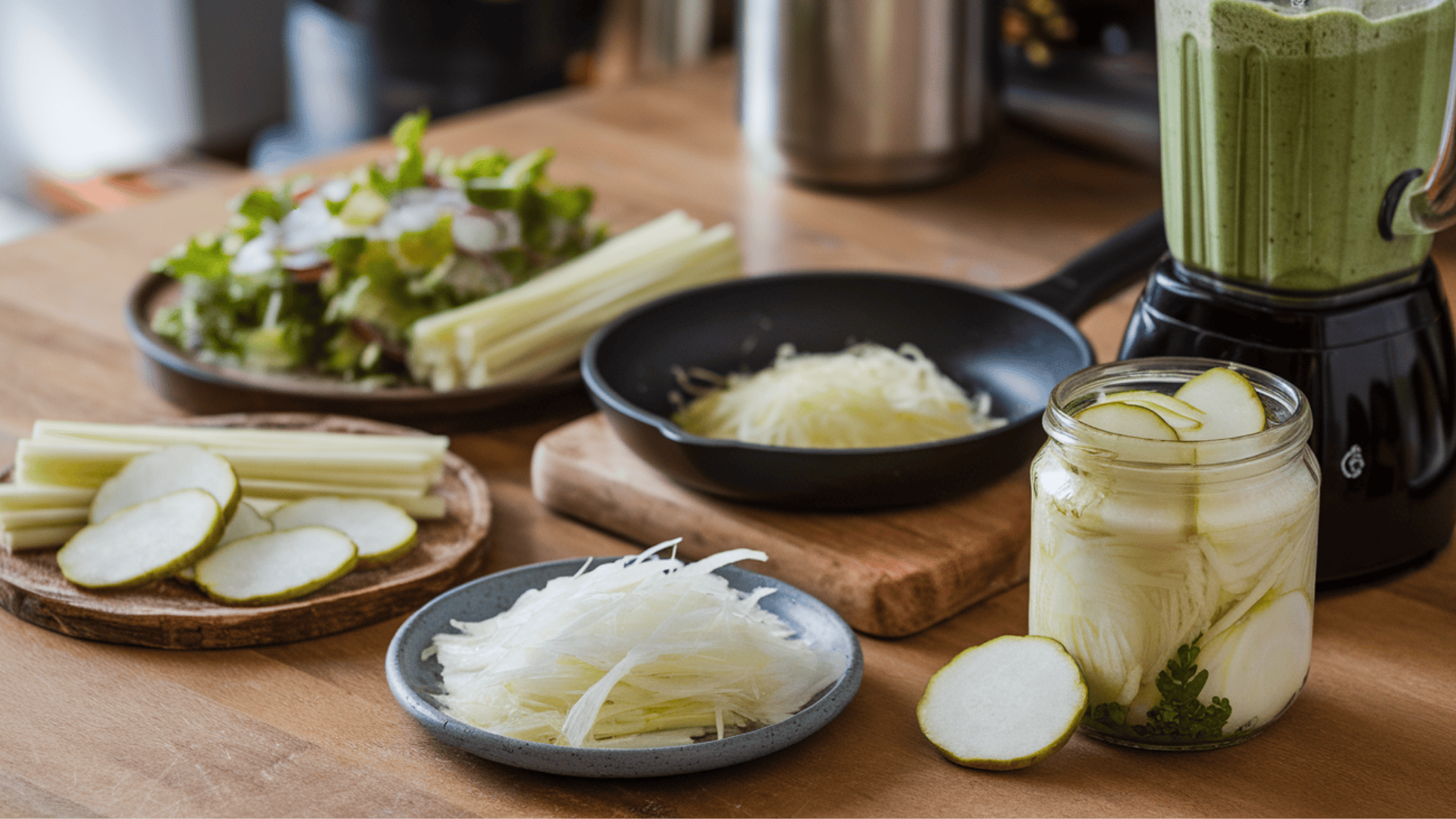
Daikon radish is incredibly versatile and easy to work into your meals. You can eat it raw, cooked, pickled, or even mixed.
| Preparation Method | Description | How to Use | Benefits |
|---|---|---|---|
| Raw | Crisp with a mildly peppery flavor | Slice for salads, cut into sticks for snacks, add to sandwiches/wraps, or grate over rice bowls or tacos | Retains maximum nutrients, adds fresh crunch |
| Cooked | Softer, milder flavor with tender texture | Sauté with garlic and oil, steam for soups, stir-fry with veggies/protein, roast for sweetness | Easier to digest, develops subtle sweetness |
| Pickled | Tangy and crunchy | Slice thin, soak in rice vinegar, salt, and sugar overnight; use as a topping for rice, noodles, or sandwiches | Adds bold flavor, enhances meals, longer shelf life |
| In Smoothies | Mild and neutral when blended | Blend with greens, cucumber, apple, and lemon | Adds fiber and nutrients without overpowering taste |
However you choose to eat it, daikon is easy to prepare and pairs well with almost any meal. Experiment with different methods to find what you enjoy most.
Side Effects and Risks of Daikon Radish
While daikon radish offers many nutritional benefits, it’s also important to be aware of potential side effects and consume it mindfully.
- Digestive Discomfort: Eating large amounts of daikon may lead to bloating, gas, or mild stomach upset due to its high fiber content.
- Thyroid Considerations: As a cruciferous vegetable, daikon may interfere with iodine absorption when consumed in excess, which can be a concern for individuals with hypothyroidism.
- Allergic Reactions: Although rare, some people may experience symptoms like itching or swelling after consuming daikon.
- Moderation & Awareness: It’s best to introduce daikon gradually and monitor how your body responds, especially if you have existing health conditions.
- Medical Advice: If you have concerns or underlying health issues, consulting a healthcare professional can help ensure safe consumption.
Being mindful of these factors allows you to enjoy daikon radish safely while still reaping its nutritional benefits.
Bottom Line
After learning about daikon radish’s nutritional benefits, I’m convinced this vegetable deserves more attention in your kitchen. It’s low in calories, packed with fiber, and loaded with vitamins that support your digestion, heart, and immune system.
What I love most is how versatile it is: you can eat it raw for a crunchy bite, cook it for a softer texture, pickle it for a tangy bite, or even mix it into smoothies. It fits into almost any diet, whether you’re managing weight, watching carbs, or just trying to eat healthier.
The benefits are real, and the prep is simple. Start small, experiment with different methods, and see how daikon works in your meals. If you’ve already tried it, I’d love to hear how you use it; drop a comment below!
References
- Murata, M., Yamamoto, T., Yamaura, T., & Homma, S. (2008). Comparison of the glucosinolate-myrosinase systems among daikon (Raphanus sativus, Japanese white radish) varieties. Journal of Agricultural and Food Chemistry, 56(8), 2845–2852. https://doi.org/10.1021/jf073411t↑
- Dahl, W. J., et al. (2019). Dietary fiber intervention on gut microbiota composition in healthy adults: a systematic review and meta-analysis. American Journal of Clinical Nutrition, 107(6), 965–983. https://doi.org/10.1093/ajcn/nqy041↑
- Zhang, X., Shu, X. O., Xiang, Y. B., Yang, G., Li, H., Gao, J., Cai, H., Gao, Y. T., & Zheng, W. (2011). Cruciferous vegetable consumption is associated with a reduced risk of total and cardiovascular disease mortality. American Journal of Clinical Nutrition, 94(1), 240–246. https://doi.org/10.3945/ajcn.110.009340↑
- Aune, D., Giovannucci, E., Boffetta, P., Fadnes, L. T., Keum, N., Norat, T., Greenwood, D. C., Riboli, E., Vatten, L. J., & Tonstad, S. (2017). Fruit and vegetable intake and the risk of cardiovascular disease, total cancer and all-cause mortality: a systematic review and dose-response meta-analysis of prospective studies. International Journal of Epidemiology, 46(3), 1029–1056. https://doi.org/10.1093/ije/dyw319↑
- Connolly, E. L., Sim, M., Travica, N., Marx, W., Beasy, G., Smith, G. S., Steele, C., Howes, M. J. R., Hodgson, J. M., & Blekkenhorst, L. C. (2024). Cruciferous vegetables lower blood pressure in adults with mildly elevated blood pressure in a randomized, controlled, crossover trial: the VEgetableS for vaScular hEaLth (VESSEL) study. European Journal of Nutrition, 63, 2699–2711. https://doi.org/10.1007/s00394-024-03449-0↑
- Binia, A., Jaeger, J., Hu, Y., Singh, A., & Zimmermann, D. (2015). Daily potassium intake and sodium-to-potassium ratio in the reduction of blood pressure: a meta-analysis of randomized controlled trials. Journal of Hypertension, 33(8), 1509–1520. https://doi.org/10.1097/HJH.0000000000000611↑