




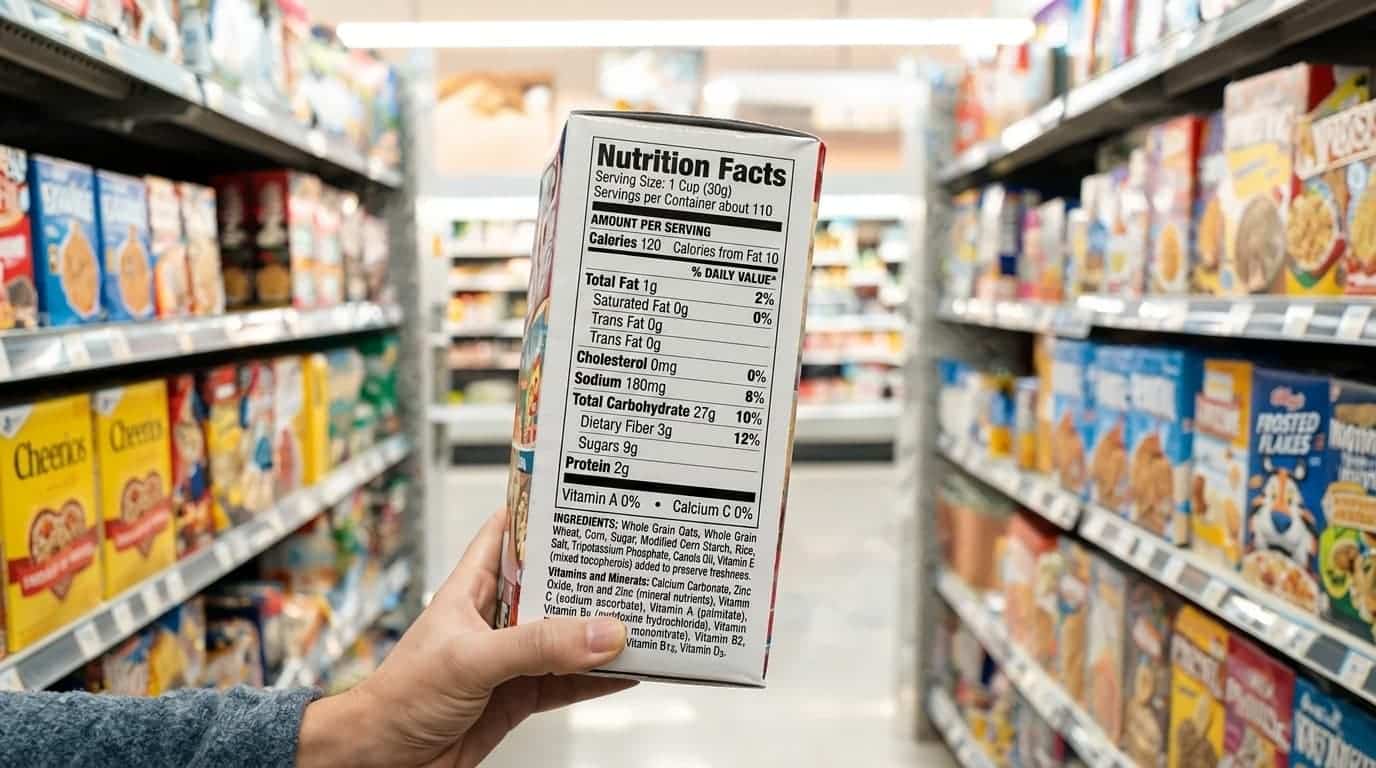







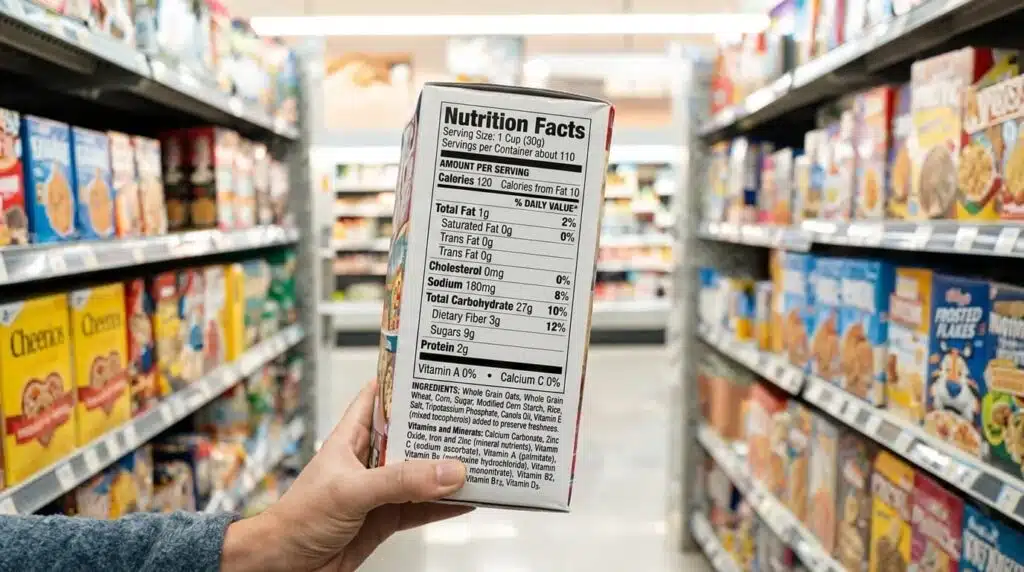

The cereal aisle looks straightforward until you start reading the labels, and then it gets confusing fast. Most boxes say “whole grain” and “heart healthy,” but flip them over, and you will often find sugar in the top three ingredients and a serving size nobody actually pours.
Finding the healthiest cereal does not have to feel like a research project. I have tested enough of them to know the difference is significant, and the ones that look healthy on the shelf are not always the ones that actually are.
You will find the brands worth buying, what to skip entirely, and everything needed to make a confident call next time you are standing in that aisle.
The Problem With Most Breakfast Cereals
The average American breakfast cereal contains 10 grams of added sugar per serving, nearly half a woman’s daily recommended maximum in a single bowl. And that is assuming you pour the stated serving size, which most people do not.
Refined grains are the other issue. Many cereals are made from processed flour with the bran and germ stripped away, removing most of the fiber, vitamins, and minerals in the process. What remains is mostly starch with a fast blood sugar impact.
Add artificial dyes, BHT preservatives, and hydrogenated oils, which appear in many mainstream options, and the gap between what the packaging promises and what the ingredient list delivers becomes very hard to ignore.
The Healthy Cereal Checklist: What to Look for on the Label
The front of the packaging is marketing. The back is information. Here is what actually matters.
- 100% whole grain as the first ingredient: refined grains strip up to two-thirds of nutrients during processing.
- 3 to 5 grams of fiber per serving: steadies blood sugar and keeps you full significantly longer. If you are pairing your cereal with fresh fruit, blueberries add antioxidants and a modest fiber boost without significantly raising the carb count.
- 6 grams of added sugar or less: if sugar appears in the top three ingredients, the cereal is built around it.
- 3 to 5 grams of protein per serving: significantly reduces post-breakfast hunger.
- Short recognizable ingredient list: the fewer unrecognizable ingredients, the better.
- Serving size awareness: most servings are 6 tablespoons. Most people pour two to three times that amount.
The 6 grams of added sugar benchmark is based on the American Heart Association’s daily guidelines: no more than 25 grams for women and 36 grams for men.
One bowl of the wrong cereal can burn through nearly half that before the morning starts, the same way a seemingly harmless drink can quietly do the same, as covered in our look at what is actually in Sparkling Ice.
One 30-second label check covers all six and changes most cereal buying decisions immediately.
Healthiest and Low Sugar Cereals Ranked by Nutrition
These brands consistently come out on top across dietitian recommendations, nutritional research, taste testing, and real-world use for the healthiest cereal options available today.
Each entry covers nutritional strengths, taste, and who it works best for.
1. Ezekiel 4:9 Sprouted Grain Cereal
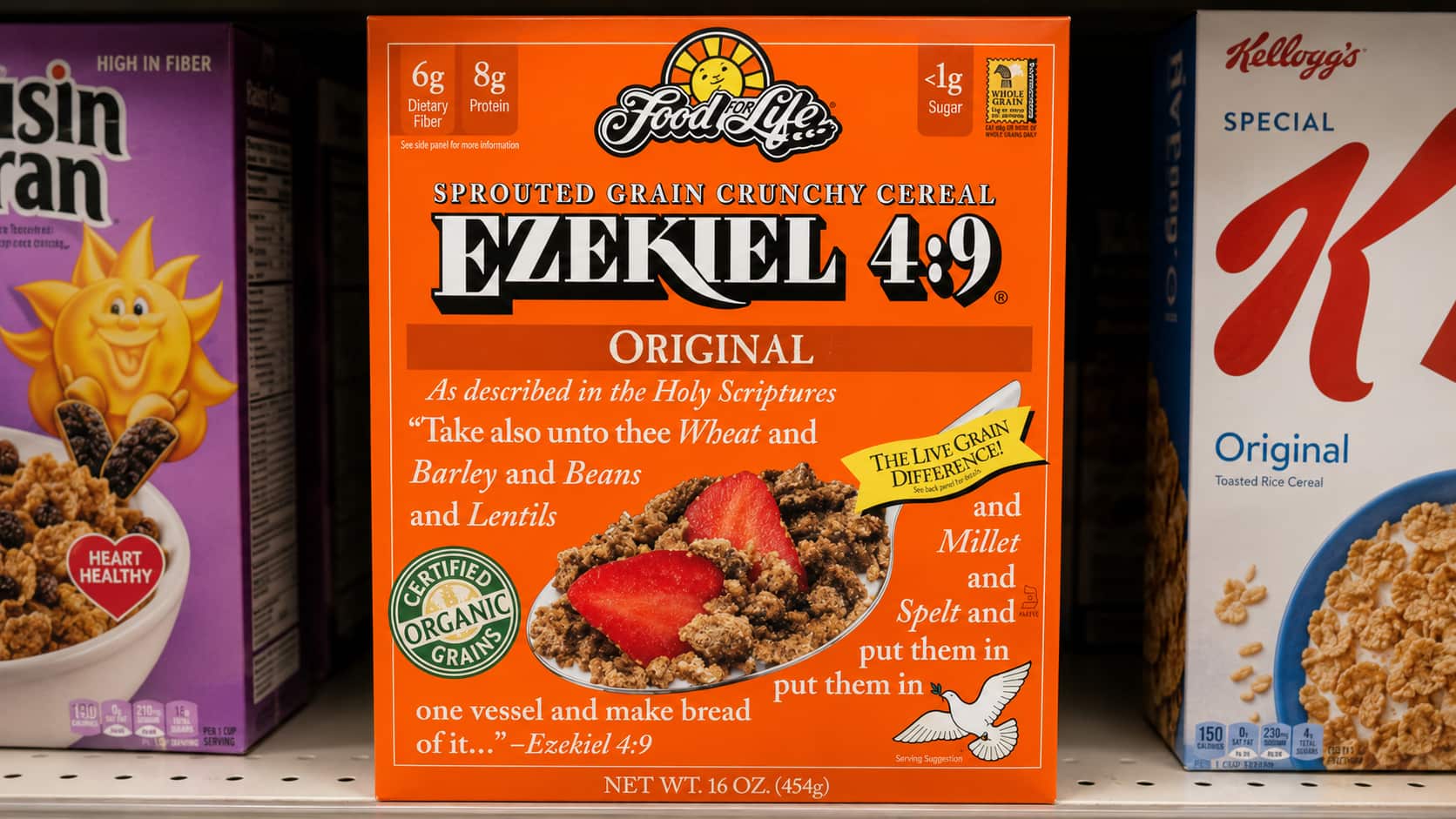
Health Score: 9.5/10 Nutrition: 80 cal | 0g added sugar | 6g fiber | 8g protein
Made from six sprouted whole grains and legumes with no flour and zero added sugar. Sprouting increases nutrient availability significantly.
The legume addition creates a complete amino acid profile that no grain-only cereal can match.
- Taste: Dense and nutty, best with milk or yogurt. Not enjoyable, dry.
- Best for: Maximum nutrition, high protein, and blood sugar management.
- Drawback: Sold frozen, requires refrigeration after opening.
- Where to buy: Whole Foods, Sprouts, Amazon
- Price: ~$6–8
2. Grape Nuts
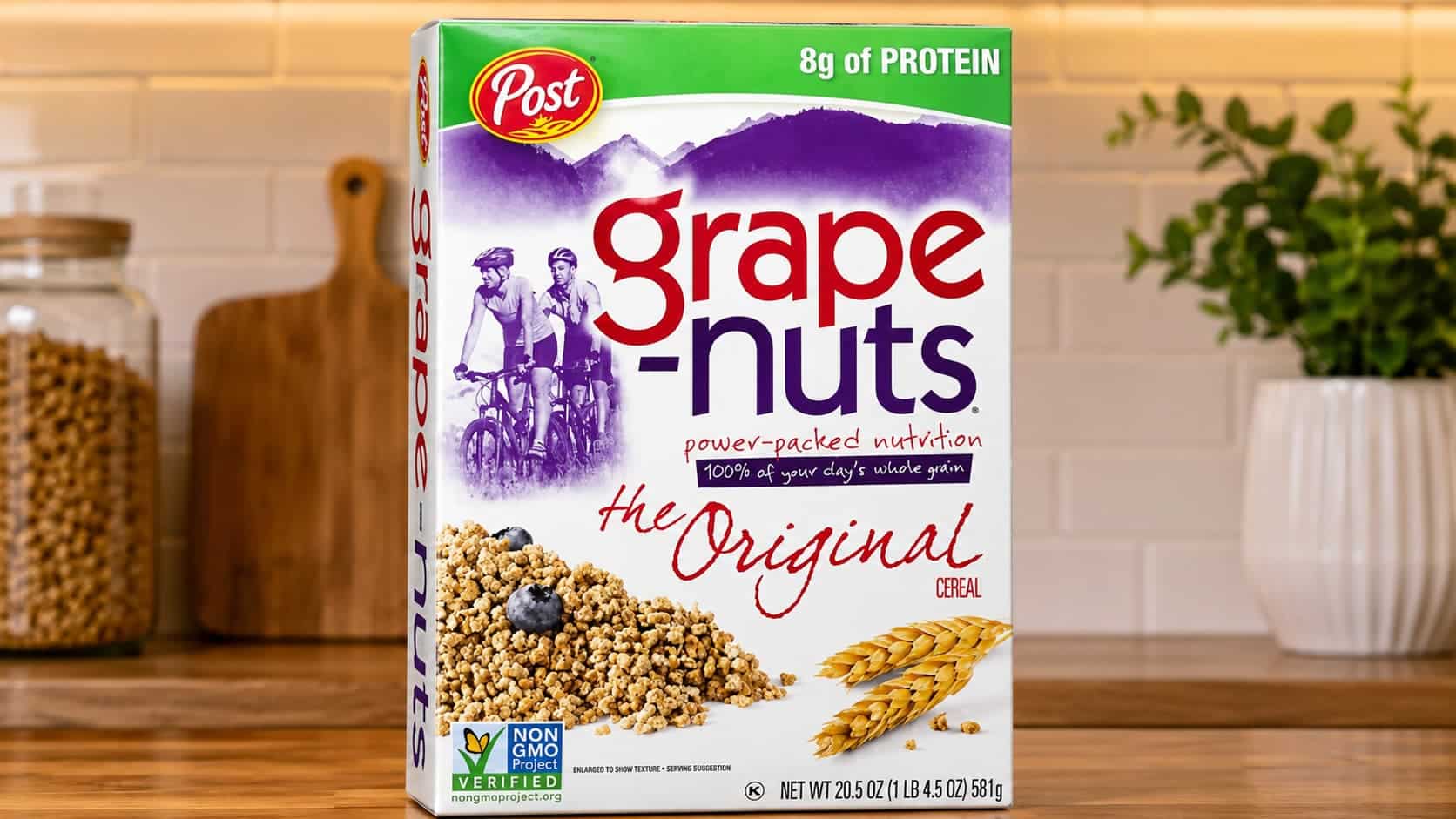
Health Score: 9.0/10 Nutrition: 200 cal | 0g added sugar | 7g fiber | 6g protein
One of the oldest cereals on the market, and consistently one of the most nutritious. Made from whole grain wheat and barley with zero added sugar, rare for a mainstream cereal available at standard supermarkets at an affordable price.
- Taste: Very dense and hard; needs 2 minutes of soaking in milk. Nutty flavor improves with fresh fruit.
- Best for: Fiber intake, blood sugar stability, budget-friendly eating.
- Drawback: Texture puts off first-time eaters.
- Where to buy: Walmart, Kroger, Target
- Price: ~$4–6
3. Cascadian Farm Purely Os
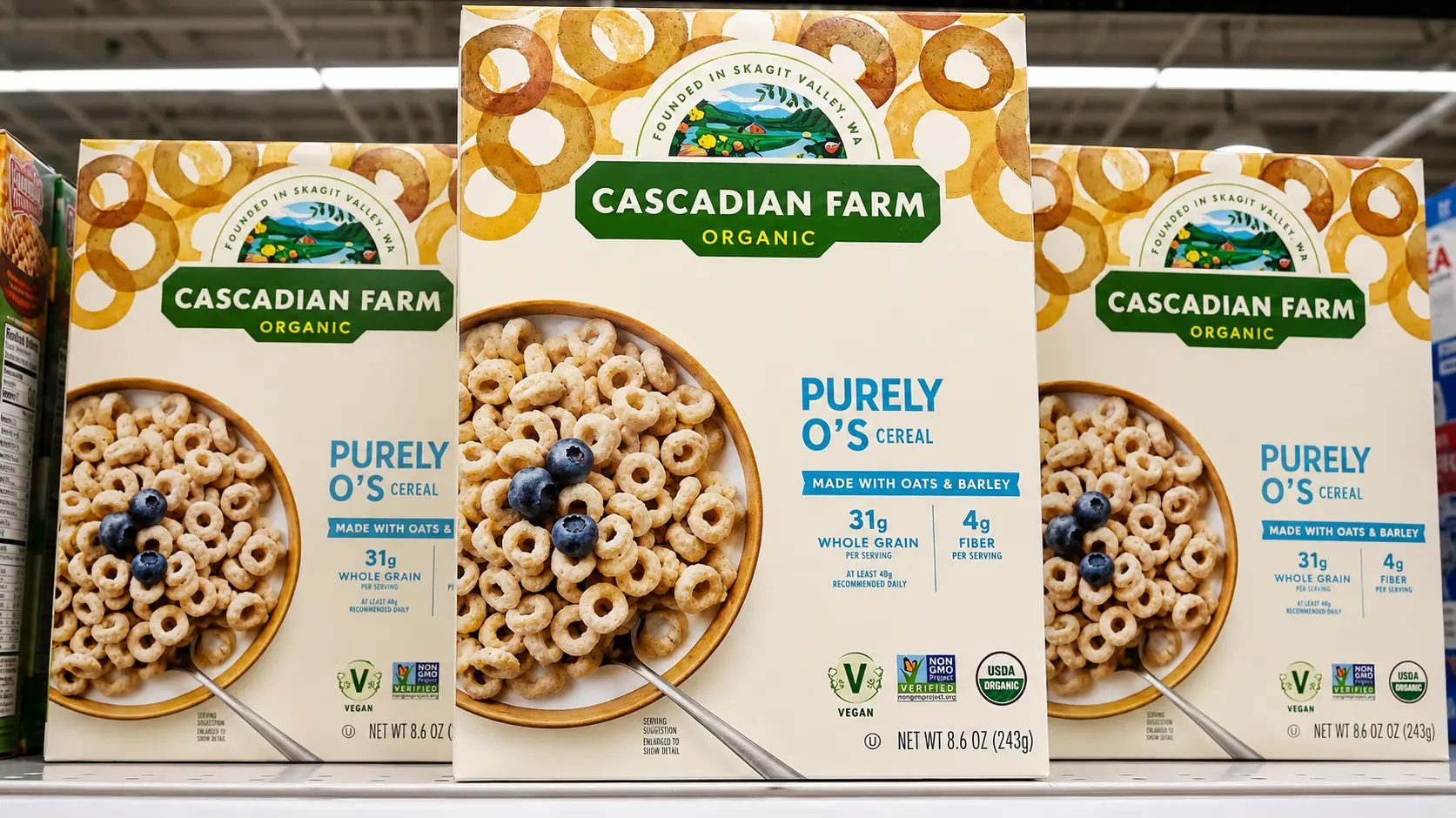
Health Score: 8.8/10 Nutrition: 100 cal | less than 1g added sugar | 4g fiber | 3g protein
The organic equivalent of Cheerios, made from whole grain oats and barley, certified gluten-free, and iron-fortified. One of the first cereals pediatric dietitians recommend for toddlers.
With less than 1 gram of added sugar, it is one of the most reliable low-sugar everyday options available.
- Taste: Mild and lightly sweet, familiar for kids, clean for adults.
- Best for: Toddlers, kids, families, low-sugar everyday eating.
- Drawback: Lower protein, pair with milk for a complete breakfast.
- Where to buy: Whole Foods, Target, Walmart, Kroger
- Price: ~$6–8
4. Cascadian Farm No Added Sugar Mixed Berry
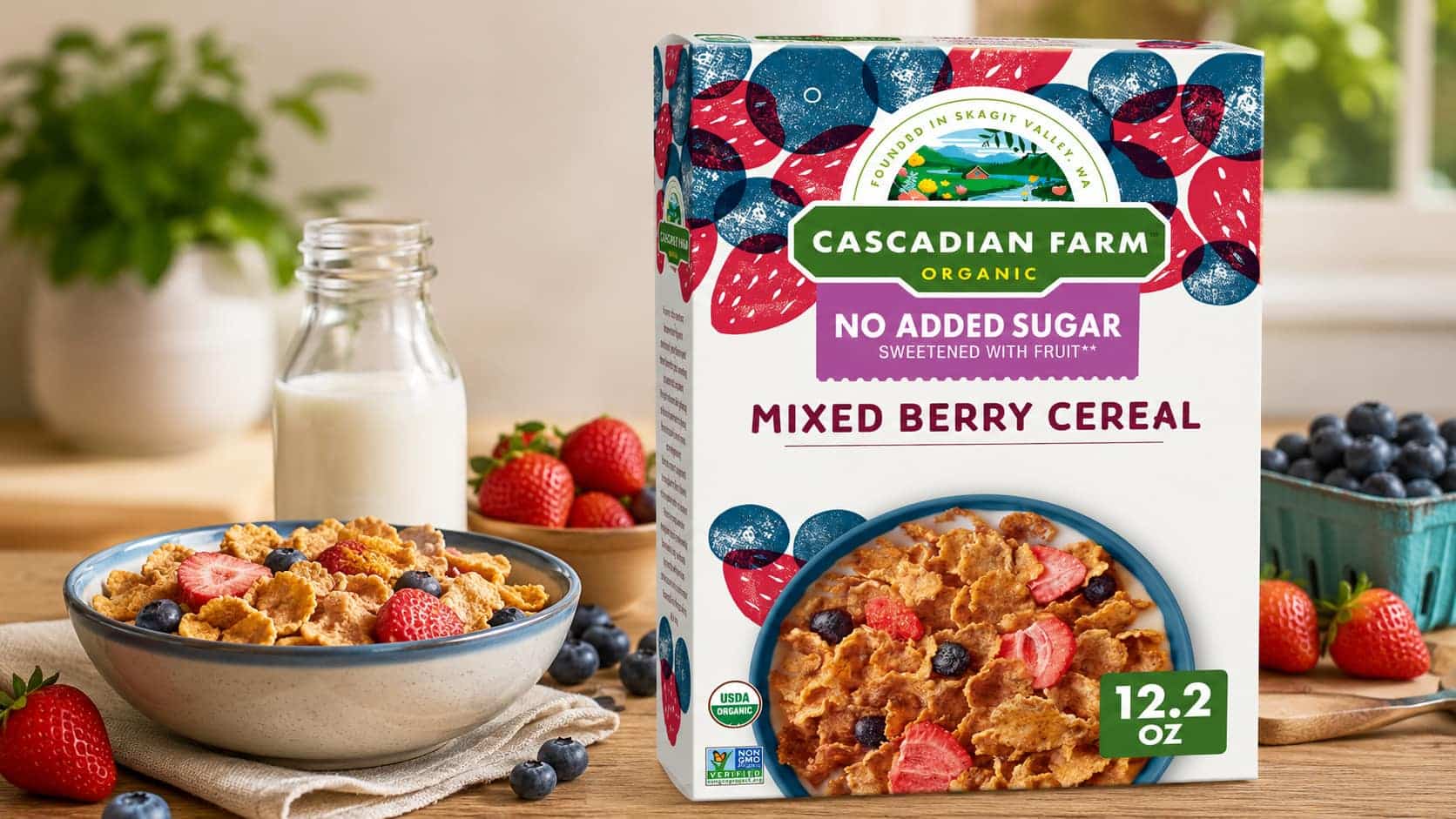
Health Score: 8.7/10 Nutrition: 160 cal | 0g added sugar | 6g fiber | 3g protein
Whole grain wheat flakes with dried blueberries and strawberries, sweetened only with date powder. Zero added sugar, organic, and non-GMO.
The dried fruit provides natural sweetness without any cane sugar or artificial sweeteners anywhere in the ingredient list.
- Taste: Crisp wheat flakes with chewy dried fruit. A hint of sea salt rounds out the flavor.
- Best for: Strict low-sugar eating, anyone avoiding added sugar entirely.
- Drawback: Slightly higher in fat from coconut oil.
- Where to buy: Whole Foods, Target, Walmart, Amazon
- Price: ~$5–8
5. Seven Sundays Oat Protein Cereal
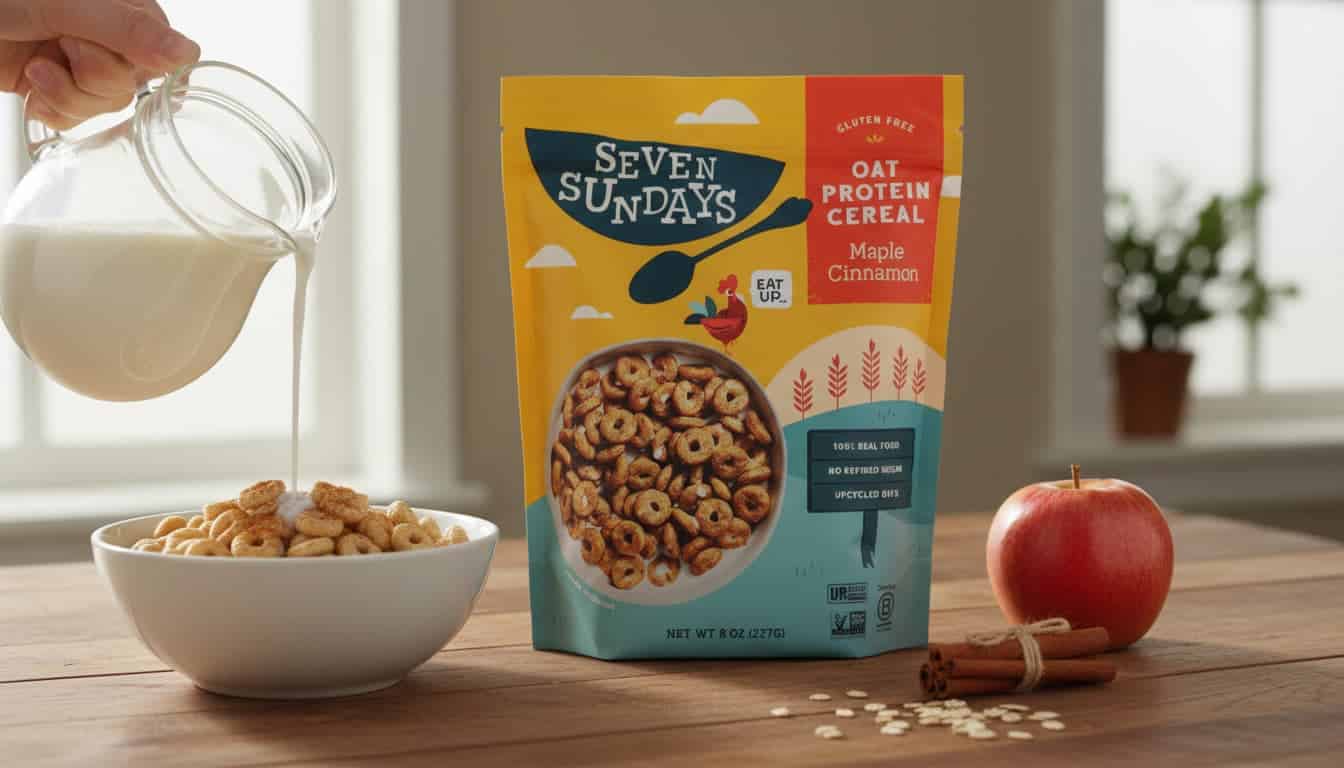
Health Score: 8.5/10 Nutrition: 120 cal | 1–7g added sugar | 5g fiber | 5g protein
Made from upcycled oats, delivering three times more protein and twice as much fiber as standard whole oats. Gluten-free, sweetened with dates and coconut sugar.
Available in four flavors, chocolate sea salt is the standout across all taste tests.
- Taste: Light and crunchy O-shapes, enjoyable dry or with milk.
- Best for: Protein-focused eating, gluten-free requirements, flavor variety.
- Drawback: Added sugar varies significantly by flavor; check per variety.
- Where to buy: Whole Foods, Sprouts, Amazon
- Price: ~$5–9
6. Kashi Whole Wheat Biscuits
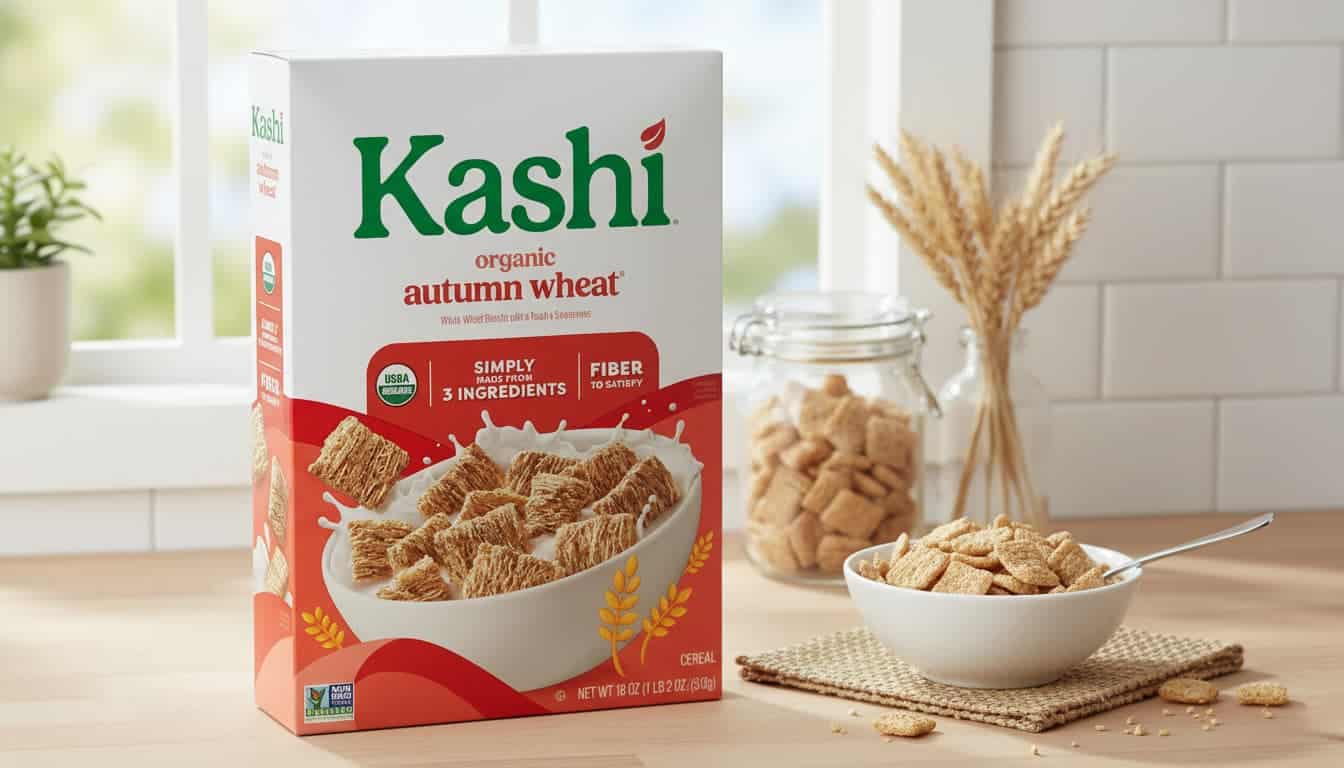
Health Score: 8.3/10 Nutrition: 180 cal | 7g added sugar | 7g fiber | 7g protein
Organic whole grain wheat biscuits with 7 grams each of fiber and protein, one of the strongest combined protein and fiber profiles on this list.
Contains 30–40% less sugar than standard frosted shredded wheat options.
- Taste: Lightly sweet, dense biscuits that absorb milk well. A small bowl is genuinely filling for hours.
- Best for: Balanced fiber and protein, blood sugar stability.
- Drawback: 7 grams of added sugar is higher than the best options here.
- Where to buy: Walmart, Target, Kroger, CVS, Amazon
- Price: ~$4–6
7. Nature’s Path Smart Bran
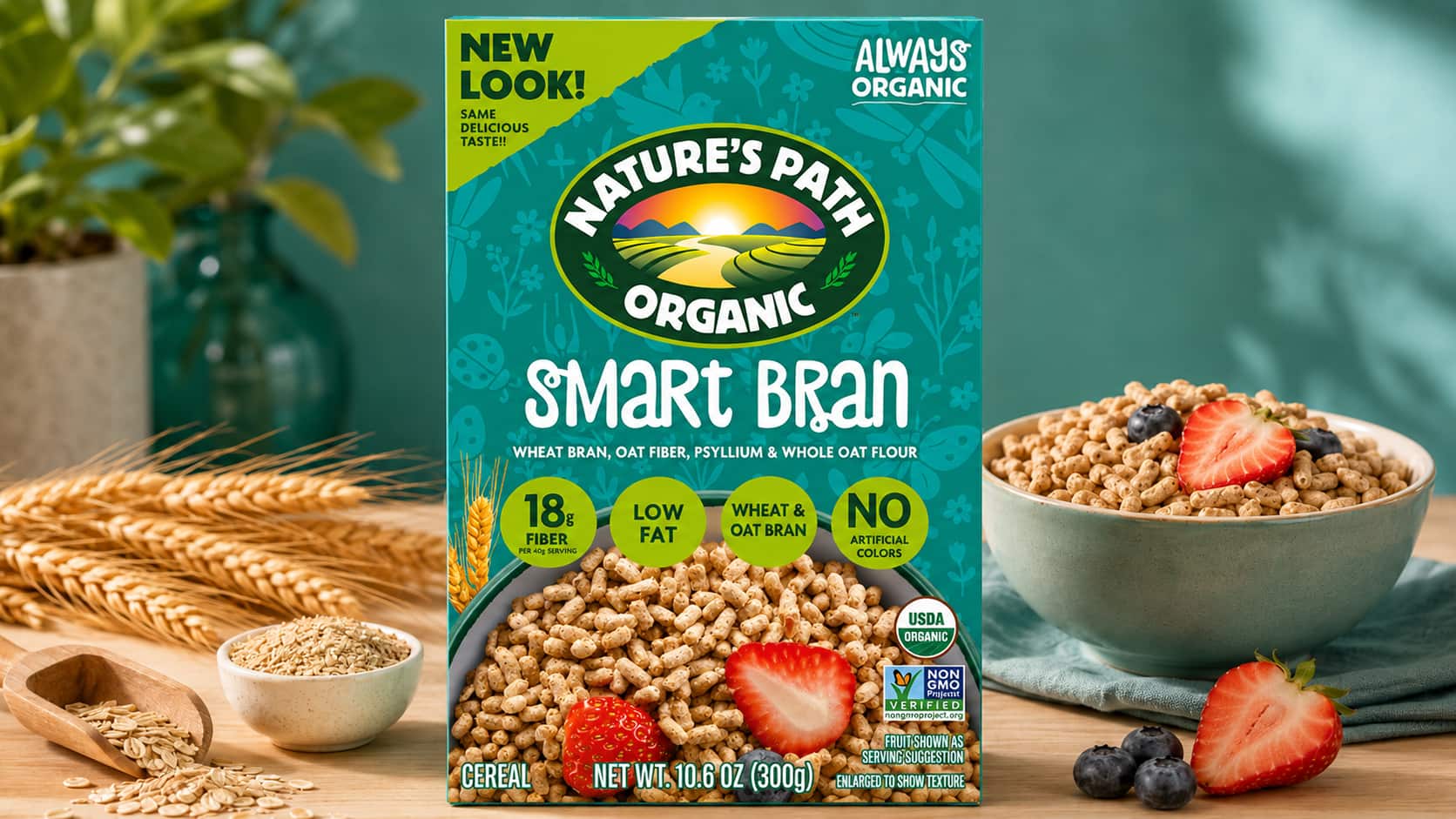
Health Score: 8.2/10 Nutrition: 80 cal | 8g added sugar | 17g fiber | 4g protein
17 grams of fiber per serving, 65% of the daily recommended intake in a single bowl. Made from wheat bran, oat fiber, and psyllium.
Best used mixed with other cereals or over yogurt rather than eaten as a standalone full bowl.
- Taste: Dense and dry on its own, best combined with yogurt or another cereal.
- Best for: Anyone significantly behind on fiber intake, gut health, and digestive regularity. Most people fall well short of their daily fiber target, even foods that seem fiber-dense, like leafy greens, often deliver far less than expected.
- Drawback: 8 grams of added sugar, and the texture requires some adjustment.
- Where to buy: Whole Foods, Walmart, Target, Kroger
- Price: ~$5–9
8. Purely Elizabeth Ancient Grain Granola
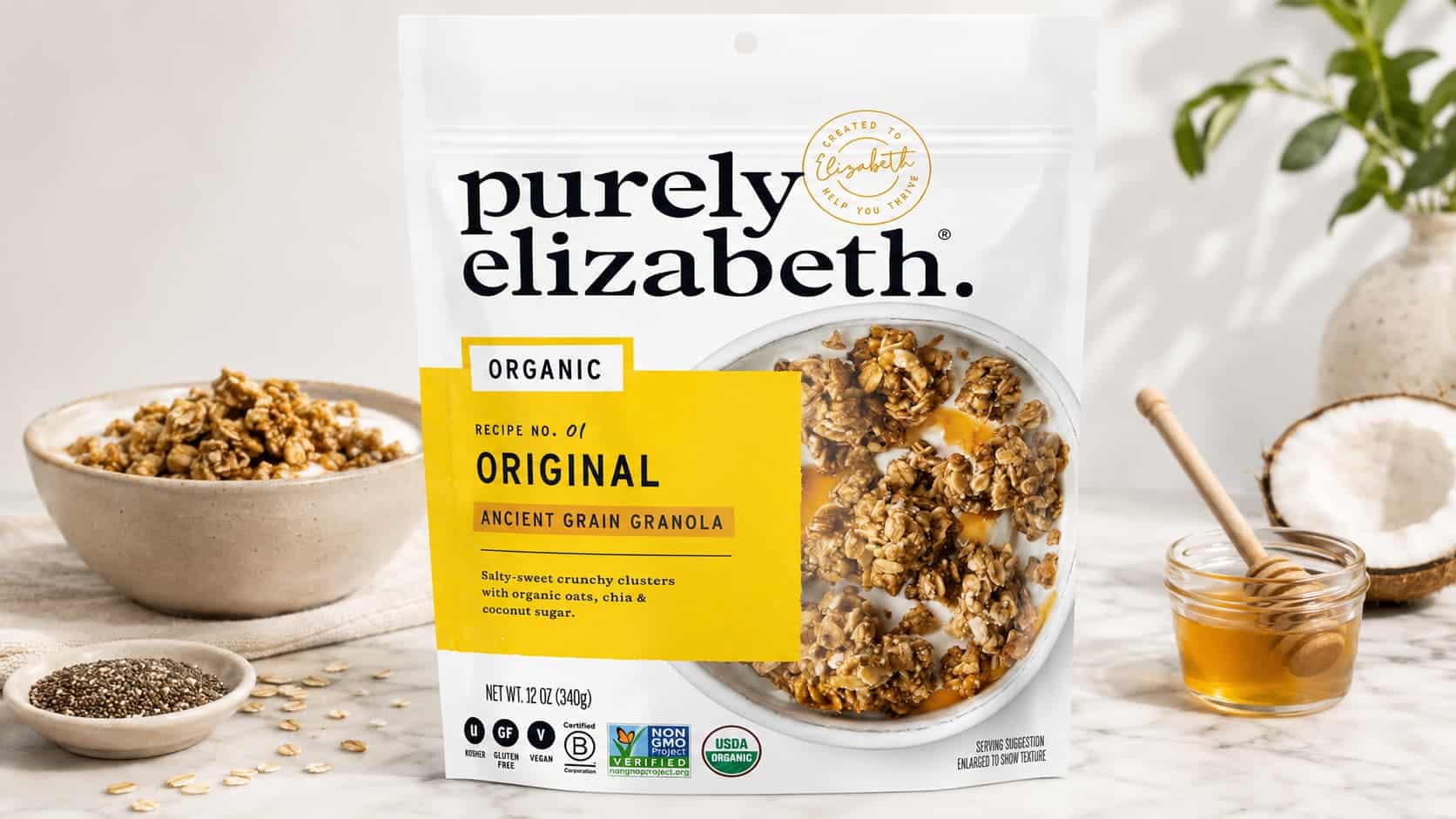
Health Score: 8.0/10 Nutrition: 140 cal | 6g added sugar | 3g fiber | 4g protein
Gluten-free oats, puffed amaranth, quinoa flakes, millet, sunflower seeds, and chia seeds make up one of the most nutritionally diverse granolas available. Sweetened with coconut sugar.
Available in 10 flavors, including seasonal varieties.
- Taste: Light and crispy with genuine depth from the ancient grain variety. Stands apart from standard oat-only granolas.
- Best for: Granola lovers, gluten-free requirements, and yogurt topping.
- Drawback: Lower fiber than most entries on this list.
- Where to buy: Whole Foods, Target, Walmart, Sprouts, Amazon
- Price: ~$5–9
9. Catalina Crunch Cinnamon Toast
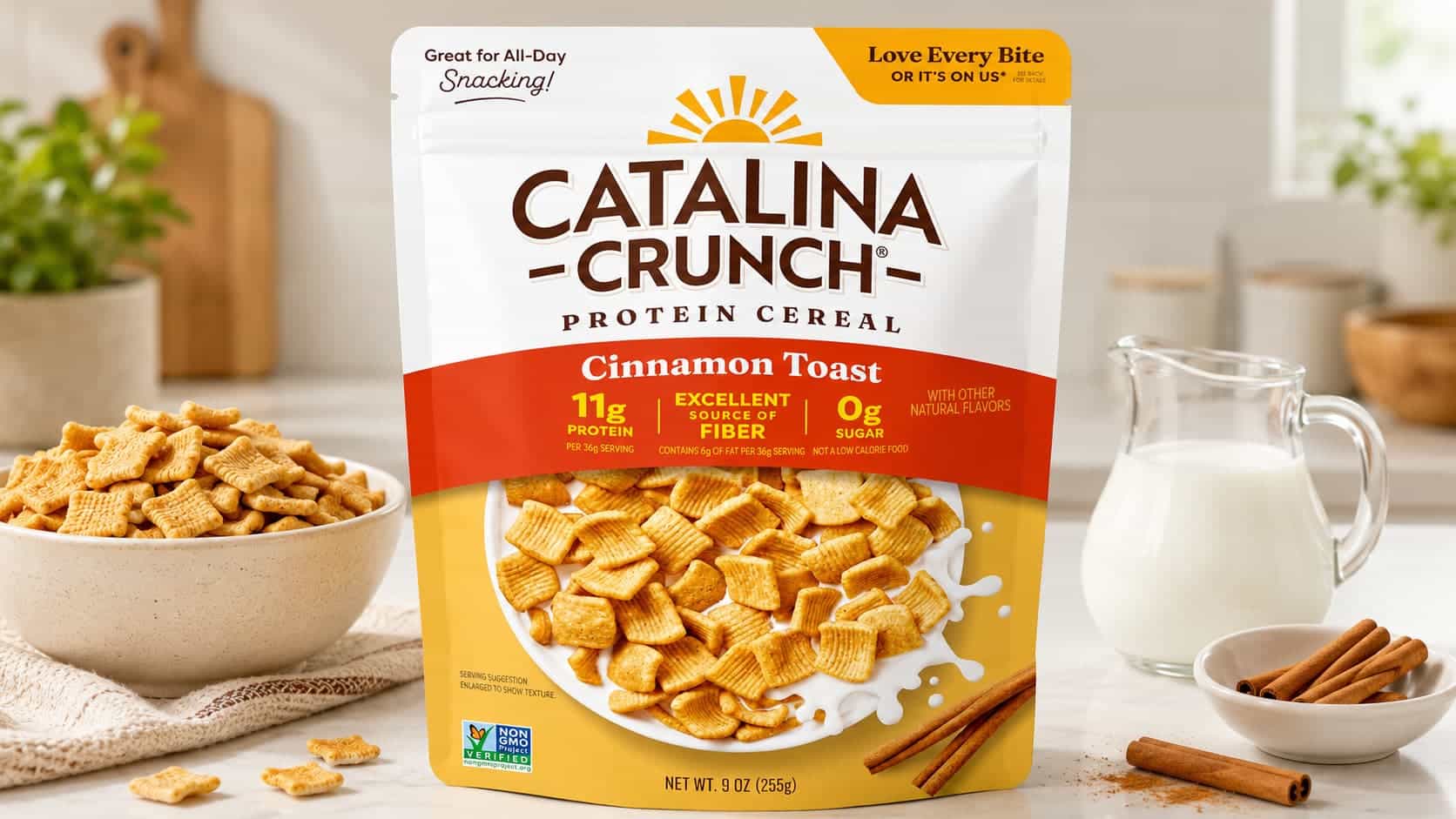
Health Score: 7.8/10 Nutrition: 90 cal | 0g sugar | 9g fiber | 11g protein
Zero grams of sugar, 11 grams of protein, and 9 grams of fiber per serving. Grain-free and keto-friendly, it fills the cereal craving without the carbohydrate load of any grain-based alternative.
Sweetened with stevia and monk fruit.
- Taste: Crisp cinnamon squares, genuinely reminiscent of a popular cinnamon cereal. Monk fruit leaves a slight aftertaste for some people.
- Best for: Low-carb eating, keto diet, high protein requirements.
- Drawback: Higher price point than most mainstream options.
- Where to buy: Target, Whole Foods, Amazon
- Price: ~$9–12
10. Magic Spoon Fruity Protein Cereal
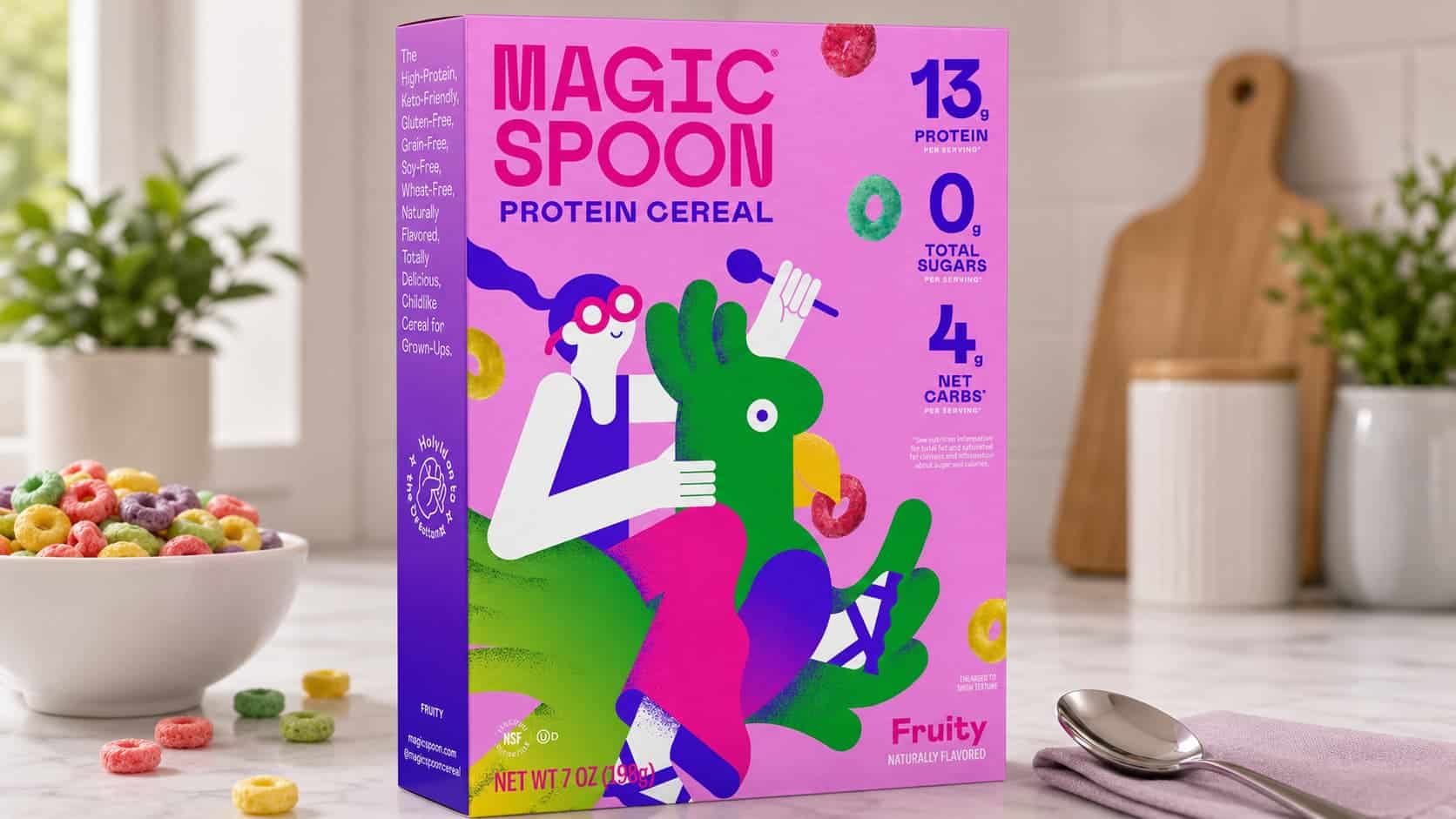
Health Score: 7.5/10 Nutrition: 140 cal | 0g sugar | 0g fiber | 13g protein
Zero grams of sugar, 13 grams of protein, grain-free, gluten-free, and keto-friendly. Natural colors from turmeric, spirulina, and vegetable juice.
Sweetened with monk fruit and allulose. The taste surprises almost everyone; most people check the label after the first bite.
- Taste: Light, fruity, crunchy O-shapes with real flavor. Works equally well as a late-night snack.
- Best for: Anyone who misses sweet cereal, has high protein requirements, and is on a keto diet.
- Drawback: Zero fiber is a significant nutritional gap.
- Where to buy: Target, Whole Foods, Amazon
- Price: ~$10–13
11. Bob’s Red Mill Maple Sea Salt Granola
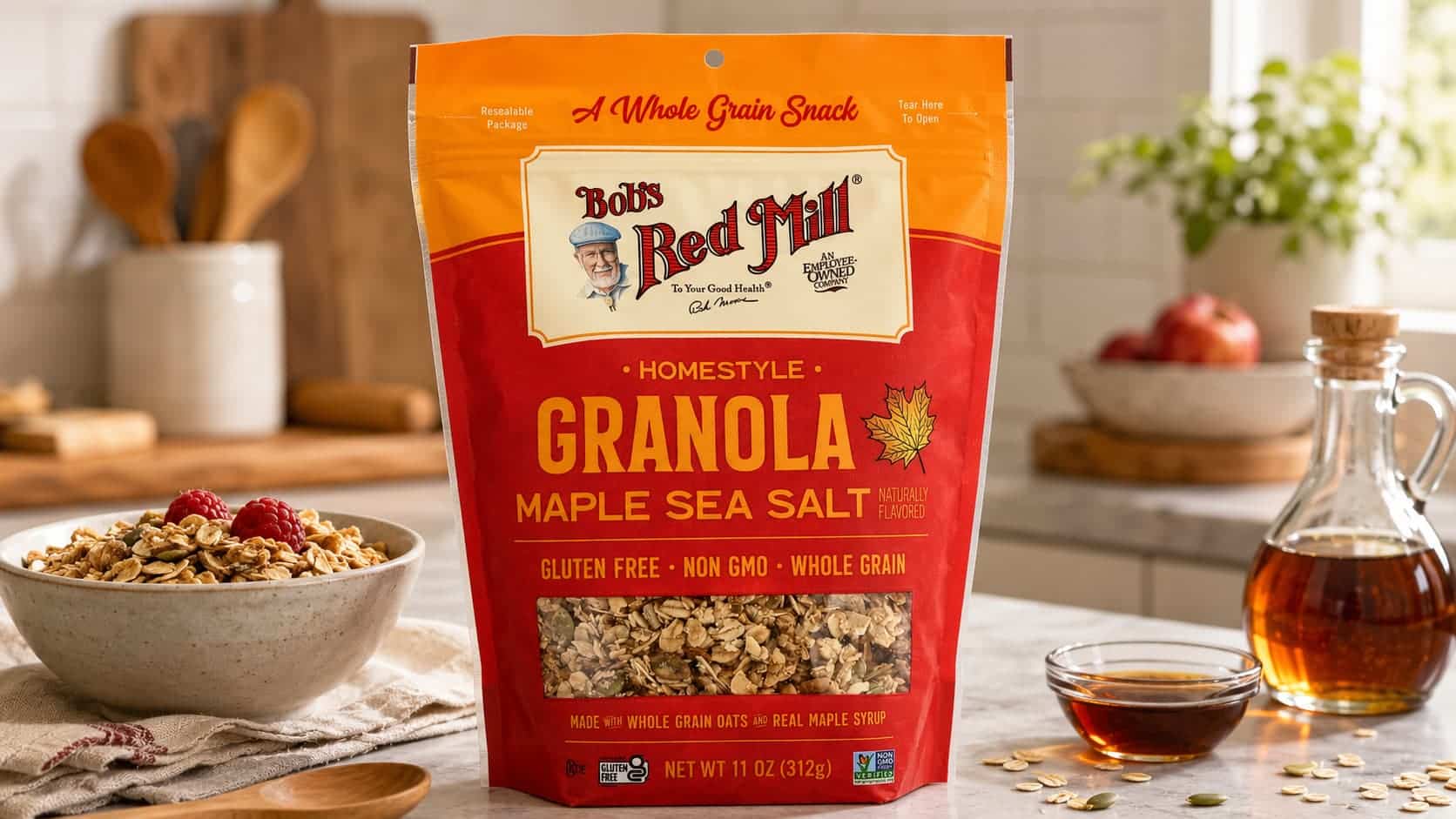
Health Score: 7.3/10 Nutrition: 150 cal | 5g added sugar | 3g fiber | 4g protein
Simple, recognizable ingredients: whole-grain oats, maple syrup, coconut, coconut oil, and brown sugar. Only 5 grams of added sugar per serving.
A legacy natural brand available in mainstream supermarkets at significantly lower prices than most specialty granola options.
- Taste: Classic granola, crunchy, lightly sweet, and genuinely satisfying. The maple sea salt combination stands out from standard granola flavors.
- Best for: Budget-conscious shoppers, everyday granola use.
- Drawback: Lower fiber and protein than most entries on this list.
- Where to buy: Sprouts, Safeway, Kroger, Walmart, Amazon
- Price: ~$6–8
12. Uncle Sam Original Wheat Berry Flakes
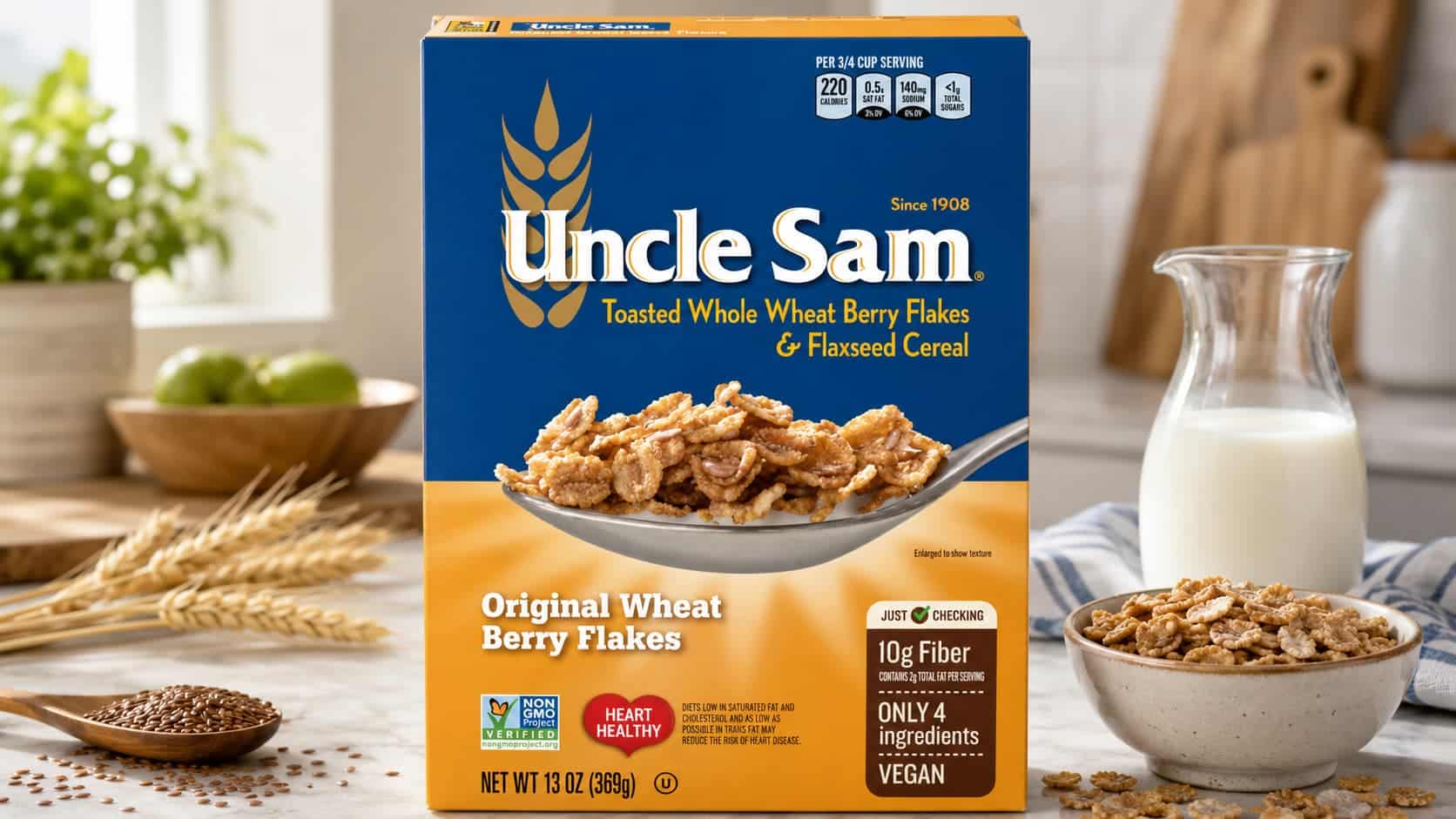
Health Score: 7.2/10 Nutrition: 190 cal | 1g added sugar | 10g fiber | 7g protein
One of the most nutritionally consistent mainstream cereals that most people overlook entirely. Whole grain wheat berries and flaxseeds deliver 10 grams of fiber and 7 grams of protein with only 1 gram of added sugar, a combination that rivals far more expensive specialty options.
- Taste: Nutty and slightly dense, the flaxseeds add a pleasant textural contrast. Better with milk than dry.
- Best for: High fiber, budget-friendly, underrated everyday option.
- Drawback: Limited availability compared to mainstream brands.
- Where to buy: Whole Foods, Natural Grocers, Amazon
- Price: ~$5–7
13. Post Shredded Wheat Original
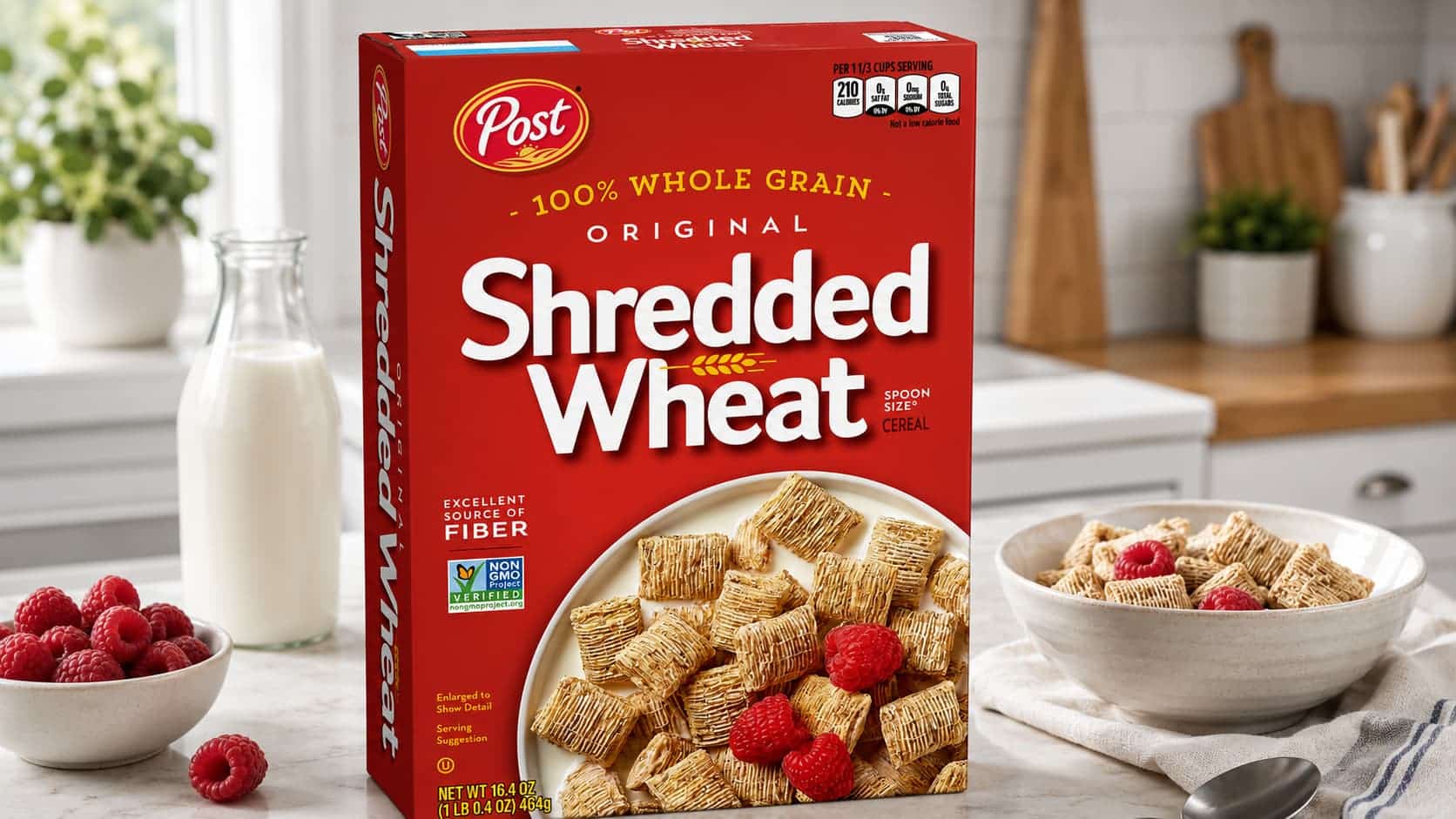
Health Score: 7.0/10 Nutrition: 170 cal | 0g added sugar | 3g fiber | 5g protein
Two ingredients only: whole grain wheat and nothing else. Zero added sugar, zero artificial additives, zero BHT.
One of the cleanest ingredient lists of any cereal available in a standard supermarket, and one of the few options that has never contained added sugar in over 100 years.
- Taste: Mild and neutral, absorbs milk well, and pairs naturally with fresh fruit or a drizzle of honey.
- Best for: Clean eating, no-additive requirements, simple everyday cereal.
- Drawback: Very mild flavor needs additions to be genuinely enjoyable.
- Where to buy: Walmart, Kroger, Target, Safeway
- Price: ~$4–6
These cereals cover every goal, budget, and dietary need, from the most nutritionally complete option on the market to the cleanest two-ingredient alternative that has been sitting on shelves for over a century.
Quick Nutrition Comparison: Top Cereals at a Glance
All numbers are per serving, making this quick comparison chart helpful for spotting differences in fiber, protein, sugar, and whole-grain ingredients.
| Cereal | Fiber | Added Sugar | Protein | Whole Grain | Best For |
|---|---|---|---|---|---|
| Ezekiel 4:9 Original | 6g | 0g | 8g | Yes | Best overall, protein |
| Grape Nuts | 7g | 0g | 6g | Yes | Fiber, low sugar |
| Cascadian Farm Purely Os | 4g | <1g | 3g | Yes | Kids, low sugar |
| Cascadian Farm Mixed Berry | 6g | 0g | 3g | Yes | No added sugar |
| Seven Sundays Oat Protein | 5g | 1–7g | 5g | Yes | Protein, taste |
| Kashi Whole Wheat Biscuits | 7g | 7g | 7g | Yes | Protein, fiber |
| Nature’s Path Smart Bran | 17g | 8g | 4g | Yes | Maximum fiber |
| Purely Elizabeth Ancient Grain | 3g | 6g | 4g | Yes | Taste, variety |
| Magic Spoon Fruity | 0g | 0g | 13g | No | High protein, keto |
| Catalina Crunch Cinnamon | 9g | 0g | 11g | No | Low-carb, protein |
| Bob’s Red Mill Maple Sea Salt | 3g | 5g | 4g | Yes | Budget, everyday use |
| Uncle Sam Wheat Berry Flakes | 10g | 1g | 7g | Yes | Underrated, fiber |
| Post Shredded Wheat Original | 3g | 0g | 5g | Yes | No additives, clean |
This side-by-side comparison gives you a faster way to spot what matters most and helps you pick a cereal based on protein, fiber, sugar, and overall ingredients.
What the Community Says About Healthy Cereal
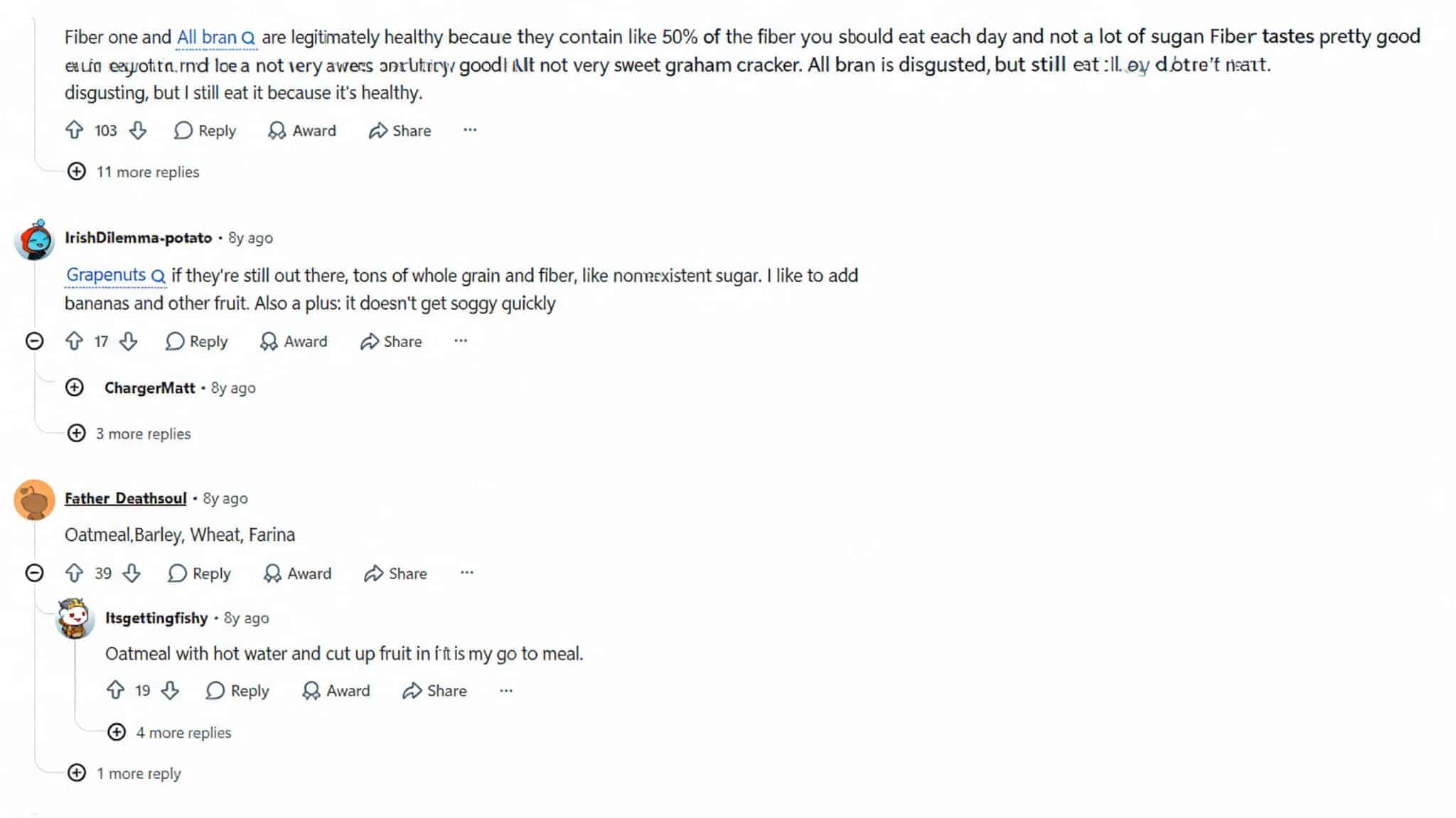
A community member u/themumenrider asked fellow redditors for their go-to healthy cereal recommendations, specifically looking for options that are nutritious, affordable, and actually enjoyable to eat daily.
The thread pulled in hundreds of honest responses from budget-conscious shoppers, parents feeding families, and everyday cereal eaters.
The most upvoted answers consistently pointed to Grape Nuts, Ezekiel 4:9, plain shredded wheat, and Cascadian Farm Purely Os as the cereals people returned to most often, not because of marketing, but because the nutrition and taste held up week after week.
Cereals That Look Healthy But Are Not
Some of the most misleading products in any grocery store are in the cereal aisle. These are the ones worth watching out for.
- Standard granola: most commercial versions contain 12 to 20 grams of added sugar per serving despite the wholesome image.
- “Multigrain” cereals: multigrain means multiple grains were used, not whole grains. Check the first ingredient before buying.
- “Heart-healthy” flavored oat cereals: the badge refers only to beta-glucan content. Added sugar and artificial dyes may still be present.
- “Low-fat” cereals: removing fat almost always means adding sugar to compensate for flavor.
- “Natural”-labeled cereals: natural has no regulatory definition on food packaging and legally means nothing.
The front of the packaging is designed to sell the product, not inform you about it. The label on the back is the only thing worth reading.
Cereal Mistakes Most People Make Every Morning
Small habits quietly undermine even the best cereal choice every single morning. These are the ones most people do not realize they are making.
| Mistake | Why It Matters |
|---|---|
| Pouring straight from the box | Most people pour 2–3 times the serving size |
| Sweetened milk alternatives | Often contains as much sugar as the cereal itself |
| Skipping protein | Causes blood sugar spikes regardless of fiber content |
| Same cereal daily | Limits nutrient variety across different whole grains |
| Granola without label checking | Most contain 12–20g of added sugar per serving |
| Flavored yogurt instead of plain | Adds significant hidden sugar to an otherwise clean bowl |
| Trusting front-of-pack claims | “Natural” and “multigrain” mean very little without reading the label |
Fixing two or three of these costs nothing and makes every cereal on this list work significantly better.
Frequently Asked Questions
Are high fiber cereals good for weight loss?
Yes, high fiber slows digestion, reduces hunger, and decreases overall calorie intake throughout the day without requiring portion restriction.
Does the type of milk affect how healthy cereal is?
Yes, significantly. Sweetened plant milks add hidden sugar. Plain whole milk, unsweetened almond, or oat milk are the cleanest options to pair with any cereal on this list.
Can cereal replace a meal for adults?
Yes, when prepared correctly. A whole-grain cereal with plain Greek yogurt, fresh fruit, and nuts delivers adequate protein, fiber, and healthy fats, making it a complete meal.
The same principle of balancing protein, fiber, and healthy fat applies whether you are assembling breakfast at home or building a balanced lunch bowl later in the day.
Is cereal a good post-workout meal?
It depends on the type. High-protein options like Ezekiel 4:9 or Magic Spoon paired with milk can support muscle recovery, but most standard cereals lack sufficient protein for effective post-workout nutrition.
Final Thoughts
The cereal aisle no longer has to be confusing. Finding the healthiest cereal comes down to three things: whole grain as the first ingredient, minimal added sugar, and a protein source alongside it. Everything else is packaging.
I have been checking cereal labels long enough to know that the best options are rarely the ones with the loudest health claims on the front. They are usually the quieter ones at the back of the shelf, delivering solid nutrition for years.
You do not need to overhaul your entire breakfast; just make one better swap this week and build from there. Tried any of these? Drop a comment and let me know which one worked for you.