













Worried that Japanese sweet potatoes are too high in calories or carbs? You’re not alone; online discussions often mix facts with confusion.
This blog breaks down Japanese sweet potato nutrition, including calories, fiber, vitamins, and antioxidants, and explains how portion size and preparation affect their health benefits.
By the end, you’ll know how to enjoy them as a nutrient-rich carb, make balanced meal choices, and find out simple ways to include these versatile tubers in your diet without overdoing calories.
Japanese Sweet Potato Nutrition Facts
Before judging Japanese sweet potatoes by calories alone, it helps to see what those calories come with.
They are mostly carbohydrate foods, but they also provide fiber, small amounts of protein, very little fat, and useful micronutrients. This is why I would not call them “empty calories,” even though they can add up quickly when portions are large.
Here is a simple nutrition snapshot based on common nutrition listings:
|
Nutrient |
Approx. Amount Per 100g |
Why It Matters |
|
Calories |
90–120 kcal |
Moderate energy source |
|
Carbohydrates |
21–27g |
The main source of calories |
|
Fiber |
2–4g |
Supports fullness and digestion |
|
Protein |
1–2g |
Small amount, not protein-rich |
|
Fat |
0–0.2g |
Naturally very low in fat |
|
Sugar |
Around 5–7g per serving |
Naturally occurring sweetness |
|
Vitamin C |
Present |
Supports immune function and tissue repair |
|
Potassium |
Present |
Supports fluid balance and muscle function |
|
Antioxidants |
Present |
Adds value beyond calories |
The main takeaway is that Japanese sweet potatoes are nutrient-dense, but still carb-rich.
A 100g serving can fit easily into a balanced meal, while a large whole potato may contain two or three times that amount. That difference is what often causes confusion in calorie-tracking apps, forums, and social media posts.
Community Discussions on Japanese Sweet Potato Nutrition
Across social platforms, users are debating the nutritional value of Japanese sweet potatoes and whether they are genuinely healthy.
Questions often revolve around calorie content, preparation methods, and nutritional benefits. Insights from these discussions highlight both common misconceptions and useful tips, which I’ve summarized from multiple forums.
The following sections break down key takeaways from different platforms, along with my perspective as a dietitian:
Reddit Perspectives: Calorie Confusion and Fiber Benefit
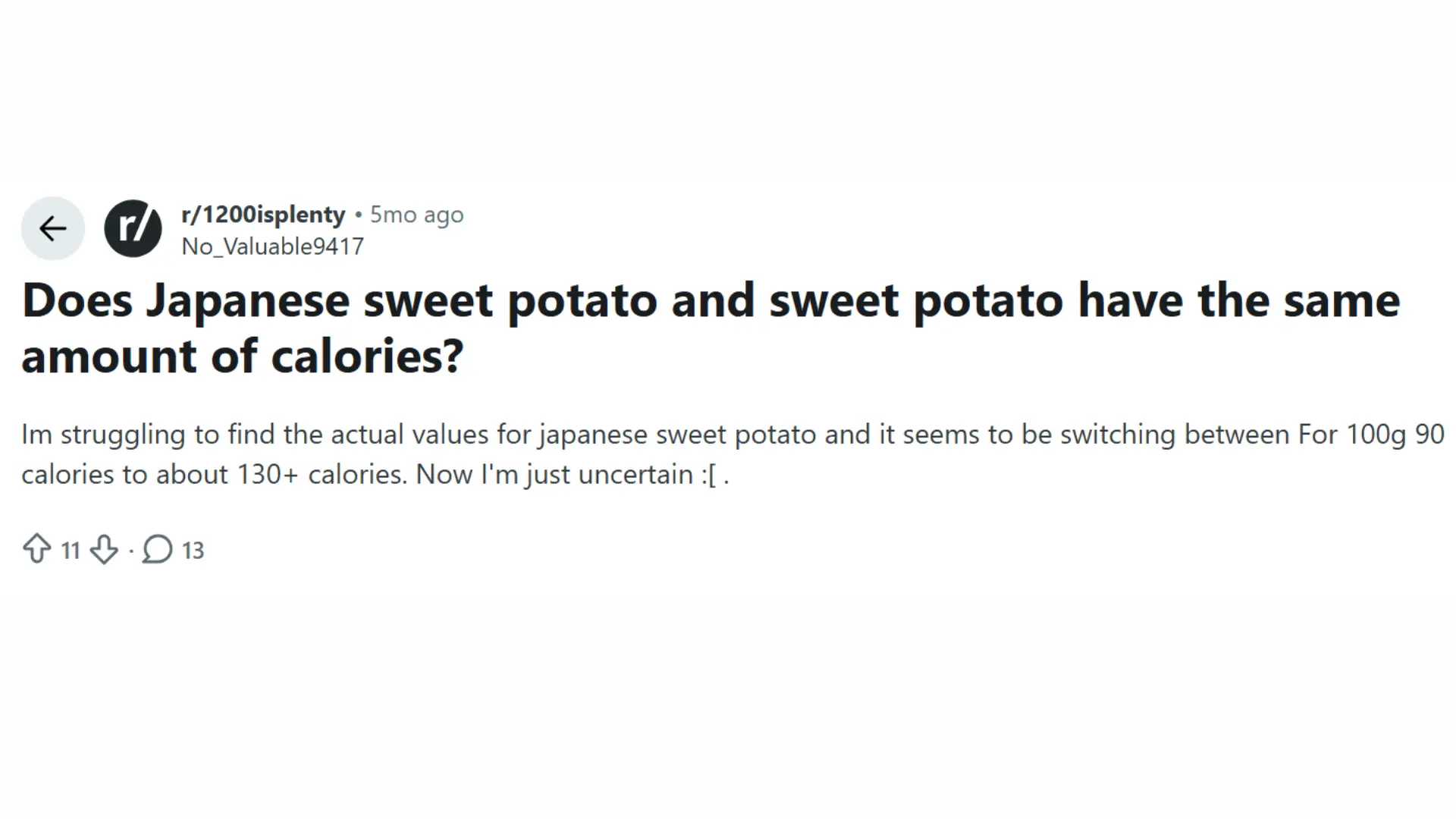
On r/1200isplenty, users are debating whether Japanese sweet potatoes and regular sweet potatoes have the same number of calories. One user expressed confusion, noting values ranging from 90 to 130+ calories per 100 grams (see image). Comments quickly clarified that differences come from whether the potato is raw or cooked, water content, and tracking methods.
Several contributors pointed out that Japanese sweet potatoes are slightly higher in calories but richer in fiber, making them more filling. Others shared personal experiences, noting that texture, sweetness, and preparation affect both satisfaction and calorie perception.
From my perspective, this discussion highlights a common misunderstanding: calories can vary slightly depending on size and cooking method, but Japanese sweet potatoes remain a nutritious option. I often encourage clients to focus on portion size and pairing with protein or vegetables, rather than getting caught up in minor calorie differences.
Quora Insights: Nutrient-Rich and Antioxidant Benefits
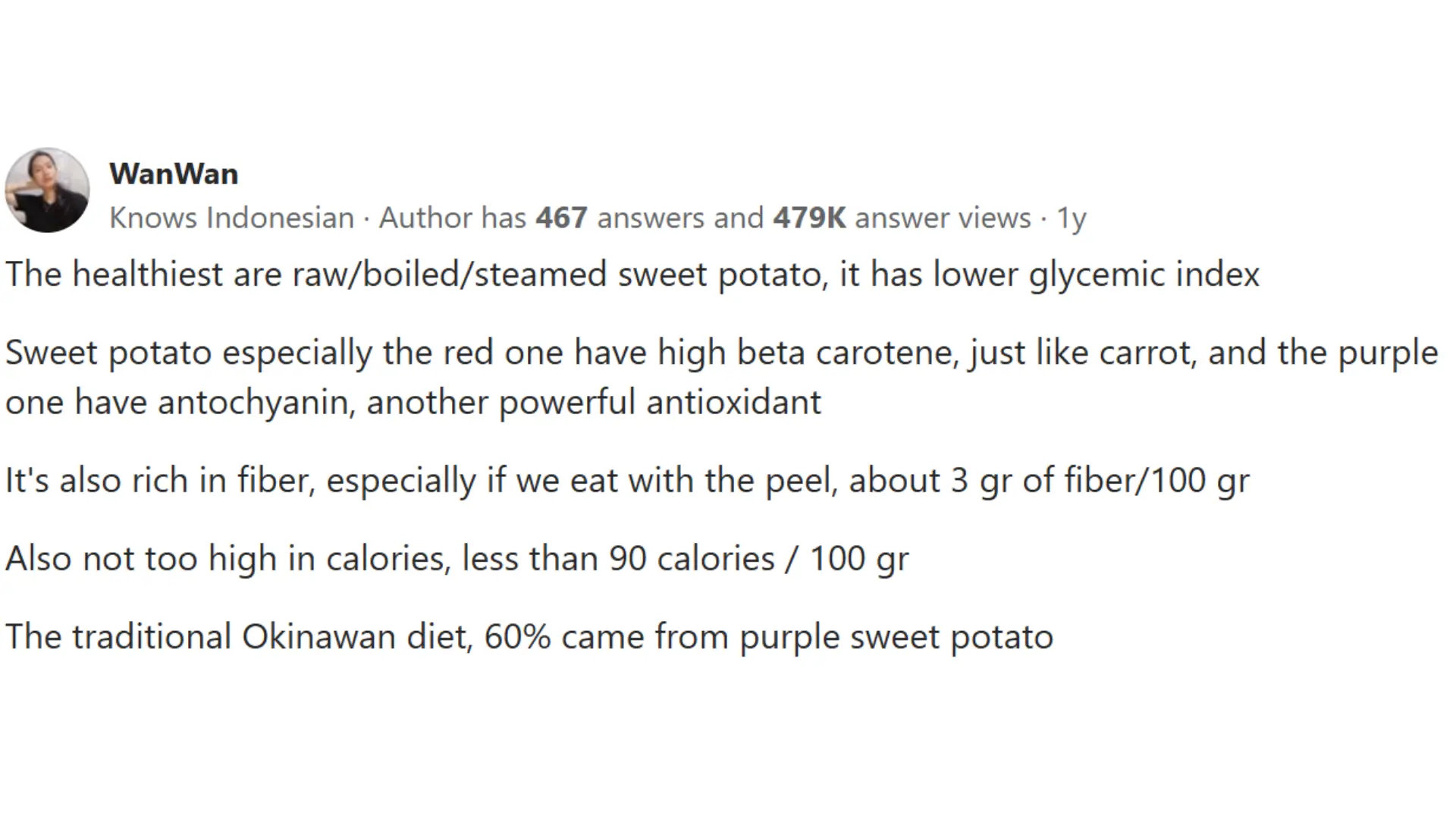
A Quora thread focused on the nutrient and health benefits of Japanese sweet potatoes (see image). Contributors emphasized that raw, boiled, or steamed sweet potatoes have a lower glycemic index, making them a healthier carbohydrate choice. Red varieties are high in beta-carotene, while purple ones contain anthocyanins, a potent antioxidant.
They also provide about 3 grams of fiber per 100 grams when eaten with the peel, and contain fewer than 90 calories. Users noted that including the peel maximizes nutritional benefits, a point often overlooked in everyday cooking.
I agree with these insights. In my practice, I see that Japanese sweet potatoes can be a reliable way to get antioxidants and fiber while supporting satiety. When eaten thoughtfully and paired with balanced ingredients, they are a nutrient-dense option that fits seamlessly into a healthy diet.
Are Japanese Sweet Potatoes Really Healthy?
Yes, Japanese sweet potatoes are healthy for many people. They provide fiber, vitamins, minerals, and antioxidants in a whole-food form. They are usually a better choice than refined sweets, sugary snacks, or low-fiber starches.
But the honest answer has a second part: they are healthy when the portion fits the meal.
A large roasted Japanese sweet potato eaten on top of rice, bread, or noodles can make the meal too carb-heavy for some people. A smaller serving paired with protein and vegetables is a much better use of the food.
So, are Japanese sweet potatoes healthy? Yes, but they should be treated as a nourishing starch rather than a calorie-free health food.
Health Benefits Of Japanese Sweet Potatoes
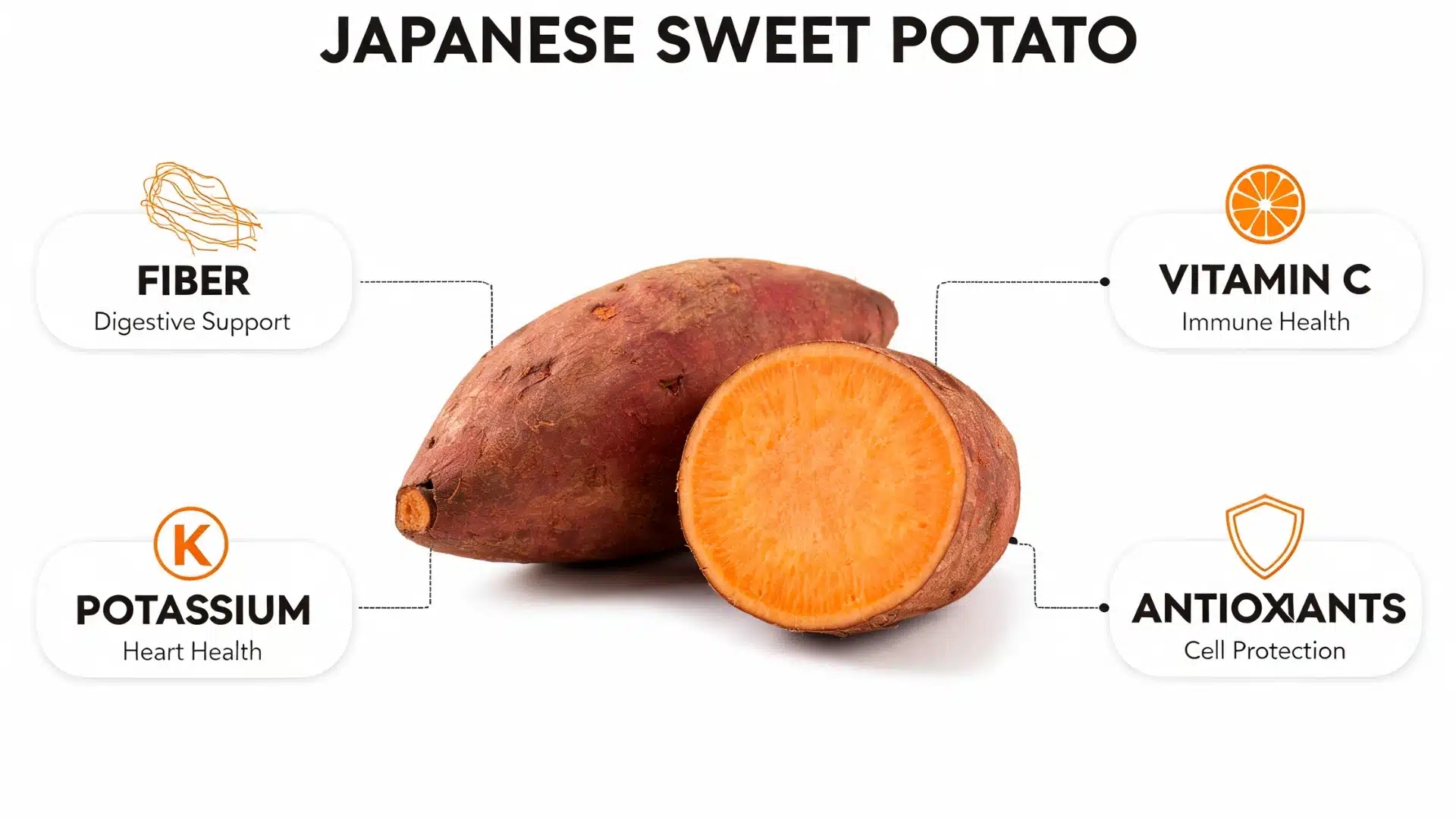
Japanese sweet potatoes are calorie-dense but provide fiber, potassium, vitamin C, and slow-digesting carbs.
Their health benefits depend on both portion size and preparation.
When roasted or steamed with protein and vegetables, they support energy, digestion, and nutrient intake. Large servings with sugar, butter, or syrup, however, reduce these benefits.
Here are the main health benefits worth knowing:
- Digestive Support: Japanese sweet potatoes provide fiber, which supports regular bowel movements and feeds beneficial gut bacteria. Their dense texture also makes them filling.
- Blood Sugar Balance: They taste sweet, but their fiber and complex carbs slow digestion compared with refined carbs. Pair them with eggs, fish, tofu, beans, or Greek yogurt for steadier energy.
- Immune Support: Japanese sweet potatoes contain vitamin C and antioxidants that help protect cells from everyday stress. Purple-skinned types may also provide anthocyanins.
- Heart Health: Their fiber and potassium can support a heart-friendly diet. Potassium helps balance sodium, while fiber supports healthy cholesterol levels.
- Better Satiety Than Refined Carbs: Compared with white bread, sweets, or packaged snacks, Japanese sweet potatoes offer more fiber, volume, and nutrients.
- Naturally Simple and Versatile: They taste good roasted, steamed, or baked. Keeping toppings light helps them stay a wholesome, healthy carb choice.
So, are Japanese sweet potatoes high in calories? They can be, depending on serving size. But are they “unhealthy” because of that? No. The real issue is how much you eat, how you cook them, and what you eat with them. For many people, Japanese sweet potatoes can be a nourishing carb that fits well into a balanced plate.
Japanese Sweet Potatoes Nutrients Compared
Japanese sweet potatoes are often perceived as higher in calories due to their dense, creamy texture and natural sweetness. That can lead people to wonder if they’re really healthy.
The truth is, they are a nutritious carb source, but portion control is important. Comparing them with other common carbs highlights their benefits without overcomplicating things.
|
Feature |
Japanese Sweet Potato |
Regular Sweet Potato |
White Potato |
Cooked White Rice |
|
Calories |
90–100 |
86 |
77 |
130 |
|
Carbs |
21–24g |
20g |
17g |
28g |
|
Fiber |
3–3.5g |
3g |
2g |
<1g |
|
Protein |
1.5–2g |
1.6g |
2g |
2.7g |
|
Fat |
Very low |
Very low |
Very low |
Very low |
|
Taste |
Sweet, nutty, chestnut-like |
Mildly sweet |
Mild, earthy |
Neutral |
|
Texture |
Dense, creamy |
Moist, mashable |
Fluffy or waxy |
Soft |
|
Best for |
Roasting, snacks, meal prep |
Mash, fries, soups |
Boiled sides, baked dishes |
Meals with protein & curry |
|
Key advantage |
Filling, fiber-rich |
High beta-carotene |
Lower calorie, versatile |
Higher calorie, easy to overeat |
This table shows that Japanese sweet potatoes strike a balance: they offer more fiber and satiety than white rice, are naturally sweeter than white potatoes, and are a slightly denser alternative to regular sweet potatoes. While not “low-calorie,” they fit well into a balanced diet if eaten in moderate portions.
Best Ways To Eat Them
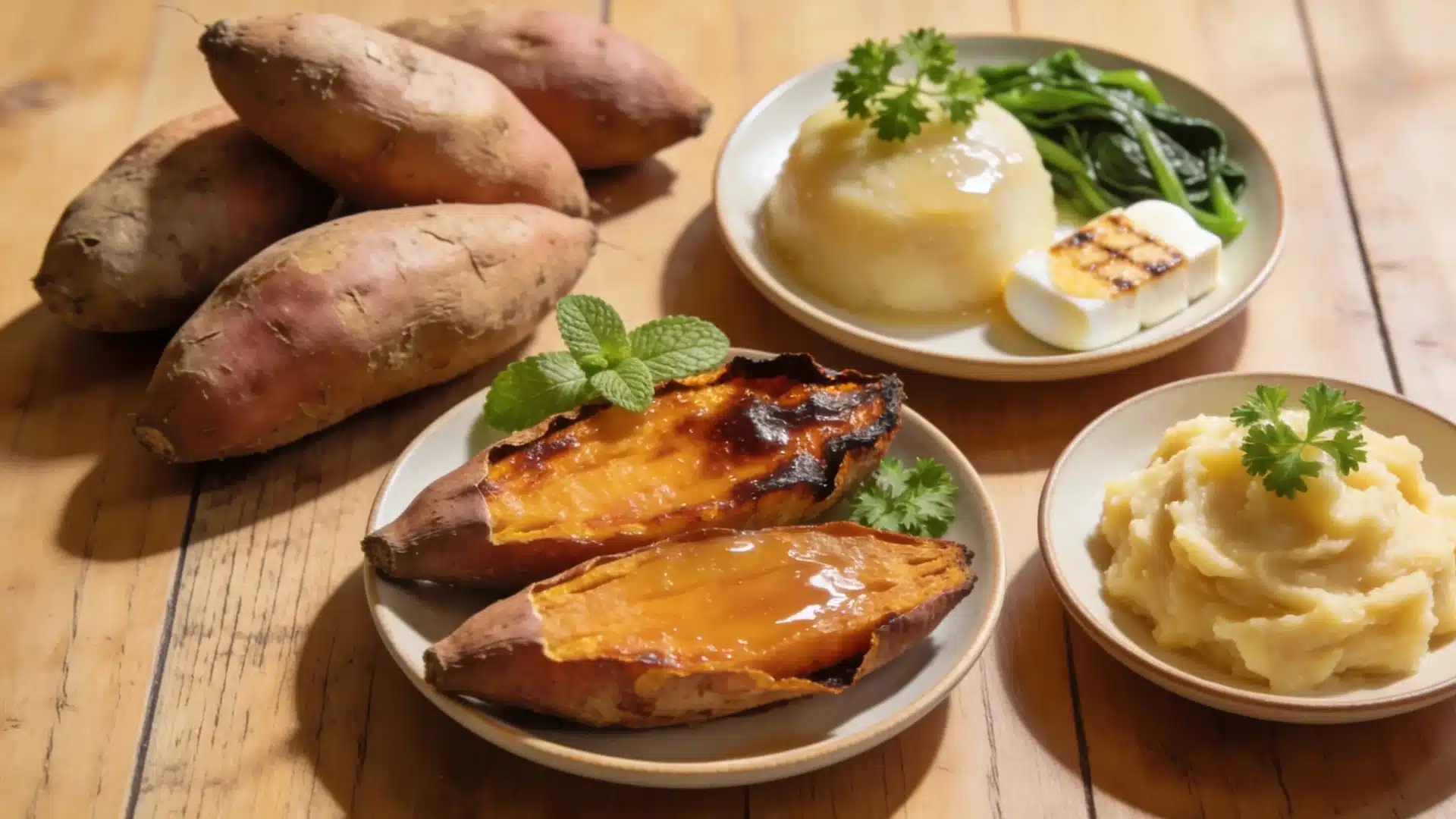
Japanese sweet potatoes are surprisingly versatile, and the way you prepare them can really highlight their natural sweetness while keeping them nutritious. Here are some of my favorite ways to enjoy them:
- Baked Whole: I like roasting them until tender; it brings out their natural sweetness without needing extra sugar. They’re simple, satisfying, and keep most of their nutrients intact.
- Mashed: Mixing a little olive oil or butter makes mashed sweet potatoes creamy and cozy. It’s a great side for dinner, and you can control the richness without going overboard.
- Steamed: Steaming keeps them soft and preserves delicate vitamins like C and beta-carotene. They’re light, subtly sweet, and perfect as a healthy base for other flavors.
- Grilled Slices: Grilling adds a smoky, caramelized flavor I love. The edges get slightly crisp while the inside stays soft, making it a perfect snack or side dish.
- Cubed in Soups or Stews: Tossing cubes into soups adds natural sweetness and heartiness. It also boosts fiber and complex carbs, giving your meal more substance.
- Oven-Baked Fries: Baking sweet potato fries gives you that satisfying crunch without all the oil. They’re a simple, healthier treat that still feels indulgent.
- Pureed in Smoothies: Adding sweet potato puree makes smoothies creamy and naturally sweet. It blends well with fruits and spices, giving extra fiber and nutrients without overpowering the flavor.
Frequently Asked Questions
Why are Japanese sweet potatoes high in calories?
Their dense texture and carbohydrate content mean calories add up quickly in larger servings, even though they remain nutrient-rich and more filling than many snack options.
Do Japanese sweet potatoes spike blood sugar?
They have complex carbs and fiber, which slow digestion. When eaten with protein or fat, they produce steadier blood sugar responses compared with refined carbs.
Are Japanese sweet potatoes good for weight loss?
Moderate portions can support weight management because their fiber and density help you feel full, making it easier to control overall calorie intake.
What is the best way to eat Japanese sweet potatoes?
Roasting, steaming, or baking preserves nutrients and flavor. Pairing them with vegetables, protein, or light seasoning maximizes both health benefits and taste.
Final Diet Takeaway
Japanese sweet potatoes aren’t just carbs—they pack fiber, vitamins, potassium, and antioxidants that help digestion, heart health, and steady energy.
How you eat them matters. Moderate portions paired with protein or vegetables keep meals balanced, while baking, steaming, or mashing preserves nutrients without adding sugar or fat.
Including Japanese sweet potatoes thoughtfully can make healthy eating simpler and more satisfying. Try new ways to enjoy them and see how they fit into your meals. Share your favorite recipes or tips in the comments to join the conversation.