



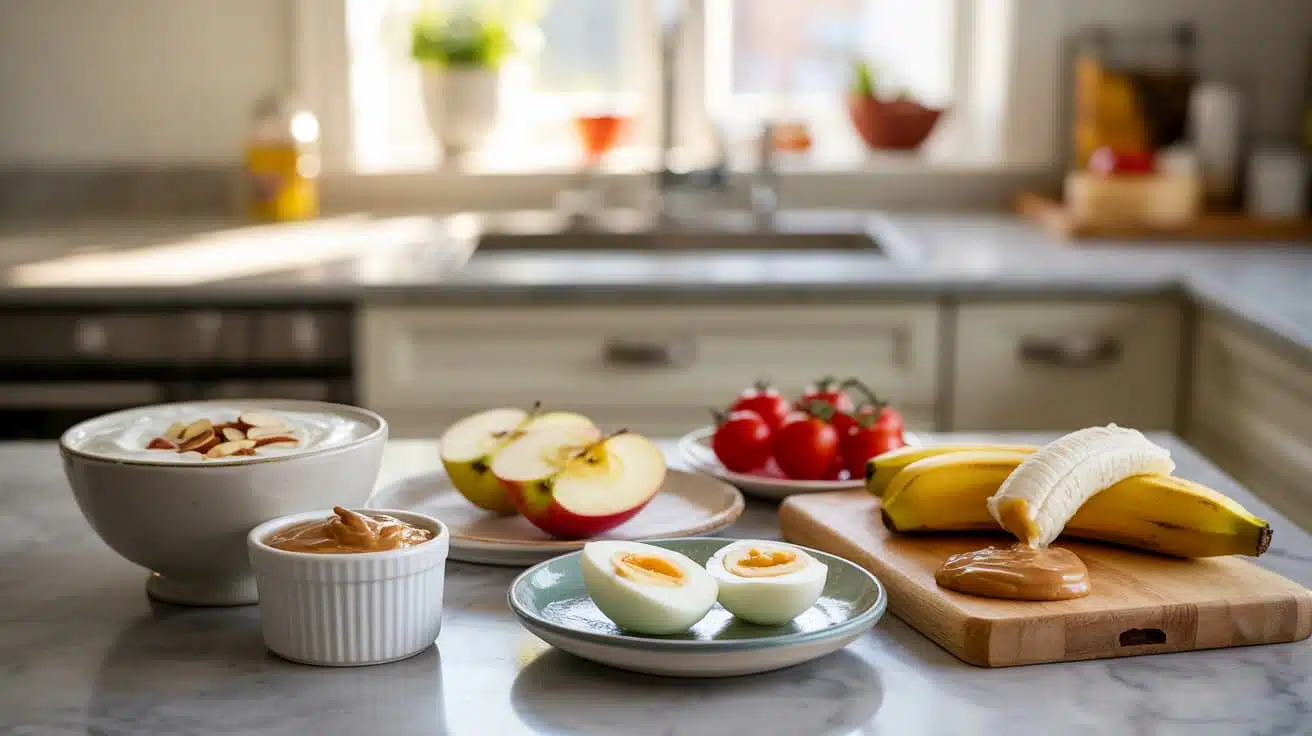







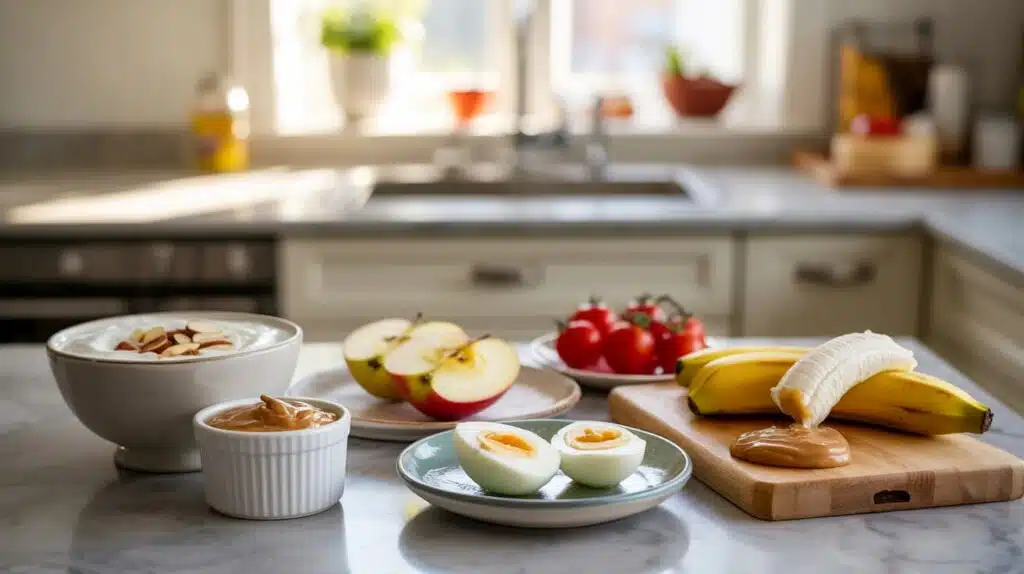

A snack that leaves hunger behind in minutes often misses what the body actually needs. The 200-calorie snack ideas I put together here focus on the right mix of protein, fiber, and healthy fats to slow digestion and steady energy.
This balance is what reduces sudden hunger and supports better control between meals. Most snacks hit a calorie target but fail to satisfy, leading to more eating later and undoing the effort entirely.
What I have tried to do here is bring together simple options built around real foods that support fullness and consistency. I have also broken down why these combinations work, so smarter choices become easier to repeat during busy days or a structured eating plan.
Why 200 Calories Is a Smart Snack Target
Two hundred calories is a snack target that earns its place for a straightforward reason: it works. It sits high enough to manage hunger meaningfully and low enough to leave daily intake intact.
For most adults, eating three meals a day and a snack in that range prevents the kind of energy dip that turns a small gap between meals into a bad food decision. But the number alone is not the point.
A 200-calorie snack built around protein and fiber behaves entirely differently, even across lighter fast food picks, from one built around sugar and refined carbs, with the same calorie count but a completely different outcome.” The target sets the boundary. Nutrient density is what makes the snack worth eating.
Three Ways to Build a Snack That Keeps You Full
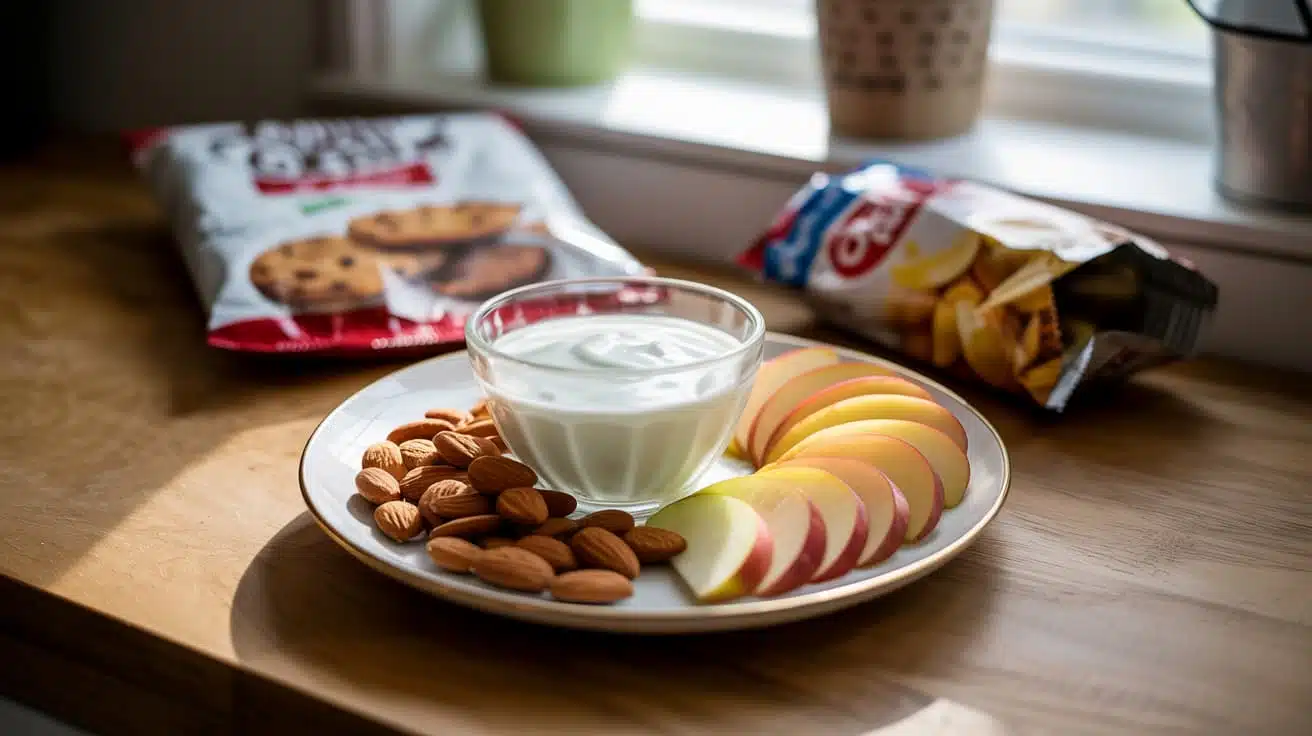
The snacks that actually keep you full are not complicated. They fall into three categories, and knowing which one to reach for changes everything.
1. Protein-First Snacks: Most Filling
What I always point people toward first is protein, and for good reason. It is the most reliable way to stay full without overshooting your calorie budget. Here are the ones actually worth keeping on your list:
| Snack | Calories | Protein | Best Time to Have It |
|---|---|---|---|
| Greek yogurt + honey + almonds | ~190 cal | 16g | Mid-morning or post-workout |
| Two hard-boiled eggs + cherry tomatoes | ~170 cal | 12g | Mid-morning or early afternoon |
| Cottage cheese + cucumber + seasoning | ~110 cal | 14g | Evening or late-night craving |
| Edamame + small apple | ~200 cal | 11g | Afternoon energy dip |
Any of these can be put together in under five minutes, which makes them easy to stick to even on a busy day. They also slot right into a 500-calorie meal plan, leaving enough room to build a satisfying, balanced plate around them.
2. Fiber-Forward Snacks: Best for Gut Health
Fiber-forward snacks are the most underrated option when gut health is part of the goal. Here are the snacks that deliver the most without pushing you over your calorie limit:
| Snack | Calories | Fibre | Best Time to Have It |
|---|---|---|---|
| Apple slices + 1 tbsp almond butter | ~170 cal | ~4g | Mid-morning or afternoon slump |
| Veggies + 3 tbsp hummus | ~165 cal | ~5g | Anytime, especially before meals |
| Half avocado + lemon + two rye crispbreads | ~190 cal | ~7g | Lunch or late afternoon |
| Small pear + 20g sharp cheddar | ~180 cal | ~4g | Afternoon or early evening |
These are the kinds of snacks that do quiet, consistent work throughout the day. From what I have seen, even one swap per day is enough to feel the difference in how steady your energy stays.
3. Whole Food Snacks: Simple and Effective
Whole food snacks are the most straightforward option when you want something simple that actually holds you over. Here are the ones that hit the mark without overcomplicating things:
| Snack | Calories | Best Time to Have It |
|---|---|---|
| Small banana + 1 tbsp peanut butter | ~185 cal | Pre-workout or mid-morning |
| DIY trail mix: almonds, walnuts, raisins | ~185 cal | On the go or an afternoon snack |
| Rice cake + half avocado + chili flakes | ~160 cal | Light afternoon or early evening |
All three sit comfortably under 200 calories, require no preparation, and deliver real staying power without relying on anything processed or artificially filling.
Snacks to Avoid When You’re Hungry
The problem is not the hunger; it is what gets chosen to solve it. These are the options that consistently make hunger worse, and here is exactly why:
- Plain rice cakes and crackers have zero protein, fat, or fiber. They cost calories without buying any fullness.
- Fruit juice and cereal bars strip out fiber and pack in sugar. The healthy label does not match the nutrition facts.
- Low-fat flavored yogurt lets sugar do the heavy lifting. Up to 20g per small serving with little satiety in return.
- Store-bought granola bars regularly cross 200 calories, mostly from added sugar, despite being marketed as a smart snack.
- Flavored popcorn disappears fast. Two hundred calories are gone before the hunger even registers.
Every item on this list shares one problem: it costs calories without buying fullness. That is the only pattern worth remembering here.
Matching Snacks to Your Specific Goal
Not everyone snacking at 200 calories is after the same outcome. Here is how to match your snack choice to what you are actually trying to do:
| Your Goal | Best Snack Type | Quick Pick |
|---|---|---|
| Weight management | Protein-first | Cottage cheese + cucumber |
| Sustained energy (no crash) | Fiber + healthy fat | Half avocado + rye crispbreads |
| Pre-workout fuel | Whole food, moderate carb | Small banana + peanut butter |
| Gut health | Fiber-forward with variety | Veggies + hummus |
| Late-night craving control | High protein, low sugar | Plain Greek yogurt + almonds |
The right snack does not just fit your calorie budget, it works toward something specific. Matching the two is what makes the difference between eating out of habit and eating with intention.
Tips for Making Snacks Work Better
The right snack is only half the equation. How and when it gets eaten determines whether it actually does its job, and most people never think about either.
- Eat sitting down without distractions: delayed satiety signals mean more gets eaten before the brain catches up
- Drink water alongside every snack: thirst and hunger use the same signal; water frequently resolves what feels like hunger
- Prep snacks in advance: hungry decision-making defaults to whatever is closest, not whatever is smartest
- Time snacks 2–3 hours after the last meal and 2–3 hours before the next. This is when a snack genuinely earns its place
Small adjustments around the right snack consistently outperform snack swaps alone. The habit matters as much as the choice.
Final Thoughts
200 calories sounds small, but I have seen it make a genuine difference when it is built around the right things. The snacks that actually work are not complicated or expensive.
They are just intentional. Protein slows digestion, fiber extends fullness, and a little healthy fat ties it together.
That is the whole formula. If you have been reaching for 200-calorie snacks that leave you hungry twenty minutes later, the problem was never the calorie count; it was what filled it.
Start with one swap from this list and see how differently your body responds. Try one snack this week and see how it lands. And if you found this useful, share it with someone who needs it.