
A single gram of saffron costs more than a gram of silver. I know, even you assumed it’s a luxury markup, the kind of pricing that exists purely to make something feel exclusive. But it isn’t.
The price is entirely justified, and once you understand why, you start looking at those thin rust-colored threads very differently.
I’ve been working with medicinal plants for seven years, and saffron is one I kept coming back to, not for the flavor, but because of where it kept showing up: clinical trials, neuroscience labs, psychiatry journals.
Not the usual folk remedy territory. So I went deep. Here’s everything worth knowing.
Stats for One Pound of Saffron
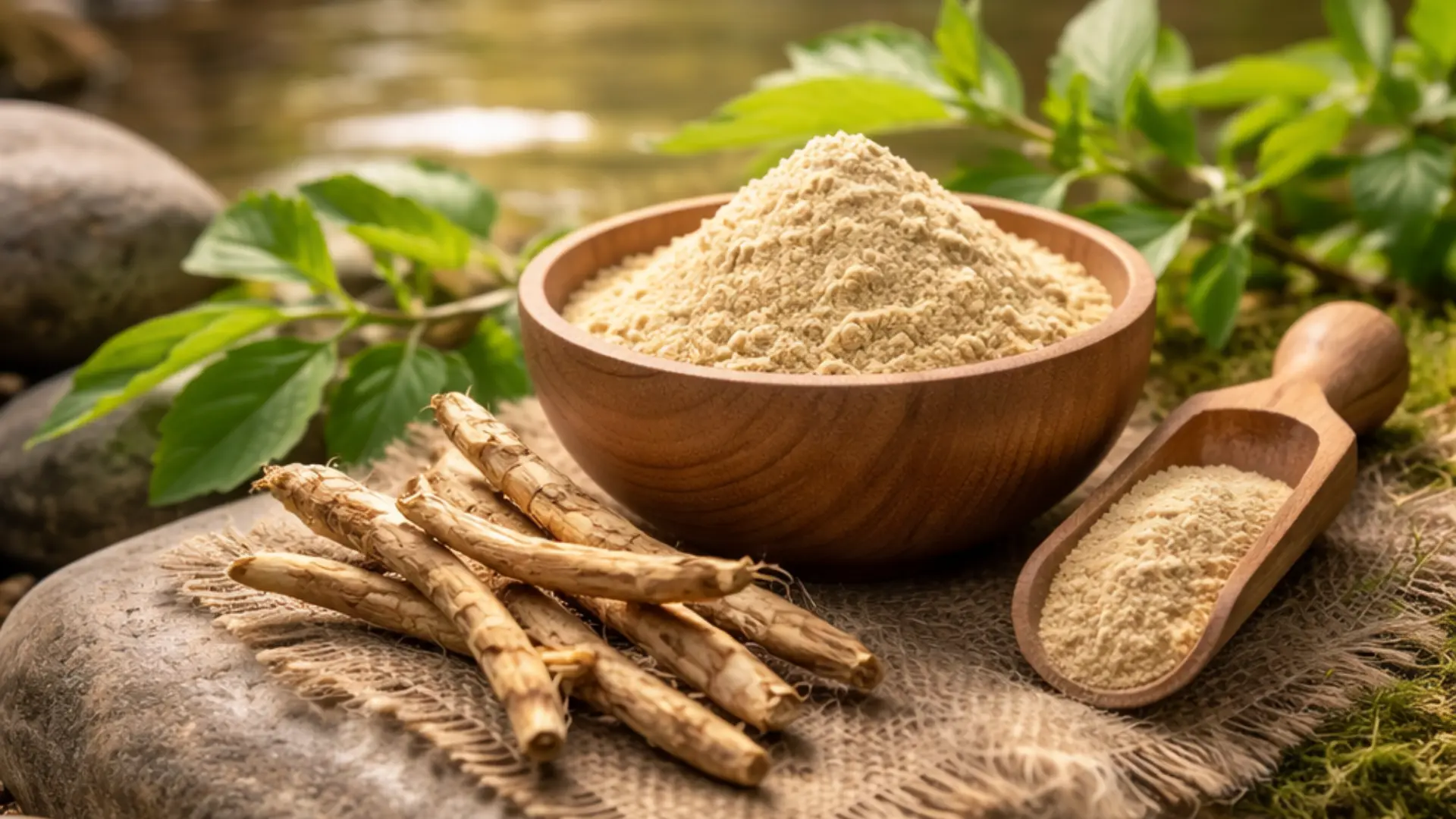
Saffron comes from a small purple flower called Crocus sativus. Inside each flower are three thread-like strands called stigmas. Those threads are what saffron actually is.
They have to be picked by hand, one flower at a time, during a two-week autumn harvest. It takes roughly 150,000 flowers to produce a single pound. There’s no machine that can do it.
That’s why saffron costs between $500 and $5,000 per pound. It’s not marketing; it’s just the reality of how it’s grown. Iran produces around 90% of the world’s supply. Kashmir produces less but is considered among the highest quality available.
Because saffron is so expensive, it’s also one of the most adulterated foods in the world. Dyed plant fibers, counterfeit threads, and diluted products are common. I’ve covered how to spot them further down.
Three Compounds and Their Effects
Most medicinal herbs have one primary active compound. Saffron has three, and each one does something different inside your body. That’s what makes it unusual.
- Crocin is the pigment behind saffron’s golden-red color. It’s a powerful antioxidant that crosses the blood-brain barrier easily, which is rare for a plant compound, and why saffron works so well on the nervous system.
- Safranal is what gives saffron its distinctive smell. It has a calming, sedative action and gently modulates serotonin activity, without forcing a spike the way most pharmaceutical options do.
- Picrocrocin gives saffron its bitter taste. It contributes to the herb’s anti-inflammatory activity and breaks down into safranal over time, which is why freshness and proper storage directly affect potency.
What Saffron Actually Does for You
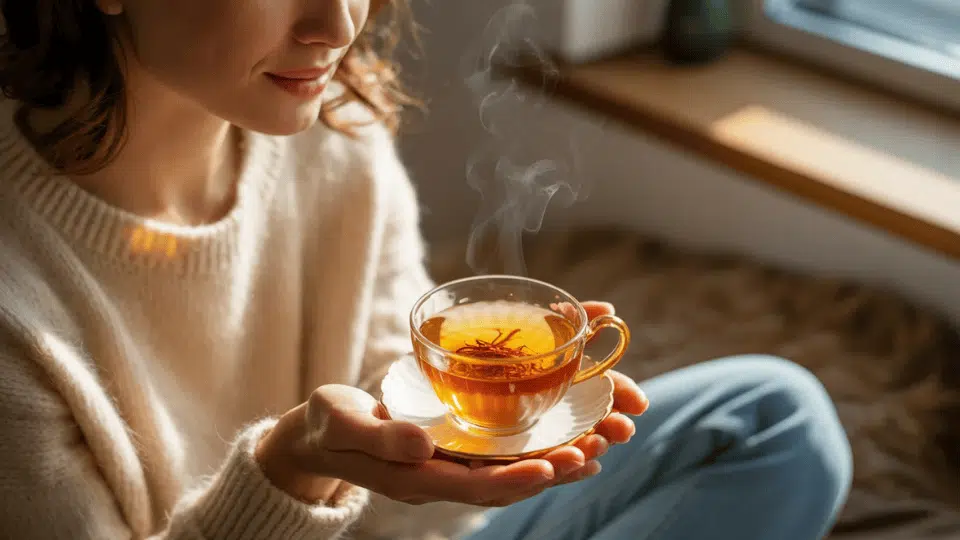
Most herbs have one or two studied benefits. Saffron has a surprisingly wide evidence base, though the strength varies depending on the area.
Mental Health Benefits
Depression is the headline. Multiple controlled trials have found saffron performs comparably to low-dose antidepressants for mild to moderate cases, with fewer side effects. It works by modulating serotonin and dopamine, without the blunt-force approach of most pharmaceuticals.
Anxiety and stress sit just behind it. Safranal has a consistent cortisol-reducing effect across multiple studies, not sedating, just taking the edge off daily tension in a way that builds over two to three weeks.
PMS and PMDD round it out. Irritability, mood swings, and emotional dysregulation have all shown meaningful improvement in trials. Research on saffron’s role in attention is newer but moving in a serious direction.
Physical Health Benefits
The physical evidence is broader but more scattered, some areas well-supported, others still early.
- Eye Health: Crocin protects retinal cells from oxidative damage, helping slow the progression of age-related macular degeneration.
- Blood Sugar: Multiple trials show reliable reductions in fasting glucose, meaningful complementary support, not a medication replacement.
- Sexual Function: Improved libido and erectile function across trials, especially in those affected by antidepressants. Both men and women are represented.
- Internal Organs: Saffron harming the kidneys is not a real concern at normal doses; the detox claims associated with it are largely overstated.
Which Way of Saffron Consumption Works for What
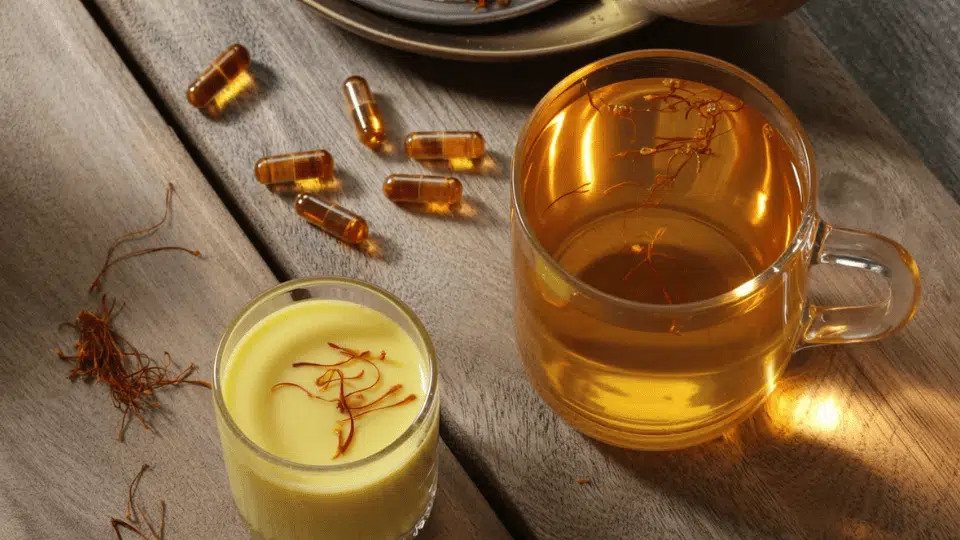
This is the part most saffron guides skip. They’ll tell you saffron is good for mood or sleep, but they don’t tell you that how you take it changes what you’re actually getting.
Most articles tell you saffron is good for mood or sleep. What they skip is how you take it changes what you actually get.
1. Supplements
This is what clinical trials use. Standardized extracts at 28 to 30mg per day, standardized meaning the manufacturer has verified the percentage of crocins and safranal in each capsule.
A reputable product states this clearly on the label. If it doesn’t, you have no way of knowing what dose you’re actually getting. This is the form that delivers consistent, trackable concentrations, which is why the studies use it.
- Amount: 28–30mg per day
- Best for: Mood, blood sugar, hormonal balance
2. Saffron Tea
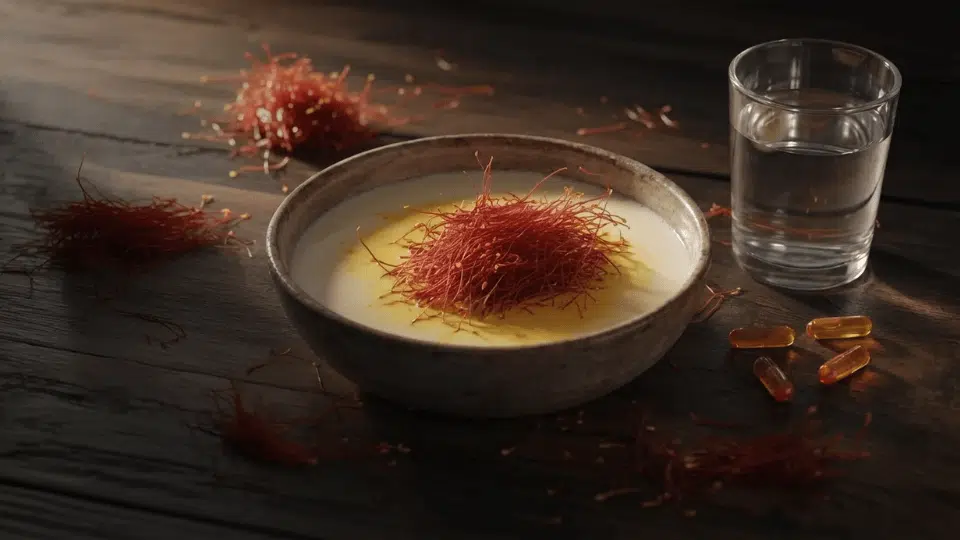
Lower and less consistent than a supplement, but still meaningful for daily wellness and gentle mood support. You steep four to six threads in hot water for 10 to 15 minutes.
The water turns golden. The taste is earthy and slightly sweet. Add honey or warm milk if you like. Saffron tea carries benefits when consumed daily in optimal doses.
- Amount: 4–6 threads per cup
- Best for: Daily wellness, sleep, mild mood support
3. Cooking
A pinch of saffron in rice, soups, or warm milk won’t replicate what a clinical trial uses. But regular low-dose exposure over months and years genuinely adds up.
Most traditional cultures never used saffron as a supplement; they cooked with it daily, and the long-term benefits of that habit are well documented across centuries of use.
- Amount: A pinch per dish
- Best for: Long-term general health
Who Should Not Use Saffron
Saffron is safe for most healthy adults at normal doses. But there are specific groups where the risk is real enough to warrant either caution or a full stop.
- Pregnant women: Firmly avoid. Saffron stimulates uterine contractions at higher doses. The risk of miscarriage or early labor is documented. Even large amounts of food are not advisable.
- People with bipolar disorder: Saffron’s serotonin activity can trigger mood swings or manic episodes. This isn’t theoretical; it’s flagged consistently across safety reviews.
- Those with bleeding disorders: The mild anticoagulant effect makes this genuinely risky for anyone with clotting issues or upcoming surgery.
- People with liver or kidney disease : Not a blanket avoidance, but reduced organ function means the body processes saffron differently. Medical input is needed before supplementing.
- Children and teenagers : The ADHD studies involving children used specific standardized doses under clinical supervision. Self-supplementing in this age group without medical guidance is not appropriate.
- Breastfeeding women: Research is too limited to say it’s safe. The conservative position is to avoid it until more data exists.
People already on medication need to be more careful. Mixing the drugs with saffron can cause real harm, and the interactions between saffron and common drugs are worth knowing before anything goes wrong.
How to Spot Real Saffron from Fake
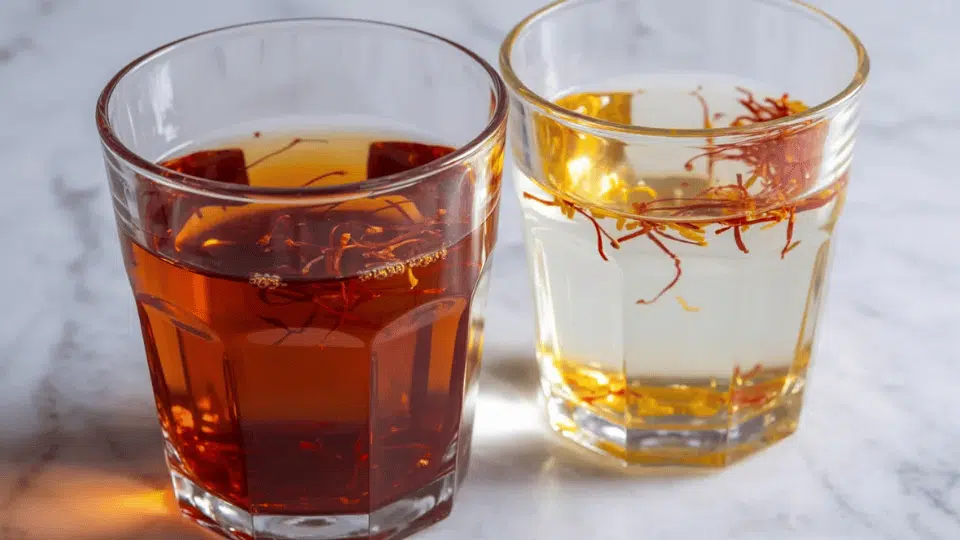
Because saffron is so expensive, the market is full of fake and adulterated products. Here’s what to check before buying.
| What to Look For | Genuine | Red Flag |
|---|---|---|
| Water Test | Slow golden-yellow color release over 10–15 mins | Turns water red immediately |
| Smell | Floral, earthy, slightly honey-like | Flat or chemical scent |
| Grade | Sargol, Negin, Super Negin (Iran) or Coupe (Spain) | Well below-market price |
| Crocin % (supplements) | Clearly stated on the label | No figure listed |
| HPLC Verification (supplements) | Independently tested and confirmed | Self-reported only |
| ISO 3632 (supplements) | Certified to the international quality standard | No certification present |
|
Quick check: Real saffron threads are red at the top and slightly yellow at the base. Fully red threads, tip to bottom, are often dyed. |
Final Thoughts
Saffron holds up unusually well under scientific scrutiny. Most herbs have patchy evidence, a few promising studies, and many gaps.
So what is saffron, exactly? It is the dried stigmas of Crocus sativus, hand-harvested one flower at a time. That labor-intensive process is part of what makes its clinical support, defined risk profile, and centuries of traditional use so compelling.
What it does not have is magic. It works at the right dose, in the right form, and without risky combinations. Treat it casually, and you risk missing the benefits entirely.
The herbs worth trusting are honest about their limits. Saffron is one of them.