

Yoga looks simple from the outside, a stretch here, a hold there. But the more I practiced, the more I realized that beneath every yoga pose lies a layer of history and meaning a studio never mentions. What started as a simple need to move quietly deepened into something far more personal.
The more time I spent on the mat, the more the poses revealed themselves, shaped by centuries of philosophy, reflecting patterns I hadn’t thought to notice in my own body.
Learning why yoga poses exist changed how I moved through them. From the first stretch to Corpse Pose, nothing felt quite the same again.
Before You Step on the Mat, Know What Yoga Actually Is
People call yoga a workout. Some call it a stretch routine. A few call it a religion. It’s none of those things exactly, though it touches all of them.
The word yoga comes from the Sanskrit root yuj, which means to unite or to yoke, pointing to the core meaning of yoga as a practice of integration. It’s about bringing the body, breath, and mind into one place at one time. Not enlightenment on day one. Just presence.
What most people practice in studios, the poses, the flows, the sequences, is called asana. It’s one part of a much older system. The ancient scholar Patanjali laid out the eight limbs of practice in the Yoga Sutras.
Asana is limb three. The other seven cover ethics, breathwork, sense withdrawal, and meditation. Most of us start with the physical and gradually move into the rest. That’s completely fine. That’s how it’s supposed to work.
From the Indus Valley to the Modern Yoga Mat
Yoga is at least 5,000 years old. Carved seals from the Indus-Saraswati civilization show figures in poses that look remarkably familiar. The word first appeared in the Rig Veda around 1500 BCE, describing the union of individual awareness with something larger.
For centuries, it was passed down through oral tradition, teacher to student, often in secret. The Upanishads deepened the philosophy. The Bhagavad Gita brought it into everyday life.
Patanjali’s Yoga Sutras (roughly 400 CE) organized everything into the foundational text that serious practitioners still study today.
Yoga reached the West in the late 1800s through Swami Vivekananda. By the 20th century, Krishnamacharya and his students, Iyengar, Pattabhi Jois, and Indra Devi, shaped the physical practice most of us recognize. What began as a spiritual science is now practiced by hundreds of millions.
The roots are still there. You can trace any pose back through thousands of years of yoga tradition if you’re curious enough to look.
The Language of Yoga: Key Sanskrit Terms
Walk into any yoga class, and you’ll hear words you don’t recognize. That’s not exclusion, it’s lineage. Sanskrit is the original language of yoga, and many of its terms don’t have perfect English translations. Here’s what actually matters.
The Words You’ll Hear Every Class
You don’t need to memorize all of Sanskrit. But these few words will make every class make more sense.
| Sanskrit | What It Means | Why It Matters |
|---|---|---|
| Asana | Pose or seat | Any physical posture in yoga |
| Pranayama | Breath control | Regulating breath to regulate the mind |
| Vinyasa | To place with intention | Often used for flow-style sequences |
| Drishti | Gaze point | Where do you fix your eyes to stay focused |
| Bandha | Lock or bind | Internal muscular contractions that support poses |
| Savasana | Corpse Pose | Final resting pose at the end of practice |
These aren’t jargon for the sake of it. Each word carries a specific instruction. When a teacher says, “Find your drishti,” they’re telling you to stop looking around and come back to yourself. Yoga has a discipline that runs much deeper than anything you’ll hear in a single class.
The Philosophy Words That Go Deeper
Some Sanskrit terms aren’t about the body at all. They’re about how you live. Aparigraha means non-grasping or non-attachment. It’s one of Patanjali’s five Yamas, ethical guidelines for navigating the world.
On the mat, it shows up when you stop trying to force a pose and let your body find its own edge. Off the mat, it’s the practice of letting go of attachment. It’s harder than any backbend.
Savasana literally translates to Corpse Pose. We’ll come back to why that name isn’t morbid at all; it’s actually the most honest name in yoga.
And then there’s the question of who practices all this. A yogi’s lifestyle and values look different for everyone. There’s no single mold.
Types of Yoga Pose Explained Simply
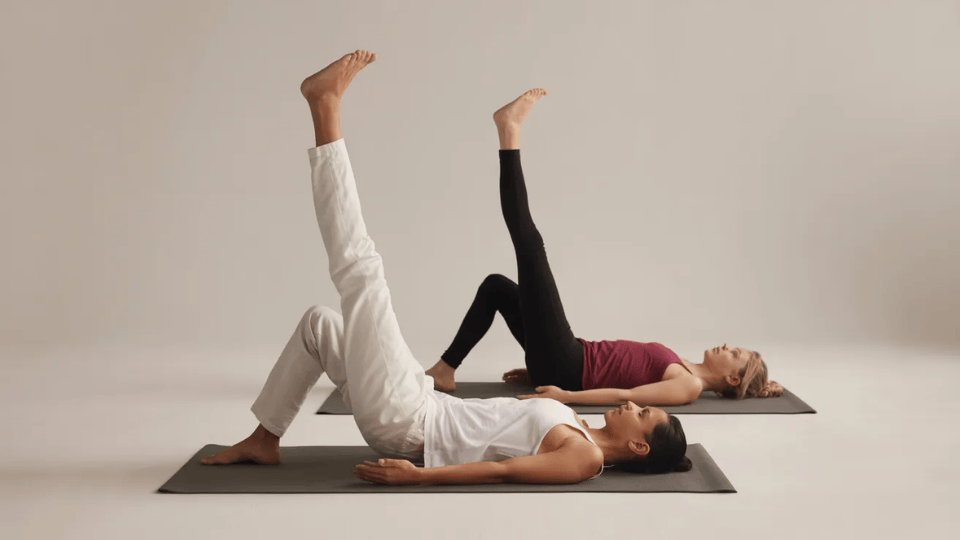
Yoga has thousands of poses, but every single one falls into a small number of categories. Once you know the categories, you start to see the logic in every sequence you’re ever taught.
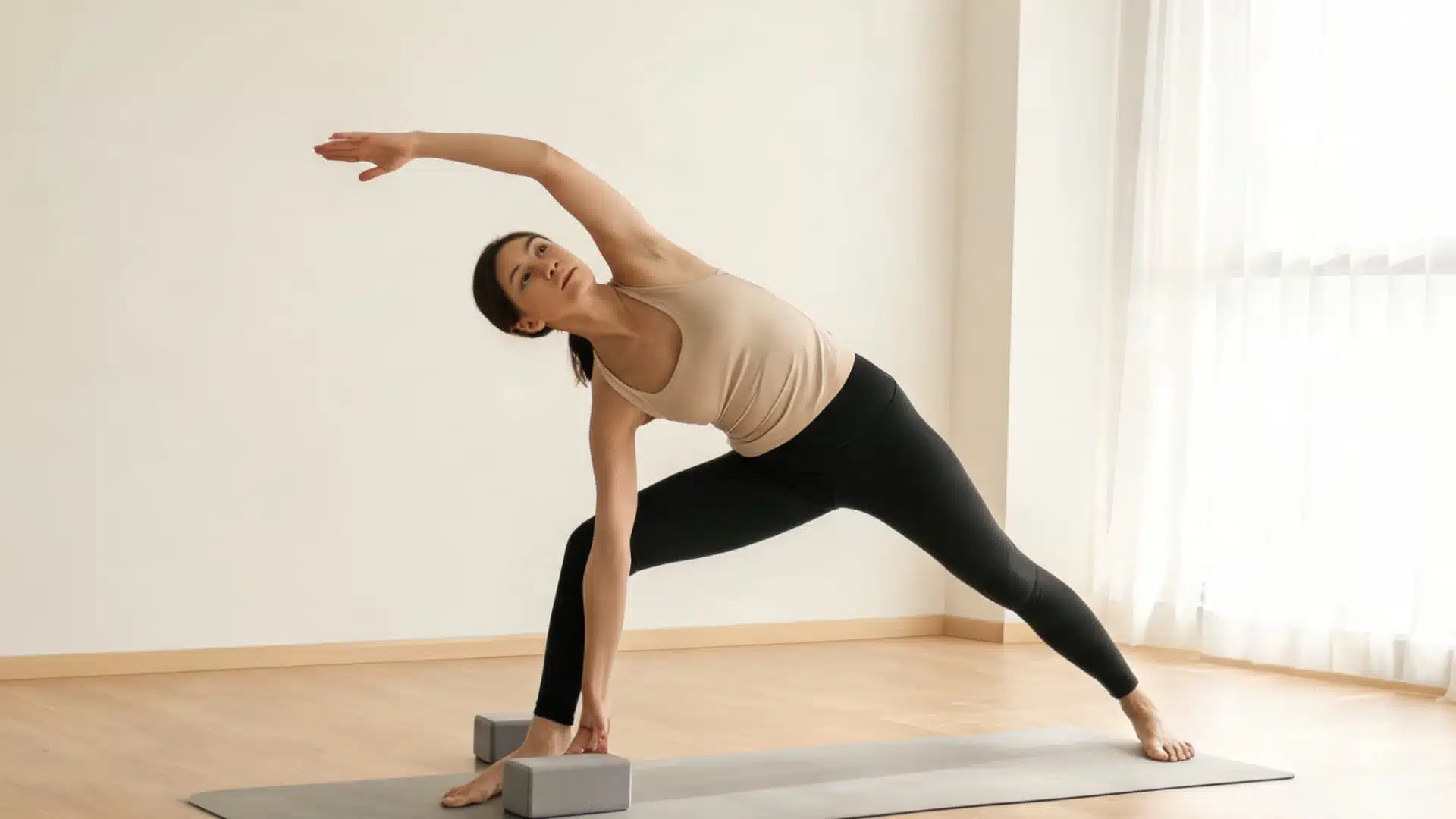
1. Standing Poses
Your feet are on the ground, and your whole body is learning to work together. These poses build strength, balance, and a real sense of how you hold yourself upright.
Standing poses are usually the backbone of any flow sequence. They teach you how to root down before you reach up. Most beginners start here without even realizing it, and there’s more going on in a simple Mountain Pose than it looks like.
Examples: Tadasana (Mountain Pose), Virabhadrasana I & II (Warrior I & II), Trikonasana (Triangle Pose)
2. Seated Poses
You’re on the floor, the hips start to open, and the nervous system slows down. Seated poses look passive from the outside, but they’re quietly doing a lot.
The hips carry more tension than almost any other part of the body, and seated poses are among the most direct ways to work through that tension. They’re underrated at every level of practice, beginner or advanced.
Examples: Dandasana (Staff Pose), Upavistha Konasana (Wide-Angle Seated Pose), Sukhasana (Easy Pose)
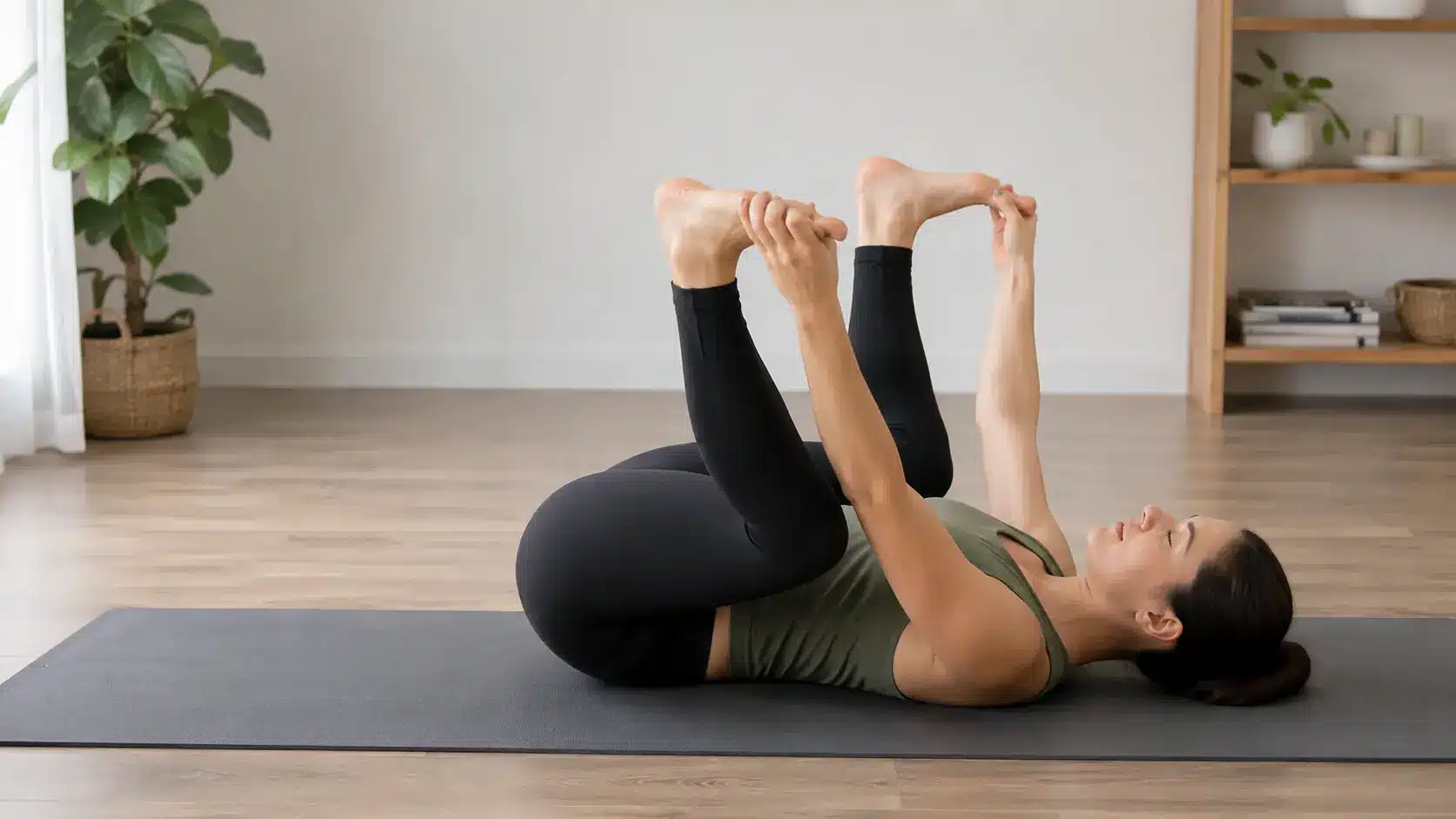
3. Forward Folds
The spine rounds forward, and the entire back body, hamstrings, calves, lower back, and the back of the neck get a long, slow stretch. Forward folds have a genuinely calming effect on the nervous system.
They’re not a flexibility test. The depth of the fold matters far less than the quality of your breath inside it. Let go of the idea that your hands need to reach the floor.
Examples: Paschimottanasana (Seated Forward Fold), Uttanasana (Standing Forward Fold), Janu Sirsasana (Head-to-Knee Pose)
4. Backbends
The spine opens in the opposite direction, the chest lifts, the front body stretches, and the shoulders draw back. Most of us spend the day hunched forward over screens, and backbends directly undo that.
They build energy rather than quiet it, which is why they tend to show up in the more active parts of a sequence. They can also feel surprisingly vulnerable. That’s not a coincidence; the front body is where we hold a lot.
Examples: Setu Bandha Sarvangasana (Bridge Pose), Bhujangasana (Cobra), Ustrasana (Camel Pose)
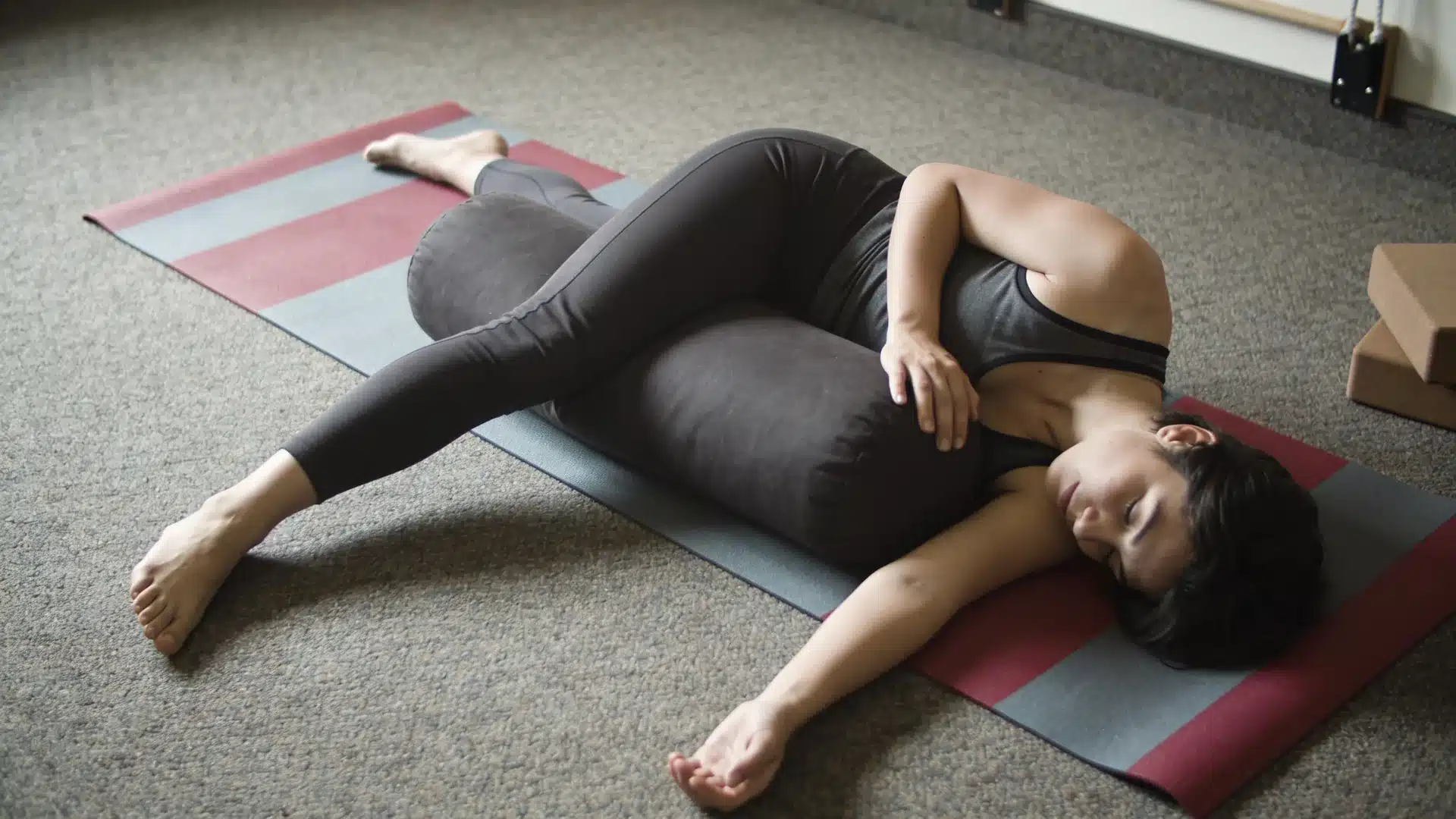
5. Twists
The spine rotates, and tension wrings out of the back, the sides, and the digestive organs. Twists compress and then release; that’s where the detoxifying description comes from.
They’re one of the best poses for a stiff or tired back, but they need a warm body to work safely. A cold spine forced into a deep twist is how people get hurt. Save these for the middle or end of a session.
Examples: Ardha Matsyendrasana (Half Lord of the Fishes), Parivrtta Trikonasana (Revolved Triangle), Supta Matsyendrasana (Supine Twist)
6. Inversions
The head drops below the heart, blood flow reverses, and the nervous system gets a completely different kind of input. Inversions range from deeply restorative, Legs Up the Wall is one of the most calming poses in yoga, to genuinely demanding.
Building toward a full handstand takes most people months or years, and that’s not a flaw in the process. The slow build is where the real work happens.
Examples: Viparita Karani (Legs Up the Wall), Sarvangasana (Shoulder Stand), Sirsasana (Headstand)
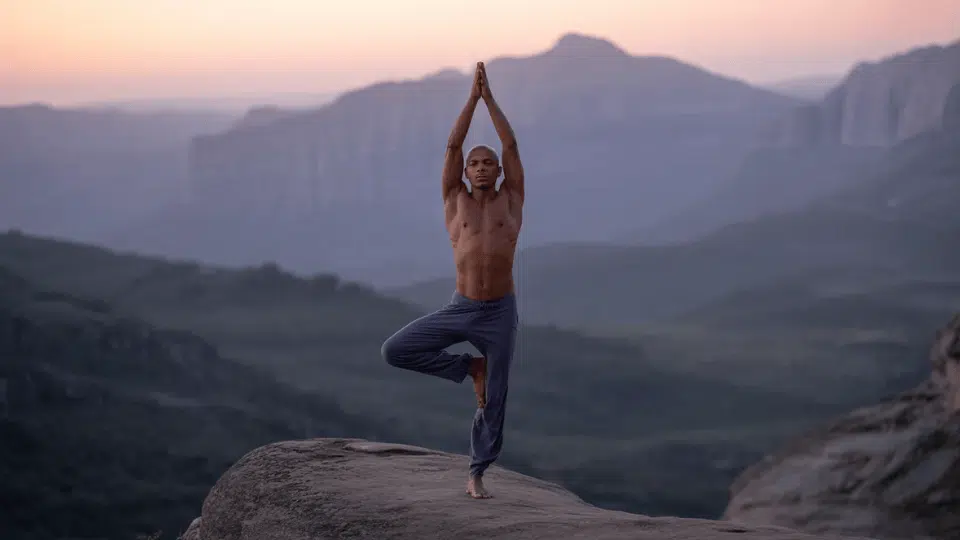
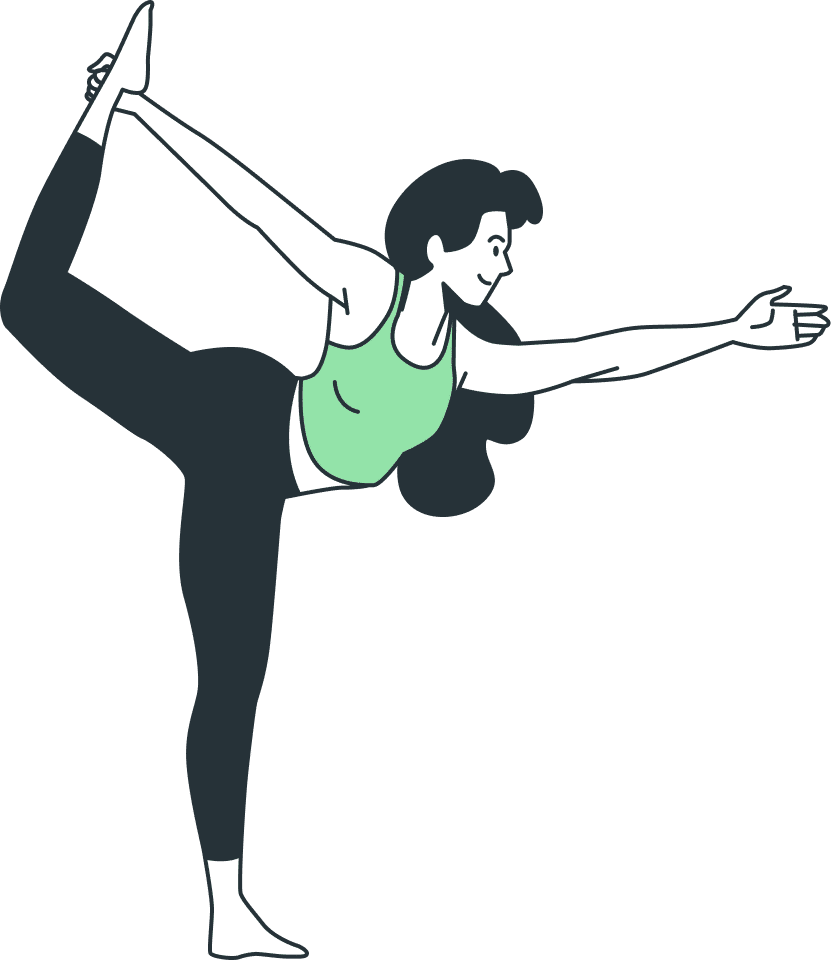
7. Balancing Poses
One point of contact with the floor and your complete attention is required. No multitasking, no drifting, balance demands presence. These poses expose exactly where you’re holding tension and how your focus behaves under mild stress.
A wobble on a hard day isn’t failure, it’s information. Utthita Hasta Padangusthasana is a good example of how balance and flexibility work together, not separately.
Examples: Vrksasana (Tree Pose), Utthita Hasta Padangusthasana (Extended Hand-to-Big-Toe Pose), Natarajasana (Dancer Pose)
8. Restorative Poses
Supported, slow, and completely still. Props, bolsters, blankets, straps, and even the wall hold the body so the muscles have permission to fully let go.
Restorative yoga is not gentle yoga in the sense of easy. It’s a different kind of hard. Staying still for five minutes without fidgeting, without checking your phone, without doing anything at all, asks more of most people than a full Vinyasa flow does.
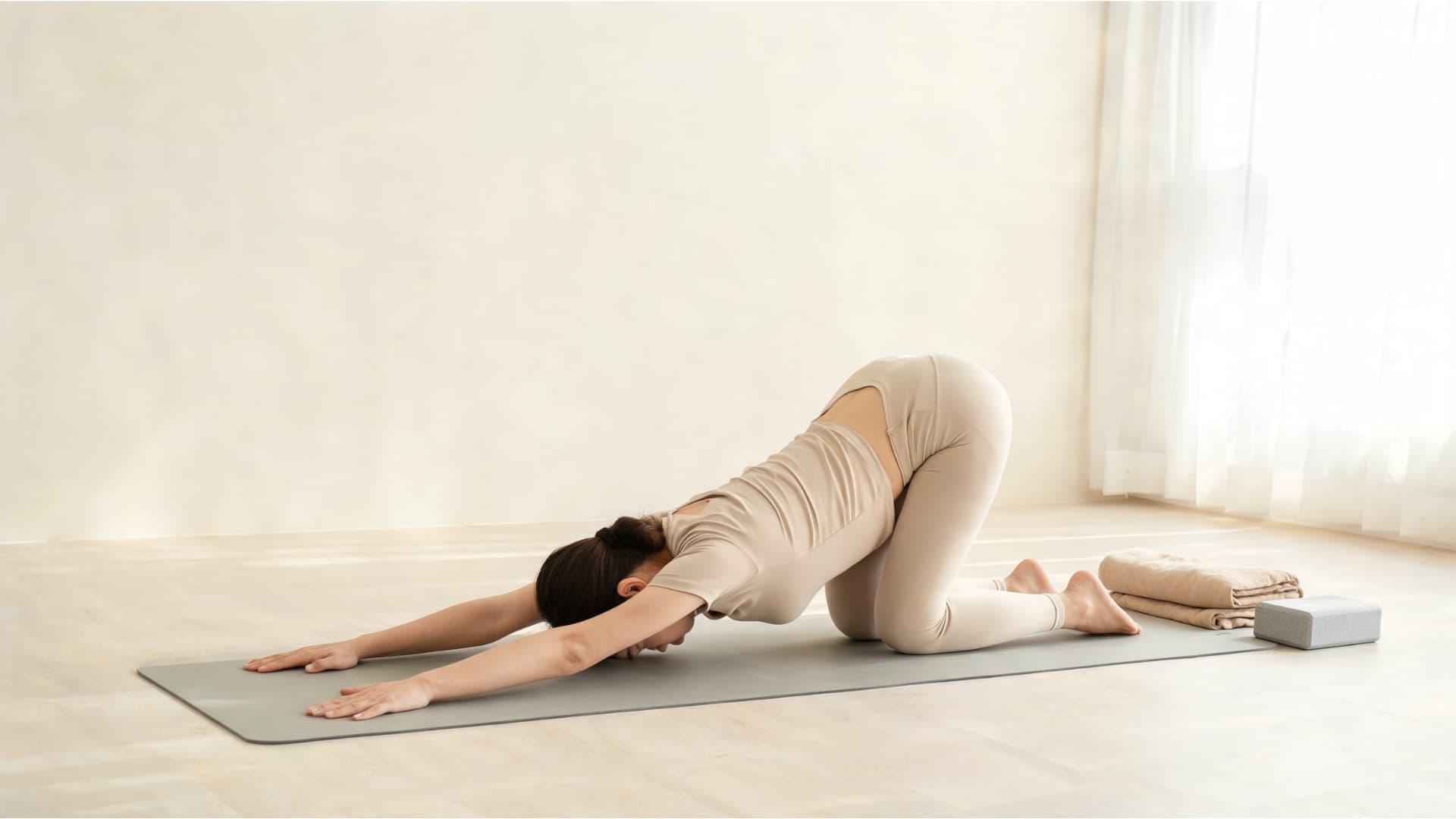
Examples: Supta Baddha Konasana (Reclined Bound Angle), Supported Child’s Pose, Savasana
What Tight Hips and Shaky Balance Are Really Telling You
Years of teaching reveal consistent patterns: your body mirrors your habits, stress, and nervous system responses clearly on the mat.
- Tight hips are extremely common; hip flexors and rotators store physical strain from sitting, injuries, and accumulated stress.
- Intense hip-opening discomfort often signals stored tension, not weakness or lack of flexibility.
- Shaky balance in standing poses reflects nervous system state more than strength or skill.
- Anxiety, fatigue, or distraction disrupts proprioception, making stability harder to maintain.
- Wobbling in poses like Tree Pose offers honest feedback about your internal state.
- Breathlessness in inversions is typically a fear response triggered by perceived threat.
- Shortened breath shows the nervous system is not yet comfortable being upside down.
- Progress comes from staying, breathing steadily, and teaching the body safety through repetition.
Your practice is feedback, not judgment. Read it closely, respond patiently, and your body will gradually shift toward balance and ease.
Yoga Has Always Been Practiced Together
There’s a common idea that yoga is a solo practice, just you and your mat. But tradition has always included shared practice. Satsang, gathering with a common intention, has always been central to yoga.
Partner work reflects that older approach. When you practice with someone else, attention shifts outward. You build trust, communicate clearly, and develop sensitivity to another body, not just your own.
Two-person yoga poses usually begin simply: seated back-to-back twists or supported forward folds. They introduce shared weight, where one person’s stability becomes the other’s support. It creates awareness you can’t access alone.
With more people, the dynamic changes completely. Movements become coordinated, timing matters, and communication has to be precise.
Four-person yoga sequences bring in elements similar to acro yoga—counterbalancing, weight-sharing, and teamwork. The practice becomes more interactive, often helping people open up in ways solo work doesn’t.
Moon Cycles, Chakras, and Correct Timing
Yoga adapts to your state, not routines. Timing, energy, and awareness shape how each practice supports your body and mind.
| Aspect | Explanation |
|---|---|
| Practice Variation | Not every session is the same; your body and mind need different approaches on different days. |
| Lunar Influence | Full moon days bring heightened energy, openness, and emotional sensitivity in traditional yoga understanding. |
| Full moon yoga sequences | Focus on release through longer holds, restorative poses, and steady breathing instead of intensity. |
| Chakra System | Seven energy centers along the spine relate to physical and emotional patterns in the body. |
| Throat Chakra | Linked to communication, an imbalance may show as holding back or difficulty expressing yourself. |
| Supportive Poses | Fish Pose, Shoulder Stand, and backbends help open and release tension in this area. |
You don’t need belief, just attention. Yoga helps you notice patterns, understand your body, and respond with more clarity and ease.
How to Build a Yoga Practice From Scratch
You don’t need much to start. A mat, some floor space, and a willingness to feel awkward for a while. That’s genuinely it.
- Start three times a week. It’s enough to build muscle memory without burning out. Forcing daily practice in week one is how people quit by week three.
- Pick a time you’ll actually show up for. Morning practice tends to be energizing, with standing poses, sun salutations, and flows. Evening is better for unwinding, forward folds, twists, and restorative shapes. Neither is superior.
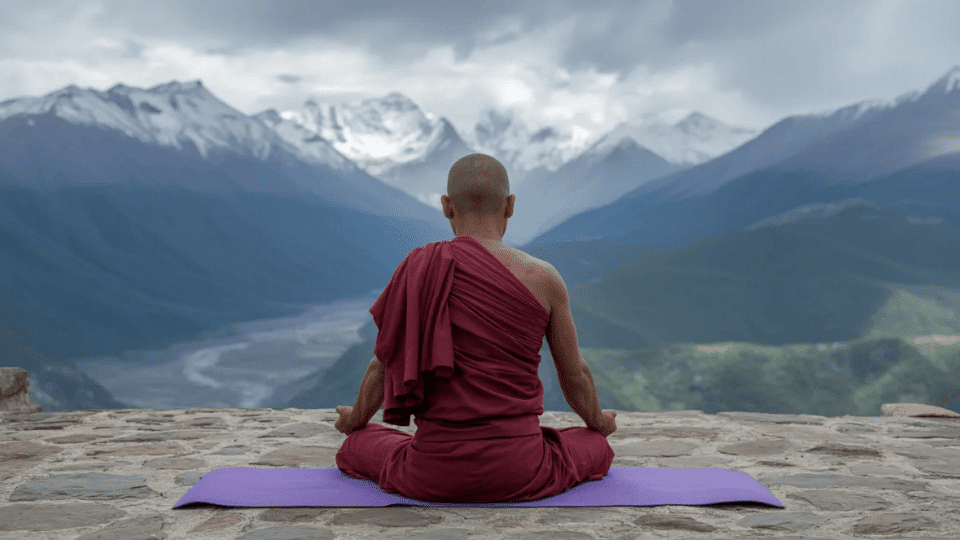
- Begin with stillness, not movement. Seated meditation poses are an underrated entry point for complete beginners. Before the body learns to move in yoga, it helps to learn to be still. Five minutes of sitting and breathing is a yoga practice. It counts.
- Stop measuring progress in poses. Some days, something that felt easy last week is impossible. Some weeks, everything clicks. The practice is in returning, not in being good at it.
Frequently Asked Questions
Is it better to practice yoga before or after a workout?
Usage determines yoga’s role: use dynamic flows and mobility as a warm-up before workouts, and slower stretches for recovery afterward. Treat yoga as a tool: energize before, unwind after.
Do I need to feel discomfort in yoga for it to be effective?
Not necessarily. Sensation and pain differ. Mild stretches are normal, but sharp pain signals to stop. Progress in yoga depends on consistency and awareness, not pushing limits. Recognizing your body’s signals is part of the practice.
Can yoga practice change depending on life stages or routines?
Yes, it should. Your practice evolves with age, stress, sleep, and activity. A routine that works during busy times may feel different when life slows down. Adapting your practice instead of forcing consistent intensity helps long-term progress and prevents burnout.
The Final Stretch
Yoga poses are the visible part of something much older and deeper. They’re the entry point, the thing you can see and touch and practice with your body.
But behind every pose is a history, a name, a philosophy, and a reason.
This yoga poses guide was built to give you everything in one place: what yoga is, where it came from, the language it speaks, how the poses are organized, what your body is communicating through them, and how to begin or deepen a practice that’s actually yours.
If something here opened a door for you, follow it. Drop a comment with suggestions, guidance, and questions. I would love to know more.