



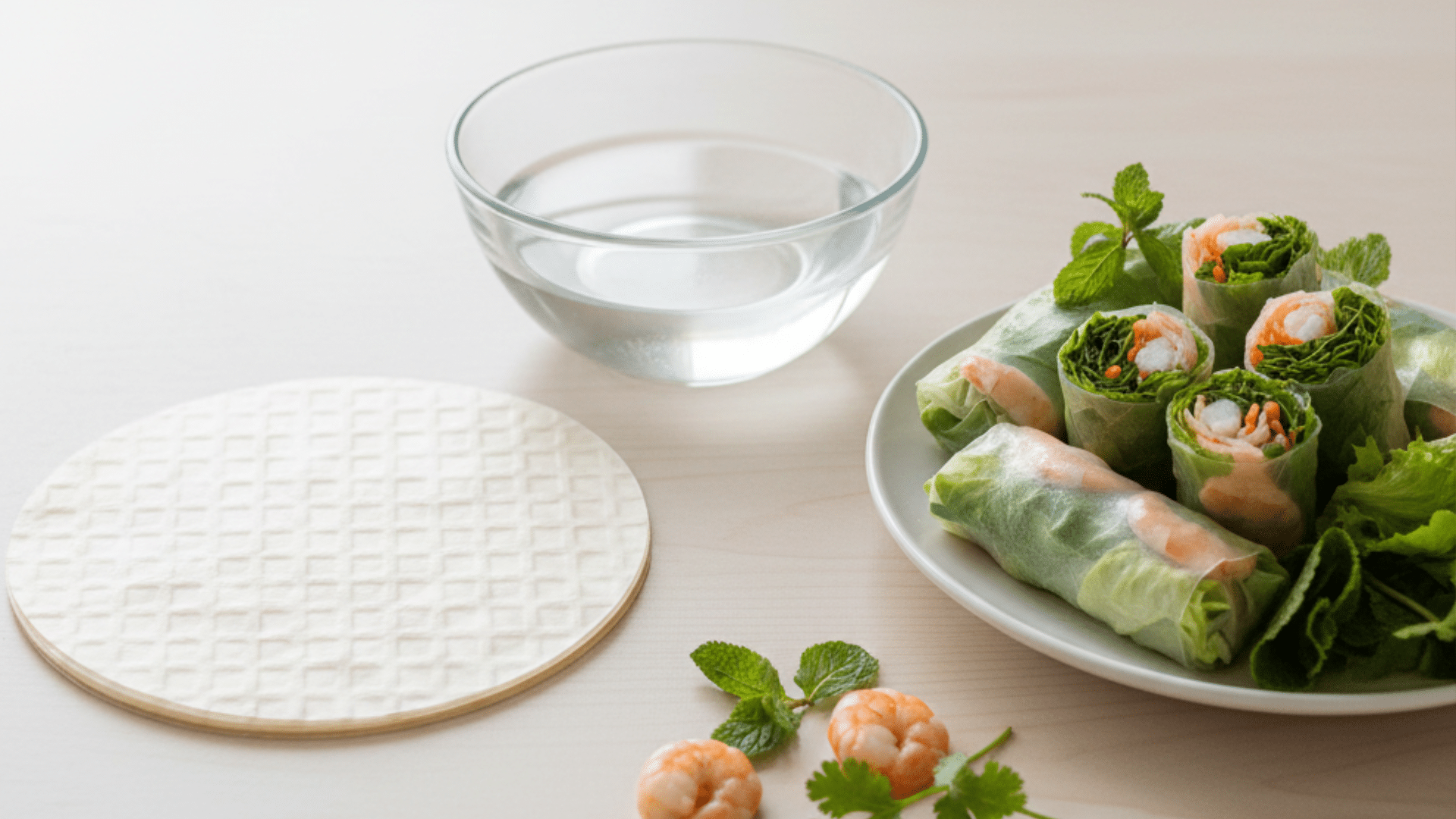








I still remember the first time I made fresh rolls at home and wondered if the wrappers were truly light or just smart packaging. You’ve probably stood over a pack too, trying to figure out what each sheet means for your day.
Calories, carbs, sodium, noodles or no noodles, it can all feel confusing when you just want a simple answer. Clear rice paper nutrition makes everything easier.
When you understand what one sheet actually gives you, you can build rolls that fit your needs without guessing. It also helps you choose fillings and sauces with more confidence. So let’s break everything down in a calm, simple way that makes rice paper nutrition feel easy to trust.
What Rice Paper is Made Of?
Rice paper sheets stay light and thin because they rely on a short list of basic ingredients. Each part of the mix changes how the sheet feels in your hands and how it behaves once it touches water.
- Rice flour gives the sheet its form and mild taste.
- Tapioca adds stretch and helps the sheet bend without breaking.
- Salt supports drying, improves flexibility, and slows spoilage.
- Water brings the mixture together before the sheet dries.
Small changes in the amount of each ingredient create big differences between brands. A thicker sheet holds more starch, which raises calories.
A higher level of tapioca shifts the carb number and softening time. Salt levels also change sodium counts from one brand to another.
Quick Answer: Rice Paper Nutrition and Calories
A dry rice paper sheet stays light, and most of its energy comes from rice paper carbs, which make up nearly the full calorie count.
You can see the average values clearly in the panel below, based on common brands sold in many stores.
Rice Paper Calories and Macros (Per 1 Dry Sheet)
| Item | Amount |
|---|---|
| Calories | 40–70 kcal |
| Carbohydrates | 10–11 g |
| Net Carbs | 10–11 g |
| Protein | 0–0.5 g |
| Fat | 0 g |
| Saturated Fat | 0 g |
Rice Paper Sugar and Fiber Content
| Item | Amount |
|---|---|
| Sugar | 0–1 g |
| Fiber | 0–1 g |
Rice Paper Minerals and Sodium
| Item | Amount |
|---|---|
| Sodium | 100–260 mg |
| Calcium | 0 mg |
| Iron | 0–0.5 mg |
| Potassium | 0 mg |
A dry sheet is mostly starch with a small amount of salt. It does not give many vitamins or minerals, so the fillings decide the final nutrition of your roll. This includes how much fibre, protein, and micronutrients you take in.
Because fat is almost zero, the sheet works well in low-fat meals. Carbs stay steady if you use only one or two sheets, but the total rises fast when you build several rolls in one sitting.
Calories per Sheet
Different brands use slightly different formulas, sheet sizes, and serving weights. That is why their calorie and carb numbers do not match exactly. Looking at a few common brands helps you see the normal range.
Use these figures to see how each brand differs in serving weight, calories, carbs, protein, fat, and sodium per portion.
These numbers help you see how much energy, carbs, fat, and sodium you get when you compare per-sheet and per-100g values.
| Brand / Source | Serving Size | Calories | Carbs | Protein | Fat | Sodium |
|---|---|---|---|---|---|---|
| Bento at Home | 1 sheet (13g) | 45 | 11g | 0.2g | 0g | 125mg |
| Valcom | 2 sheets (20g) | ~69 | 16.4g | 0.2g | 0.2g | 174mg |
| Pandaroo | 30g | ~102 | 25g | 0.5g | 0g | 264mg |
| Bamboo Tree | 7 sheets (68g) | ~238 | 59g | 0g | 0g | 105mg |
| Three Ladies | ~1 sheet (varies) | 40–60 | 10–11g | 0–0.5g | 0g | varies |
| ReciPal Standard | 100g | 338 | 77g | 6g | 0.5g | 1339mg |
These values help you match your sheet count with your needs so that you can plan your rolls with clear and simple numbers.
Rice Paper Roll Calories by Filling Type
Your sheet stays light, so the fillings decide most of the calories. Once you know the numbers, you can build rolls that match your needs.
Low-Cal Rolls (Under 100 Calories)
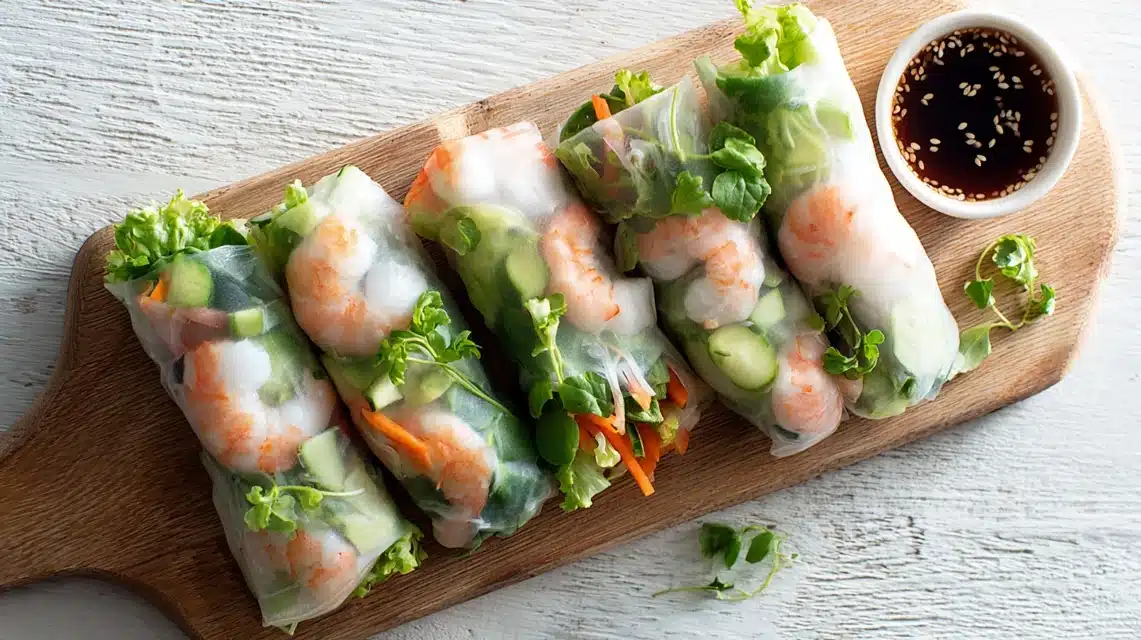
A low-cal roll uses one sheet, lean fillings, and no noodles.
- Wrapper: 45–60 calories
- Vegetables and herbs: 5–20 calories
- Shrimp (optional): 20–30 calories
- Sauce (very small amount): 10–20 calories
A light roll usually stays around 60–100 calories, depending on your mix. Vegetables add very little, so the sheet and protein decide the total. If you skip avocado, noodles, and heavy sauces, the roll stays low in energy.
A small spoon of sauce keeps the flavour steady without adding too many calories.
High-Protein Rolls
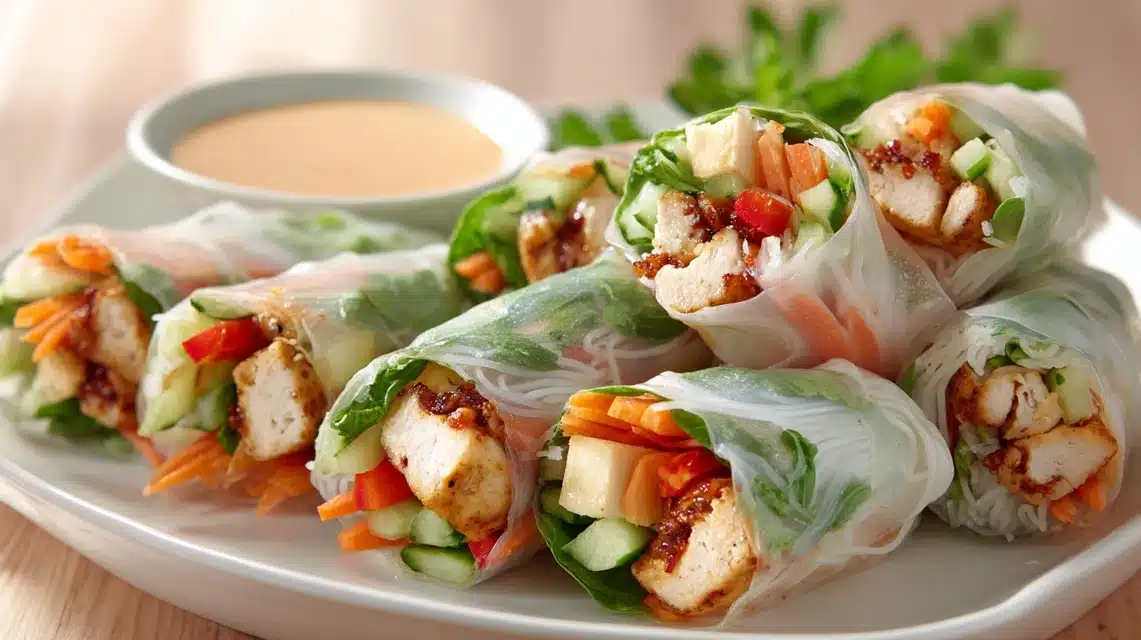
A high-protein roll uses chicken, shrimp, fish, or tofu as the main filler.
- Wrapper: 45–60 calories
- Protein (chicken, shrimp, tofu): 40–80 calories
- Vegetables and herbs: 5–20 calories
- Noodles (optional): 30–50 calories
A protein-focused roll usually lands 100–180 calories before sauce. Chicken and shrimp add steady protein without raising calories too high.
Tofu also works well, especially when kept plain instead of fried. Keep noodles low to keep the focus on protein instead of starch. This style helps you stay full longer during meals.
Plant-Based Rolls
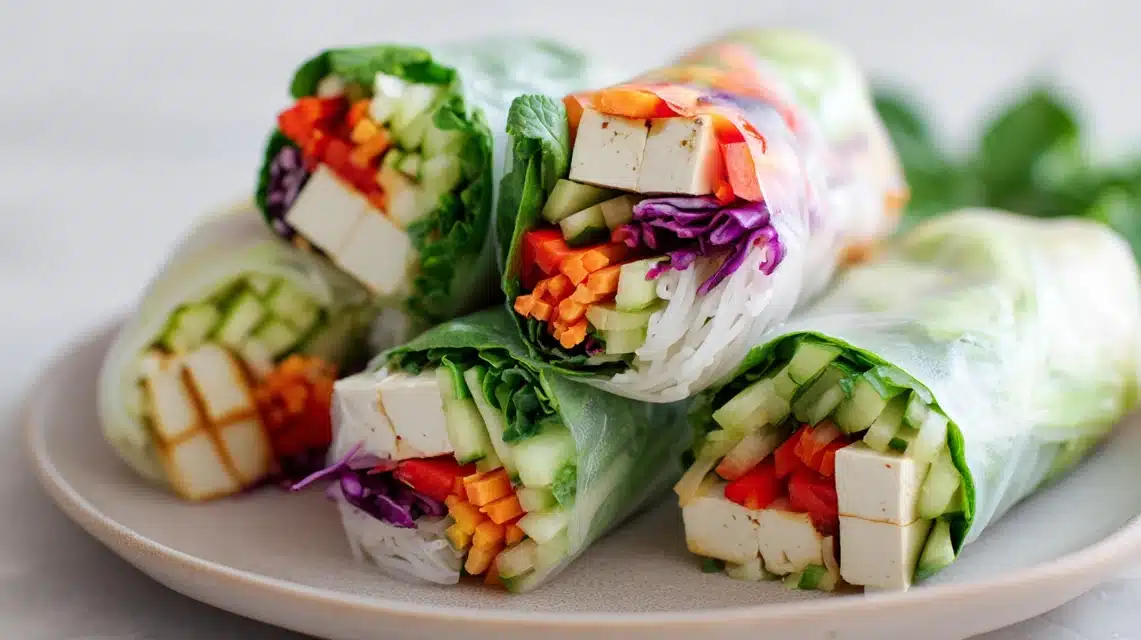
A plant-based roll uses firm tofu along with fresh vegetables.
- Wrapper: 45–60 calories
- Tofu: 40–70 calories
- Vegetables and herbs: 5–20 calories
- Noodles (optional): 30–50 calories
A plant-based roll stays between 100–170 calories, depending on how you season and prepare the tofu. Plain tofu keeps the number steady, while pan-fried tofu increases it.
Vegetables bring very little energy, so they help balance the tofu. If you skip noodles, the roll stays light while still giving enough protein for a filling meal.
How Fillers Change Calories
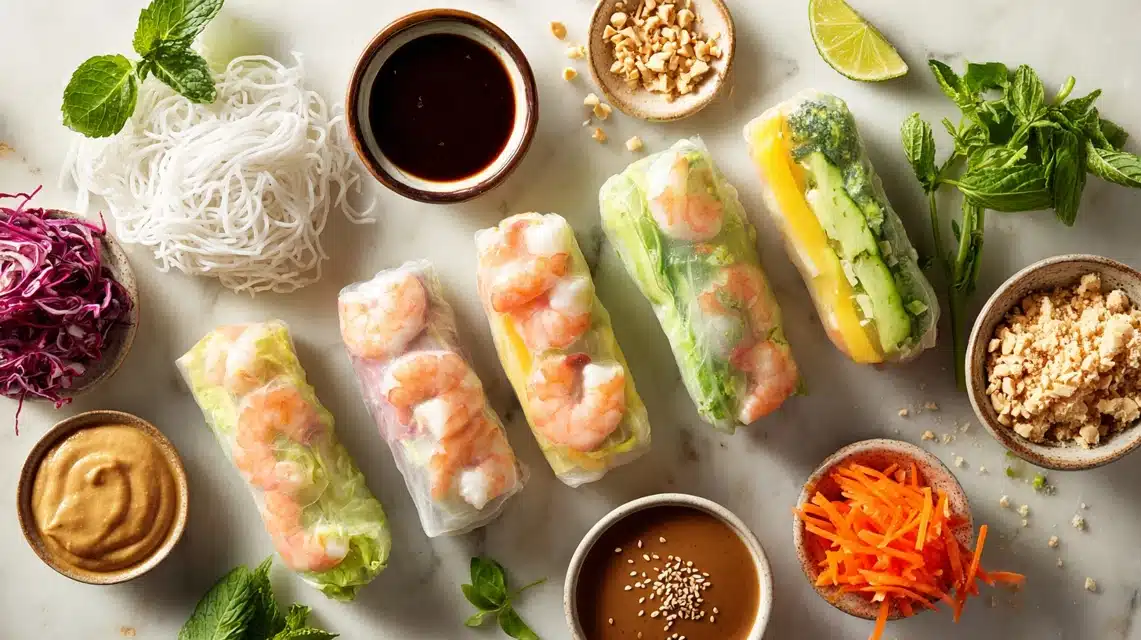
Your fillers account for most of the calories in each roll.
- Noodles: 40–50 calories
- Shrimp: 20–30 calories
- Vegetables and herbs: 5–20 calories
- Peanut sauce: 80–100 calories
- Hoisin sauce: 30–40 calories
- Fish-based dips: 20–30 calories
The wrapper stays light, so the mix inside controls your total. Noodles raise energy fast because even a small portion adds steady carbs.
Vegetables keep the roll light, while sauces add the most. A measured spoon keeps the flavour steady without raising calories more than you expect.
Is Rice Paper Healthy?
Rice paper can fit into many eating plans because it is low in fat and fairly low in calories.
A study in the Asian Journal of Food and Agro-Industry (2013) examined rice flour and tapioca sheets and found that these wrappers carry very little fat or protein. This makes them a light option for meals, since most of the energy comes from carbs rather than added oils.
Another paper in Food Chemistry, 2016, examined rice starch films and reported that the sheets carry a steady carb load but very small amounts of micronutrients. This means the sheet works best when you pair it with foods that supply fibre, protein, and vitamins.
People with gluten concerns can use rice paper safely, since common brands rely on rice and tapioca instead of wheat.
Rice Paper and Blood Sugar
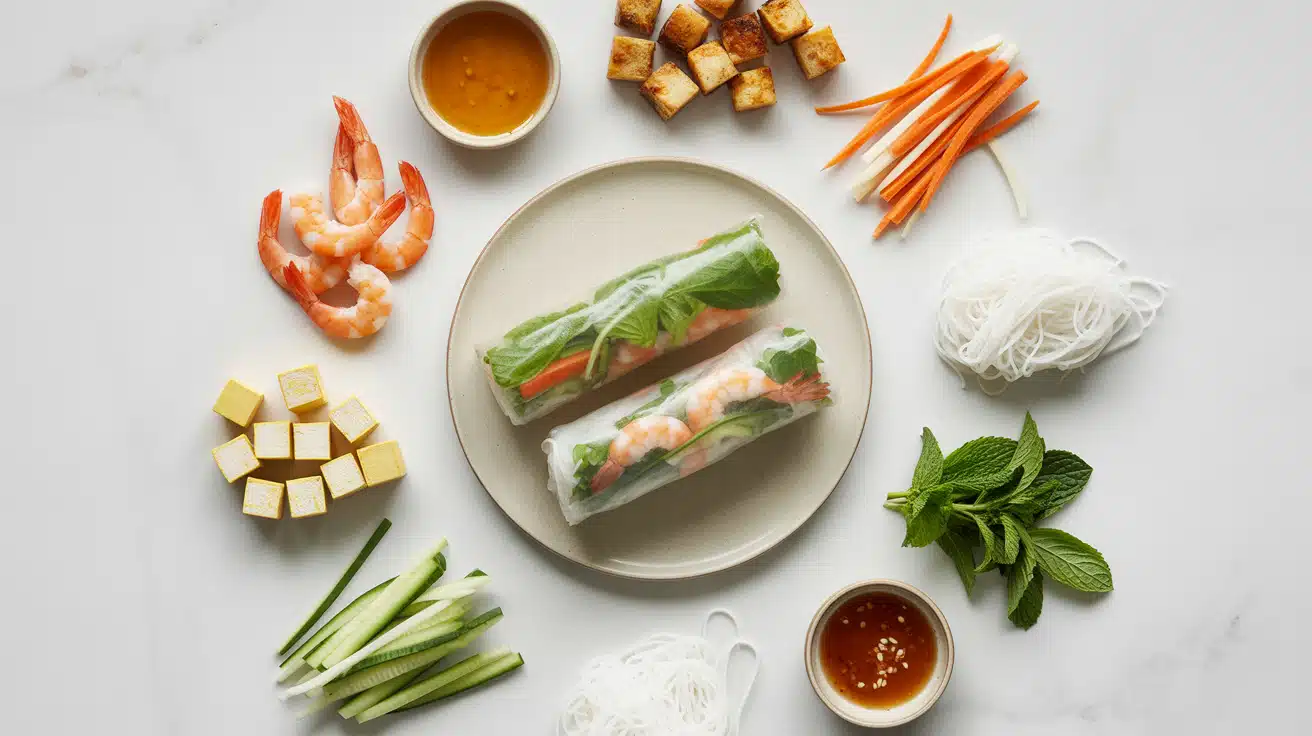
You should know how rice paper affects your blood sugar, how tapioca changes this effect, and simple ways to keep your rolls steady for your body.
Glycemic Index of Rice Paper
Rice paper can raise your blood sugar faster than whole grains because it’s made from refined rice starch. This refined starch breaks down steadily once you start eating it.
The sheet is still light, so your total carb load stays smaller than eating a big serving of plain white rice. The real impact depends on what you put inside each roll.
When you add vegetables and lean protein, the rise in blood sugar slows because these foods digest more slowly. This balance helps soften the effect of the sheet and keeps each roll steadier for your body.
How Tapioca Affects the GI
Tapioca raises the glycemic impact because your body breaks it down very quickly. This fast digestion makes the sheet act more like a quick carb.
When a sheet contains more tapioca, it softens faster in water and digests faster once you eat it. This can lead to a steady rise in blood sugar, especially if the roll lacks enough protein or fibre.
You can still use these sheets, but you need to balance them with protein and vegetables. Sheets with less tapioca usually give you a slower and steadier change in blood sugar.
How to Make Rolls Blood-Sugar-Friendly
You can shape each roll in simple ways that help steady your blood sugar and keep your meal gentle on your body.
- Add protein like chicken, tofu, shrimp, or fish. Protein slows digestion and helps steady your blood sugar.
- Use plenty of vegetables and herbs. Fibre slows how fast your body absorbs the carbs from the sheet.
- Skip large portions of noodles. They raise the carb load quickly.
- Keep sauces low in sugar. Peanut, hoisin, and sweet blends can raise blood sugar faster than the sheet itself.
- Use lime, chili, or fresh herbs for flavour without sugar.
- Build smaller rolls if you want tighter blood sugar control during meals.
How Many Sheets Should You Use? Realistic Portions
The number of sheets you use changes the total calories and carbs in your meal. One sheet stays light, but several sheets can raise your intake faster than you expect.
Your ideal number depends on how many rolls you want to eat and how much you add inside each roll.
Most people keep their serving between two and four sheets during a meal, but some packs list a much larger serving size. Use the guides below to plan your own portions.
Typical Serving Sizes
1 sheet: One sheet works for a single roll when you want a light snack or when you pair the roll with soup or salad. It stays low in calories and carbs.
2–3 sheets: This amount suits a normal meal. You can fill each sheet with protein and vegetables without taking in too many carbs at once.
7–8 sheets (package serving): Some labels list this as a full serving, but most people do not eat this amount in one sitting. The number is based on pack weight, not a meal.
Calories for 1, 2, 3 Sheets
Here are simple numbers you can use when planning your meal. Values reflect the average sheet size used by common brands.
- 1 sheet: about 40 to 60 calories
- 2 sheets: about 80 to 120 calories
- 3 sheets: about 120 to 180 calories
These numbers cover the wrapper only. Your fillings and sauces account for most of the calories in your meal.
How to Use Rice Paper Properly
Step 1: Keep the sheet in water for only one or two seconds. A quick dip stops it from turning soft too fast and keeps your roll steady.
Step 2: Place the wet sheet on a clean surface for a short pause. This short wait helps the sheet firm up so it does not tear easily.
Step 3: Keep your fillings in one straight line in the center. A tight line helps the sheet fold smoothly and keeps the roll stable.
Step 4: Bring both sides inward, then roll from the bottom toward the top. This method keeps the fillings in place and prevents the sheet from pulling apart.
Step 5: Use slow, light movements when shaping your roll. Soft sheets can tear with rough handling, so a gentle touch helps you keep the roll together.
Rice Paper vs. Other Wrappers: Which is Healthier?
Use these numbers to see how rice paper fits next to other wrap choices.
| Wrapper Type | Calories | Carbs | Protein | Fat | Sodium |
|---|---|---|---|---|---|
| Rice paper (1 sheet) | 40–60 | 10–11g | 0–0.5g | 0g | 100–260mg |
| Flour tortilla | 90–120 | 15–20g | 2–3g | 2–3g | 120–220mg |
| Wonton wrapper | 35–45 | 7–8g | 1g | 0g | 40–60mg |
| Seaweed sheet | 10–15 | 1–2g | 1g | 0g | 20–30mg |
| Lettuce leaf | 1–5 | 0–1g | 0g | 0g | 0–5mg |
Flour tortillas carry more calories and fat. Seaweed sheets carry fewer carbs. Lettuce leaves bring the lowest calorie count. Rice paper sits in the middle, making it easy to use for light meals.
Conclusion
So now you have a clear view of what those thin sheets really add to your plate, and what they don’t. You know how calories change with fillings, how sauces matter, and how many sheets fit your goals for a meal.
For me, rice paper feels a lot easier to use once the numbers are out in the open. You can treat rice paper nutrition as a simple tool, not a puzzle.
I’d love for you to try a new roll combo, adjust the portions, and see how you feel. When you’re ready, check out my other blogs for more simple food breakdowns and ideas.