

If you have diabetes, fruit can feel weirdly controversial like it personally offended your glucose meter and now the internet has Opinions™. But here’s the truth: fruit isn’t automatically the villain. Whole fruit comes with fiber, water, vitamins, and antioxidants that can absolutely fit into a diabetes friendly day.
The problem is that people lump all “fruit” into one big category… when a cup of raspberries and a glass of orange juice do not behave the same in your body. That’s like saying a houseplant and a jungle are both “green,” so they require the same care. (No. One of them is plotting your downfall.)
So let’s talk about which fruits tend to play nicest with blood sugar, which ones need a little side-eye, and how to figure out what your body thinks—because your meter does not care about anyone’s comment section.
Why Fruit Gets Blamed (Even When It’s Not the Problem)
Fruit has sugar. True. But whole fruit also has fiber, and fiber is basically the speed bump that keeps sugar from flying into your bloodstream like it’s late for a meeting.
Fruit usually turns into a “whoops” moment when:
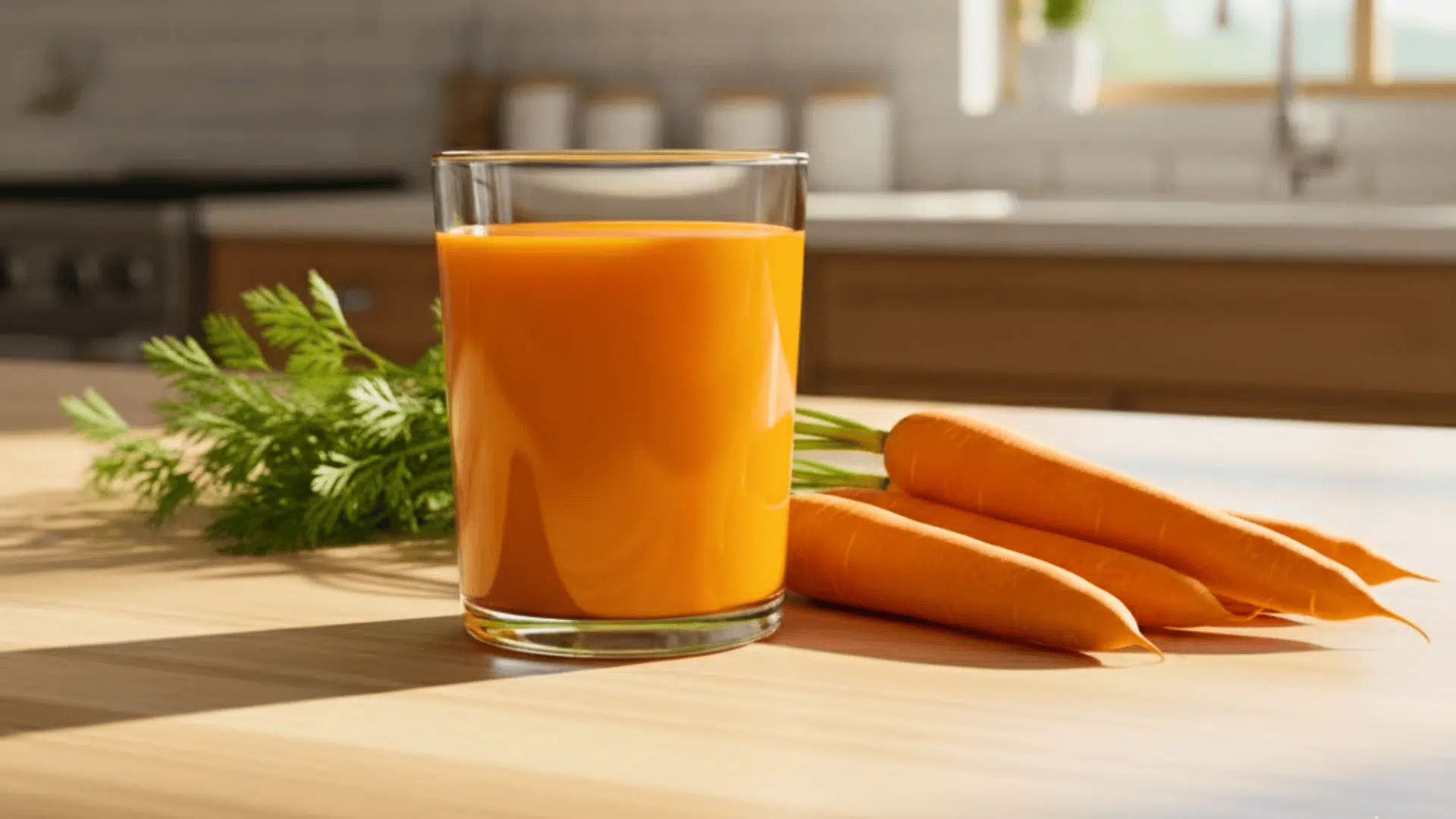
- You drink it (juice = sugar hits faster because the fiber is gone)
- You dry it (dried fruit is tiny but carb dense like fruit went through a shrink ray and kept all its sugar)
- You freehand the portion (I support vibes… but not when it comes to grapes)
- You eat it solo on an empty stomach (pairing helps more on that in a minute)
One mindset shift that helps a lot: treat fruit like any other carb. Not “good” or “bad,” just something you budget for—like bread, rice, potatoes, etc. Fruit isn’t the villain. Portion creep is.
The “Impact” Idea (GI/GL Without the Headache)
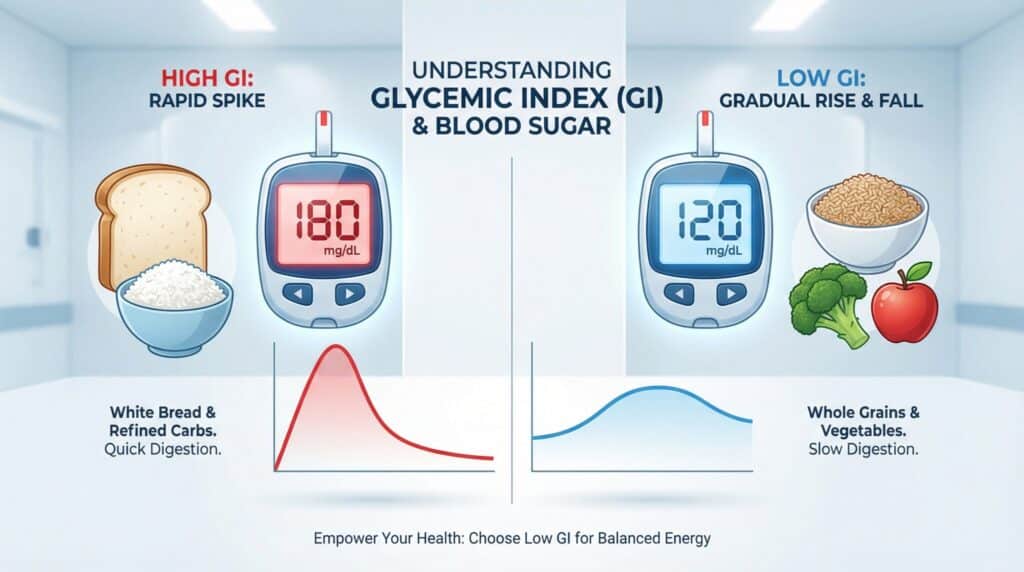
You’ll hear people talk about glycemic index (GI) and glycemic load (GL). Here’s the only part you really need:
GL matters more in real life because it considers a normal serving size. (Watermelon is the classic example: it can have a high GI, but a typical portion doesn’t contain a ton of carbs, so it’s often more manageable than people expect.)
I like thinking of fruit in three buckets:
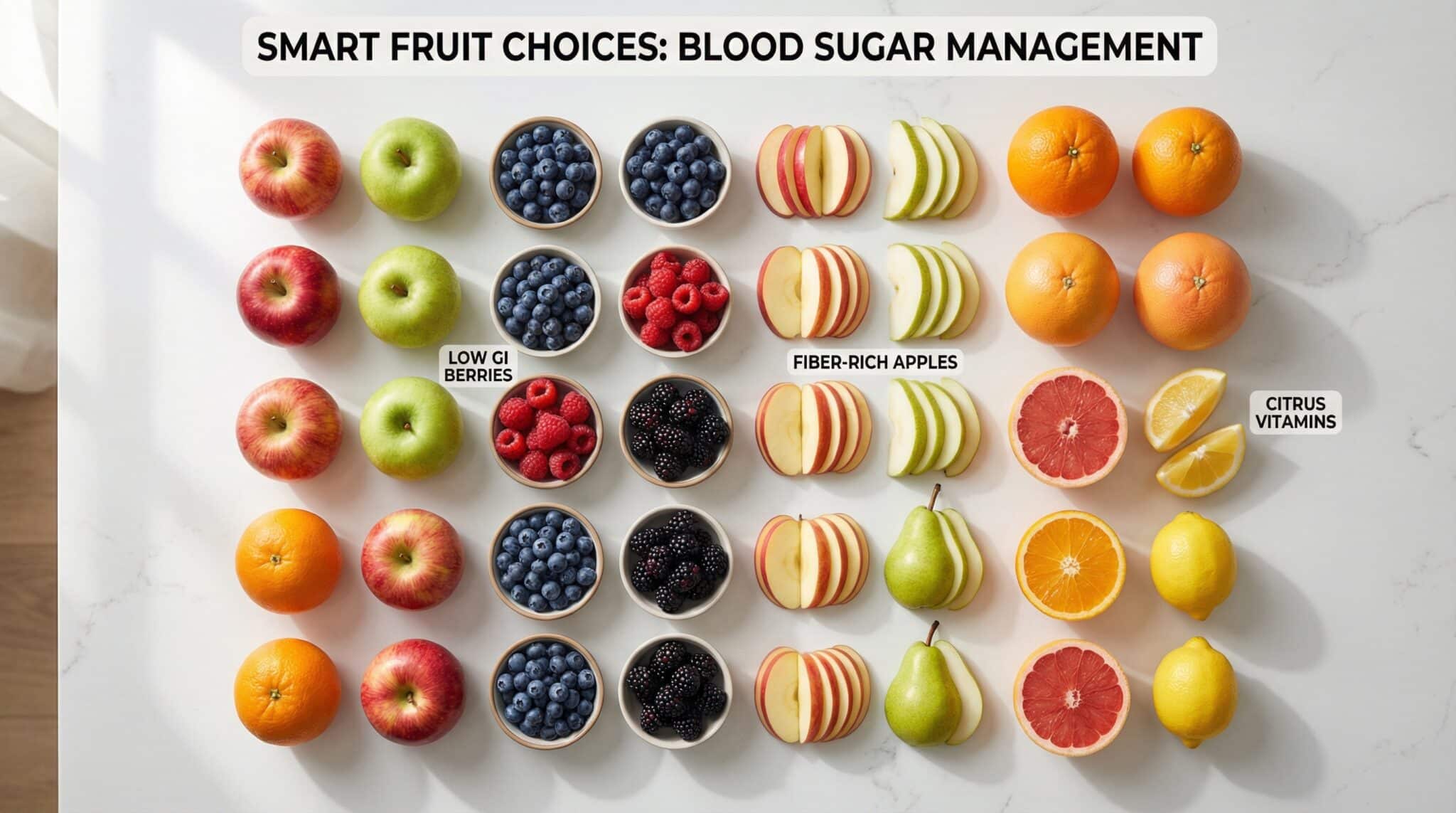
- Usually easiest: berries, cherries, grapefruit, apples, pears, peaches, plums
- Middle ground: oranges, grapes (portion matters!), kiwi, pineapple, mango (small portions)
- Often spikier: very ripe bananas, dried fruit, fruit juice
Also: ripeness matters. A greener banana is basically the banana whispering, “I come in peace.” A very ripe banana is like, “Good luck, babe.”
The “Safest Bets” Fruit List (If You Want to Keep It Simple)
If you want the short list I’d start with at the grocery store, it’s this:
1) Berries
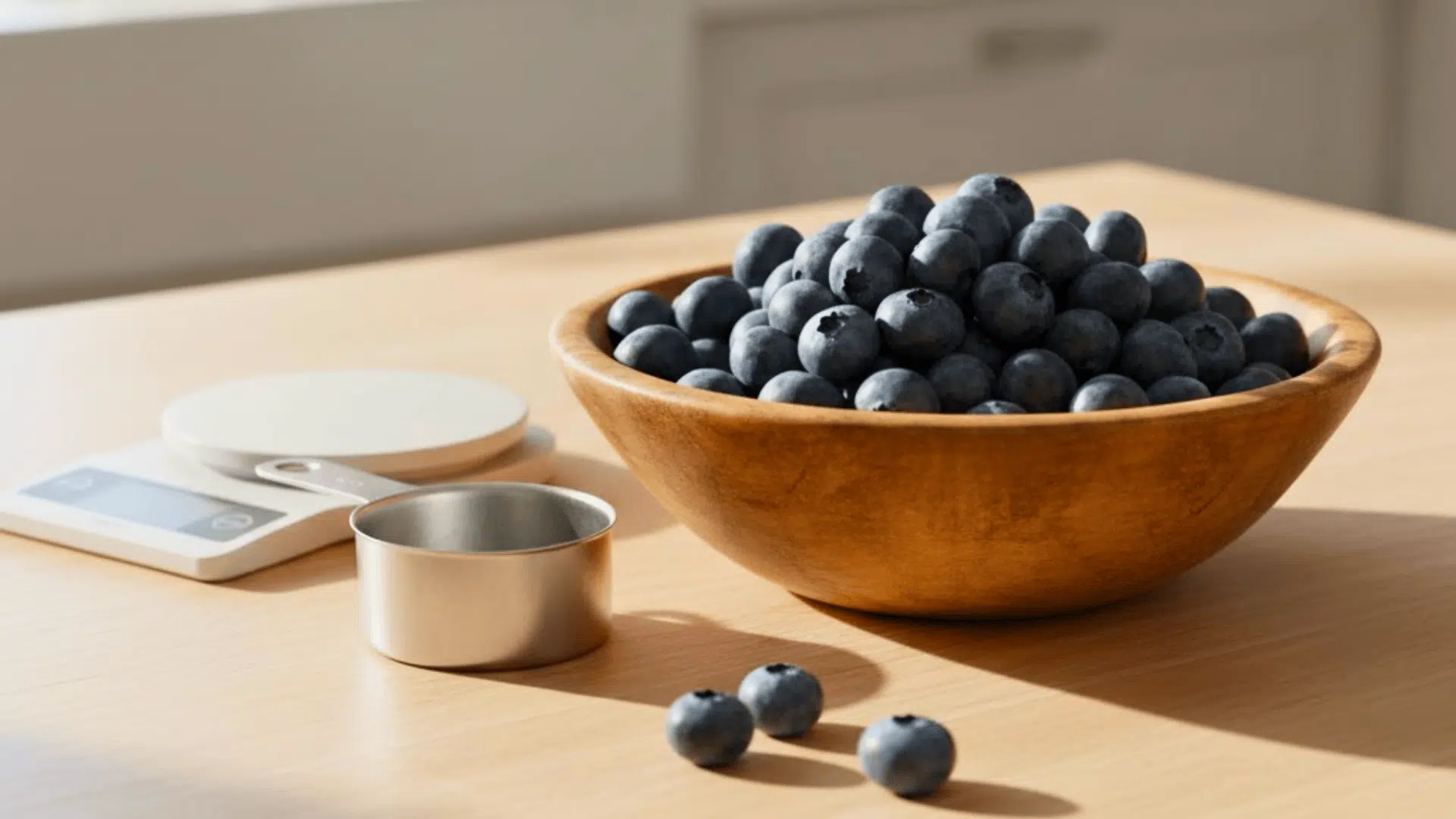
Blueberries, raspberries, strawberries, blackberries—these are the MVPs. They’re fiber-y, lower sugar, and actually feel satisfying. Plus you can eat a decent volume like a cup of blueberries without accidentally carb loading yourself into a nap.
2) Apples & pears (with the skin, please)
The soluble fiber helps slow things down. I know the peel can be… a texture situation. But if you can do it, it’s worth it.
3) Stone fruits
Peaches, plums, apricots, cherries—sweet without being totally unhinged. Cherries are the one exception where I’m like: measure them once, because they’re tiny and smug and you can eat 47 without noticing.
4) Kiwi
Underrated. Great fiber, lots of vitamin C, and it feels like a treat. Quiet overachiever energy.
5) Avocado (yes, it’s fruit)
Avocado is basically the fruit that decided to be friends with protein and fat. It’s very blood sugar friendly.
Quick grapefruit note (the unfun but important part)
Grapefruit can interact with certain medications (including some cholesterol and blood pressure meds). If grapefruit is on your list, do a quick check with your pharmacist/doctor so it doesn’t start drama in your medicine cabinet.
Fruits That Aren’t “Bad”… They’re Just a Bit Extra
You don’t have to ban these. Just don’t wander into them with zero plan and a hungry mood.
- Mango, pineapple, papaya: delicious, but easier to overdo. Keep portions smaller (like 1/2 cup) and pair them with protein/fat.
- Bananas: especially ripe ones tend to spike faster. If bananas are your true love, try 1/2 a banana and see how you do.
- Watermelon: usually fine in a normal portion, chaos in “summer BBQ bowl refill” portions.
- Grapes: I’m saying this with love: grapes are sneaky. They disappear. Portion them like an adult. (I say this as someone who has absolutely stood at the fridge eating “just a few” until the bag looked emotionally abandoned.)
Pro move: eat these after a balanced meal instead of on an empty stomach. It can soften the rise quite a bit.
Juice, Dried Fruit, and “Fruit in Syrup”: The Tricksters
If there’s one place fruit really earns its chaotic reputation, it’s here.
- Fruit juice: the fiber is gone, so it hits fast. “No sugar added” can still mean a lot of natural sugar. That label is a smooth talker.
- Dried fruit: same carbs, less volume. It’s unbelievably easy to eat a whole bunch without realizing you just ate the carb equivalent of a larger serving of fresh fruit.
- Canned fruit in syrup: syrup adds extra sugar for no reason other than to make your life harder. Choose fruit packed in water or its own juice, and drain it.
- Smoothies: they can be fine, but they’re also the #1 way people accidentally drink multiple servings of fruit at once. If you do smoothies, make protein the star and keep fruit measured.
My general rule: default to whole fruit. Save juice/dried fruit for specific situations (like treating a low, if that’s part of your plan with your clinician) or an occasional treat you choose on purpose.
Okay, But How Much Fruit Is a Serving?
I wish “eyeballing it” worked. It does not. Here are super practical serving anchors:
- Berries: 3/4-1 cup
- Apple or pear: 1 small (about tennis ball-ish)
- Orange: 1 medium
- Banana: 1/2 medium
- Grapes: about 15-17 small grapes (yes, count them once—then you’ll believe me forever)
- Melon: 1 cup cubed
- Dried fruit: ~2 tablespoons (this is why it’s tricky)
Many people can fit 2-4 fruit servings a day, depending on their overall carb plan, meds, activity, and all the other real life variables. The big idea is: spread it out. Your blood sugar likes a steady pace, not a fruit festival.
The Pairing Trick (AKA: How to Make Fruit Behave)
If fruit alone spikes you, don’t assume fruit is “off limits.” Try pairing it. Protein and fat slow digestion and can help blunt the rise like giving that sugar a chaperone.
Some easy combos:
- Berries + Greek yogurt
- Apple slices + peanut butter
- Pear + walnuts
- Orange on the side of eggs
- Cheese + peaches (trust me)
If you take nothing else from this post, take this: fruit is usually easier after or with a meal than as a solo snack on an empty stomach.
The Only Way to Know for Sure: Test Your Personal Response
Charts are averages. Your body is… not an average. (Mine certainly isn’t. It has main character energy.)
If you want a simple, low drama way to test a fruit:
- Check your blood sugar before you eat.
- Eat one measured serving of the fruit (start with it alone if you’re testing baseline).
- Check again about 2 hours later (or follow the timing your clinician recommends).
- Write down what happened.
A lot of people use rough ranges like:
- < 30 mg/dL rise: that fruit/portion is probably a good fit
- 30-50 mg/dL: try a smaller portion or pair it next time
- > 50 mg/dL: keep it occasional, or tighten portion/pairing
And yes—test again with a pairing (like fruit + nuts or yogurt). Sometimes that one tweak turns a “nope” into a “totally fine.” Data is oddly comforting like that.
Your Next Step (Because “Someday” Never Shows Up)
Pick two fruits from the “safest bets” list, buy them this week, and eat them in measured portions paired with protein/fat. Then check your numbers and see what your body says.
You deserve to enjoy sweet things without the stress spiral. Go eat fruit—on purpose, with a plan, like the capable legend you are.
Quick common sense note: This is general info, not personal medical advice. If you’re adjusting carbs/fruit intake and you take insulin or glucose lowering meds, loop in your clinician so you stay safe.