









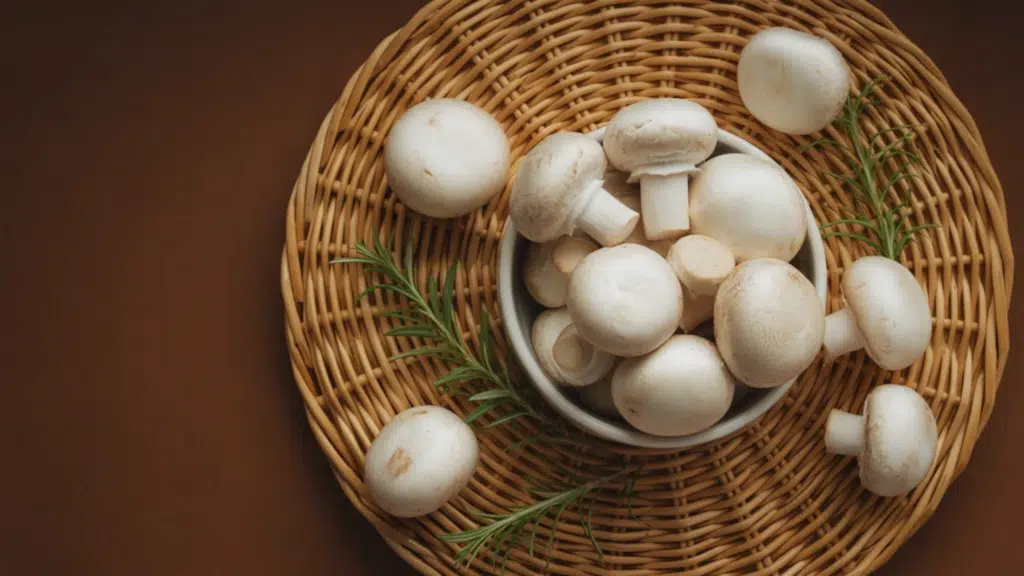

I still remember the first time I started paying attention to calories in mushrooms while trying to eat healthier. I was surprised to learn how incredibly low in calories they are compared to many other foods.
If you’ve been wondering whether mushrooms fit into a weight-loss or healthy eating plan, you’re in the right place. I’ll break down the calories in mushrooms by type, explain how cooking changes their calorie count, and share the key health benefits they offer.
By the end, you’ll clearly understand which mushrooms are best for your goals and how to enjoy them without accidentally adding extra calories.
Calories in Mushrooms: What You Need to Know
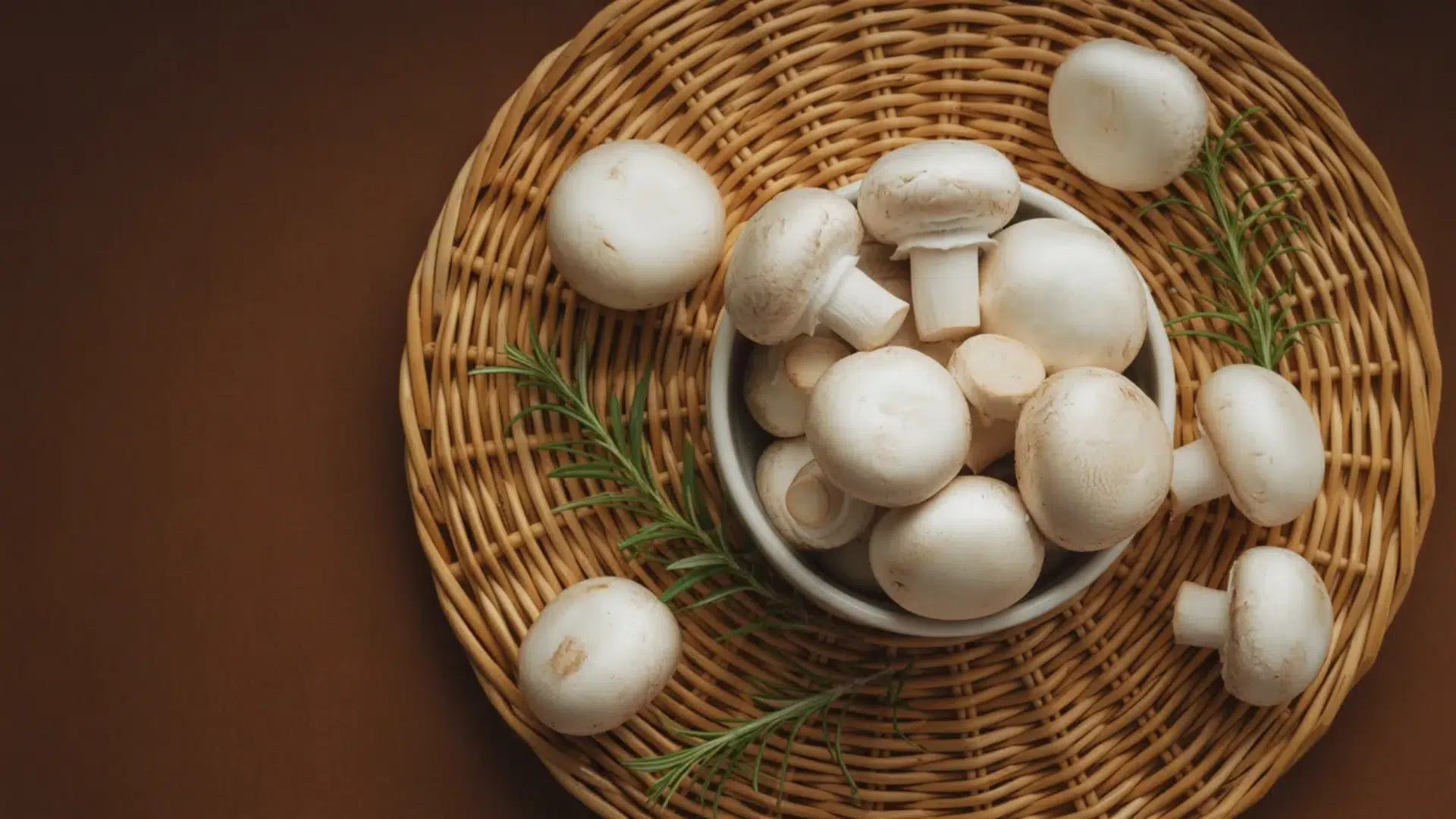
If you’re wondering about calories in mushrooms, the short answer is that they are very low in calories. One cup of raw white mushrooms contains about 15 to 20 calories.
A 100-gram serving has roughly 22 calories. Even when cooked, one cup usually contains around 30 to 40 calories, depending on how it is prepared.
Mushrooms are naturally low in fat and carbohydrates, and they are made up of mostly water, which keeps their calorie count low.
Because of this, they are considered a low-calorie food that fits well into weight-conscious or balanced eating plans. Just remember that adding oil, butter, or sauces during cooking can increase the total calorie count significantly.
Mushroom Nutrition Facts (Beyond Calories)
Mushrooms offer more than just a low calorie count. They provide small amounts of protein, helpful fiber, and important vitamins and minerals that support overall health and daily body functions.
| Nutrient | Amount (per 100g raw mushrooms) |
|---|---|
| Calories | ~22 kcal |
| Protein | ~3 grams |
| Carbohydrates | ~3 grams |
| Fiber | ~1 gram |
| Fat | ~0.3 grams |
| Vitamin B2 (Riboflavin) | Good source |
| Vitamin B3 (Niacin) | Good source |
| Vitamin D | Present if exposed to sunlight |
| Selenium | Good source |
| Potassium | Moderate amount |
| Copper | Good source |
These nutrients make mushrooms a nutrient-dense food that supports energy production, immune health, and proper muscle and nerve function.
Health Benefits of Eating Mushrooms
I’ve found mushrooms to be small but surprisingly powerful for health. Here are the key benefits that make them worth adding to your meals.
- Supports Weight Management: Their low-calorie density allows for large portions with minimal calories, while fiber and protein increase fullness, and meat swaps may reduce daily intake.
- Rich in Antioxidants: Mushrooms contain selenium and ergothioneine, which fight free radicals, and their antioxidant strength is widely recognized by the Harvard Nutrition Source.
- May Support Immune Health: Beta-glucans in mushrooms support the immune response, and lentinan in shiitake mushrooms has been studied for additional immune-supporting benefits.
- Good for Heart Health: Being cholesterol-free and low in sodium supports heart health, while potassium helps regulate blood pressure, and fiber supports healthy cholesterol levels.
- Provides Plant-Based Nutrients: Mushrooms naturally provide vitamin D, offer helpful plant protein for vegetarians, and supply B vitamins that support energy and brain function.
I regularly add mushrooms to meals because they pack strong health benefits while keeping calories low, making healthy eating much easier to maintain.
Calories in Different Types of Mushrooms
Different mushroom varieties have similar calorie counts, but their flavor, texture, and nutrient profile can vary slightly. Here’s a closer look at each type.
1. White Button Mushrooms
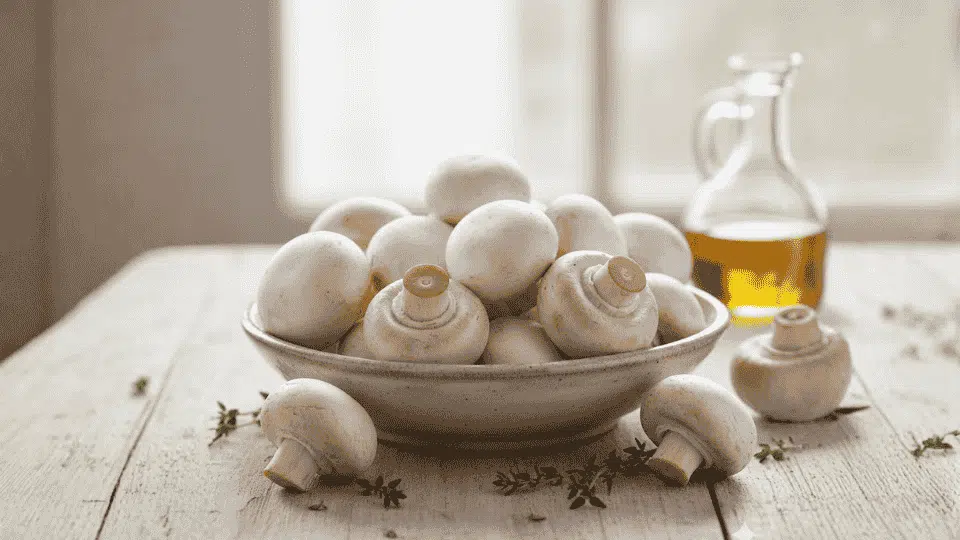
White button mushrooms are one of the most commonly eaten mushroom varieties. They are very low in calories while still offering useful nutrients that support overall health and daily body function.
- Calories: ~22 per 100g
- Protein: ~3g
- Carbohydrates: ~3g
- Fiber: ~1g
- Fat: ~0.3g
They are a good source of B vitamins that support energy production and selenium, which helps protect cells from oxidative damage. Their mild flavor makes them easy to add to salads, soups, stir-fries, and many everyday meals.
2. Cremini (Baby Bella) Mushrooms

Cremini mushrooms are slightly darker and firmer than white mushrooms. They remain low in calories while offering a richer taste and solid nutritional value for balanced meals.
- Calories: ~22–24 per 100g
- Protein: ~3g
- Carbohydrates: ~3–4g
- Fiber: ~1g
- Fat: ~0.3g
They provide B vitamins, potassium, and copper, which support muscle and nerve function. Their deeper flavor works well in roasted and sautéed dishes.
3. Portobello Mushrooms

Portobello mushrooms are the mature version of cremini mushrooms. They are large, dense, and filling while still remaining low in calories and fat.
- Calories: ~22–25 per 100g
- Protein: ~3g
- Carbohydrates: ~4g
- Fiber: ~1–2g
- Fat: ~0.3g
They are rich in B vitamins and potassium, supporting heart health and fluid balance. Their size makes them a popular lower-calorie meat alternative.
4. Shiitake Mushrooms

Shiitake mushrooms are known for their bold flavor and slightly higher calorie count compared to button varieties, while still remaining a low-calorie food option.
- Calories: ~34 per 100g
- Protein: ~2g
- Carbohydrates: ~7g
- Fiber: ~2–3g
- Fat: ~0.5g
They provide copper, selenium, and B vitamins that support immune and energy function. Their strong taste means you can use smaller portions.
5. Oyster Mushrooms

Oyster mushrooms have a soft texture and mild flavor. They stay low in calories while offering helpful nutrients that support overall health and digestion.
- Calories: ~33 per 100g
- Protein: ~3g
- Carbohydrates: ~6g
- Fiber: ~2g
- Fat: ~0.4g
They contain B vitamins, potassium, and small amounts of iron. Their delicate texture works well in soups and stir-fries.
6. Enoki Mushrooms

Enoki mushrooms are thin, crisp mushrooms commonly used in soups and salads. They are low in calories but still provide useful nutrients.
- Calories: ~37 per 100g
- Protein: ~3g
- Carbohydrates: ~7g
- Fiber: ~2–3g
- Fat: ~0.3g
They supply B vitamins and potassium, supporting muscle and nerve function. Their light texture adds volume without adding many calories.
Are Mushrooms Good for Weight Loss?
Yes, mushrooms are considered among the most weight-loss-friendly foods. Their low calorie density means a large amount of food can be eaten for very few calories.
The combination of fiber and plant protein helps promote a sense of fullness and may reduce overall food intake. A practical strategy is to add ½ cup of cooked mushrooms to omelets, soups, or stir-fries, providing about 17 calories.
However, the cooking method is critical; deep-frying or heavy cream sauces can significantly increase calories and reduce weight-loss benefits.
Comparing Mushrooms to Other Vegetables
If you’re comparing calorie density, mushrooms stand out as one of the lowest-calorie vegetables. Below is a more detailed nutritional comparison per 100 grams to help you see how they stack up beyond just calories.
| Food (Per 100g) | Calories (kcal) | Protein (g) | Carbs (g) | Fiber (g) | Fat (g) |
|---|---|---|---|---|---|
| Mushrooms | ~22 | ~3.0 | ~3.3 | ~1.0 | ~0.3 |
| Broccoli | ~34 | ~2.8 | ~6.6 | ~2.6 | ~0.4 |
| Spinach | ~23 | ~2.9 | ~3.6 | ~2.2 | ~0.4 |
| Potatoes | ~77 | ~2.0 | ~17.0 | ~2.2 | ~0.1 |
Mushrooms provide similar protein to broccoli and spinach but with fewer carbohydrates than potatoes. Their very low fat and calorie content makes them ideal for volume eating and weight-conscious meal planning.
Do Cooked Mushrooms Have More Calories?
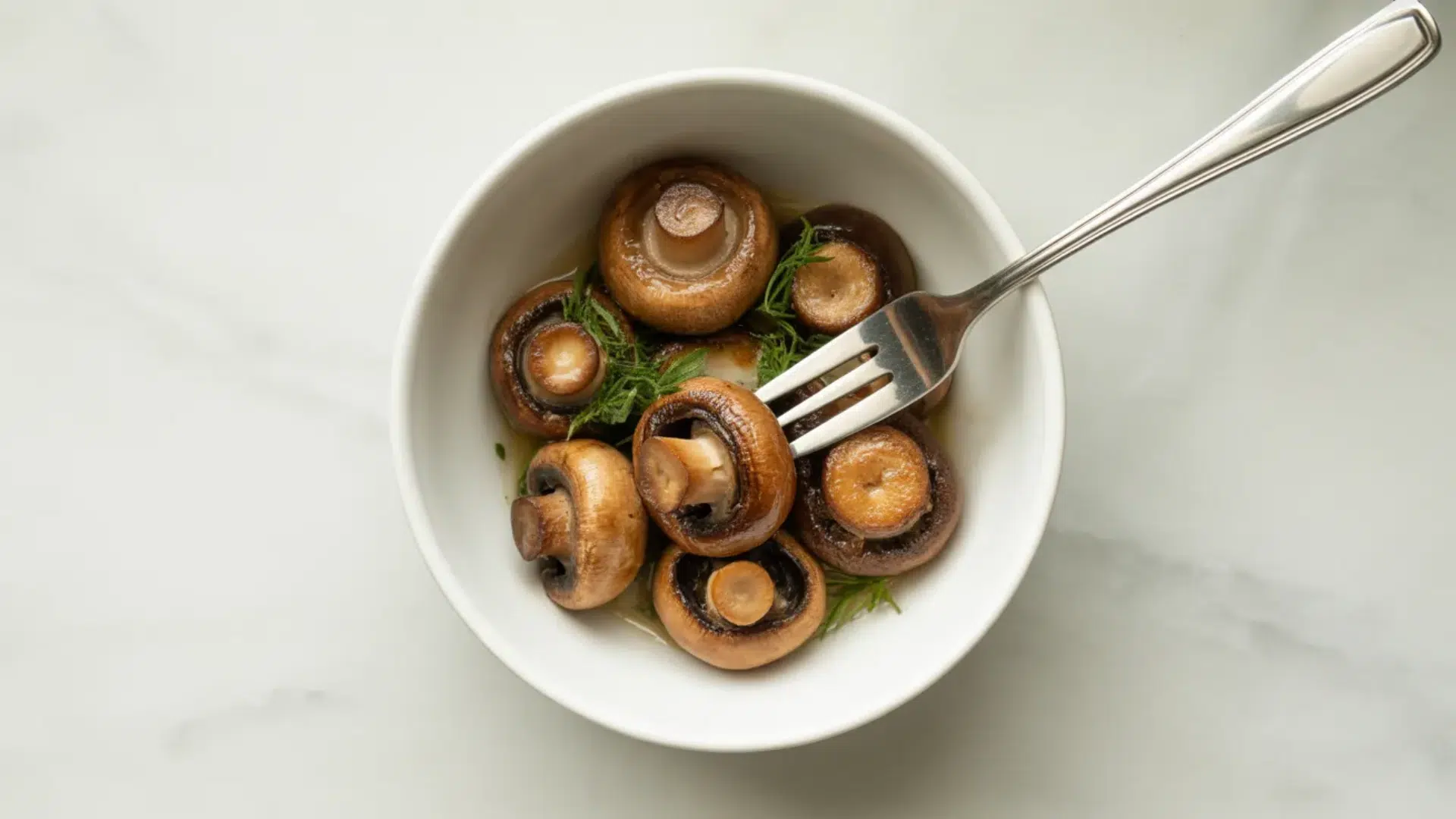
Cooked mushrooms do not automatically have more calories than raw mushrooms. Cooking by itself does not add calories. In fact, when mushrooms are heated, they lose water, which can make them look smaller and slightly more concentrated, but the actual calorie content stays about the same if nothing is added.
The real difference comes from how they are cooked. If you sauté mushrooms in oil or butter, the calories increase because fats are calorie-dense. Even one tablespoon of oil can add around 120 extra calories.
A dry sauté, where you cook mushrooms in a non-stick pan without added fat, keeps the calorie count very low. So it’s not the cooking method, but the added ingredients, that change the calorie total.
Potential Downsides of Eating Mushrooms
Mushrooms are healthy for most people, but there are a few downsides to be aware of. Understanding these helps ensure they stay a safe, smart food choice.
- Digestive discomfort: Eating large amounts of raw mushrooms may cause bloating or stomach upset because their cell walls are tough to digest.
- Wild mushroom risk: Some wild varieties are toxic, so mushrooms should never be foraged or eaten unless correctly identified by an expert.
- Hidden calorie increase: Mushrooms absorb oil and butter easily, so cooking them with excess fat can quickly raise calories.
- Possible allergies: A small number of people may experience allergic reactions or sensitivities when consuming certain mushroom varieties.
Note: When properly sourced and cooked with minimal added fat, mushrooms remain a safe, nutritious, and low-calorie food for most people.
Keeping these simple precautions in mind makes it easy to enjoy mushrooms safely while still benefiting from their excellent nutrition and naturally low calorie content.
Final Thoughts
After looking closely at the calories in mushrooms, I’ve come to appreciate just how powerful these little fungi can be in a healthy diet.
They’re low in calories, packed with nutrients, and incredibly versatile in everyday cooking. If you’re trying to lose weight, eat lighter meals, or simply add more plant foods to your plate, mushrooms are an easy win.
I personally love using them to bulk up meals without adding many extra calories. If you found this guide helpful, save it for later and share it with someone who’s trying to eat smarter.
And if you want more simple nutrition guides, stick around.