
If you’re standing in the grocery store doing mental math over blueberries like they’re tiny purple landmines… hi, welcome, I’ve been you.
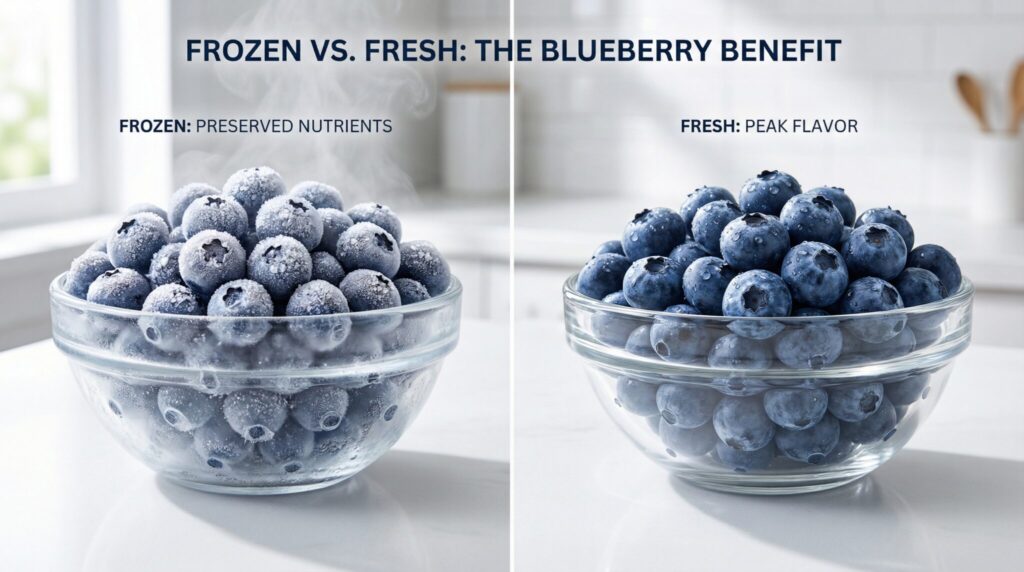
Here’s the punchline: fresh and frozen blueberries are basically a tie on carbs—as long as you buy unsweetened frozen berries. The real difference isn’t nutrition so much as labels, convenience, and whether you’re going to actually eat them before they turn into a fuzzy science experiment in the back of your fridge. (Ask me how I know. No, seriously. Ask me. I deserve to be humbled.)
Let’s make this simple and actually useful.
Step One: Don’t Get Bamboozled by “Sweetened” Frozen Berries
Frozen blueberries come in two personalities:
1) Unsweetened (the angel)
2) Sweetened (the chaos gremlin)
Sweetened bags can have added sugar, syrup, or juice concentrate, which means surprise more carbs.
If you only remember one thing from this whole post, remember this:
Unsweetened frozen blueberries should have ONE ingredient: blueberries.
That’s it. One. Not “blueberries, sugar, blueberry juice concentrate, unicorn tears.” Just blueberries.
Quick label words that usually mean “carbs just went up”:
- sugar
- cane sugar
- syrup
- fructose
- juice concentrate
If the ingredient list reads like a fancy drink menu, put the bag down and back away slowly.
Okay, But What About the Actual Carbs?
Let’s talk numbers with a carb breakdown per cup without making this feel like a spreadsheet punishment.
For about 1 cup:
- Total carbs: fresh ~21g, frozen ~19-21g
- Fiber: both ~3.6g
- Net carbs (if you track those): fresh ~17g, frozen ~15-17g
- Sugars: fresh ~15g, frozen ~13-15g
So yes, frozen can come in a hair lower sometimes, but we’re talking “barely worth starting an argument over” amounts.
Also: values vary depending on ripeness and brand. If you want the most accurate number, check the nutrition label on your specific bag or weigh them. (I do not always do this. I am a grown adult who sometimes measures blueberries with vibes.)
Frozen Isn’t the Villain (It Might Actually Be the Sneaky Overachiever)
Frozen blueberries get a bad rap like they’re sitting in the freezer plotting against your wellness goals.
In reality:
- “Fresh” blueberries at the store are often picked, shipped, stored, and displayed for days.
- Frozen blueberries are usually picked ripe and frozen quickly, which helps “lock in” nutrients.
So if your fresh blueberries are truly fresh amazing. But if they’ve been lounging in your fridge for a week while you keep thinking, “Tomorrow I’ll make parfaits”… frozen might actually be the better nutritional deal.
Also, frozen blueberries never develop that “is this mold or… blueberry dust?” situation. And I appreciate that kind of stability in a relationship.
Blood Sugar: Fresh vs. Frozen Isn’t the Big Deal You Think It Is
Blueberries (fresh or unsweetened frozen) are generally considered low to moderate GI, often reported around 53. So it’s not really a “fresh is safe, frozen is scary” situation.
What matters more:
- What you eat them with (protein/fat helps): Greek yogurt, nuts, cottage cheese, etc.
- Portion size (one cup vs. two cups is a different party)
- Your personal response (bodies are weird and individual, unfortunately)
If you’re watching blood sugar closely, I’d focus on portion + pairing and serving size net carb math before I’d stress about fresh vs. frozen. Don’t major in the minors.
So… When Should You Buy Fresh?
Fresh blueberries are unbeatable when they’re actually good plump, sweet, and not $9 for a clamshell the size of a hamster bed.
Fresh makes sense when:
- you’ll eat them within a few days
- you want that juicy pop for snacking, salads, or topping things
- they’re in season (in the U.S., usually June-August) and taste like summer instead of disappointment
Fresh blueberries are very “main character energy”… for about 72 hours.
And When Frozen Is the Better Move
Frozen blueberries are the low maintenance friend. No drama. Always available. Never suddenly mushy.
Frozen makes sense when:
- you won’t use fresh berries quickly
- you’re making smoothies, oatmeal, sauces, or baking
- it’s off season and fresh berries are pricey imports
- you want to cut food waste (and usually save money)
Smoothie tip: use frozen blueberries straight from the freezer for a thicker smoothie, and you won’t need as much ice (aka you won’t water down your drink into sad berry slush).
Storage: The Part Everyone Skips (Then Complains About)
I say this with love: storage is where good intentions go to die.
Fresh blueberries:
- don’t wash them until you’re ready to eat (water speeds up mold)
- store in the fridge with a little airflow (original container is fine)
- try to eat within 5-7 days, but sooner is better
Frozen blueberries:
- squeeze extra air out of the bag after opening
- seal tightly (freezer burn is real and it is rude)
- best quality within about 6 months, but they’ll keep longer (often 6-12 months)
Freezer burn won’t make them unsafe it just makes them taste like they’ve been emotionally neglected.
If You Want to Freeze Fresh Blueberries at Home (Do This, Not That)
When berries are cheap and gorgeous in peak season, I love freezing extras.
Here’s the no clump method:
- spread washed and dried berries in a single layer on a baking sheet
- freeze for about 2 hours
- transfer to a freezer bag/container
That way you can grab a handful instead of chiseling out a berry brick like you’re on an Arctic expedition.
The Bottom Line (Because You’re Busy)
If you buy unsweetened frozen blueberries, fresh vs. frozen is basically a nutritional tie for carbs and fiber. The “best” choice is the one that fits your real life:
- Fresh if you’ll eat them quickly and want the texture
- Frozen if you want convenience, savings, and zero spoilage pressure
And if you’re watching blood sugar, remember: portion + pairing matters more than whether your blueberries came from the produce aisle or the freezer.
Now go toss blueberries into something yogurt, oatmeal, a smoothie, straight into your mouth at the open fridge door like a little raccoon and call it self-care.