
I can’t tell you how many times I’ve been in the middle of a perfectly innocent home project—like “just” painting a room (LOL)—and suddenly I’m standing in my kitchen staring into the pantry like it owes me answers. You know the moment: your brain goes foggy, your energy falls off a cliff, and you start negotiating with a granola bar like it’s your boss.
That post lunch crash is often the not so cute aftermath of a blood sugar spike… followed by a hard drop. And the annoying part? There’s usually no neon warning sign over your head. You just feel tired, snacky, and mildly offended by everything.
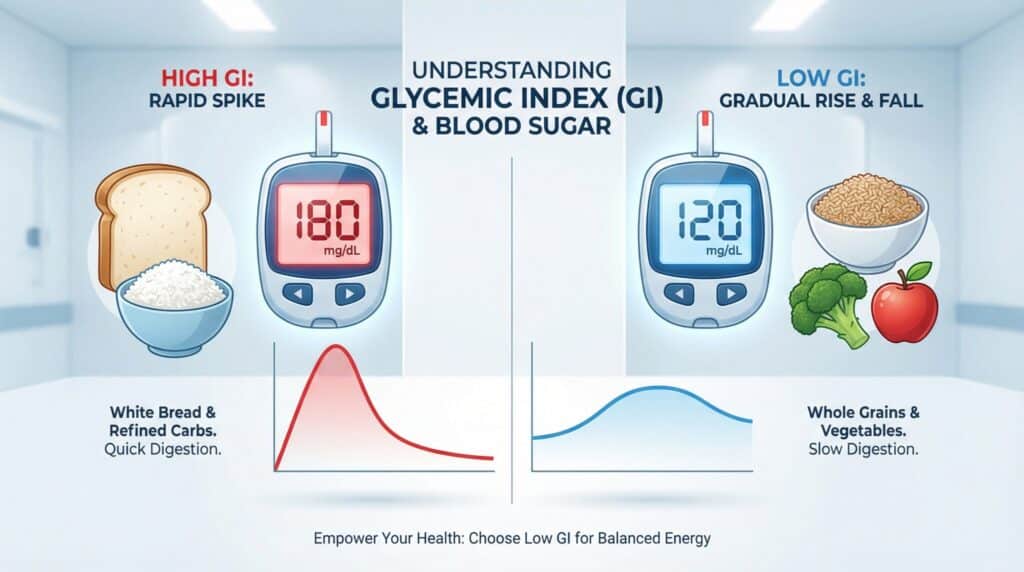
The glycemic index (GI) is basically a way to predict which carbs are more likely to pull that “big dramatic rise + dramatic crash” routine—and which ones tend to keep you feeling steady. No, this doesn’t mean you have to ban carbs forever and live on sad lettuce. It just means you get to be a little strategic (which, honestly, is my favorite kind of “health advice” because it’s realistic).
GI in Real Life: A Speed Test for Carbs (But Don’t Panic)
The glycemic index ranks carb containing foods on a 0-100 scale based on how quickly they raise blood sugar compared to straight glucose (which is 100). Think of it like: how fast does this food turn into “fuel” in your bloodstream?
- Low GI (about 55 or less): slower, steadier rise
- Medium GI (roughly 56-69): somewhere in the middle
- High GI (70+): faster spike potential
Important note before anyone starts assigning moral value to a potato: GI is not a “good food / bad food” score. It’s just a tool. Also, GI doesn’t tell you how sweet something tastes. A white potato can spike you faster than table sugar. (Rude.) And “natural” doesn’t automatically mean low GI. Honey can still hit like… honey.
And then there’s the plot twist: GI doesn’t account for how much you actually eat. Which brings me to the thing that matters just as much—sometimes more.
Glycemic Load: Because Serving Size Is Always the Villain
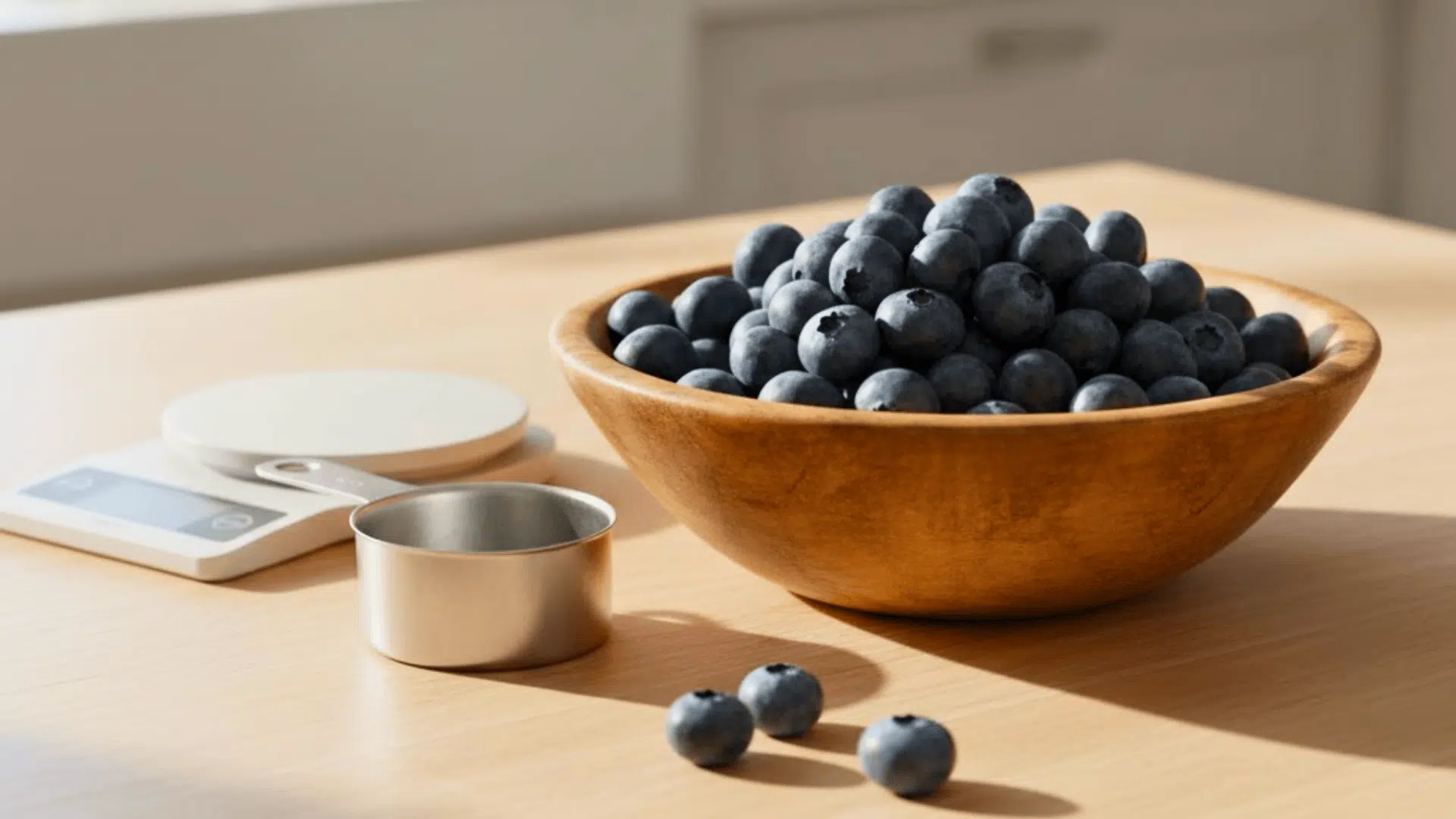
GI testing is based on eating 50 grams of digestible carbs from a food. But in real life… you don’t eat blueberries by the cup in lab portions while wearing a hairnet.
Example: you’d need a lot of watermelon to hit 50 grams of carbs, but only a couple slices of bread. Same testing method, totally different “normal plate.”
Glycemic load (GL) combines:
- how fast the food raises blood sugar (GI)
- how much carb you’re actually eating (portion)
The formula is (GI × grams of carbs per serving) ÷ 100. A GL under 10 is generally considered low; over 20 is high. But please don’t turn breakfast into a math quiz. The takeaway is simpler:
A food can have a high GI and still be fine in a normal portion. And a food with a high GI + big typical serving (hi, many breakfast cereals) can be the express train to Spike City.
Why Your “Same Food” Doesn’t Act the Same (Because Life Is Complicated)
This is the part where your carb choices get way less depressing and way more flexible. Because the same exact food can hit differently depending on how it’s prepared and what you eat with it.
- Cooking changes things: Pasta cooked al dente tends to digest slower than soft pasta. Also, cooling cooked rice or potatoes creates more resistant starch, which can lower the blood sugar impact. (Yes, leftover rice can be a tiny bit of a health hack. Go ahead and feel smug.)
- Ripeness matters: A greener banana is usually lower GI; a super ripe, spotty banana is higher. As fruit ripens, starch turns into sugar.
- Processing speeds everything up: Instant oats tend to spike more than steel cut oats. The more a food is “broken down” before you eat it, the less work your body has to do… and the faster glucose can show up.
- Pairing matters: Protein, fat, and fiber act like speed bumps. Crackers alone hit different than crackers with cheese or hummus.
Translation: you’ve got more control here than you think. Which is great, because nobody needs one more thing in life that feels impossible.
What a Spike Actually Feels Like (Aka: “Why Am I Suddenly a Sleepy Potato?”)
When you eat carbs, your body breaks them down into glucose. Glucose enters your bloodstream, and insulin helps move it into your cells for energy. When glucose comes in at a steady pace, it’s like trickle charging your phone.
When it comes in fast, your blood sugar rises quickly, your body pumps out more insulin, and then—often—your blood sugar drops hard after. That’s when you get:
- the sudden sleepiness
- brain fog / “I can’t focus” vibes
- irritability (everything is annoying for no reason)
- strong cravings / “I could eat the entire pantry” energy
- sometimes thirst or frequent bathroom trips
Over time, frequent big spikes can contribute to insulin resistance and raise risk for issues like type 2 diabetes and heart disease. (Not a scare tactic—just a “hey, this is why it matters” moment.)
Foods That Sneakily Spike People (Even If They Don’t Taste Sweet)
Some of the biggest offenders are the ones that feel “normal” and harmless:
- Fluffy/instant starches: instant mashed potatoes, sticky rice, many refined breads
- Breakfast cereal culture: a lot of cereals—even the ones wearing a “healthy” costume—hit fast
- Refined crunchy snacks: crackers, pretzels, chips made with refined flour (your body can treat them like sugar)
- Sugary drinks: soda and juice don’t come with the fiber “brakes,” so they’re especially easy to overdo
- Some sneaky extras: sweet sauces and dressings (ketchup, BBQ sauce, some salad dressings) and very ripe bananas
This is not me telling you to never eat these again. This is me telling you: if you keep face planting into a crash, these are the usual suspects.
The “Steady Energy” All Stars (Food That Won’t Betray You Mid Afternoon)
If you want the boring superpower of feeling like a functional human at 3 p.m., these foods tend to help:
- Non-starchy vegetables: broccoli, peppers, cucumbers, leafy greens, tomatoes—load your plate. (I have never once heard someone say, “Wow, that extra spinach really ruined my day.”)
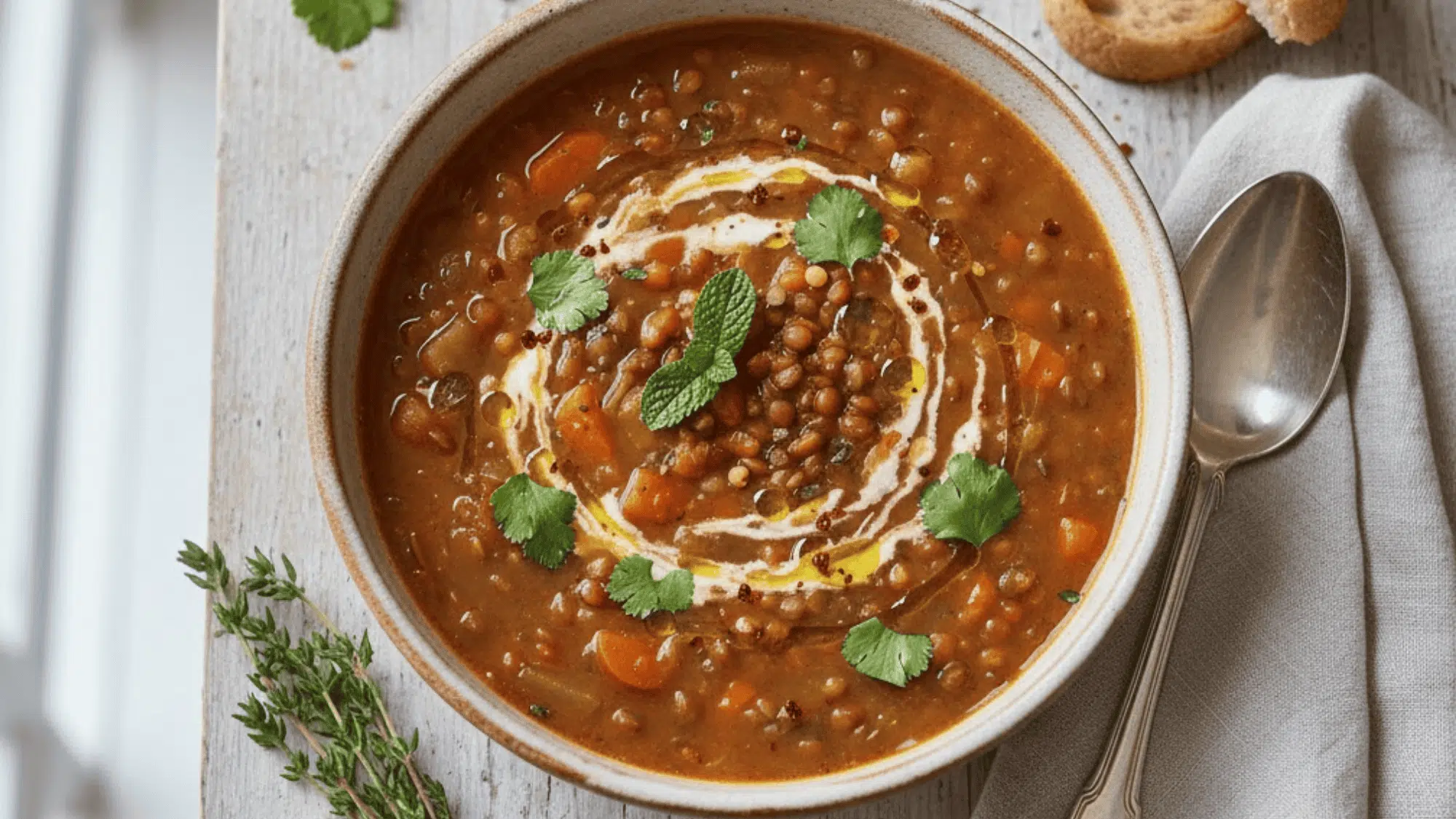
- Legumes: lentils, chickpeas, black beans—higher fiber + protein makes them steadier for most people
- Less processed whole grains: steel cut oats, barley, quinoa, bulgur (and yes, bread varies a lot—seeded, hearty breads tend to be gentler than finely milled “whole wheat” that’s basically fluff in disguise)
If you want a quick “same vibe, calmer outcome” swap list, berries with fewer carbs per cup are my favorites:
- Instead of fruit juice → try whole fruit (fiber stays intact)
- Instead of instant oatmeal → try steel cut oats (slower digestion)
- Instead of white bread → try seeded rye or sourdough (often slower for many people)
- Instead of a giant bowl of plain rice → try a smaller portion plus veg + protein (same meal, different aftermath)
My 5 Go To Tricks for Fewer Spikes (No Spreadsheet Required)
You don’t need to overhaul your whole life. You need a few moves you can repeat on a random Tuesday when you’re tired and hungry and your willpower is in the basement.
1) Think portions, not bans
You can absolutely eat higher GI foods. The difference is whether you’re eating a modest portion alongside fiber/protein… or eating a mountain of fast carbs alone like it’s an Olympic event.
2) Eat “in order” (this is weirdly effective)
Try eating vegetables first, then protein, then starch. Same foods, different blood sugar curve for a lot of people.
3) Never send carbs into your body alone
Pairing is huge. Add “speed bumps”:
- apple + peanut butter
- toast + eggs
- crackers + cheese or hummus
4) Take the world’s least dramatic walk
A 10-15 minute walk after meals can measurably reduce post meal blood sugar because your muscles use glucose when you move. This is not “become a runner.” This is “stroll like you’re looking at other people’s landscaping.”
5) Run a tiny experiment (like a normal person)
Pick one meal that reliably makes you crash. Change one thing next time—portion, pairing, order, or a walk—and see how you feel 60-90 minutes later. Repeat a couple times. Your body gives feedback pretty fast when you actually listen.
How to Tell If You’re Crashing (Besides Wanting to Nap Under Your Desk)
Blood sugar often peaks about 60-90 minutes after eating. If you regularly feel any of this in that window, a spike + drop might be involved:
- fatigue out of nowhere
- brain fog
- crankiness
- strong cravings
- intense thirst
If you like data, you can use a basic finger prick meter from a pharmacy, and there are also continuous glucose monitors (CGMs) available through various programs. Data can be helpful—just don’t let it become your entire personality unless you genuinely enjoy that sort of thing.
General reference ranges (educational, not diagnostic):
- Fasting: 70-99 mg/dL is considered normal; 100-125 suggests prediabetes; 126+ on repeated tests suggests diabetes
- After meals: under ~140 mg/dL at 1-2 hours is typical for many people without diabetes
If you’re consistently seeing 160-180+ mg/dL after meals (or you feel awful no matter what you try), that’s a solid reason to talk with a clinician and get proper lab testing.
When to Call in Backup (Because White Knuckling Isn’t a Hobby)
Talk to a healthcare provider if:
- you have frequent spike/crash symptoms despite changes
- home readings are consistently outside typical ranges
- you have risk factors (family history, low activity, higher body weight)
- you’re pregnant and concerned about gestational diabetes
Real talk: I’m not your clinician. If your body is waving red flags, you deserve personalized guidance—not a solo mission powered by vibes and willpower.
What I’d Do This Week (If You Want a Simple Starting Point)
Don’t change everything. Pick one meal that leaves you tired or foggy and try one adjustment:
- add protein/fiber
- swap a more processed carb for a less processed one
- eat veggies/protein first
- take a 10 minute walk after
Small tweaks can make a genuinely noticeable difference within days. And you don’t need perfect numbers—you just need fewer “why am I suddenly a sleepy potato?” moments.
Now go build a plate that doesn’t betray you at 3 p.m.