



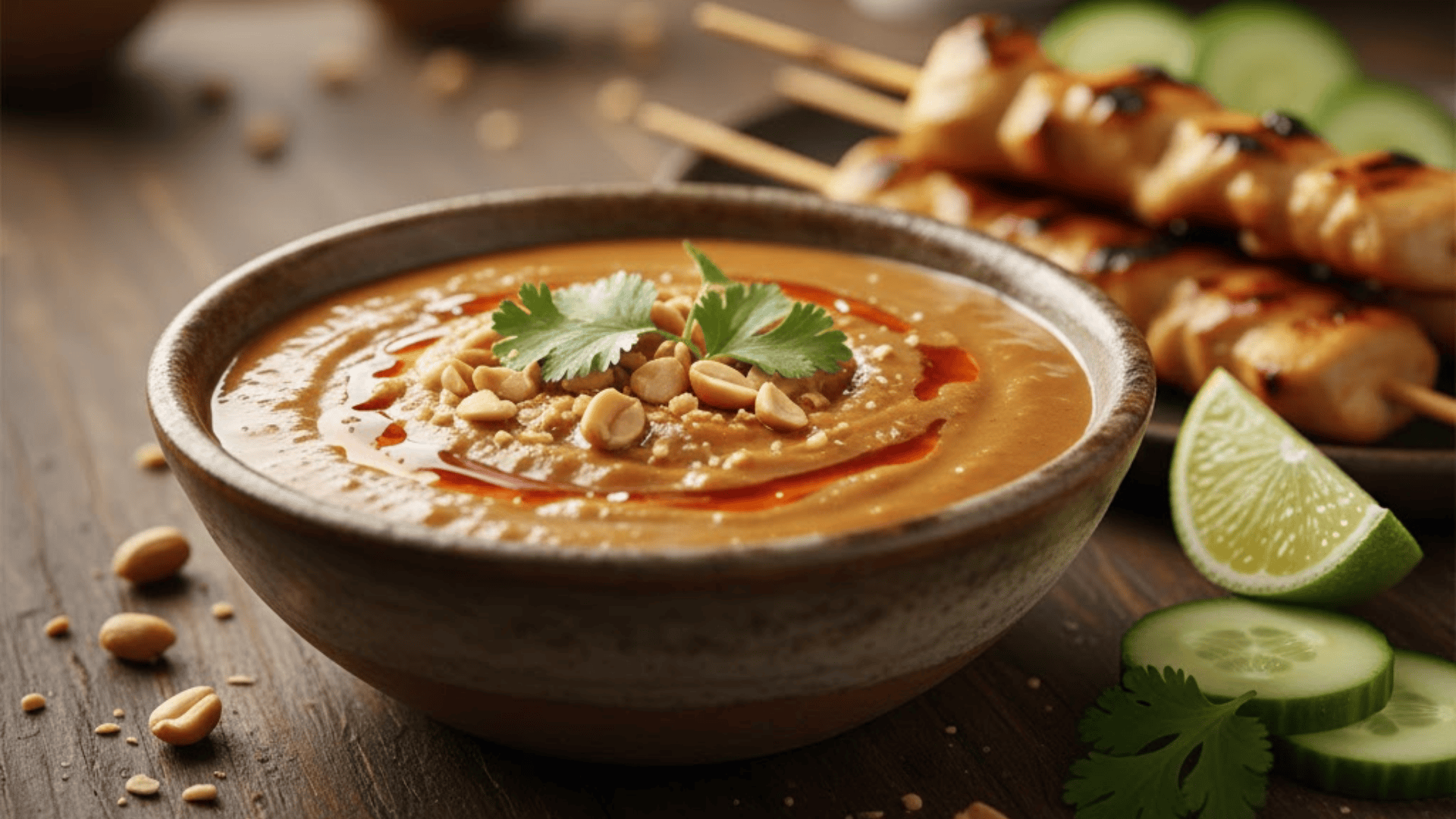







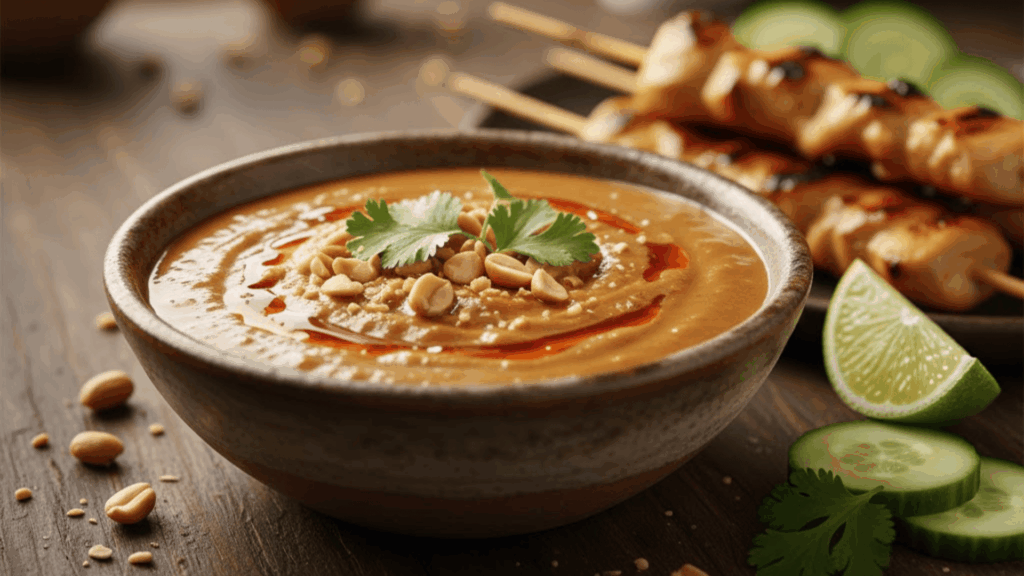

I always keep peanut butter in the pantry, but I don’t always know what to do with it. That’s where peanut dipping sauce comes in. You can whip it up in minutes, and it makes simple food taste more complete.
In this post, I’ll show you a 5-minute base sauce you can tweak for your taste. You’ll also get a Thai-style option with lime, ginger, and a little heat, plus a Vietnamese peanut hoisin sauce for spring rolls.
You can use it for veggies, noodles, bowls, or as a salad dressing. You’ll learn easy swaps, quick fixes if the flavor feels off, and the best way to store it so your next meal is easier.
Why Peanut Dipping Sauce Works So Well
Peanut dipping sauce tastes rich and filling, but it is still easy to mix. It also works with many foods, so one batch can cover snacks and meals.
Here’s why it’s a smart sauce to keep around:
- It uses pantry items you likely already have.
- It takes about 5 minutes for the no-cook versions.
- It can be a dip, a noodle sauce, or a salad dressing.
- You can make it mild, sweet, tangy, or spicy.
Common ways people use it:
- Dip for spring rolls and veggie sticks
- Sauce for noodles and rice bowls
- Drizzle for roasted vegetables
- Dressing for simple salads (thin it more)
Now that you know why it’s so useful, let’s get into the simple building blocks that make the sauce taste just right.
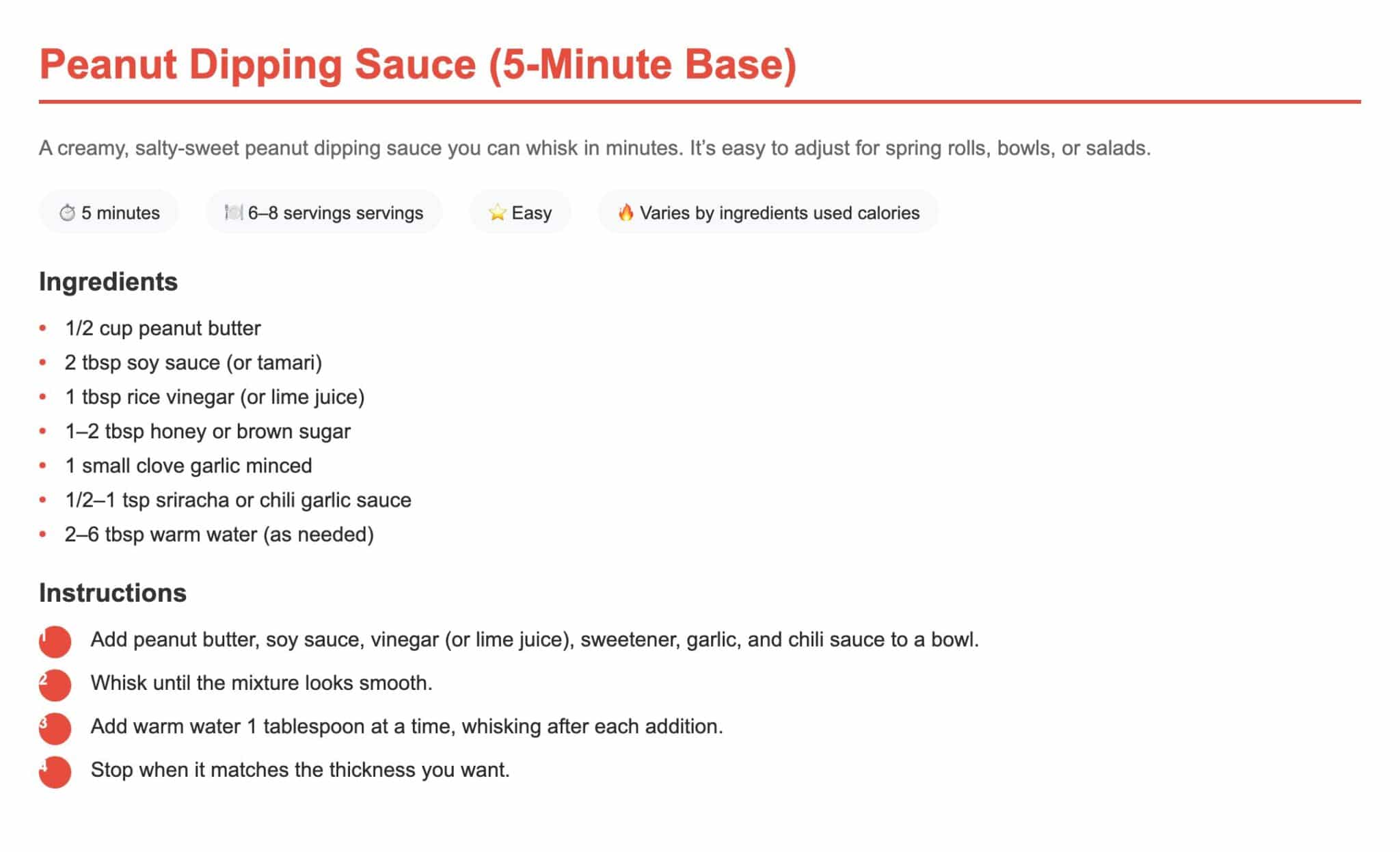
1. Peanut Dipping Sauce Recipe (5-Minute Base)
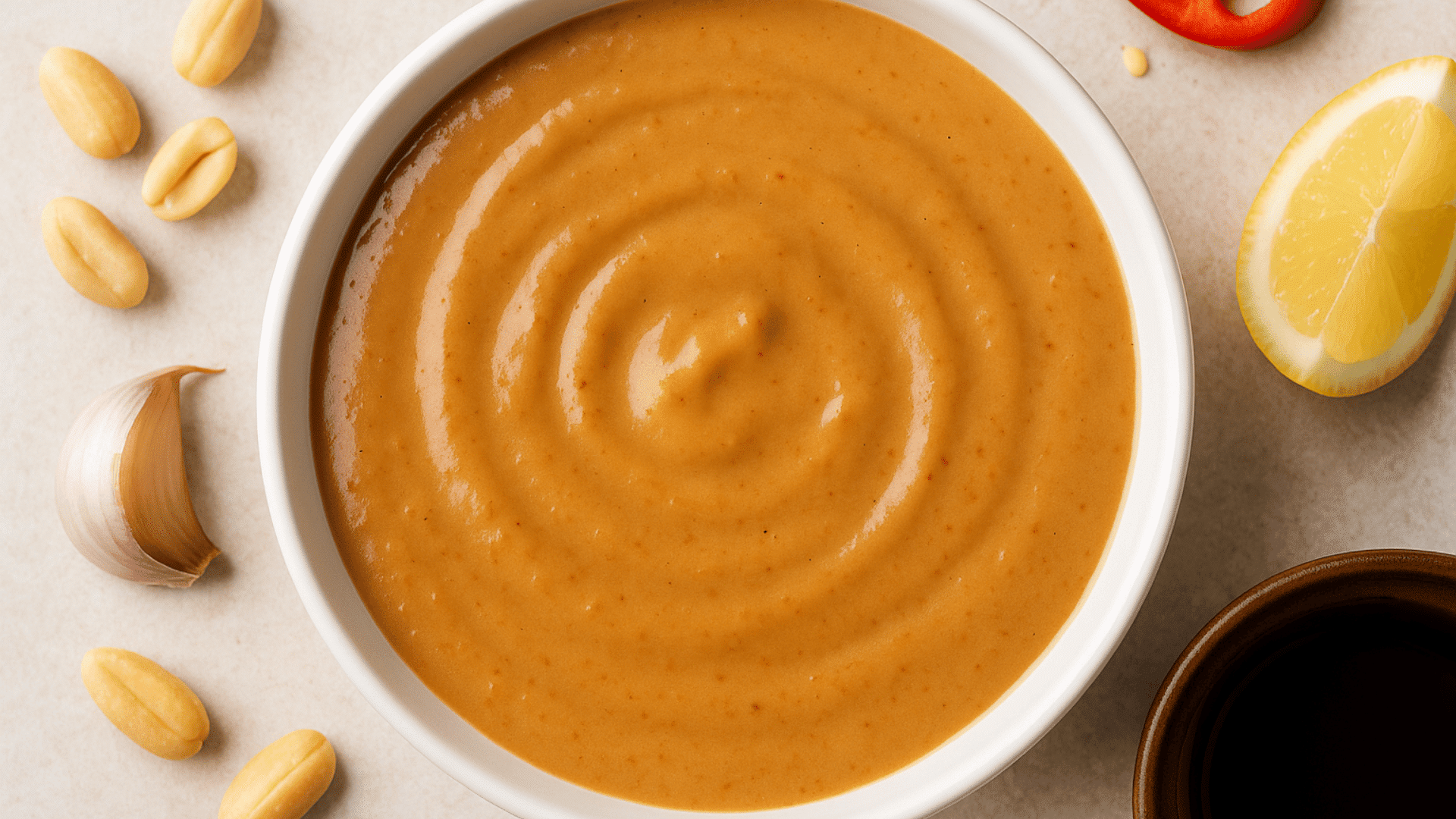
This base recipe is the one to keep on repeat. It is creamy, salty-sweet, and easy to adjust. Use what you have. Most kitchens already have these.
| Ingredient | Amount |
|---|---|
| Peanut butter | 1/2 cup |
| Soy sauce (or tamari) | 2 tbsp |
| Rice vinegar (or lime juice) | 1 tbsp |
| Honey or brown sugar | 1–2 tbsp |
| Garlic (minced) | 1 small clove |
| Sriracha or chili garlic sauce | 1/2–1 tsp |
| Warm water | 2–6 tbsp (as needed) |
Once everything is measured out, all that’s left is a quick whisk and a small water adjustment to get the texture you want.
How to Make Peanut Dipping Sauce (Step-by-Step)
- Add peanut butter, soy sauce, vinegar (or lime), sweetener, garlic, and chili to a bowl.
- Whisk until it looks smooth.
- Add warm water 1 tablespoon at a time.
- Stop when it matches the thickness you want.
Tip: For a thick dip for spring rolls, use 2–3 tablespoons of warm water; for a pourable sauce for bowls, use 4–5 tablespoons; and for a salad dressing texture, use 5–6 tablespoons.
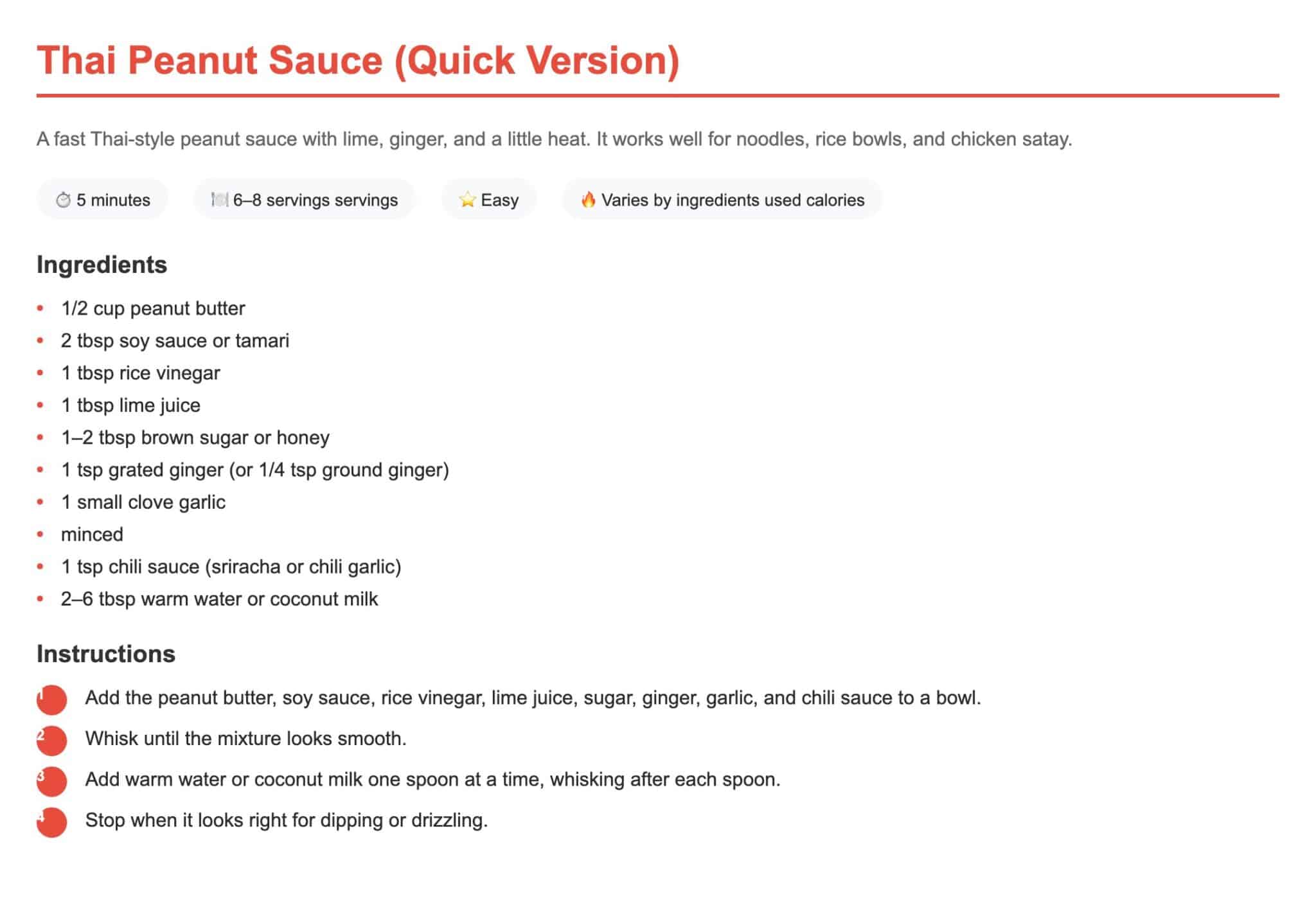
2. Thai Peanut Sauce Recipe
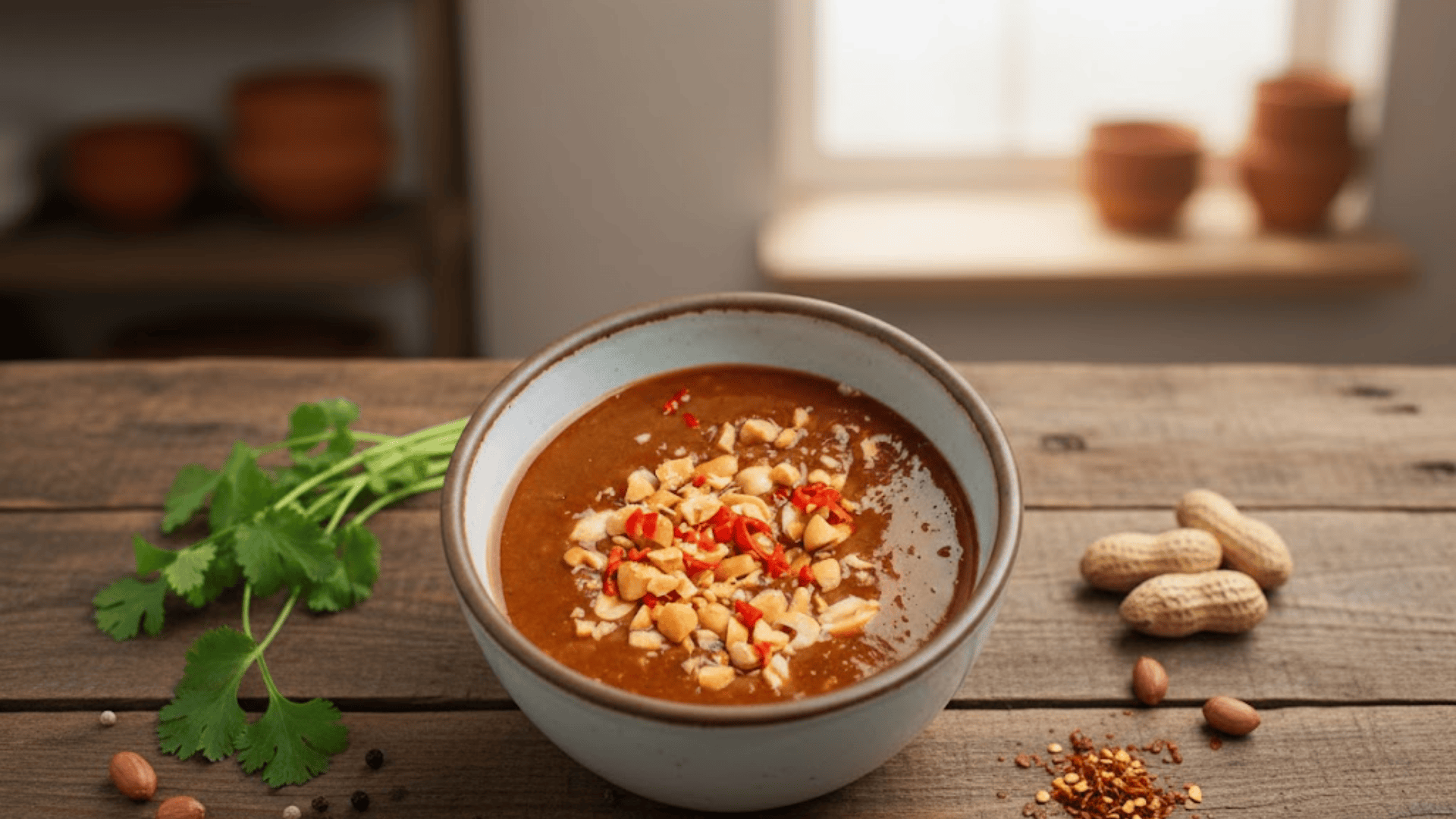
Thai peanut sauce works great with noodles, rice bowls, and chicken satay. This version stays fast, but still tastes bold because it uses lime, ginger, and a little heat.
| Ingredient | Amount |
|---|---|
| Peanut butter | 1/2 cup |
| Soy sauce or tamari | 2 tbsp |
| Rice vinegar | 1 tbsp |
| Lime juice | 1 tbsp |
| Brown sugar or honey | 1–2 tbsp |
| Ginger (grated or ground) | 1 tsp or 1/4 tsp |
| Garlic (minced) | 1 small clove |
| Chili sauce (sriracha or chili garlic) | 1 tsp |
| Warm water or coconut milk | 2–6 tbsp |
Tip: Use warm water if you want a sharper taste with more tang, and use coconut milk if you want a softer, creamier sauce.
How to Make It
Step 1: Add the peanut butter, soy sauce, vinegar, lime juice, sugar, ginger, garlic, and chili sauce to a bowl.
Step 2: Whisk until the mix looks smooth.
Step 3: Add warm water or coconut milk one spoon at a time.
Step 4: Whisk after each spoonful until it looks right for dipping or drizzling.
Fast fixes if it tastes “off.”
- If it tastes too salty, add a little more peanut butter and a splash of warm water.
- If it tastes too sweet, add a bit more lime juice or rice vinegar.
- If it is too thick, add warm water or coconut milk, one spoon at a time.
- If it needs more heat, add more chili sauce and whisk again.
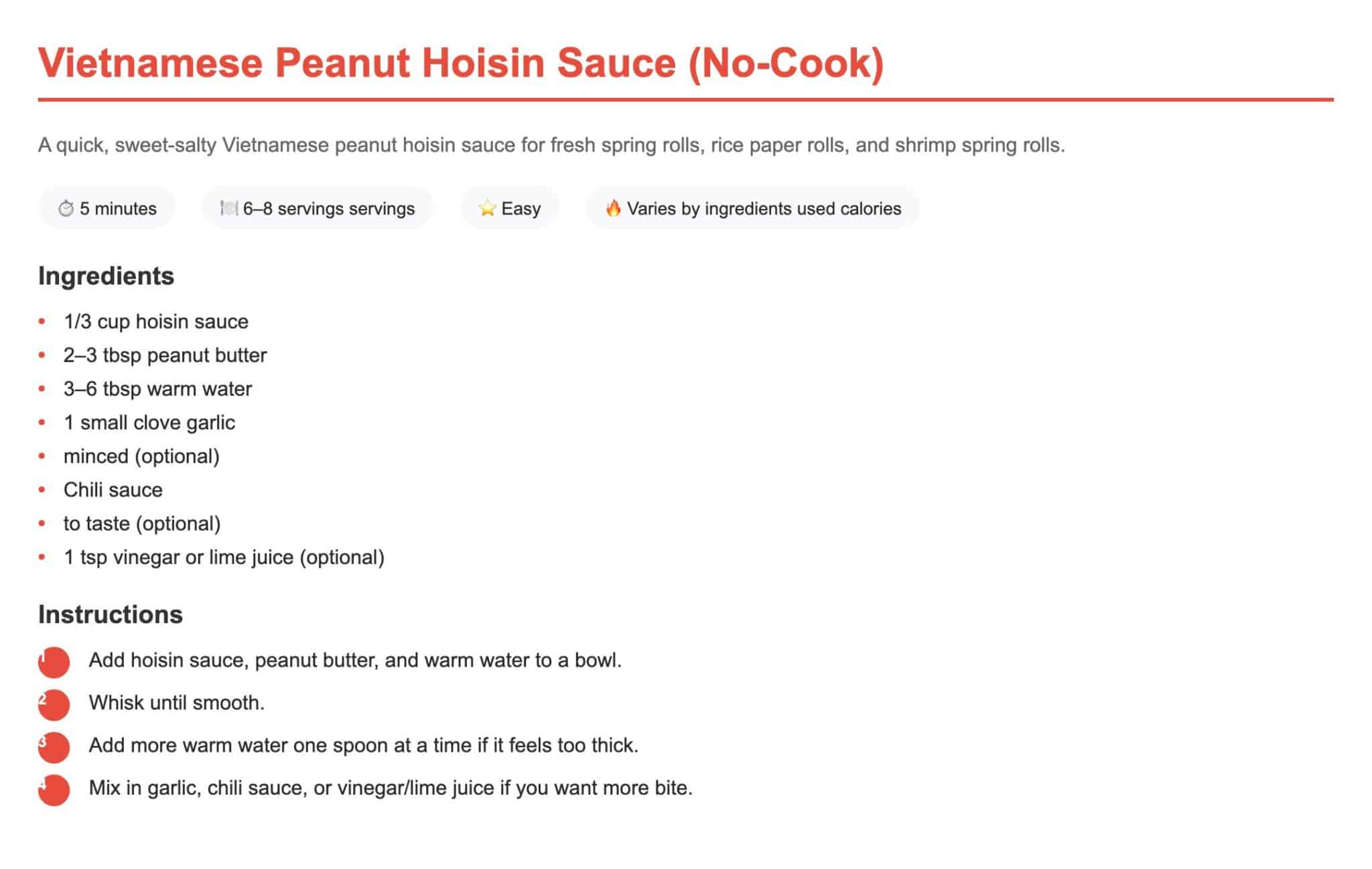
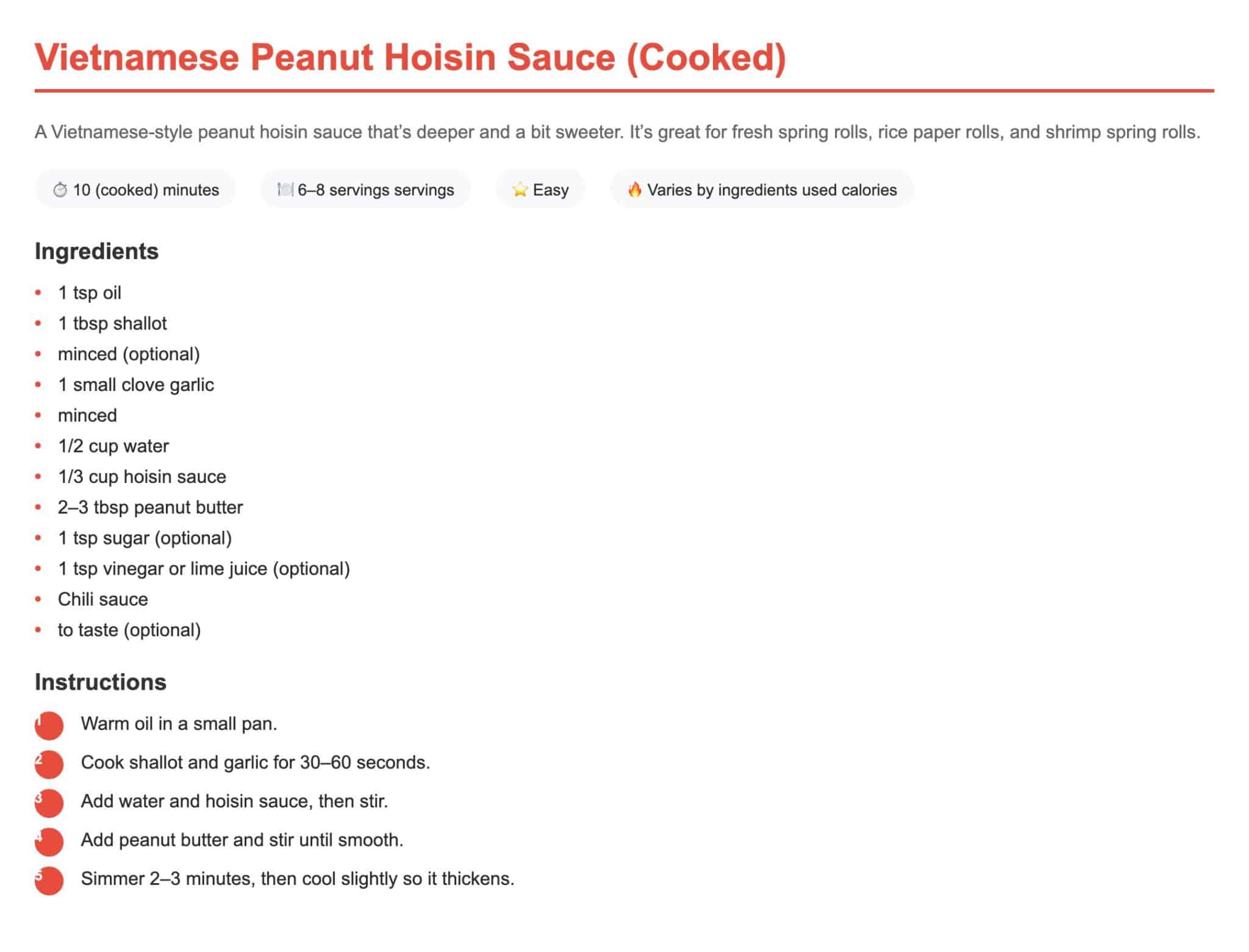
3. Vietnamese Peanut Hoisin Sauce
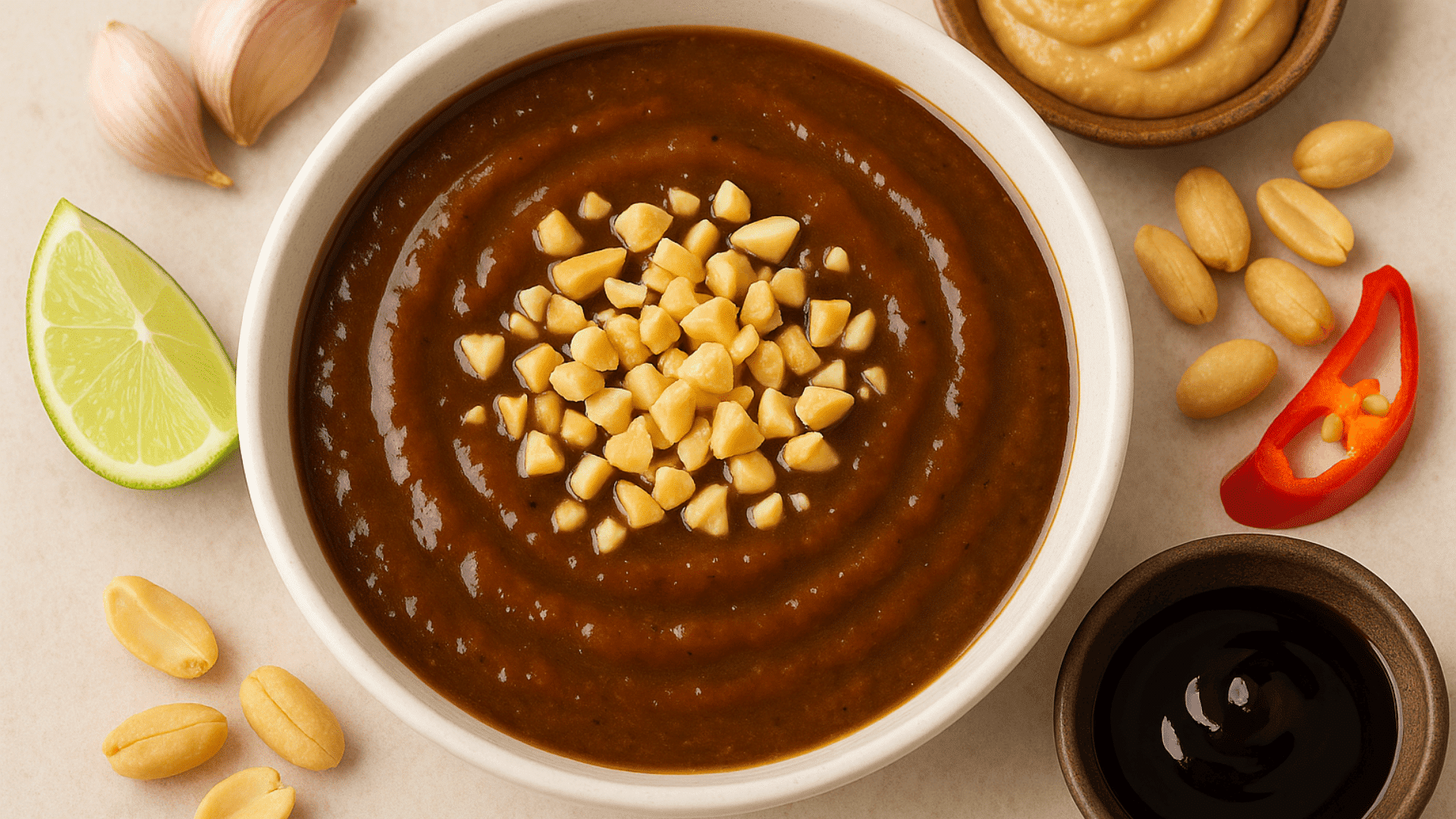
Vietnamese peanut hoisin sauce is a favorite for fresh spring rolls, rice paper rolls, and shrimp spring rolls.
It tastes deeper and a bit sweeter because of the hoisin, and you can make it either no-cook or cooked.
| Ingredient | Amount |
|---|---|
| Hoisin sauce | 1/3 cup |
| Peanut butter | 2–3 tbsp |
| Warm water | 3–6 tbsp |
| Garlic (minced, optional) | 1 small clove |
| Shallot (minced, optional) | 1 tbsp |
| Vinegar or lime juice (optional) | 1 tsp |
| Chili sauce (optional) | to taste |
| Sugar (optional, cooked version) | 1 tsp |
| Oil (cooked version) | 1 tsp |
Tip: Pick the no-cook version when you want speed, and pick the cooked version when you want a deeper taste and a thicker finish.
How to Make It (No-Cook)
Step 1: Add hoisin sauce, peanut butter, and warm water to a bowl.
Step 2: Whisk until smooth.
Step 3: Add more warm water, one spoon at a time, if it feels too thick.
Step 4: Mix in garlic or chili sauce if you want more bite.
How to Make It (Cooked)
Step 1: Warm oil in a small pan.
Step 2: Cook shallot and garlic for 30–60 seconds.
Step 3: Add water and hoisin sauce, then stir.
Step 4: Add peanut butter and stir until smooth.
Step 5: Simmer 2–3 minutes, then cool slightly so it thickens.
Once it cools and thickens, it’s ready to dip your spring rolls right away or store for later.
Variations of Peanut Dipping Sauce
Before you change the base peanut sauce recipe, decide what you want it to taste like.
Do you want more heat, more tang, or a softer and creamier feel? Make only one small change at a time, then taste it, so you do not lose control of the flavor.
| Variation | What to add or swap |
|---|---|
| Spicy | Add more sriracha or chili garlic sauce |
| Sweeter | Add 1–2 tsp honey or brown sugar |
| More tang | Add 1–2 tsp vinegar or lime juice |
| More garlic | Add another small clove |
| Ginger kick | Add 1 tsp grated ginger |
| Creamy coconut | Swap water for coconut milk |
| Sesame hint | Add 1/2 tsp toasted sesame oil |
| Vegan | Use maple syrup instead of honey |
| Gluten free | Use tamari (check label) |
| Nut-free swap | Use sunflower seed butter (taste will change) |
After you pick your favorite version, save it as your “regular” mix. Next time, you can make it faster, and you will know exactly how it will taste before you even dip the first spring roll.
Tips for Smooth Peanut Sauce Every Time
Before you start whisking, a few small steps can help your peanut sauce turn out smooth and creamy, without lumps or oily spots.
- If peanut butter is stiff, warm it for 10–15 seconds, then whisk.
- Always use warm water to thin the sauce.
- Whisk well before adding more water.
- Natural peanut butter can look oily at first, so mix the jar well.
- Sweetened peanut butter can make the sauce too sweet, so use less sugar.
- Low-sodium soy sauce helps you control salt.
After you follow these tips once or twice, you’ll be able to fix the texture and taste in seconds, even when the sauce feels “off” at first.
Storing Peanut Sauce the Easy Way
Peanut dipping sauce is great for meal prep, so making extra can save time later. Just remember that it often thickens in the fridge, so a quick re-mix helps bring it back to the right texture.
- Fridge (airtight jar): Up to 7 days, and it will thicken over time.
- Freezer (small container): Up to 2–3 months, then thaw and whisk again.
How to loosen it after chilling:
- Let it sit on the counter for 15–20 minutes, then whisk.
- Or warm it for 10–20 seconds, then whisk.
- Add warm water 1 tsp at a time if needed.
Once it turns smooth again, it’s ready to dip, drizzle, or toss with noodles right away.
Bottom Line
Now you’ve got a few easy ways to make peanut dipping sauce at home without stress.
I walked you through a simple base you can whisk in minutes, a Thai-style version with lime and ginger, and a Vietnamese peanut hoisin sauce that pairs well with spring rolls.
You also got simple swaps, quick fixes for when the taste feels off, and storage tips so you’re not making a new batch every time. When you keep a jar ready, you can pull together noodles, bowls, and snacks much faster.
If you try one, start with the base and make it taste right for you. And if you want more simple food ideas, you’re welcome to check out my other blog posts for more help.