




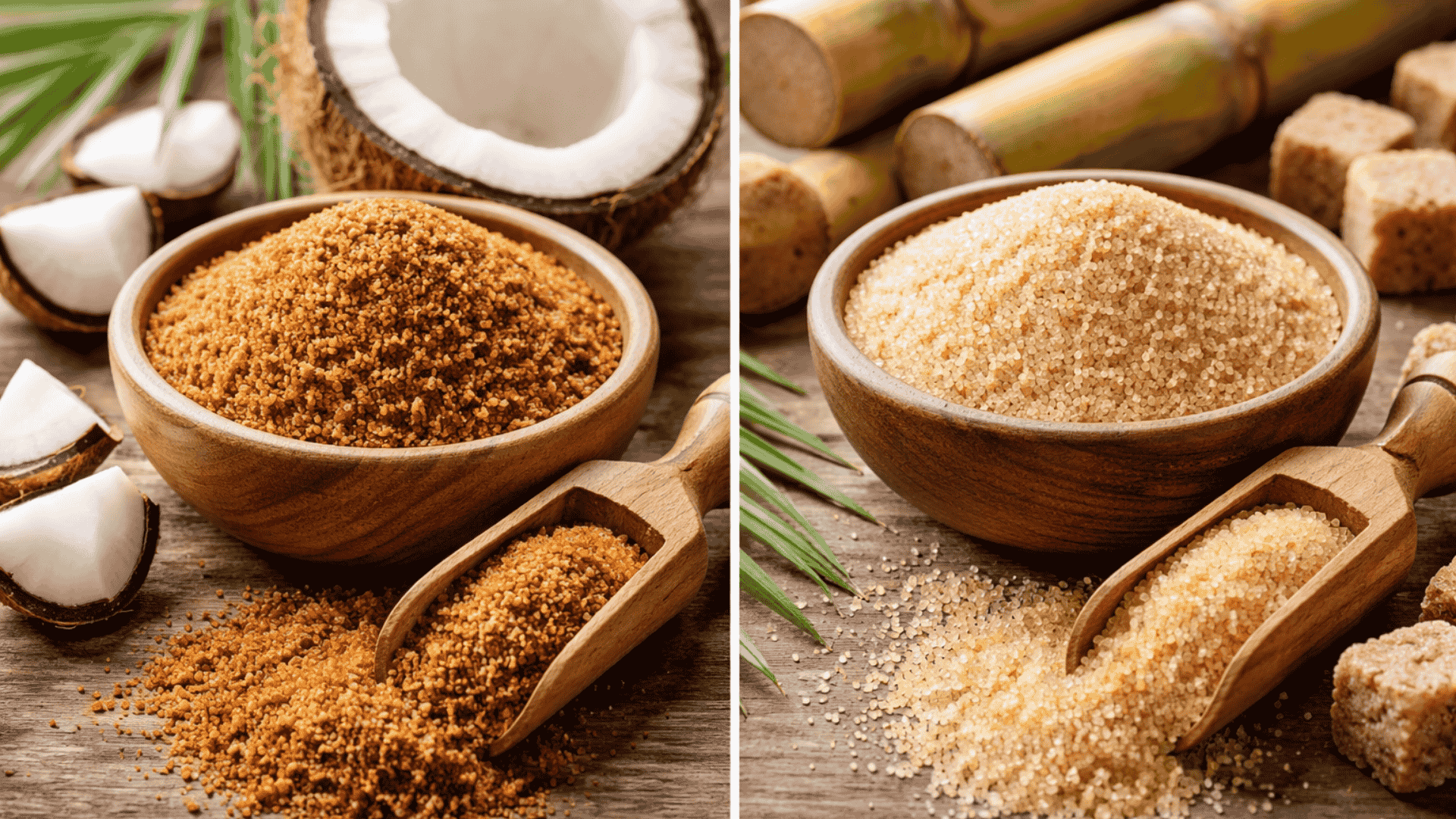









Sugar shows up in many everyday foods, from morning coffee to weekend baking. One day, I started wondering about coconut sugar vs cane sugar and whether one is actually better.
Both seem similar at first, yet small differences appear when looking closer. I spent some time reading labels, checking nutrition facts, and learning how each sweetener is made.
What I found surprised me more than expected. This guide breaks down coconut sugar vs cane sugar in simple terms. I’ll look at how each one is produced, its calories, glycemic index, nutrients, and flavor.
I’ll also share when one might work better in baking or cooking, plus a few sweetener alternatives worth knowing.
What is Coconut Sugar?
Coconut sugar is a natural sweetener made from the sap of coconut palm trees. These trees mostly grow in tropical areas like Southeast Asia.
To make it, farmers collect the sweet liquid that drips from cut coconut flower buds. This sap is poured into large pans and heated over a fire.
As it heats up, the water evaporates, and the liquid gets thicker. Eventually, it turns into small brown crystals or granules.
The whole process is pretty simple and doesn’t need much processing. Coconut sugar tastes like caramel with a bit of butterscotch flavor and a touch of smokiness.
It’s golden to dark brown in color and feels similar to regular brown sugar: slightly moist and grainy.
What is Cane Sugar?
Cane sugar is the most common sugar we use every day. It comes from sugarcane plants or sugar beets. Sugarcane is a tall grass-like plant that grows in warm, tropical places.
To make sugar, farmers harvest and crush the sugarcane stalks to squeeze out the sweet juice. This juice gets cleaned to remove dirt and other stuff.
Then it’s boiled until it becomes thick and syrupy. As it cools, sugar crystals form. These crystals go through more cleaning and filtering to become pure white.
That’s the white sugar you see in stores. Cane sugar tastes simply sweet without any extra flavors, and it looks like tiny white or light brown crystals.
Coconut Sugar vs. Cane Sugar: Nutritional Comparison
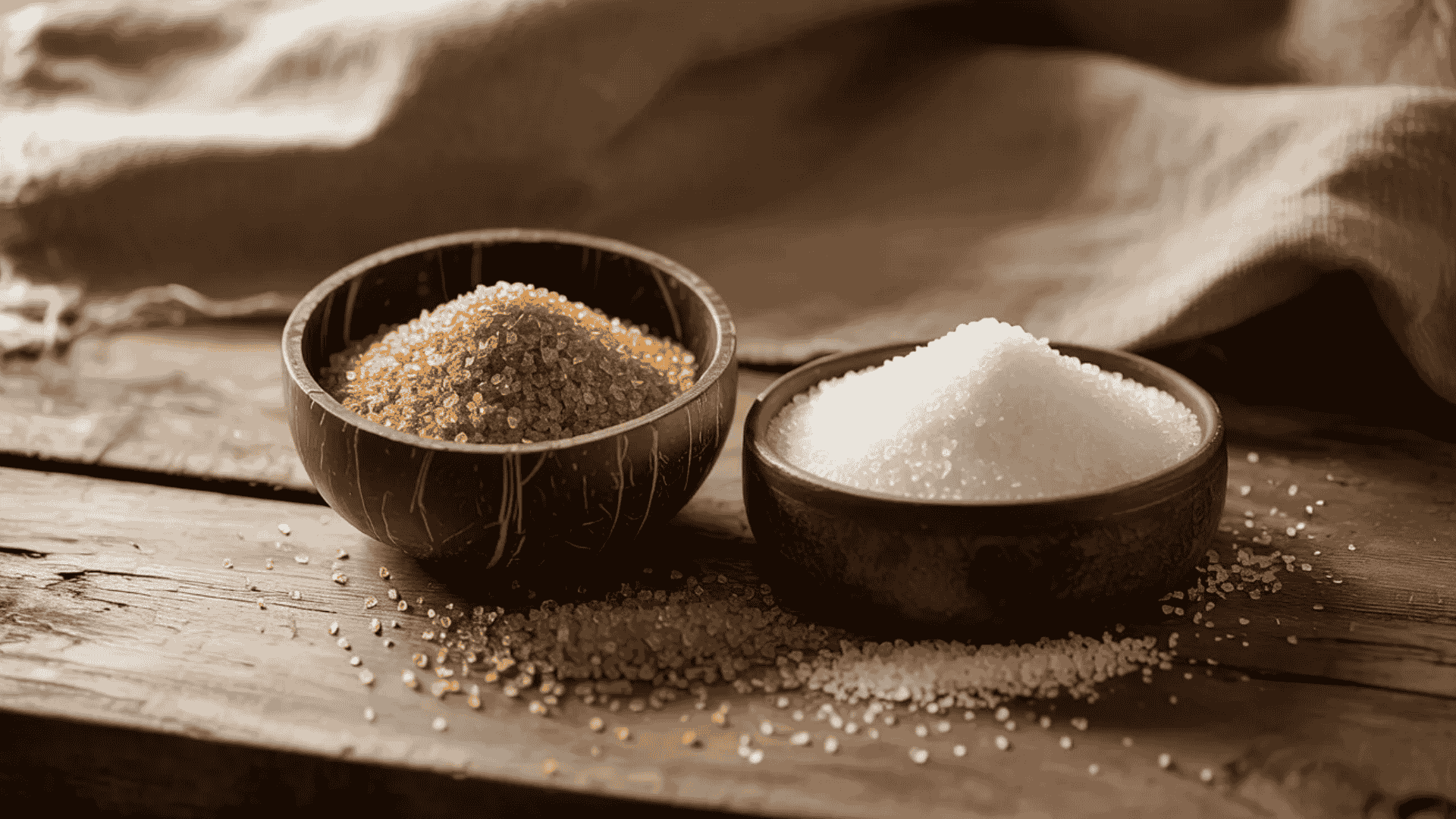
As I dug deeper into Coconut Sugar vs Cane Sugar, I realized that while both might seem similar, there are some important differences when it comes to nutrition. Here’s how they stack up:
1. Calories and Carbohydrates
Coconut sugar: Has about 15 to 16 calories per teaspoon and 4 grams of carbs. It gives you the same energy as regular sugar, so it’s not lower in calories.
Cane sugar: Also has 16 calories per teaspoon and 4 grams of carbs. Both are almost the same in calories, so neither is better if you’re watching your weight or counting calories.
2. Glycemic Index
Coconut sugar: Has a glycemic index (GI) of 35 to 54, which is low to medium. This means it raises your blood sugar slowly and gently without sudden jumps.
Cane sugar: Has a higher GI of 60 to 65, which is medium to high. It makes your blood sugar rise quickly, causing faster spikes that can affect how energetic you feel.
3. Micronutrients
Coconut sugar: Has small amounts of helpful minerals like iron, zinc, potassium, and magnesium. These come from light processing and can help with bone health and immunity, though the amounts are really small.
Cane sugar: Has no minerals or nutrients at all, especially the white refined kind. Processing removes everything except pure sugar, making it nutritionally empty with just calories and nothing else good for you.
4. Fiber Content
Coconut sugar: Has inulin, a special fiber that feeds the good bacteria in your gut. This fiber also slows down how fast sugar gets absorbed, helping your digestion and keeping blood sugar steadier.
Cane sugar: Has no fiber at all because it’s removed during processing. Without fiber, the sugar enters your bloodstream fast, causing quicker blood sugar spikes and giving no help to your digestion.
5. Vitamins and Antioxidants
Coconut sugar: Has small amounts of antioxidants and vitamins like vitamin C. These compounds help protect your cells from damage and stay in the sugar because it’s not heavily processed.
Cane sugar: Has zero vitamins or antioxidants, especially white sugar. Everything nutritious is removed during refining, leaving only empty calories with nothing to protect or nourish your body.
6. Price and Availability
Coconut sugar: Costs 3 to 4 times more than regular sugar because it’s hard and time consuming to harvest. You’ll mostly find it in health food stores, specialty shops, or online instead of regular supermarkets.
Cane sugar: Is really cheap and available everywhere. Every grocery store has it. The low price and easy availability make it the most affordable and convenient sweetener for most people.
Which Should You Choose: Coconut Sugar or Cane Sugar?
Choosing between coconut sugar vs cane sugar often depends on personal goals, cooking needs, and how much sweetness a recipe requires.
- For Blood Sugar Control: Coconut sugar has a slightly lower glycemic index than cane sugar. Blood sugar may rise a bit slower, but portion size still matters most.
- For Weight Goals: Coconut sugar and cane sugar contain nearly the same calories. Reducing total sugar intake matters more than switching types.
- For Baking and Cooking: Coconut sugar adds a mild caramel taste, while cane sugar tastes cleaner and lighter. Coconut sugar usually substitutes in a 1:1 ratio.
Both sweeteners work well in different situations. The better choice often depends on taste preference, recipe needs, and overall sugar intake.
Is Coconut Sugar Better Than Cane Sugar?
When looking at coconut sugar vs cane sugar, the differences are smaller than many people expect. Coconut sugar has a slightly lower glycemic index, which may cause a slower rise in blood sugar.
Even so, coconut sugar still raises blood glucose, especially when used in larger amounts. Coconut sugar also contains small amounts of minerals such as iron, zinc, and potassium.
These amounts remain very low and do not make it a strong source of nutrition. Calorie content between coconut sugar and cane sugar stays almost identical, so coconut sugar is not a lower-calorie option.
From an overall health view, both count as added sugars. Moderate intake matters far more than the type of sugar used.
Are There Healthier Alternatives?
Some people look for sweeteners that may have fewer calories or a smaller impact on blood sugar. A few options are often used as substitutes.
| Sweetener | What to Know | Product Recommendation |
|---|---|---|
| Stevia | A plant-based sweetener with no calories. Very sweet, so only a tiny amount is needed. | SweetLeaf Stevia |
| Monk Fruit | Natural fruit sweetener with no calories. Often blended with erythritol for better taste. | Lakanto Monk Fruit |
| Erythritol | Sugar alcohol with very low calories and a mild taste similar to sugar. | Now Foods Erythritol |
| Honey | Natural sweetener with trace minerals, but still similar to sugar in calories. | Nature Nate’s Honey |
| Maple Syrup | Rich flavored syrup with small minerals, yet still considered added sugar. | Coombs Maple Syrup |
Even with healthier alternatives, moderation still matters. Sweeteners can fit into meals, but overall sugar intake plays the biggest role.
The Final Verdict
So now you know that Coconut Sugar and Cane Sugar both have similar calories and carbs. Coconut sugar has a slight edge due to its lower glycemic index and small amounts of minerals like potassium and iron.
But honestly, these differences aren’t huge enough to make one clearly better for your health. The main thing to remember is that both should be used in moderation as part of eating well overall.
Want to learn more about healthy alternatives or get other helpful tips? Check out my other blogs for more easy guides and useful information.