











I remember the first time I grabbed a quick bowl after a long day and wondered why it felt lighter one time and heavier the next. If you’ve had the same thought, you’re not alone.
Poke bowl nutrition facts can shift a lot, and it gets confusing when every bowl seems different. You might want something light, steady, or more filling, but it’s hard to figure out what actually changes the numbers.
As a dietitian, I get this question more than almost any other about takeout food, partly because poke looks healthy, but the actual calorie and macro ranges are wider than most people expect.
That gap between perception and reality is exactly why breaking it down is useful.
That’s why it helps to break things down into simple parts so you can build a bowl that fits your day without guessing. So, here’s where we start as you look at the choices that shape each bowl.
Poke Bowl Nutrition Facts (Quick Overview)
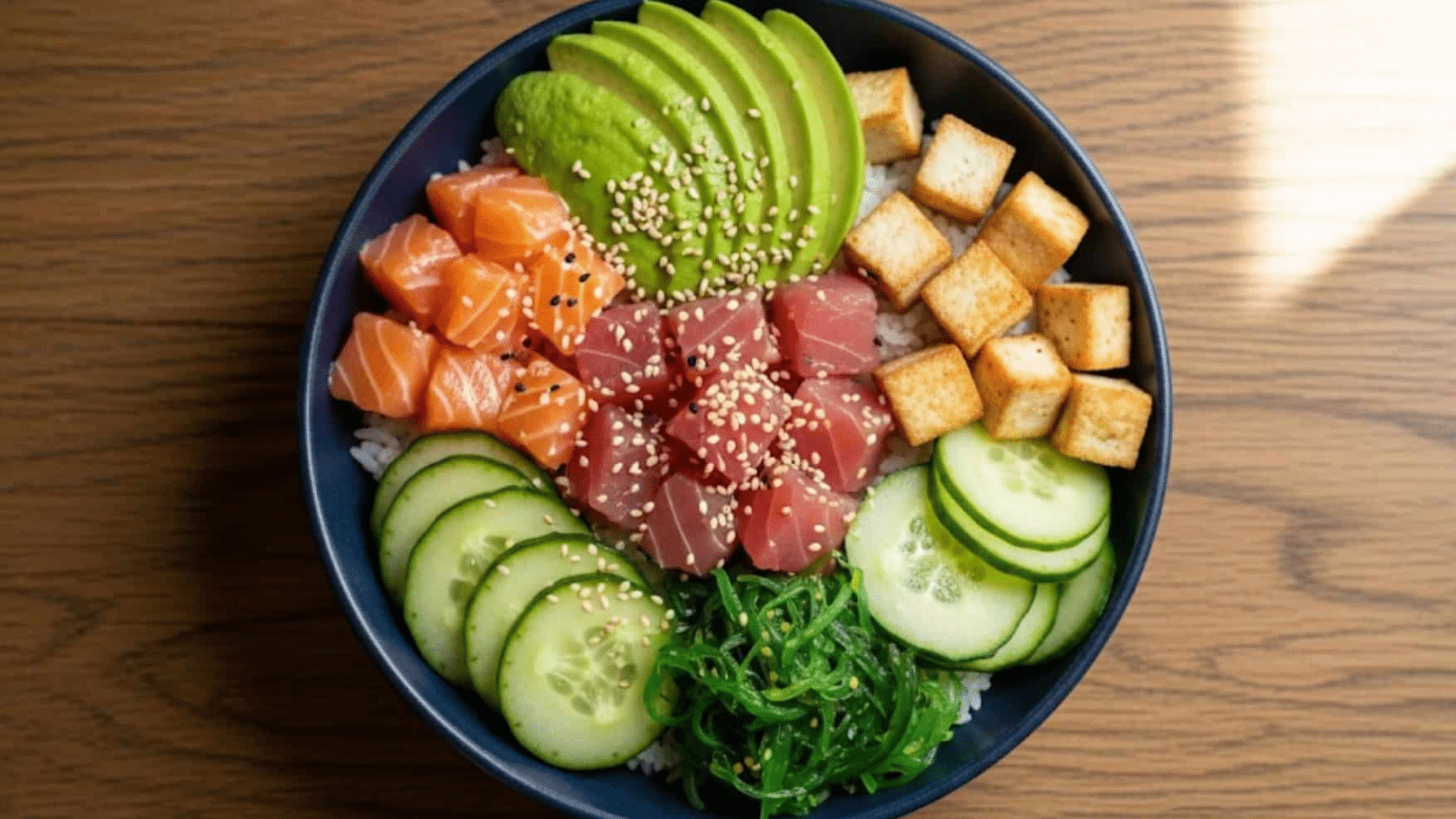
How Many Calories in a Poke Bowl?
Most poke bowls range from 400 to 850 calories. A light bowl built on greens with tuna and ponzu can sit closer to 400–500 calories.
While a large rice-based bowl with salmon, avocado, and spicy mayo can push past 800. The final number depends on your base, protein, toppings, and the size of your sauce.
Key factors that raise or lower calories:
- Lower-calorie bowls: greens, tuna, shrimp, simple sauces
- Higher-calorie bowls: large rice portions, salmon, avocado, seaweed salad, crunchy toppings
- Rice impact: one cup adds 200+ calories, and many bowls include more than one cup
- Sauce impact: one or two heavy spicy mayo drizzles adds 150–300 calories
- Toppings: fried toppings add quick calories in small amounts
When you see how each part changes the total, you can adjust your bowl to match your needs without guessing.
Full Macro Snapshot
A poke bowl’s macros shift with your base, protein, and toppings. Each part affects protein, carbs, fat, and fiber in a different way.
Typical macro ranges:
- Protein: 20–40 grams from tuna, salmon, chicken, or shrimp
- Carbs: 40–90 grams, depending on rice or greens
- Fat: 8–35 grams, found in salmon, avocado, nuts, and creamy sauces
- Fiber: 3–8 grams from greens, cabbage, onions, edamame, and fruit
These numbers help you see whether your bowl leans heavier on carbs, protein, or fat, so you can balance it based on your goals.
Sodium and Sugar Snapshot
Sodium and sugar rise fast in poke bowls because many sauces and mix-ins use added salt and sweeteners.
Where sodium and sugar come from:
- Sodium sources: sauces, seaweed salad, pickled items, marinated proteins
- Sauce impact: one spoon of shoyu or ponzu can add 300+ mg
- Sugar sources: mango, pineapple, seaweed salad, sweet sauces
- Sugar range: 5–20 grams, depending on your fruit and sauce choices
Knowing where these numbers come from helps you reduce them without losing flavor. A small change in sauce size or fruit portion makes a noticeable difference.
Ingredient-Wise Nutrition Chart
You see clear nutrition numbers for common poke bowl items. These details help you compare calories, carbs, and portions so you can build a bowl that suits your needs without confusion.
Base Nutrition Comparison Chart
You can look at the numbers below to understand how each base changes calories and carbs. The list helps you spot which base supports a lighter bowl and which one raises totals faster.
| Base | Calories (1 cup) | Carbs | Notes |
|---|---|---|---|
| White rice | 180–240 | High | Raises calories and carbs fast |
| Brown rice | 215–250 | High | More fiber and slower digestion |
| Mixed greens | 10–30 | Very low | Adds volume with almost no calories |
| Cauliflower rice | 25–35 | Low | Light and low-carb |
| Zucchini noodles | 20–30 | Low | Adds size with minimal calories |
| Quinoa | 220–240 | Moderate | Higher protein than rice; good fiber source |
| Kelp noodles | 35–45 | Very low | Mineral-rich and nearly calorie-free |
You can use these numbers to decide if you want a light base or a higher-calorie base that adds more carbs and energy to your bowl.
Protein Comparison Chart
You can review the calorie ranges below to understand how each protein affects your bowl. The list shows which choices are lower in calories and which ones are higher in calories due to natural fat or added sauces.
| Protein | Calories (per ounce) | Notes |
|---|---|---|
| Tuna | 30–40 | Lean and steady in protein |
| Salmon | 40–55 | Higher due to natural fat |
| Shrimp | 25–30 | Light and low in calories |
| Chicken | 35–50 | Simple and filling |
| Tofu | 20–30 | Plant-based and mild |
| Octopus (tako) | 25–35 | Very lean; traditional Hawaiian poke protein |
| Edamame (add-on) | 35–40 | Plant protein with fiber; good vegan booster |
You can rely on these numbers to choose proteins that match your calorie target, whether you want a lean bowl or a more filling one.
Beyond nutrients, the correct raw fish choice also shapes how well the bowl sits with you.
Toppings Nutrition Comparison Chart
You can check the values below to see how toppings affect calorie counts. Even small amounts can raise totals quickly, especially when fried items or calorie-dense seeds are added.
| Topping | Calories (1 tablespoon) | Notes |
|---|---|---|
| Tempura flakes | 50–70 | Adds crunch and quick calories |
| Crispy onions | 45–65 | Fried and dense |
| Sesame seeds | 45–60 | Adds steady fat |
| Peanuts | 50–80 | Raises calories fast |
| Avocado (2 tbsp) | 50 | Soft texture and fat |
| Macadamia nuts (1 tbsp) | 70–100 | Calorie-dense; adds richness quickly |
| Mango (2 tbsp) | 20–35 | Adds sugar and sweetness; low in fat |
You can use these numbers to adjust portions or limit heavier toppings, especially when building a bowl that stays within a lower calorie range.
Sauce Nutrition Comparison Chart
You can review the numbers below to understand how sauces influence calories and sodium. Some sauces stay light, while creamy choices can raise your totals with only one or two spoonfuls.
| Sauce | Calories (1 tablespoon) | Notes |
|---|---|---|
| Spicy mayo | 80–100 | Highest due to added fat |
| Aioli blends | 90–110 | Thick and calorie-heavy |
| Eel sauce | 30–50 | Sweet flavor and sugar |
| Shoyu | 10–20 | Light but salty |
| Ponzu | 10–15 | Citrus-based and mild |
| Sesame oil drizzle | 40–45 | Calorie-dense, but a little goes a long way |
| Yuzu citrus dressing | 15–25 | Light and tangy; one of the lowest-calorie flavor options |
You can use these values to control sauce portions. Small adjustments often make a noticeable difference in calories and sodium without changing flavor too much.
Sample Poke Bowl Nutrition Profiles
You can use these sample bowls to see how different bases, proteins, toppings, and sauces shape calories. These examples help you plan your bowl with clear, simple numbers.
500-Calorie Bowl Example
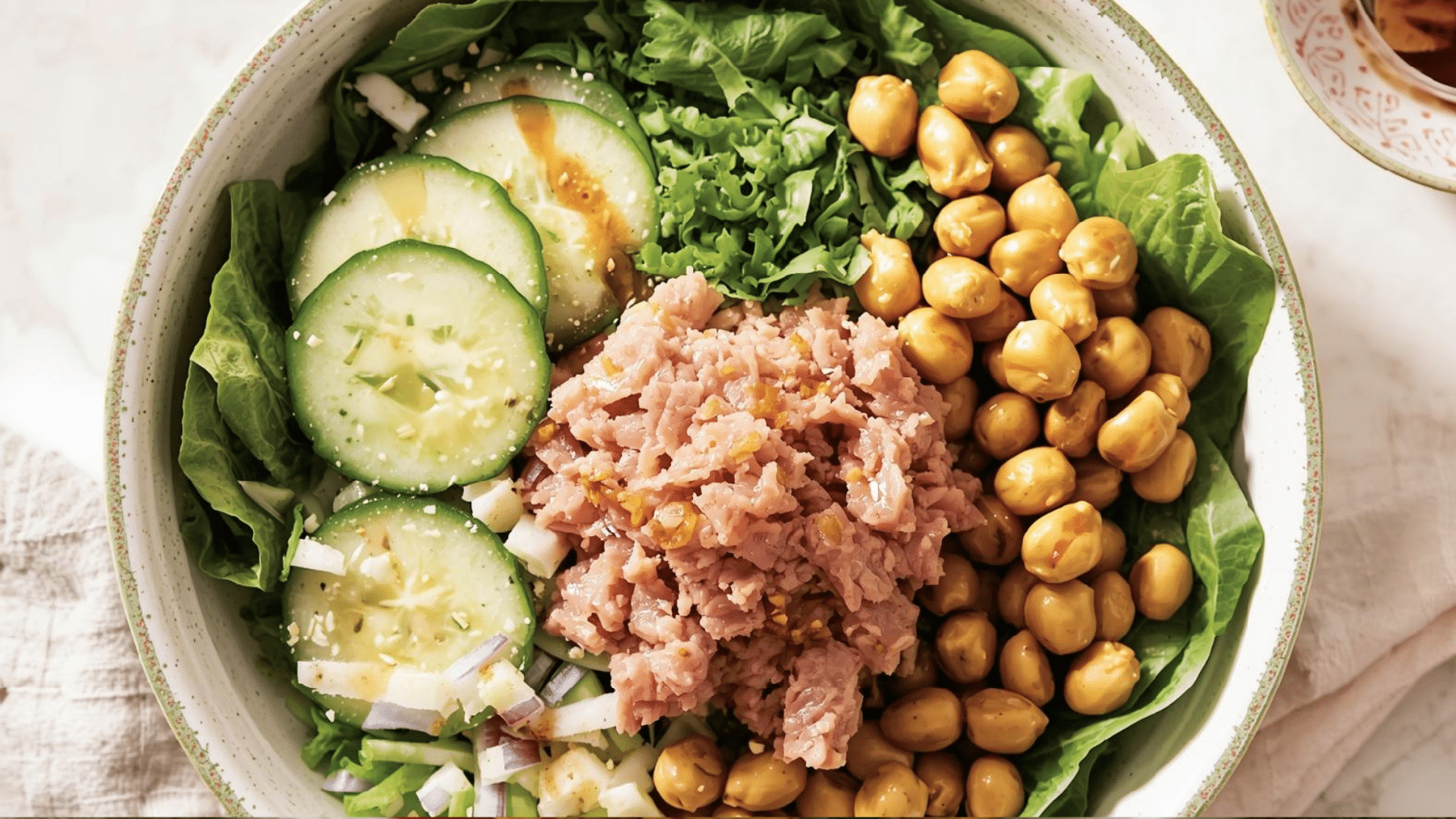
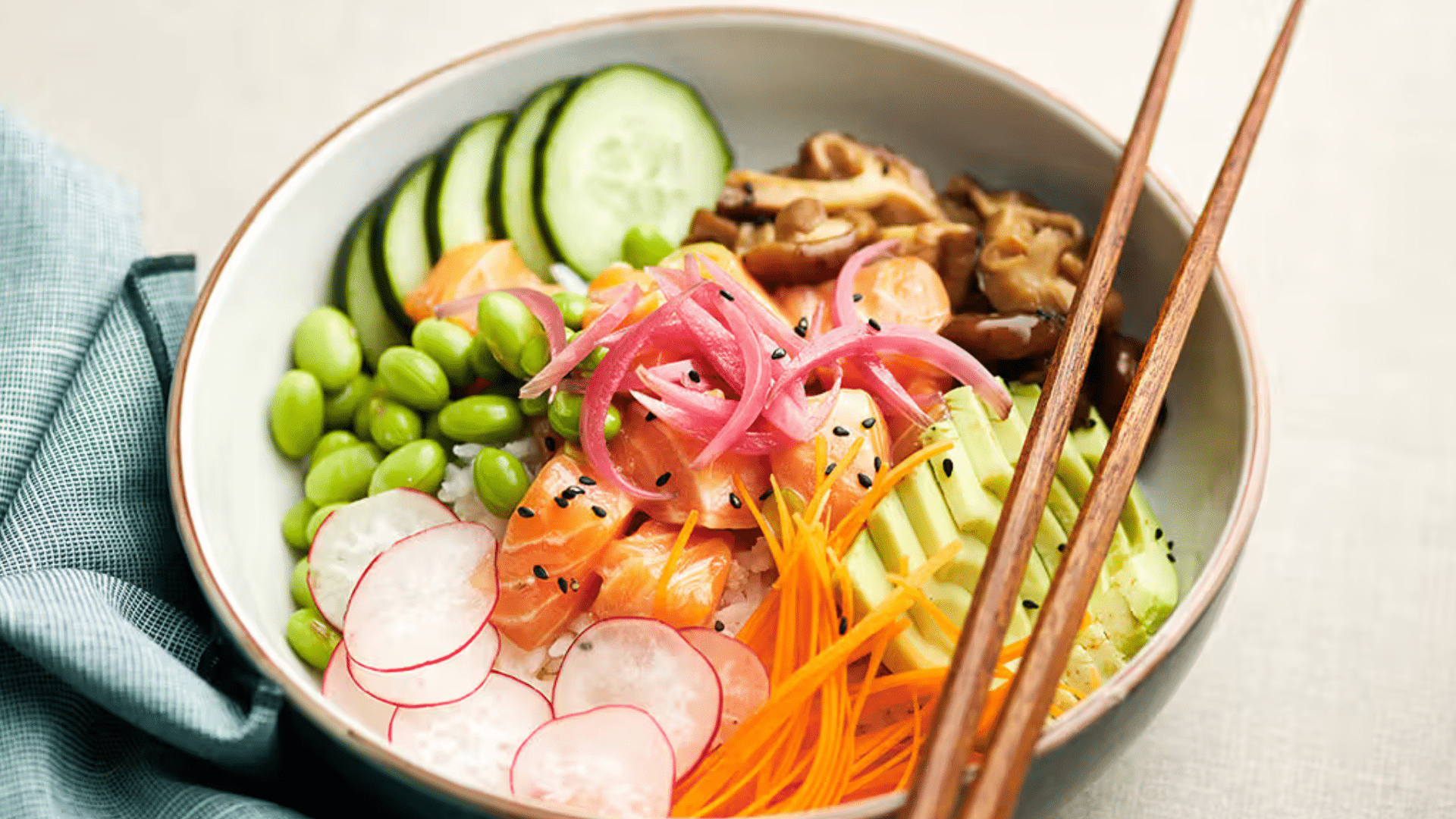
A 500-calorie bowl stays light and steady. You start with mixed greens as the base. Add one scoop of tuna for lean protein. Include cucumber, cabbage, and onions for crunch without raising calories.
Add a small spoon of edamame for a little protein and fiber. Finish with a light drizzle of ponzu for flavor. Skip fried toppings and creamy sauces to keep the number low.
This bowl works well when you want a filling meal without a high-calorie load. You still get steady protein, volume, and flavor while staying well under the average poke bowl range.
700-Calorie Bowl Example
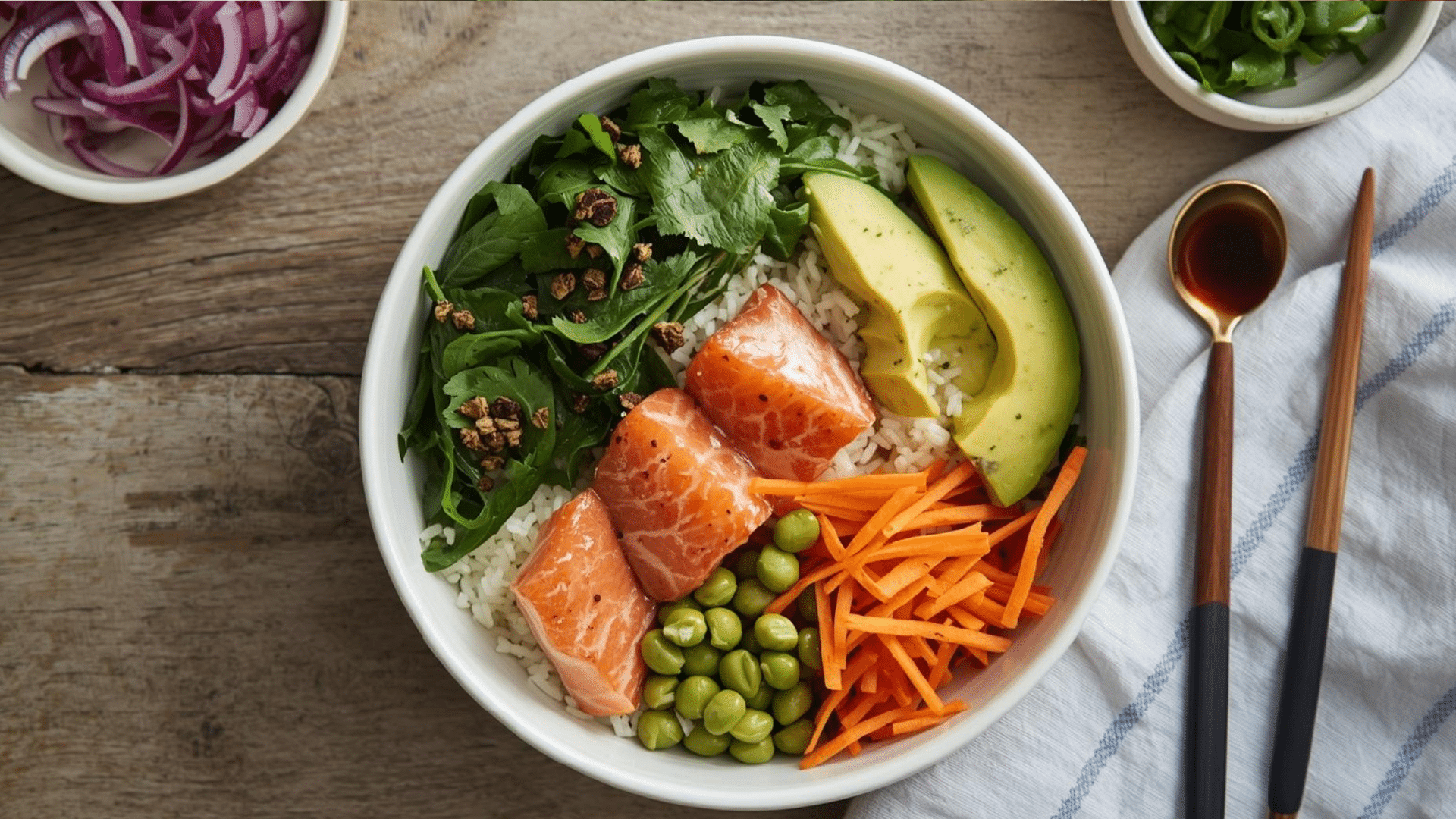
A 700-calorie bowl sits in the middle range. Start with half greens and half white rice. Add one scoop of salmon for steady protein and natural fat. Include edamame, onions, and carrots for fiber and crunch.
Add a small serving of avocado for softness and healthy fat. Use one spoon of shoyu to season the bowl without raising calories too fast. This mix gives you a balanced bowl with steady carbs, protein, and fat.
You get a filling meal with more energy than a light bowl, but without moving into a very high-calorie range.
900-Calorie Bowl Example
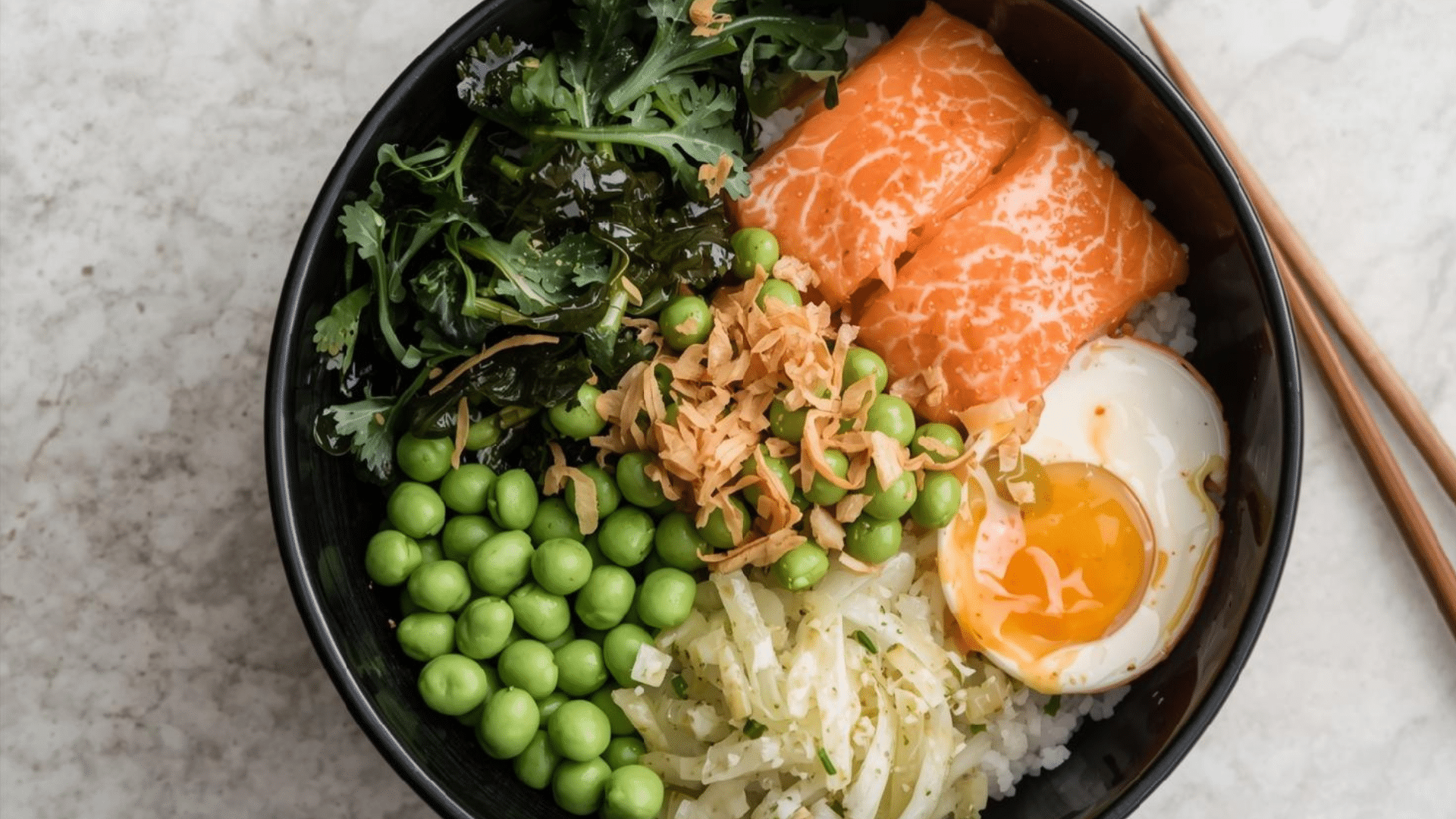
A 900-calorie bowl feels heavier and more filling. You begin with a full cup of white rice. Add two scoops of salmon or a salmon mix for a higher-calorie base.
Include seaweed salad, edamame, and avocado for extra flavor, fat, and carbs. Add a small serving of crunchy toppings, such as crispy onions, for texture. Finish with one or two spoons of spicy mayo to complete the bowl.
The added fat, carbs, and toppings push the number higher. This bowl works well when you want a large, satisfying meal that keeps you full for several hours.
Detailed Nutrition for Popular Poke Bowls
These examples give you clear calorie, macro, sodium, and sugar numbers so you know what to expect when ordering standard bowls from popular restaurants.
Pokeworks: Hawaiian Classic (Regular Size)
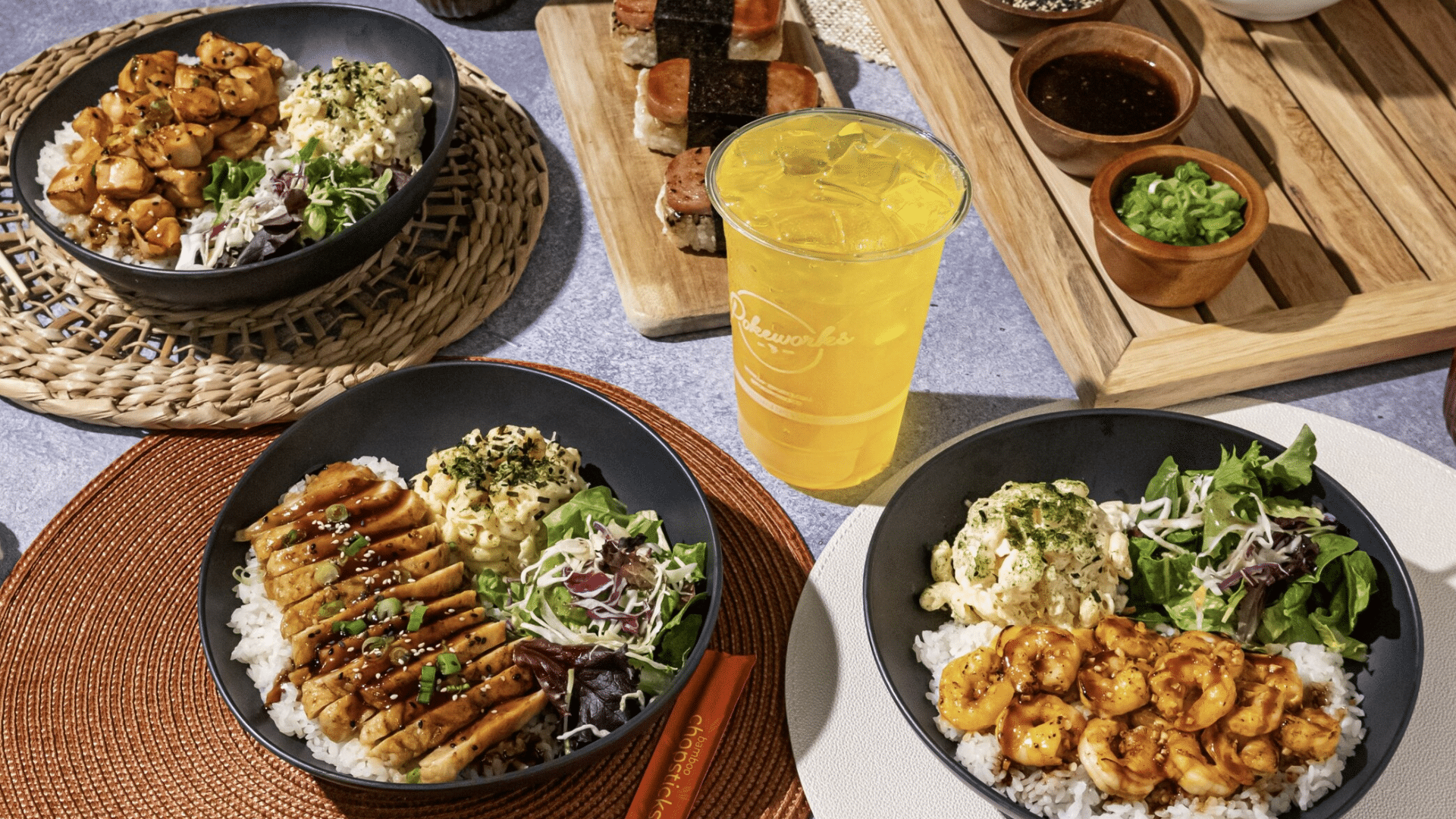
- Calories: 640
- Protein: 36g
- Carbs: 68g
- Fat: 22g
- Sodium: 1,180mg
- Sugar: 9g
This bowl stays moderate in calories but high in sodium due to soy-based sauces and marinated mix-ins.
Pokeworks: Spicy Ahi Bowl (Regular Size)
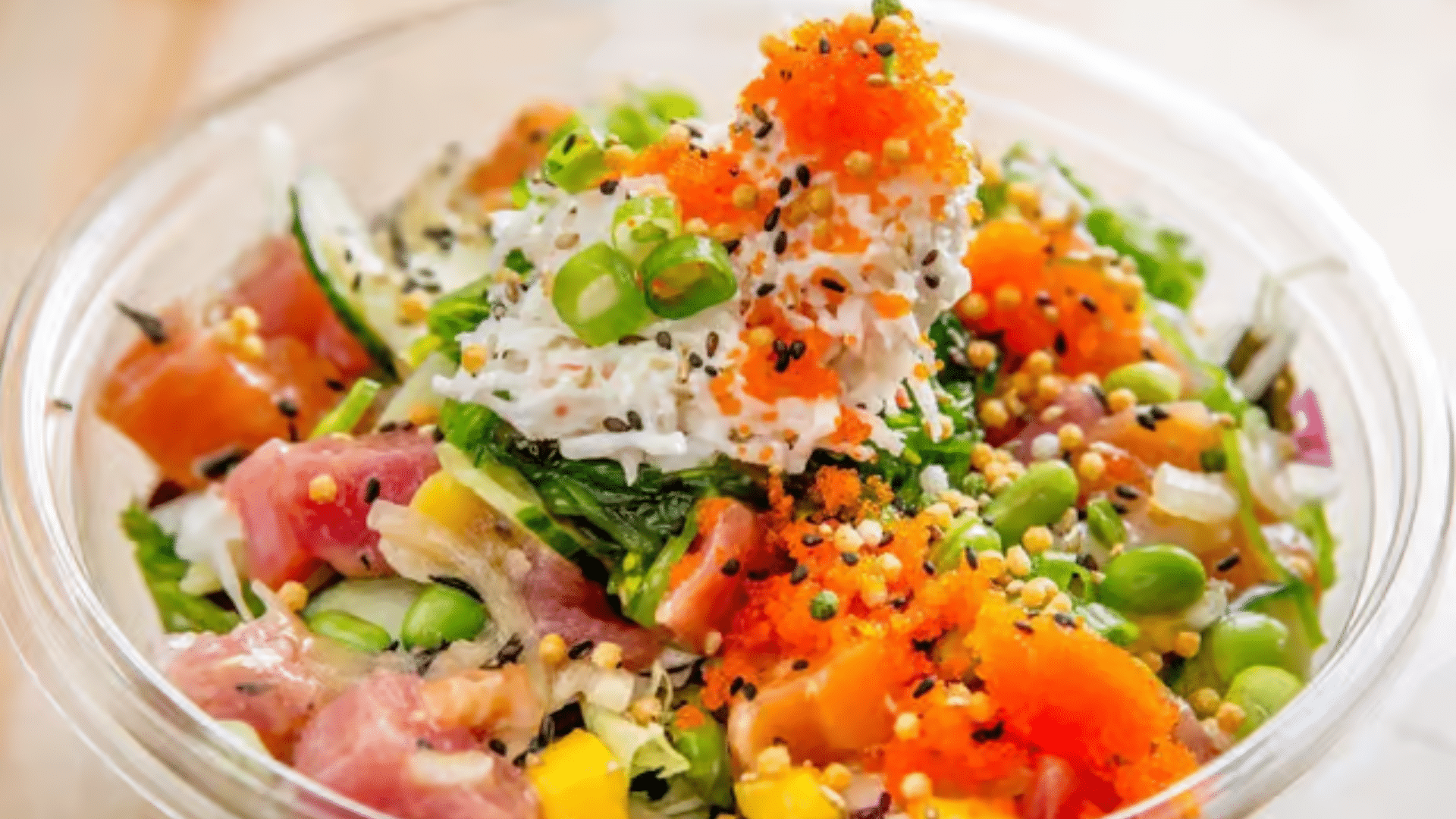
- Calories: 720
- Protein: 34g
- Carbs: 72g
- Fat: 28g
- Sodium: 1,250mg
- Sugar: 8g
Spicy mayo raises calories and fat quickly. Choosing half sauce or switching to ponzu keeps the bowl lighter.
Sweetfin: Spicy Tuna Bowl
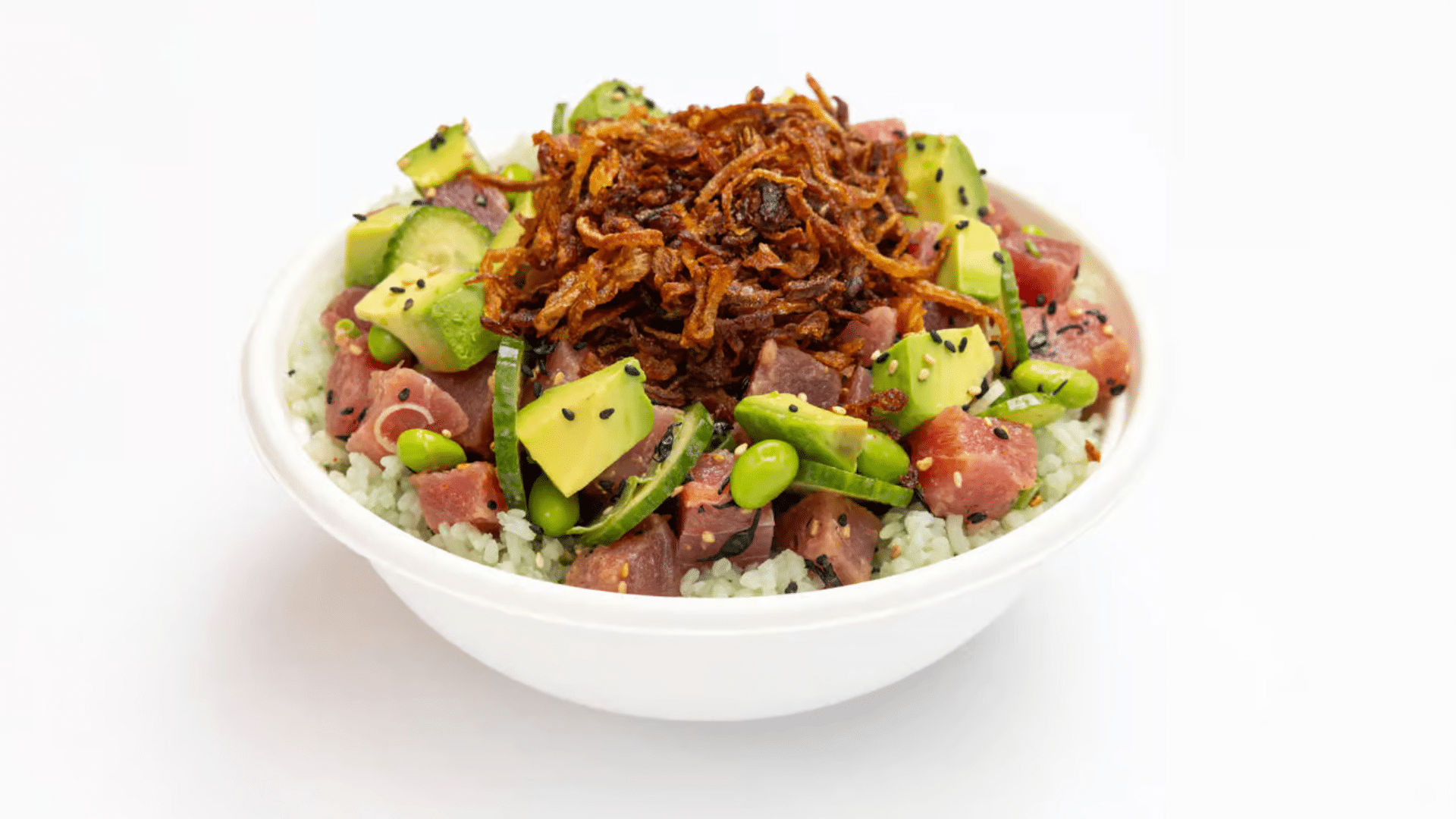
- Calories: 550
- Protein: 30g
- Carbs: 55g
- Fat: 18g
- Sodium: ~900mg
- Sugar: ~8g
Sweetfin bowls tend to stay lower in calories because they rely on salads and lighter sauces.
Aloha Poke: Samurai Bowl (Large)
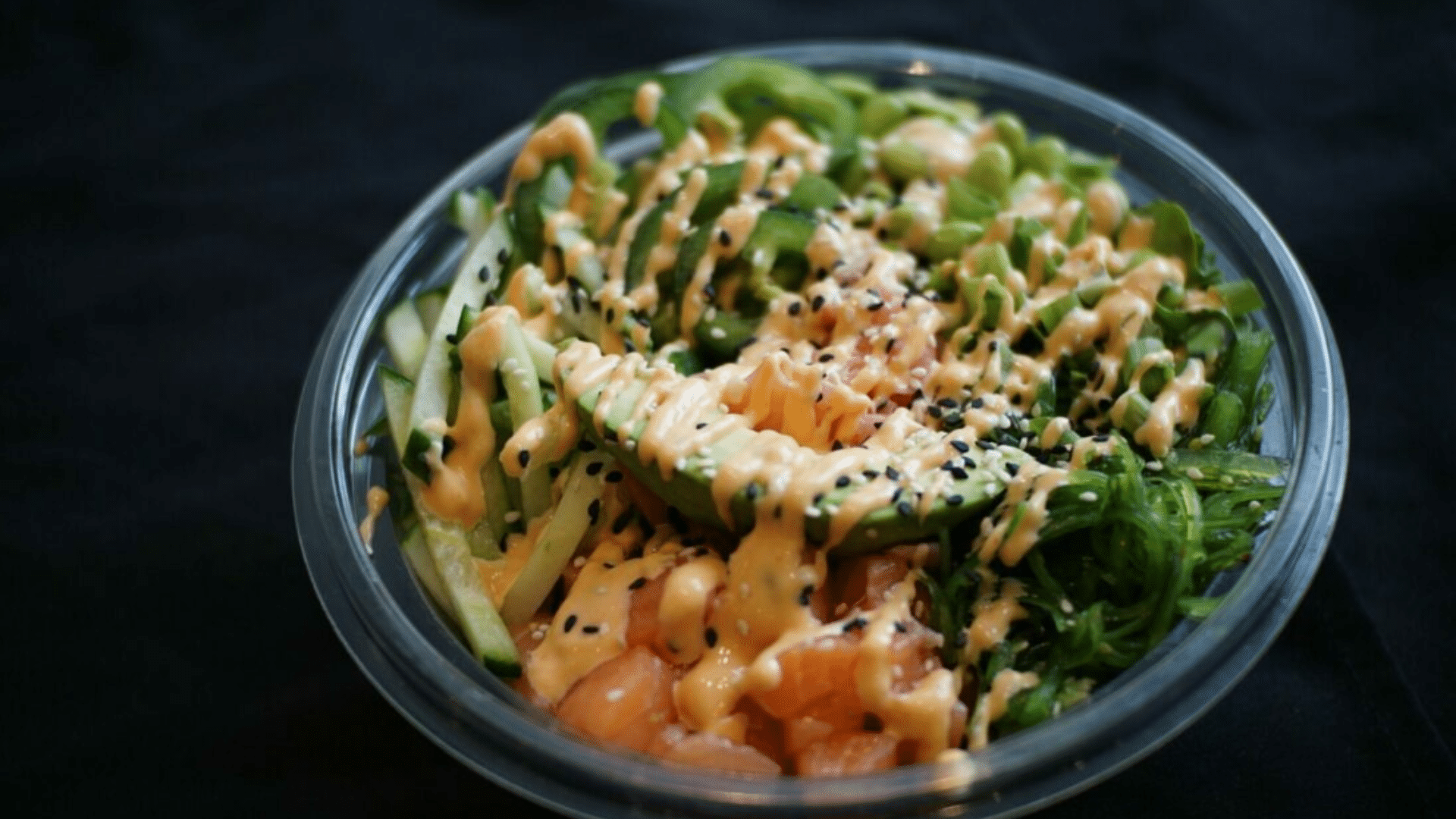
- Calories: 820
- Protein: 42g
- Carbs: 75g
- Fat: 32g
- Sodium: 1,300mg
- Sugar: 10g
This bowl runs heavier due to double proteins, rice, seaweed salad, and sauce-rich toppings.
How to Make a Healthy Poke Bowl
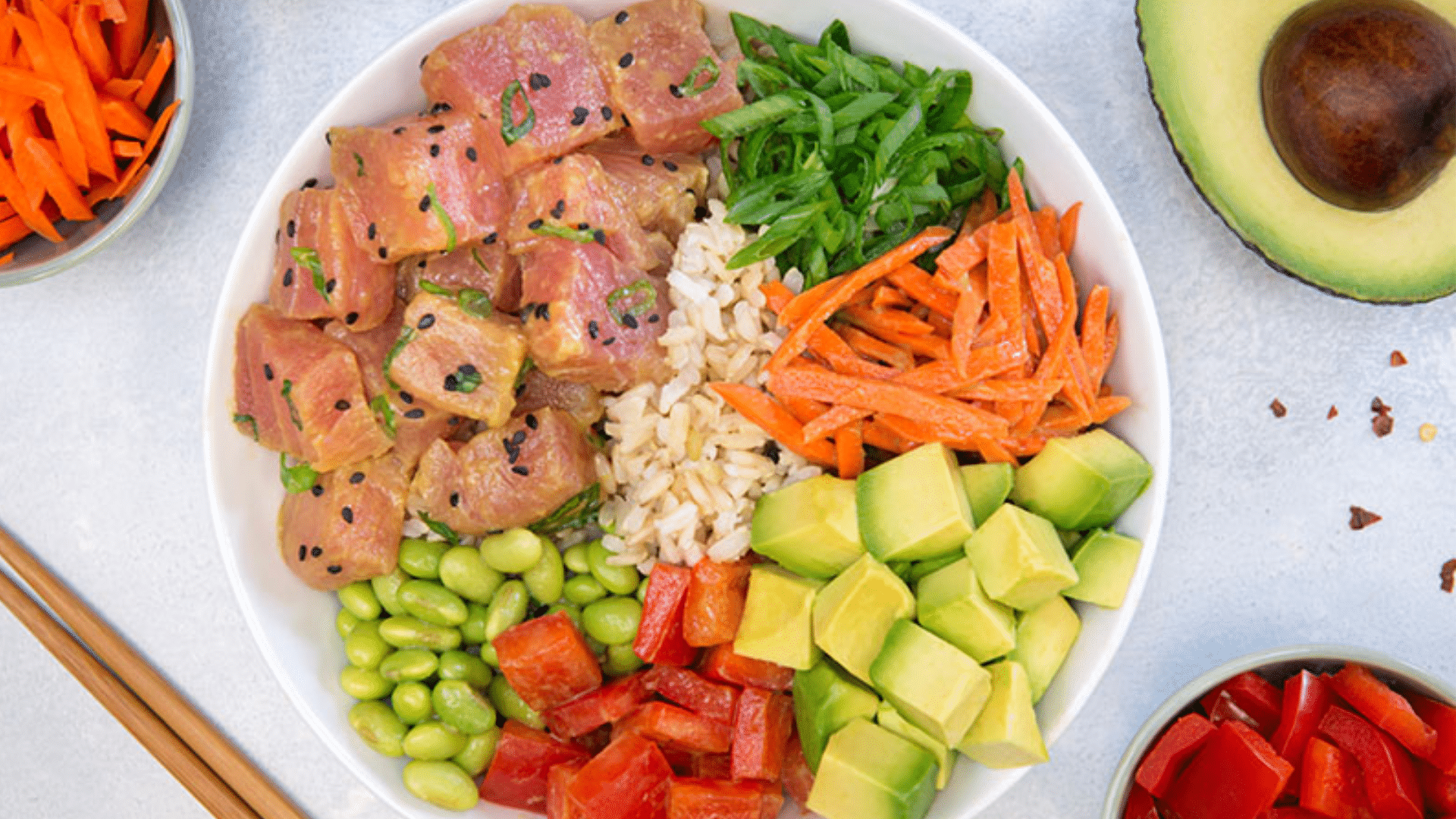
Ingredients
- 1 cup cooked white rice or brown rice
- 1 cup mixed greens
- 4 ounces ahi tuna, shrimp, or tofu
- ½ cup cucumber, chopped
- ½ cup shredded carrots
- ¼ cup edamame
- ¼ cup seaweed salad (optional)
- 2 tablespoons ponzu or light soy sauce
- ½ small avocado (optional)
- 1 teaspoon sesame seeds
Steps
- Prepare your base: Add half rice and half greens to your bowl.
- Cut your protein: Slice tuna, shrimp, or tofu into small bite-sized pieces.
- Add the veggies: Place the cucumber, carrots, edamame, and seaweed salad on top of the base.
- Add your protein: Spoon the chopped protein over the veggies.
- Pour the sauce: Drizzle ponzu or light soy sauce lightly over the bowl.
- Add optional toppings: Place a small amount of avocado on top and sprinkle sesame seeds.
- Mix and serve: Gently toss the bowl to evenly distribute the sauce, then enjoy.
How Sodium Affects a Poke Bowl
Many poke bowls contain more sodium than you might expect. Most bowls fall between 700 and 1,200 milligrams, which comes mainly from sauces and a few common add-ins.
Soy sauce, spicy mayo, and seaweed salad carry a lot of salt, and restaurants often use bigger portions than you would at home. When these items are layered together, the total climbs fast.
To put that in context: the 2020–2025 Dietary Guidelines for Americans recommend keeping daily sodium below 2,300mg for most adults. A single restaurant poke bowl can use up more than half of that in one sitting, especially when soy-based marinades, seaweed salad, and a drizzle of sauce all stack up.
If you want to keep your sodium level steady, you can make a few simple changes that still keep your bowl tasty. Ask for sauce on the side so you can control how much you use.
Pick low-sodium soy sauce when possible. Limit the seaweed salad and add more fresh veggies to keep the bowl balanced without raising the salt level.
Is Poke Healthy?
In short, poke can be healthy when prepared with intention. The longer version is that the same dish can be a balanced 500-calorie meal or a calorie-dense 900-calorie plate, depending entirely on how you assemble it.
Poke bowls can be a healthy meal when the portions are steady and the ingredients stay simple. Fish gives you solid protein, rice offers steady carbs, and fresh vegetables add fiber and texture.
The bowl becomes heavier when you add large scoops of rice, creamy sauces, crispy toppings, or sweet items such as mango or eel sauce.
These additions raise calories fast, which can shift the bowl from light to heavy without you noticing. If you want a balanced bowl, you can either pair it with a simple structured weight-loss plan, which can make consistency easier.
Or choose lean protein, add plenty of veggies, use a lighter sauce, and keep the base portion steady. Pairing this with a simple structured eating plan can make consistency easier.
With these steps, you get a bowl that feels clean, filling, and easy to fit into your day without pushing calories too high.
Who Should Be Cautious with Poke
Poke bowls are generally safe for healthy adults, but a few groups should be mindful. Raw fish carries a small risk of foodborne illness from bacteria such as Salmonella or parasites such as Anisakis.
Pregnant women, immunocompromised individuals, and young children should choose cooked protein options like grilled chicken, shrimp, or baked tofu. If you’re eating raw fish regularly, it’s also worth varying your fish choices, since larger tuna species (bluefin, bigeye) tend to be higher in mercury.
When ordering from a restaurant, it’s reasonable to ask whether their fish is sushi-grade. Reputable poke shops use fish that has been frozen to FDA-recommended temperatures to eliminate parasites before serving it raw.
How to Reduce Calories in Any Poke Bowl
You can lower the calorie count in almost any poke bowl by making a few small adjustments. Many bowls become heavy because of large rice portions, creamy sauces, or crispy toppings.
When you swap or reduce these items, the bowl stays flavorful but much lighter.
- Choose greens instead of a full rice base
- Use half scoops of sauce
- Limit spicy mayo
- Pick fresh veggies instead of crispy toppings
- Ask for one scoop of protein instead of two
- Add avocado only if you want extra fat
These steps can reduce your bowl by 150 to 300 calories while keeping the taste steady. Small changes like these give you more control over the meal without taking away the parts you enjoy.
Poke Bowl Nutrition by Goal
Poke bowls are highly customizable meals, and the way you build them should align with your specific health goals. With the right ingredients and balance, you can easily tailor a bowl to support weight loss, muscle gain, or better blood sugar control.
- For Weight Loss: Prioritize a greens base, choose lean protein like tuna or shrimp, and use a citrus-based sauce such as ponzu or yuzu. Avoid double protein scoops and skip fried toppings.
- For Muscle Building: Use a brown rice or quinoa base to add complex carbs and fiber. Double up on protein combinations like salmon and edamame, which work well. Include avocado for healthy fats and extra calories.
- For Low-Carb or Keto: Replace grain bases with mixed greens, zucchini noodles, or kelp noodles. Choose protein options like salmon or tuna, and add high-fat toppings such as avocado and macadamia nuts. Use coconut aminos or sesame oil instead of sugary sauces.
- For Diabetes-Friendly Eating: Combine carbohydrates with protein and healthy fats to slow glucose absorption and prevent blood sugar spikes. Opt for brown rice or quinoa instead of white rice because they have a lower glycemic index.
By making thoughtful ingredient choices, you can turn a simple poke bowl into a goal-focused, nutritious meal. Small adjustments in base, protein, and toppings can make a big difference in how well it supports your overall health.
How to Increase Calories if You Need More
If you need a bigger poke bowl, you can raise the calorie count with a few simple additions. Many people with higher energy needs prefer a bowl that feels more filling and steady, especially after long workdays or workouts.
Adding salmon instead of tuna gives you more fat and a higher-calorie base. Salmon also delivers more omega-3 fatty acids per ounce than tuna, which makes it a worthwhile upgrade if you’re eating poke as part of an active recovery plan.
Adding different fish gives you a varied fat and calorie base, as fish nutritional profiles run deeper than just calories. A small amount of avocado adds extra richness, while nuts or seeds bring more fat and texture.
A full-rice base raises the carbs, and a bit of extra sauce lifts the total even higher. Edamame is another easy way to add protein and carbs without changing the bowl too much.
With these steps, your bowl can reach 800 to 900 calories, which works well when you want a larger meal.
Conclusion
I hope this gave you a clearer picture of how each part of a bowl affects calories, macros, and overall balance.
Once you understand the simple pieces that control poke bowl nutrition facts, how poke calories add up, what makes poke healthy when built right, and which choices push numbers in either direction, you can put together a bowl that actually matches what your body needs that day.
You don’t have to change everything at once; small choices can shift a bowl in the right direction without losing the parts you enjoy.
If you try a new mix, I’d love to hear how it turns out for you. And if you want more food tips that keep things simple, you can keep checking my other blogs for more clear and helpful ideas.