







Some days your energy feels completely off, heavy, foggy, or just stuck. Your chakras might be the reason. These seven energy centers along your spine govern everything from digestion and sleep to confidence and the ability to speak up.
Most people have heard the word. Far fewer understand how the system actually works, what each chakra connects to inside the body, or how to tell when one is blocked.
This post covers the meaning of chakras, their symbols, what they do physically, how to spot imbalances, and the tools that actually shift them.
What Chakras Are and Where They Come From
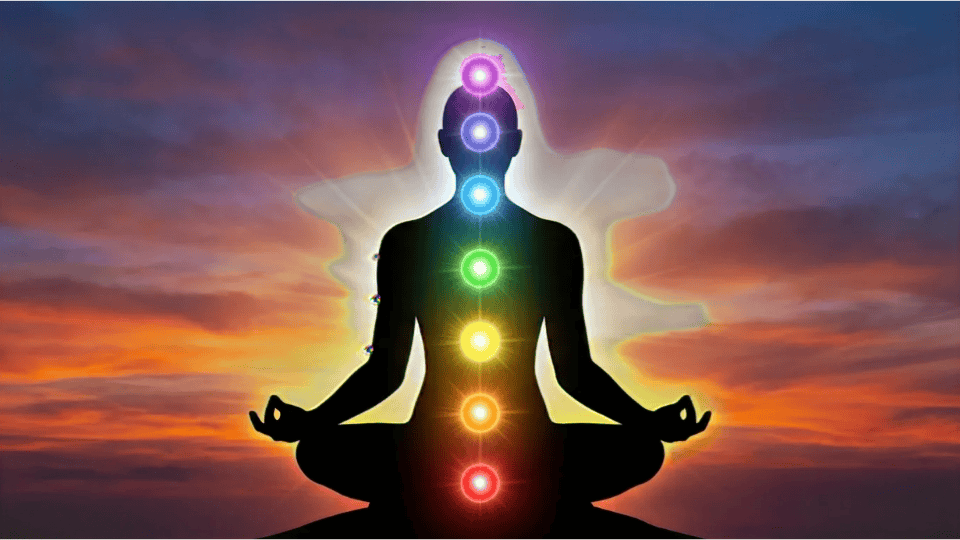
The word “chakra” is Sanskrit for “wheel.” There are seven main chakras, each sitting at a point along the spine from the base to the crown of the head.
They aren’t physical organs, but their effect on how you feel is very real. Each one moves prana (life force energy) through the body via invisible pathways called nadis.
The system traces back to the Vedas, around 1500 BCE. It deepened through the Upanishads, was sharpened by Tantra, which assigned colors, sounds, and elements to each chakra, and formalized in Patanjali’s Yoga Sutras around 400 CE.
In the 20th century, it reached the West and is now one of the most widely applied frameworks in holistic health.
How the Chakra System Works
Prana flows through the body via thousands of nadis, but three channels do most of the work. Sushumna runs straight up the center of the spine.
Ida spirals to the left of it, carrying cooling lunar energy. Pingala spirals to the right, carrying heating solar energy. The points where all three intersect are your chakras.
When prana moves freely through these channels, the body and mind feel clear and steady.
When something disrupts the flow, energy pools and stagnates at a chakra, and that’s when symptoms appear, physically and emotionally.
Because the chakras are all connected, a block in one tends to pull on the others, too.
The 7 Chakras and What They Do in the Body
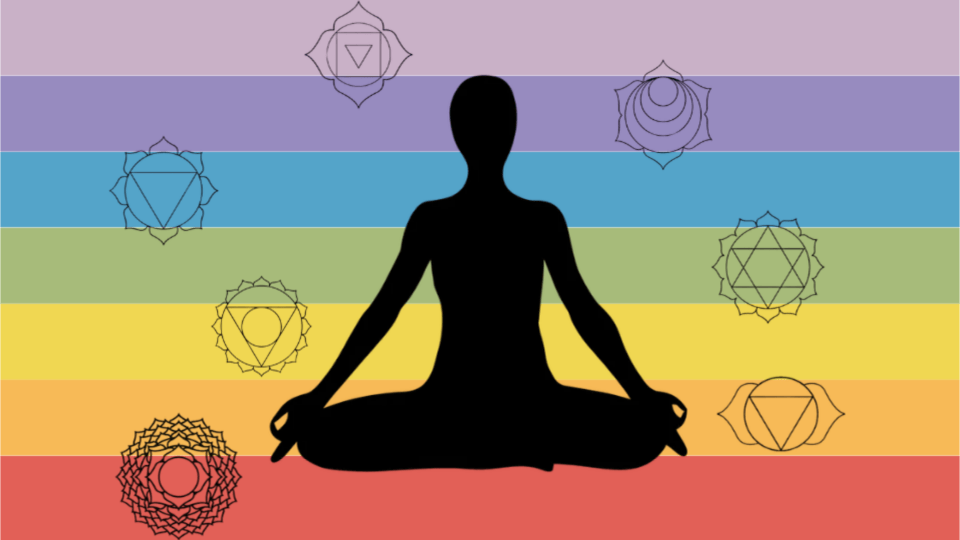
Each chakra sits at a specific point along the spine and connects directly to a gland, a nerve cluster, and a set of organs, a layer that runs just as deep as the chakra symbols and lotus geometry most people come across first.
| Chakra | Gland | Hormones |
|---|---|---|
| Root | Adrenal glands | Cortisol, adrenaline |
| Sacral | Ovaries/testes | Estrogen, testosterone |
| Solar Plexus | Pancreas | Insulin, glucagon |
| Heart | Thymus | Thymosin |
| Throat | Thyroid | T3, T4, calcitonin |
| Third Eye | Pituitary gland | TSH, FSH, LH, GH |
| Crown | Pineal gland | Melatonin |
The pituitary gland, also called the master gland, regulates others. In yogic philosophy, it’s connected to the third eye, the perception seat.
When physical and emotional patterns target the same chakra, it signals a need for attention. For example, low self-esteem and digestive issues relate to the solar plexus, while fear of speaking and thyroid tension involve the throat chakra.
How to Spot a Blocked Chakra and What to Do About It
Blocked chakras appear physically and emotionally, often together. When both point to the same chakra, use it as a starting map, not a diagnosis. Persistent physical symptoms should be evaluated by a doctor.
1. Root Chakra (Muladhara): Base of the SpineThe root chakra is your foundation. It governs survival, safety, and the basic sense that the ground beneath you is solid. When it’s blocked, neither the body nor the mind feel steady.
|
2. Sacral Chakra (Svadhisthana): Below the NavelThe sacral chakra governs creativity, pleasure, and emotional flow. It shapes how freely you feel, express, and connectwith others. A block here tends to shut all three down at once.
|
3. Solar Plexus Chakra (Manipura): Above the NavelThis is the seat of personal power, confidence, willpower, and self-trust. When blocked, you feel it in your gut and decision-making. Embodied, active practice speeds up this chakra more than anything else, explained by its connection to Manipura and the solar plexus.
|
4. Heart Chakra (Anahata): Center of the ChestThe heart chakra sits between the lower three and upper three chakras, bridging the physical and the spiritual.It governs love, compassion, and the capacity to forgive, including yourself.
|
5. Throat Chakra (Vishuddha): Base of the ThroatThe throat chakra governs communication, truth, and self-expression. It connects to the thyroid and cervical plexus, so emotional suppression can cause neck and jaw tension. Movement and yoga open the throat chakra faster than seated practice.
|
6. Third Eye Chakra (Ajna): Between the EyebrowsThe third eye governs intuition, inner clarity, and perception beyond the obvious. When blocked, the mind tends to fill that void with noise, overthinking, second-guessing, and a distrust of your own instincts.
|
7. Crown Chakra (Sahasrara): Top of the HeadThe crown chakra connects you to something larger than yourself, whether you call that consciousness, spirit, or simply a sense of meaning. A block here doesn’t always feel dramatic. It just feels like nothing quite matters.
|
Kundalini Energy and the Chakra System
Kundalini is the dormant energy coiled at the base of the spine that, when awakened, rises through each chakra in sequence, rooted in Tantra and Shaivite philosophy.
The Kundalini and serpent energy behind it is far more layered than the concept usually gets credit. As it rises, it stirs up blockages, surfaces old patterns, and energizes the chakras.
Awakening is usually gradual through consistent practice, but can be sudden, triggered by grief, trauma, or intense meditation. Shaktipat is a third path in which a teacher transmits energy to initiate awakening.
Signs include heat in the spine, emotional waves, vivid dreams, and heightened energy sensitivity. Practices activating it include intense breathwork like Breath of Fire and extended meditation.
They are powerful enough to cause real harm without a grounded foundation. Kundalini yoga’s real dangers include dissociation, focusing on building lower chakras, learning basic pranayama before advancing, and working with a teacher, if possible, to avoid emotional flooding and overwhelm.
How to Sync your Chakras

This is a body-scan practice I use with the people I guide. Sit quietly, spine upright, eyes closed.
- Three slow breaths through the nose. Feel the weight of the body settle.
- Base of the spine, warm red light. Breathe into it for thirty seconds.
- Just below the navel, an orange glow. Let it expand with each exhale.
- Solar plexus, bright yellow, warm like sunlight on skin. Two full breaths.
- Center of the chest, green light spreading outward. Let the shoulders drop.
- Throat, cool blue. On the exhale, jaw goes soft.
- Between the eyebrows, deep indigo. Mind goes still.
- Top of the head, violet or white light opening upward. One full minute.
- One deep breath, slow finger movement, eyes open.
Warmth, tingling, or heaviness in a specific spot is worth noting. It’s usually pointing somewhere.
How Chakras Compare to Other Energy Systems
If you’ve spent time with Ayurveda or traditional Chinese medicine, parts of this will already feel familiar. That’s not a coincidence; these systems are working with the same underlying reality, just through different frameworks and vocabulary.
| System | Life Force | Pathways | How It Connects to Chakras |
|---|---|---|---|
| Yoga / Tantra | Prana | Nadis | Chakras sit at the intersections of the three main nadis |
| Chinese Medicine | Qi | Meridians | Meridian pathways and chakra locations overlap significantly |
| Ayurveda | Prana / Tejas / Ojas | Doshas | Kapha governs the lower chakras, Pitta the solar plexus, and Vata the upper three |
These systems don’t compete. They’re mapping the same territory with different languages, and the overlaps are too consistent to be coincidental.
Final Words
You don’t need to work on all seven at once. Look at the physical and emotional patterns in your life right now and let them point you.
Persistent anxiety and fatigue? Root chakra. Confidence issues alongside digestive trouble? Solar plexus. Struggling to say what you mean? Throat. The signals are usually more specific than people give them credit for.
Chakra work builds over time. Five minutes of the scan above, done consistently, does more than an occasional deep dive.